2.5 C
New York
Home Blog Page 841

Global Offshore proves new pre-lay plough technology on its first project with Vattenfall

0

Global Offshore, a leading provider of cable installation, repair and trenching services to the offshore renewables, utilities and oil & gas markets and part of the Global Marine Group, has completed their first phase of work at Vattenfall’s Danish Kriegers Flak site utilising the new PLP240 asset for boulder clearance and pre-cut trenching.

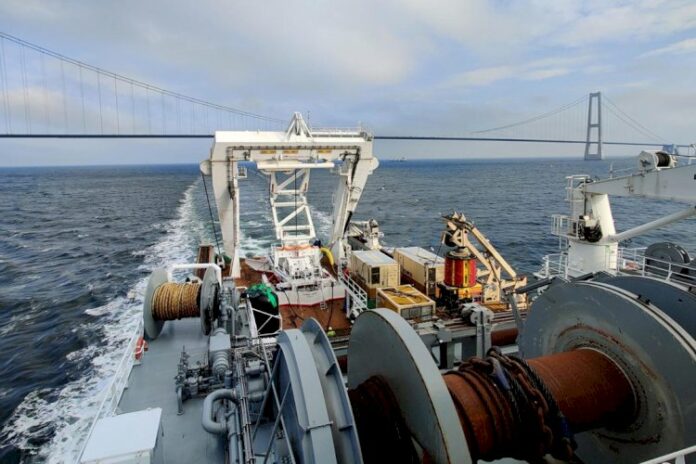
Mobilised on the Havila Jupiter, the PLP240 began boulder clearance on the site in April following rigorous testing on a directly comparable set of seabed conditions close by. The multi-function pre-lay plough was trialled in all modes: boulder clearance, pre-cut, simultaneous clearance and cutting, multi-pass and backfill. Commissioned from and designed in collaboration with Osbit Limited, with delivery to coincide with the Danish Kriegers Flak project commencement, the plough minimises the operational risk and total time required to install subsea cables.

Overall 72 routes have been completed, totalling approximately 158 km, supported by the Global Symphony and Normand Clipper undertaking boulder picking in the densely populated boulder fields. Despite the tough conditions, the PLP240 has achieved target trench depths in the majority, going over and above the project requirements, up to 1.7m in a large portion of the site.

Mike Daniel, Managing Director of Global Offshore said:

“We invested heavily in the very best upfront engineering for our PLP240 and had every confidence that the trials would evidence what we already knew to be true about the new asset. But it’s not until the tool hit the seabed, began route clearance, and was tested in each mode that its capabilities were really proven.

The seabed conditions that we’ve seen here in the Baltic Sea are likely to be some of the most extreme that we’d ever work in, so it has put the PLP240 to the ultimate stress test and we’re proud to say that it’s passed with flying colours.”

Lazaros Theodoridis, Cable Installation Package Manager at Vattenfall said:

“With the current climate, there have been several moving elements across the wider wind farm site over the last few months. Not only have Global Offshore and the PLP240 performed route clearance as we’d hoped in a difficult environment, they have also shown flexibility and professionalism in their operations, working alongside other ongoing site operations and contractors, and continuing to work safely throughout the Covid-19 pandemic.”

With route preparation works complete, the Global Offshore team are now focused on the next phase of the project, cable lay. This is to be completed by the latest addition to the Group fleet; the Normand Clipper, which has been recently mobilised and upgraded for power cable work. This will be followed up with cable burial utilising a combination of jetting with the Q1400 trencher, and in the areas of harder, more consolidated soil, the PLP240 in backfill mode to provide necessary cover and protection.

The Havila Jupiter and PLP240 will shortly begin work on Kincardine, where the team will complete route preparation and boulder clearance at the floating offshore wind site.


Machine learning helps map global ocean communities

0

On land, it’s fairly obvious where one ecological region ends and another begins, for instance at the boundary between a desert and savanna. In the ocean, much of life is microscopic and far more mobile, making it challenging for scientists to map the boundaries between ecologically distinct marine regions.

One way scientists delineate marine communities is through satellite images of chlorophyll, the green pigment produced by phytoplankton. Chlorophyll concentrations can indicate how rich or productive the underlying ecosystem might be in one region versus another. But chlorophyll maps can only give an idea of the total amount of life that might be present in a given region. Two regions with the same concentration of chlorophyll may in fact host very different combinations of plant and animal life.

Maike Sonnewald, a former postdoc in MIT’s Department of Earth, Atmospheric and Planetary Sciences, says:

“It’s like if you were to look at all the regions on land that don’t have a lot of biomass, that would include Antarctica and the Sahara, even though they have completely different ecological assemblages.”

Now Sonnewald and her colleagues at MIT have developed an unsupervised machine-learning technique that automatically combs through a highly complicated set of global ocean data to find commonalities between marine locations, based on their ratios and interactions between multiple phytoplankton species. With their technique, the researchers found that the ocean can be split into over 100 types of “provinces” that are distinct in their ecological makeup. Any given location in the ocean would conceivably fit into one of these 100 ecological  provinces.

Photo: MIT

The researchers then looked for similarities between these 100 provinces, ultimately grouping them into 12 more general categories. From these “megaprovinces,” they were able to see that, while some had the same total amount of life within a region, they had very different community structures, or balances of animal and plant species. Sonnewald says capturing these ecological subtleties is essential to tracking the ocean’s health and productivity.

Sonnewald says:

“Ecosystems are changing with climate change, and the community structure needs to be monitored to understand knock on effects on fisheries and the ocean’s capacity to draw down carbon dioxide. We can’t fully understand these vital dynamics with conventional methods, that to date don’t include the ecology that’s there. But our method, combined with satellite data and other tools, could offer important progress.”

Sonnewald, who is now an associate research scholar at Princeton University and a visitor at the University of Washington, has reported the results tin the journal Science Advances. Her coauthors at MIT are Senior Research Scientist Stephanie Dutkiewitz, Principal Research Engineer Christopher Hill, and Research Scientist Gael Forget.

The team’s new machine learning technique, which they’ve named SAGE, for the Systematic AGgregated Eco-province method, is designed to take large, complicated datasets, and probabilistically project that data down to a simpler, lower-dimensional dataset.

Sonnewald says:

“It’s like making cookies. You take this horrifically complicated ball of data and roll it out to reveal its elements.”

In particular, the researchers used a clustering algorithm that Sonnewald says is designed to “crawl along a dataset” and hone in on regions with a large density of points — a sign that these points share something in common. 

Sonnewald and her colleagues set this algorithm loose on ocean data from MIT’s Darwin Project, a three-dimensional model of the global ocean that combines a model of the ocean’s climate, including wind, current, and temperature patterns, with an ocean ecology model. That model includes 51 species of phytoplankton and the ways in which each species grows and interacts with each other as well as with the surrounding climate and available nutrients.

If one were to try and look through this very complicated, 51-layered space of data, for every available point in the ocean, to see which points share common traits, Sonnewald says the task would be “humanly intractable.” With the team’s unsupervised machine learning algorithm, such commonalities “begin to crystallize out a bit.”

This first “data cleaning” step in the team’s SAGE method was able to parse the global ocean into about 100 different ecological provinces, each with a distinct balance of species.

The researchers assigned each available location in the ocean model to one of the 100 provinces, and assigned a color to each province. They then generated a map of the global ocean, colorized by province type.

The team then looked for ways to further simplify the more than 100 provinces they identified, to see whether they could pick out commonalities even among these ecologically distinct regions.

To do this, the team applied techniques from graph theory to represent all 100 provinces in a single graph, according to biomass — a measure that’s analogous to the amount of chlorophyll produced in a region. They chose to group the 100 provinces into 12 general categories, or “megaprovinces.” When they compared these megaprovinces, they found that those that had a similar biomass were composed of very different biological species.

The team has developed an online widget that researchers can use to find other similarities among the 100 provinces. 

Sonnewald is sharing the tool with oceanographers who want to identify precisely where regions of a particular ecological makeup are located, so they could, for example, send ships to sample in those regions, and not in others where the balance of species might be slightly different.

This research was funded, in part, by NASA and the Jet Propulsion Laboratory.

New collaboration to develop first ever RP for floating solar power plants

0

DNV GL has launched a collaborative joint industry project (JIP) with 14 industry participants to develop the industry’s first recommended practice (RP) for floating solar power projects. The planned recommended practice (RP) will provide a commonly recognised standard based on a list of technical requirements for developing safe, reliable and sustainable floating solar projects.

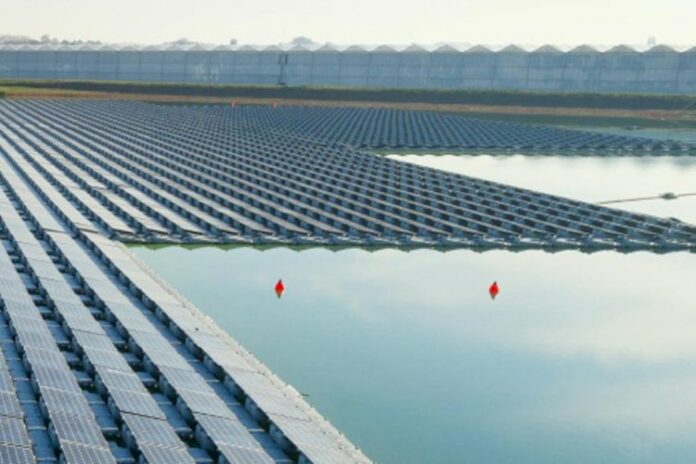
Floating solar power is a promising renewable energy technology in which solar panels are installed on floating structures on the surface of suitable bodies of water. The technology offers great potential for green energy production, particularly in areas where there is a shortage of available land for large photovoltaic plants. 

The Floating Solar JIP consortium features a varied array of companies with extensive experience in the floating solar and related industries. Current members are:

  • BayWa r.e. (Ger)
  • Blue C Engineering (Ger)
  • Carpi Tech/Makor Energy (Swi/Isr)
  • Ciel & Terre International (Fra)
  • Compagnie Nationale du Rhone (Fra)
  • Noria Energy (US)
  • EDF  – Électricité de France (Fra)
  • EDP – Energias de Portugal S.A. (Por)
  • Equinor (Nor)
  • Isigenere (Spa)
  • Mainstream Renewable Power (UK)
  • Scatec Solar (Nor)
  • Seaflex (Swe)
  • Statkraft (Nor)

Following the first projects in 2006, installed capacity for floating solar power was just 10 MW by 2015 but has accelerated considerably since then, reaching 3 GWpeak by the end of 2019. It is estimated that the total global potential capacity for deploying floating solar power on manmade, inland waters alone could be as high as 4 TW.

Despite this huge potential, there are as yet no harmonized standard approaches to developing floating solar power projects and no industry standards to ensure quality. This makes it difficult for investors, regulators and other stakeholders to have confidence in planned projects and to enforce relevant requirements, which could potentially put a break on the technology’s growth.

Responding to the industry’s need, DNV GL launched an initiative to develop a floating solar recommended practice via its industry-based, collaborative JIP (Joint Industry Project) approach. DNV GL has put together an international consortium of leading companies from the offshore, solar and floating structure manufacturing industries.

Toni Weigl, Project Manager at BayWa r.e., said:

“As currently being the largest floating PV developer in Europe, BayWa r.e. is happy to be part of this consortium to develop this important guideline for the floating PV industry. We think establishing uniform high standards for Floating PV power plants will help to mature and enhance the Floating PV industry, therefore we are excited to bring in our extensive knowledge from the successfully realized Floating PV projects.”

Prajeev Rasiah, Executive Vice President for DNV GL’s Energy business in Northern Europe, Middle East and Africa, added:

“Floating solar is a rapidly expanding technology with huge potential to help nations decarbonize, and one that we have been intimately involved with for many years. Drawing on our expertise in solar energy, floating wind, offshore platforms, Oil & Gas and Maritime technologies and industry knowledge, we have directly contributed to more than 1GW of floating solar projects, at different development stages. We are excited to work with so many committed industry leaders to create a recommended practice that will provide clear guidelines and requirements for safe, performing and long-lived floating solar projects.”

The JIP will look at all aspects of developing floating solar projects on inland and inshore waters. It will focus on five key topics: site conditions assessment, energy yield forecast, mooring & anchoring systems, floating structures, permitting and environmental impact. 

By not limiting itself to any specific floating solar technology, the consortium aims to define requirements and guidelines that can be applied in practical manner to all floating solar projects. 

Drawing on existing standards from related sectors, the consortium plans to develop a draft guideline document by the end of 2020. This will be made available for widespread industry consultation before the publication of the verified recommended practice, currently scheduled for Q1 2021.

Andrés Franco, CEO of Isigenere, added:

“The results of the JIP will be a great enabler of floating solar going mainstream, by providing a set of guidelines that will accelerate the development of successful and safe floating solar projects. I encourage all the players in the value chain of the industry to use the recommended practice when it will be published.”

Other companies with relevant expertise plus an interest and commitment to driving growth in floating solar are welcome to apply to join the consortium.

Spanish Albacora Group commissions a new fishing vessel

0

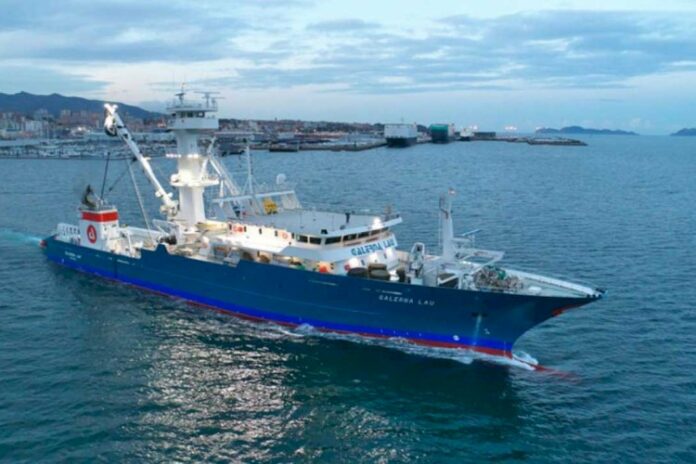
The Spanish Albacora Group, which operates the largest tuna fishing fleet in the European Union, recently commissioned a new fishing vessel. Built at Vigo-based shipyard Astilleros Armón, “Galerna Lau” is equipped with a state-of-the-art propulsion system from the German propulsion expert SCHOTTEL and will be used to catch tuna in the Atlantic Ocean. It has been designed by Armón / Cintranaval.

The propulsion system of the tuna vessel comprises one SCHOTTEL Controllable Pitch Propeller type SCP 109 4-X, featuring an input power of 6,000 kW as well as a propeller diameter of 4.0 m. It reaches a maximum speed of 20 knots.

Due to the adjustable propeller blade pitch, SCPs are suited for a wide range of operations, such as manoeuvring, berthing, and casting or hauling nets. This means the operator not only benefits from a high degree of efficiency, but also lower operating costs and reduced fuel consumption as a result. Furthermore, the controllable pitch propellers have an impressively long service life due to low maintenance requirements.

The “Galerna Lau”, with a total length of 95.1 m and a width of 14.8 m, is considered to be the largest vessel built for Albacora in recent years. With its 3,700 gross tonnage, the vessel is the third ultra-freezing project that Astilleros Armón has constructed for the Spanish owner. Albacora, which catches skipjack, yellowfin and bigeye tuna, operates a fleet of 19 purse seiners used to fish in the Atlantic, Indian and Pacific Oceans.

Keep ships moving, ports open and cross-border trade flowing, urge UN entities

0

The International Maritime Organization (IMO), which regulates shipping, and the United Nations Conference on Trade and Development (UNCTAD), which tracks world trade, reiterated calls for Governments to promote crew well-being by allowing crew changes and ensuring seafarers and other maritime personnel have access to documentation and travel options so that they can return home safely.  

It is estimated that starting in mid-June 2020, as many as 300,000 seafarers a month will require international flights to enable ships’ crew changeover – about half will travel home by aircraft for repatriation while the other half will join ships, and 70,000 cruise ship staff are waiting for their repatriation. This process is currently hampered by travel restrictions imposed due to the COVID-19 pandemic. But, to comply with international safety and employment regulations, and also for humanitarian reasons, crew changes cannot be postponed indefinitely. Access to medical care for sick or injured crew and to medical prescriptions must also be provided. 

IMO and UNCTAD also reaffirmed the urgent need for “key worker” designation for seafarers, marine personnel, fishing vessel personnel, offshore energy sector personnel, and service personnel at ports. Governments and relevant national and local authorities must recognize that these workers provide essential services, regardless of their nationality and should exempt them from travel restrictions when in their jurisdiction. The joint statement said: 

“Such designation will ensure that the trade in essential goods, including medical supplies and food, is not hampered by the pandemic and the associated containment measures.

We emphasize that, for trade to continue during these critical times, there is a need to keep ships moving, ports open and cross-border trade flowing, while at the same time ensuring that border agencies can safely undertake all necessary controls. International collaboration, coordination and solidarity among all is going to be key to overcoming the unprecedented global challenge posed by the pandemic and its longer-term repercussions.”  

Looking beyond the current situation, IMO and UNCTAD urged governments to pursue collaborative efforts to identify and remove any unnecessary regulatory obstacles to post-pandemic recovery and to facilitate maritime transport and trade in these difficult times.  

They encouraged pragmatic approaches, such as granting exemptions and waivers where necessary and appropriate. Efforts should be made to facilitate electronic means for ship-shore, administrative and commercial interactions. There should be effective sharing of pre-arrival information and other COVID-related reporting requirements for ships; and provision of adequate equipment and resources to customs and border control stations in ports.  

Lessons could be learned for the future. The joint statement points out that, in the longer term, some of the measures to confront the COVID-19 crisis may offer other important benefits, for instance encouraging further investment in digitalization and advancing efforts to improve ships’ energy efficiency and reduce greenhouse gas emissions from shipping. 

Maritime transport is dependent on the 2 million seafarers who operate the world’s merchant ships, which carry more than 80% of global trade by volume. Sea transport moves the world’s food, energy and raw materials, as well as manufactured goods and components, and is vital to sustainable development and prosperity.  

 Crew changeovers are essential for the continuity of shipping in a safe and sustainable manner. IMO Secretary-General Kitack Lim has endorsed a series of protocols developed by a broad cross-section of global maritime industry associations to ensure that ship crew changes can take place safely during the COVID-19 pandemic. 

The joint statement was signed by Kitack Lim, Secretary-General International Maritime Organization (IMO) and Mukhisa Kituyi, Secretary-General, United Nations Conference on Trade and Development (UNCTAD).

UK organisations sign agreements to develop renewable energy technologies

0

Eight UK organisations have signed significant new agreements to develop and provide renewable energy technologies, services and research in China, at a virtual ceremony hosted in Yantai City, Shandong Province.

The eight innovators, from backgrounds as diverse as Formula 1, robotics, oil and gas, marine energy and digital, have all been supported by TORC, the joint venture research and incubation centre established in March 2019 by the UK’s Offshore Renewable Energy Catapult and China’s Tus Wind.

Anakata Wind Power Ltd, the Oxford-based aerodynamics specialists with a pedigree in Formula 1 design, has created Tus-Aero, a 50:50 joint venture company with Tus-Wind, to develop and supply its performance improving aerodynamic blade add-ons. Anakata has been working with TORC for the past year and has installed its technology on a number of Chinese onshore windfarms, proving a potential 6% annual energy increase on the world’s most installed turbine, with over 22,000 in operation in China.

Six further UK companies have signed Memorandums of Understanding (MOU) with TORC to develop collaborative projects for the Chinese market:

Aleron Group, Aberdeen-based specialists in remotely operated vehicles for the oil and gas industry, they design and manufacture advanced subsea robotic systems and will bring their MultiRov product to the Chinese market.

Blueprint Subsea, based in Cumbria, design and manufacture products for the offshore, subsea and commercial diving markets, aiming to bring the latest advances in technology to our customers at an affordable cost without comprising on quality or function.

Logan Energy, Edinburgh-based experts in hydrogen and fuel cell technologies, designing, installing, commissioning, and maintaining integrated energy systems across the UK and Europe.

Miros Scotland, Aberdeen-based technology company with more than 35 years of experience providing sensors and systems for environmental monitoring to the global offshore and maritime industry. Miros delivers accurate, real-time, local wave and weather data on- or offshore and on any device.  Miros has been collaborating with ORE Catapult since 2019.

REOptimize Systems, an Edinburgh-based start-up born from the Institute of Energy Systems (IES), delivering a system-wide approach to the optimisation of control settings of wind turbines, using machine learning & holistic system simulation. They will collaborate with TORC on bringing a wind turbine performance assessment and optimization service to market in China.

ZOEX Wave Power, a wave energy technology developer based in Aberdeen, has designed a modular device to be attached to existing structures such as breakwaters, offshore wind platforms and aquaculture farms. They will collaborate with TORC to identify manufacture and demonstration partners in Asia.

In addition, a new academic research partnership has been formed, with an MOU between TORC and Harbin Engineering University (HEU) /Exeter University. Prof. Lars Johanning is in charge of the HEU Yantai research activities and a leading academic in marine renewables in the UK. His team will collaborate on developing an international academic / industry partnership to develop marine renewables.

Dr. Stephen Wyatt, ORE Catapult Director of Research and Disruptive Innovation, said:

“We are delighted that these companies have partnered with our research and innovation centre in Yantai to take their world-leading technology to the Chinese offshore wind market, which is forecast to be the biggest in the world by 2030.  Through TORC, our unique partnership between ORE Catapult and Tus Wind, we can provide the necessary support to ensure these companies succeed in China.”

Commenting at the signing ceremony in Yantai, Senior Vice President, Tus Holdings and Chairman of TORC, Charlie Du, said:

“The ocean energy industry in China is growing at 20% per year and will be the largest such market in the world over the next 20 years. Supporting, nurturing and developing the world’s leading marine science expertise and technology from both the UK and China will play an instrumental role in driving the world’s economic recovery from the Coronavirus.”

Ben Wood, Founder and CEO of Anakata Wind Power, said:

“After less than a year working with TORC, the formation of Tus-Aero is a massive step forward, with ambition to create a global leader in improving onshore and offshore wind turbine blade efficiency. We represent a fusion of Formula One innovation and wind turbine aerodynamics, combining UK and Chinese technology and experience to provide services to maintain aerodynamic excellence.

Working with TORC over the past year to demonstrate our technology at scale in China has already enabled us to build our engineering team in the UK and more than doubled our business development activities in Europe.”

Bill Ireland, CEO of Logan Energy, said:

“China has ambitious goals to develop into a hydrogen society, which is why there has been a surge in hydrogen and fuel cell development – it hopes that hydrogen will account for 10% of its energy system by 2040. Hydrogen is a valuable way for China to meet its climate and pollution goals without increased reliance on imported fuels.

It’s great to be working with TUS-ORE Catapult to explore the positive impact that hydrogen applications could have within Chinese aquaculture, and to be part of the strengthening links between China and Britain.”

Andreas Brekke, CEO of Miros Group, said:

“We are excited to be a part of this initiative and to have the opportunity to support the impressive speed and scale of China’s offshore wind development.”

Richard Crozier, Managing Director, REOptimize Systems, said:

“We are very excited about this unparalleled opportunity to establish our company in China with the support of TORC, increasing our chances of commercial success. We will be looking to strengthen our offering by partnering with TORC and the other UK SMEs that are part of this programme.”

The construction of Finnlines’ newest vessel to start

0

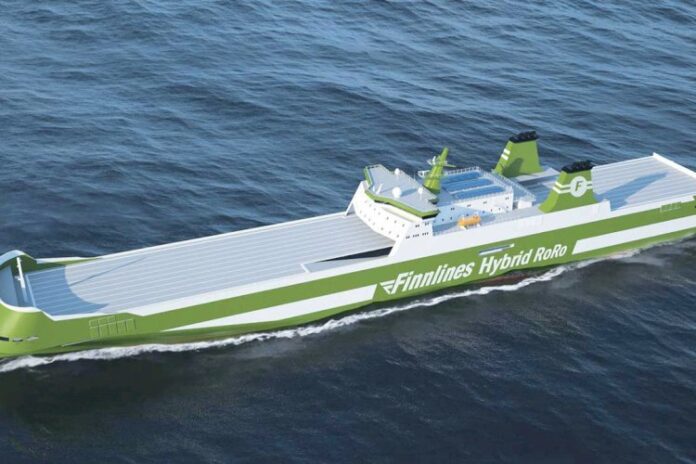
Finnlines newbuilding programme continues as planned. All three ordered environmentally friendly hybrid ro-ro vessels will be built with the latest technology available to ensure the lowest CO2 emissions.

In addition to lithium-ion battery systems that enables zero-emission operations in port, they will be equipped with efficient engines, emission abatement systems and an innovative air lubrication system to reduce hull resistance. The vessels will have the highest Finnish/Swedish ice class.

The first ro-ro vessel is expected to start operation as early as next year, and the other two in 2022.

In addition to this, Finnlines has also ordered two giant Superstar vessels, which will be pioneer in honouring green values. The total investment including five new vessels is EUR 500 million.

Emanuele Grimaldi, CEO of Finnlines, says:

“The new vessels will modernize our fleet further and offer us the lowest possible fuel consumption and emissions. These will be the most innovative and efficient ro-ro vessels in the world. We continue our successful track record in investing sustainable operation of our fleet.”

Hybrid ro-ro vessel, technical details:

  • Length: 238m
  • Breadth: 34m
  • DWT metric tons: 17,400
  • Cargo capacity: 5,800 lane metres & 5,600m2 of car decks & about 300 TEU on weather deck
  • Flexible for all type of ro-ro cargo whilst tank top and main deck are shaped with strengthened bulkheads and free of pillar areas to accommodate paper and sto-ro concept

Navis collaborates with two innovative startups to boost its smart ecosystem offering

0

Navis, part of Cargotec Corporation, the provider of operational technologies and services that unlock greater performance and efficiency for leading organizations throughout the global shipping industry, announced it will leverage the solutions offered by startups, i4sea and Teqplay, as part of the Navis Smart Suite offering, specifically enhancing Navis’ capabilities to provide port call planning and optimization for terminal operators.

The memorandum of understanding to explore this relationship comes on the heels of a successful joint business project completed at the Rainmaking Trade & Transport Impact program in the Fall of 2019, which gathered global startups and corporations to solve the biggest challenges in maritime, trade and transport.

Tero Hottinen, Director, Emerging Digital Business, Cargotec, said:

“Engaging with these two innovative young companies is a great example of how Navis and Cargotec are staying in the front seat of digitalization within the container industry, by not only developing and providing their own solutions, but also collaborating with others and linking relevant third-party offerings to their portfolio to maximize the value for customers and the industry.”

i4sea’s product i4cast® provides highly accurate forecast data for weather, ocean and vessel dynamics related restrictions for any port call enabling higher and safer utilization of berths and sea passages. Teqplay provides port call event tracking and visibility solutions, including superior level ETA information, enabling easier planning and communication with relevant stakeholders around a port call. Both solutions provide clear complementary features for the Navis Berth Window Management, a cloud-based product that enables terminal operators to better plan and optimize their berth utilization in an intuitive and easy manner.

Ajay Bharadwaj, Senior Product Management Director at Navis, said:

“The berthing process is one of the most important stages in maritime logistics. Yet it’s inefficient management can have a great impact on finances, not only of the terminals but also of the rest of the stakeholders involved, especially the carriers. As part of the Navis Smart Vessel Planning suite, our berth window management solution supports terminals and their customers in eliminating uncertainty when planning the berth schedule of a vessel. This enables the maximization of berth space, the increase of throughput and the reduction of cost per move. The solutions from i4sea and Teqplay complement what we already provide as a leading solution, and through this engagement, we can continue to improve service to our customers.”

Leon Gommans, CEO of Teqplay and Bruno Balbi, CEO of i4sea, agree:

“Solving the complex challenges of the maritime industry requires close collaboration, and Navis, i4sea and Teqplay have the capabilities required to bring the industry to the next level.”

Smart energy technologies to be piloted at Portsmouth International Port

0

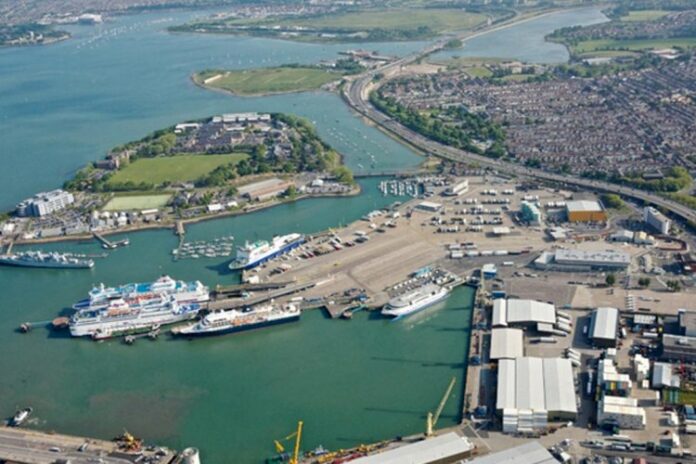
A consortium including Portsmouth International Port has successfully received around £320k of funding to revolutionise the use of renewable energy at the port.

The centrepiece of the PESO (Port Energy Systems Optimisation) scheme will be a 20-foot container sized battery, that is powerful enough to charge four mid-range electric cars simultaneously. 

The port has already committed to reduce emissions as part of its Air Quality Plan. Ambitions are for the port to be carbon neutral by 2030, and contribute towards the national clean maritime plan for the UK to have net zero shipping emissions by 2050. Electrification is a vital element of the clean maritime strategy, and is particularly important for ports in order to address port-city air quality targets.

The funding will come from Innovate-UK’s ‘Prospering from the Energy Revolution’ fund to develop develop and build a prototype system that will optimise the efficiency of the port’s energy use. The project, led by Marine South East (Commercial) and supported by the port alongside Swanbarton and Energy System Catapult, will demonstrate how a port can operate as a smart energy network.

The dual chemistry battery will be an innovative lithium-ion and lead acid hybrid battery. Swanbarton is developing the energy management software for this battery technology demonstration, which is co-funded by Innovate-UK.

The port already has significant energy generating capabilities from solar panels across the site, so the ability to store electricity and then use later at times of higher demand means that clean energy can be used much more efficiently. It can also be used by the wider electricity grid to help smooth demand at peak times.

Mike Sellers, port director at Portsmouth International Port said:

“We’ve previously said we’ll take bold action to meet our goal to be the UK’s first zero emission port. This innovative project demonstrates that we want to be at the forefront of research into sustainable energy projects that will help us reach that target.

This initiative has the potential to have significant benefits for the port, and could also provide an solution to smart energy use that can be shared with the wider port industry.”

Dr Jonathan Williams, CEO at Marine South East Ltd added:

“Cleaning up maritime emissions is now an urgent priority for the sector and the PESO project will be a critical stepping-stone to achieve this. 

Marine South East is delighted to be leading this project with Portsmouth International Port, to build a prototype system for advanced energy management in the port.  This will pave the way for de-carbonisation and other emissions reduction across the port estate.”

Cllr Gerald Vernon-Jackson, Leader of Portsmouth City Council said:

“We are facing a climate emergency and as a city we have to take responsibility and direct action to combat this critical issue. This successful application for funding shows the commitment that Mike and his team at the port have to take this issue seriously, and reflect the wider city’s ambition to tackle carbon emissions and air quality issues head-on.”

Anthony Price, MD of Swanbarton said:

“Energy management combined with energy storage are powerful tools to unlock the benefits of smart energy networks.

We are pleased to be working with Marine South East, Portsmouth International Port and the Energy Systems Catapult as we transfer our experience of integrating energy storage systems to facilitate the electrification of port operations.”

A successful test of inspection via autonomous drone

0

A drone has successfully inspected a 19.4 meter high oil tank on board a Floating Production, Storage and Offloading vessel.

The video shot by the drone was interpreted in real-time by an algorithm to detect cracks in the structure. It is the latest step in a technology qualification process that could lead to tank inspections becoming safer and more efficient.

Scout Drone Inspection and DNV GL, the quality assurance and risk management company, have been working together to develop an autonomous drone system to overcome the common challenges of tank inspections. For the customer, costs can run into hundreds of thousands of dollars as the tank is taken out of service for days to ventilate and construct scaffolding.  The tanks are also tough work environments, with surveyors often having to climb or raft into hard to reach corners. Using a drone in combination with an algorithm to gather and analyze video footage can significantly reduce survey times and staging costs, while at the same time improving surveyor safety.

Geir Fuglerud, Director of Offshore Classification at DNV GL – Maritime, said:

“We’ve been working with drone surveys since 2015. This latest test showcases the next step in automation, using AI to analyse live video. As class we are always working to take advantage of advances in technology to make our surveys more efficient and safer for surveyors, delivering the same quality while minimising our operational downtime for our customers.”

The drone, developed by Scout Drone Inspection, uses LiDAR to navigate inside the tank as GPS-reception is not available in the enclosed space. A LiDAR creates a 3-D map of the tank and all images and video is accurately geo-tagged with position data.  During the test, the drone was controlled by a pilot using the drone’s flight assistance functions, but as the technology matures it will be able to navigate more and more autonomously.  In its role as the world’s leading classification society, DNV GL has been developing artificial intelligence to interpret the video to spot any cracks and eventually the camera and algorithm will be able to detect anomalies below the surface such as corrosion and structural deformations.

Nicolai Husteli, CEO of Scout Drone Inspection, said:

“This is another important step towards autonomous drone inspections. Up until now the process has been completely analogue but technology can address the urgent need to make the process more efficient and safer.”

Altera Infrastructure hosted the test on Petrojarl Varg as part of its drive to improve safety and efficiency through innovative technology.  The video was livestreamed via Scout Drone Inspection’s cloud-system back to Altera Infrastructure’s headquarters in Trondheim, where the footage was monitored by engineers. DNV GL can also simultaneously watch the footage, opening up the possibility for stakeholders to work together from different locations.

Astrid Jørgenvåg, Senior Vice President Technical & Projects Department Altera Production, at Altera Infrastructure, said:

“At Altera Infrastructure we are committed to using technology to raise efficiency and safety and we want to be at the forefront.  We see great potential for drone inspection technology to meet the challenges of the inspection process going forward.”