0.5 C
New York
Home Blog Page 840

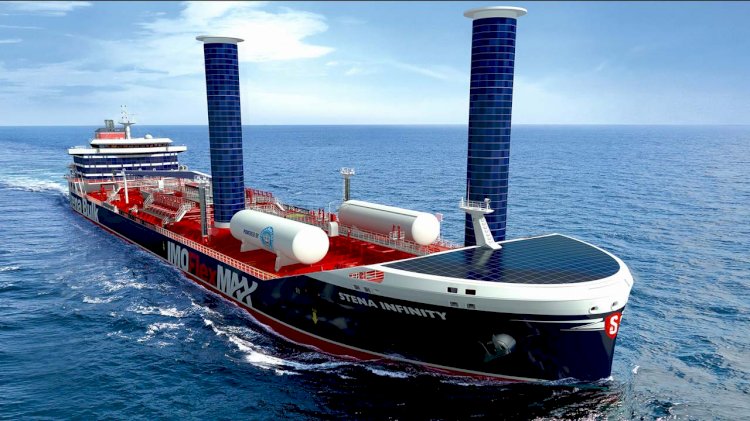
Stena Bulk presents prototype next-generation product and chemical tanker

0

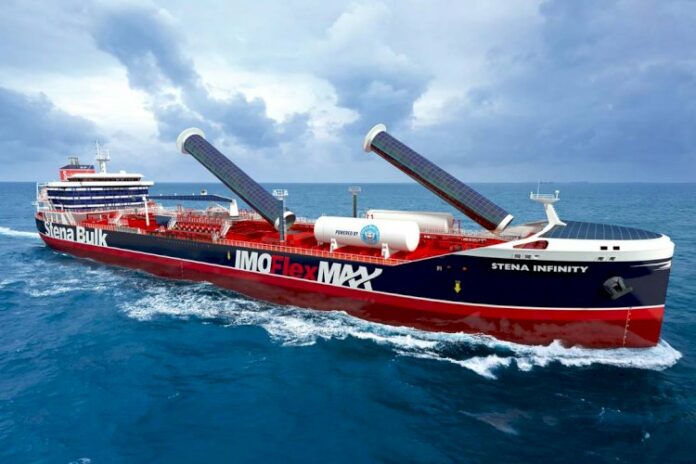
The vessel, designed by Stena Bulk to meet the current and future needs of liquid bulk shipping, is a further development of the current IMOIIMAX design; best in class in terms of performance and with a design based on two major objectives – flexibility and efficiency.

Erik Hånell, President & CEO at Stena Bulk, says:

“The world’s need for reliable, innovative and sustainable transportation of liquid products is increasing and it will continue to do so as the world’s population grows and global living standards continue to improve.”

IMOFlexMAX will lead the way towards a sustainable future as one of the most energy-efficient product and chemical tankers on the market. It has been designed by world-class naval architects at sister company Stena Teknik and is based on 40 years of tanker shipping experience. From hull design to vessel propulsion, these ships will incorporate the latest technology, setting a new standard for the global tanker industry. The vessels will be equipped with Flettner rotors and solar panels to harvest energy from wind and sunlight.

They will be powered by efficient dual-fuel engines that can run on LNG as well as conventional low-sulfur fuels using today’s newest technology, but also open the way for further development of alternatives with consideration to trade lanes and customers’ expectations. The basic concept of the IMOFlexMax will allow us to dramatically reduce local SOX, NOX and particle emissions, as well as greenhouse gas emissions. With the combined fuel and energy efficiencies, we will be able to reduce greenhouse gases by at least 25 % with a potential to reach up to 45 % compared to modern product tankers run by low-sulfur fuel oil.

With IMOFlexMAX vessels, which can be built today with existing and proven technology and other solutions, Stena Bulk is taking a major step forward in bringing shipping in compliance with the Paris Agreement and the UN’s Sustainability and Development Goals.

Erik Hånell says:

“The plan is for the IMOFlexMAX vessels to be deployed in Stena Bulk’s logistics system in the global market along with the IMOIIMAX. The IMOFlexMAX vessels will constitute an important asset for Stena Bulk, as well as for its partners, in strengthening our position as the market-leading, cross-trading specialists in the MR segment with increased efficiency and reduction of greenhouse gases.

The prototype is one step further in Stena Bulk’s vision of being our customers’ first choice for safety, innovation and performance in the transportation of oil, chemicals and gas.”

SSAB Raahe’s steel plant is testing biogas from Gasum as a maritime transport fuel

0

SSAB, ESL Shipping and Gasum are working together to reduce the emissions arising in shipping SSAB’s raw materials.

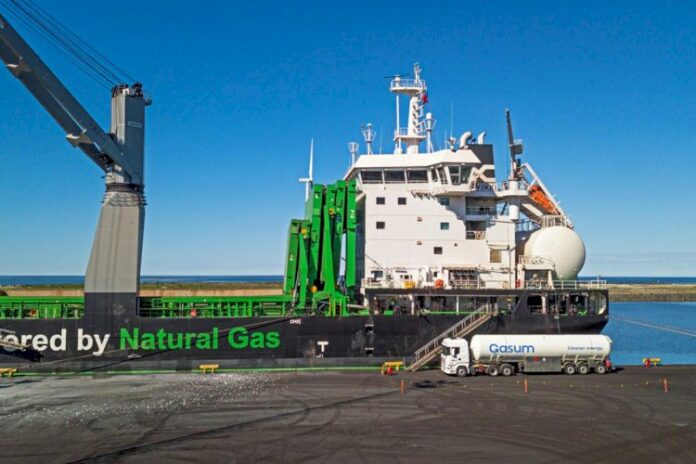
Last year, SSAB and ESL Shipping introduced a new transport chain that, in comparison with its predecessor, nearly halved the carbon dioxide emissions originating in shipping SSAB’s raw materials between Luleå, Oxelösund and Raahe. The improved transport chain brought into use ESL Shipping’s new ships Viikki and Haaga which are fueled by liquefied natural gas (LNG) rather than conventional fuels. Now these companies are piloting the use of liquefied biogas (LBG) as a supplementary fuel to further replace fossil fuels.

In the test that kicked off today, M/S Viikki was fueled with LNG and one tanker load of liquefied biogas which was brought to SSAB Raahe from the Gasum Terminal in Pori.

Harri Leppänen, Head of Environment, Health & Safety at SSAB, says:

“With this test, we aim to find out whether biogas could be used in small amounts for maritime transport to reduce emissions. The methane in biogas originates from biogenic material and so does not contain any fossil coal.  This means the amount of biogas used in the test could further reduce the fossil  carbon dioxide emissions originating in this transport chain by between 25% and 28%.”

Efforts toward removing fossil CO2 emissions from the transport chain would require replacing all LNG with LBG and replacing  the diesel fuel used to power  the ship’s engine with fossil-free biodiesel.

Mikki Koskinen, ESL Shipping’s Managing Director, says:

“Our company’s key environmental goal for 2020 is testing biogas in our ships. We have been engaged in long-term environmental work together with SSAB for years, and now we are taking a new significant step towards fossil-free sea transport.”

Jacob Granqvist, Sales Director maritime, Gasum, says:

“The test with ESL and SSAB is in line with our strategy to bring cleaner fuels to our customers. We are all the time increasing our biogas production and sourcing to meet growing demand of our customers. We are already in discussions with ESL about running vessels Viikki and Haaga on 100% LBG.”

SSAB wants to launch fossil-free steel on the market as the world’s first steel company as early as 2026. The entire company is aiming to be fossil free by 2045. To achieve these targets, SSAB together with LKAB and Vattenfall has launched the HYBRIT initiative to eliminate fossil carbon dioxide emissions across the entire steel manufacturing value chain from mines to finished steel products.

Harri Leppänen continues:

“However, for operations to be entirely fossil free, it is also necessary to strive to eliminate fossil fuels from shipping.” 

More than 90% of carbon dioxide emissions at SSAB Raahe originate in ironmaking, where coal is used as a raw material in the reduction process. The HYBRIT initiative aims to replace coal with hydrogen, which means emissions will be water vapor instead of carbon dioxide. Iron is made at SSAB Raahe using two blast furnaces, one of which will be decommissioned in about 2029, when half of the production will switch to electric arc furnace technology where hydrogen-reduced iron and recycled steel will be used as raw materials. This transition will cut the plant’s emissions by about 40%. The other blast furnace will also be replaced by an electric arc furnace by 2040, which will reduce the plant’s fossil carbon dioxide emissions to zero if shipping can be operated without fossil fuels.   

India drives digitalization with Portall and CargoX

0

India is digitalizing its bills of lading and other trade documentation workflows as one of the last missing elements within the country’s electronic Port Community System (PCS). The PCS, offering the P-CaSo curated marketplace of specialized services, was built by Portall Infosystems, and they have integrated CargoX’s Platform for Blockchain Document Transfer (BDT). 

The Indian Ports Association (IPA) and the trade bodies in the Federation of Indian Logistics Association (FILA) have emphasized the importance of digitalization in light of the current global pandemic. The Government of India accordingly started evaluating ways to implement electronic bills of lading, electronic delivery orders, certificates of origin, letters of credit, and other trade documentation across all EXIM transactions in India.

The CargoX Platform for Blockchain Document Transfer (BDT) has been successfully tested by Portall Infosystems and India’s global shipping stakeholders to transfer electronic bills of lading. CargoX and Portall Infosystems have entered into a partnership to digitalize the processing of bills of lading and the transfer of trade documents. The CargoX Platform can be accessed by stakeholders through the P-CaSo services marketplace, integrated into PCS 1x.

The dozen major ports in India handle approximately 60% of the country’s total cargo traffic. In 2019-20 that was close to 705 million tonnes of cargo, and 20,837 vessels that were handled by these ports.  

Portall has built the Indian Port Community System from the ground up within a record time of 6 months, with complete implementation in 13 major Indian ports – it is currently operational in 19 ports with 16,000+ corporate stakeholders. The B2B marketplace (P-CaSo) for the ecosystem is integrated into the Indian Port Community System to bring various niche services with curated service partners, including services such as blockchain document transfer (BDT). 

Post lockdown cargo stoppages due to the inability of courier agencies, requirements of social distancing, the requirement of delivering of physical format-based trade documentation, and the sheer time added in person-to-person contact while handling paper documents, create a high level of risk with the contagious nature of Covid-19, result in considerable delays in cargo processing, stated Mr. Gopal Krishna, the Secretary of the Department of Shipping of Government of India in a letter to dr. Anup Wadhawan, the Secretary of the Department of Commerce.

Stefan Kukman, CEO and founder of CargoX, said:

“We have developed the CargoX Platform for contactless, distributed online teamwork – and we are glad we did. In these times of multiple risks to our common society, we are proud to help shipping companies, who represent the backbone of the economy, resolve supply chain document sending issues and enables them to meet delivery deadlines everywhere in the world, in a secure and efficient manner, while also lowering the document transfer cost.”

Manish Jaiswal, President of Portall Infosystems:

“We saw that there was a good fit between the companies. Both Portall and CargoX are fairly young, but the teams have domain-rich knowledge and bring expertise from various facets of the industry. This way we are able to understand the needs of the customers well and provide for the best-suited solution. As a service partner, CargoX stands for values that we stand for – transparency and innovation, sophisticated yet user-friendly solutions which save cost and time without compromising on the quality of the solution.”

Portall is promoted by JM Baxi Group, India’s leading integrated logistics, services, and transportation conglomerate, with a unique infrastructure and technology backbone. JM Baxi group delivers award-winning performance and sets benchmarks in the shipping logistics industry of India in their 104 years of existence. 

To comply with the Ministry of Shipping’s initiative, Portall and CargoX engaged their partners to test the CargoX Platform for EXIM with Indian companies. Proof-of-concept tests and simulations were run with various use-case scenarios, including breakbulk and container shipments, export, and import from and into India.

Leif Arne Strømmen, Vice President of Innovation at G2 Ocean, the operator of the largest breakbulk carrier fleet in the world with 130 open hatch vessels, has provided his insight into testing:

“We are strategically backing trade digitalization and we were glad to provide testing and insight for the project of digitalization of bills of lading in India with our partner CargoX. Because of the lockdown situation, we were unable to execute regular live shipments within the given narrow time frame. Therefore we successfully simulated shipments and processing based on real historic B/Ls, to provide complete insight into the future workflows and optimizations.”

Alejandro Gutierrez, the founder of the new Forward Together logistics network, carried out a live shipment with Tech Cargo, Global Transitions, DeeEs Engineers India Project, and Parsteel Shelving Co./Atlas Mega Steel, substituting the manual handling of paperwork with a blockchain-protected bill of lading. He reports on his experience:

“The ability to conduct shipment transactions and transfers of ownership without the need for human physical interaction creates a breakthrough case for freight forwarding and logistics, especially when health measures are so important.”

F-drones and Wilhelmsen sign MOU for last mile delivery of 3D printed spare parts

0

As the only drone delivery provider currently authorized by the Civil Aviation Authority of Singapore (CAAS) to execute drone deliveries Beyond-Visual-Line-of-Sight (BVLOS) to vessels at anchorage, the agreement with F-drones enables Wilhelmsen to broaden the scope of its exclusive on-demand additive manufacturing service.

Hakon Ellekjaer, Head of Venture, 3D Printing, Wilhelmsen says:

“Exploring safe, reliable and inexpensive alternatives for last mile delivery of our 3D printed parts to our customers is key for us moving forward. F-Drones is actively developing a solution and their ambitions are very much aligned with our own, to disrupt the existing supply chain and offer a service that is faster, cheaper and greener”.

Currently refining the next iteration of its own proprietary drone system, capable of carrying 5kg over a distance of 50km, F-drones’ long-term ambition is to develop a larger scale drone capable of delivering 100kg to vessels up to 100km away.

Commenting on the agreement, Yeshwanth Reddy, Co-founder of F-drones, says:

“We are excited to be working together with Wilhelmsen’s 3D printing venture, which is at the forefront of commercializing on-demand manufacturing for the maritime industry. Its capability can provide a large variety of parts in different shapes, sizes, and materials. With our drones that can carry much bigger items over longer distances, we can catalyze the adoption of on-demand printing of parts for the maritime industry”.

As part of an exclusive Early Adopter Program for 3D printed marine spare parts, 6 customers signed up with Wilhelmsen’s Marine Products division in December 2019 to begin utilizing on-demand additive manufacturing. Existing customers include Berge Bulk, Carnival Maritime, Thome Ship Management, OSM Maritime Group, Executive Ship Management and Wilhelmsen Ship Management.

Wilhelmsen is providing 3D printed spare parts on demand to the selected six customers’ vessels around the globe, reducing the typically high supply chain costs, long lead times and impact on the environment associated with the traditional supply chain. Through a unique selection, digitization, and documentation process, parts are produced on-demand, without having to go through time consuming and costly storage, shipping, customs and receiving processes.

Suez Canal to channel leading-edge research to stay at the max

0

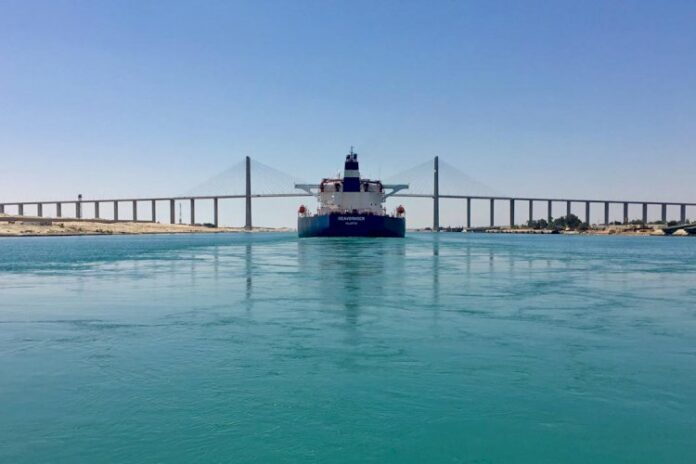
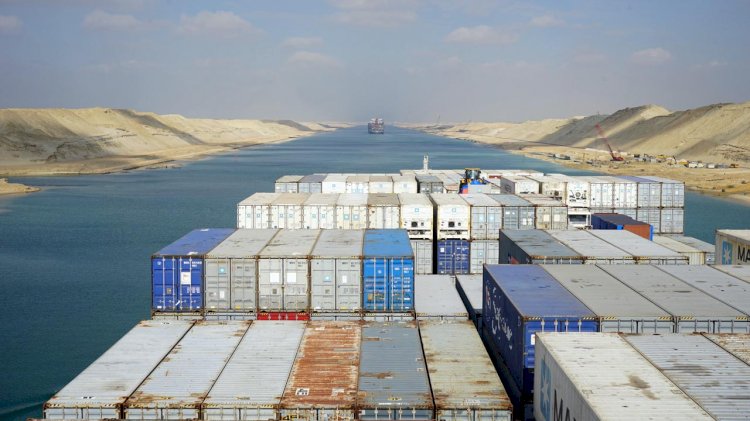
HR Wallingford is to establish a suite of numerical hydraulic models for the entire canal system, as well the port approaches in the Mediterranean Sea and Gulf of Suez. The canal is one of the world’s most heavily used shipping lanes, transited by 18,000 vessels in 2019. HR Wallingford will also supply a bespoke state-of-the-art wave generation system for the flume in SCA’s research centre, which will be used for studies requiring a physical model.

HR Wallingford’s model will be the most comprehensive that has ever been created of the canal. It will incorporate current flows, waves, and sediment transport, and cover neighbouring coastal areas and ports, as well as the canal itself. To create the model, HR Wallingford’s team will use the open source TELEMAC suite. This offers the major advantage of allowing the SCA to make its own modifications and updates in the future, if required. As well as preparing the model, the contract also covers HR Wallingford training the SCA in its use and installing the software at its research centre in Egypt.

HR Wallingford’s wave generation system is also destined to be installed in the Suez Canal Research Centre, as a permanent part of its existing research flume. To create the bespoke single paddle flume wave generation system, the team will first design the equipment to fit within the existing structure using Solidworks design software, drawing on their extensive experience of constructing wave generation systems for a wide range of global customers.

The new wavemaker will use the signal wave generation software, HR Merlin, which is able to produce regular and irregular waves, covering all the most commonly used spectra. The contract also includes installation together with the HR Wallingford team commissioning the equipment on site and the training of staff in its use and maintenance.

George Safwat, SCA spokesperson said:

“We have worked on various development projects since digging the Suez Canal 150 years ago to keep abreast with evolutions in the shipping sector, in addition to maximising the Canal’s competitive advantages. We aim to maintain the Canal’s position as one of the most significant maritime routes in the world, and we wish to have the best research facilities to back this, which is why we have awarded this contract to HR Wallingford. The Suez Canal is very important for the Egyptian people and our economy.”

HR Wallingford’s Senior Engineer Giulia Sforzi said:

“Modelling such an iconic shipping route, and supplying a wave generation system, is a great honour for us. We believe that our leading-edge tools and models will be of great benefit in keeping this important route operating at its full potential.”

For this project, HR Wallingford has partnered with an Egyptian firm, Noor Scientific and Trade, which is acting as in country exclusive representative. Noor Scientific and Trade strictly followed up the contracting procedure and offered HR Wallingford excellent support to win the project. Noor Scientific and Trade will assist with the equipment installation and logistics.

New Alfa Laval PureSOx Express offers easy access to SOx scrubber advantages

0

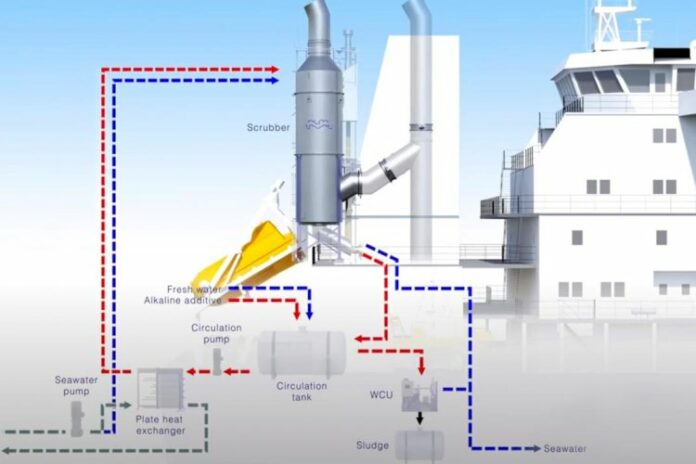
For smaller vessels like handymax bulkers or product tankers, the cost of installing a scrubber for SOx compliance has sometimes outweighed the benefits. Now Alfa Laval PureSOx Express makes it simple for these vessels to continue using HFO and comply with SOx regulations.

The new PureSOx Express is an open-loop PureSOx system, but one delivered as a fully enclosed module. Adapted for a simple and cost-efficient fit on smaller vessels, it reduces the investment cost, engineering time and physical work of installing a SOx scrubber.

Steven Pieters, Sales Director, Exhaust Gas Cleaning, says:

“PureSOx Express uses the proven PureSOx technology that’s already used on hundreds of vessels. But it can be lifted on board and connected without a specialized scrubber team, which means less work at the shipyard and an installation time of just 10–14 days. Not only is the initial investment lower, the vessel can return more quickly to its money-making operations.”

Prefabricated and preconfigured, PureSOx Express is designed for up to 75 tonnes of exhaust gas per hour and engine power up to 10 MW. This makes it a one-size-fits-all solution for many vessels of 40,000–65,000 DWT, which typically include bulkers and product tankers.

As an open-loop system, PureSOx Express is economical in complying with today’s regulations. But the scrubber is also hybrid-ready, with connections present for a later conversion to a hybrid system. 

Pieters says:

“PureSOx Express offers flexibility to add equipment for closed-loop operation down the road, should they need to meet stricter water discharge regulations.”

In addition to a packed scrubber bed, PureSOx Express features an effective water trap that ensures safety by preventing any backflow to the engine.

Equinor and Aker BP agree on way forward for Krafla, Fulla and North of Alvheim

0

Equinor is the operator of the Krafla license and Aker BP is the operator of the NOA and the Fulla licenses.

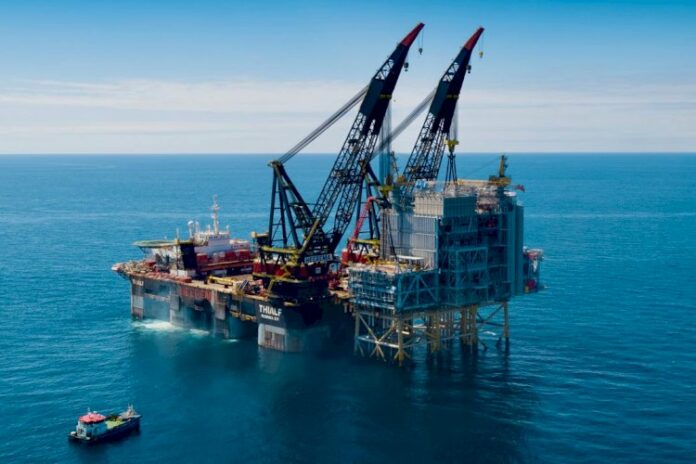
The area consists of many licenses and complex reservoirs that contains several oil and gas discoveries with total recoverable resources estimated at more than 500 million barrels of oil equivalents, with further exploration and appraisal potential identified.

The contemplated development concept for the area consists of a processing platform in south operated by Aker BP and an unmanned processing platform in north operated by Equinor with possibilities to several satellite platforms and tiebacks to cover the various discoveries.

Developing these resources will have significant effect on the supplier industry when it comes to engineering, development and the operational phase.

The area is located between Oseberg and Alvheim in the North Sea.

The partners in the licences are Equinor ASA, Aker BP AS and LOTOS Exploration and Production Norge AS.

HHI and CADMATIC sign MOU for the development of next-generation design systems

0

Through this MOU, the two companies will carry out cooperation while maintaining the technology partnership to develop next-generation design systems that will be applied to the latest technologies, such as AI, Big Data analysis, advanced modeling and drawing automation. This system will be the basis of digital twins for ship design.

According to Mr. Mehryar Delalat, Director of New Business Development at CADMATIC, the company established a Korean branch (Representative Yu Seong-man) last year as well as a domestic sales and technical support system.

CEO of CADMATIC Jukka Rantala is happy to be partnering with HHI in developing a next-generation design system and digital capability enhancement project. Mr. Rantala says:

“It is not only related to data-driven shipbuilding, but also to our information management tools such as the eShare information portal to engineering, maintenance, and operation data, the eBrowser file-based 3D viewer and project review tool, as well as our eGo tablet solution. We will focus all our technologies and capabilities to provide a total solution for smart design operation at HHI. We will do our best to ensure a successful transition to a completely digitalized system.” 

CERONAV invests in high performance DP simulators from Kongsberg Digital

0

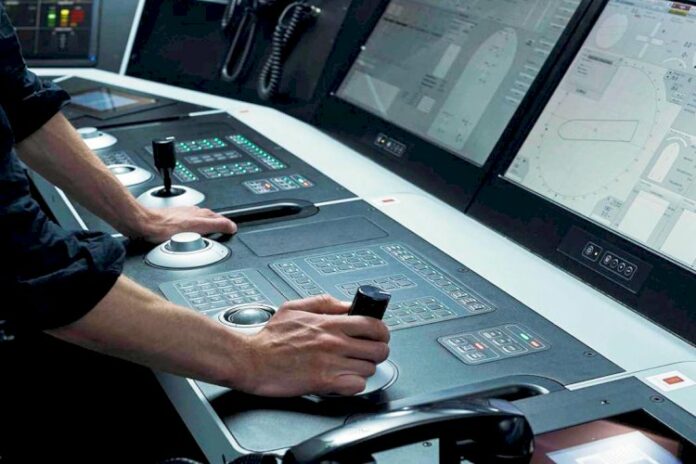
CERONAV is investing in KONGSBERG’s K-Sim Dynamic Positioning simulators, which integrate with KONGSBERG’s well-reputed K-Pos Dynamic Positioning (DP) system. Forming a totally unique training system, simulating vessel behavior, environmental conditions, thruster performance, position-reference system and sensors. It enables a realistic learning experience for students and supports DP training on all levels, including operator training according to Nautical Institute’s latest standards.

The delivery to CERONAV will comprise a K-Sim DP Maneuvering (Class A) simulator to support advanced training and the DP Offshore training scheme, plus a further eight KONGSBERG K-Pos DP Basic (Class C) desktop simulators for basic DP training, including instructor stations to manage the exercises.

With the new suite of DP simulators, CERONAV will prepare for accreditation of its training center and DP courses by the Nautical Institute. Ovidiu Sorin Cupsa, Associate Prof and General Manager, CERONAV, said:

“Currently, our teaching activity is based on rules and regulations issued by the Romanian Ministry of Transport, and on documents developed within our Integrated Management System. However, in recent years our training programs have undergone an extensive review to enhance their content and to conform with conditions set by the Romanian Naval Authority, OPITO and – more recently – the Nautical Institute. KONGSBERG’s K-Sim DP simulators are already compliant with these requirements, and will greatly facilitate our ability to deliver first-class training to our students, most of whom are crew with long experience as DP Operators at sea, with a need for retraining and internationally-approved certificates.”

Tone-Merete Hansen, Senior Vice President, Kongsberg Digital, said:

“The K-Sim DP platform is a powerful tool enabling the user to interface with the same information and settings as found on board a K-Pos equipped vessel. Common DP operations such as offshore loading, tug assistance, offshore supply and construction, subsea and dive support, drilling vessel station keeping and emergency maneuvering can all be simulated, making onshore training a comprehensive, immersive and accurate learning experience. We are delighted that CERONAV has chosen K-Sim to help them deliver world-class training to their students.”

Due for delivery to CERONAV on 25th August 2020, the simulator will initially be installed at the Center’s existing premises before being relocated to a new, dedicated Offshore Marine Simulation facility on the shores of Lake Mamaia, when complete

Aker Solutions wins umbilicals contract for the King’s Quay development

0

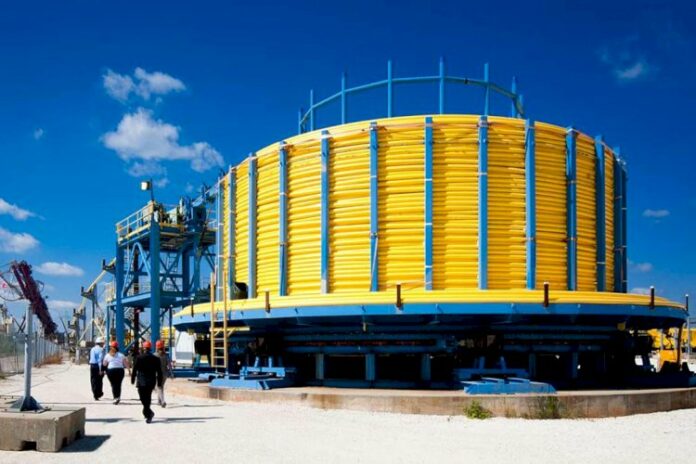
The work scope includes 22 kilometers (14 miles) of dynamic steel-tube umbilicals and distribution equipment to connect the King’s Quay floating production system (FPS) to the Samurai, Khaleesi and Mormont deepwater developments.

The King’s Quay semisubmersible FPS will be located around 280 kilometers (175 miles) south of New Orleans in the Green Canyon area of the U.S. Gulf of Mexico.

Jonah Margulis, vice president and country manager for Aker Solutions in the United States, said:

“We look forward to working with Subsea 7 on one of the largest subsea development projects in the Gulf of Mexico. Aker Solutions and Subsea 7 have built a collaborative and high-performing relationship over time, with a strong track-record of excellent project execution.”

The engineering, design and manufacturing of the umbilicals and distribution equipment will take place at Aker Solutions’ facility in Mobile, Alabama in the United States. The work starts immediately and the delivery is planned for the fourth quarter of 2021.

The contract will be booked as order intake in the second quarter of 2020.