1.3 C
New York
Home Blog Page 837

Wärtsilä comes onboard the Mayflower Autonomous Ship Project

0

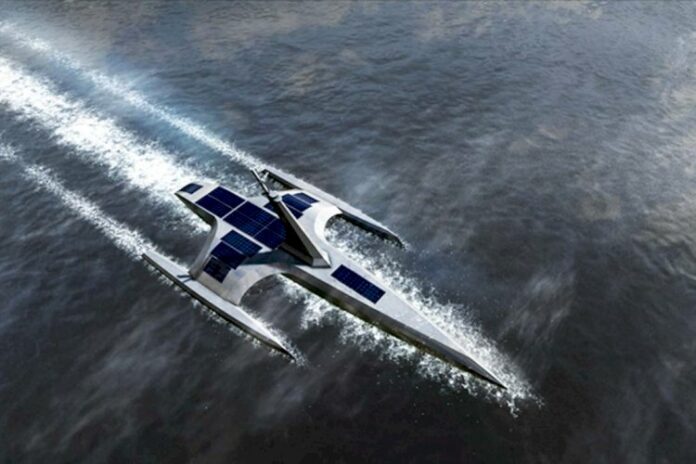
Retracing the voyage of its famous 17th century namesake vessel, the Mayflower Autonomous ship is set to become one of the world’s first fully autonomous, unmanned vessels to cross the Atlantic. Led by marine research organisation, ProMare, the project is developing autonomous systems that can later be deployed commercially, offering a window into the future of shipping and marine research.

Wärtsilä has joined a global consortium of technology partners that includes IBM. IBM is providing the AI, cloud and edge computing, and power systems behind the Mayflower’s AI Captain that will enable the vessel to sense, think and make decisions at sea.

The Wärtsilä RS24 system is a ground-breaking high-speed, high-resolution FMCW K-Band radar (24GHz) designed to provide high levels of situational awareness – especially in densely populated marine environments. The RS24 radar system will work in tandem with the Mayflower’s onboard cameras, AIS, and navigational systems as a core part of the AI Captain. The AI Captain constantly evaluates the Mayflower’s environment and long-term goals, and modifies the ship’s course in order to avoid debris and storms which could threaten the ship at sea.

The RS24 is already established as one of the primary sensors onboard the Wärtsilä IntelliTug – the first commercial Maritime Autonomous Surface Ship, which underwent successful trials in Port of Singapore waters last year.

The Wärtsilä RS24 has a five times higher resolution than existing marine S and X-Band radars with spin cycles of 60 rpm. This enables resolution separation of small crafts in crowded waters, especially in close proximity to the vessel, and will allow the Mayflower to navigate safely in complex situations. By identifying potential hazards, and through fusing data with that from the video recognition and AIS, the Wärtsilä system helps produce a high-fidelity map of the operating area.
Brett Phaneuf, Co-Founder of the Mayflower Autonomous Ship Project, says:

“Our team has followed the development of technologies applicable to ship autonomy, and when selecting systems for the Mayflower project, we quickly recognised that the Wärtsilä RS24 was the perfect radar solution. Having Wärtsilä as a partner really helps the project; they understand the marine environment and how the various instruments should be designed, deployed, operated and maintained, plus they have tremendous experience in integrating systems.”

Dr Sasha Heriot, Business Development Manager, Wärtsilä Voyage, says:

“We are pleased to provide our latest, high-resolution radar technology, the RS24, as an integral component of the Mayflower Autonomous Ship project. This will form the primary instrument for acquiring and tracking targets, and maintaining situational awareness at a scale that allows for early path planning and hazard reduction. This is a unique and highly significant project, and Wärtsilä is honoured to participate in this partnership.”

Wärtsilä’s experience in integrating complex systems, and its know-how in manned and unmanned marine operations, were cited as being of huge importance to the project. The company’s Smart Marine approach emphasises the value in collaborating with qualified partners to achieve greater efficiencies throughout the maritime ecosystem. It is anticipated that when completed, the Mayflower voyage will represent a major step forward in bringing autonomous shipping to realisation.

The Mayflower will support the development of a flexible and cost-effective platform for oceanographic research. It will also act as a testbed for new navigation software, renewable energy, and propulsion systems for marine vessels.

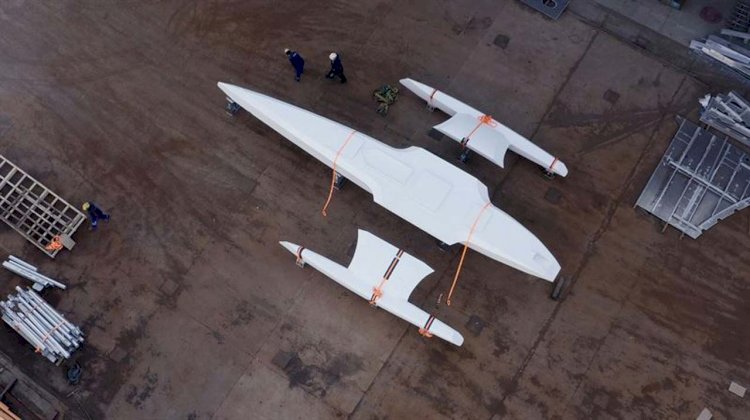
At 15m in length and weighing a mere 5 tons, the Mayflower is small and fast. Performing nimble manoeuvres to avoid other ships and marine debris, the Mayflower will benefit from a highly responsive short-range radar to help detect and avoid potentially show-stopping objects in the water. Specifically designed to look for potential hazards at close range, up to 1000m, the Wärtsilä RS24 radar will play a fundamental part in securing safe passage as she traverses oceans.

The new-generation Mayflower is set to take to water for sea trials in the summer of 2020.

Wärtsilä Voyage radically transforms the way vessels perform their voyages by leveraging the latest digital technologies to deliver a step-change in safety, efficiency, reliability and emissions.

Video: IBM
WinGD drives sustainable dual-fuel engine performance with X-DF2.0 technology

0

The launch of Intelligent Control by Exhaust Recycling (iCER) is the first development to be introduced as part of X-DF2.0, WinGD’s second-generation dual-fuel engine platform.

As shipowners factor greenhouse gas reduction targets into their upcoming newbuild projects, XDF2.0 technologies will enable improved engine performance with both LNG and future carbonneutral fuels. The iCER system delivers enhanced combustion control through the use of inert gas. The result is a reduction in methane slip emissions of up to 50% when using LNG and a significant reduction of fuel consumption, of 3% in gas mode and 5% in diesel mode.

By advancing the performance of dual-fuel engines, X-DF2.0 will help shipowners prepare for shipping’s transition to carbon-neutral fuels. Building on the successful X-DF platform, the nextgeneration technologies minimise methane slip in expectation that these emissions will be regulated by IMO to help meet its 2050 greenhouse gas targets. Improved fuel efficiency will also be a key factor in reducing emissions further during the first phase of the transition.

Volkmar Galke, WinGD Global Director of Sales, said:

“By adjusting the recirculation rate of inert gas and controlling parameters like fuel admission and ignition timing, we can increase compression ratios for greater efficiency. The result is optimized combustion through closed-loop control regardless of ambient conditions and load.”

Like all future X-DF2.0 technologies, iCER will be available for all new X-DF engines. It is currently completing trials at one of WinGD’s dedicated test engine facilities – the final step in a two-year testing programme. The company is also finalising plans for a pilot installation. As well as using fossil LNG, X-DF engines can also burn carbon-neutral synthetic or bio-derived LNG when it becomes available. By continuing to develop combustion control and engine efficiency, WinGD is improving the performance of its engines using these fuels and minimising fuel cost for ship owners and operators.

Galke explained:

“Our highly efficient and reliable X-DF engines are already widely used, with more than 500,000 hours operating experience and market leadership in many key vessel segments. Our next-generation X-DF2.0 technologies will prepare our engines for even better performance, both with LNG and with the future fuels to come.”

Atlantic Offshore protects against cyber threats with Fleet Secure Endpoint

0

North Sea operator Atlantic Offshore has put its levels of cyber resilience substantially ahead of approaching International Maritime Organization requirements for ship owners, after adopting Fleet Secure Endpoint from Inmarsat to protect against ongoing cyber threats.

The state-of-the-art cyber security solution was installed to coincide with a Fleet Xpress bandwidth upgrade across its fleet of offshore support vessels. All vessels now use Fleet Xpress to achieve maximum upload/download speeds of 4MBps/2MBps, with the Ka-band/L-band solution delivering committed information rates of 256kbps.

Roy Wareberg, CEO, Atlantic Offshore, says:

“The shift towards digitalisation, crew welfare needs and demand for greater vessel efficiency are all drivers for reviewing and upgrading our ship/shore connectivity needs. Meeting next year’s IMO cyber security rules in the same step was an opportunity too good to miss.”

Fleet Secure Endpoint defends ship networks at their vulnerable ‘endpoints’, which can be anything from a business-critical PC to a crew laptop. The multi-layered protection solution scans the network and eliminates malicious encryption, blocks forbidden sites, shuts down malicious connections and runs anti-spyware/anti-phishing software. It only allows trusted endpoints to interact with the network, with new devices labelled rogue until verified. Malware introduced by infected USBs also prompts ‘guardian portal’ intervention.

Eric Griffin, Vice President, Offshore & Fishing, Inmarsat Maritime, says:

“We are seeing data usage on board ship doubling roughly every eight months and owners develop a competitive edge by upgrading connectivity to anticipate crew welfare and vessel operational needs. Forward-looking companies such as Atlantic Offshore recognize that the threat from the cybercriminals is also rising, which is why they choose Inmarsat as a secure connectivity provider across all touch points, including endpoints.”

Available for use with Fleet Xpress, FleetBroadband, and Fleet One, Fleet Secure Endpoint covers 10 of the 20 detection, reporting and recovery criteria defined by the SANS Institute as essential for cybersecurity without requiring hardware adjustments or awareness training.

Shipowners and managers must incorporate guidelines relating to cyber risk management into their safety management systems by 1 January 2021. Fleet Secure Endpoint provides a cost-effective cyber security product for the maritime market that helps support compliance, in a single solution that protects vessels and the communications network.

Eric Griffin says:

“The Fleet Secure Endpoint Security report gives the owner and a clear overview of the security status of the vessel in a format that is fully compliant with IMO 2021.”

Maersk will begin implementation of innovative SBA ropes on the mooring lines

0

Maersk will begin implementation of an innovation called Snap Back Arrestor (SBA) ropes on the mooring lines used to hold vessels in place while docked in port for loading and unloading. Mooring is one of the most dangerous aspects of port and vessel operations. When a mooring rope holding a docked vessel snaps, the abrupt energy release can cause the rope to whip across the dock and ship at a speed of almost 500 MPH or more than twice the speed of a NASCAR level race car.

Working closely with suppliers to solve this industry challenge – Maersk chose a Norwegian-based manufacturer called TIMM ROPES who offered new mooring rope technology which features a special core that elongates more than the surrounding rope, acting to absorb and dampen the tremendous energy released when mooring ropes break while under strain. As a result, instead of snapping back in unpredictable ways at great speed, a broken SBA rope will simply drop to the ground. The new ropes are also colored with a Maersk blue color stripe, making it easier for operators to spot any damage or twists in the rope that could affect breakage. This is another important visual feature developed to enhance the safety of people working in our industry.

Taking safety from the laboratory to the fleet Once the SBA concept was verified by snap tests at the TIMM ROPES manufacturing facility, several Maersk vessels were enrolled in a ninemonth pilot project in 2019 to ensure the rope’s operational conditions,alongside traditional mooring ropes, using vessels of various sizes. Collaboration with TIMM ROPES, a supplier to the industry since the 18th century, ensured the standardization of the new SBA mooring rope sizes and compatibility with existing mooring designs.

Aslak Ross, Maersk’s Head of Marine Standards, said:

“This SBA rope technology embraces one of the fundamental elements of our “Safety Differently approach, by building in capacity to safeguard people.”

Each year Maersk buys and replaces some 1,000 mooring ropes – an annual expense of nearly USD 2 million. Traditional mooring ropes have a five-year lifespan and Maersk will be implementing an exchange program in which their current, high quality mooring ropes will be replaced at the end of their lifecycle with SBA enhanced ropes at a pace which also reflects the supply and availability. Full fleet implementation of the new SBA ropes is planned to be completed within five years.

Mr. Ross added:

“This new technology and innovative approach enables us to safely transform the mooring rope approach in our industry and help lead by example to protect our seafarer community and our dockworkers ashore.”

Initiative to realize autonomous sailing ready to start demonstration voyages

0

Mitsui O.S.K. Lines, Ltd. has announced that with the consortium members, MOL, two of its group companies, and other consortium members have jointly applied to the Nippon Foundation to fund demonstration voyages to test underlying technologies for autonomous sailing within fiscal year 2020.

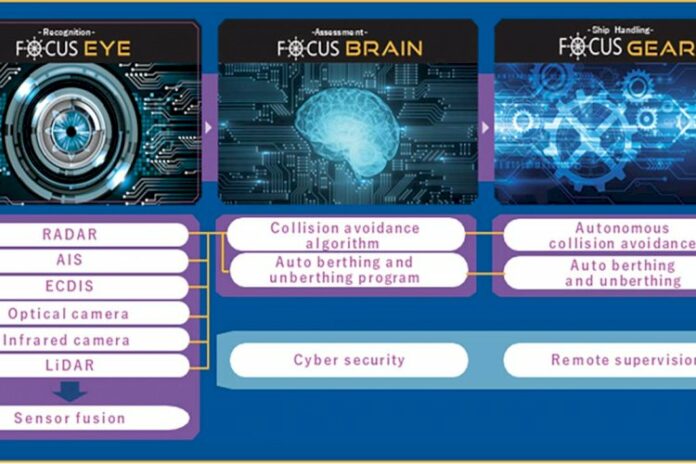
In cooperation with Mitsui E&S Shipbuilding and Furuno Electric, the MOL Group has been developing technologies for autonomous sailing, and plan to conduct demonstration voyages of their autonomous sailing operation system, from unberthing to berthing. With the support from Nippon Foundation, the demonstration tests will start in 2020.

The demonstration voyages will be conducted with an MOL Ferry-owned/operated large-scale coastal ferry and a coastal containership owned by Imoto Corporation and operated by Imoto Lines, Ltd., using surrounding cognitive technology based on Furuno Electric-developed and owned sensors and Mitsui E&S-developed/owned ship handling for avoidance and auto berthing/unberthing technologies, after MOL Marine conducts autonomous functions using a simulator. In addition, mooring support technology using a drone, developed by Sekido, will be introduced in the demonstration voyage of the coastal containership.

MOL will oversee the entire program and conduct risk assessments, drawing upon its accumulated expertise in ship operations management.

MOL is working to realize autonomous vessels to achieve two aims—further enhancement of safe operation by using new underlying technologies, and reduction of crewmembers’ workload.

Coastal shipping, the target of the program, is a key element of Japan’s logistics system, transporting about 40% of the nation’s domestic cargo and about 80% of basic industrial commodities on a ton-kilometer basis. However, the costal shipping sector is heavily dependent on an aging workforce.

MOL will develop versatile technologies and move ahead with demonstration voyages using two vessels of different types – a 749-ton containership and a large (10,000-ton plus) car ferry. These are two of the major types of vessels involved in coastal shipping, and operate in a severe work environment. The company believes that autonomous sailing can address safety issues and reduce human errors, which contribute to about 70% of marine accidents.

MOL has moved ahead with advanced support of safe operation and reduction of its environmental impact, as set out in the “ISHIN NEXT – MOL SMART SHIP PROJECT -,” which began in November 2016, and aims to become customers’ first choice as a logistics partner by applying ICT technology to improve service quality and efficiency.

KN will use external expert services to implement the long-term LNG supply solution

0

KN (AB Klaipėdos nafta), the operator of oil and liquefied natural gas (LNG) terminals, will use external expert services to implement the long-term LNG supply project. In this step, KN continues the implementation of the LNG long-term supply solution and announces a public market consultation on the planned procurement of legal expert services. KN plans to announce procurements for such services that are necessary for the effective implementation of the long-term LNG supply solution.
 
Under the Law on Liquefied Natural Gas, KN is obliged to acquire and operate a floating LNG storage and regasification unit (FSRU) by December 31, 2024 at the latest, i.e. to become the owner of the whole infrastructure and superstructure. The company must choose the most economically advantageous offer and ensure reliable operation of the LNG terminal by 2044. In order to achieve these goals, the missing competencies will be used to develop strategies and contracts for the acquisition and management of FSRU maintenance services. Various alternatives will be considered with the help of external experts, including (but not limited to) the acquisition of the existing FSRU “Independence”. 
 
According to Darius Šilenskis, general manager of KN, the law provides for a clear time frame for the implementation of the LNG long-term solution project, and external competencies are used in order to implement the project in a timely manner and at the lowest possible cost, in accordance with the principles of transparency, equality and promotion of competition.

D. Šilenskis explains:

“The project requires specific competencies, such as ship brokers, ship classification specialists, as well as lawyers specializing in the LNG ship industry. That is why the aim is to use the services of external experts.”

The expertise of external experts is necessary to avoid delays, errors and financial and other losses in the future. Until the end of this year, KN also plans to procure the services of other external experts which will help to prepare the FSRU acquisition process and technical specifications. Public consultations will also be announced prior to these procurements.

Public market consultation prior to the award of contracts for the services of external experts is a good practice of contracting authorities which is promoted by the European Union. Prior to initiating the procurement procedure, public procurement operators may consult potential suppliers as part of a broader market analysis process.

D. Šilenskis says:

“Market consultation allows contracting authorities, such as KN, to better understand the structure of the market and the possibilities of suppliers. According to the Public Procurement Directives, preliminary market consultations have two objectives: to gather information from the market and to inform about procurement plans. Prior market consultation is particularly important for complex procurements that require a high degree of preparation. In this case, the implementation of a long-term LNG supply solution is a complex process, where errors need to be minimized at each stage. On the basis of the information received during the consultation, KN will be able to develop more precise specifications for the services to be procured and to be better informed about the choice of the most appropriate procurement procedure, planning the appropriate duration of the procurement process.”

According to him, when implementing the long-term LNG supply solution and preparing for the acquisition of the FSRU, even more attention will be paid to market analysis during the preparation of the FSRU operation strategy, justifications for registration and flag selection technical specification of the FSR procurement documents, selection criteria, evaluation of tenders, FSRU purchase-sale agreement and/or operation agreement, in order to prepare a list of storage vessel takeover works and conditions and to participate during the takeover of the storage vessel itself in order to fulfil the envisaged conditions, etc.

MHI Vestas UK pipeline enhanced with Seagreen firm order

0

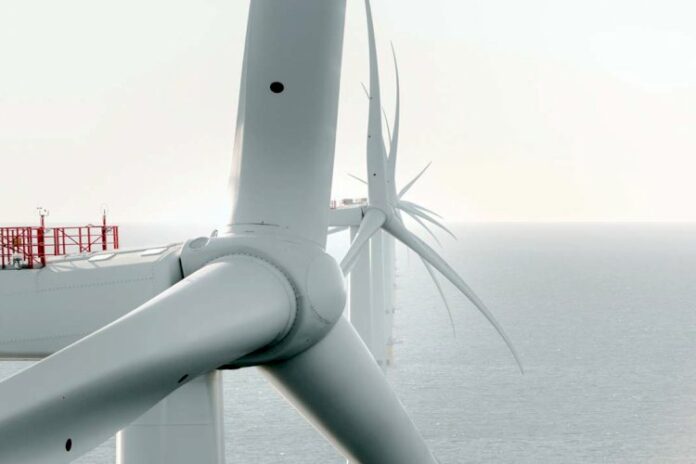
The Seagreen project, which will be Scotland’s single largest source of renewable energy when complete, has finalised the firm order for 114 V164-10 MW turbines from MHI Vestas, to be installed off the coast of Fife in 2021. Seagreen will be built out to 1,075 MW capacity.

The contract will see MHI Vestas manufacture and install turbines at the 1,140MW Seagreen site, its fourth project in Scotland. MHI Vestas has also signed a service and maintenance agreement at the project for a period of 15 years.

Henrik Jensen, Chief Sales Officer at MHI Vestas, said:

“We are very pleased to have secured the firm order for turbine supply at Seagreen, which is the largest project under development in Scotland. We have been able to reach this milestone even during Covid-19, with major decisions being taken over videoconference. It is encouraging to see that, even in these challenging times, the offshore wind industry can collaborate as a pioneering force driving the world towards a green recovery.”

Julian Brown, UK Country Manager at MHI Vestas, noted:

“The Seagreen contract will further secure the presence of MHI Vestas in the UK with service operations based in Scotland serving the project and blades supplied from the Isle of Wight blades manufacturing facility. The project will be supported by our technician apprenticeship programme based in Scotland and provides further opportunities for development of the UK supply chain, delivering sustainable and high value jobs in offshore wind. We look forward to working with our partners across Scotland and the northeast to build and install the 114 turbines at Seagreen.”

The Seagreen project has been under development since 2010, when it was part of the award to exclusive development rights for the Firth of Forth Zone of the UK’s Round 3 offshore wind farm development programme.

John Hill, Seagreen Project Director, said:

“We’re delighted to have finalised the turbine supply contract with MHI Vestas for the 114 turbines for installation at Seagreen offshore wind farm. We are looking forward to using the proven offshore turbine technology of MHI Vestas to harness the power of North Sea wind to provide new green energy for Scotland and the UK. The conclusion of this contract is yet another step towards realising the project and the construction of what will be Scotland’s largest offshore wind farm.”

Seagreen will provide around 5,000GWh annually of clean renewable energy, supplying the energy needs of around one million homes and saving around 1.6 million tonnes of carbon dioxide emissions annually.

Kongsberg delivers first K-Sim Fast Craft simulators to SPCG’s training centre

0

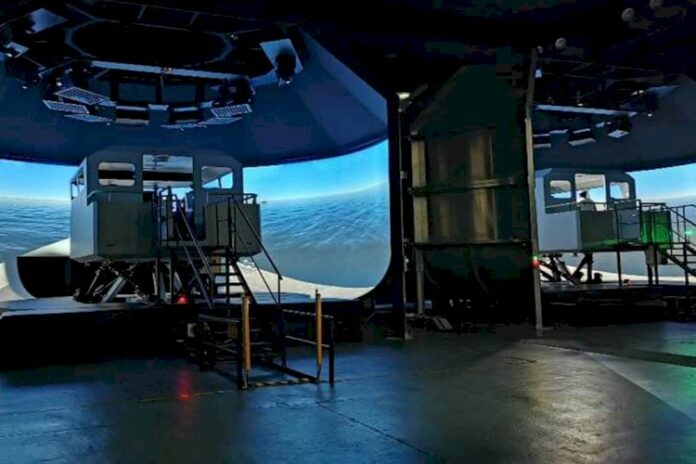
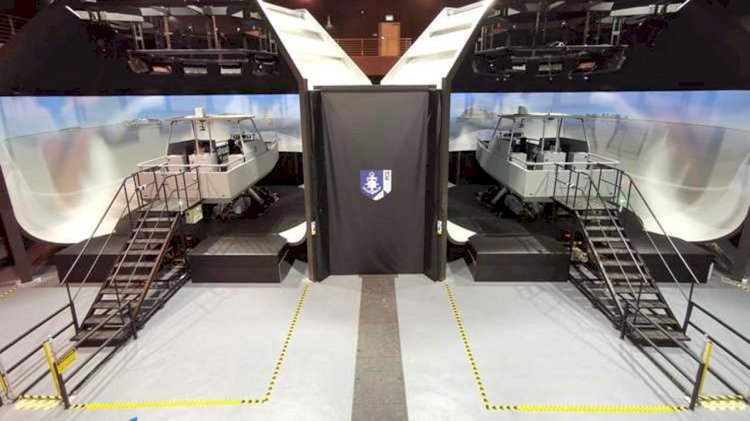
Unveiled at an official opening at the centre previously this year, the four installed simulators reproduce a variety of high-speed vessel types and are supplied under the terms of a landmark contract with the Singapore Ministry of Home Affairs.

The simulator is first of its kind in enabling highly realistic vessel simulation at speeds exceeding 50 knots and integrates with an advanced eye-tracking system in addition to weapon capabilities. It will be put to work straight away to provide new recruits with the most, lifelike high-speed tactical and rapid interception training program possible. The simulator training will enable exercises to be carried out and professionally assessed in controlled conditions of complete safety, avoiding risk to personnel and removing the prospect of equipment damage. In addition, the exercises are repeatable, so trainees can undertake them as many times as is necessary in order to achieve the required high standard of competence.  

The highly adaptable K-Sim Fast Craft simulator uses an advanced physics engine and customizable hydrodynamic modelling, derived from and validated against recorded vessel performance data, to duplicate the ways in which high-speed vessels behave in the real world when affected by factors such as wave movements or impacts with other crafts and floating objects, in a range of sea states and at different speeds.

Along with the authenticity provided by the full motion platform, the simulator’s 270 HFOV (horizontal field of view), low-radius, cylindrical visual projection system also provides a large vertical field of view with extension panels for floor projection covering the hull sides, while the integrated physical bridge layout can accommodate genuine control and display apparatus such as navigation systems, engine start/stop switches and communications equipment to heighten the sensation of working in a complex onboard operating environment.

As well as enhancing the trainees’ tactical decision-making capabilities by exposing them to a comprehensive range of complex scenarios, the simulator also supports all-important training in advanced boat handling, navigation and interception techniques, escalation of force and weapons engagement, including mission planning, rehearsals and full-scale debriefing/after action reviews. Its cutting-edge instructor, monitoring and assessment system means that trainees receive the highest standard of invaluable and easy-to-understand feedback.

Tone-Merete Hansen, Senior Vice President, Maritime Simulation, Kongsberg Digital, says:

“The delivery of our first K-Sim Fast Craft simulator marks the beginning of a transformative new era for the personnel engaged in such vital and potentially hazardous work. The long-term value of providing full scale training for these highly skilled duties in conditions of absolute safety is incalculable. Our cost-effective simulators obviously save substantial sums of money, but of prime importance is the fact that they also literally save lives.”

NYK to participate in crewless maritime autonomous surface ship trial project

0

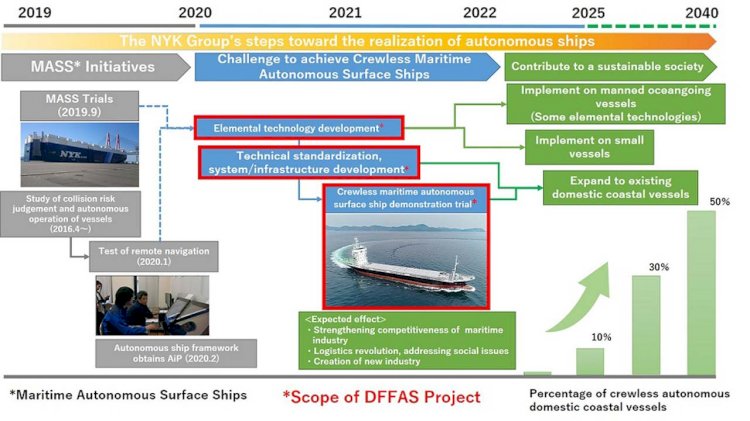
NYK and NYK Group companies Japan Marine Science Inc. (JMS) and MTI Co., Ltd. are participating in the Designing the Future of Full Autonomous Ship Project (hereinafter referred to as the DFFAS Project). (1)

Comprising 22 domestic Japanese companies, the project has been decided to be sponsored by the Joint Technological Development Programme for the Demonstration of Unmanned Ships (2) under the administration of the Nippon Foundation. With the support of the foundation, the DFFAS Project will aim to conduct the world’s first successful crewless maritime autonomous surface ship demonstration trial in order to advance the practical use of crewless maritime autonomous surface ships by 2025.

The DFFAS project aims to realize a domestic coastal shipping business supported by crewless maritime autonomous surface ships. The NYK Group will make full use of the technology and experience so far cultivated in the technological development of maritime autonomous surface ships (MASS) into this project. The DFFAS project will work toward the standardization of technology and the establishment of systems and infrastructure as well. Moreover, the project plans to carry out a long-distance demonstration trial within FY2021 in congested waters using a domestic coastal containership to realize the world’s first crewless maritime autonomous surface ship.

<Conceptual image of the realization of crewless autonomous ships>

The DFFAS project has the following characteristics under the concept of “creating the future of crewless maritime autonomous surface ships — a grand design devised by various experts.”

a) A project structure that values the concept of open collaboration among 22 domestic companies that are responsible for creating the future of the Japanese shipping industry, cooperating together with various domestic and foreign experts.

b) Development and demonstration of comprehensive system functions required for crewless maritime autonomous surface ships including remote operation in case of an emergency, automation of berthing/unberthing, operations in accordance with the approved route plan and action plan, and the monitoring of support functions from the fleet operation center (including ship-shore data communication system).

(1) Companies participating in the DFFAS project include Japan Marine Science Inc. (project leader); MTI Co., Ltd.; IKOUS Corporation; BEMAC Corporation; SKY Perfect JSAT Corporation; TOKYO KEIKI INC.; Nippon Telegraph and Telephone Corporation; NTT DOCOMO, INC., Japan Radio Co., Ltd.; NYK; FURUNO ELECTRIC CO., LTD.; Weathernews Inc.; EIZO Corporation; NTT Communications Corporation; Japan Hamworthy Co., Ltd.; Japan Marine United Corporation; Nabtesco Corporation; Nippon Shipping Co., Ltd.; pluszero Inc.; Honda Heavy Industries Co., Ltd.; Yokogawa Denshikiki Co., Ltd. and Mitsubishi Research Institute Inc.;

The DFFAS project will consider adding new participants as needed.

(2) A subsidization scheme to cultivate further momentum for technological development in the field of crewless maritime autonomous surface ships, promoting changes in logistics, economies, and social infrastructure in Japan, and supporting such technological development through the success of the world’s first crewless autonomous operation trials by domestic coastal vessels.

Damen’s next generation tug ASD Tug 2312 delivered to Iskes

0

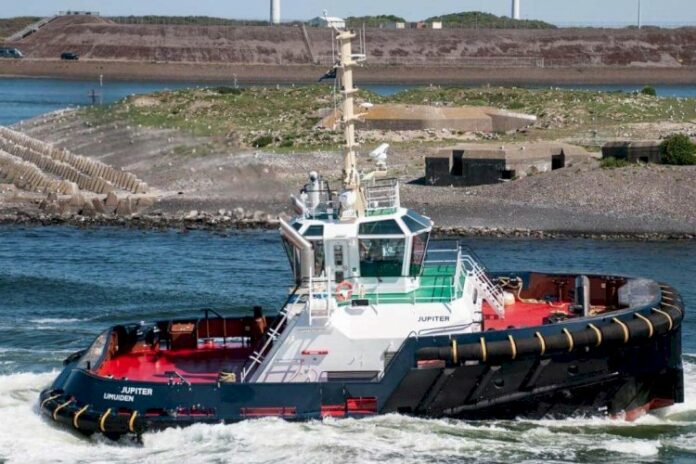
The vessel, one of Damen’s next generation tugs, offers a package combining safety, sustainability, reliability and efficiency. Jupiter will operate in the ports of IJmuiden and Amsterdam carrying out regular port towage duties and the tug is also capable of handling (crane) barges.

Damen signed the contract for the vessel with Iskes in July 2018, at the ITS Marseille and developed the ASD Tug 2312 together with them.

Damen sales manager Joost van der Weiden said:

“Iskes gave us a lot of valuable input for the design of this new class of tug. We often work together with our customers when developing new vessels – it’s a good way for us to make sure that the boats we build fully meet their requirements.”

Iskes CEO Jim Iskes added:

“We are very satisfied with the result. The ASD Tug 2312 is a compact vessel with a very high degree of manoeuvrability, required for operating in the ports of Amsterdam and IJmuiden. And notwithstanding her compact design, the vessel, with 60 tonnes BP, has ample power to perform every job at hand, to all sizes of vessels calling at the port.”

The ASD Tug 2312 is an innovative design. For example, the winch is integrated into the superstructure, offering a number of benefits. As well as offering a spacious, safe and clutter-free deck, the central positioning means the vessel can, with just one winch, tow both fore and aft. With only one winch required, the vessel is more compact and the sheltered location provides protection from the elements and minimises maintenance requirements.

The ASD Tug 2312 features Damen Safety Glass; shatter-proof glazing that offers protection in the event of a towing line snapping. Beneath the waterline, the Damen Twin Fin significantly improves directional stability in both sailing directions, making the vessel very predictable when sailing aft, but also in front of a ship.

The tug is prepared for the future, being IMO Tier III ready, including all mandatory certification. All that is required for the ASD Tug 2312 to comply with the forthcoming regulations is the easy and fast retrofit of a Damen Selective Catalytic Reduction System.

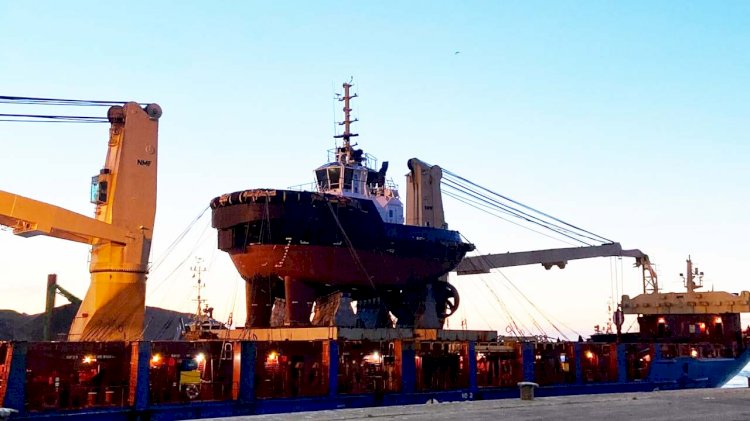
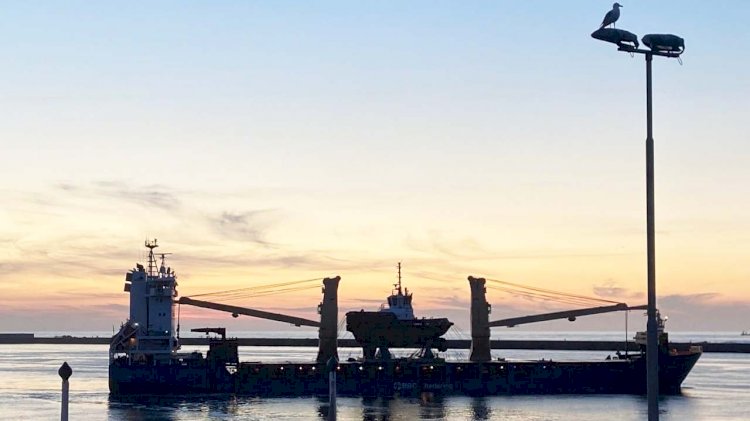
Damen built Jupiter at Damen Song Cam Shipyard in Vietnam. In order to ensure maximum safety during the coronavirus crisis, Damen amended its delivery planning. The vessel was intended to sail on her own keel to the Netherlands, but travel restrictions made this difficult. The alternative was transporting the tug on a heavy lift ship. However, internal travel restrictions in Vietnam also meant that the vessel could not be transported to Ha Long Bay in order to meet the heavy lift vessel.

Joost:

“The well-being of all the people involved was our first priority at all times. To ensure safety and minimise the chance of the spread of disease, we arranged for the heavy lift vessel to collect the vessel not at Ha Long Bay as is typical, but closer to the yard at Hai Phong. The events of these past few months have required us to be adaptable, but, working together with our customers and our suppliers we have usually found ways to remain safely open for business.”