0.7 C
New York
Home Blog Page 836

Kongsberg Digital launches new Benchmark application on Vessel Insight

0

Kongsberg Digital has developed a new application for Vessel Insight users. Vessel Insight Benchmark provides dashboards with insight into the vessel operating profile compared to vessels of similar size and type.

The application gives users an instant historic perspective that triggers discussions on improving vessel operations and support already ongoing initiatives that aim to optimize cost efficiency.

Vessel Insight Benchmark introduces a new data driven approach for gaining insight into historic vessel performance. Fleet managers and maritime executives get access to key metrics for their vessels and can compare these against vessels in the same segment.

Vigleik Takle, SVP Maritime Digital Solutions, Kongsberg Digital, says:

“Our customers are always looking for ways to work smarter, enhance revenue and increase performance. Benchmarking is a proven approach using a set of metrics to get a comparative view across companies and highlight improvement areas. Through key metric comparisons, Vessel Insight Benchmark users get insight into their performance compared to others’, and allows them to optimize speed, voyage and vessel energy efficiency, among other things.”

For Vessel Insight users, no installation onboard is required to get instant access to key vessel metrics, as well as two years of historical data for similar vessels and segments. The service uses data from MarineBenchmark’s maritime statistical platform. This platform combines terrestrial and satellite AIS data, the global ship registers and vessel statistics to provide insights.
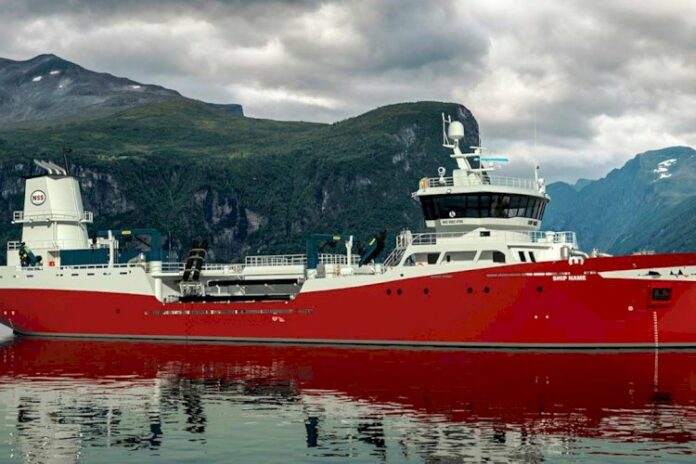
ABB wins hybrid power order for sustainable live fish carrier

0

As the first live fish carrier to feature ABB hybrid power and propulsion solution with integral energy storage, Færøysund responds to a wider green shift in the maritime industry, with consumers demanding greater accountability in the food supply chain.

The 77m-long diesel-electric vessel is being built at the Aas Mek. Verksted AS shipyard in Vestnes, Norway, for Nova Sea Service AS, one of Norway’s largest producers of Atlantic farmed salmon. Due delivery in September 2021, Færøysund is Aas Mek. Verksted AS second newbuild for Nova Sea Service AS.

Halvard Aas, Aas Mek. Verksted AS, said:

“We are very proud of the innovation behind this project and our role in supporting Nova Sea’s mission to deliver fresher, tastier products from farm to plate. Consumers are increasingly aware of the need for sustainability in the transport chain and our collaboration with ABB has resulted in a power plant solution for Færøysund that supports live fish transport while also minimizing carbon footprint.”

Onboard batteries will enable ‘peak shaving’ when the ship is operating at high loads, optimizing the energy management and reducing fuel consumption and CO2 emissions. Stored energy will also be critical for fish life support, acting as a reserve, if required, in the event of power outage or blackout. In environmentally sensitive areas, stored energy, supported by clean shore power connected via ABB technology, will enable emission-free operation.

Sindre Sætre, head of ABB Marine & Ports business in Norway, said:

“This is a very sophisticated live fish carrier whose energy efficiency contributes to sustainability in the food supply chain it serves and in its working environment. Building on years of ABB experience in hybrid power solutions, we are proud to make a first delivery for a ship of this specialized type. The order also adds momentum to the shift towards green technologies being seen across the marine sector.”

ABB’s scope of supply consists of an electric, digital and connected propulsion package comprised of two ACS880 drives and two permanent magnet motors, the energy storage system including a battery pack, low voltage switchboards, and a power energy management system (PEMS). ABB is also overseeing all systems engineering, project management and commissioning, and will offer a full range of remote diagnostic services.

Based on a proprietary design, the live fish carrier includes a 3000m3 load compartment which can be separated into two wells, and a pressure loading and unloading system. Its sophisticated water treatment, oxygenation and circulation systems use ultraviolet light to eliminate pathogens and filters to control fish lice. With stress known to affect fish health and, ultimately, taste the methods ensure that cargo moves “in a safe and gentle manner”, according to Aas Mek.

Wärtsilä to build and deliver propulsion system to MSCL

0

The technology group Wärtsilä’s ability to design and deliver a fully integrated main propulsion system with outstanding fuel economy, and to provide full lifecycle support, were given as key considerations in the award of an important new order.

The Wärtsilä solutions will be installed on a new 8200 dwt multi-purpose cargo vessel being built for Mauritius Shipping Corporation Ltd (MSCL) at the Huanghai Shipyard in China. The order with Wärtsilä was placed in April 2020.

Reliability was also cited as being a major factor, since the vessel will provide essential transportation of goods and passengers between the Republic of Mauritius and the islands of Reunion, Agalega, and Rodriquez. Any disruption in the service and supplies to these islands can have serious consequences as they depend solely on MSCL for them. The new ship will replace an existing vessel sailing this route.

Glenn Mattas, Regional Sales Director, Wärtsilä Marine, says:

“The customer has made clear that the emphasis must be on optimal efficiency, integration, support, and reliability, all of which are areas where Wärtsilä excels. We have worked closely with MSCL to ensure that our solutions are tailored to their precise requirements.”

Rishi Ronoowah, CEO, MSCL, says:

“We have operated with Wärtsilä main engines since 2001 and have experienced no major breakdowns or disruption to our normal and essential operations during all these years. We are, therefore, very satisfied and in our experience the engines have been extremely reliable, allowing us to enhance our business performance.”

The full scope of the integrated supply includes a Wärtsilä 32 main engine, a reduction gear, a controlled-pitch propeller, the Wärtsilä ProTouch remote control system, a transverse thruster, and three Wärtsilä 20 auxiliary engines. The equipment is scheduled for delivery to the yard in spring 2021, and the ship is expected to commence commercial operations in 2022.

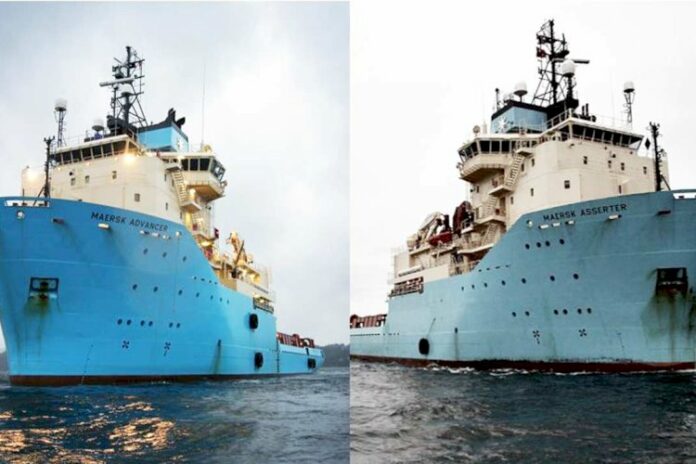
Maersk Supply Service has sold two of its Anchor Handler Tug Supply Vessels

0

Chief Commercial Officer of Maersk Supply Service Carsten Gram Haagensen says:

“As a response to the recent downturn in the oil and gas industry, we have re-evaluated our fleet composition and future fleet deployment. As we expect insufficient commercial opportunities for Maersk Advancer and Maersk Asserter, we have concluded that a sale of these assets is the most attractive solution. With this, we continue to take active steps to right-sizing the supply side of the market that the OSV industry needs for a sustainable recovery.”

The vessels have been sold to an international buyer and will be modified for use in a non-competing industry.

In 2016, Maersk Supply Service set out to reduce its fleet in response to the global over-supply of offshore support vessels. The divested vessels have been either recycled or modified by their new owners to compete outside of the offshore supply vessel segment. In total, 26 PSV and AHTS vessels have since the 2016 left Maersk Supply Service’s fleet. After the recent sale, 41 vessels are in the fleet.

KVH expands high-speed VSAT-based IoT services

0

Maritime innovator KVH’s VSAT-based IoT offerings are designed for deep sea use by equipment manufacturers and commercial vessels

KVH Industries, Inc., a global leader of maritime satellite connectivity, has announced that it is expanding its high-speed VSAT-based Internet of Things (IoT) services, which are designed for an era of increased digitalization throughout the maritime industry. With the new offerings, KVH will provide a suite of maritime IoT solutions for everything from remote monitoring to real-time intervention, powered by a high throughput satellite (HTS) network that delivers fast and reliable connectivity worldwide.

KVH Watch IoT Connectivity as a Service, introduced last year, provides maritime equipment manufacturers, multicard service providers, and shipyards with access to 24/7/365 secure data from onboard equipment. Featuring a dedicated cybersecure terminal, KVH Watch enables an independent, air-gapped data flow that does not use the vessel’s primary satellite communications system.

Adding to the KVH Watch solutions, KVH will offer Remote Expert Intervention, a satellite optimized video collaboration application designed to enable on-demand high-throughput remote support sessions between vessels at sea and experts on shore. The focus on remote collaboration enables maritime equipment manufacturers to use their most experienced experts on shore to give real-time guidance to onboard crew for troubleshooting, repair, and identification of replacement parts that are needed, thereby avoiding costly service calls, minimizing delays in port, and making support more effective.

Sven-Eric Brooks, KVH’s senior director for IoT business development, says:

“By using deep sea transit time, Remote Expert Intervention goes well beyond simply monitoring the performance of onboard equipment. It enables maritime equipment manufacturers to take action and provide real-time support via video, voice, and text, even when the equipment is on a vessel in the middle of the ocean.”

KVH Watch services also include Flow, which provides high-performance connectivity for IoT platforms, and Flow Intervention, which boosts data capacity to speeds as fast as 10/3 Mbps for bulk file transfers, very high-frequency data investigations, and application updates.

Remote support at sea is particularly relevant during the COVID-19 pandemic and for the future of the digital ship as maritime operators seek increased operating efficiencies by adopting a range of digital processes including cloud-based services, telemedicine, video conferencing, virtual payments, and electronic invoicing, according to industry experts. Current IoT solutions that utilize cellular connectivity fall short due to being out of range while at sea and unpredictably expensive when roaming. Solutions relying on L-band suffer from limited and expensive bandwidth; they cannot support high-speed bursts or video sessions at sea.

WPSP releases new Cyber Security White Paper

0

New White Paper aims to ensure ports accurately understand and correctly define cyber security, conduct a gap analysis and take a measured, step-by-step approach towards cyber resilience.

One major outcome of the intensive work in recent weeks by the IAPH’s World Ports Sustainability Program Covid19 Task Force has been the very urgent need for ports to digitalize processes and data exchanges as we move towards a post-COVID19 modus operandi. This conclusion has led to IAPH organizing a industry call to action in the first week of June which has culminated in a joint communiqué by various maritime industry associations to the IMO.

This call to action is also now being matched in practice with the publication of the WPSP Port Community Cyber Security White Paper, which serves as guide to those ports now gearing up for digitalization.

IAPH Managing Director Patrick Verhoeven in the White Paper’s foreword, comments:

“With the world’s attention now focused on exiting from lockdowns and preparing for a ‘new normal’, there is an urgent need for inter-governmental organisations, governments and industry stakeholders concerned with maritime trade and logistics to come together and accelerate the pace of digitalization so that port communities across the world can at least offer a basic package of electronic commerce and data exchange. Increased digitalization of port communities means ports will need to pay increased attention to cyber security risks.”

The fifteen-page White Paper has been put together by IAPH in association with ICHCA International and TT Club, with the idea for it originally emerging from a meeting between the contributors at the TT Club offices in London, during the 2019 edition of London International Shipping Week. It is the product of a collaborative effort between port and cyber security experts, collectively offering many decades of experience both inside and outside the maritime industry.

Each chapter in the paper explores a different dimension of the cyber conundrum, with practical recommendations, advice and examples. These include :

  • Why cyber security is such a vital issue for port communities looking at trade, regulatory, geo-political and defense dimensions.
  • The importance of ‘speaking the same language’ around cyber security
  • What is commonly missing in port community cyber security and practical suggestions on steps to increase cyber resilience.
  • The essential building blocks for a cyber resilient port community.
  • Current cyber security provisions in the IMO rules and the potential evolution of the Port Facility Security Officer role for the future.

The report also contains a well-defined Glossary of Cyber Terms in order for the document to reach beyond IT-articulate professionals in the port industry.

IAPH Managing Director Patrick Verhoeven concludes:

“We began by creating and publishing our now bi-weekly Port Economic Impact Barometer report for the wider maritime community. We then developed the WPSP COVID-19 Guidance document for ports with the accumulated work of the WPSP-IAPH Task Force. We now offer this Cyber Security White Paper, again by port experts for ports. We sincerely hope that this practical, pragmatic approach towards assisting our membership and the world’s ports communities overall will help us overcome the challenges all of us face in the post COVID-19 era. Digitalization will be key to future port safety and efficiency.”

Maersk Drilling joins Danish offshore CO2 storage consortium

0

Maersk Drilling is joining a new CO2 storage consortium formed by INEOS Oil & Gas Denmark and Wintershall Dea. The consortium is maturing one of the most progressed carbon capture and storage projects inside Danish jurisdiction and targets the development of CO2 storage capacity offshore Denmark based on reusing discontinued offshore oil and gas fields for permanent CO2 storage.

The project has received support from the Energy Technology Development and Demonstration Program (EUDP) via the Danish Energy Agency. As part of its commitment to the consortium, Maersk Drilling has pledged to contribute know-how and limited funding to the initial phases of the project.

The project aims at building infrastructure and capabilities that will enable CO2 captured in onshore facilities to be transported offshore for injection and storage beneath the seabed. The first phase of the project will be a feasibility study to validate reservoir compatibility, followed by a pilot to test CO2 injection. The Geological Survey of Denmark and Greenland (GEUS) will act as a research partner to the project, conducting specialised laboratory experiments and results analysis.

The target is to have the first well ready for injection from the Nini platform offshore Denmark in 2025. Longer term, the goal is to develop the capacity to store approximately 3.5 million tons CO2 per year by 2030, matching the Danish Climate Council’s recommendations of actions needed to meet Denmark’s 70% reduction target. Maersk Drilling expects that its offshore rigs will be used to repurpose the existing oil and gas wells for CO2 injection.

CEO Jørn Madsen, Maersk Drilling, says:

“We’re really excited to be joining this effort to support the green transition by using the facilities and capabilities of the offshore industry and Maersk Drilling’s more than 40 years of experience with drilling wells in the North Sea. As the Danish government recently stated in its climate plan, carbon capture and storage is an important component in the efforts needed to reach the goal of reducing Denmark’s emissions by 70% by 2030. For Maersk Drilling, the project is part of our innovation initiatives and an attractive opportunity for building additional competencies and broadening the use of our rigs.”

Hugo Dijkgraaf, Chief Technology Officer of Wintershall Dea, says:

“At Wintershall Dea we are very certain: the global energy transition is happening, and we intend to play a decisive role in it. One way we will do so is through technology and innovation projects like this. Offshore CO2 storage can have a significant contribution to a cleaner energy future and the potential to significantly mitigate CO2 emissions in Denmark. Thus, we really appreciate the support of the Danish authorities to fund this important endeavour.”

In addition to participating in the offshore carbon storage consortium, Maersk Drilling is working to reduce the emissions associated with offshore drilling in multiple ways. This includes the first-ever rig to operate on shore power and the upgrade of two jack-ups to hybrid, low-emission rigs.

Storing CO2 beneath the sea

  • The project aims to store CO2 captured onshore 1700m beneath the seabed. For the onshore capture, proven carbon capture technology can be used at carbon-intensive facilities, for example industrial plants or power plants.
  • The captured CO2 will be bunkered in ports and transported by ship to the offshore storage platform which will reuse existing infrastructure originally built for oil and gas production.
  • At the offshore platform, the CO2 will then be injected for permanent storage beneath the seabed using repurposed oil and gas wells.
  • The consortium has set a goal of developing the capacity to store approximately 3.5 million tons CO2 per year by 2030. This puts the project in the range of delivering CO2 storage corresponding to 15-20% of the reduction required to reach Denmark’s reduction target in 2030.

NORDEN announces strategic product tanker partnership with Diamond S Shipping Inc

0

Diamond S will initially contribute 28 medium range (MR2) product tankers to the endeavour, which will be marketed and operated through the Norient Product Pool (“NPP”).

Diamond S also intends to contribute its existing in-house commercial expertise in the product tanker space to the global network of NPP. Pro forma the contribution of DiaNor ships, the Norient Product Pool will manage approximately 150 tankers and become one of the largest operators of medium range (MR) product tankers in the world.

Craig Stevenson Jr., CEO & President of Diamond S, commented:

“We are pleased to further continue the much-needed consolidation of the tanker industry. The DiaNor partnership is an exciting new chapter for Diamond S. We believe it will create substantial value for both our shareholders and our customers. We have worked with NORDEN and NPP in the past and believe that they represent a state-of-the-art, world-class commercial organisation. Adding our considerable capabilities to their extensive network should produce a clear leader in the product tanker space.”

NORDEN CEO Jan Rindbo says of the partnership, “We are delighted to enter this partnership with Diamond S, which will further strengthen our ability to provide efficient global transport solutions to our product tanker customers. Diamond S has been a valued partner of NORDEN in the past and we look forward to what we can create together in the future.”

DiaNor enables Diamond S and NORDEN to continue to serve their valued and existing clients via the NPP platform even better, by creating a well-managed, homogeneous fleet, ensuring flexibility and quality service to all parties. The combined fleet will create scale, expediting further development of the digital solutions already in play in both organisations as well as optimisation including fuel efficiency, bunker purchasing and vendor contracts around the world.

Søren Huscher, Head of Tanker Operator at NORDEN, says:

“We are convinced that the scale created by the combined fleets as well as the people competencies will create great value to our stakeholders. The strong values upon which we are both built will be the backbone of our joint efforts.”

The management of the combined fleet of around 90 MR2 product tankers will be handled from NORDEN’s existing office locations in the U.S., Singapore and Denmark and become one of the largest within the segment.


New trailing suction hopper dredger for GLDD

0

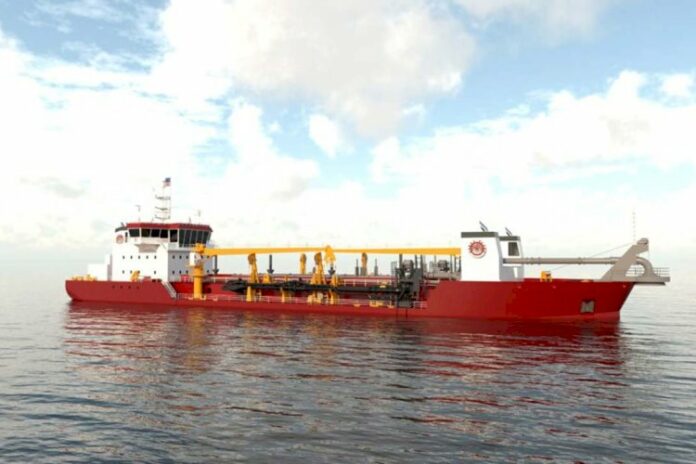
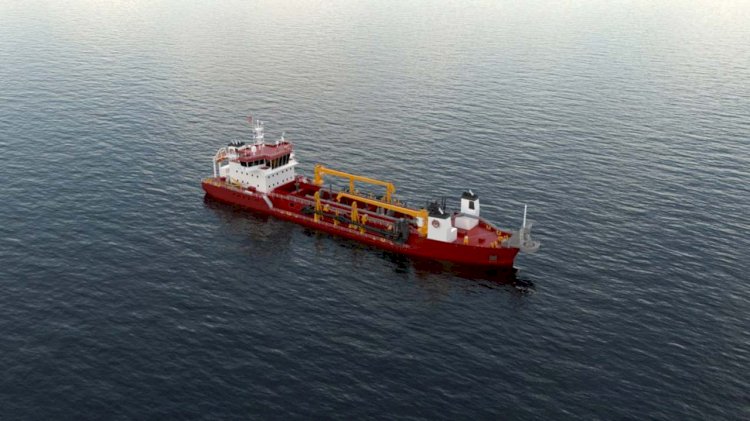
Great Lakes Dredge and Dock Corporation recently announced it has ordered a new build trailing suction hopper dredge. C-Job Naval has been involved in the design, co-creating the TSHD with a hopper capacity of 6,500 cubic yards.

GLDD called on C-Job to develop the trailing suction hopper dredge for beach nourishing and channel maintenance activities. Working closely together with the largest provider of dredging services in the United States, C-Job created the initial and concept design which evolved into the current basic design package of this fit for purpose dredger.

The basic design package is the information from which the vessel will be built by the LA based Conrad Shipyard, as announced by GLDD on 9 June. The dredge will be approximately 346 feet in length, 69 feet in breadth, 23 feet in depth and total installed horsepower of 16,500. The TSHD will have a hopper capacity of 6,500 cubic yards.

Lasse Petterson, Chief Executive Officer and President at GLDD says:

“Great Lakes continues to strategically invest in its dredging fleet. This highly automated new build vessel will increase the capabilities of our hopper fleet in the coastal protection and maintenance markets as well addressing specific needs in the growing offshore wind market.”

The TSHD boasts two suction pipes and has been specifically designed to be easy to build. The hull shape was kept relatively simple while incorporating hydrodynamic design optimizations. This will make the vessel easy to build while still being fuel efficient. In addition, the design is ballast free which will reduce investment and operational costs.

Commenting on the design, Harry Kikkert, Project Manager at C-Job, says:

“At C-Job Naval Architects we believe the best designs come about in close collaboration with the client. From the start of this project, key members of the technical fleet managers were involved in the design process. Their feedback and those of the crew of which they were in close contact with were paramount to shape the design as it stands now.”

The vessel is scheduled to be fully operational by 2023.

Alion secures contract to support Navy Minotaur software platforms

0

Alion Awarded $75M Research, Development, Test, and Evaluation of All Navy Minotaur Software Platforms for Naval Air Systems Command (NAVAIR) and Naval Surface Warfare Center (NSWC), Crane

Alion Science and Technology has been awarded a contract totaling $75M to support research, development, test, and evaluation (RDT&E) of all Navy Minotaur software platforms for the Naval Air Systems Command (NAVAIR) and the Naval Surface Warfare Center (NSWC), Crane. Alion was awarded this contract under the Department of Defense Information Analysis Center’s (DoD IAC) multiple-award contract (MAC) vehicle that allows for competition at the task order level. These DoD IAC MAC task orders (TOs) are awarded by the U.S. Air Force Installation Contracting Center (AFICC) to Alion for work to be performed for various U.S. Military organizations.

Alan Dietrich, Alion Senior Vice President and General Manager, said:

“Alion’s vast knowledge and thorough understanding of the Navy’s sensor requirements and systems engineering, data fusion techniques, and AI/ML expertise, will accelerate Minotaur capability integration into current and future platforms. Our expertise in developing and integrating ISR, EW, sensors, cyber, and AI to seamlessly address critical national priorities is driven by our desire to advance technology and innovation to respond to rapidly changing needs.”

Alion’s goal is to develop the next generation of advanced systems, such as airborne mission processors, mission management systems, multi-function active sensor radars, and Electronics Intelligence (ELINT) systems, Signal Intelligence (SIGINT) Systems, Communications Intelligence (COMINT) Systems, and Electro-Optical/Infrared (EO/IR) Intelligence Surveillance Reconnaissance (ISR) systems for use in Navy, DoD and DHS platforms. Integration efforts include cyber security and information assurance hardening of Minotaur software and integration across multiple sensors including electro-optics, radar, communications, signal intelligence systems, and electronic support measures systems.