0.2 C
New York
Home Blog Page 835

New zero-emissions battery powered ferries for Boreal Sjö

0

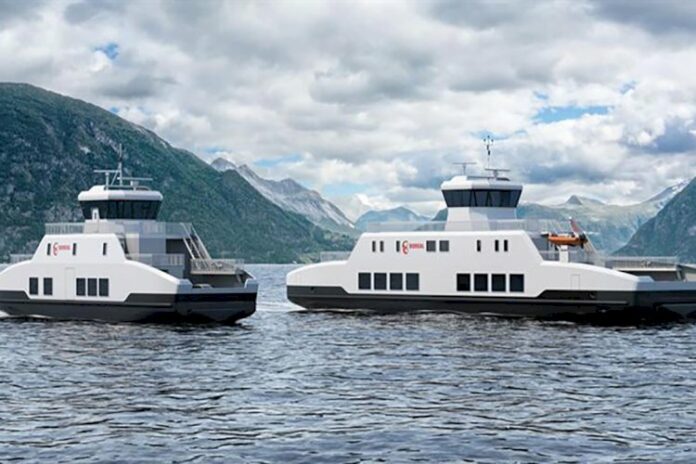
The technology group Wärtsilä’s experience and leading position in the development of battery and hybrid propulsion vessel solutions has been recognised with the award of a contract to design and equip two new zero-emissions ferries. The ships are to be built for Norwegian operator Boreal Sjö at Holland Shipyards in the Netherlands. The orders with Wärtsilä for the design and the equipment were placed in April 2020.

The Wärtsilä ship design is tailored to the operating and route profiles of the two double-ended shuttle ferries. Included in the design concept is the optimisation of energy consumption.

In addition to the design, for each ferry Wärtsilä will supply the thruster motors, batteries, onboard and shore-based battery charging equipment, the back-up generators, and various electrical systems. The equipment is scheduled for delivery to the yard in the beginning of 2021 and the ships are expected to commence commercial operations in autumn 2021.

René Zuidam, Account Manager, Newbuild Sales, Wärtsilä Marine, says:

“This project is an excellent example of Wärtsilä’s extensive capabilities in delivering optimal design and integrated equipment solutions. These battery-powered ferries represent the future in environmental sustainability, and their design is the result of the years of R&D that Wärtsilä has invested in smart marine solutions to lower the carbon footprint of shipping.” 

Marco Hoogendoorn, Director, Holland Shipyards, says:

“Both Wärtsilä and Holland Shipyards Group have extensive experience in the electrification of vessels and a shared vision to provide sustainable solutions to the transport sector. The combined expertise of both organizations form an excellent base for a valuable and successful cooperation.”

Having the equipment contracted from a single supplier provides customer benefit also during operation of the vessels, since a single point of contact for maintenance, spare parts and support on the equipment is more convenient than dealing with a number of different companies.

The two ferry designs are not identical. One is for a 30 metres long vessel capable of carrying 10 cars and approximately 100 passengers, while the other is for a 50 metres long vessel for 35 cars and 149 passengers, including crew.

The ferries will serve the Launes – Kvellandstrand – Launes, and Abelnes – Andabeløy – Abelnes routes in Norway.
Jan De Nul completes 2000 hours of marine biofuel trial

0

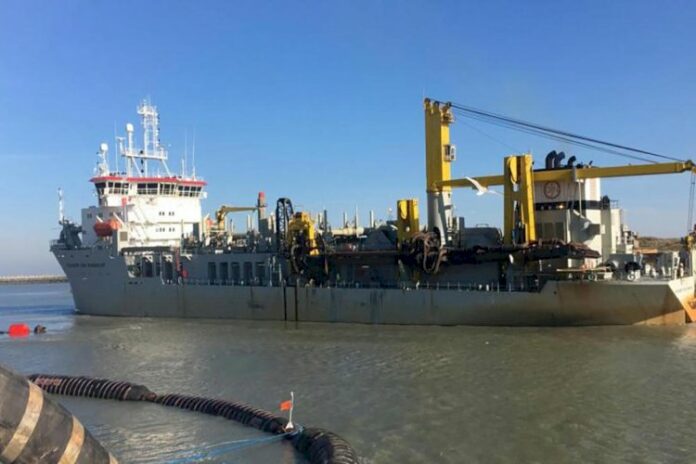
Jan De Nul Group has completed, in close collaboration with MAN Energy Solutions and GoodFuels, 2,000 hours using 100% renewable 2nd generation Biofuel Oil (BFO) on board the Trailing Suction Hopper Dredger Alexander von Humboldt.

This major milestone represents the longest continuous use of 100% sustainable marine biofuel in the maritime industry. The achievement further reinforces the successful adoption of this fuel solution, proving to the maritime world that BFO is ready for use as a sustainable drop-in fuel to meet industry emissions reduction targets.

The Alexander von Humboldt is the first vessel in the world to record this biofuel milestone. The important technical benchmark of 2,000 sailing hours proves the technical applicability and capabilities of sustainable marine biofuel in operations. At the same time, it opens the door to cross-sectoral collaboration with original equipment manufacturers (OEMs), class societies, flagstates, and supply chains to accelerate the supply of these fuels into mainstream use.

Michel Deruyck, Head of Energy Department at Jan De Nul Group:

“We will further explore the use of biofuel on other vessels, and continue the aim to achieve decarbonisation within our business. It’s also paramount to involve our clients to meet these ambitious carbon reductions, since it’s certainly not the most economical option of the fossil-dominated fuel supply industry. Moreover, this transitional biofuel solution needs to be a sustainable primary energy source. We are open to all other sustainable primary energy sources, but for the time being most of them are financially not competitive within the existing regulatory frameworks.”

The Alexander von Humboldt was refuelled at various stages over the last nine months, with massively reduced fossil CO2 emissions by 85%. The vessel consumed the biofuel while conducting maintenance dredging works in Flemish seaports and the United Kingdom. As a frontrunner, Jan De Nul Group shows that the maritime construction industry can be part of a game-changing global movement that will help to achieve climate goals by using low carbon solutions.

The BFO was introduced by GoodFuels in 2018. It was the first marine 2nd generation, fossil fuel-equivalent biofuel, that is completely derived from sustainable waste feedstock in line with the latest European renewable energy directive. GoodFuels introduced the BFO as a credible carbon based solution to accelerate the energy transition.

Peter Jonckheere, Chief Engineer of Jan De Nul’s Alexander von Humboldt:

“This sustainable marine biofuel is not only a green solution, it is also a high-quality fuel to run our engines on.”

Michel Deruyck, Head of Energy Department at Jan De Nul Group:

“With our choice of this sustainable marine biofuel, we want to prove to the governments and our clients that if they have climate ambitions and incorporate these in the selection procedures, the industry is ready for it. It is very important now that the right policies and regulations follow to leverage the full potential of BFO. Research into fuels of the future is useful, but it should not prevent us from using sustainable solutions already available today for the much-needed energy transition within the shipping industry.”

Finnlines begins construction of hybrid ro-ro

0

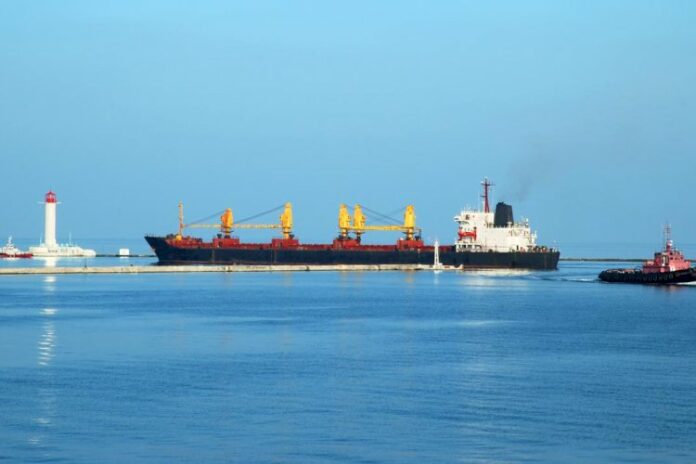
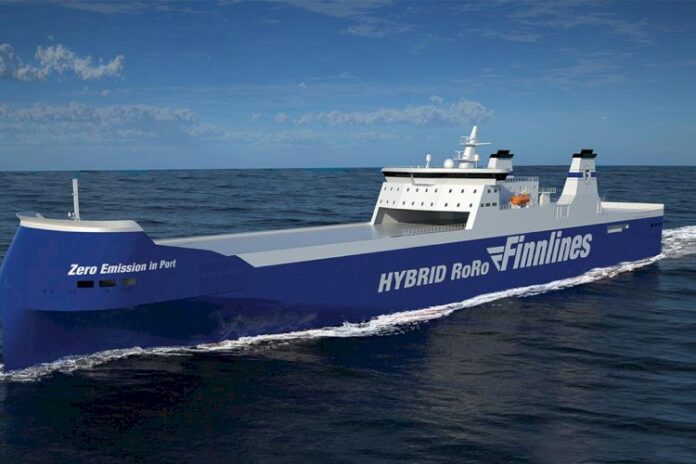
The vessel is the first of three hybrid ro-ro vessels ordered by Finnlines.

All vessels will be built with the latest technology available to ensure the lowest CO2 emissions. In addition to lithium-ion battery systems that enables zero-emission operations in port, they will be equipped with efficient engines, emission abatement systems and an innovative air lubrication system to reduce hull resistance. The vessels will have the highest Finnish/Swedish ice class.

The first ro-ro vessel is expected to start operation as early as next year, and the other two in 2022.

In addition to this, Finnlines has also ordered two giant Superstar vessels, which will be pioneer in honouring green values. The total investment including five new vessels is EUR 500 million.

Emanuele Grimaldi, chief executive officer of Finnlines, said:
“The new vessels will modernise our fleet further and offer us the lowest possible fuel consumption and emissions. These will be the most innovative and efficient ro-ro vessels in the world. We continue our successful track record in investing sustainable operation of our fleet.”

Technical details of the hybrid ro-ro vessels include:

  • Length: 238m
  • Breadth: 34m
  • DWT metric tons: 17,400

Cargo capacity: 5,800 lane metres & 5,600m2 of car decks & about 300 TEU on weather deck

Flexible for all type of ro-ro cargo whilst tank top and main deck are shaped with strengthened bulkheads and free of pillar areas to accommodate paper and sto-ro concept.

BG Freight Line introduces tri-weekly Dublin-Liverpool service

0

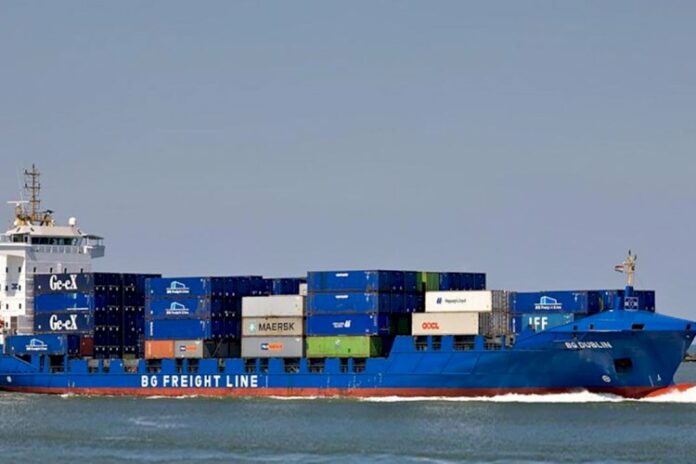
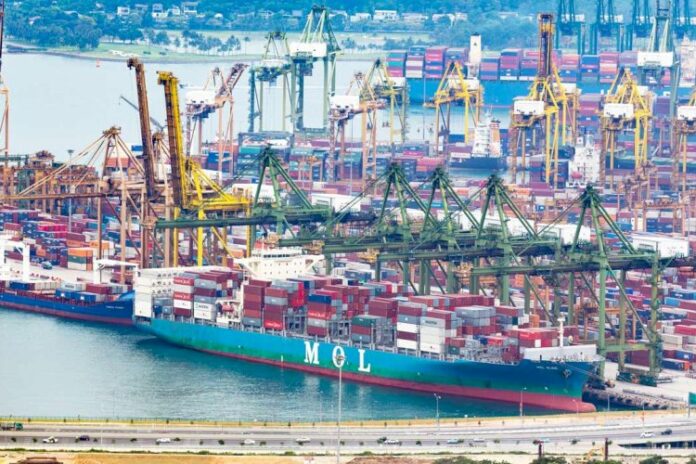
The newly announced service will call between Liverpool and Dublin on a tri-weekly basis, ensuring a regular facility to the meet the dynamic needs of each customer in the fast-paced environment of short-sea shipping.

BG Freight Line, part of the Peel Ports Group, provides a comprehensive range of logistics services to and from Ireland, the UK and continental Europe. These services include door-to-door shipping, feedering and quay-to-quay shipping for all types of containerised cargo.

Koert Luitwieler, CEO, BG Freight Line, said:

“Our sailing schedule is amongst the best in the business and as part of the Peel Ports Group, we are able to offer the assurance to our customers that we are both an established and reliable partner. We are always looking for new growth opportunities and adding another service to the Dublin – Liverpool route will strengthen our excellent Irish Sea network even further. The extra call in Liverpool allows us to meet the demands of our customer, giving them greater flexibility to move last minute cargo closer to its end destination in an ever-changing landscape”.

David Huck, Managing Director, Peel Ports said:

“We are delighted to welcome this extra weekly service as it reinforces the strategic importance of this route, as well as our ambition and commitment to provide the seamless movement of goods between Dublin and Liverpool. During these uncertain times, it’s imperative that we remain agile for our customers and remain customer-focussed to find a fast solution that ensures cargo, especially essential supplies reaches its destination on time”.

The Port of Liverpool is ideally positioned to be at the heart of a distribution network for UK and Irish markets. The Port is adept at offering innovative and sustainable solutions for warehousing, manufacturing and retail industries, connecting the UK’s major conurbations to both the Irish Sea Hub and beyond.

Veson Nautical launches a commercial maritime educational portal

0

Veson Nautical unveiled Veson University – a unique commercial maritime educational portal for members of the Veson community. Designed for Veson clients, employees, partners, or anyone looking to learn more about commercial maritime technology, Veson University provides digital access to high-quality training and certification solutions to help learners be more successful in their jobs, empowered by the Veson IMOS Platform (VIP).

Brian Berry, Director of Technical Solutions at Veson Nautical, noted:

“For years we’ve had a dream to launch an educational product for the community, in addition to our product itself. We’ve always known that when the time is right for our employees and our customers, we would launch an online education platform. We are fortunate to be in a position in our company’s history where we’ve laid the groundwork necessary to launch that platform as Veson University.”

Veson’s specialized e-learning platform goes beyond simple online training – the program will offer a standardized catalog of self-paced courses, materials, and role-based certifications. Users can progress through learning paths and courses, earn badges, record notes and findings, track course milestones, and access certificates all through a central online learning platform. Each course is individually designed by Veson Nautical consultants and maritime technologists, sharing specific learnings gleaned from Veson’s nearly two decades in business.

Laura Burns, Education Content Strategist at Veson Nautical, commented:

“Learning a new technology is never just about knowing what to click on. For users, it’s about understanding how the technology can help them accomplish daily tasks and track progress toward their goals. For companies, having well-trained users with access to resources for continuous learning ensures they will get the most value out of their investment in VIP. Veson University exists to ensure that our clients can work confidently and efficiently in the system while continuing to build their skills.”

Veson University was launched with a set of inaugural courses; VIP Product Concepts, an introductory overview to the key modules and benefits of the Veson IMOS Platform; VIP New User Onboarding, a learning path with 14 courses that expose learners to core concepts, workflows, and operating standards; and VIP Onboarding Certification Level 100, an introductory level exam and certificate to validate VIP expertise in the community. Veson University is an evolving online institution, and new content and courses will be added on a continuous basis moving forward.

Berry commented:

“I’ve been training colleagues and clients for over 12 years and recognize that you need a lot of information to work optimally within the maritime and maritime technology space. From industry knowledge, to how a shipping company works, to understanding a backend integration, we are covering a large scope of concepts. Veson University provides a structure that modularizes this learning and allows you to custom build the right learning path for you and your business. It’s a unique combination, maritime and tech. I’m humbled to have the opportunity to work with an incredibly smart team to build something we have dreamed of for a while.”

Veson University is officially live, and all courses are free for the remainder of 2020. 

Sonardyne’s Vigilant sonar for a new design diver delivery unit

0

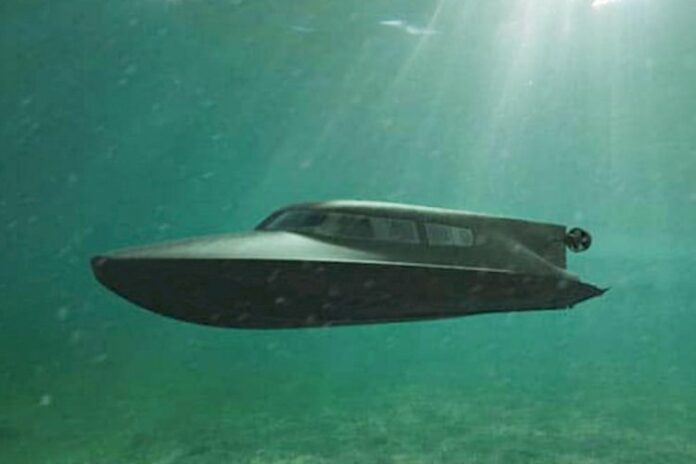
Underwater obstacle avoidance technology from maritime defence and security specialist Sonardyne International Ltd. has been chosen for a new design diver delivery unit (DDU) being built by SubSea Craft.

Sonardyne’s Vigilant forward looking sonar (FLS) will provide a critical hazard avoidance capability for the crew and embarked divers of the VICTA Class DDU when navigating on or below the surface.

Using a compact and sophisticated bow-mounted transducer arrangement, Vigilant FLS displays water depth, sub-surface obstacles and features by creating an accurate 3D model of the underwater environment over a 90° field of view. The model is displayed relative to the underwater vehicle or surface vessel it’s fitted to, overlaid on standard charts in real-time, providing operators with an easily-interpreted topographical image of their route ahead.

Vigilant FLS provides this detailed and easy to interpret 3D bathymetry out to 600 m, as well as automated warnings of unseen collision hazards out to 1.5 km, supporting safe navigation for mariners, underwater vehicle pilots and unmanned surface and subsea systems.

SubSea Craft’s VICTA Class DDU offers the speed and endurance of a long-range insertion craft with the stealth and capacity of a swimmer delivery vehicle. It can travel up to 250 nautical miles (nm) at speeds of up to 40 knots on the surface, whilst submerged it cruises at 6 knots, with a ‘sprint’ capability of 8 knots, for up to 25 nm to deploy and recover up to eight operatives (two crew and six divers) to their objective area mission-ready.

Tim Chicken, SubSea Craft’s Chief Commercial Officer, said:

“Being able to detect – at range – navigation hazards, before they become a real threat, is mission-critical to the sort of operations likely to feature in VICTA’s playbook. Vigilant is the solution. With Vigilant integrated into VICTA, complete with its easy to use, intuitive graphic user interface, pilots can visualise the environment ahead to navigate safely and avoid obstacles ensuring safe insertion and recovery of operators, regardless of the mission. As VICTA is designed around the operator, Vigilant was the ideal solution.”

Environmentally friendly hybrid CTVs under construction

0

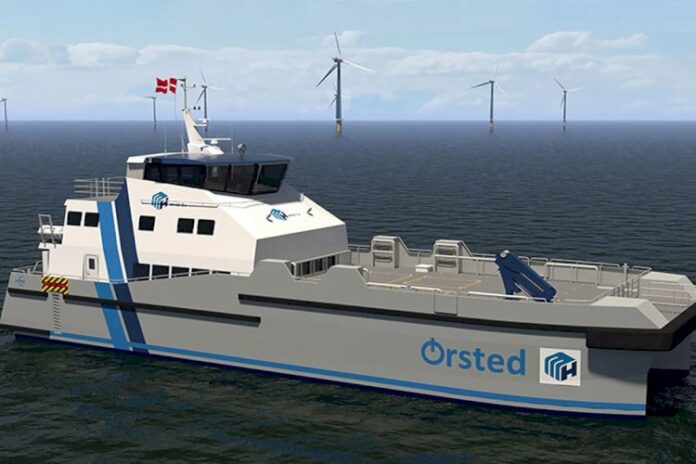
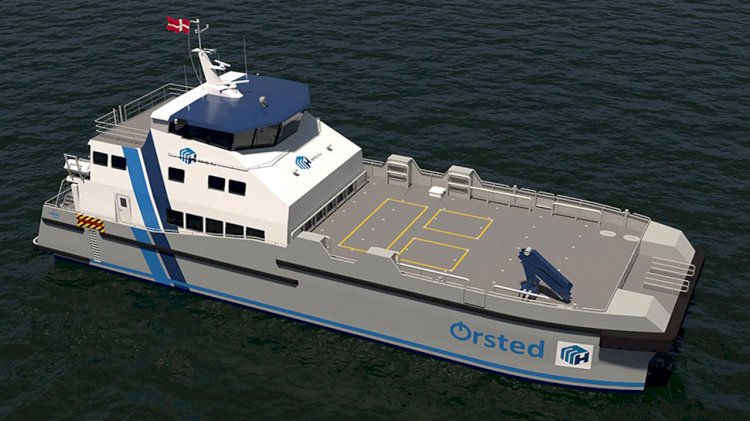
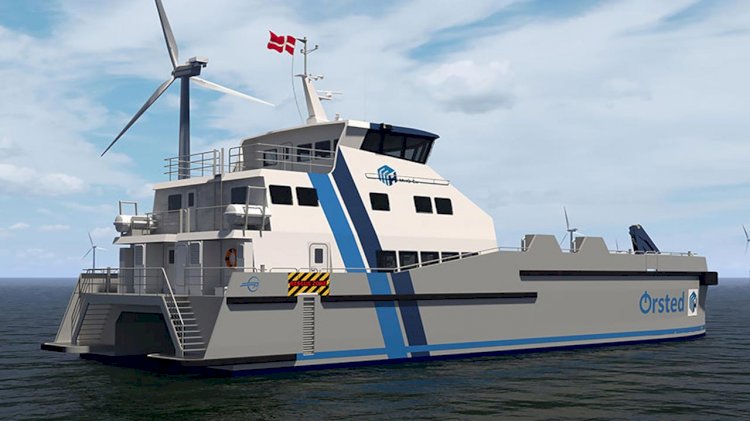
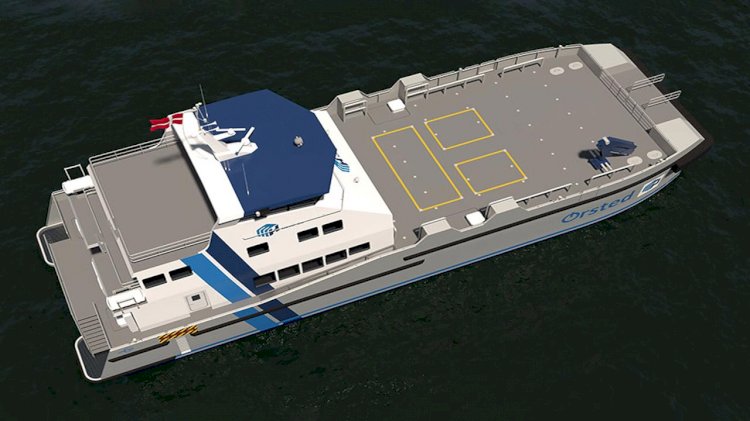
The Incat Crowther 35s will use modern electric motors to save on weight, space and emissions for the benefit of the environment as well as fuel economy in the offshore wind industry.

The vessels will use a combination of direct drive and electric propulsion for maximum flexibility and significant redundancy. Reductions in emissions will be seen across a range of operating modes, including a zero-emission mode. The newly developed hybrid propulsion packages are designed in a way which enables them to be adapted at a later state to future eco-friendly power generation technologies such as hydrogen.

Under construction at AFAI Southern Shipyard, the vessels will enter service in mid-2021, operating under contract with Ørsted, where they are scheduled to transport technicians and equipment to the offshore wind farm Hornsea 2 in the North Sea.

MHO-Co CEO and founder, Mik Henriksen, says:

“Designing and building hybrid CTVs is a huge step in the environmental direction, and I am proud that we at MHO-Co have found partners who share our vision for sustainable development in the offshore industry. With these new vessels we still offer some of the largest and most reliable CTVs in the world, and they can be converted to future technologies.”

MHO-Co has partnered with Incat Crowther to develop the new generation of vessels, following the success of MHO Gurli and MHO Esbjerg. Incat Crowther’s expert knowledge of offshore catamarans will combine with MHO-Co’s insight and experience with CTVs to result in two unique, state-of-the-art vessels.

Ed Dudson, Managing Director of Incat Crowther Europe says:

“MHO-Co always push the boundaries when it comes to new vessels in the Offshore Wind Industry. These new 35m vessels are no different. It’s great to be working with Mik and his team again on the latest project, which will really bring hybrid technology to the fore.”

The vessels’ propulsion systems will be installed by Danfoss’ Editron, consisting of permanently magnetized electric motors that save both weight and space on the CTV while consuming less fuel and giving higher efficiency.

NYK vessel rescues four fishermen off the coast of Manila

0

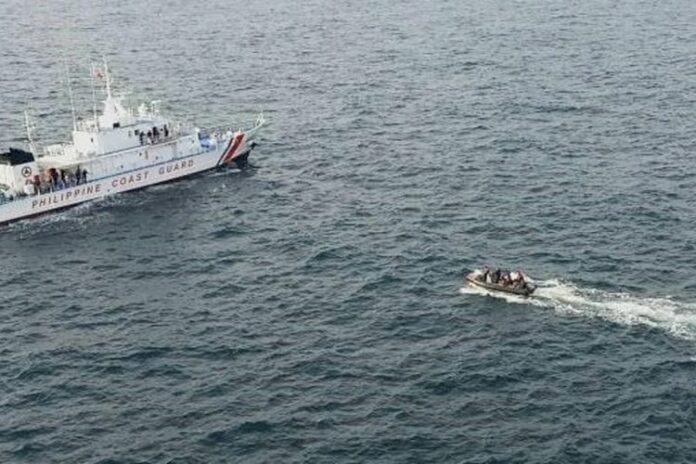
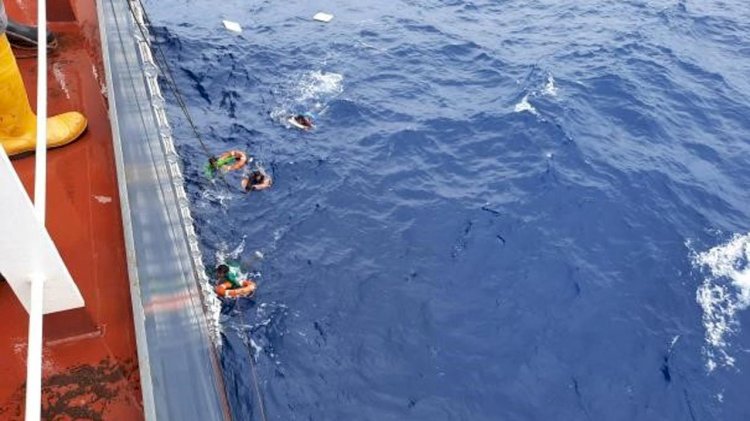
While CSK Zephyr was sailing from Port Hedland, Australia, to Caofeidian, Tangshan in China, the vessel found four fishermen clinging to their boat.

The master of CSK Zephyr immediately informed shore management, the Philippine Coast Guard, and the Maritime Rescue Co-ordination Centre, and the four men were brought on board. The rescued fishermen are in good health and have been transferred to a Philippine Coast Guard vessel.

DNV GL’s My Care: Applying hospital-grade infection risk management to ships

0

Managing infection risk during the COVID-19 pandemic requires a new approach to disease control and prevention.

My Care is DNV GL’s infection risk management approach that has been developed to assess, manage and mitigate infection risk in management systems, business processes and operations. My Care incorporates local regulations and guidelines – it can be applied to any vessel type, as well as terminals

My Care’s suite of independent assessment services is designed to help businesses reassure stakeholders that they have put infection risk management at the core of their risk management strategy.

The My Care methodology is derived from the approach DNV GL applies to assess infection risk management in hospitals. It brings together aspects of DNV GL’s healthcare standards, best practices in risk management, HSE and quality management systems and maturity safety rating standards.

The My Care assessment framework is applicable to companies in any type of industry, including the maritime industry. It differs from DNV GL’s recently launched CIP-M which is a certification standard for infection prevention developed specifically for cruise and other vessel types. CIP-M includes sections on very specific areas such as medical staff, patient rights and medical records.

Luca Crisciotti, CEO of DNV GL – Business Assurance, says:

“Verification by a third party provides assurance that the right measures are in place to keep people safe, providing transparency and enhancing the trust of passengers and other stakeholders. Active communication of infection risk prevention and mitigation efforts can help companies restore passenger trust, as well as that of employees and other stakeholders. All My Care assessments result in a dedicated trust mark that can be displayed online or onboard the vessels, for example, and through which you can share more information.”

As a starting point to resuming operations, companies can choose to assess how well they have implemented infection prevention processes and measures. In addition, My Care can be used to measure infection risk management maturity. This provides a comprehensive understanding of the maturity of their existing processes. It also facilitates integration into and development of HSE (Health, Safety & Environment) management systems, to build long-term business resilience.

The Finnish cruise and ferry company Viking Line is the first maritime business to complete a My Care readiness assessment, covering seven vessels as well as six terminals.

Knut Ørbeck-Nilssen, CEO of DNV GL – Maritime, says:

“The pandemic has put immense pressure on businesses to demonstrate a readiness to re-open and reliably sustain operations – the maritime industry is no different. Following our recent launch of the certification of infection prevention in maritime (CIP-M), My Care is yet another example of how DNV GL continues to draw on its existing expertise and experience in healthcare and other industries to innovate new maritime-targeted products to meet the challenges of today and tomorrow.“

MOL and NW Innovation Works announce new partnership

0

Tokyo-Mitsui O.S.K. Lines, Ltd. and Northwest Innovation Works, Kalama, LLC have announced MOL will invest in NWIW and will provide and operate purpose-built next-generation ships to serve the planned methanol facility at the Port of Kalama in southwest Washington, USA.

With the support of MOL, NWIW gains an experienced partner with global reach to better meet the growing demand for cleaner materials, as identified by the International Energy Agency and consistent with UN Sustainable Development Goals.

The planned facility in Kalama will convert regionally sourced natural gas to methanol to be transported via ship for use in dedicated materials pathway production in Asia. The methanol will be used to produce materials, including olefins, the primary components in numerous products, including medical devices, such as masks, gowns, gloves, and eye protection, recreational equipment, clothing, cell phones, and furniture, among many other applications.

Having over 740 ships in its fleet with a capacity of nearly 55,000,000 deadweight tons, MOL is one of the world’s largest shipping companies and methanol carriers. Partnering with NWIW at an early stage places MOL in the best position to provide safe operation, service and solutions with the aim of achieving the highest levels of environmental benefits. By participating in this project, MOL will obtain a deeper knowledge of overall methanol activities, allowing the company to provide better services and solutions for its customers.

This announcement furthers NWIW’s mission to produce the most environmentally sustainable and least carbon intensive industrial-scale methanol for clean essential materials. NWIW methanol will displace more carbon-intensive coal-based methanol, resulting in GHG reductions globally. In addition, NWIW will offset one hundred percent of its GHG emissions from both direct and indirect sources within Washington State.

Beyond these and other environmental highlights, including using ultra-low-emissions and zero liquid discharge technologies, the facility will contribute substantial economic benefits to the local economy. The investment of well over $2 billion will result in over 1,000 new construction jobs and up to 200 permanent direct family-wage jobs, as well as providing $30 to $40 million in annual tax payments paid to state and local governments.