0.2 C
New York
Home Blog Page 834

Outfitting of the Nexans Aurora starts at Ulstein Verft

0

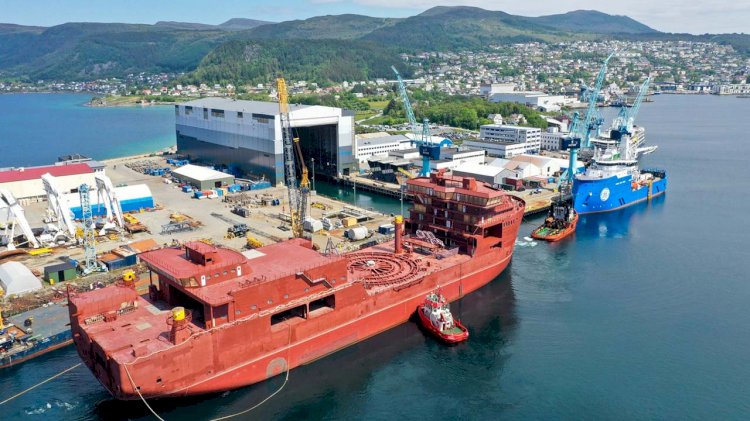
In June 2018, a shipbuilding agreement was signed between Nexans and Ulstein on a large, DP3, cable laying vessel (CLV) to support markets such as the offshore wind industry. The construction project now enters a new phase, as the outfitting work at Ulstein Verft is about to start.

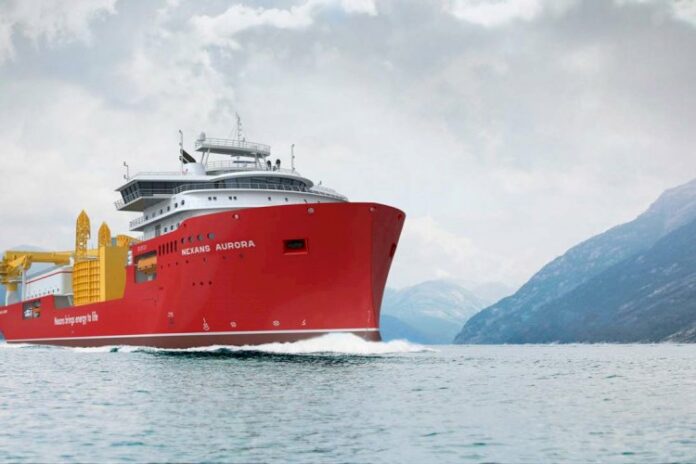
The CLV Nexans Aurora hull arrived Ulstein Verft on 15 June 2020, after having been built at CRIST, Poland. The hull will now be towed into the dock hall at Ulstein Verft before activities such as outfitting, electrical work, insulation and piping commence. Ulstein Verft will also install the main components such as the main generator set, the power package, deck machinery, winches and topside equipment.

The Nexans Aurora is measuring 149.9 m in length and 31 m in the beam. She will be prepared for vertical lay operations and complex subsea construction tasks in deep waters in addition to the principle built in structural and system capacities and flexible design features to allow easy adaptation to customer’s future needs.

The Nexans Aurora will be equipped with a large capacity cable handling spread including a 10,000 t split turntable with dual product lay lines with capacities and features to handle safely and efficiently the full Nexans submarine systems product line.

The vessel also contains a dedicated enclosed cable splicing area offering a controlled environment for performance of all product splicing and termination work to the exact standard as performed in our factories.

The vessel has been developed through the combined experience of Nexans, Skipsteknisk, Ulstein Verft and MAATS Tech, each world leading in their own fields to produce a subsea cable and umbilical systems installation vessel for worldwide operations, covering the full range of shallow and deep subsea activities.

Maiden voyage of China’s first hybrid ship

0

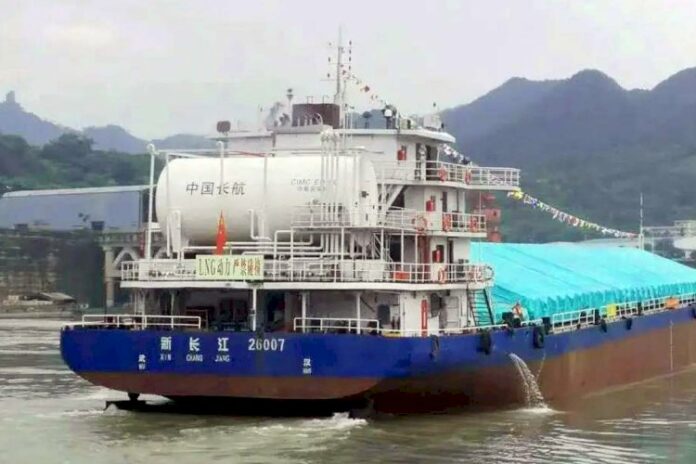
It was reported that this ship is China’s first oil, gas and electricity-powered hybrid inland river ship, and its general contractor for technological transformation is CIMC Enric.

Yang Xiaohu, Executive Director and General Manager of CIMC Enric, attended the ceremony. While extending warm congratulations to CSC, he also expressed his great honor for CIMC Enric to participate in the clean energy ship renovation project as EPC general contractor.

It was reported that the ship uses LNG (liquefied natural gas) as the main fuel, adopts dual power driven by DC network and propulsion motor, and can realize seamless switching of diesel / electric dual propulsion systems through PTI gear box, representing the most advanced technology of oil-to-gas conversion for domestic inland river ships, and it is a truly green and environment-friendly ship.

Compared with traditional ships, the ship’s pollutant emissions are greatly reduced, nitrogen oxides are reduced by 90%, sulfur oxides and PM2.5 are close to zero emissions, and the phenomenon of “black smoke emission” is completely eliminated. Compared with traditional power ships, the “New Yangtze River 26007” can reduce fuel consumption by 10%, and the price cost can be reduced by 25%-30% year on year. The safety technology is guaranteed, energy conservation and environmental protection are effective, and economy and efficiency are notable. The ship is a typical demonstration ship built under the background of promoting the strategy of “Gasified Yangtze River”. It will strongly promote the application of LNG clean energy in inland river shipping, which is of great significance to the ecological construction along the Yangtze River.

Yang Xiaohu said:

“The successful maiden voyage of the “New Yangtze River 26007″ not only reflects the efforts and contributions made by CIMC Enric in using clean energy to help the high-quality development of green Yangtze River shipping, but also demonstrates its sense of social responsibility in the efforts to protect the mother river.”

V.Group launch new risk-based SIRE Performance Analysis Platform

0

In March 2019, V.Group commissioned an external review of its vetting processes with Barber Maritime Ltd. The review looked at V.Group’s processes, procedures and digital platforms with the remit to give assurance all of its offices were performing to top quartile standards.

The report provided a detailed document review which concluded:

“V.Group uses strong software tools, such as ShipSure, for recording events and to provide detailed management information. The regional offices operating time charter vessels are currently within the top quartile of the industry, as measured by International Oil Major vetting departments.”

Nevertheless, findings highlighted areas where improvements could be made, including  considering moving the assessment of ship inspection observations onto a risk-based platform. This platform would be used to define high-risk observations and to provide procedures with levels of responses based on risks.

The platform is now ready and, after months of development, launched on 2nd June. The platform helps to understand the risks and ensure mitigation to prevent harm to people, property or the environment. V.Group’s fleet cells are now well-equipped to allow easier decision making, increase efficiency, track performance, and share best practices which will ultimately improve the vetting process and tanker fleet performance overall.

The main focus for V.Group’s new platform is to drive performance, enhance learning, prioritise risk-based decision making, and eliminate high and medium risk findings. With this refreshed proactive fleet risk assessment and risk mitigation approach, V.Group aims to lead the industry for safety, quality and operational performance excellence.

Mike Bradshaw, Global Head of HSEQ, said:

“Our reporting capabilities and our capacity to provide actionable insights will be redefined by our new Vetting Analysis platform. We will not only be able to risk assess findings and inspections, but also monitor performance on key process safety indicators with the new system. We can drill into SIRE Vetting Performance much better than before, and I look forward to putting our new insights to good use to continue to provide flawless service delivery to our customers”.

Steve Barber, Director of Barber Maritime Ltd and former Global Head Vessel Quality Assurance for Royal Dutch Shell, led the detailed review of the V.Group vetting processes in March 2019.

Captain Barber concluded that V.Group were in the top quartile of the industry with respect to their vetting processes and made three improvement recommendations to move V.Group to the top of the quartile, provide for continuous improvement and attain best in class performance.

On the 8th June 2020 Captain Barber was provided with a demonstration of the V.Group SIRE performance platform and stated:

“The SIRE performance platform is meeting, or exceeding, oil major requirements with respect to vetting performance. The platform’s capabilities provide V.Group with the tools and management information to deliver top quartile performance across their suite of management offices. The ability to drill down to specific details is considered vetting best practice in vessel management.”

Turkish shipowners and operators Güngen invest in Kongsberg Simulators

0

Kongsberg Digital has won a contract with Turkish shipowners and operators Güngen Maritime & Trading A/S for delivery of a K-Sim Cargo Handling Simulator, interfaced to a real KONGSBERG K-Chief 600 marine automation system.

The K-Sim Cargo simulator model replicates a modern Suezmax crude-oil tanker, reflecting the layout and specification of Güngen’s own vessels. Operating in tandem with the K-Chief 600, the integrated system will be used by Güngen to optimize the company’s routines for cargo handling as well as training, testing and verifying the competence of the firm’s crew.

Upon delivery, the high-performance simulator system will have the same number and correct volumes of cargo/ballast tanks as Güngen’s real crude-oil tankers, while all pumps and pipelines will have the same characteristics. Inert gas and cargo heating system representations will also be included. All simulated equipment and functionality will provide a very similar response to the crew as they will experience when using the real systems after they come on board. In addition to the K-Chief 600 interface, the simulator model will also contain a ballast water treatment control system.

The simulator system will be installed at the shipowners’ office. New employees will undergo internal simulator training before signing on to the company’s vessels, and the training will reduce the overlap time needed on board when new employees sign on.

Capt. Turgul Vural, responsible for managing Güngen’s training center, says:

“We have had a very positive experience in training crews on simulators integrated with the same equipment as is found on board our tankers. Back in 2008, we bought a KONGSBERG simulator integrated with KONGSBERG’s K-Chief 500 to train our crews and improve our routines. Since this approach has been hugely successful, it was natural for us to come back to KONGSBERG when we needed a new type of cargo simulator model with an interface to the latest K-Chief 600.”

Tone-Merete Hansen, Sr. Vice President, Kongsberg Digital, adds:

“Güngen is a company with high ambitions when it comes to setting and applying the International Standards of Liquid Cargo Transportation. We are pleased to be able to deliver simulators which are specifically adapted to Güngen’s training and verification needs, and are confident that our simulator systems will continue to help in improving the safety and sustainability of the company’s shipping business.”

BPA teams up with Astaara to highlight growing cyber risk management

0

The explosion in remote working and reliance on technology in maritime business continuity throughout the covid-19 crisis has boosted interest in cyber security and resilience in the wake of a fourfold increase in cyber-attacks in the maritime industry since February.

In one high profile attack last month, (9 May) computer systems at the Shahid Rajaee port in the strategically important Strait of Hormuz were attacked, creating traffic jams of delivery trucks and delays in shipments. It is understood that the attack came in direct response to a failed Iranian cyberattack on an Israeli water facility last month.

Whilst attacks from criminal groups are far more common than suspected state-based attacks or ‘hacktivist’ incidents, the overall upward trend is concerning and driving increased interest in security. The global cyber security market is expected to grow from £144 billion to £182 billion by 2021, although that will still be only around 10% of the value lost to cyber-attacks each year.

Robert Dorey, CEO of insurance service and risk management advisory business, Astaara, said:

‘Now, more than ever, the advantages of digitisation should be capable of being realised, but only if the corresponding management resilience and recovery plans are in place and practiced to ensure those digital control systems and data flows are uninterrupted and uncorrupted. Processes need to be continually reviewed and updated as necessary, training provided, and new approaches to monitoring assessed and adopted.’

Mr Dorey added that marine companies were at increased risk of cyber-attacks, as scammers prey on the coronavirus disruption.

Mr Dorey said:

‘The Covid-19 restrictions mean that many activities, for example crew change, marine warranty survey or superintendent spot check will be done differently or just may not happen. This means that maritime business are more vulnerable. Criminals realise this and do not care about the human cost of Covid-19, or their crimes. They are not interested in the morality of their action. Instead they are interested in disruption and making money; they see Covid-19 as an opportunity.’

Remote working has been highlighted as a major risk for security, as the attack surface is broadened. Spoofing to misdirect payments long being a favourite of cyber criminals; classically, hackers will plant a virus, enabling them to monitor emails and change the text of a message from suppliers, adding a different bank account.

Mr Dorey said:

‘Covid-19 impacts the maritime industry like no other, principally due to complex supply chain relationships.’

Astaara white paper – ‘Managing Ports’ Cyber Risks’ – is launched with The British Ports Association, as part of The Port Futures thought leadership programme. The paper looks at the ever more complicated business environment a of a port, with increasing regulation and risk.

The BPA programme was launched in 2018 to examine global emerging trends in the ports and shipping industries. This rolling programme of activity addresses key issues for ports over the next 50 years, including new technology and new applications of technology, infrastructure, and skills, as well as potential opportunities for and challenges to British ports that these issues present.

The British Ports Association (BPA) represents over 100 port members and over 80 associate members. Our port members own and operate over 350 ports, port facilities and terminals of all sizes across the UK, facilitating more than 85% of the UK’s maritime trade, 95% of which is carried by sea.

Mark Simmonds, Head of Policy and External Affairs at the British Ports Association, said:

“As key gateways for 95% of the UK’s international trade, ports are critical to the UK economy. The British Ports Association is keen to explore the benefits that technology can bring to our industry, whether through increased productivity or new ways of providing services. As port systems become ever more connected and digitalised, it is important that security and resilience is built in in to processes and training. Cyber security should be a board-level issue for all ports and we are committed to sharing and improving both Government policy and industry practice wherever we can. We hope this paper will serve as a useful reminder and guide for UK ports.”

Triton Knoll: First offshore cable makes landfall as installation progresses

0

Triton Knoll offshore wind farm has marked a significant step in the construction of its state-of-the-art electrical system, ahead of anticipated first power generation in 2021.

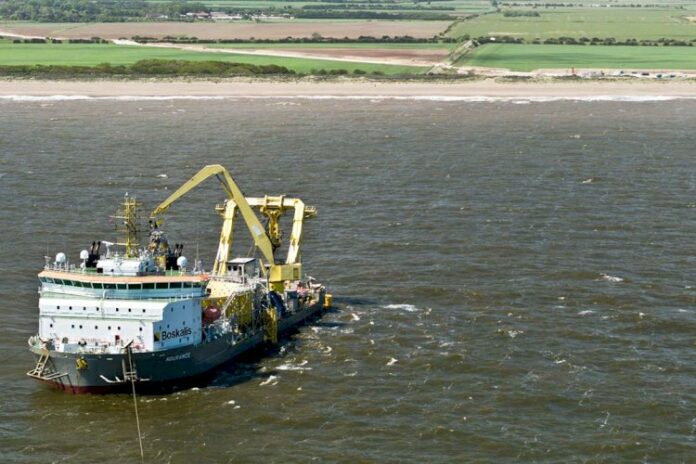
The project has successfully installed the first 25km length of subsea offshore export cable from its landfall connection at Anderby Creek, establishing a first point of contact between the onshore and offshore infrastructures.

It’s an important step in the delivery of this nationally significant energy infrastructure project which, when fully operational, will be capable of generating wind powered electricity equal to the needs of over 800,000 UK homes, or  all the homes in Lincoln, Nottingham, Sheffield and Leeds combined.

Contractor Boskalis, in a consortium with NKT, is continuing with cable installation throughout the summer in order to complete the full offshore circuit of two lengths of 3-core export cable, linking the two offshore substation platforms to the onshore electrical network. Once complete, each circuit will be capable of transmitting the high voltage electricity generated by the wind farm’s 90 turbines back to the shore 50km away, and ultimately into UK homes and businesses.

Julian Garnsey, Triton Knoll and innogy project director, said:

“This is a very welcome achievement for all those on the project who have worked tirelessly to help us stay on track, despite some serious challenges, not least of all the impacts of Covid19. It’s great to see the onshore and offshore assets coming together now, and its thanks to our teams and contractors that Triton Knoll is becoming an increasingly physical presence offshore. It’s also a big thank you to the local community that has worked with us throughout the construction works to date. In less than a year’s time, Triton Knoll expects to generate our first electricity, and will become a hugely important asset supporting the UK’s drive to make low carbon electricity the backbone of its energy industry.”

The offshore export cables are just one part of the wider offshore electrical system, and connect into two Offshore Substation Platforms, which have both now been installed over 50kms off the coast of Lincolnshire. Inter array cabling, which links the turbines to the offshore substation, will follow during the summer, ahead of turbine installation in early 2021.

Triton Knoll is a state-of-the-art, 857MW offshore wind farm, consisting of 90 of the world’s most powerful turbines, and representing a significant investment in new UK energy infrastructure. Located 32km off the Lincolnshire coast, Triton Knoll is the largest offshore wind farm currently in construction by innogy and, once fully operational, will be capable of generating renewable energy equivalent to the needs of over 800,000 typical UK households.

Cadmatic and Floorganise partner to enhance shipyard production planning

0

The partnership includes joint software products as well as technical and commercial cooperation under the Cadmatic Floorganise brand name.

Building on successful cooperation on integration projects with renowned customers in the superyacht and work boat industries, the partnership facilitates joint development of a shipbuilding planning and control platform that integrates engineering data with planning and control functions. The platform can reduce the duration of shipbuilding projects by more than 15%.

The partnership supports CADMATIC’s strategic growth goals and strengthens its position as a global market leader in marine and process design and information management software. It also expands CADMATIC’s shipyard user base from engineering users to users in project management, planning and production control. The partnership allows CADMATIC to provide design and information management software to its customers as a “one-stop shop”.

CADMATIC CEO Jukka Rantala says:

“The partnership creates excellent opportunities for CADMATIC. Now we can provide our customers with digital information management solutions for the entire shipbuilding production and supply chain process. Floorganise has already demonstrated its capability to integrate engineering, production, planning and supply chain data from various sources in a consistent digital ship production execution system.”

Ronald de Vries, Managing Director of Floorganise B.V., says:

“Partnering with CADMATIC enables end-to-end digital processes and information flows in shipbuilding. We are happy to enter into this partnership with CADMATIC, which allows us to offer shipyards enhanced capabilities to not only increase their level of project control but also the efficiency of their operational performance. It is a win for customers, CADMATIC, and for us.”

Alibaba joins Blockchain Bill of Lading project

0

Chinese e-commerce and technology group Alibaba has signed up to the International Port Community Systems Association’s (IPCSA) ground-breaking Blockchain Bill of Lading initiative and embarked on a new blockchain project in the organisations’ joint Logistics Visibility Task Force. 

The joint work is aiming at standardisation and proof-of-concept (POC) of blockchain application in logistics and e-commerce.

The IPCSA Blockchain Bill of Lading initiative is being led by an IPCSA member, Israel Ports Company, which operates the Israeli Ports Community System (IPCS). This year, Israel Ports Company ran a number of successful pilots using Blockchain technology for transferring electronic Bills of Lading. Some pilots involved the shipment of a cargo via ZIM Shipping Company from Israel to Ukraine, where IPCSA member PPL 33-35 operates that country’s Port Community System. The exporter was Adama Israel, with shipments to Adama Ukraine, with the help of customs agents Damco (Israel) and Rem-trans (Ukraine).

A Bill of Lading was electronically issued by the shipping company and transferred to the exporter and then to the importer in Ukraine/Spain. The system provides information as to which party holds the electronic Bill of Lading at any time, together with the logistics status of the cargo.

Ms Zhu (Judy) Hongu, Head of the Standardization Department of Alibaba Group, said:

“Alibaba and IPCSA have been working closely together for the past two years. In October 2018, in collaboration with LOGINK (China’s national logistics information shared network), we set up a global intelligent logistics network, named the Logistics Visibility Task Force. In its work to develop global smart supply chains, the Task Force has focused on the development of track and trace solutions and the use of ISO standards. Following on from this work, Alibaba has signed up to the IPCSA Blockchain Bill of Lading initiative, effectively making this a second workstream of the Task Force.”

Mr Sun Tengda, General Director of LOGINK, said:

“Working with Alibaba and IPCSA together, Logistics Visibility Task Force endeavoured to solve the problems in cross border logistics information sharing, trace and track service was the first breakthrough, and the ISO standards we are working on is also part of the mission. Now, with the technical advantage of Blockchain, we are looking forward to explore an innovative route to establish this globally trusted network together.”

Ms Gu Xuemei, Alibaba Cainiao Network CTO, said:

“The use of Blockchain in transferring an electronic Bill of Lading is expected to deliver significant savings in time and money to all participants in the supply chain, while maintaining a high level of information security and preventing forgeries. In addition, Alibaba Cainiao Network hopes to cooperate with industry chain partners to build global blockchain application standards for logistics and e-commerce.”

Richard Morton, secretary general of IPCSA, said:

“There are numerous strong reasons for using Blockchain technology for Bills of Lading. Blockchain is transferring an asset and there is huge value in linking the consignment to the information that Port Community Systems hold. This can match the Bill of Lading to any ‘event’ during the movement of the cargo – for example, that the cargo has been loaded on the ship, arrived at port, been unloaded, been cleared by customs, or exited the gate. By matching these events to the Bill of Lading, the solution gives much-needed information and flexibility.

There are multiple parties involved in this process – shippers, shipping lines, importers, banks, forwarders, agents, and so on. By matching information in this way, nodes can be added to the Blockchain relevant to specific partners.

Standardised and structured data is the key to making this work. We recognise that this is a journey. Getting people to use structured data – especially small and medium-sized companies – is a challenge. The IPCSA Bill of Lading will also accept adding PDF and JPG documents in the first version, but ultimately it will be entirely based on Blockchain structured data.”

IPCSA also welcomes the recent Digital Container Shipping Association (DCSA) initiative to help standardise the Bill of Lading, which will help in the acceptance of an eBill of Lading.

VIDEO: Vega will launch ESAIL maritime microsatellite

0

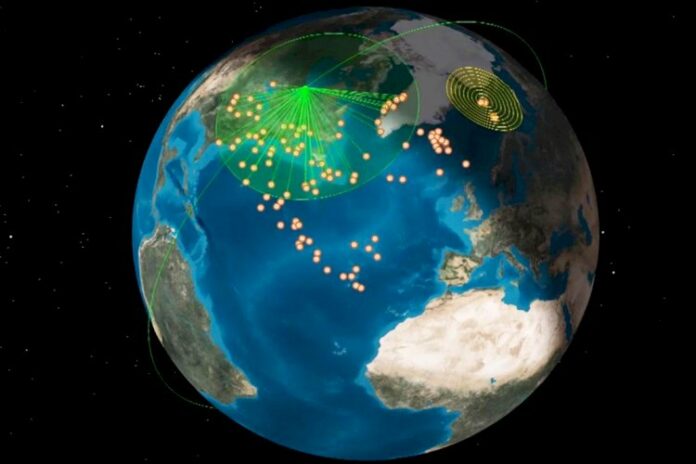
Soon a Vega will launch from Kourou carrying a payload of several satellites. These will be delivered into orbit by a new multi-payload system developed by ESA. Among these small satellites, E-SAIL.

This microsatellite is dedicated to supporting maritime traffic and making seafaring safer. It is part of ESA’s SAT-AIS programme, which aims is to increase the coverage of the Automatic Identification System for ships. This system is a short-range coastal tracking system currently used on ships that makes traffic safer but which has a limited range. With microsatellites from the SAT-AIS programme such as E-SAIL maritime shipping can be made safer across the oceans.

The ESAIL satellite is built by LuxSpace for the exactEarth constellation of AIS satellites, through an ESA’s Partnership Project together with the Luxembourg Space Agency and other ESA member states.

5G Blueprint project: investigating digital technologies

0

Under the name ‘5G Blueprint’, an international research project is investigating how tele-operation can be used to make transport and logistics more efficient – including across borders. North Sea Port is one of the partners.

A public-private partnership made up of members from the Netherlands, Flanders, Switzerland and the Czech Republic has been granted a subsidy of €10 million euros by the European Union for this purpose. The Dutch Ministry of Infrastructure and Water Management, together with (among others) the Flemish Department for Mobility and Public Works, the port authorities North Sea Port and Port of Antwerp, the business community and the academic sector, has set up a consortium with 28 members. Together they are investigating how transport and logistics can be made more efficient with the aid of remote control (tele-operation) technology – including across borders. The 5G Blueprint project will commence on 1 September 2020 and run for three years.

The parties involved are investigating how exchanging real-time data to and from vehicles, between terminals and vehicles and between vehicles and their head offices can contribute to greater efficiency in the supply chain and help mitigate driver shortages. The aim is to be able to remotely steer and support vehicles and vessels. This is expected to not only improve the accessibility of the important North Sea Port (Vlissingen, Terneuzen and Ghent) to Antwerp logistics corridor, but also to increase employment and strengthen the competitive position of that area. New 5G telecommunications technology will be one of the tools used.

The 5G Blueprint project will investigate digital technologies and telecommunications possibilities. The project will also look at safety, costs and benefits, division of responsibilities, collaboration and standardisation. The insights and lessons from this three-year project will be applied directly in this region where possible. But they will also be important as a new standard and working method – as a ‘Blueprint’ – for other areas and sectors.

The 5G Blueprint project is an extension of the collaboration between the Netherlands and Flanders. A great deal of knowledge and experience is already being exchanged within existing programmes around intelligent traffic lights, ‘Talking Traffic’ and ‘Mobilidata’. The management and development of standards are also being taken forwards jointly.

The participating parties are: the Ministry of Infrastructure and Water Management (including the Directorate-General for Public Works and Water Management), Martel Innovate, HZ University of Applied Sciences, Sentors, Economische Impuls Zeeland, Locatienet, Swarco Nederland, KPN, V-Tron, HAN University of Applied Sciences, Sweco Nederland, Telenet, IMEC, Be-Mobile, the Flemish Department for Mobility and Public Works (including the Agency for Roads and Traffic), Room40, Port of Antwerp, Nxtport, Eurofiber, Kloosterboer, More Work Less Carbon, RoboAuto, Seafar, Verbrugge International, Toyota Motor Europe, Transport Joosen, North Sea Port and Terberg Benschop.

This project has been awarded a grant from the EU ‘Horizon 2020 Research and Innovation’ programme under ‘Grant Agreement’ number 952189. You can read the European Commission press release announcing the grant here.