0.2 C
New York
Home Blog Page 833

HamiltonJet unveils Electro-Hybrid Drive system

0

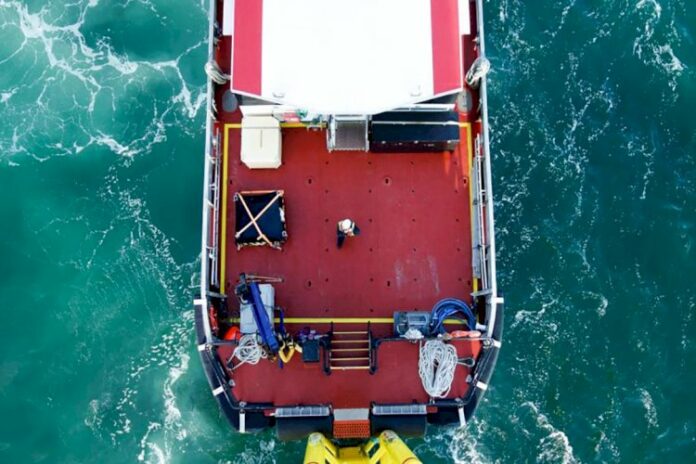
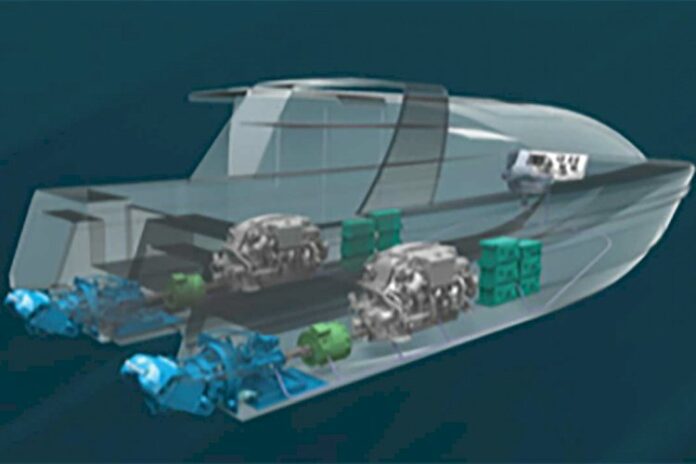
This unique system delivers lowers fossil fuel consumption (reduced further when dock charging, as infrastructure allows) combined with the speed, manoeuvrability, efficiency and safety waterjets are renowned for.

With EHX, HamiltonJet delivers the electric motors, power electronics and control system, alongside specialist expertise to ensure seamless integration with the waterjets, engines, gearboxes or clutches. 

The control system manages the hybrid energy flow between engines, batteries and motors, while charging and discharging the batteries as required. A simple automatic setting enables effortless vessel operation, while a manual setting delivers four different modes of operation – Diesel Only, Electric Only, Charging or Electric Boost.

HamiltonJet CEO Ben Reed says collaborating on a large number of electric hybrid projects around the globe has seen the company become specialist integrators for hybrid electric technologies, which has led to the design of this innovative product.

Ben Reed says:

“When it comes to hybrid electric solutions, we know one size definitely does not fit all. That’s why we’ve created a system that’s scalable to individual vessel projects. Motors, battery capacity and components are all specifically selected based on bespoke need. It means we can ensure the very best outcome for the lowest cost.”

EHX can also be configured for an electric-only vessel with the option of a fully integrated HamiltonJet solution.

Haifa Port Company successfully migrates Navis N4 TOS with remote assistance

0

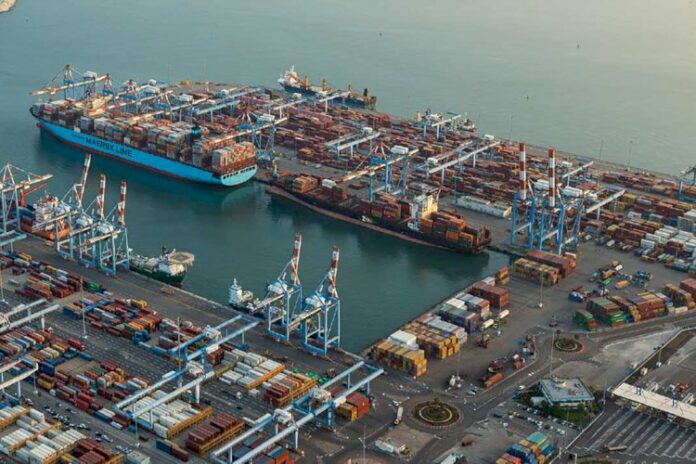
Navis, a part of Cargotec Corporation, and the provider of operational technologies and services that unlock greater performance and efficiency for leading organizations throughout the global shipping industry, today announced that Haifa Port Company has successfully completed their N4 migration project with remote support from Navis.

Located in northern Israel, Haifa Port Company is the largest port in the region, operating at 1.4 million TEU and handling over 25 million tons of cargo, annually. Due to future growth expectations and the demand to add new terminals to the company, Haifa Port Company initiated a project to merge facilities that historically operated as independent operations into one integrated terminal with common equipment, processes and IT management, all overseen by a single management team. As a result of the pandemic, the Navis team could not be on-site to complete the go-live. However, with the full support and hard work of both the Navis and Haifa Port teams, they were able to overcome challenges and complete the project on schedule.

Oded Orr, Project Manager at Haifa Port Company, said:

“These COVID-19 delays and restrictions will continue to dominate businesses over the next few months and beyond. We didn’t want COVID-19 to hold us back from our projects and plans, especially upgrades that can help make day-to-day activities at our site more efficient. After making the shift to an N4 single-facility remotely, we have already seen great results and are now able to operate out of our new terminal successfully.”

Jacques Marchetti, General Manager, EMEA at Navis, said:

“Our job at Navis, is to work with our customers to find solutions that help them optimize their businesses to help them reach their goals. After working with Haifa Port Company to help them complete their N4 integration project, they are now able to address current operational challenges and have a solution in place to help their business run efficiently as they scale.”

Bremen’s Senate resolves to provide shore power for maritime shipping

0

Bremen’s Senate resolved to create comprehensive additional shore power supply facilities at the ports of Bremen. The plans envisage the provision of eight stationary shore power supply units for maritime shipping and two additional connections for inland shipping by the year 2023.

Dr Claudia Schilling, Senator for Science and Ports, stated:

“The creation of shore power connections for maritime shipping is another step forward and an important milestone in our endeavours to become a green, climate-neutral port. Accordingly, the electricity for these permanently installed shore power connections will come entirely from renewable energy sources.”

Prior to the adoption of this pioneering resolution, bremenports and the Fischereihafen operating company had already identified particularly suitable locations both in the Überseehafen area in Bremen itself and at Fischereihafen in Bremerhaven and conducted detailed assessments of the technical feasibility and the costs involved. By the end of 2023, two shore power supply units will be installed for maritime shipping in the container throughput area in the city of Bremen, another one in the ro-ro port area and one at the cruise terminal. At Fischereihafen, there will be three facilities for government vessels and one for research shipping.

To date, the provision of shore power at the ports of Bremen has focussed on port and service vessels as well as inland shipping. Most of the berths for these sectors in Bremen und Bremerhaven have already been equipped with the necessary plant. The new investment programme will create another two facilities for inland shipping at Bremen’s Industriehafen, so that all the relevant mooring points for river traffic will then be equipped with shore power connections.

The total investments for all ten new connections will amount to 32.4 million euros, half of which will be funded by the Federal Land of Bremen, the other half by the federal government on the basis of an administrative agreement to be signed between the federal and state governments.

Schilling commented:

“This political objective is in line with the European Union’s ‘Green Deal” and is also included in the present Coalition Agreement and the federal German Climate Protection Programme. Together with representatives of four other North German states and the federal government, I already signed a Memorandum of Understanding back in autumn 2019 regarding improvement of the framework conditions for the use of shore power at the ports. I am pleased to say that this Memorandum of Understanding is now being followed by tangible measures and that here at the ports of Bremen, we are not taking merely a small step, but a giant leap forward.”

At the same time, however, the Senator appealed to shipowners to design and operate more eco-friendly fleets on the whole. This involved retrofitting as many vessels as possible, as soon as possible, or commissioning new ships with the appropriate equipment for the use of shore power. Schilling stated:

“We can only achieve our goal of clean shipping if everyone involved makes a concerted effort. The more ports that provide shore power, the more cost effective it will be for the shipping companies to adapt their vessels. Ships spend most of their time at sea, so it is only logical that more attention has to be paid to the use of new, low-emission or emission-free propulsion systems to back up the measures in place at the ports.”

Somanor and Brittany Ferries confirm termination of Honfleur shipbuilding contract

0

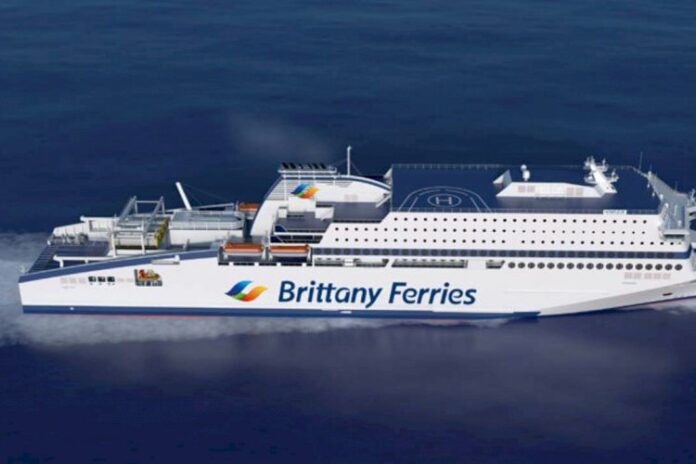
Somanor SAS (a semi-public company bringing together the Normandy Region, and the Calvados and Manche Departments), and Brittany Ferries have confirmed the termination of the construction contract for Honfleur with the Flensburger Schiffbau-Gesellschaft (FSG) shipyard.

The vessel has been under construction in Flensburg, Germany, since 2017. Honfleur was originally scheduled to enter service in June 2019, but delivery of the vessel has been postponed several times due to persistent financial problems encountered by the yard’s management.

The change of main shareholder in September 2019, with the arrival of Lars Windhorst and the Tennor group, did not allow the yard to return to growth and competitiveness.

With the surprise announcement that the yard was placed under the protection of the Commercial Court in May 2020, and unsuccessful discussions with the current management of FSG and its main creditors, Somanor and Brittany Ferries, the backers of Honfleur, acknowledged that they had lost confidence in the yard’s ability to complete the vessel within a reasonable period of time.

thyssenkrupp Marine Systems presents new modular underwater vehicle

0

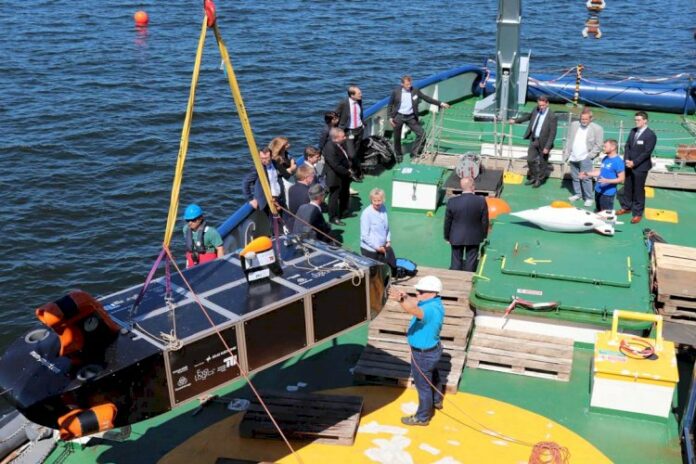
thyssenkrupp Marine Systems, Germany’s number three defence company and world market leader in conventional submarines, today presented the results of a pioneering research project on the feasibility, usability, construction and operation of large modular underwater vehicles.

The focus was on the MUM project “Modifiable Underwater Mothership”, which is funded by the Federal Ministry for Economic Affairs and Energy and, designed in collaboration by industry and science since 2017, is intended to achieve market readiness in the upcoming years.

The presentation was part of the “Maritime Research Programme” whereby the Federal Ministry for Economic Affairs and Energy supports the development of innovative maritime technologies. 

Norbert Brackmann, German government coordinator for the maritime industry, said:

“The MUM project fits in very well with our aspiration to technological leadership. The project results show that individual commitment, teamwork, creativity and German engineering skills are an excellent combination for maintaining our technological lead in future markets. Given the challenging economic situation triggered by the Covid-19 pandemic, innovations and the further development of high-tech will pave the way to a successful future. Therefore, we have included provisions in the recently adopted economic stimulus package to provide additional funds for supporting innovation and the Maritime Research Programme.”
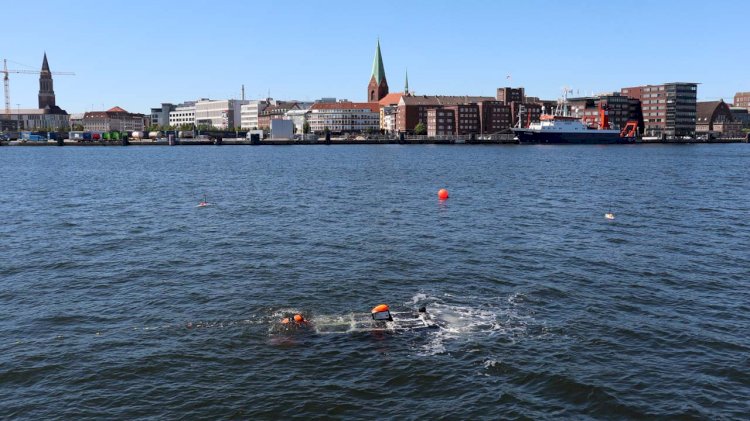
MUM is a modular unmanned underwater system for various applications in the civil maritime industry. Examples include the transport and deployment of payloads, applications in the offshore wind and oil & gas industries as well as the exploration of sea areas with difficult access, such as the Arctic ice regions. In order to meet these requirements, a modular structure is envisaged. The system will use electrical power as the main energy source, by implementing a state-of-the-art, emission-free fuel cell. Where necessary, the power supply system is supported by a safe and reliable Li-ion battery module. Independent of wind and weather, MUM can operate 24/7, 365 days a year.

Dr. Rolf Wirtz, CEO of thyssenkrupp Marine Systems, said:

“We are the only systems supplier in Germany to offer high-tech solutions for the future. The MUM project will benefit from our many years of expertise in fuel cell and battery technology, underwater vehicles as well as maritime sensors and autonomy software. Our project partners from science and industry complement us to an extraordinary degree!”

MUM is to set the new standard for unmanned underwater operations by 2024. Together with the project partners ATLAS ELEKTRONIK, EvoLogics, University of Rostock, TU Berlin, Fraunhofer Institute, German Aerospace Center the Institute for the Protection of Maritime Structures, thyssenkrupp Marine Systems will apply for funding for a MUM large-scale demonstrator as part of the Economic Ministry’s Maritime Research Programme.

Submarine Handling Crane completes Huisman facility for walrus-class submarine replacement

0

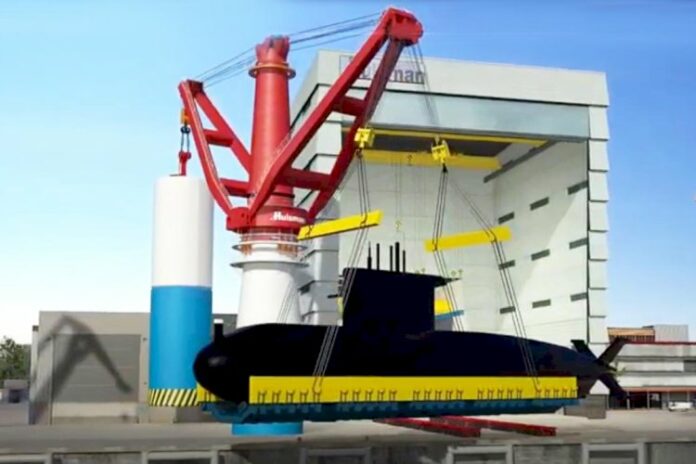
Huisman, a leading designer and manufacturer of innovative and step changing technical solutions to the world’s leading companies in the renewables, oil & gas, naval, civil and entertainment industries, has announced that with the Huisman Submarine Handling Crane its future submarine facility is fit-for-purpose.

With this facility, located in Schiedam, the Netherlands, Huisman enables the three bidding non-Dutch Original Equipment Manufacturers (OEM) to increase Dutch content, reduce costs and investments in specialised facilities, and minimise construction risks.

Huisman has engineered and built the world’s largest (2 x 10.000mt) Offshore Cranes and has developed complex mechatronic solutions such as Heave Compensation Systems and Motion Compensated Grippers. The technology used for these solutions is equal to submarine production technology and meets the requirements for hull assembly and joining assemblies.

With this portfolio-extension, Huisman aims to carry out detailed engineering and production of parts of the pressure hull as well as assembly of elements and parts of submarines, including marine engineering systems. Furthermore, Huisman is able to facilitate the overall assembly and testing of the submarines. All of this under the guidance of experienced submarine OEM partners.

The recently developed Huisman Submarine Handling Crane offers a method for safe and easy handling of complete submarines, from the assembly hall into the harbour and vice versa. With this crane, the Huisman submarine facility is fit for purpose, and provides major benefits and minimal investment risks to the remaining three OEM partners for the replacement of the Dutch Walrus-class submarines.

The location of the submarine facility in the heart of the Rotterdam area facilitates cooperation with the Dutch maritime cluster, contributing significantly to the future Dutch content for the submarine replacement. Furthermore, existing knowledge will be secured and production technology in the maritime and submarine field will be kept up-to-date. This enhances the international competitive position of the region.

The Rotterdam area has built up expertise and equipment support for the current Walrus submarines and subsequent other complex maritime projects. The Dutch maritime cluster offers a central location where all Dutch expertise and knowledge can be integrated in close cooperation with the OEM partners for this replacement programme.

The importance of investing in higher local Dutch content is obvious. The government receives a 125% return on investment for every euro spent in the Netherlands, contrary to a full cash out spent abroad. Involving the Dutch maritime cluster early in the programme reduces risks and therefore costs for initial investments. At the same time, it ensures long-term local employment which is of great value to the area, following the economic downturn as a result of the Coronavirus pandemic.

OWA publishes new recommended boat landing geometry design

0

A new publicly available design of recommended boat landing geometry has been released for use by offshore wind developers and Crew Transfer Vessel (CTV) owners and operators. The design offers a consistent fender geometry for use on CTVs across different wind farms, reducing the time and cost of changing fenders.

It was developed by the Offshore Wind Accelerator (OWA), a collaborative research, development and deployment programme between the Carbon Trust and nine offshore wind developers.

The new design follows analysis of the interaction and impact of CTVs on boat landings during push-on transfers to offshore structures and other vessels, and incorporates better-defined CTV loads, as well as industry feedback and recommendations. It also adheres to the G+’s health and safety guidelines.

Currently there is wide inconsistency in boat landing geometry between different wind farms, even those located in close proximity to each other. This inconsistency results in CTVs either not having the correct fender configuration to safely undertake crew transfer operations, or having to switch fender configurations when operating between wind farms, which increases health and safety risk.

G+ 2018 incident data reported 278 incidents and hazards involving vessels, one-third of which were related to turbine access, and in 2016 the International Marine Contractors Association (IMCA) identified design impact forces for the boat landing as a critical area where data was lacking.

This OWA project aimed to build on both pieces of research and recommend a standardised boat landing design that would address the health and safety implications of differing boat landing designs and incorporate a more detailed analysis of impact forces.

Sam Strivens, manager of the OWA vessel and access systems workstream, commented:

“While we think the recommended design will provide benefit to the industry-at-large, we expect this will have the greatest impact in emerging offshore wind markets, where new projects can implement the design from the outset, without need for retrofit.”

The design was developed with support from Atkins Ltd, a design, engineering and project management consultancy.

Ponant fleet reactivation supported by Bureau Veritas expertise

0

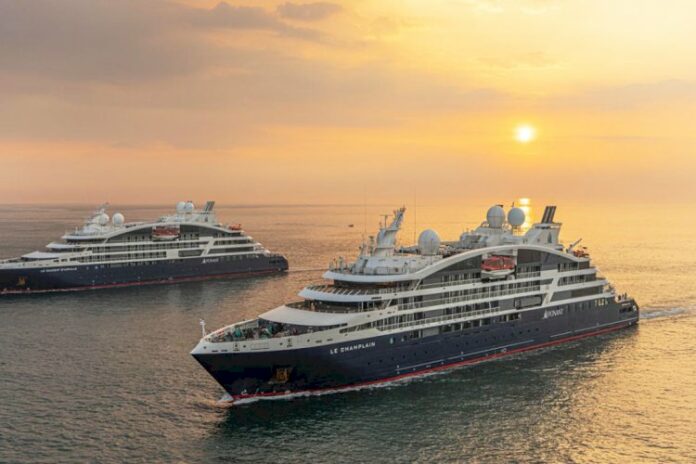
Bureau Veritas (BV), a world leader in testing, inspection, and certification (TIC) services, is working with PONANT, a cruise company with a fleet of 11 smaller-scale ships combining state-of-the-art technology and respect for the environment, to help implement effective infection prevention measures.

PONANT will benefit from the ‘Restart your Business with BV’ suite of solutions developed for passenger ship clients. ‘Restart your Business with BV’ for passenger ships meets the specific requirements of this market addressing biological risks, as posed by COVID-19 and other infections. ‘Restart your Business with BV’ provides procedures and measures to protect passengers, company personnel and other stakeholders as operations are resumed, helping ensure that appropriate health and safety standards are put in place.

The SafeGuard label is awarded when it can be satisfactorily certified that the operator has addressed health, safety and hygiene requirements, has properly implemented necessary procedures, has trained the crew and all employees on board and has, as well, agreed procedures with ports and terminals for port operations.

Speaking on behalf of  PONANT Frédéric Gallois, Chief Operating Officer of the company, said:

‘The small size of our vessels, the medical infrastructure and teams on board, our protocols and the professionalism of our crews ensured that there were no cases of Covid-19 contamination throughout the PONANT’s fleet. To prepare for the resumption of our activity, we are pleased to collaborate with Bureau Veritas to deploy this SafeGuard label highlighting the excellence of our protocols.”

Matthieu de Tugny added:

‘Restart your Business with BV’  perfectly reflects our specific role and mission as a classification society. We know PONANT and their ships very well and are very pleased to help them with their fleet reactivation.’

Neptune Energy begins Dugong drilling campaign

0

Dugong is the first operated exploration well to be drilled by Neptune in the northern North Sea since the Duva discovery in 2016.  
 
Neptune’s Director of Exploration & Development in Norway, Steinar Meland, said:

“A discovery in Dugong could open up new and exciting opportunities in surrounding licences, making it an important well in establishing a new core area for Neptune in Norway. This activity underlines the importance of the region to Neptune’s geographically-diverse portfolio.”

Dugong is located 158 kilometres west of Florø, Norway, at a water depth of 330 metres, and is close to the existing production facilities of the Snorre field. The reservoir lies at a depth of 3,250 – 3,400 metres.

The drilling program comprises a main bore with a down-dip side track, subject to the results of the main bore.

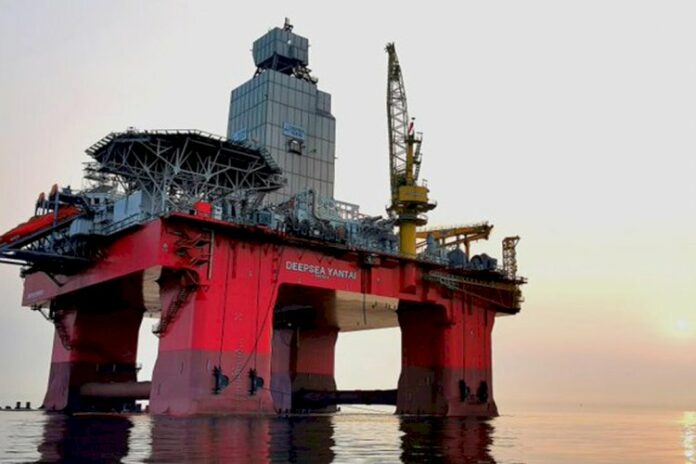
Dugong will be drilled by the Deepsea Yantai, a new semi-submersible rig, owned by CIMC and operated by Odfjell Drilling.

Dugong partners: Neptune Energy, (operator and 40%), Concedo (20%), Petrolia NOCO (20%), and Idemitsu Petroleum Norge (20%).

DNV GL issues provisional type certificate for GE’s Haliade-X 12 MW

0

GE Renewable Energy’s  Haliade-X 12 MW prototype, the world’s most powerful wind turbine operating to date, has received a provisional type certificate (IECRE Provisional RNA Component Certificate) from DNV GL.

This certification demonstrates GE’s Haliade-X prototype has the highest safety and quality standards, and provides evidence that its design is on-track to meet the full type certification requirements. Testing activities of the 107-meter long blade currently taking place at UK’s Offshore Renewable Energy (ORE) Catapult in Blyth, and at Boston’s Wind Technology Testing Center in the US, will continue as planned to complete the documentation required to get the full type certificate in the months to come.

John Lavelle, CEO of Offshore Wind at GE Renewable Energy said:

“This is a very important milestone for us as it confirms the robustness of our Haliade-X 12 MW design, and gives certainty to our current and future customers who believe in the attributes of our platform. When we introduced the Haliade-X 12 MW we established a new paradigm in the industry, and we will continue to do so by innovating, improving, and introducing new features to our Haliade-X platform, making offshore wind a more affordable and competitive source of renewable energy.”

Dr. Kim Mørk, Executive Vice President for Renewables Certification at DNV GL, said:

“GE’s Haliade-X 12 MW is a significant breakthrough for the offshore wind industry. Developing new and innovative technology always brings an element of uncertainty and risk. Type certification is a vital measure to demonstrate that new turbines will operate safely, reliably and according to requirements and we are proud to provide our offshore wind expertise to this important new technology development and support our customers enter into new markets.”

The Haliade-X technology has been selected as preferred wind turbine for the 120 MW Skip Jack and 1,100 MW Ocean Wind projects in the US, and the 3,600 MW Dogger Bank offshore windfarm in the UK. All combined, GE’s Haliade-X technology will power more than 5 million households in both countries. Haliade-X serial production will start at GE’s Saint-Nazaire factory in France during the second half of 2021.

The prototype located in Rotterdam set a new world record in January 2020 by generating 288 MWh of continuous power in one day. The Haliade-X has also been recognized as the Best Sustainable Invention of the Year by TIME magazine and Best Wind Turbine of the Year by Wind Power Monthly magazine.

One GE Haliade-X 12 MW offshore wind turbine can generate up to 67 GWh* of gross annual energy production, providing enough clean energy to power 16,000* European households and save up to 42,000 metric tons of CO2, which is the equivalent of the emissions generated by 9,000 vehicles** in one year.

* Gross performance based on wind conditions on a typical German North Sea site
** According to EPA Greenhouse gas equivalencies calculator