0.5 C
New York
Home Blog Page 832

Fast-moving waterfalls in the deep sea can be dangerous for seafloor cables

0

These underwater channels are the offshore equivalents of rivers, but can be much larger. Submarine channels can extend for tens to thousands of kilometres offshore, providing an important conduit for the transfer of sediment, nutrients and pollutants, such as microplastics, to the deep-sea. Avalanches of sediment that flow down these channels also pose a hazard to networks of seafloor cables that underpin global communications, including the internet.

An international research team, including NOC, Universities of Durham, Southampton and Hull (UK), Geological Survey of Canada, and University of New Hampshire (USA), performed the most detailed repeated mapping of any submarine channel to date. Time-lapse surveys acquired over nine years in Bute Inlet, British Columbia, revealed a dramatic series of up to 30 m-tall, steep cliffs (called ‘knickpoints’) that resemble waterfalls in rivers. Similar features migrate at a rate of less than 1 metre per year in rivers. The team observed much faster migration rates in the submarine channel – up to 450 metres per year. 

NOC researcher Maarten Heijnen, the lead author of the new study in the journal Nature Communications, said:

“We previously knew that knickpoints existed in submarine channels, but had no idea they could move so fast. The rate at which they migrate is hundreds of times faster than similar features move in rivers. It surprised us that such large features can be so dynamic and is a stark reminder that there is still much to discover in the deep sea”.

Dr Mike Clare, also of NOC, says:

“Our study of deep sea environments such as submarine channels has been hampered by a lack of long-term monitoring. This study, and other exciting technological advances, are providing important and much-needed step-changes into understanding how these globally-important systems behave.”

Almost three quarters of the erosion in the channel resulted from these fast-moving knickpoints, leading the study’s authors to conclude that knickpoints are far more important for the evolution of submarine channels than other previously-suggested controls, such as the growth of meander bends. An abundance of repeated aerial photographs and satellite data has revealed how rivers change over time; however the challenges of surveying deep underwater, has meant that such a wealth of time-lapse surveying does not exist for submarine channels. Instead, most of our understanding has been based on scaled-down laboratory models or from one-off seafloor surveys that only capture a snapshot in time.

Dr Matthieu Cartigny from Durham University comments:

“We think that knickpoints play an important role in many other submarine channels around the world. Understanding how these fast-moving features behave is important for determining how and where all sorts of particles, including sediment, organic carbon and microplastics, are transported.”

The powerful sediment avalanches that transit these submarine canyons also pose a threat to critical seafloor infrastructure, such as the network of telecommunication cables that carry >99% of all digital data traffic, including the internet.  Dr Gwyn Lintern of the Geological Survey of Canada added:

“These findings contribute valuable information for designing resilient seafloor structures that provide the communication and power supplies that underpin our daily lives. The Geological Survey of Canada supports this important work under our Public Safety Geoscience Program. In 1929 an earthquake off the east coast of Canada triggered submarine flows, which severed 12 transatlantic cables. Submarine landslides and sediment flows are also a common coastal hazard in Canada’s inlets. The deposits of such flows are often used for dating major earthquake and land flood events, and therefore understanding how the channels transport these flows is a very important piece of information.”
Auckland’s port seeks consent for deeper channel

0

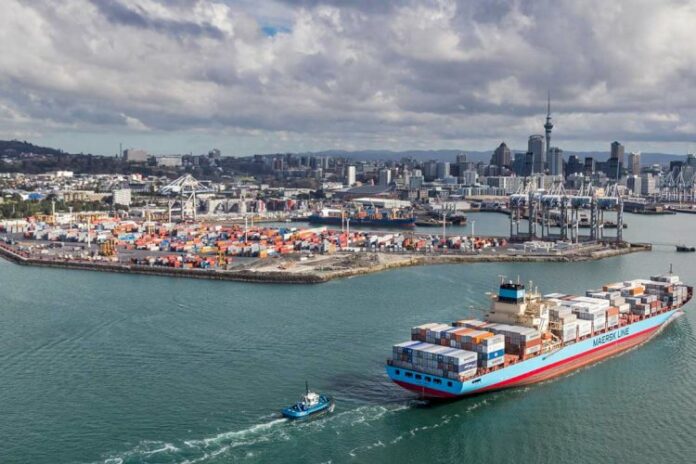
Ports of Auckland has applied to Auckland Council for consent to deepen the city’s shipping channel and a resource consent hearing on the matter will be held this week.

Auckland’s population is forecast to grow significantly, with a million more people expected to live here by 2050. More people means more demand for the products we all buy from overseas, which means more containerised imports and – bigger container ships.

Ports of Auckland must be ready to handle this growth.

The largest container ships calling in Auckland now carry up to 5,000 twenty-foot containers (TEU). Shipping lines want to bring 6-7,000 TEU ships here in the next 2-3 years and in future Auckland will need to host ‘New Panamax’ ships that can carry around 12,000 TEU.

The channel is currently 12.5 metres deep at low tide, but New Panamax ships are 366 metres long with a maximum draft of 15.2 metres. Ports of Auckland is only applying to deepen the channel to 14 metres – so how will the ships get in?

The answer is tidal windows. In common use globally and at other New Zealand ports, a ‘tidal window’ simply means that deeper draft ships enter or leave port when the tide is high enough.

To create a tidal window suitable for New Panamax ships to access port safely Auckland will need a channel which is 14 metres deep on the straights and 14.2 metres deep on the bends. Auckland’s berth will be dredged to 15.5 metres so ships can stay through a full tide cycle.

By using tidal windows, Auckland can minimise dredging and reduce cost. It is the most efficient way to accommodate larger container ships.

The dredging will be done by the lowest impact method available – a digger on a barge. The digger will have a long arm to reach down to the seabed to scoop out material. The channel bed is mostly soft material like marine muds, mudstones and some sandstone and gritstone, which can be removed easily. No blasting is required.

Ports of Auckland asked for the consent application to be publicly notified by Auckland Council so that people could have their say on the project. Over two hundred submissions were received.

If consent is granted, work on deepening the channel could start in 2021.

ROBINS Project: Testing Facility and on-board field trials

0

As part of the ROBINS project, the University of Genoa was tasked to build up and to develop a Testing Facility where Robotics and Autonomous Systems (RAS) intended for ship inspections can be verified and developed as well as their interactions and team-working with pilots, ship surveyors and service-suppliers are outlined.

The University of Genoa contributes to the project activities with two laboratories: the MaSTeL (Marine Structures Testing Lab) and the DrEAMS (Drives and Experimental Automation for Marine Systems Lab) of the Department of Naval, Electrical, Electronics and Telecommunications Engineering (DITEN) of the Polytechnic School.

The ultimate goal is to encourage the technology transfer of robotic know-hows into the traditionally reluctant to innovation shipping community, in the belief that this will significantly support ship surveyors and superintendents in many difficult or dangerous scenarios by proposing ground-breaking and pragmatic solutions.

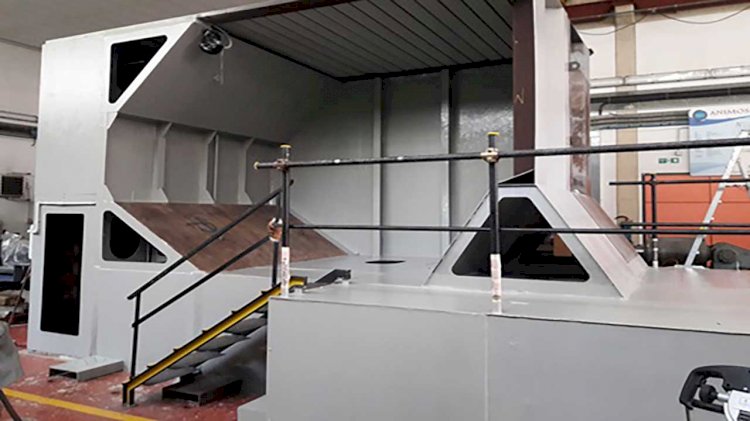
The Testing Facility is now active at the University of Genoa: parts of ship structures are reproduced in full scale, using elements recovered from ships repair works including real defects and shapes. The Testing Facility is organized in various sections and may be further developed:

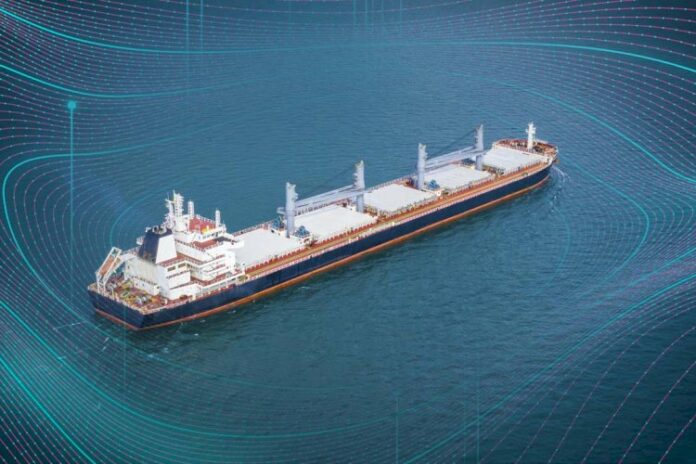
  • Section A: dedicated to tests within a complex scenario, reproducing ship environments such as a typical cargo hold of a bulk carrier, a double bottom, a double side, a ballast tank, in various wastage conditions;
  • Section B: dedicated to specific tests, aimed at verifying some particular features and capabilities of the robotic platforms, using specially designed test equipment;
  • Section C: reproducing large scale stiffened panels and a corrugated bulkhead for orienteering and defect localization trials by flying RAS, especially autonomous ones.

Testing protocols have been developed as well, and laboratory test results are compared with field trials and actual survey records, aiming at the definition of a well-rounded assessment approach demonstrating the equivalence between RAS-assisted inspections and the ones carried out by human surveyors.

To date, a laboratory environment dedicated to the development and evaluation of robotic platforms for ship inspection is undoubtedly an innovation, being not available worldwide. RAS manufacturers develop protocols and test equipment not specifically conceived for inspections on ships. On the contrary, in the Testing Facility the tests are performed according to ad-hoc designed protocols and the robots’ performances are evaluated according to metrics defined on the basis of the usual practice of ship and offshore structural inspections.

Robotic units for ship inspection must be integrated to procedures and methods that have been defined since decades in classification societies rules and international conventions as being performed by humans, thus overcoming traditional inspection roots. It should be admitted that the human inspector is by definition an “analog equipment” while the robotic unit is intrinsically “digital”: Testing Facility allows refining inspection procedures that modify the consolidated and well-proven test methods without losing their essential contents.

Both, the novel Testing Facility and the test protocols developed up to now have reached a rather detailed level in their definition. They are mainly used for two purposes: on the one hand, the capabilities of a robot performing specific types of inspections can be certified, assessing the accuracy and reliability of its performances. On the other hand, it is planned to use the same Testing Facility for the training of operators and the development of innovative robots, allowing the implementation of increasingly complex inspections. All in accordance with what, to date, can be considered the best tool for inspection of ships: the human surveyor, with his skills, sensitivity, experience and ability. Also, a path towards standardization in RAS application is aimed at.

The ambition of the participants in the project is to create an aggregation place for sharing experiences among the stakeholders of different industrial fields (shipping, robotics, CAD / CAE developers, etc.).

The goal is to create, around the Testing Facility, a competence centre where test protocols specific for RAS intended to be used in the inspection of ship and offshore structures are continuously developed along with the RAS. At the same time, the Testing Facility is aimed at becoming the training and certification environment for surveyors and service suppliers working within the shipping community, bearing in mind that the first trials already proved that team-working of RAS, their pilots and ship surveyors is necessary.

Milestone for first LPG conversion with Isle of Man design acceptance

0

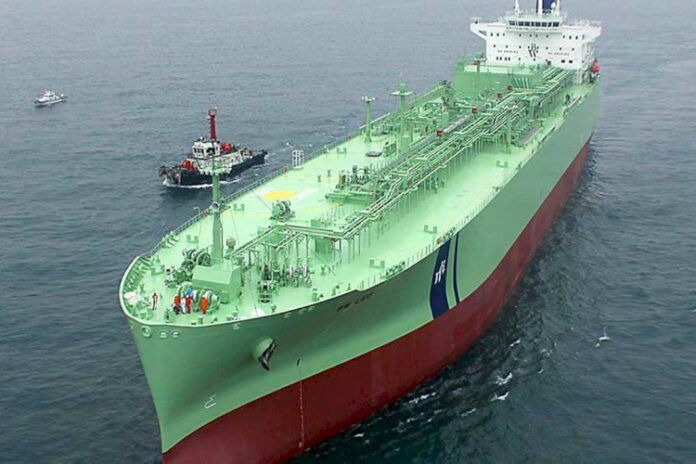
With the successful acceptance BW LPG will begin the conversion of 12 vessels to dual fuel LPG engines. The conversions will be the first of a VLGC to run on LPG. After the conversion the vessels will also receive the newly developed DNV GL class notation “GF LPG”.

BW LPG first announced the project to convert some of the LPG carriers to a LPG fuelled propulsion system in August 2018. The flag state acceptance of the design by the Isle of Man means that the project has been demonstrated to have an equivalent level of safety to methane as a ship fuel under the IGC Code 2016.

Knut Ørbeck-Nilssen, CEO of DNV GL – Maritime, said:

“We are very pleased that BW LPG has recognized our expertise in this field and chosen DNV GL as the classification partner for this project. This acceptance is the result of all of the partners bringing their exceptional competence and experience to come up with a safe and feasible solution for this innovative project. In addition, the knowledge we have gained from working on the project has resulted in us being able to release a new dedicated LPG notation, which we hope will spur the further interest and uptake of LPG as a ship fuel.”

Anders Onarheim, CEO of BW LPG, said:

“The Board and Management at BW LPG continue to emphasize a deep corporate commitment to sustainable development. For us, as the world’s largest owner and operator of VLGCs, this means that we invest significant resources and expertise to pioneer technology that can be used to push our industry towards decarbonization without the need for dedicated newbuilding orders. We thank our industry partners who have worked in close collaboration with us to ensure that this pioneering technology is safe and reliable for implementation.”

Cameron Mitchell, Director, Isle of Man Ship Registry, said:

“In the age of constant change, technological advances and forward thinking the Isle of Man Ship Registry and the Ship Registry’s global client base of ship owners and operators, are very keen to put their collective experience to good use, working collaboratively and embracing innovation within the maritime industry. The safety of seafarers, ships and the environment are key objectives of the Ship Registry and being closely involved in the conceptual challenges presented, helps us to assess and ultimately achieve those objectives. We are proud to have our team confirm first flag acceptance of a VLGC LPG conversion, and thankful to all stakeholders for their co-operation throughout the project.”

The vessels will be fitted with two additional LPG cargo/fuel deck tanks in cargo area, so as not to compromise the cargo capacity onboard and a high-pressure liquid fuel system for the modified MAN Energy Solutions two stroke engines. Using LPG as a ship fuel results in substantial lower emissions to air, virtually eliminating sulphur emissions, and dramatically reducing particulate matter and black carbon emissions. Used with a two-stroke engine, LPG can also significantly cut NOx emissions and reduce greenhouse gas emissions., Retrofitting has the added benefit of extending the lifespan of the vessel, significantly reducing the overall carbon footprint compared to a newbuilding.

BW LPG plans to begin the conversions of the first two vessels, “BW Leo” and “BW Gemini”, this summer with completion scheduled for late summer 2020. The other vessels are targeted for conversion at their next drydocking period.

Siemens Gamesa awards Worley a contract for London Array offshore wind farm

0

Siemens Gamesa Renewable Energy (SGRE) has awarded Worley a contract for statutory inspections and general maintenance of wind‐turbine‐generator cranes and lifts across all turbines on the London Array offshore wind farm.

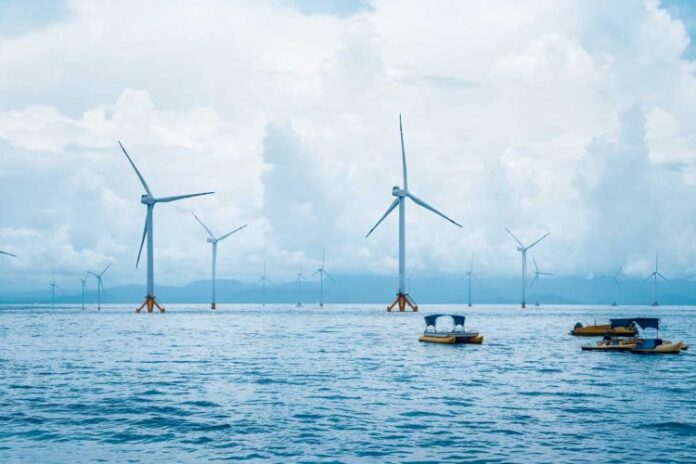
The wind farm consists of 175 turbines installed over 20 km off the Kent coast in the UK.

Generating 630MW, the London Array offshore wind farm produces enough energy to power approximately 470,000 homes, displacing approximately 500,000 tonnes of CO2 a year.

This award follows the acquisition of 3sun in October 2019, which provided Worley with a leading position in the high growth offshore wind energy services sector in the UK and Europe. The services will be executed by Worley’s Great Yarmouth team in the United Kingdom.

Chris Ashton, Chief Executive Officer, Worley, said:

“I’m delighted that we have been chosen by SGRE to help deliver this strategically important project. This supports our ongoing commitment to the energy transition and continues our strategy of delivering enhanced operations and maintenance services to the global offshore wind market.”

WPCAP ports aligned in series of new climate change actions

0

A recent online global conference involving the CEO’s of eleven aligned ports was concluded with a series of agreements in line with the ambition of the program to make strong improvement in addressing global warming and deliver on the call for clean air through concerted, cooperative actions.

WPCAP was initiated by the Port of Rotterdam Authority and launched in September 2018 at a global climate conference in San Francisco. Other ports that have joined the action oriented network are: Long Beach, Los Angeles, New York/New Jersey, Vancouver, Antwerp, Barcelona, Gothenburg, Hamburg, HAROPA – Port of Le Havre and Yokohama. Initially, a global cross-industry face-to-face conference was planned for June this year. Due to the COVID-19 situation, the set-up had to be changed into an online gathering with only port delegates.

Nevertheless, substantial headway was booked and decisions were made by the CEO’s on proposals of five working groups that prepared over the last half year actions on topics as efficiency, power-toship, sustainable fuels, cargo handling equipment and policy.

Common thread in their work was the aspiration to form coalitions among ports on specific projects as well as involving shipping lines, terminals and energy providers as alignment across the value chain will have the most impact. Another recurring theme of WPCAP is the desire to take control over its own destiny instead of waiting until other institutions are introducing adjusted rules and regulations.

Working together with leading international ports provides moreover a critical mass to realise change successfully.

The WPCAP CEO network adopted five agreements. These are the following:

  • In terms of efficiency, observations are that ports, terminals and shipping are facing enormous challenges to reduce emissions whilst there is limited collaboration among them. Speed optimisation and enhanced planning on routing and turn-around time in ports is an important step, but requires that parties are joining efforts and sharing data. It now has been agreed that for this specific topic WPCAP support IMO Global Industry Alliance in a fact-based overview of emission reduction options, whilst taking the initiative to form a new coalition with IMO for developing a joint roadmap on reducing emissions in the ship-port interface.
  • Power-to-ship has the clear potential to reduce emissions in the port as ships can switch off their own power generation and make use of, preferably, green energy infrastructure supplied by port organisations. In addition, this reduces noise and has a positive effect on air quality.
    Power-to-ship however starts to have real impact if numerous ports introduce this arrangement. Hence, not only ports, but also terminals, shipping lines, ship owners, grid owners and energy companies need to work together to facilitate a critical mass. After all, this will stimulate all parties in the network to invest in this equipment. WPCAP CEO’s unanimously decided to develop three coalitions involving liquid bulk (tankers), containers and cruise.
  • The third agreement is on alternative fuels, another complex area as the fuel of the future in the shipping sector has not been crystallized yet. WPCAP has now agreed to facilitate the launch of pilot projects in 2021 on new sustainable low carbon marine fuels in their ports that will directly benefit deep-sea/ocean-going vessels. Lessons learned on the usage of LNG was highlighted as these could be used for the introduction of new low or zero emission fuels as well.
  • Cargo handling equipment has the interest of ports as this topic could contribute to the overall aim of WPCAP, though there is a shortage of information and there are limited commercial products on the market available. The CEO’s decided to intensify working relations with terminal operators in their ports in order to introduce equipment demonstration and build a database for information sharing. There also was a strong plea to increase involvement of terminal operators in WPCAP actions.
  • The final commitment was made on the topic of policy. Many ports around the world are using policy instruments to stimulate emission reductions in the maritime industry, such as incentives, pricing policies and regulations. WPCAP concluded that increased coordination and further development of those efforts – within the strict limitations of competition law – could strengthen efficiency, effectiveness, transparency and accountability of those instruments. Against that background, CEO’s agreed on actions that will improve the impact of policy instruments that ports may choose to use, supporting both decarbonization of sea going vessels and cargo handling equipment.

Baptiste MAURAND, CEO of HAROPA – Port of Le Havre:

“WPCAP allow us to cooperate more closely in order to tackle climate change and accelerate energy transition in the ports and beyond, this kind of initiative is clearly the way to meet our commitments of greening maritime transports and ports activities. Furthermore is a real pleasure to work with our colleague all over the world on the same goals: paving the way to zero emission port and maritime transport”.

International consortium kicks off ePIcenter project on future-proof logistic chains

0

The project is funded by the European Horizon 2020 programme and has a timeframe of 42 months.

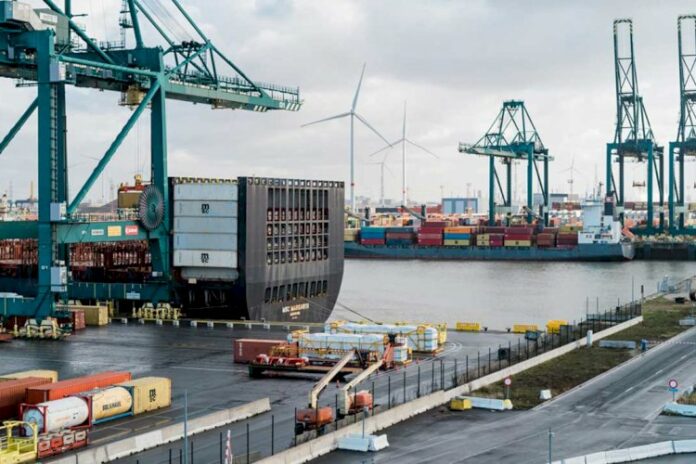
Under the coordination of Port of Antwerp, the partners will join forces to provide hands on solutions that turn global supply chain challenges caused by increasing length, complexity and vulnerability into opportunities. The goal will be to enable seamless transport of goods, focusing especially on the technological and operational opportunities that the Physical Internet, synchro-modal operations and other disruptive technologies such as Hyperloop, Industry 4.0 and autonomous vehicles provide.

ePIcenter has a truly global scope, with a number of large scale demonstrators on main shipping routes from Europe to Canada and the US, as well as new trade routes such as the Northern Sea Route and the new Silk Road routes. Technology innovators and environmental experts will collaborate to develop new solutions which increase the efficiency and sustainability of global supply chains.

With result oriented field trials and working with some of the most ambitious players in the trade & logistics sector, ePIcenter commits to create solutions with tangible impact towards the sustainable logistics chain of the future.

Port of Antwerp, next to coordinating the ePIcenter project, will host one of the large scale demonstrators. The “Link of the Future” demonstrator will focus on implementing the various ePIcenter innovations in one of Europe’s largest multimodal transport hubs, as well as realising the first transcontinental cyber secure trade lane. Furthermore Port of Antwerp’s international network will create possibilities for valuable worldwide knowledge sharing and further improvement of the tools developed in the project.   

Erwin Verstraelen – Chief digital and innovation officer, Port of Antwerp:

“We are very enthusiastic about kicking off the ePIcenter project, which will allow us to create a transcontinental, integrated and transparant freight corridor by leveraging existing and promising technologies, frameworks and data standards. Port of Antwerp and Port of Montreal, both important nodes in the global supply chain, will act as catalyst for symbiosis amongst the different stakeholders.”

Annick De Ridder, vice mayor of the Port of Antwerp:

“The future of our port and its prosperity goes hand in hand with the power of innovation. We are proud to play a pioneering role and to serve as a laboratory for innovation. Today more than ever it is important to make our global supply chain more resilient to an evolving and volatile world with a variety of challenges.”

Drilling programme on Valhall Flank West is completed

0

The drilling programme on Valhall Flank West is now complete.

Aker BP’s SVP Drilling and Wells Tommy Sigmundstad confirms:

“The jack-up rig alliance between Aker BP, Maersk Drilling and Halliburton has delivered world-class performances. We’re demonstrating that the strategy of creating increased value through alliances yields results.”

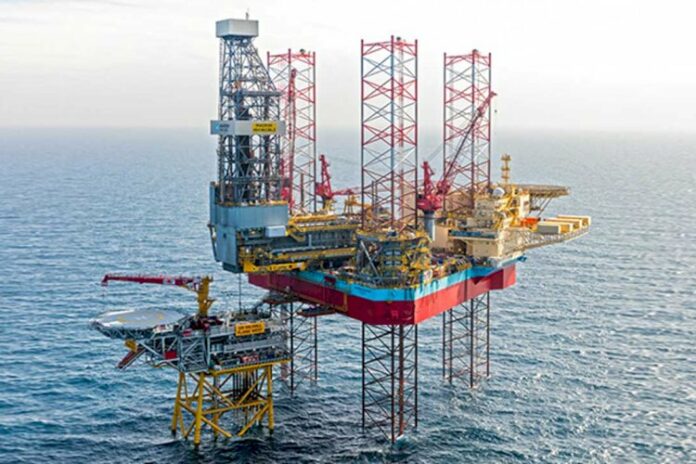
Maersk Invincible arrived on the Valhall field in late June last year. After the 12 first large conductors were set, the rig drilled an average of one well per month. A total of nine wells have been drilled and completed. Three of these are multibranch wells.

Sigmundstad says:

“This would not have been possible without a strong alliance team capable of bringing out the very best efforts in each other. Compared with a comparable campaign completed outside the alliance, we see an improvement of 88 per cent in average rate of penetration and 186 per cent improvement in connection times.”

The drilling programme on Valhall Flank West is the first project delivered through the alliance and Maersk Invincible.

Drilling superintendent Anders Linndal says:

“It all started with batch setting 12 conductors, where we had a fantastic learning curve and ended up 15 days ahead of our estimated time consumption. This learning curve has simply continued to grow. We’ve had some challenges, but they were resolved in a very good way because the whole team has pulled in the same direction. Now, as we look ahead, it’s important that we capture the lessons learned, so the alliance can continue to deliver good projects.”

Last winter, the rig set a new record on the Norwegian Shelf when it drilled 2278 metres in a 12¼” section in 24 hours. Maximum drilling speed achieved by the rig on the record-breaking day was 280 metres per hour.

Maersk Invincible also held the previous drilling record in Aker BP, with 1953 metres drilled in a single day. That record was also set on a well on Valhall Flank West.

Valhall Flank West came on stream in December 2019, just two years after the Plan for Development and Operation was submitted to the Norwegian authorities. The giant Valhall field has produced more than one billion barrels of oil equivalent since the field was opened in 1982. The ambition is to produce another billion barrels over the next 40 years. Valhall Flank West is an important contribution.

Maersk Invincible will remain on the field through the summer to assist in ongoing well stimulation work. Aker BP has been the first company in the world to use a new method of well stimulation offshore. The single-trip multi-frac technology (link), which yields faster and thus less costly stimulation, is used on Valhall Flank West.

Four wells have started producing so far. The remainder are expected to start up through the year.

Evac Evolution ballast water management system chosen for Irish Lights vessel

0

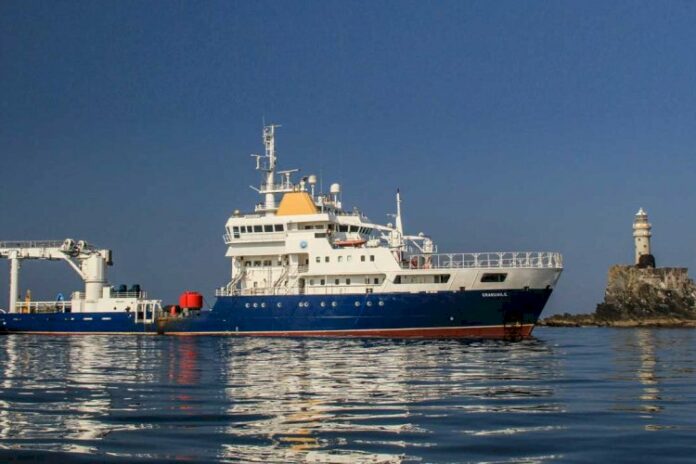
The vessel’s primary function is to place and service 150 offshore buoys, which warn mariners of the location of sand banks, reefs and other offshore hazards. The vessel also provides support for the teams tasked with maintaining a further 65 lighthouses and beacons around the coast of Ireland and Northern Ireland. In addition, the ship supports the national response to maritime wreck and new dangers to navigation.

With a length of 79.69m, the ship is equipped with advanced dynamic positioning equipment and accommodates a crew of 16.

Adam Rogers, Evac’s Head of Global Sales for Ballast Water Management Systems, said:

“We are delighted to have won the BWMS order for a vessel which has such an important role in maintaining safety at sea and protecting the marine environment.”

The vessel will be installed with an Evac Evolution system with the capacity to treat ballast water at a rate of up to 250m3/hr. The components will be supplied in modular form enabling them to be distributed to make the best use of available space within the engine room.

The Evac Evolution attained IMO and U.S. Coast Guard Approval last year, opening the way to worldwide sales. Based on a combination of filtration and UV technology, the space-saving system is energy effective and completely chemical-free. It has a ‘feedback loop’ which uses UV transmission as the parameter for precisely determining UV dosage. This ensures effectiveness in challenging water conditions, but saves on power during normal running.

Effective in fresh, brackish and seawater, the Evac Evolution system enables vessels to operate without restriction. The system is available with capacities from 34m3/hr to 1,500m3/hr in a single unit. It can be supplied in modular form for retrofits or skid mounted for newbuild applications.

The Evac Evolution system has been fitted on vessels including cruise ships, container vessels, research ships, offshore supply vessels and cable laying craft where its small footprint and potential for flexible installation have proved to be important assets.

MPA, SSA and IMDA launch the Maritime Digitalisation Playbook

0

The Maritime and Port Authority of Singapore (MPA), Singapore Shipping Association (SSA) and Infocomm Media Development Authority (IMDA) have launched the Maritime Digitalisation Playbook (MDP), to support maritime companies in accelerating their digitalisation plans as the economy reboots and enters a new normal post-COVID-19.

This was announced by Senior Minister of State for Transport and Health, Dr Lam Pin Min, at the “Accelerating Digitalisation, Building Resilience” webinar today. Dr Lam said in his opening remarks:

“This pandemic has accelerated digitalisation, regardless whether you are a multinational company or a local SME. The Playbook will serve as a guide to help maritime companies uncover opportunities in digital transformation. Our hope is that no matter where you are in your digitalisation journey, the Playbook will help support your vision and development of concrete digitalisation plans to improve the competitiveness and productivity of your company.”

The MDP incorporates key findings from the IMDA-commissioned 2020 Digital Acceleration Index (DAI) survey for the sea transport sector, where over 200 maritime organisations submitted a self-assessment of their digital maturity. This has enabled MPA to establish the state of digitalisation of subsectors such as the shipping line, ship management, ship agency and harbour craft. To help maritime companies chart out their digitalisation and innovation journey holistically, MPA partnered SSA and IMDA to develop the MDP as part of Sea Transport Industry Transformation Map efforts.

The MDP will help maritime companies, in particular small and medium enterprises (SMEs), to formulate their digitalisation roadmaps, guide execution and benefit from maritime digital platforms covering port clearances and services, trade documentation and trade operations and financing. This guide provides these companies with:

  • An overview of the state of digitalisation in the maritime sector based on results of the 2020 DAI survey;
  • An understanding of the sector’s digitalisation landscape and opportunities, including key global trends driving digitalisation, examples of technology use-cases and the potential impact on planning, operations, commercial and support functions of a maritime business.
  • A digital transformation framework to help identify digital driven business strategies and prioritise digitalisation initiatives.

The MDP supports Maritime Singapore’s broader efforts in digitalisation. It complements the Sea Transport Industry Digital Plan launched in 2019. Companies can also apply for co-funding from MPA’s Maritime Cluster Fund – Productivity Development (MCF-PD) to develop their digitalisation solutions. 

Ms Caroline Yang, President, SSA, said:

“SSA initiated the co-development of the Maritime Digitalisation Playbook with MPA and IMDA as both parties saw the need to provide a practical guide to help maritime companies develop or retool their digitalisation capabilities to grapple with the fast-changing anomalous world. The MDP contains information and resources, that include templates and support programmes, to help companies identify and address target gaps to formulate or rethink their digitalisation strategy. We strongly encourage maritime companies, especially the small-medium enterprises (SMEs), to make use of the MDP to achieve their digitalisation vision.”

Mr Tan Kiat How, Chief Executive, IMDA, said:

“The Maritime Digitalisation Playbook helps maritime companies to understand the digital gaps in the industry and how they can use technologies to close these gaps. The Playbook also includes the various government schemes to support the companies in their digitalisation efforts. Together with the Industry Digital Plans, which are part of the SMEs Go Digital programme, these will give companies a wider range of potential solutions to adopt. Collectively, they will enable our maritime ecosystem to integrate with a rapidly evolving digital economy.”