0.5 C
New York
Home Blog Page 831

Danfoss Editron obtains marine certification in China

0

Recently, Danfoss Editron has obtained the final Type Approval Certificate for its Synchronous Reluctance assisted Permanent Magnet Motors and frequency converters from the China Classification Society (CCS).

The acquisition of this Type Approval Certificate means that Danfoss Editron products have been recognized by the industry authorities in terms of design and development, technological process, production and manufacturing and product quality – a milestone achievement by Danfoss Editron.

“Green ship” has become the main topic of the development of the shipbuilding and shipping industries, facing increasingly environmental policy requirements. The impact of ship and shipping industry on environmental pollution has attracted more and more attention, and with gradual development demand of electrification solutions within these industries.

According to the original testing plan, all type approval tests can be completed in Q1, 2020, but the Covid19 pandemic suddenly disrupted all plans. With personnel challenges and limited travel, the Danfoss Editron China team actively contacted the authoritative third-party professional testing company in the industry to develop test plan for the type test difficulties, and sorted out the product series and design drawings, process documents and test procedures one by one – and worked out various implementations with the China Classification society surveyor and our product team in Lappeenranta.

The China Classification Society carried out a comprehensive audit on the design, production, inspection and other relevant quality systems of the products applied by Danfoss Editron in accordance with relevant specifications and test procedures.

After more than 20 tests, the excellent performance of Danfoss Editron product system was finally recognized by the China Classification Society. This confirmed that Danfoss Editron products meet the approval standards, and the society agreed to issue the product type approval certificate.

Senior-level surveyor of the China Classification Society said:

“Electrification plays an increasingly important role in the green promotion of ships. The type approval of this product can help customers reduce costs and improve sustainability. This approval also proves the requirements of China Classification Society for standardized product inspection and shows our determination to promote green shipping and classification services.”

Chao Wang, our Head of Off-Highway and Marine in China, said:

“Meanwhile, electric propulsion will become more and more popular in shipping, and electrification is a fast-growing field. At present, port emission regulations are increasingly strict. As an influencer of the market, our product and solutions have become innovative leaders in today’s maritime market. Therefore, it is particularly important to find more efficient products, and we hope that these green ship technologies can become the standard of China’s new energy ship industry electrification.” 
Industry giants back ORE Catapult’s floating offshore wind centre of excellence

0

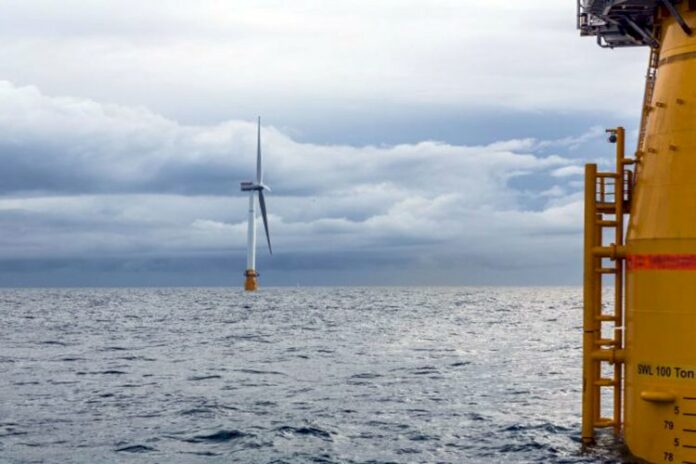
Ten of the world’s leading offshore energy organisations have joined the Offshore Renewable Energy (ORE) Catapult’s national Floating Offshore Wind Centre of Excellence (FOWCoE) to drive forward the development of next-generation offshore wind technologies.

Offshore wind developers EDF Renewables, EDP Renewables, Equinor, ESB, Mainstream Renewable Power, ScottishPower Renewables, SSE Renewables, and Offshore Wind Power Ltd (OWPL), a Joint Venture between the Green Investment Group and RIDG, are joined by energy companies Total and Shell in the Centre of Excellence.

The Centre of Excellence will focus on all areas of floating wind activity in the UK across four key workstreams – technology development, supply chain and operations, development and consent, and delivering net zero. The aim is to reduce the cost of energy from floating wind, accelerate the build-out of floating farms, create opportunities for the UK supply chain, as well as driving innovations in manufacturing, installation and operations and maintenance.

The Centre will work closely with stakeholders across the sector, including the Welsh and Scottish Governments and regional authorities in England, leading academic institutions in the UK, and key technology and supply chain providers. This collaborative approach will enable the Centre to deliver and coordinate a range of world-leading activities, including a portfolio of collaborative projects.

The  first tranche of projects will focus on addressing some of the critical challenges in the commercialisation of floating offshore wind, including the development and consenting process; project and technology certification, classification and application of standards; developing a cost reduction pathway to commercial competitiveness; and defining the energy systems benefits of floating offshore wind.

Cameron Smith, from Mainstream Renewable Power, will C0-Chair the FOWCoE’s Executive Governance Board alongside ORE Catapult’s Chris Hill. He said:

“I’m delighted to have the opportunity to Co-Chair this exciting group which I believe will be critical in driving forward the commercialisation of floating offshore wind. I am particularly pleased to support the Government’s push to attract high value, supply chain businesses.

The advancement of floating wind technologies is seen as vital if the country is to deliver on its ambitious offshore wind growth target of 40 gigawatts by 2030 and meet our net-zero carbon emissions target by 2050. It can also be a catalyst for a robust global economic recovery as we exit the COVID-19 pandemic. In the UK alone, studies have shown that floating wind could create 17,000 jobs and generate £33.6 billion for the UK economy by 2050.”

Chris Hill, ORE Catapult’s Operational Performance Director and Co-Chair of the FOWCoE’s Executive Governance Board commented:

“Our team of innovation experts and engineers here at ORE Catapult are very much looking forward to working with our stakeholders, industrial and academic partners to accelerate floating offshore wind technology deployment. We’ll work together to de-risk and encourage innovation to ensure we deliver UK economic benefit from the global growth of floating offshore wind – growing local supply chains and delivering UK content and jobs as the economy emerges from the COVID-19 pandemic.”

The Centre of Excellence will align activity nationally and develop projects focused on regional priorities. It will closely align its projects and initiatives with the activities of key stakeholders including UK Government, Scottish Government, Welsh Government, the Celtic Sea Cluster, Opportunity North East (ONE), the Oil and Gas Technology Centre (OGTC), the Deepwind Offshore Wind Cluster, Scottish Enterprise, Cornwall & Isles of Scilly Local Enterprise Partnership, Highlands and Islands Enterprise, the Carbon Trust and Crown Estate Scotland.

Driving digital solutions: Black Sea port of Constanta joins IPCSA

0

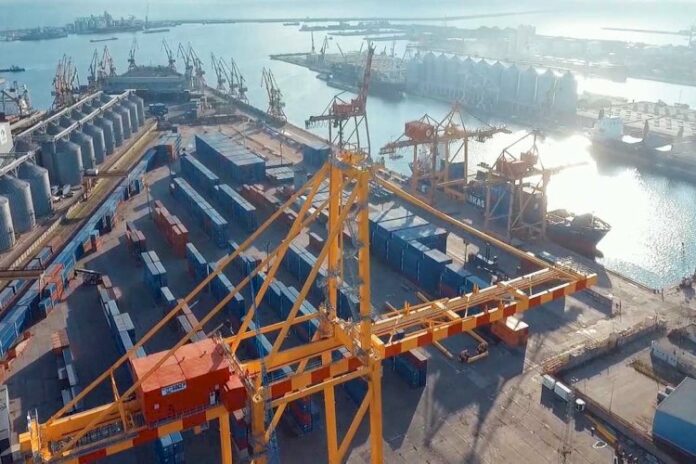
The largest port in the Black Sea and also the deepest, providing depth alongside of up to 18.5 metres, the Port of Constanta’s hinterland includes Austria, Bulgaria, Hungary, Moldova, Serbia, Slovakia and Ukraine.

The Constanta Port Administration’s jurisdiction covers river port facilities, being connected to the Danube via the Danube-Black Sea Canal, and maritime port facilities on the Black Sea, and the port also has excellent road and rail links.

As a landlord port, Constanta provides facilities for about 40 different private operators and its new Port Community System is being designed to connect as many as possible of these.

Costel Stanca, General Manager of the Port of Constanta Administration, said:

“We took the decision to move ahead with a PCS two years ago and have completed our pre-feasibility study. In the context of the Covid-19 pandemic, it was decided that we would speed up the implementation of this project.

We are in discussions with ICT service suppliers to consider which modules should be developed first and which authorities should be connected. While we want to implement our PCS as soon as possible, we are also determined to do this in the best way and not to make mistakes. We plan to have the first modules in place this year.”

During the Covid-19 crisis, the priority has been keeping the port operational – in fact, agribulk volumes increased by 50% year-on-year in the first quarter, said Mr Stanca. The port administration expects the major international grain operators located at the port to be among those joining the PCS in the earliest stages.

He explained:

“The PCS will transform the port, making our operations and procedures more efficient and enabling us to provide information on the status and position of cargo. In addition, it will give the port administration a clearer picture on river, rail and maritime port transport flows, allowing us to analyse activity. In short, it is an important step towards implementation of European Union Directives relating to digital information flow, while allowing better planning and improved business dynamism, reliability and transparency.”

The new PCS will be directly connected to Romania’s national Maritime Single Window.

As a partner in the EU Interreg ‘DAPhNE’ project (Danube Ports Network), the Port of Constanta Administration has attended seminars and discussions focusing on Port Community Systems and the digitalisation of ports.

Mr Stanca said:

“As a member of IPCSA, we will be able to exchange opinions and knowledge with other PCS organisations and have access to regional and international players in this sector. One of the reasons for joining IPCSA is that we want to follow best practice, take the right steps and also participate as actively as possible. We are eager to get involved and look forward to learning from case studies, good practices and recommendations from our fellow members.”

Richard Morton, secretary general of IPCSA, said:

“IPCSA was one of the signatories of the recent ‘Call for Action’ communiqué entitled Accelerating Digitalisation of Maritime Trade and Logistics, which recognises the heightened urgency of this acceleration as we plan for our post Covid-19 future. The members of IPCSA provide the digital solutions which play a critical role in enabling the smooth, swift flow of cargo and associated information, helping to remove bottlenecks, delays and cost from supply chains.”

Equinor: TechnipFMC awarded assignments worth up to NOK 1.8 billion

0

The projects in scope are Breidablikk and the Gas Import System for the Snorre Expansion Project, for which contracts have been awarded, and Askeladd Vest, for which a letter of intent has been issued. The Breidablikk contract has subsea installation as an option.

The total value of the three assignments, including the option, is about NOK 1.8 billion.

Peggy Krantz-Underland, Equinor’s chief procurement officer, says:

“We are pleased to award TechnipFMC new large assignments within pipelaying and subsea installation on the NCS. Giving three assignments to the same supplier enables efficiency gains and cost savings. It will also allow for a coordinated follow-up of the total delivery during the implementation phase. This creates value for all parties.”

The scope of the assignments includes fabrication and laying of pipelines, installation of subsea structures, control cables and hook-up and testing of systems. The offshore operations under the contracts are planned to be carried out during 2021-2023.

The awards contribute to sustaining important workplaces for TechnipFMC in Norway, including the Orkanger spoolbase, where the pipelines will be fabricated before they are reeled onto the installation vessel. The awards are also expected to generate additional work through further sub-contracting to other companies.

Krantz-Underland says:

“In a challenging period for the industry we aim to continue realizing the full potential of our NCS project portfolio. This must be carried out in close cooperation with our suppliers to ensure that we create value and activity in Norway. It will help sustain jobs in the supply industry and further develop the important competence the industry has built up.”

The contract award for Breidablikk is subject to a final investment decision and a final regulatory approval. The letter of intent for Askeladd Vest is subject to a final investment decision.

Nauticor conducts first STS LNG bunkering operation for the cruise ship Iona

0

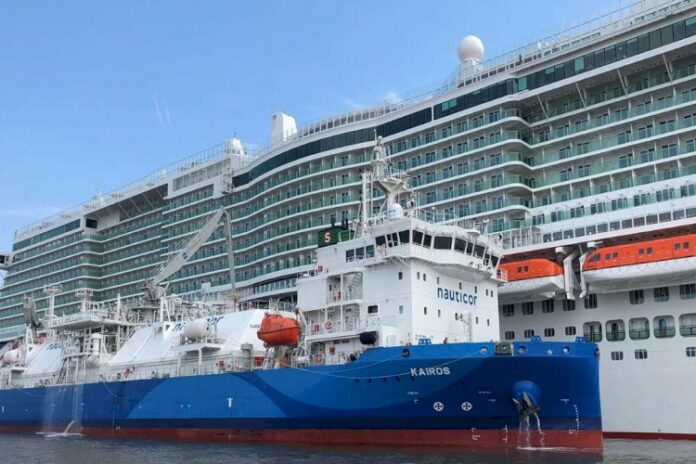
On June 18th, Hamburg based LNG supplier Nauticor, a subsidiary of the Nordic energy company Gasum, has conducted the initial ship-to-ship LNG bunkering operation for the newbuild cruise ship Iona.

The bunkering operation was conducted by Gasum’s LNG BSV Kairos in the port of Bremerhaven. The operation also marked another milestone with it being the first ship-to-ship LNG bunkering operation in this port in general.  

Iona is one of the world’s first LNG-fuelled cruise ships. The vessel is in the final outfitting phase at the Meyer Werft shipyard. After the outfitting and sea trials has been done, the vessel will join the fleet of P&O Cruises. The vessel is part of a series of vessels for the Carnival Corporation with their different brands. 

LNG is the cleanest available marine fuel, and it’s rapidly becoming the most commonly used alternative to traditional fuels. The use of LNG significantly improves local air quality as well as reducing greenhouse gas emissions by at least 20%, and it meets all the current and forthcoming regulations set out by the International Maritime Organisation and the EU. Furthermore, LNG is suitable for all vessel types.

Gasum’s bunker vessel Kairos started operating in 2019 and is mainly operating in the North Sea and the Baltic Sea. The vessel became a part of Gasum’s fleet of LNG BSV when the company took over Nauticor’s marine bunkering business in April 2020. 

Jacob Granqvist, Sales Director, LNG Maritime, Gasum, adds:

“The bunkering operation was a great success because of a close cooperation between our teams onshore and at sea and the shipyard. Kairos has proven again that the vessel is a valuable asset for us in our aim to develop the Northern European market for LNG as maritime fuel and we are looking forward to reaching more milestones on our way to make transport more sustainable.”

Turbine installation kicked off at SeaMade, Belgium’s largest offshore wind farm

0

With a 487 MW capacity, SeaMade is the largest offshore wind farm in Belgium.

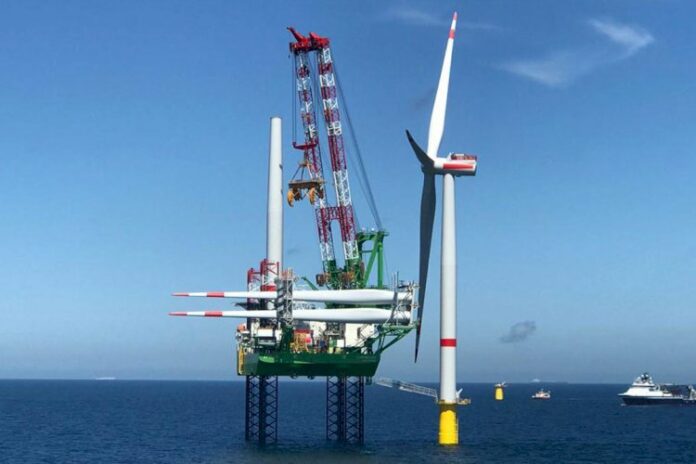
Offshore construction of the SeaMade wind farm started in September 2019, with the last foundation installed in January 2020 and in the meantime connected by the subsea cables. DEME’s DP2 offshore installation vessel ‘Apollo’ will now install 58 Siemens Gamesa 8.4 MW turbines on the monopile foundations.

‘Apollo’ loaded the first wind turbine components at the Renewable Energy Base Ostend (REBO), which is used as the marshalling harbour for the pre-assembly of the 58 turbines. From Ostend, ‘Apollo’ will transport the tower elements, nacelles and blades, with a total weight of 1,000 tonnes each, for installation at the SeaMade site which is about 45 km off the Belgian coast.

 ‘Apollo’ features an 800-tonne, leg-encircling crane and an unobstructed, spacious 2,000 m² deck with a load carrying capacity of 15 t/m².

Michael Glavind, Business Unit Director DEME Offshore:

“After the successful installation of the foundations, offshore substations and subsea cables, the start of the turbine installation campaign brings us another step closer to the production of green energy. This is also the first turbine installation project for our offshore installation vessel ‘Apollo’, which has just completed a challenging foundation piling project in Scotland. This vessel’s ability to multitask highlights the versatility of our fleet and our ability to handle all aspects of the most complex offshore wind farms.”

Mathias Verkest, CEO SeaMade and Otary:

“I am proud to have reached the final stage of our SeaMade construction activities. The offshore installation of 58 8.4 MW wind turbine generators in both concession areas will turn SeaMade into the largest wind farm in the Belgian North Sea. SeaMade and Rentel will soon have a combined operational capacity of about 800 MW. Otary will enter into this final installation phase with great expertise, knowledge and focus. The past few months have been challenging given the spread of COVID-19 but I can only be grateful for what has been achieved by this strong team. Together with all contractors, subcontractors and partners involved we will continue working in the upcoming months with great dedication and perseverance to deliver SeaMade safely within time and budget. It must be highlighted that the combined Otary projects are a major contributor to Belgium’s ongoing climate goals and efforts, contributing more than 1/3rd of the overall offshore production capacity which covers half of the 2020 renewable energy targets.” 

By the end of 2020, SeaMade will be operational with a capacity of 487 megawatts providing green energy for 485.000 households.

Stena Bulk to introduce low-carbon shipping options

0

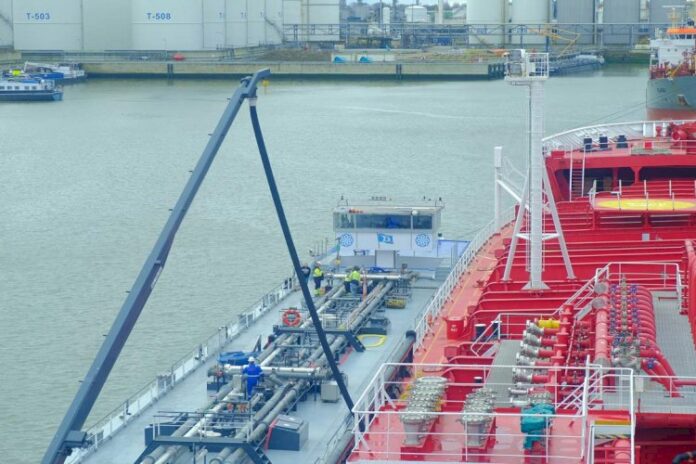
Biofuel has the potential of putting shipping on the trajectory towards IMO’s greenhouse gas reduction targets, without having to wait for new technology and zero-carbon fuels to emerge as commercially viable options.

Stena Bulk’s recent trial, where a cross-Atlantic voyage was conducted with 100% waste-based biofuel, proved the technical and operational feasibility of using biofuels in regular tanker operations, and Stena Bulk is now taking it one step further by introducing a set of low-carbon shipping options for its customers. The options will range from 20% to 100% biofuels and will be based on an offsetting program where the biofuel is used within the Stena Bulk fleet. This allows customers to make use of low-carbon shipping options regardless of fuel availability on the specific route. It also guarantees that operation is performed without any disturbance to the shipment.

Erik Hånell, President and CEO for Stena Bulk, says:

“Performing according to our customers’ expectations is our highest priority, and this setup allows us to continue to do that while also offering a service. It will be one way to take actions in meeting future requirements. This type of fuel is one step in many combined sustainable solutions that needs to be considered and can be used today.”

Offering low-carbon shipping options is initially an ambitious initiative, but is reflective of Stena Bulk’s ambition to reduce the environmental footprint of tanker operations through innovation. New fuels and new technology like Stena Bulk´s recently presented IMOFlexMAX vessel design will also be important in that we can test and learn through challenges and thus take further steps in developments for the future. Collaboration within the industry will also be a key element, and the company will continue to develop new solutions together with customers, partners and suppliers.

Erik Hånell says:

“We need to come together as an industry to find solutions that comply with future legislation. By working together, sharing experiences, risks and inspiring each other, we are convinced that we will meet the targets and ensure that shipping remains the most efficient and sustainable mode of transportation.”

Stena Bulk MR vessel Stena Immortal ran on 100% biofuel during a 10-day sea trial.

MSC Cruises announces new winter 2020/2021 programme

0

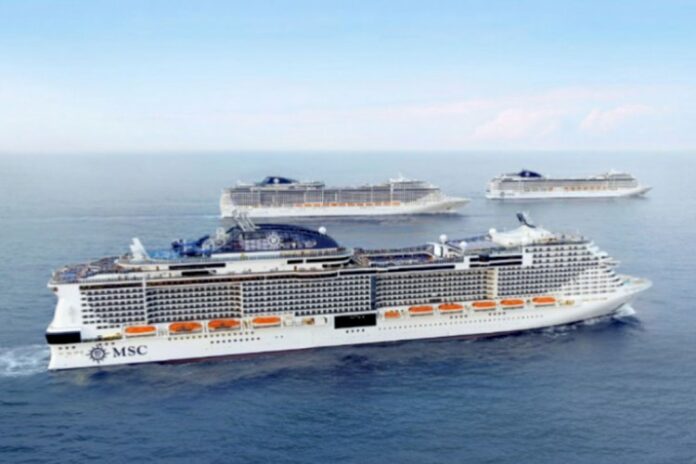
MSC Cruises has confirmed full details of its Winter 2020/2021 Season, offering over 90 different itineraries across the Caribbean, Mediterranean, the Gulf, South Africa, South America and Asia – all of the regions where MSC Cruises traditionally operates. Itineraries range in length from two to 24 nights, along with the third MSC World Cruise departing in January 2021 and an extensive Grand Voyages programme.

Gianni Onorato, MSC Cruises’ CEO, commented:

“We have reviewed and updated our complete Winter 2020/2021 Season, starting in late October and we are pleased to now confirm the full details. Our Winter programme sees us offering cruises in all of the regions of the world where we traditionally operate and whilst there are some updates to the original planned deployment of specific ships, we are still able to offer our main itineraries so that guests can enjoy the holiday that they booked with us.”

This announcement follows the Company’s recent confirmation that the entire MSC Cruises fleet, including two brand new vessels currently under construction, will be in operation starting from March 2021 for the Summer 2021 Season.

In addition, MSC Cruises has confirmed the voluntarily further extension of the halt of operations of its ships operating from U.S. ports in the Caribbean until September 15, 2020. The announcement impacts two ships – MSC Seaside and MSC Armonia – that were previously scheduled to sail in the region during this time period. Guests affected by the cancelled cruises will receive a Future Cruise Credit (FCC) by July 13, where they have the opportunity to transfer the full amount paid for their cancelled cruise to a future cruise of their choice – on any ship, for any itinerary — through to the end of 2021. Meanwhile for the Summer 2020 Season, MSC Cruises has previously announced the temporary halting to its current ship operation up until 31 July in the other regions where the Company operates.

In conjunction with its announcement, the Company also revealed that a new comprehensive and enhanced health and safety protocol is being developed in collaboration with relevant national health authorities and with the support of a team of external medical experts. This protocol will cover all aspects of the cruise from the booking phase through to disembarkation and the return home. It will also include all aspects of life on board and the precautionary measures will ensure the health and wellbeing of guests and crew including enhanced sanitation measures, guidelines for life on board as well as enhanced medical facilities and health screenings for guests and crew.

Kongsberg Digital in new partnership with Lloyd’s List Intelligence

0

Lloyd’s List Intelligence will provide KONGSBERG’s open platform, Kognifai Ecosystem, with online vessel tracking abilities and Lloyd’s List news and market commentary.

Lloyd’s List Intelligence is one of several well-known tech and data businesses collaborating on the platform which presents a wide variety of live and static maritime information.

Vigleik Takle, SVP of Maritime Digital Solutions at Kongsberg Digital, says:

“This will give our maritime customers easy cloud enabled access to the best maritime intelligence reporting in the market. Whether customers are using Vessel Insight or not, are onboard or on shore, the reports can be collected and analysed, combined with own data or read as standalone reports for greater insights into what is going on in the maritime markets.”

Tom Richmond, Senior Key Account Manager, Lloyds Intelligence, says:

“Kongsberg Digital’s partnership with Lloyd’s List Intelligence will provide Kognifai users with greater capabilities for combining maritime intelligence and insight from a multitude of complementary sources. In return, Lloyd’s List Intelligence’s appearance on Kognifai will allow us to raise awareness of our services to their expanding audience.”

Lloyd’s List Intelligence services will be available in the Kognifai Marketplace within July 2020.

Oceaneering launches OceanSMART business

0

OceanSMART will be led by Managing Director Bryan Phillips, who comes to the team with over 25 years’ experience in the marine shipping and cargo logistics industry, most recently as chief innovation officer at Inchcape Shipping Services.

He is joined by another maritime industry stalwart with over 30 years’ experience, Neill Tomlin, who will serve as Vice President of Product and Business Development.

Over the past 18 months, Oceaneering’s Maritime Intelligence and Technology team worked to develop the OceanSMART offering to address serious industry challenges. The bulk commodity industry amounts to around 60% of world seaborne commodity movements. These cargoes include oil and gas, agricultural, and mineral products. The industry is one where there is little transparency, inherent conflicts of interest, tremendous waste, and misinformation. This environment results in delays, reactive decision making, unnecessary risk, excess cost, and other environmental impacts. This presents an incredible opportunity to revitalize the way the industry currently does business by more effectively using data and technology, getting away from paper-driven tasks and aging legacy applications.

OceanSMART is a combination of software as a service (SaaS) products, data science tools, and resourcing services that will provide cargo owners with real time visibility of their vessels, cargoes, and maritime assets. The service provides transparency to risk, hidden costs, inefficiency, and waste as well as provides the solutions to significantly save time and money and vastly improve decision making.

Rod Larson, President and Chief Executive Officer of Oceaneering, said:

“OceanSMART is a perfect complement to our existing maritime business and fits well into our ‘innovate and expand’ strategic objective. We are very excited about what the team has built over the last 18 months and the growth opportunities this business offers. When Bryan first pitched the idea to us, it was clear that he understood the problem he was trying to solve, that he had the background and skills to lead this initiative, and that the strategy would significantly change the industry.”

Bryan Phillips, Managing Director of OceanSMART, said:

“Oceaneering is the perfect organization and partner for what we are undertaking. Customers are incredibly excited by what we have built as well as the roadmap ahead of us. They are excited that we have the stable ownership of a major organization like Oceaneering, whose leadership is 100% behind us.

Ever since I started off as an 18-year-old customs clerk in the port of Durban, South Africa, it has always mystified me how little awareness there is of the amount of money being wasted by cargo owners. Fundamentally, the more inefficient a cargo movement is, the more money several parties handling this cargo make, and this is ultimately paid for by the cargo owners. That is why, three years ago, I set out to start a business that intends to rectify this issue and change the industry.”

The OceanSMART portfolio currently includes the SaaS products SMART Position and SMART Analytics. Data science advanced algorithms have been developed that can analyze port and terminal performance in near-real time with developing predictive analytics. On the resourcing side, OCEAN Demurrage and OCEAN Barge have both received significant demand signals from the market. Additionally, OceanSMART has launched the SMART AIS mobile app. Over the next 12 months, several new SaaS products, data science algorithms, and resourcing services will be released to expand the OceanSMART product line.