-2.9 C
New York
Home Blog Page 82

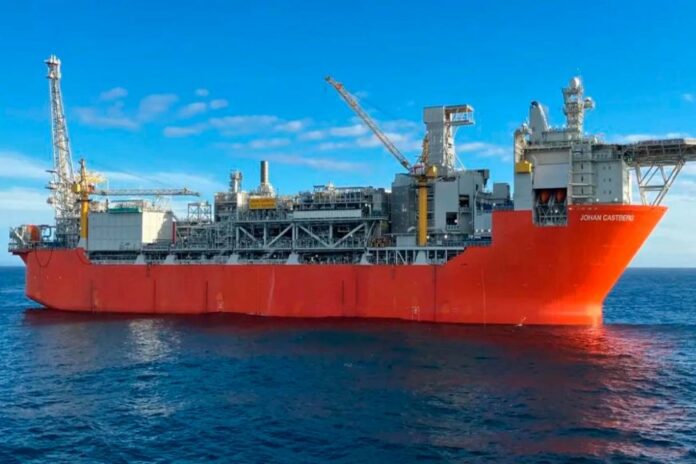
Johan Castberg strengthens Norway as a long-term energy exporter

0

At peak, Johan Castberg can produce 220,000 barrels of oil per day, and recoverable volumes are estimated at between 450 and 650 million barrels.

“This is a red-letter day.The Johan Castberg field will contribute crucial energy, value creation, ripple effects and jobs for at least 30 years to come. We expect that this major field development with a price tag of NOK 86 billion (2024) will be repaid in less than two years,” says Geir Tungesvik, Equinor’s executive vice president for Projects, Drilling and Procurement.

12 of the 30 total wells are ready for production, and this is sufficient to bring the field up to expected plateau production in the second quarter of 2025.

“Johan Castberg opens a new region for oil recovery and will create more opportunities in the Barents Sea. We’ve already made new discoveries in the area and will keep exploring together with our partners. We’ve identified options to add 250-550 million new recoverable barrels that can be developed and produced over Johan Castberg,” says Kjetil Hove, Equinor’s executive vice president for Exploration & Production Norway.

The Norwegian supplier industry has accounted for more than 70 per cent of deliveries to the project during the development phase. In operation, this will increase to more than 95 per cent, with a Northern Norwegian share of more than 40 per cent. One of three employees on board the FPSO lives in Northern Norway. 84 per cent of the revenue from the field will be transferred to the Norwegian state through tax and the state’s direct participating interest.

The field’s supply base and helicopter base are in Hammerfest and will be operated from Equinor’s office in Harstad. A total of 30 wells will be drilled on the Johan Castberg field, and drilling operations are expected to continue towards late 2026, which will yield significant activity in Hammerfest.

“Johan Castberg has been a massive and challenging project, and I want to extend my very sincere thanks to everyone who contributed on the road leading to first oil and operation, both our partners Vår Energi and Petoro, our suppliers and our own employees. 79 million hours of work have been recorded in the project, and the HSE results are very good. Now the field will produce for 30 years and generate substantial values,” Tungesvik says.
LR approves design of ammonia dual-fuel system on Trafigura’s gas carriers

0

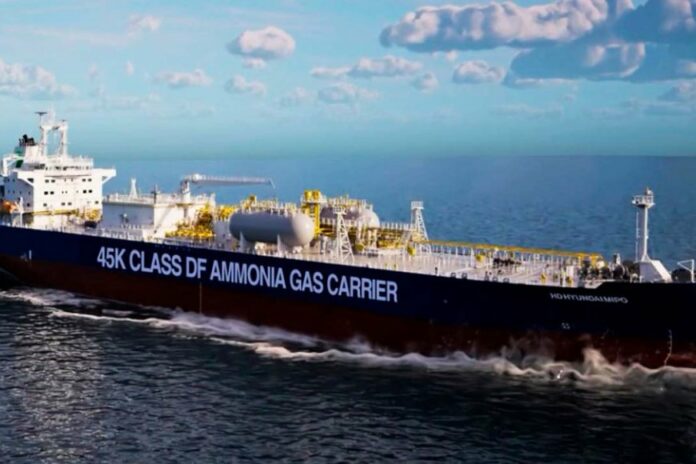
Lloyd’s Register (LR) has confirmed the successful completion of a joint development project (JDP) designing ammonia dual-fuel systems on Trafigura’s newbuild medium gas carriers (MGCs).

LR completed an extensive design evaluation and safety assessment to approve the designs in line with its rules and international regulations.

Implementing ammonia dual-fuel systems on these vessels marks a significant step towards expanding the use of low-carbon fuels beyond specialised vessels to more diverse ship types. 

The Singapore-based commodity trading company signed a contract with HD Hyundai Mipo (HMD) in 2024 to build four 45,000 cubic metre MGCs, powered by WinGD ammonia dual-fuel engines and Alfa Laval’s Ammonia Release Mitigation System. They are designed to transport both liquefied petroleum gas (LPG) and ammonia.

The vessels will be built at HMD’s shipyard in Ulsan, South Korea, with deliveries expected to be completed during 2028.

Panos Mitrou, LR’s Global Gas Segment Director, said: “We are proud to have played a pivotal role in this collaborative project. It demonstrates our commitment to supporting the maritime industry’s energy transition efforts by offering exceptional technical expertise, rigorous safety evaluations, and regulatory leadership.

“As a trusted maritime services partner, we continue to pioneer the pathway enabling the adoption of alternative fuels and innovative technologies that shape the future of decarbonised shipping.”

Vessels powered by low carbon ammonia have the potential to significantly reduce carbon emissions, compared to a conventional marine fuel burning vessel. The ammonia carried by the newbuild vessels can also support decarbonisation of a wide range of heavy industries.

The order for the newbuild dual-fuel vessels makes Trafigura one of the first movers in the low-emission tanker market and sends an important demand signal to the market to generate zero‑carbon fuel production and infrastructure. It also supports Trafigura’s commitment to reduce the carbon intensity of its own shipping fleet and align with the Group’s commitments and participation to the WEF’s First Mover’s Coalition and Global Maritime Forum’s Getting to Zero Coalition.

“EU regulations have been crucial in allowing us to execute this order,” said Andrea Olivi, Global Head of Shipping for Trafigura. “If we are to decarbonise freight and increase the demand for zero-carbon fuels across the world, we need the IMO to implement regulations including EU ETS and Fuel EU maritime on a global scale. The IMO needs to introduce a simple and transparent policy framework including, in our view, a global fuel standard combined with a straightforward levy applied equally across the board.”

“We will focus on securing new environmental technologies to preoccupy future markets by actively utilising design and construction experience and synergy accumulated over long period of time with HD Hyundai shipbuilding affiliates,” said Mr Lee, Dong-jin, Head of the Initial Design Division and the Detailed Design Division at HD Hyundai Mipo.

A joint development project studying the performance of ammonia as a shipping fuel started in December 2024 and will continue until the new vessels are delivered. The project brings together expertise from multiple organisations, including LR, Trafigura Maritime Logistics, HD Hyundai Mipo, HD Hyundai Heavy Industries’ Engine & Machinery Division, WinGD Ltd, Liquid Gas Equipment Limited (Babcock LGE), Alfa Laval Corporate AB, and the Maritime and Port Authority of Singapore.

First commercial-use ammonia-fueled tugboat completes three-month demonstration voyage

0

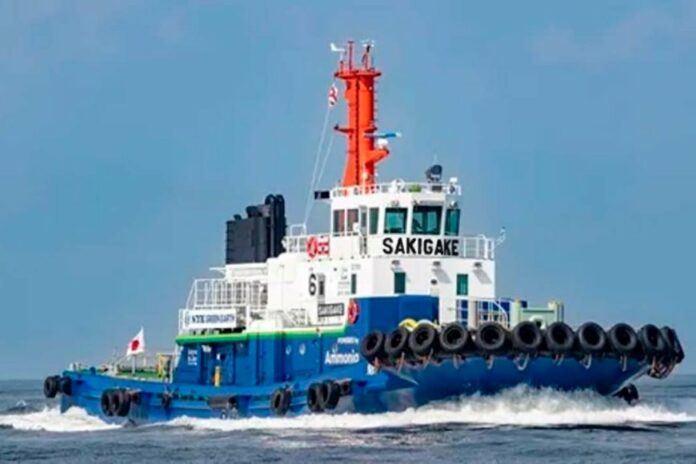
The world’s first commercial-use ammonia-fueled vessel, Sakigake, has successfully completed a three-month demonstration voyage, during which the vessel engaged in tugboat operations in Tokyo Bay and achieved a GHG-emission reduction of up to approximately 95%.

The vessel was completed by Nippon Yusen Kabushiki Kaisha (NYK) and IHI Power Systems Co., Ltd. (IPS) on August 23, 2024, in cooperation with Nippon Kaiji Kyokai (ClassNK) as part of a Green Innovation Fund Project under Japan’s New Energy and Industrial Technology Development Organization (NEDO).

The development project of this vessel started in October 2021 as part of NEDO’s Green Innovation Fund Project; “Development of vessels equipped with domestically produced ammonia-fueled engines”. It was completed in August 2024, becoming the world’s first commercial-use ammonia-fueled vessel. Afterward, NYK Group company Shin-Nippon Kaiyosha engaged the vessel in a three-month demonstration voyage while conducting tugboat operations in Tokyo Bay.

NYK and IPS analyzed the ammonia co-firing and GHG-reduction rates during vessel operations and confirmed them to consistently exceed 90% and rise to approximately 95% in each of the main engine load ranges, as shown in the table below. The demonstration tests while in tugboat operation is the world’s first trial, confirming that ammonia is one of the most viable and promising options as a next-generation fuel for vessels.

The vessel will continue to be used for tugboat operations in Tokyo Bay, and NYK will continue to accumulate knowledge related to the development and operation of ammonia-fueled vessels.

In addition, NYK, Japan Engine Corporation, IPS, and Nippon Shipyard Co., Ltd. are working together to develop an ammonia-fueled ammonia gas carrier, which is scheduled to be delivered in November 2026, also as part of NEDO’s Green Innovation Fund Project; “Development of vessels equipped with domestically produced ammonia-fueled engines”.

Viking Line’s newest ferry to get extended operational support from Wärtsilä Lifecycle Agreement

0

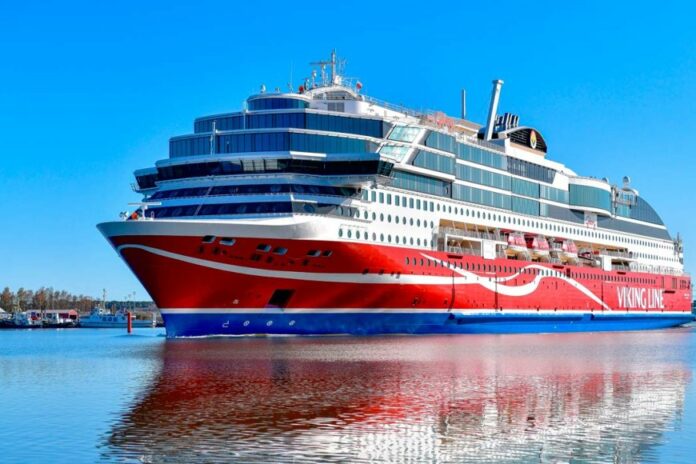
The vessel has been supported by an earlier Wärtsilä agreement since its launch in 2021, and this renewal further extends and expands the partnership and benefits provided by the agreement. This latest order was booked by Wärtsilä in Q1 2025.

The equipment covered by the agreement includes the ship’s six Wärtsilä 31DF dual-fuel engines, six Wärtsilä Gas Valve Units (GVU’s), and two Wärtsilä LNGPac fuel storage and supply systems. The agreement is designed to minimise unscheduled maintenance and ensure performance reliability, while providing cost predictability for budgeting purposes.  

“We already have two ferries covered by Wärtsilä agreements, and we have been extremely pleased with the service and support they deliver. The Viking Glory is one of the most environmentally sustainable vessels sailing today, and by maintaining the equipment we ensure efficiency of its operations. The Wärtsilä agreement represents an important contribution to improve the reliability, and this help us on our decarbonisation strategy,” says Mathias Sundberg, Technical Manager – Viking Line.

The scope of the agreement includes maintenance planning, operational support, spare parts and services for the equipment covered, and a ‘one point of contact’ through the contract manager. It also includes Wärtsilä’s unique Expert Insight digital predictive maintenance service. Delivered through Wärtsilä’s global Expertise Centres, Wärtsilä’s Expert Insight leverages AI technology to identify potential failures before they occur, thus helping to improve asset efficiency and reduce both operating costs and emissions.

“We are delighted to renew and extend our collaboration and support for the Viking Glory and to continue our strong relationship with Viking Line. Both our companies are committed to decarbonising shipping operations, and these agreements play an important role in this. By ensuring the highest levels of operational efficiency, Viking Line can continue its great work in minimising the environmental impact of its operations,” comments Henrik Wilhelms, Director, Agreement Sales, Wärtsilä Marine.

Both the Viking Grace and Viking Glory are supported by Wärtsilä Lifecycle Agreements. The Viking Grace was the first ferry to operate with dual-fuel engines, enabling it to operate with LNG fuel. The Viking Glory operates with the highly efficient Wärtsilä 31DF dual-fuel engine, which delivers the best fuel economy of any engine in its class. Both ferries operate between Finland and Sweden.

AD Ports Group and Columbia Group form ship management joint venture

0

The newly formed entity, Noatum – CSM Limited, combines Columbia Group’s expertise in advanced fleet management systems and AI-driven performance analytics, with AD Ports Group’s diverse fleet and extensive ship management experience, both globally and regionally. 

Also, by integrating ship management into AD Ports Group’s Maritime & Shipping Cluster service portfolio, this strategic alliance offers the benefits of world-class ship management system and team to third parties.

The JV will benefit from immediate access to Columbia Group’s Performance Optimisation Control Room (POCR), an advanced digital platform designed to catalyse fleet performance enhancement, predictive maintenance, and regulatory compliance. This platform provides continuous live monitoring and comprehensive decision support tools to optimise voyages, speed, bunker usage, and emissions. The system will harness data from multiple vessels to empower informed decision-making and enhance operational and commercial performance.

Captain Ammar Mubarak Al Shaiba, CEO – Maritime & Shipping Cluster, AD Ports Group, said: “This partnership symbolises a pivotal advancement in maritime asset management, merging the strengths of Columbia Group and AD Ports Group. As we expand our capabilities, we are benefitting our clients by elevating quality and efficiency. We are committed to offering a holistic suite of services with exceptional operational competency and expertise, further fortifying our position as a global maritime service provider.”  

Mark O’Neil, President and CEO – Columbia Group said: “This partnership marks a significant milestone in our shared vision to set new standards in maritime asset management. Combining Columbia’s global expertise with AD Ports Group’s strong presence in the Middle East will drive operational excellence and innovation in the region’s maritime sector. We look forward to building a sustainable and future-ready business together.”

Strategically based in the UAE, the JV will support day-to day management and introduce comprehensive crew management, procurement, training, and other operational services to ensure best-in-class asset management practices. Noatum – CSM Limited will unlock a broad array of additional skills, capabilities and operational excellence for clients.

MPA and Wärtsilä renew partnership to drive maritime decarbonisation

0

This model will help maritime professionals acquire the knowledge and competencies needed to operate methanol-powered vessels safely and efficiently. 

Wavelink Maritime Institute will be the first MPA-accredited training partner to use this innovative simulation model launched at SMW 2025. Wärtsilä will also introduce the Ammonia PAC simulation model in early 2026 to further enhance the industry’s capabilities to handle and operate ammonia-powered vessels.  

These initiatives are part of the renewed partnership between Wärtsilä and the Maritime and Port Authority of Singapore (MPA) to accelerate maritime decarbonisation and digitalisation. The renewed partnership will focus on the introduction of next-generation alternative fuels, optimisation of digital port operations, and development of future maritime talent.

MPA and Wärtsilä will collaborate with companies in Singapore’s MarineTech ecosystem to explore Research and Development projects aimed at lowering the cost of adopting new technologies. These projects will include the Methanol and Ammonia PAC simulation models, plume modelling to enhance safety assessment, and improvements in handling of low- and zero-emission maritime fuels. The goal is to enhance safety procedures for the handling, storage, and operation of these fuels while ensuring the industry’s readiness for new fuel technologies. 

Both partners will also work with industry partners and stakeholders to identify emerging skills needed for methanol- and ammonia-powered engines operations. Training curricula will be co-developed using advanced technologies and simulation models to improve effectiveness.

Wärtsilä will host a Simulation User Conference on fuel training and simulation in June 2025. The conference will feature Wärtsilä experts sharing insights on the latest advancements in simulations and training related to renewable fuels and their applications in the maritime industry. Topics will include competency and capability development for alternative fuels and the future of maritime decarbonisation.

Mr Teo Eng Dih, Chief Executive, MPA, said, “As a leading bunkering hub transitioning towards a multi-fuel future, our partnership with Wärtsilä will help unlock the potential of low- and zero-emission maritime fuels. This partnership will be an action-focused effort to ensure a safe and efficient bunkering environment in Singapore.”

Håkan Agnevall, President and CEO of Wärtsilä, said, “As the world’s busiest transshipment port and largest bunkering hub, Singapore has an important role to play in shipping’s journey towards net-zero. That’s why we are proud to continue fostering our partnership with MPA on accelerating this transition. The renewal of our MOU and the launch of the Methanol PAC simulation model are significant steps towards achieving our shared goals of decarbonisation and digitalisation in the maritime sector.”

Maersk names dual-fuel methanol vessel “Adrian Mærsk”

0

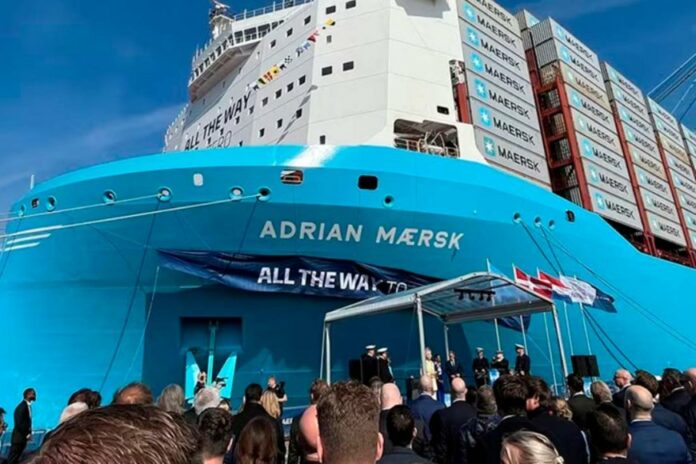
Maersk has celebrated the naming of the dual-fuel methanol ship “Adrian Mærsk” at its APM Terminals Maasvlakte II terminal in Rotterdam. Stephanie Pullings Hart, Executive Vice President and Chief Operations Officer (COO) at Nestlé, is the godmother of the container vessel.

Nestlé, a key customer, ships 100% of its Maersk ocean cargo under the ECO Delivery Ocean product which utilizes alternative fuels to reduce greenhouse gas (GHG) emissions. These alternative fuels reduce the GHG emissions of the Nestlé cargo by more than 80% compared to conventional fossil ship fuels and stand for a substantial financial commitment of Nestlé who has been using ECO Delivery Ocean since 2023.

Karsten Kildahl, Chief Commercial Officer (CCO) at Maersk, said: 

“The dual-fuel vessels demonstrate that the technology for the energy transition of the shipping industry is here. What is crucial now are the decisions that the International Maritime Organization (IMO) member states will make in London next month. We urgently need regulation to support the uptake of fuels that significantly reduce GHG emissions. At the same time, we need ambitious customers like Nestlé as our close partners in the green transition of shipping and logistics which we couldn’t achieve without their support.”

Godmother Stephanie Pullings Hart, Executive Vice President and Chief Operations Officer (COO) at Nestlé, said:

“At Nestlé, we recognize climate change as one of the most pressing challenges of our time. As a global leader in the food and beverage industry, we are committed to taking bold actions to address this issue. By achieving a 20% reduction in greenhouse gas emissions by 2024, ahead of our 2025 target, and aiming for net zero by 2050, we demonstrate our dedication to sustainability. Our green logistics efforts, including partnerships with Maersk, showcase our commitment to reducing emissions and promoting a sustainable future.”

“Adrian Mærsk” has a capacity of over 16,000 TEUs (Twenty-Foot Equivalent Units) and will serve the Asia-Mediterranean trade lane after completing its maiden voyage from Rotterdam. As part of Maersk’s new East-West network, it will do its part to fulfil Maersk’s ambition to deliver a schedule reliability above 90% once the new network is fully phased in. Maersk’s hub terminals like APM Terminals Maasvlakte II in Rotterdam play another vital role in achieving this goal.

Dual-fuel vessels are central to Maersk’s decarbonization plans. Bio- and e-methanol can reduce GHG emissions by 65% to 90% compared to conventional fossil fuels, depending on the feedstock and production process. Maersk will also deploy dual-fuel liquefied methane vessels, aiming to use bio- or e-methane as soon as possible. Given the global fuel demand, a mix of several alternative low-emission fuel technologies is necessary to decarbonize the shipping industry.

Equinor industrialising plugging operations on the Norwegian continental shelf

0

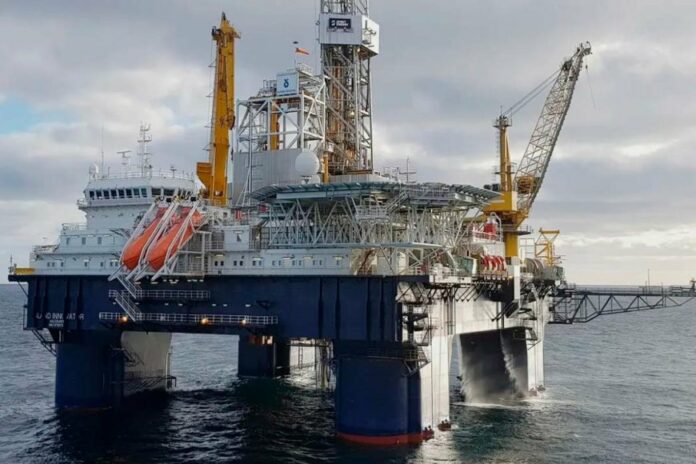
Island Drilling Company AS has been awarded a three-year contract for well plugging on Equinor-operated fields on the Norwegian continental shelf (NCS) using the Island Innovator semi-submersible rig. In addition, the oil service companies Archer Oiltools and Baker Hughes Norge have won framework agreements for plugging services.

Island Innovator is a mobile rig specially designed for well plugging. The Norwegian rig company will now be on assignment for Equinor for several years, start-up scheduled for early 2026.

The contract, worth an estimated near USD 330 million, also carries five one-year options. The scope of work under the contract includes mobilisation, planned upgrading and certain integrated drilling services.

“We will drill 600 improved oil recovery wells and about 250 exploration wells to maintain our production on the NCS towards 2035. At the same time, many wells will be permanently securely plugged. This rig provides us with a tool specially designed for plugging operations. The initial plan is a three-year work programme, but we do not rule out utilising the rig for operations also in the longer term,” says Erik G. Kirkemo, Equinor’s senior vice president for drilling & well.

According to the plan Island Innovator will permanently plug 15 to 20 wells annually for a total of nine licences. These wells will no longer be used for oil or gas production. The rig will plug subsea wells at Heidrun, Snorre and Norne, among others.

In addition to the Island Innovator contract Equinor has awarded framework agreements to the oil service companies Archer Oiltools and Baker Hughes Norge for full-range delivery of plugging services with a duration of three years, with two two-year options.

Total work related to integrated plugging services over the next seven years is estimated at a combined value of about NOK 3.5 billion. Archer Oiltools has also been assigned responsibility for planning plugging operations for 26 wells to be plugged from Island Innovator, in addition to options to perform the work.

“Through these contracts the suppliers are involved at an early stage and get a greater responsibility for planning the plugging operations, closely monitored by Equinor, who has the overall responsibility. We facilitate the industrialisation of safe and efficient plugging operations, ensuring continuous improvements together. This is about ensuring quality and reducing costs for work that will gradually increase on the NCS in the future,” says Mette H. Ottøy, Equinor’s chief procurement officer.

Oil and gas discovery in the North Sea

0

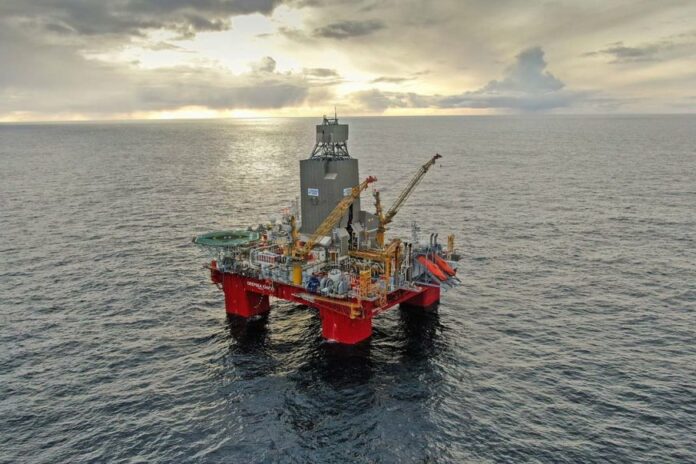
The oil and gas discovery in wells 35/10-15 S and A was made in the northern part of the North Sea, specifically 27 km northwest of the Troll C platform and 44 km southwest of the Gjøa platform. These are the first and second exploration wells in production licence 1182 S, which was awarded in APA 2022.

The wells were drilled using the Deepsea Yantai exploration rig.

Preliminary calculations place the size of the discovery between 6.1 and 11.8 million Sm3 of recoverable oil equivalent (o.e.), which corresponds to between 38.4 and 74.2 million barrels of recoverable o.e. The licensees will consider a potential development and further follow-up of the discovery alongside other discoveries and prospects in the vicinity.

There is substantial exploration activity in the area. Kjøttkake is an injectite discovery similar to the 35/10-8 S Kveikje and 35/10-9 Heisenberg discoveries, which are located in PL 293 B and PL 827 S, respectively, in the same area.

The objective of the wells was to prove petroleum in Palaeocene reservoir rocks in the Sotra Formation, and to confirm the extent of the reservoir and delineate the discovery.

Well 35/10-15 S encountered a 9-metre gas column and a 41-metre oil column in the Sotra Formation in multiple sandstone layers totalling 11 metres with good reservoir quality.

The gas/oil contact was encountered at 1857 metres below sea level, and the oil/water contact was encountered at 1898 metres below sea level.

The sidetrack 35/10-15 A was drilled horizontally through the oil zone in the Sotra Formation, and confirmed the oil/water contact encountered in 35/10-15 S.

The wells were not formation-tested, but extensive data acquisition and sampling was undertaken.
Well 35/10-15 S was drilled to a vertical depth of 2067 metres below sea level and was terminated in the Shetland Group in the Upper Jurassic.

Well 35/10-15 A was drilled to a measured depth of 3282 metres and a vertical depth of 1927 metres below sea level, and was terminated in the Lista Formation in the Lower Palaeocene.

The water depth is 356 metres. The wells have been permanently plugged and abandoned.

ABB to supply equipment for six new Portuguese Navy’s OPVs

0

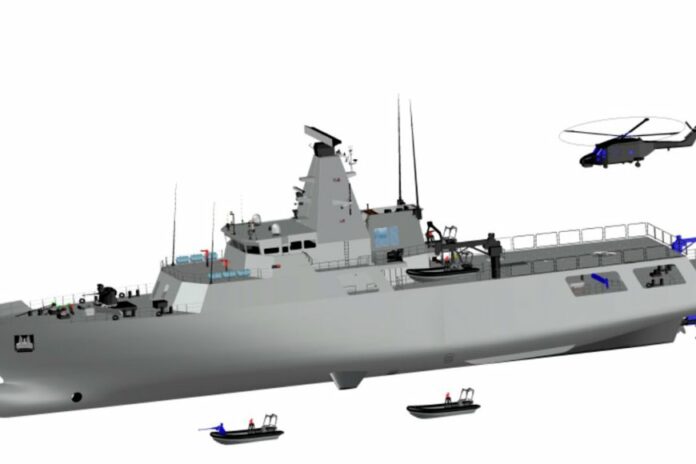
ABB has secured a contract with the West Sea Shipyard located in Viana do Castelo, Portugal to equip six new offshore patrol vessels (OPVs) of the Portuguese Navy with an integrated power, propulsion, and automation system designed to ensure optimal efficiency. The vessels are planned to be delivered between 2027 – 2031.

The new vessels will be equipped with the Azipod® propulsion system, Onboard DC Grid™ power system platform, and the market-leading distributed control system ABB Ability™ System 800xA®. Combined, ABB’s solutions will enable increased operational efficiencies for the vessels, helping reduce fuel consumption and emissions.

“ABB’s pioneering and proven integrated power, propulsion, and automation system was a choice of confidence for us providing flexibility, reliability, performance as well as fuel efficiency for better environmental performance,” said Renato Amorim, Director, West Sea Shipyard. We look forward to collaborating with our trusted partner ABB on this exciting project.”

“We are honored that West Sea Shipyard and the Portuguese Navy have chosen our power, propulsion and automation solution for these six high-specification offshore patrol vessels,” said Sindre Satre, Business Line Manager, Coast Guard and Navy, ABB Marine & Ports. “Our integrated systems already have a strong track record in the commercial market, and they are increasingly being specified for naval vessels, too. We look forward to collaborating and developing our partnership with West Sea and the Portuguese Navy on this exciting project.”

Azipod® electric propulsion will be optimizing the efficiency of the forthcoming vessels. It is a gearless, steerable propulsion system in which the electric drive motor is housed within a pod outside the ship’s hull, allowing the unit to rotate 360 degrees. By increasing maneuverability and operating efficiency of vessels, Azipod® propulsion system helps to cut fuel consumption compared with conventional shaftline systems.

Tailored to meet the needs of next-generation vessels, Onboard DC Grid™ is a modular and compact power system platform, which offers several benefits compared to its AC counterpart. The solution enables savings in weight and space, and facilitates the integration of variable speed generators, energy storage systems, and new energy sources to future-proof vessels for evolving requirements. By optimizing power usage, Onboard DC Grid™ significantly reduces fuel consumption and emissions, contributing to maritime decarbonization. Highly configurable, Onboard DC Grid™ supports the simplest to the most demanding of applications, while its best-in-class fault tolerance maximizes safety and reliability.

The ABB Ability™ System 800xA® is a comprehensive automation solution designed to enhance the efficiency and safety of marine vessels. It integrates various systems and equipment on board, providing a single user environment for seamless operations. This system allows the crew to access all necessary information from an intuitive, single-screen interface, making it easier to operate the vessel more effectively and safely.

As part of the package ABB will also supply its power and energy management system PEMS™. In combination with Onboard DC Grid™, the system forms the core of a vessel’s combined power and control system. This enables optimal use of the vessel’s total power resources in a safe, energy-efficient, and environmentally friendly manner.

A trusted supplier and integrator of first-class power and propulsion technology, ABB is growing its presence in the coast guard and naval market. ABB’s recent orders in this segment include contracts for the German, Spanish, Dutch and Belgian navies, as well as for the Canadian Coast Guard and Finnish Border Guard.