-1.5 C
New York
Home Blog Page 824

Ørsted awarded Semco a service contract for Borkum Riffgrund offshore substations

0

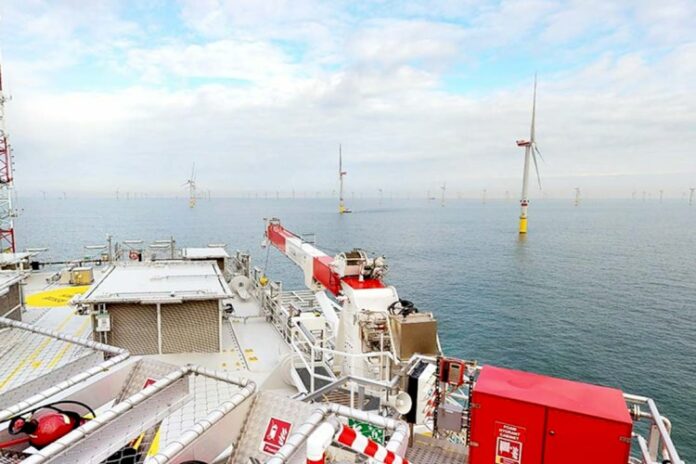
Wind energy and sustainability pioneer, Ørsted, has awarded Semco Maritime a 1-year service contract for programmed preventive maintenance on the two offshore substations for wind farms Borkum Riffgrund 1 and Borkum Riffgrund 2 in Germany.

Semco Maritime will perform maintenance work on the substations’ LV utilities and fire, safety and structural systems. The contract furthermore includes upgrading of the helideck system on the Borkum Riffgrund 1 substation.

Mads Iversholt, Director, Service Wind at Semco Maritime, says:

“We look forward to working with Ørsted and ensuring that the sustainable energy produced at sea is brought to shore as smoothly and efficiently as possible. At the same time, we are pleased to return to the two substations, which we know quite well from the construction of Borkum Riffgrund 1 and various installation, hook-up and commissioning activities at Borkum Riffgrund 2.”

The maintenance work will mainly be performed by teams from the Semco Maritime office in Norddeich, Germany.

11 major companies join forces to accelerate the energy transition in logistics

0

At the Rencontres Économiques d’Aix-en-Provence, an economic forum attended by many organizations from around the world, 11 international groups have announced they have joined forces to form an international coalition open to new members.

AWS, Carrefour Group, CMA CGM Group, Cluster Maritime Français, Crédit Agricole Corporate and Investment Bank, Engie, Faurecia, Michelin, Schneider Electric, Total and Wärtsilä are the existing members.

The Coalition aims to accelerate the development of energy sources and technologies to address the challenges posed by sustainable mobility in the transport and logistics industry by reducing emissions, fighting global warming and protecting biodiversity.

The 11 existing members are pooling their expertise in pursuit of three key goals to achieve genuine technological breakthroughs with tangible results by 2030:

  • Unlock a more extensive portfolio of clean energy sources,
  • Lower energy consumption per kilometer-equivalent of goods transported,
  • Eliminate a substantial proportion of emissions linked to transport and logistics.

Over the past few months, the Coalition has established nine working groups with several dozen participants to devise nine concrete projects that will help shape the energy sources of the future:

  • Develop green hydrogen procurement solutions for the transport sector,
  • Develop biofuels for the various modes of transport,
  • Expand the use of biogas and synthetic gases in transport,
  • Replace fossil fuels with green energy across the supply chain,
  • Launch zero-emission vehicle pilot projects by the end of 2021,
  • Create a digital door-to-door route planning system that calculates the option with the lowest environmental impact,
  • Optimize the operational management and loading to step up the energy efficiency of each ton carried,
  • Make multimodal platforms more environmentally friendly for logistics applications,
  • Consolidate methods used to measure the impact of energy transition projects in transport and logistics.
  • The Coalition was launched in late 2019 during the French Maritime Economy Conference (Assises de l’Economie de la Mer) and has received the backing of French President Emmanuel Macron.

The Coalition’s initial findings will be officially presented in January 2021 at the IUCN World Conservation Congress.

Rodolphe SAADE, Chairman and Chief Executive Officer of the CMA CGM Group, stated:

“In view of the challenges facing the world, we must unite our strengths in order to accelerate the energy transition of the transport and logistics industry. I am delighted that 11 global corporations, leaders in their respective fields, have joined this initiative. CMA CGM will provide all its expertise and experience to this first large global multisectoral coalition, supported by the President of the French Republic, Emmanuel Macron. We are all fully mobilized to produce concrete short, medium-and-long-term solutions.”

Patrick POUYANNE, Chairman and Chief Executive Officer of Total, declared:

“Total shares the ambition to get to net-zero emissions by 2050, together with society, for its global business across its production and energy products used by its customers. By joining the Coalition for the energy of the future alongside major partners, we intend to support and accelerate the joint development of tangible energy solutions, therefore directly contributing to the reduction of carbon intensity of the transportation and logistics sectors.”

Jaakko ESKOLA, President and Chief Executive Officer of Wärtsilä, commented:

“The shipping industry’s transition to cleaner, more sustainable energy use is a movement in which we at Wärtsilä continue to play a leading role. Through the development of smart technologies, research into alternative future fuels, and our holistic approach to raising efficiencies in all aspects of shipping and port operations to create a Smart Marine Ecosystem, we have shown our commitment to promoting decarbonization. We are, therefore, proud to be part of this coalition which perfectly aligns with our purpose to enable sustainable societies with smart technology.”

Global oil and gas service provider signs up for the Risk Intelligence System

0

The client is a global integrated oil and gas service and solution provider that operates across the entire upstream value chain in highly demanding global environments where access to constantly updated risk intelligence and security alerts is of paramount importance.

Hans Tino Hansen, CEO of Risk Intelligence says:

“With this new agreement, Risk Intelligence underlines our capability as a specialist risk resource for service providers in the oil and gas industry. The current threat picture to oil and gas service providers is complex and demands deep insight into various risk scenarios that the Risk Intelligence System provides 24/7. We are also proud to secure new clients in the current COVID-19 business climate, where June has seen a pick-up in business.”

With access to the Risk Intelligence System, the new client will be joining many other oil and gas service providers operating word-wide, that are assessing security threats and risks based on intelligence and in-depth assessments from Risk Intelligence. Today, 14.7% of the global merchant fleet in international traffic is operated by Risk Intelligence clients.

The license agreement provide access to the Risk Intelligence System (MaRisk+PortRisk) through a subscription where the client in advance pays for access to the system for twelve months. In general, the Risk Intelligence System license agreements create recurring revenue and generates strong cash flow for the Company.

The Risk Intelligence System is a digital security intelligence solution that has been developed in close collaboration with global businesses established in the fields of shipping, offshore, oil and gas. The digital platform has been designed based on customer needs along with the experienced security risk analysts and developers at Risk Intelligence. The Risk Intelligence System offers customers a complete picture of immediate, short- and medium-term security risks for coastal areas, ocean, port and landside threats. The analysis is focused on insurgency, piracy, organised crime, activism, terrorism, military conflicts and any the interplay between these. Risk Intelligence identifies where serious events arise and presents an assessment of how great the threat is in each area. This makes it possible for companies to evaluate both current and future security risks with the purpose of minimising risks affecting their operations.

The parties have agreed not to disclose the value of the contract.

Neptune Energy confirms hydrocarbon discovery at Dugong well

0

Upon entering the reservoir, logs and cuttings have identified hydrocarbons and a decision has been made to initiate coring.

The operations in the reservoir section are still at an early stage and final results are not yet available. A contingent side-track may be drilled to further define the extent of the discovery.

Dugong is located 158 kilometres west of Florø, Norway, at a water depth of 330 metres, and is close to the existing production facilities of the Snorre field. The reservoir lies at a depth of 3,250 – 3,400 metres. 

The drilling program comprises a main bore with a down-dip side track, subject to the results of the main bore. 

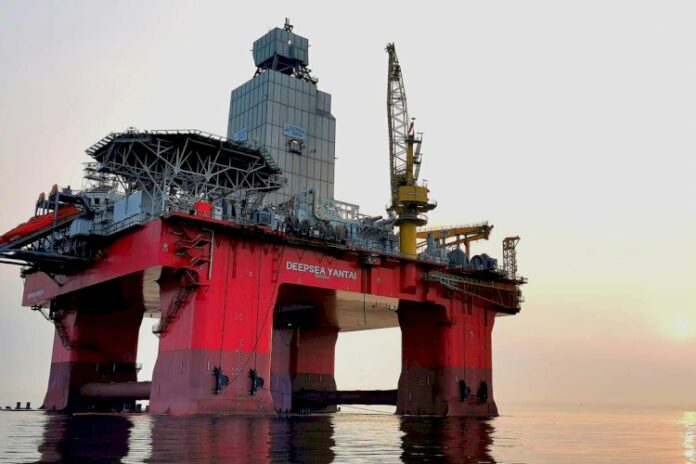
Dugong has been drilled by the Deepsea Yantai, a new semi-submersible rig, owned by CIMC and operated by Odfjell Drilling.  

Dugong partners: Neptune Energy, (operator and 40%), Concedo (20%), Petrolia NOCO (20%), and Idemitsu Petroleum Norge (20%). 


CNCo streamlines collection and distribution of files across its fleet

0

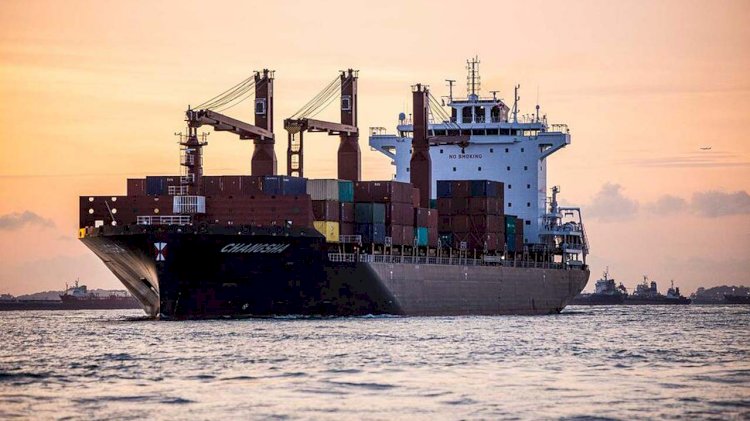
The China Navigation Company (CNCo) and Dualog expand co-operation with the roll-out of a new data exchange solution across its fleet. As they investigated the options, more uses became apparent.
 
The China Navigation Company (CNCo), headquartered in Singapore, is one of the oldest shipping companies in the world. Its parent company’s history dates back to 1872. As the shipping arm and oldest operating entity of the Swire group, CNCo has grown in tandem with the global economy. It owns and manages a sizeable deep-sea fleet of multi-purpose, container and bulk vessels and has an extensive network of liner, bulk, logistics and shipping agency businesses globally. Today, the company is firmly rooted in the 21st century with a modern fleet and a digital strategy set for the future.

The co-operation with Dualog started in 2011 with the roll-out of Dualog’s class-leading email solution across the entire fleet. As digital operations have expanded, the range of Dualog services has grown as well. The latest joint effort sees the implementation of Dualog® Drive, a maritime-optimised file and folder replication service, designed to streamline the collection and distribution of large data volumes between ship and shore. 

A core challenge of modern shipping companies going digital is to integrate ships with the rest of the organisation. Every business is an information business; a sentiment very much true for the shipping company of today. This means that all business processes and important events are registered and, eventually, stored in some form of enterprise information system’s database. Consequently, if it is not registered, it has not happened. Sales data is collected in your accounting system; procurements are managed in your procurement system; accidents and incidents are registered in your risk management systems; safety documentation is distributed as digital documents, and the list could go on. Ultimately, everything that is important in an enterprise becomes recorded in digital form in various databases and file-sharing applications. 
 
Gerry Bonner, General Manager Fleet Services, of CNCo, explains:

“The growth of cloud solutions for file sharing and enterprise data management certainly pertains to this business problem. Today’s CIO/CISO or IT Manager must, therefore, have in place solutions that enable secure company-wide data collection and distribution.”

Andrea Giglietti, Customer Service Manager working from Dualog’s Singapore office, explains the challenges:

“The problem is that most shipping companies currently use email-based systems for data and file sharing. Data packets are compiled into smaller, email-sized pieces, sent via a standard email to your ship where it is saved, unpacked and assembled manually. The process is work-intensive, prone to errors, has file size limits, and poses a significant challenge when distributing files across a larger fleet or group of vessels.”  
Andrea Giglietti, Customer Service Manager, Dualog, says:

“The problem is that most shipping companies currently use email-based systems for data and file sharing. Data packets are compiled into smaller, email-sized pieces, sent via a standard email to your ship where it is saved, unpacked and assembled manually. The process is work-intensive, prone to errors, has file size limits, and poses a significant challenge when distributing files across a larger fleet or group of vessels.” 

Often, he explains, shore personnel have to retrieve critical files and, due to the big size, they need to wait for the ship to be in port and have an agent get the files on a USB stick and transfer to the office. This process is time-consuming and costly.

After testing and implementing Dualog® Drive across parts of their fleet, the usefulness of having a reliable file replication solution has become apparent. Gerry Bonner, General Manager Fleet Services, of CNCo explains:

“Safety documentation was our starting point, and we now use Dualog® Drive to distribute and maintain a repository of SMS documents pertaining to all ships in our fleet. As we investigated the options, other potential uses became apparent. We have used the system for IT software distribution, collection of Voyage Data Recorder (VDR) data for urgent investigations, and to share updates of vessel drawings after revisions. We also want to use Drive to ensure that major Equipment Safety Updates and Technical Circulars, as well as Certificates, are updated across our fleet accordingly. We have also used the system to distribute company circulars and safety notices, and we are considering several other situations where we can provide additional benefit to our Ships Staff by using the Dualog Drive application.”

First hybrid LNG-fuelled tanker for Terntank under construction

0

This is a further development of Terntank’s AVIC series. The two vessels on 15,000 dwt have been ordered from CMJL, formerly AVIC Dingheng Shipbuilding, under the project name AVIC SERIES 2.0.

Tryggve Möller says:

“We saw a will and a potential in the shipyard when we got there in 2013. Having the first four vessels Ternsund, Ternfjord, Tern Sea and Tern Ocean in operation for three, four years, we found that our customers, crew and the owners is very satisfied with that shipyard.

Our goal of reducing carbon dioxide emissions by 40% through reduced fuel consumption and LNG operation was achieved through the first series. Now we continue our journey towards fossil-free operations with hybrid technology and over time also by biofuels.”

In addition to dual fuel machinery that can be run on liquid biogas (LBG) or natural gas (LNG), the newbuilding’s get a hybrid battery system. This way the vessels can eliminate the use of auxiliary engines in arrival and departure from the port.

In addition, the vessels will be equipped with shore power connections that will eliminate the emissions in port, which are generated from the auxiliary machines.

Tryggve Möller says:

“This is both costly and technically complicated because the connection must be carried out in an explosion area.”

The vessels will also be equipped with new digital technology. The vessels are designed by Kongsberg (former Rolls-Royce Commercial Marine) in collaboration with Terntank. 

The two newbuilding’s will be put into service on the Baltic Sea and the North Sea during 2021. The first, AD077, are going to be delivered in November 2021 and the second, AD0078, will be delivered in February 2022.

Waves Group awarded MWS contract on Vietnam’s nearshore wind farm

0

Waves Group offshore marine consultancy has announced its involvement in the construction of the Tra Vinh nearshore wind farm in Vietnam.

Waves Group is currently providing Marine Warranty Surveyor (MWS) services for the installation of foundations, infield cables and WTGs. The contract commenced in June 2020 and will continue through to May 2021.

The project will be run from the Singapore office with support from offices in the UK.

Located off the coast of Vietnam in the Tra Vinh province, the wind farm has a generating capacity of 48MW which is estimated to power over 132,000 households. The project company is Tra Vinh Wind Power Company Limited which is jointly owned by Climate Investor One’s (CIO) Construction Equity Fund, a finance facility managed by Climate Fund Managers (CFM), and Korea’s Samtan.

Waves Group has over 15 years’ experience working within the renewable energy sector and have supplied MWS services on a number of large-scale offshore wind farm projects across the UK, Europe and Asia such as, Triton Knoll, Horns Rev 3, Galloper, Beatrice, Seamade, Formosa 1 Phase 2, among others.

Incat Crowther design delivered for South African Special Forces

0

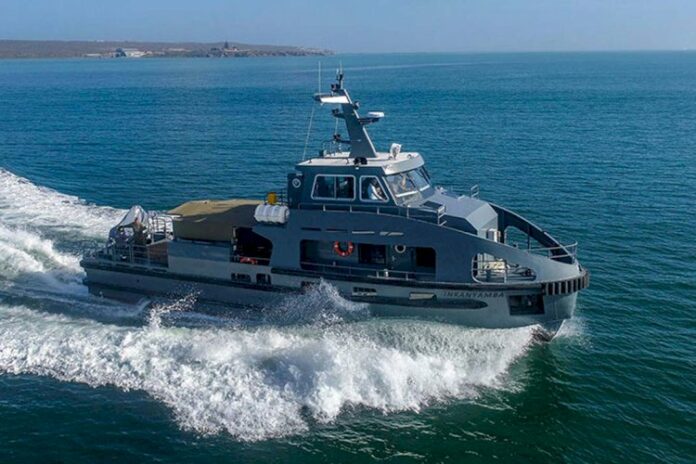
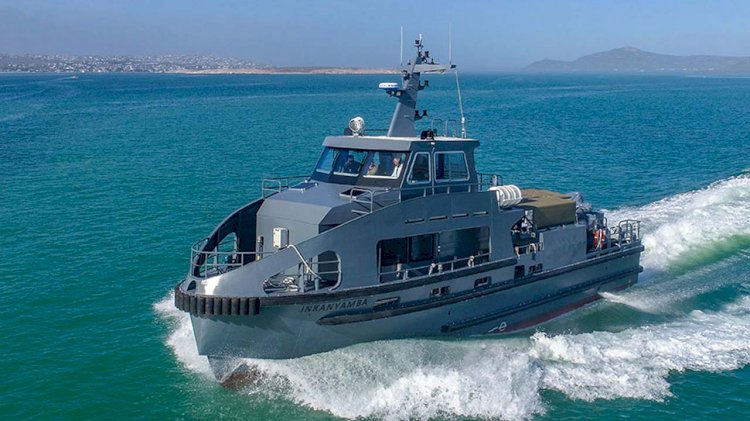
Built by Cape Town shipbuilder Veecraft Marine, the vessel will be tasked by the South African National Defence Force (SANDF) with the transportation of personnel, equipment and also support training activities in coastal waters up to 10 miles off the coast under inclement weather conditions often experienced in the area.

The vessel is designed in accordance with BV requirements and in compliance with flag state rules as defined by South African Maritime Authority (SAMSA) for Category C vessels.

The main deck features a forward deckhouse with wheelhouse above and a generous 25m2 aft cargo deck. The modestly sized deckhouse is fitted with galley and mess areas along with two toilets and a deck locker accessible from the cargo deck. The wheelhouse is arranged for 360-degree visibility, including an unobstructed view of the cargo deck.

The cargo deck of the aluminum vessel is able to accommodate a 6m ISO container and is also fitted with a 5t marine crane. A foldable dive platform is fitted aft of the transom along with stairs integrated into the main deck to provide safe access.

Below deck includes two 7.5 cubic meter cargo holds with access hatches above, engine room, fuel and water tanks, and overnight accommodations. The overnight accommodation features three staterooms for a total capacity of twelve (12) personnel.

Other notable features include a robust fendering system and heavy towing bollards on each end of the vessel.

With a service speed of 15 knots at a substantial deadweight load of 20 tonnes, the vessel is powered by two (2) MAN D2862 LE431 marine engines rated at 588kW @ 1800 rpm driving Teignbridge fixed pitch propellers through ZF 2050 gearboxes.

Inkanyamba is the twelfth Incat Crowther vessel built by Veecraft in less than a decade and further demonstrates the versatility of both organizations to deliver custom solutions tailored to unique and demanding requirements.

MSC introduces Instant Quote function for online cargo bookings

0

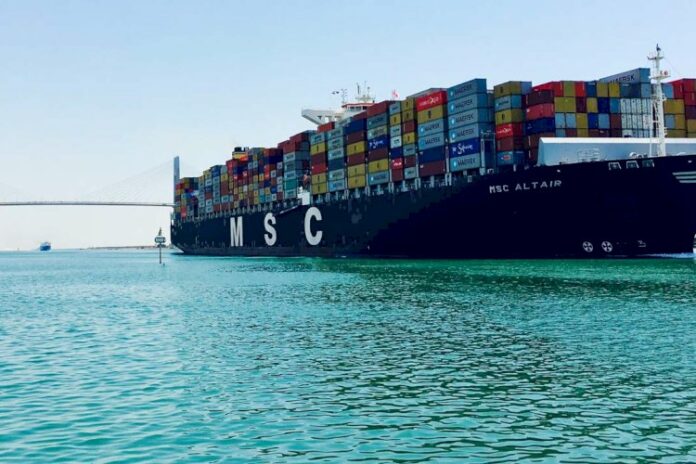
Currently, the majority of MSC’s bookings are carried out offline, and it can take some time to complete a booking. Using Instant Quote, customers can generate an online quote in seconds, with just a few simple clicks, 24/7 online.

They then have the option to instantly complete the booking with the generated quote on myMSC. Alternatively, they can save the quote or forward it to multiple contacts for booking at a later stage. The automated quote generation also reduces room for human error, further improving the efficiency of the process.

The Instant Quote function is currently only available for shipping trade routes from North America to Europe and from Asia to Europe, with plans for the addition of more trades over the course of 2020. 

Andre Simha, Chief Digital & Information Officer at MSC, said:

“The COVID-19 pandemic has accelerated the trend towards digitalisation within the industry and the importance of engaging customers through multiple platforms, including through e-business. As such, this upgrade of myMSC is a clear illustration of our continuing efforts to invest in digital business transformation with the aim to improve efficiency and transparency, and to give our customers more options.”

The launch of Instant Quote is expected to significantly boost the number of MSC’s online bookings, and further unlock the value of myMSC as an e-business platform for customers.

The tool can be used for bookings of standard-sized (20 and 40 feet) and High Cube (40 and 45 feet) dry containers. For locations where intermodal services are available, customers can opt for end-to-end rates from the origin to destination.

MSC has ensured a seamless integration of the Instant Quote function into myMSC, and a smooth overall user experience for customers. This new function adds on to the list of e-business tools available in myMSC, such as ability to do e-bookings, retrieval of documents such as booking confirmations and arrival notices, oversight of bookings via a dashboard, creation and submission of Shipping Instructions, submission of Verified Gross Mass (VGM), tracking of shipments and receiving of notifications.

APM Terminals introduces APIs to transform the next generation of terminal data

0

APIs allow data to be transmitted in just seconds from the terminals’ operating systems directly to customers own transport management or logistics systems. 

David Francis, APM Terminals Head of Digital Customer Solutions, said:

“We have co-developed our APIs with customers looking for real-time data to give them better visibility at the container terminal level. Once a customer queries a container or multiple containers, they’ll receive the latest status of the container instantly. By creating better integration with our data through APIs we can improve decision-making for our customers and remove supply chain inefficiencies, which are costing the industry billions each year.”

During the pandemic, cargo visibility issues have been exacerbated due to, among other things, transport and travel restrictions, reduced capacity and additional import/export controls. At the same time, demand patterns literally changed overnight as employees started to work remotely.

Francis says:

“Never before, has speed and visibility been so key for improving the flow of goods and managing expectations.”

The exponential increase in ecommerce and the urgency of home deliveries brought on by the COVID-19 pandemic has highlighted the fact that for some customers, the delivery experience has become integral to the product itself. For companies wanting to gain a competitive edge, getting this right is essential.

Currently, logistics companies spend a lot of time calling or emailing for cargo status updates. Over the last few months, this has been exacerbated by critical cargo for medical support and delays caused by reduced staffing. Apart from being inefficient in terms of human capital, this can also lead to error and delays.

Larger logistics companies may also rely on Electronic Data Interchange (EDI), which has been commonly used since the 1970s. However, as the internet’s capabilities have grown, the use of APIs are playing an increasingly important role, offering easier integration into digital ecosystems used by customers. 

The packaging and sending of data using EDI can, in some scenarios, result in data being outdated several hours, increasing the likelihood of supply chain partners using incorrect information to make decisions. 

Initially, APM Terminals is making APIs available to track import availability at container level, including container data, estimated time of arrival and date of discharge from the vessel, the status of the container, any holds on the container, and whether a truck appointment has been made. 

The company is also offering an API to track vessel schedules in real-time, including estimated arrival and departure times, and cut-off times for delivering a variety of container types.

APM Terminals’ APIs use familiar standard protocols, meaning that implementation by the customer is a fast, one-time process that saves time and IT resources. Any maintenance on the API is carried out by APM Terminals. 

The first locations to support the import availability and vessel schedule APIs are APM Terminals Pier 400 Los Angeles, California – North America’s largest privately-operated container terminal and Pacific gateway to the United States along with APM Terminals Port Elizabeth – the company’s largest container terminal on the US East Coast serving as the Atlantic gateway to the US and Canada – and APM Terminals Mobile, Alabama – the company’s US Gulf gateway to the Southeast, Midwest and Central Canada. Fifteen more terminals in the company’s global portfolio will be added by the end of the year.