-3.4 C
New York
Home Blog Page 822

Maritime partners unveil Autonomous Guard Vessel

0

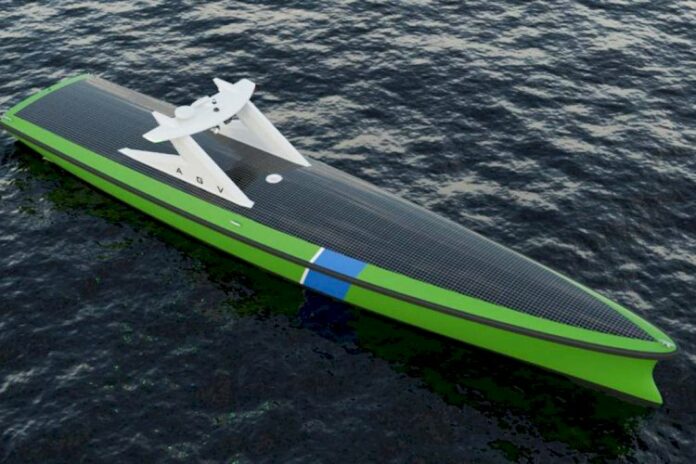
C-Job Naval Architects, in collaboration with LISA Community, Seazip Offshore Service, Sea Machines, MARIN and eL-Tec Elektrotechnologie, created a modern design which will support the offshore industry by exploiting technology available today.

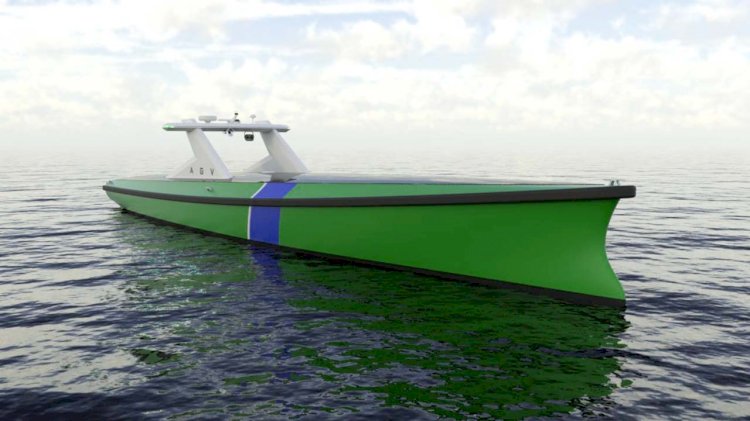
The novel design is smaller and lighter than most current guard vessels used to protect offshore operations and boasts sustainable solutions as well as exploiting the benefits of autonomous shipping. In addition, the Autonomous Guard Vessel (AGV) is set to operate more efficiently as well as require lower operating costs due to no crew being required.

This clean and lean concept to replace conventional guard vessels came to life in a project group facilitated by LISA, a community for maritime professionals. The project group resulted in a consortium, which includes C-Job Naval Architects, SeaZip Offshore Service, Sea Machines and recently joined by MARIN and eL-Tec elektrotechniek BV. Their combined industry knowledge created this viable, innovative, and sustainable alternative which benefits both wind asset owners and guard vessel operators.

The Autonomous Guard Vessel is specifically designed for surveillance of offshore structures throughout their life cycle, ranging from wind farms to substation platforms and cable routes. With any area that needs to be secured, the AGV can continuously monitor nearby marine traffic visually as well as via radar and AIS data. With any vessel that approaches the area, measures will be taken to secure the area in order to avoid collisions and damage to the offshore infrastructure. An intruding vessel can be communicated with and will receive information on how to safely navigate the area as well as being physically escorted away from the site by the Autonomous Guard Vessel. Additionally, the encounter will be recorded to provide video footage in case of any violation or accident.
Pelle de Jong, Founding Partner LISA, explains:

“Guard vessels perform an essential job, however, it is not the most exciting one for crew. Combined with the fact that conventional guard vessels are mostly outdated and thus aren’t necessarily the most comfortable let alone sustainable, it can be difficult to find well-trained crew willing to do the job.

The group set out to improve upon the overall process of securing an offshore area while incorporating sustainable solutions and reducing overall cost. By utilizing the knowledge we have as a group as well as the technology already available, we succeeded in creating a design which does this and more.”

Thanks to incorporating state-of-the-art technology, the Autonomous Guard Vessel does not require crew onboard the vessel.  Therefore, accommodations can be eliminated in the design, meaning the ship will be considerably smaller than existing guard vessels. The smaller size creates a number of opportunities, such as using batteries thanks to reduced propulsion requirements. Additionally, the reduced power and lack of onboard crew leads to lower operational costs.

Sustainability is key to ensure both the viability and durability of the design. Rolph Hijdra, Autonomous Research Lead at C-Job Naval Architects, says:

“We are pleased we were able to develop a battery-powered design, ensuring the Autonomous Guard Vessel is free of harmful emissions. Additionally, the ship has solar panels across the top which allows for the continuation of navigation and communications in case the batteries run out of power.

Contrary to current guard vessels, the AGV will continue to be operational even with rough sea conditions and have minimal underwater noise owing to the smaller size, reduced propulsion requirements and absence of a diesel engine.”

The Autonomous Guard Vessel will recharge its batteries via a charging station. The charging station can be moored independently or connected to existing equipment onsite. Depending on the situation, charging could either be via a cable connection to the on-site equipment such as an offshore transformer platform or locally generated using renewable fuels.
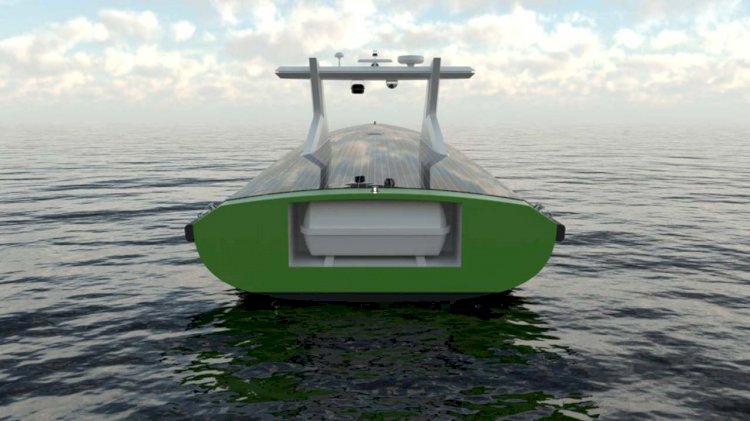
The consortium envisions an offshore site will need a number of Autonomous Guard Vessels, which can take turns in monitoring the area and recharging. Harm Mulder, Operations Manager at SeaZip Offshore Service, says:

“The Autonomous Guard Vessels will be constantly patrolling the area and take turns recharging. One fully charged AGV will remain on stand-by supporting operations if a situation arises. For example, when an intrusion is detected – one of the AGVs will monitor, warn, and escort the intruding ship to safety, while the others continue normal operations. Alternatively, it could take over from a monitoring vessel in case the battery runs out of power.”

While the consortium continues to work on the Autonomous Guard Vessel design, they have considered human intervention for the unmanned vessel. Conventional guard vessels patrolling offshore structures, from installation through to decommissioning, have few incidents that require intervention from those onboard the vessel. For those exceptional circumstances the Autonomous Guard Vessel, if human intervention would be required, will be connected to a Command Center which could control the AGV remotely to ensure correct action is taken. In addition, all data collected by the AGV will be send to the Command Center. This can be a standalone on a mother ship or a shore-based station.

Frank Relou, Business Development Manager at Sea Machines, says:

“Smart vessel technology will have the most significant initial impact on small workboats, such as this guard vessel. The development of autonomous technology for vessel operations are occurring on an international level but namely in niche segments, such as the guard vessel and other examples, currently operating in (with supervised autonomy), marine survey, fire, patrol, aquaculture and offshore wind operations.”
Shell’s report: Shipping sector prioritises five solutions for decarbonisation

0

Shell together with Deloitte Netherlands and Deloitte UK today published joint research outlining industry perspectives on decarbonising the shipping sector. The “Decarbonising Shipping: All Hands on Deck” report sets out the views of senior shipping executives from across the sector and presents a roadmap of solutions to help the industry meet the International Maritime Organization’s (IMO) ambition to reduce carbon emissions.

Huibert Vigeveno, Downstream Director of Shell, said:

“We know that shipping is one of the harder sectors to decarbonise, which is why we are working with our customers and the wider industry to identify possible solutions. This report shows the urgent effort required by industry to reduce carbon emissions. It stems from Shell’s own ambition to be a net-zero emissions energy business by 2050 or sooner. To achieve that, we need to work with our customers.”

An overwhelming 95% of shipping executives interviewed view decarbonisation as important or a top-three priority and nearly 80% noted that its importance had increased significantly over the past 18 months.

  • 85% of interviewees saw market and customer demand as a major factor driving change towards decarbonisation
  • 80% of interviewees saw technology alignment as a major factor in making decarbonisation feasible
  • 65% of interviewees saw ease of replacing infrastructure as a major factor in being able to make change happen at speed and scale

Grahaeme Henderson, Vice President Shell Shipping & Maritime, said:

“While shipping leaders are rightly focused on the current challenges of the COVID-19 pandemic, our research shows that they still have their sights on the horizon and identify decarbonising shipping as a top priority. In conducting this unique study involving detailed interviews with more than 80 of shipping’s top executives, we have been able to better understand the views of our customers and the broader shipping sector. The research identified the barriers the industry faces, solutions that will drive progress, and how we can work to help accelerate change. We want to catalyse progress towards a net-zero emissions shipping industry and working together will be crucial to implementing these solutions.”

Tarek Helmi, Partner, Deloitte Netherlands, said:

“The insights from the research give us a comprehensive roadmap to unlock decarbonisation by identifying who needs to do what, and when to drive change.”

Based on in-depth interviews with senior shipping executives across Europe, Asia and North America, the report presents a consolidated roadmap of how to accelerate decarbonisation of the shipping sector. It prioritises five solutions to be implemented over the next two to three years that could speed up progress:

  • Scale up customer demand: create scale in demand for zero-emission shipping through charterer’s commitments such as long-term contracts and green procurement criteria.
  • Global regulatory alignment: create a level playing field by aligning decarbonisation targets and timelines between the IMO and major local regulatory bodies.
  • Cross-sector R&D: accelerate company partnering to develop a zero or low-emission fuel through joint research and development (R&D) across shipping, onshore sectors in which change is hard to achieve and the energy industry.
  • Scale up controlled pilot projects: accelerate R&D by running end-to-end green pilot projects involving charterers, operators, owners and ports on specific routes and vessel types.
  • Coordinated industry commitment: increase the reach of existing initiatives and implement independent coordination mechanisms to choreograph action and areas of responsibility.

In addition, operational efficiency, is identified as the foundation for the transition process, enabling reduced emissions from the current fleet through accelerated implementation of operational measures. This includes fuel and lubricant quality, digitalisation, and the use of data and smart navigation strategies.

Other solutions identified in the report would follow to increase the scale of the change.

New ferry line Baltic Link has been launched at the port of Riga

0

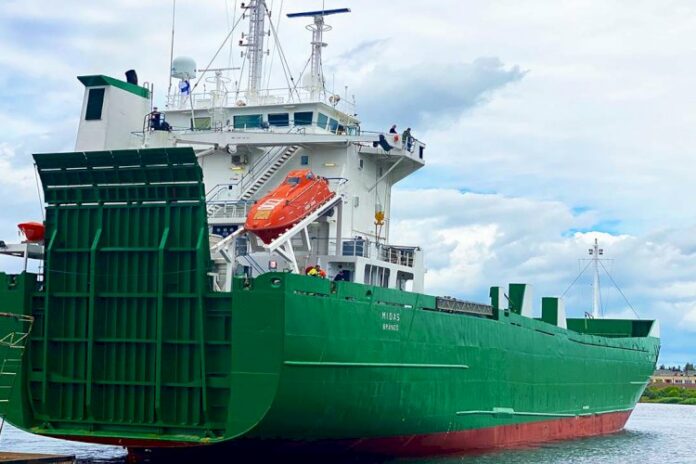
This voyage is the start of regular cargo vehicle (Ro-ro) transportation between Riga and the port of Oxelosund in Sweden.

From now on, the ferry will make three trips from Riga every week – on Tuesdays, Thursdays and Sundays. The operator of the Baltic Link line is the Swedish shipping company Wagenborg Shipping Sweden AB, which is expanding its Ro-ro ferry line network in the Baltic Sea with the new Baltic Link line.

Mr. Viesturs Zeps, Chairman of the Board of the Freeport of Riga, said:

“Taking into account the peculiarities of competition in the field of ferry transportation as well as the location of the Port of Riga, the entry of another cargo ferry line into the port is very positive. Latvian freight carriers can benefit from another competitive logistics route to the Nordic countries, while the range of services provided at the Port of Riga is expanding. It might be an excellent opportunity to attract new customers to the port of Riga and increase the volume of handled cargo. Thus, we are taking another step approaching the objective of the Port of Riga development – to become a modern and efficient logistics center, serving both the Baltic and Nordic countries.”

The port of Riga is a multifunctional port with a modern infrastructure, providing for various cargo handling as well as for accommodation of various types of vessels, including Ro-ro ferries. The port of Riga is located in the Gulf of Riga, which makes freight ferry transportation to European ports less competitive in terms of distance and cost, compared to ports located on the shores of the Baltic Sea. Nevertheless, this type of transportation is developing at the port of Riga, and Ro-ro cargo volumes are increasing. Until now, regular Ro-ro transportation from the port of Riga has been provided by Tallink line ferries, which carry both passengers and cargo.

The cargo ship MIDAS with a carrying capacity of 5873 GT sails under the Finnish flag. The line operator, Wagenborg Shipping Sweden AB, points out that as the volume of the transported cargo increases, the ferry MIDAS can be replaced by a larger, demand-compliant ferry.

SMC Secures Marine Coordination contract on SGRE Yunlin

0

SMC said it will be working with ATLAS™, the company’s proprietary marine management software solution, to ensure the delivery of services throughout the project.

George Moore SMC Business Development Manager said:

“This project represents our seventh Marine Coordination project in Taiwan and our 44th globally. We are thrilled to be given the opportunity to work with SGRE again, continuing a partnership that is proven and effective, reaffirming our positions as global leaders within the sector. We’re also really pleased to have been able to build upon our commitments to the region in what are extremely trying times for businesses worldwide – it is testament to the values and competencies of both SGRE and SMC that we have been able to do so safely and efficiently.”

To remind, SMC established a branch in Taiwan in March 2019 with an aim to support the offshore wind sector in the region. The two parties previously collaborated in the region for operations across the Formosa 1 offshore wind farm, Taiwan’s first commercial offshore wind farm.

Yunlin, now under construction, will comprise 80 Siemens Gamesa turbines of the 8MW class. The 640MW offshore wind project reached financial close at the end of May 2019 and is scheduled for completion by December 2021”

DCSA publishes standards for Digital Exchange of Operational Vessel schedules

0

Digital Container Shipping Association (DCSA), a neutral, non-profit group established to further digitalisation of container shipping technology standards, in conjunction with its nine member carriers, today published standards for the exchange of operational vessel schedules (OVS).

The standards can be implemented by vessel operators, as well as their Vessel Sharing Agreement (VSA) partners and operational service providers, to enable automatic sharing of schedule information. This is one of many initiatives to be put forth by DCSA to accelerate digitalisation through a unified industry effort. 

The DCSA Standard for Operational Vessel Schedules can be freely downloaded from the DCSA website. With the new standards in place, carriers can digitally publish their schedules, and their partners and operational service providers can subscribe to the carrier’s feed to automatically receive updates, or retrieve updates as needed. This will provide complete vessel schedule transparency, increasing efficiency and enabling better planning and optimisation of shipping activities.  

The DCSA OVS standard publication comprises a set of documents:  

  • the DCSA Industry Blueprint 2.0 with OVS schedule definitions and an updated glossary of terms 
  • the DCSA Information Model 2.0  
  • DCSA Data Interface Standards for OVS 1.0 and associated Reading Guides  

In addition to these documents, DCSA has published OVS API definitions on the SwaggerHub open source API development platform, where future enhancements will also be published. Carriers can use the definitions to rapidly implement DCSA standard-compliant APIs for OVS.  

Yu Kurimoto, Managing Director, Corporate and Innovation for ONE (Ocean Network Express), said:

“ONE emerged from the legacy of three Japanese liner companies, who historically prided themselves on high service quality and process excellence. From this cherished history we formed our current core values of Quality, Reliability, Innovation and Customer Satisfaction. Furthering these values in the modern era requires greater transparency and interoperability among industry participants. OVS is a perfect example of an area in which digitalisation would provide these benefits. We are very pleased to see DCSA taking on OVS with its digital standards initiatives. Their efforts are important for helping ONE and the industry achieve its goals moving forward.” 

Thomas Bagge, CEO of DCSA, said:

“Operational vessel schedules are core to the functioning of the container shipping industry. Digitising them is necessary if we want build a higher degree of effectiveness and efficiency into the fabric of container shipping processes, and this release is an important step in that direction. Once implemented, our OVS standards will, for example, enable a port operator to optimise their operational activities in accordance with the exact arrival time and departure date of a vessel. Ultimately, the more transparency and efficiency we build into these fundamental processes the more each stakeholder will be able to trust and benefit in terms of lower costs, increased productivity, greater innovation, a better customer experience, and less impact on the environment.”   

KNOT concludes long-term charter ccontract with PetroChina for shuttle tanker

0

NYK Group company Knutsen NYK Offshore Tankers AS (KNOT), of which NYK has a 50 percent share, has concluded a first long-term time charter contract for up to a 10 year period starting from 2022 for a shuttle tanker with Petro China International (America) Inc., which is a subsidiary company of PetroChina Company Limited.

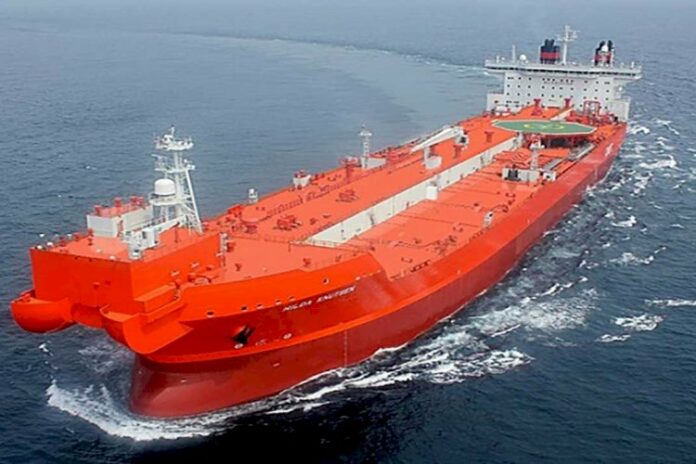
The contract aims to use a 154,000 DWT Suezmax tanker equipped with a dynamic-positioning system built in China by COSCO (Zhoushan) Shipyard Co. Ltd. to shuttle crude oil produced in waters off Brazil.

In accordance with its medium-term management plan “Staying Ahead 2022 with Digitalization and Green,” the NYK Group will continue its efforts to provide stable and economical energy-transport services in the shuttle tanker and offshore businesses.

About Knutsen NYK Offshore Tankers AS (KNOT)

A joint venture company between NYK and TS Shipping Invest AS (TSSI), the parent company of the Knutsen Group. The KNOT Group has a share of about 40 percent of the world shuttle tanker market (not including the number of vessels on order and shuttle tankers in Russia), and with this contract will have 34 shuttle tankers in operation or on order.

About PetroChina Company Limited

An oil and natural gas company headquartered in Beijing, China, and a subsidiary of China Petroleum and Natural Gas Group (CNPC) that engages in oil refining, distribution, and manufacturing and sales of petrochemical products throughout the group.

Damen delivers five zero emissions propulsion ferries to Arriva

0

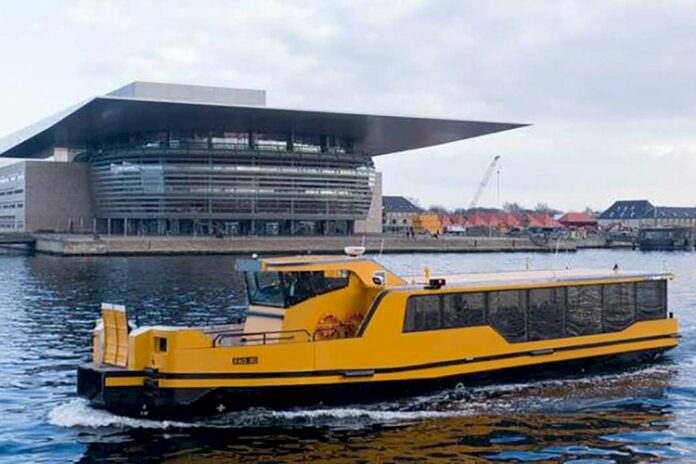
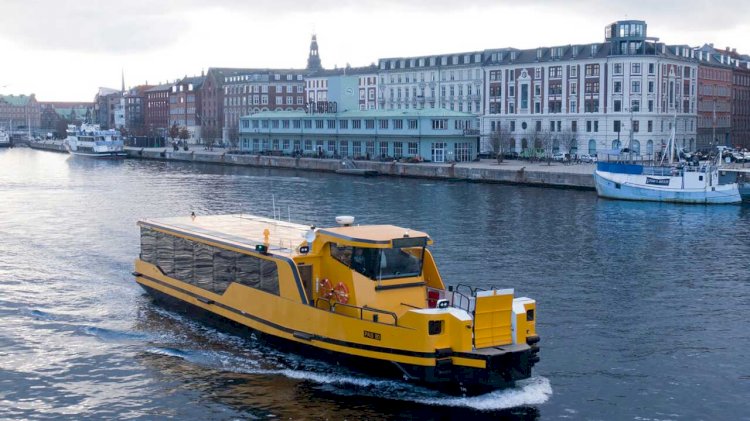
Damen Shipyards Group has delivered five Damen Ferries 2306 E3 to Arriva Denmark in Copenhagen. Arriva is operating the vessels on behalf of Danish public transport agency Movia. The vessels are based on Damen’s E3 philosophy – environmentally friendly, efficient in operation and economically viable.

When Movia issued the public tender for waterborne public transport in Copenhagen, its aim was to upgrade the service, making it cleaner and more sustainable. In this the agency was aligned with both Arriva, which embraces innovation in order to reduce environmental impact, and Damen, whose aim it is to become the world’s most sustainable shipbuilder.

The ferries make significant strides towards a zero emission service, reducing Copenhagen’s public transport NOX emissions by 2.5%, CO2 emissions by 10% and particulate emissions by 66%.

The vessel’s sustainable credentials are powered by a series of innovative, digital shipbuilding techniques. Computational fluid dynamics (CFD) were applied to the hull design, minimising resistance in the water, while cutting-edge software measured the relationship between engine torque and propeller speed. This resulted in the optimal use of battery packs for reduced weight, energy consumption and – ultimately – costs of operation.

The ferries are prepared for remote monitoring. Informed by a network of sensors incorporated into the vessel, Damen’s remote monitoring department is able to set up a dashboard tracking such things as sailing patterns, battery lifecycle and swell dynamics. This allows fine-tuning of the operation towards greater efficiency and reduced downtime for maintenance.

For this project Damen has undertaken its role as integrator, or complete solution provider. This has involved, for example investigating shore solutions for electricity supply – in alignment with Movia’s requirement that 60% of the electricity for the operation comes from a sustainable source.

Martin Verstraaten, Damen sales manager, says:

“This, in my opinion, is where Damen really add value to a project. Our involvement is not limited to the shipbuilding scope alone, we take responsibility for the entirety of the project. We provide a focal point where all partners involved the project come together to fulfil their individual roles in alignment with one another. With this, the project benefits from cohesive, centralised direction for maximum efficiency.”

Working closely together with Echandia Marine, Heliox and Staubli, Damen developed a solution that takes just seven minutes to charge the ferries at the end of each trip they make. The charging solution features an innovative auto-mooring system to ensure a secure connection between the vessel and charging infrastructure.

Having recently unveiled the Electric Cutter Suction Dredger 650, Damen continues to work on a number of hybrid and electric projects. These include two fully electric ferries for Ontario, Canada, four (having delivered two to date) hybrid vessels, easily convertible to full electric propulsion in the future for BC Ferries in British Columbia, Canada and the world’s first fully electric harbour tug with 70 tonnes bollard pull for the port of Auckland, New Zealand.

Report: High volume vessel calls as a result of blank sailings put pressure on port operations

0

The tenth WPSP-IAPH COVID19 Port Economic Impact Barometer published reveals an important development for ports located in countries where lockdown restrictions are being eased. This report accumulates results from ninety ports predominantly located in Europe and the Americas, with some representation from Africa and the Far East.

More ports than in any of the past surveys reported a return to ‘business as normal’ as regards the number of cargo vessels calls. Nonetheless, while cargo vessels beyond containerships increasingly arrive at the same numbers as the year before, the container trades continue to suffer from blank sailings.

Co-author Professor Theo Notteboom commented:

“As reported, during the last week container ports experienced another wave of cancellations from many carriers for the third quarter, although they appear to be lower in numbers than the second quarter.”

The current situation has had serious consequences for some container terminals. Ultra large container ships (ULCS) calls are less frequent in numbers but are filled up with more cargo. Major container ports in both Europe and North America report that the average moves per ULCS per call have significantly increased, with some hubs reaching up to 10.000 TEU moves. This is creating peaks in both ship-to-ship operations and yard activity at the terminals and is starting to impact land-side operations, especially on truck arrivals and departures. Some ports report that it takes days to return back to a normal situation at the yard and gates and lost movements of cargo are on the rise. The workforce in some ports are under increasing pressure as these peaks impact resource on some days, followed by several days off duty with no activity at all.

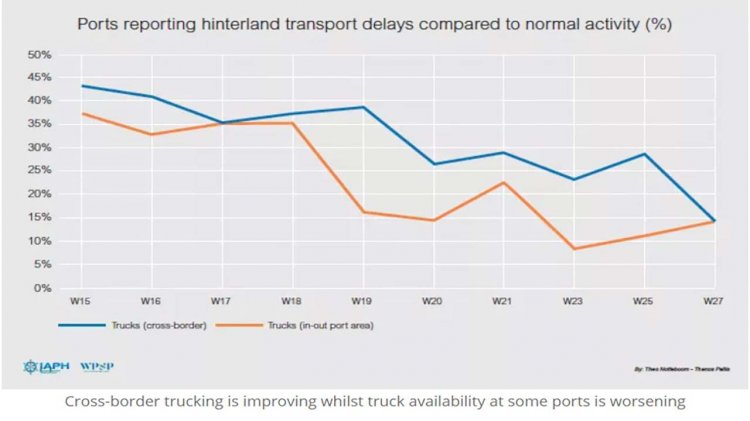
For trucks arriving or leaving the port, there is an improvement overall despite the spike in delays the last two weeks: 85% of ports report normal activity versus 78% in week 21 and only 63% in week 15. On one hand, ports have reported much less delays in cross border truck transportations in past two weeks. On the other hand, ports are reporting a worsening situation overall for trucks entering and leaving ports in the last five weeks, with a V-shape in delays from a low of 8.4% in week 23 to 14.6% this week which is almost back to the level in week 20. Reported issues of concern include potential disruptions due to the need to isolate increased numbers of truck drivers testing positive, as well as the congestion problems due to essential road maintenance. Road congestion is on the rise for ports located within city limits or within proximity of conurbations, where regular traffic is on the rise due to easing of lockdowns or the beginning of the tourist season in the Northern Hemisphere where use of public transport is being discouraged.

Ro/Ro and passenger traffic, which has been massively impacted by COVID19 in recent weeks, has seen some renewed activity, especially in Europe. Some ports have seen increases exceeding expected calls by up to 60%. More and more countries re-start the temporarily suspended operations of passenger ships.

Co-author Professor Thanos Pallis commented:

“This recovery however might not be a full one. Even though passenger vessel calls have recovered, the number of passengers on board these vessels in many cases is still more than 60% less than a year before. In some countries this is also due to restrictions that prevent passenger vessels from carrying more than 50 to 60% of their capacity.”

Despite a few small cruise vessels returning to operation, nearly all other cruise operators have cancelled their operations until autumn, or even 2021, while some countries have officially announced that there will be no cruise operations for the coming months. This has resulted in some layoffs of port staff.

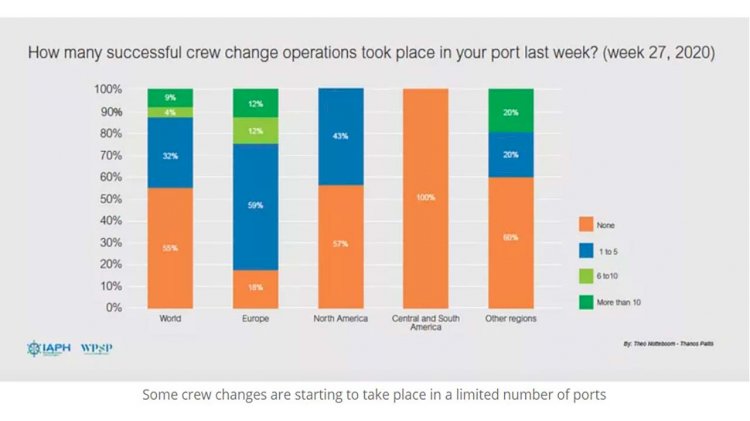
On a global scale, 55% of ports in the survey reported no crew changes have taken place in week 27. In one third of the ports, a very limited number of crew changes have occurred (less than 5). When comparing regions, European ports show the best picture in terms of the crew change situation, although 6 out of 10 European ports only recorded less than a handful of crew changes in the past week. In North America, crew changes are at a very low level with 57% of ports indicating there have not been any crew changes in week 27. No crew changes have taken place in the 29 responding ports from Central and South America. Despite best efforts from ports, the above figures show the crew change situation remains very precarious, particularly in the Americas.

For some ports reporting in that that crew changes are permitted by health authorities and immigration offices, there are no regular/commercial international flights within close vicinity for completing the operation. In some cases seafarers have to hire cars or use alternatives to be able to connect back home. Others report the need for finding accommodation for crews to be housed during the obligatory quarantine period or whilst awaiting charter or regular flight connections.

IAPH Managing Director Patrick Verhoeven commented:

“While these findings of our survey gives some hope about crew changes, more needs to be done, especially in countries where nationals need repatriating. The measures taken recently in some countries such as Singapore and the Philippines to help repatriate sea staff long overdue for leave are encouraging. Other IMO member states need to follow suit, allowing our port members to help get crew home and their replacements onboard.”

As governments meet this week in London to address the growing crisis around crew changes, IAPH supports the International Chamber of Shipping’s call on all ships to sound their horns in support of all seafarers at 12 noon local time on 8 July.

Yang Ming fulfills green promise carbon emission reduced 51% in 2019

0

Through continuous fleet optimization, Yang Ming has fulfilled its promise of energy saving and emission reduction.

Saipem awarded a contract for the Búzios pre-salt field in Brazil

0

Saipem will use FDS, its state-of-the-art field development ship, for all the subsea works.