-5.1 C
New York
Home Blog Page 821

Sanmar deliveres the first of three new tugs for Svitzer Sohar

0

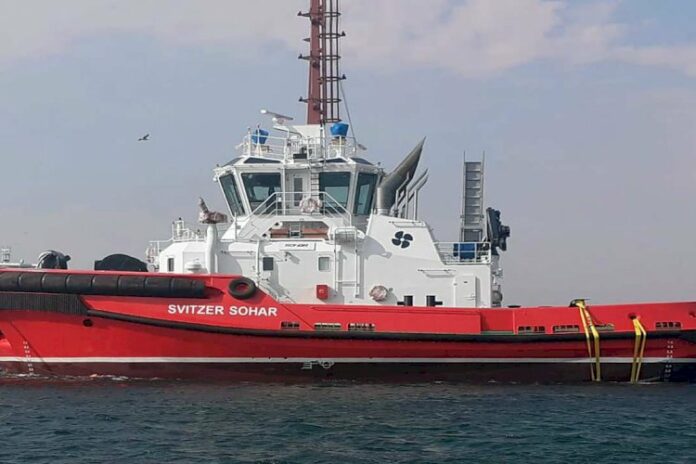
Turkey’s Sanmar Shipyards has delivered the first of three Bigaçay class ASD tugs that will be operated by Svitzer in the Port of Sohar, Oman. Destined for operation at the Sohar Industrial port, the tugs will be employed escorting and berthing large container ships and ValeMax bulk carriers.

The Bigaçay class ASD tug is a variant of the Robert Allan Ltd. designed RAstar series described as RAstar 2900-SX compact tugs. The design has a sponsoned hull form which is proven to provide significantly enhanced escort towing and seakeeping performance. As well as towage, the other services the tugs will provide are: Fire-fighting, pollution response support and salvage operations within the Port.

Particulars of the Svitzer Sohar (BIGAÇAY V), Svitzer Shinas (BIGAÇAY VI) and Svitzer Saham (BIGAÇAY VII) are:

  • Length overall: 29.40 m
  • Beam, moulded, extreme: 13.30 m
  • Depth, least moulded (hull): 5.50 m
  • Draft full load: 6.13 m

Tank capacities are:

  • Fuel oil: 175 m3
  • Foam: 18 m3
  • Fresh water: 21 m3
  • Fresh Water ballast: 52 m3

The vessel’s accommodations are compliant with MLC standards for a normal operating crew of up to 8 personnel. The Master and Chief Engineer cabins are located on the main deck with three double crew cabins located in the lower accommodations.

Main propulsion for the tug comprises a pair of Caterpillar 3516C diesel engines, each rated at 2,525 kW at 1800 rpm, and each driving a Rolls Royce 255S fixed pitch Z-drive unit, in ASD configuration.

Ship handling fenders at the bow consists of a 900 x 500 cylindrical fender with 480 x 300 mm “W” block fendering below. A 300 x 300 hollow “D” fender provides protection at the main deck sheer line and along the knuckle, and 480 x 300 mm “W” block fendering is used at the stern.

Easing of bridge draft limit encourages larger ship calls to Hong Kong Port

0

The move, which raises the air draft to 57m from the previous 53m restriction, comes after years of consultation, and has the potential to attract millions of additional containers to Hong Kong.

The Transport and Housing Bureau (THB) told Hong Kong Maritime Hub:

“As an international maritime centre, Hong Kong seeks to provide a facilitating environment for maritime and port business operation in support of the international and local shipping community.  One of our upcoming measures would be to revise the air draft restriction level at Tsing Ma Bridge so as to facilitate mega container vessels to pass through the Ma Wan Fairway to access the Hong Kong Port and other ports in the western and central parts of the Pearl River Delta Region.

Tsing Ma Bridge is the only land and rail link connecting the Hong Kong International Airport and other parts of Hong Kong.  Since it began operations in 1997, an air draft restriction of 53m above sea level has been specified in the law as the maximum height clearance for safe navigation below the bridge span. In view of the increasing use of mega vessels by the shipping sector, there have been calls from the industry to review the existing air draft restriction of the Bridge.

Having carefully considered the possibility of relaxing the air draft restriction, we will revise the existing limit from 53m to 57m above sea level.  We have briefed the trade on the proposed implementation arrangement and are working on the legislative proposal to amend the relevant provisions in the Shipping and Port Control Regulations (Cap.313A) and the Merchant Shipping (Local Vessels)(General) Regulation (Cap.548F). Upon completion of the exercise, we will introduce the legislative amendments into the Legislative Council to implement the relaxation.”

According to a consultants’ report commissioned by the Government three years ago it was estimated that in 2014 maybe 1m teu had been affected by the restrictions relating to the Tsing Ma Bridge leading to a possible loss of value added of HK$0.8bn and around 2,000 jobs. 

The consultants said:

“The affected throughputs may continue to grow following the trend of increasing deployment of mega-vessels. It is estimated that the accumulated affected throughput could rise to around 2.3m teu by 2020.”

NOAA’s Cloud and Data strategies to unleash emerging science and technology

0

Unlocking the full utility and potential of NOAA’s massive and diverse data is the purpose of the agency’s new Cloud and Data strategies. They are also integral to implementing a collection of strategies to dramatically expand emerging science and technology that will drive innovation and guide transformative advancements in NOAA’s science, products and services.

Both strategies have their own broad application across the agency while underpinning and enabling the goals of NOAA’s interrelated science and technology strategies on Unmanned Systems, Artificial Intelligence, ‘Omics – and a forthcoming strategy on Citizen Science. Collectively, they will accelerate the implementation of the most effective science and technology applications to advance NOAA’s mission, including protecting life and property and growing the American Blue Economy.

Neil Jacobs, Ph.D., acting NOAA administrator, said:

“The value of NOAA’s data depends on its quality, integrity, and the ability of users to access and use the data with modern, emerging, and innovative cloud-based services. Our Cloud and Data strategies provide a guide to address emerging science and technology, and ultimately help accelerate NOAA’s mission and further increase the value of our data.”

Reflective of NOAA’s diverse mission, the agency’s data is vast, complex, and distributed – and the systems and infrastructure that process, store, and disseminate these data are complex. With the volume and velocity of NOAA’s data expected to increase exponentially with the advent of new observing systems and increasing data-acquisition capabilities, the Cloud and Data strategies allow the agency to place a premium on scaling the IT infrastructure and services to support this growth. 

NOAA’s Data Strategy will improve the management and overall value of NOAA’s data, especially at a critical time when emerging science and technology have dramatically expanded the agency’s data collection for the greater benefit to the agency, its partners, and the nation. This strategy codifies a number of existing environmental data management directives across the agency, and ensures that NOAA is aligned with the Federal Data Strategy. NOAA’s strategies for Unmanned Systems, Artificial Intelligence and ‘Omics will improve the coordination and use of emerging science and technology across the agency, and the NOAA Cloud and Data strategies are foundational for each of these other strategies. 

The Cloud Strategy provides a common vision and guide for future cloud initiatives, building on NOAA’s robust past experience with cloud services. Recent NOAA cloud initiatives are already demonstrating significant potential improvements in data storage, access and analytics of environmental data in areas such as numerical weather prediction, ocean models, assessments of living marine resources, and big data analysis, storage and dissemination. Looking forward, the strategy seeks to accelerate innovation in areas such as AI and ‘Omics through rapid adoption of cloud services, ensure a smart transition to the cloud, promote broad and secure access to NOAA’s data, develop effective governance mechanisms for shared enterprise cloud services and enable a cloud-ready workforce. 

Marlink to deliver upgraded and optimised connectivity services to Stolt Tankers

0

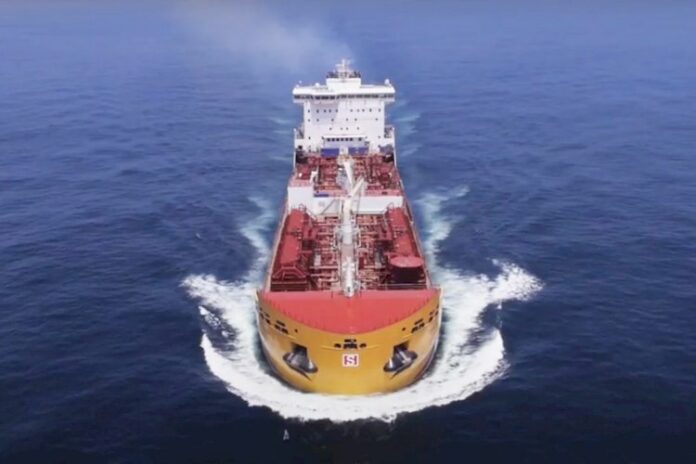
Marlink has signed a major new service agreement with Stolt Tankers. The contract cements the ongoing and substantial enhancements that Stolt Tankers has enjoyed since joining forces with Marlink to improve business and crew communications in 2011.

Under the new agreement Marlink will provide Stolt Tankers’ fleet of chemical and parcel tankers with a bandwidth upgrade, enabling even greater digitalization of its operations focusing on quality, safety, security and client satisfaction. The package includes version 5.0 of Marlink’s XChange communications management system, which will deliver greater efficiency in IT management processes as well as reinforced cyber security.

Marlink’s new 4G connectivity option will also be added to Stolt Tankers’ service package, contributing even more resilience and availability of service with cost-effective, low-latency and high-bandwidth services in coastal regions. A new VPN to shoreside operation centers will enable further improvements in business and operational efficiency by securely streamlining data sharing.

The agreement reflects the requirement of specialist vessel operators for flexible connectivity solutions that combine intelligent, hybrid networks with smarter data handling to enable digitalization and support critical communications. By providing managed services, Marlink can enable data processing at the network’s edge and proactive monitoring and support to onboard systems, providing the maximum possible uptime and quality of service.

Tore Morten Olsen, President Maritime, Marlink, adds:

“It’s a real acknowledgement to have been selected to remain as Stolt Tankers’ global satellite service provider and to take their data communications framework into tomorrow. Stolt is an operator with the very highest standards of safety and transparency and our services will continue to provide the foundations of its business strategy for years to come.”

First cruise ship receives the CIP-M certification by DNV GL

0

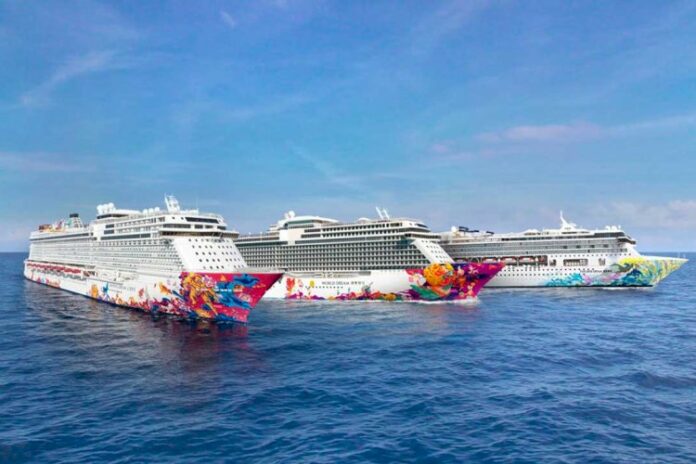
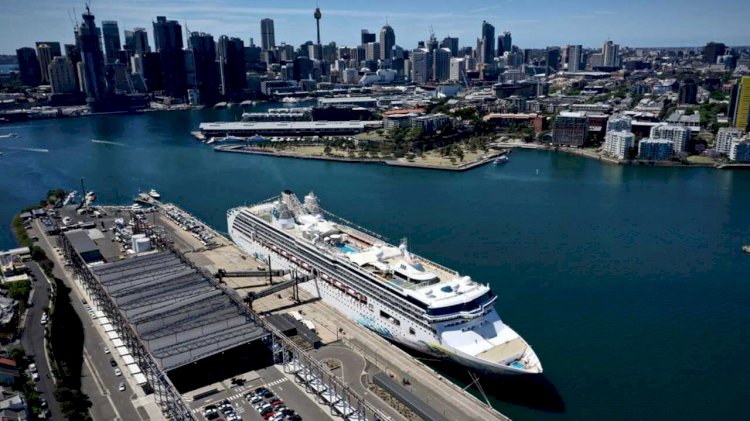
Genting Cruise Lines has announced that Dream Cruises’ Explorer Dream is the first cruise ship in the industry to receive the Certification in Infection Prevention for the Maritime industry (CIP-M) from the world’s leading classification society, DNV GL.

The CIP-M certification of Explorer Dream is timely and in conjunction with Dream Cruises’ recent announcement that Explorer Dream will recommence operations in Taiwan from 26 July 2020 onwards, offering “Taiwan Island-Hopping” itineraries.

With the CIP-M certification program for Explorer Dream, Genting Cruise Lines together with DNV GL are paving the way in introducing new safety standards, customized specifically for the maritime industry, that include enhanced infection prevention control procedures and systems for the safety and well-being of guests and crew members. The CIP-M is based on DNV GL’s stringent healthcare foundation and expertise in infection risk management, used in the accreditation and certification of more than 630 hospitals worldwide.

The CIP-M certified Explorer Dream will soon resume sailing and homeport in Keelung to operate a series of round-trip cruises, including a two, three and four-night itinerary to Penghu, Matsu and Kinmen islands, as well as Hualien in Taiwan.

Mr. Kent Zhu, President of Genting Cruise Lines, said:

“Genting Cruise Lines is proud to be part of this milestone as we continue to set new standards for our fleet and the maritime industry through the CIP-M certification of Explorer Dream. We are pro-actively taking positive steps to gradually resume operations, starting in Taiwan. These include customized safety and preventive measures in accordance to DNV GL’s CIP-M certification program and the local authorities to protect and provide peace of mind for our guests and crew, as well as to complement our existing facilities such as the 100% fresh air ventilation on board our ships.”
Cristina Saenz de Santa Maria, Regional Manager South East Asia, Pacific & India, DNV GL – Maritime, commented:

“We are very proud to mark the world’s first CIP-M certification with Genting Cruise Lines. It is encouraging to see that the cruise line has taken a lead in an industry so adversely affected by the Covid-19 pandemic. Our new certification will help ship operators to restore passenger confidence and restart operations once the situation allows.”

Stephen Keenan, Head of the Inspections & Surveys department of the Bahamas Maritime Authority (BMA), said:

“As the leading cruise ship registry, we are delighted that a Bahamas flagged cruise ship vessel is the first to receive CIP-M certification. This innovative approach to mitigating the risk of COVID and other infectious diseases on board will help promote public trust and confidence in cruise liners as the sector re-opens. We support and encourage the development of such initiatives by Bahamas Recognised Organisations and third parties.”

The CIP-M certification program utilizes DNV GL’s expertise on infection risk management, which has been integrated and customized based on a maritime specific standard, including the US CDC Vessel Sanitation Program and incorporating national and industry guidelines. CIP-M is unique as it is based on proven hospital standards and measures against infection risk and further tailored for cruise ships by experts from various fields including the maritime industry. As part of the CIP-M certification, DNV GL has assessed the Company Safety Management System with the scope of infectious disease management and annual surveys are conducted to verify continued compliance with the DNV GL CIP-M requirements.

During its hiatus period, Genting Cruise Lines has reviewed and bolstered its overall prevention and response plan for the eventual recommencement of its Dream Cruises and Star Cruises ships to ensure the safest environment for guests and crew.

Austal delivers first of two 118 metre trimarans to Fred. Olsen Express

0

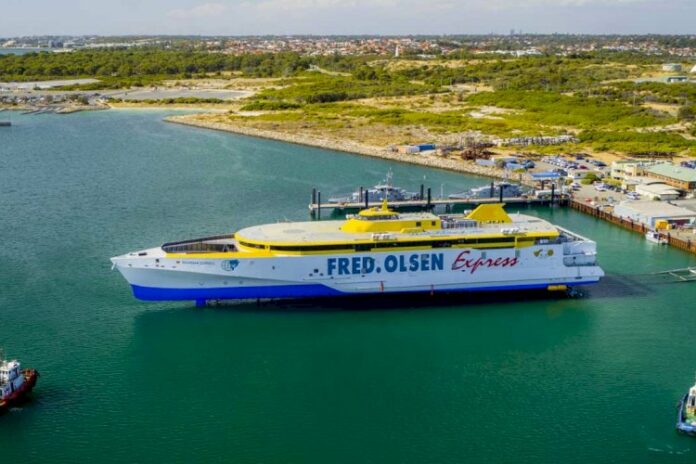
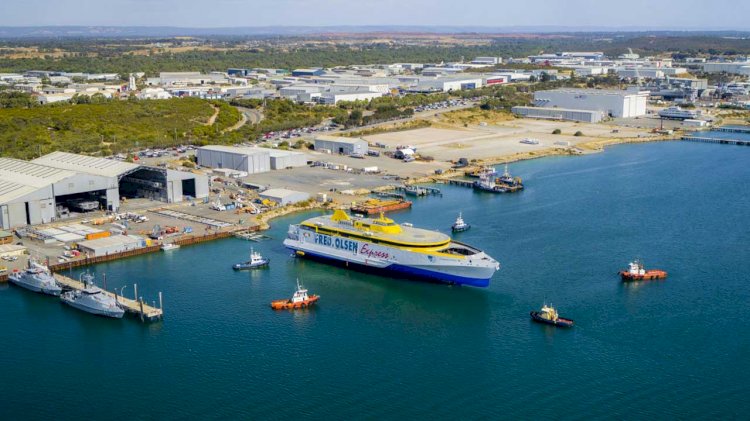
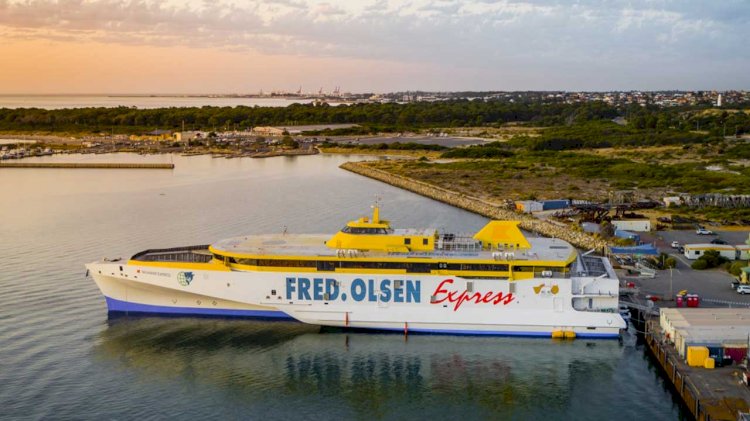
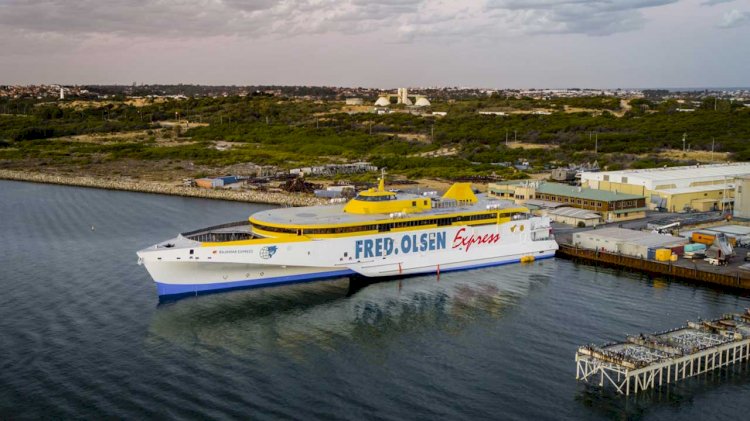
Olsen Express in a €126 million (A$190 million) contract in October 2017. The second vessel, Bañaderos Express (Austal Hull 395), is under construction at Austal Philippines shipyard in Balamban, Cebu, and is scheduled for delivery in the first half of 2021.

Speaking at the delivery ceremony, Austal Chief Operating Officer Patrick Gregg said the Bajamar Express was the second trimaran to be delivered to Fred. Olsen Express and the 4th Austal vessel to join the Fred. Olsen fleet.

Mr Gregg said:

“Fred. Olsen Express recognised the enormous potential of the trimaran hull form for high-speed craft and engaged Austal to develop the original and still the largest trimaran ferry operating in the world, the 127 metre Benchijigua Express. Based on that ship’s success, Fred. Olsen Express ordered two more trimarans in 2017 and today we celebrate the first of these vessels to be delivered.

Bajamar Express joins Benchijigua Express plus two Austal-built catamarans already operating in the Fred. Olsen fleet, the Bocayna Express and Betancuria Express. When the Bañaderos Express is delivered in 2021, Fred. Olsen Express will be operating five Austal vessels, including 3 trimarans.”

During sea trials, Bajamar Express has achieved impressive speed, seakeeping and passenger comfort results, highlighted by Austal’s new MARINELINK-Smart technology that provides real-time analysis of vessel performance, on board and remotely. With the benefit of Austal’s MOTION CONTROL System, Bajamar Express was able to reach trial speeds in excess of 44 knots (81.5km/h) whilst maintaining superior passenger comfort.

Capable of transporting 1,100 passengers and 276 cars at a cruising speed of more than 37 knots, the new trimaran ferries for Fred. Olsen Express feature class-leading interior amenities and facilities, including multiple bars, kiosks, a retail shop and children’s play area.

Fred. Olsen S.A. CEO Andrés Marín said the Bajamar Express was eagerly awaited in the Canary Islands, where the ship will commence operations between Santa Cruz, Tenerife and Agaete, Gran Canaria, immediately upon arrival in August 2020.

Mr Marin said:

“We cannot wait to introduce this fantastic new trimaran to our fleet and offer our customers an enhanced level of service on even more routes in our popular ferry network. On behalf of the entire Fred. Olsen Express team, I would like to thank the Austal Australia team for their outstanding commitment and shipbuilding capabilities, especially during the COVID-19 pandemic which has affected all of us, around the world.”

Equinor makes gas and condensate discovery by Kvitebjørn field

0

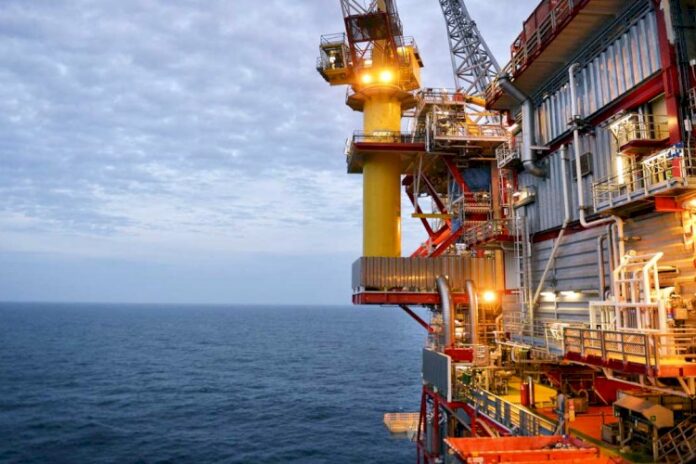
Equinor and its licence partners Source Energy AS and Wellesley Petroleum AS have discovered gas and condensate in exploration well 30/2-5 S Atlantis. Based on preliminary estimates the proven reserves are between 3 and 10 million standard cubic metres of recoverable oil equivalent, corresponding to 19-63 million barrels of oil equivalent.

Nick Ashton, Equinor’s senior vice president for exploration in Norway and the UK, says:

“It is encouraging to see that we are able to keep proving more resources in one of the most mature areas on the Norwegian continental shelf. Now we will work on evaluating the potential for profitable and CO2 efficient recovery.”

The well was drilled approximately 17 kilometres south of the Kvitebjørn field and 10 kilometres north of Huldra.

The primary exploration target of exploration well 30/2-5 S was to prove hydrocarbons in the Middle Jurassic reservoir of the Brent Group. The well encountered about a 160-metre high gas column, of which 60 metres represent an effective Middle Jurassic reservoir rock. Poor to satisfactory reservoir quality was encountered in the Ness, Etive and Tarbert formation, while the Rannoch formation had poor reservoir quality.

The well was not formation tested however extensive amounts of data have been acquired and samples have been taken. The well was drilled to a vertical depth of 4359 metres below sea level. Water depth in the area is 142 metres. The well was permanently plugged and abandoned.

This is the first exploration well to be drilled in production licence 878. The licence was awarded in the Awards in Predefined Areas 2016 (APA 2016). The licence owners will consider whether to pursue the discovery in an overall assessment of the area.

The well was drilled by the West Hercules drilling rig, which is moving on to drill exploration well 35/11-24 S, a prospect named Swisher, in production licence 248 C.

The licence owners of production licence 878 are Equinor Energy AS (60%), Source Energy (20%) and Wellesley Petroleum AS (20%).

K Line to strengthen the initiatives toward global environmental preservation

0

Kawasaki Kisen Kaisha, Ltd. (“K” Line) has thoroughly revised the long-term guideline concerning the environment, “K” Line Environmental Vision 2050 – Blue Seas for the Future -, in order to strengthen the initiatives toward global environmental preservation such as reduction of GHG (Greenhouse Gas).

Since “K” Line formulated “K” Line Environmental Vision 2050 in 2015, which set forth our longterm goals for 2050 as a frontrunner, the company has engaged in the reduction of environmental load, research and introduction of advanced technology by using this vision as a guideline. “K” Line achieved most of the 2019 interim milestones including CO2 reduction and introduction of the environmental flagship set in this vision. But the company saw dramatic changes in the environment and its requirement from society/stakeholder how to deal with environmental preservation.

Therefore, “K” Line came to a decision to revise the vision this time. Revised edition is based on the results of scenario analysis, recommended by TCFD, Task Force on Climate-related Financial Disclosures and rearranged the targets into two main factors, “Decarbonization” and ”Aim for zero environmental impact”, and set the new milestone goals for 2030.

Especially on “Decarbonization”, as 2030 interim milestones, “K” Line is aiming the improvement of CO2 emission efficiency by 50% compared with 2008, which surpasses the 2030 target set by IMO, International Maritime Organization, “improvement of CO2 emission efficiency by 40% over 2008”. “K” Line will continue to research and develop the best solution including new technologies toward the goal for GHG zero-emission.

Maersk to acquire European specialist KGH Customs Services

0

Maersk announces that it has reached an agreement with Bridgepoint Development Capital to acquire KGH Customs Services (KGH), a Sweden-based specialist in trade and customs management services in Europe. This will further enhance Maersk’s capabilities as an integrated container logistics company, offering end-to-end supply chain solutions to its customers.

With its specialised expertise across freight modes (air, ocean, land) and deep knowledge in selected industries, combined with innovative technology, KGH will significantly improve Maersk’s overall offering within customs services. KGH has a strategy focused on digital solutions and technology as an enabler for a more seamless customer experience, which also corresponds with Maersk’s own digital transformation journey.

Vincent Clerc, CEO of Ocean & Logistics at A.P. Moller – Maersk sees KGH as a perfect fit to Maersk offerings within logistics and services as well as another key building block in its strategic ambitions.

Vincent Clerc, CEO of Ocean & Logistics at A.P. Moller – Maersk, says:

“There are no end-to-end solutions without customs clearance. With KGH, we will not only be able to strengthen our capabilities within customs services and related consultancy, but also reach more of our customers in Europe through a larger geographical footprint and digital solutions that will enhance our ability to meet our customers´ end-to-end supply chain needs. We achieve all this in one go instead of having to build our expertise through multiple acquisitions.”

Based in Gothenburg, Sweden, KGH is a well-known and respected partner to a wide range of authorities, providing valuable consulting and advice, most recently in the connection with Brexit, as advisors to various authorities in the EU and the UK. KGH has in the past years achieved double-digit annual growth resulting in a revenue of approximately SEK 890m in 2019 (USD 95.5m), recurring EBITDA of approximately SEK 160m (USD 17.2) and an EBITDA margin of approximately 18 percent. KGH has 775 employees and a yearly business of 1.98m clearances.

Lars Börjesson, CEO of KGH Customs Services, says:

“With Maersk, we will have a long-term home with a company that share our values. By joining forces, we will be able to continue to build on the great success our teams have achieved, and at the same time play a key role in a combined entity providing a range of different services within the transportation and logistics industry. Customs services is an essential part of our customers’ end-to-end needs which we in unison with Maersk will be able to provide with seamlessness and global reach.”

With the acquisition of KGH, Maersk will have a solid platform for growth in customs services in Europe with own setups operating in 22 European countries with a total of 2.38m clearances on a yearly basis, 960 specialised employees and a combined turnover of SEK 1.02B (USD 109.4m).

Maersk will acquire KGH for a consideration of SEK 2.6B (USD 279.0m) on a cash and debt free basis equivalent to a multiple of 16.3x 2019 EBITDA before synergies, excluding an earn-out component contingent on future Brexit performance. When ramped up, annual EBITDA synergies from the combination are expected to amount to approximately SEK 50m-75m (USD 5.4m-USD 8.0m).

The closing of the acquisition is subject to customary regulatory approvals. Until then, Maersk and KGH remain two separate companies and thus will do their business as usual.

First jacket installed at Moray East, Scotland’s largest offshore wind farm

0

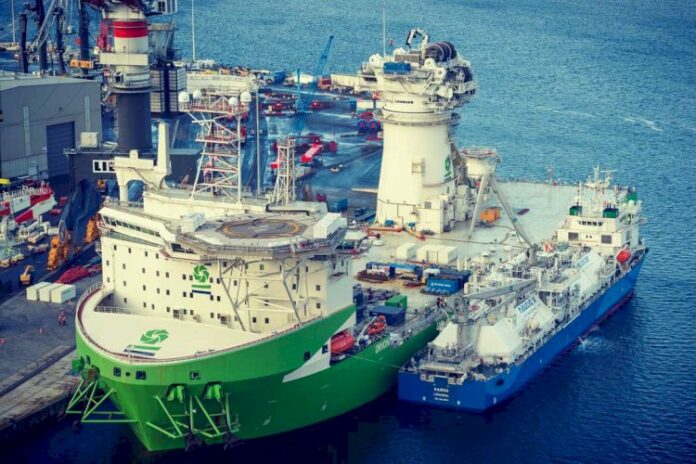
Despite the last-minute crane failure prior to the delivery of DEME’s newbuild offshore installation vessel ‘Orion’, DEME Offshore has achieved the installation of the first jacket in good time and got this phase of the project off to a strong start.

DEME Offshore has made every effort to find a suitable vessel to ensure the project’s baseline schedule is adhered to, mobilising the replacement vessel ‘Scylla’ for the jacket installation.

With a contract placed in December 2018 for the design, fabrication and installation of 103 foundation substructures and the installation of three topside structures, management of every activity has been crucial to make sure the timeline for this challenging project is kept on track.

Even though the design phase was still underway, DEME Offshore placed early orders for any time-critical components.  Fabrication of the 309 pin piles was initiated at two diverse manufacturing locations in order to expedite the initial installation works. 

DEME Offshore’s installation vessel ‘Apollo’ then installed all piles using a custom-designed piling template to maximise efficiency and to ensure that the piles were installed within the strict tolerances required. At each of the 103 locations three piles have been installed, with a length in the range of 30 m to 50 m and individual weight between 95 tonnes and 173 tonnes.

More recently, the 103 jacket structures (three for the offshore substations and 100 for the wind turbines) have been fabricated at four major centres, each working in parallel to ensure maximum throughput.

Bart De Poorter, General Manager DEME Offshore emphasises:

“Despite the many challenges brought to us by the Coronavirus and the incident with the crane of  ‘Orion’, our dedicated Moray East project team and all of our partners have done their utmost to make sure this complex project stays on schedule by closely coordinated teamwork. Such an ambitious project would not be possible without these highly skilled professionals – their ‘can do’ attitude – and the support of our shareholders, lenders, management and the team of the Moray East project. In these unprecedented times, and given this is one of the most complex EPCI projects in offshore wind history, this is a real achievement.”