-2.9 C
New York
Home Blog Page 820

EMEC supports KIOST tidal test site in Korea

0

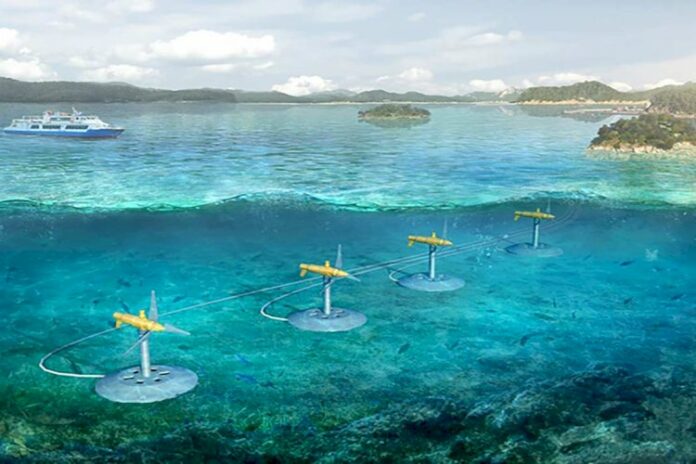
The Korea Institute of Ocean Science and Technology (KIOST) has contracted the European Marine Energy Centre (EMEC) to support the development of its tidal energy test site at Jang-Juk Strait near Jindo Island, Korea.

The signed agreement strengthens the relationship between the two organisations, and sees EMEC use its experience and knowledge as a tidal test site operator to advance the Korean test site development.

KIOST are developing a grid-connected tidal energy test site development on the Jang-Juk Strait in the southwestern sea of Korea. The Korea Tidal Current Energy Centre (K-TEC) site, which will have a 4.5 MW grid capacity, is expected to be operational by 2022.

Having managed the design, build and operation of its four marine test facilities over the last seventeen years in Orkney, EMEC have been contracted to deliver technical support to KIOST.

An EMEC technical report will review operational elements of the test site design including the cable layout, protection, and maintenance as well as data acquisition and SCADA (supervisory control and data acquisition) systems, electrical infrastructure, and grid connection.

As the KIOST site is a new development, EMEC will also assess the likelihood of any environmental impacts associated with tidal energy projects on the marine ecosystem and provide guidance on environmental monitoring strategies for use at the site.

Rob Flynn, Commercial Manager at the European Marine Energy Centre, said:

“The K-TEC facility is an important development for the tidal sector, and proof of its growing commercial readiness and expansion beyond Europe. KIOST and Korea have incredibly strong background in ocean science and engineering, and it’s encouraging to see them bring that to the tidal energy sector.
Enabling marine energy globally is at the core of what we do at EMEC. We’re happy to bring our experience of operating test sites to bear on this project and help make it a success. I’m really excited to see how this facility develops, and we wish great success for our friends at KIOST.”

Dr. Jin-Soon Park, Director of Coastal Development and Ocean Energy Research Center, at the Korea Institute of Ocean Science and Technology, said:

“I am very pleased that EMEC, which has been operating a marine energy test sites since 2003, and KIOST, which has been conducting tidal energy research since 2001, have been promoting joint research on the K-TEC construction for tidal energy development.

The convergence of EMEC’s know-how and KIOST’s design technology will make the K-TEC facility a safer and more effective tidal energy converter test site. In addition, it is expected that K-TEC will be able to revitalize the tidal energy industry in Korea and in Asia as well.”
LR to develop structural digital twin for Bluewater FPSO Glas Dowr

0

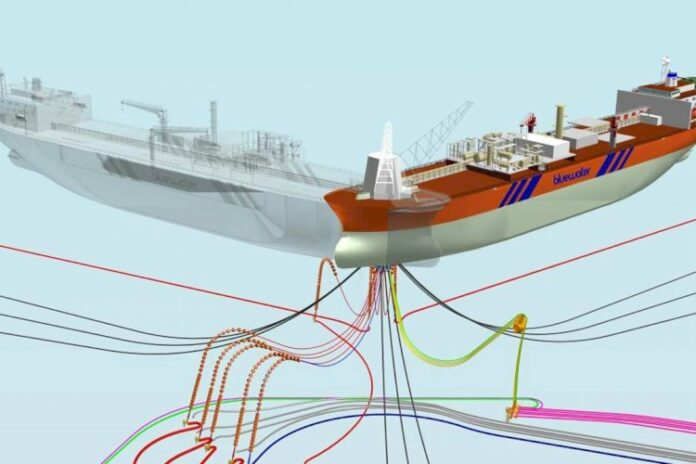
LR is contracted by Bluewater Energy Services B.V. (Bluewater), a designer and operator of Floating Production, Storage, and Offloading (FPSO) units, to provide a comprehensive digital twin and evaluation of an FPSO’s structure, using historical and real-time data of the asset. This will help Bluewater assess Glas Dowr’s operational readiness and redeployment options.

LR will do this by delivering a ‘Structural Digital Twin’ model of the Glas Dowr FPSO, using its proprietary cloud-based technology that will determine the FPSO’s global and fatigue hull strength for selected geographical locations through a combination of historical design, operational and measurement data, and real-time in-service performance data.

LR’s digital solution, an integration of a multi-physics models, sensor information and design data of the unit, will be used to mirror and predict the status and life of its corresponding physical twin. This will enhance the operation of Glas Dowr, giving Bluewater the ability to comprehend and predict the structural performance at the new field prior to physical redeployment.

As the digital twin is designed to continuously collect and process sensor data, it presents a constant evolving picture of the FPSO’s status so Bluewater can assess the asset’s health status at all times.

In the first phase, LR will deploy the FPSO Structural Digital Twin using the historical measurement, design and operational data of the unit, in order to run operational scenarios and historical simulations to evaluate the asset’s structural utilisation to train the twin.

In the following phase, LR will run a redeployment assessment based on selected future operational scenarios for envisaged redeployments and assess its feasibility based on a calculated structural integrity assessment.    

Peter Burger, Vice President Technology, Bluewater Energy Services BV, said:

“We [Bluewater] decided to extend our digital twin programme to include our FPSO Glas Dowr. Our ambition for the structures largely matched with the novel digitalisation services of LR. We are therefore pleased to team up with LR to accelerate assessment for redeployment of this most versatile FPSO, designed and proven to operate in harsh and mild environments with high uptimes and a maintained, strict regulatory and safety regime. This will enable redeployment in most fields across the globe, also including a return to its origin, the North Sea.”

Luis Benito, LR’s Marine & Offshore Innovation and Co-Creation Director, said:

“With Bluewater, we are recreating the way customers obtain business value out of enhancing their assets throughout their lifecycle, from design, production, re-deployment to decommissioning. We are creating cloud-based digital twin technologies, which are at the core of our digital solutions suite, which will deliver outcomes for customers to manage and optimise their offshore assets in operation, reducing their overall operational expenditure.”

Minerva installs Inmarsat’s Fleet Xpress alongside Navarino technology

0

One of Greece’s largest ship operators, Minerva Marine Inc. (“Minerva”), has installed Inmarsat’s Fleet Xpress alongside Navarino technology onboard the majority of its managed vessels.

63 vessels have now adopted Fleet Xpress in conjunction with Navarino’s Infinity Cube to provide high bandwidth and advanced, fully redundant communications to their daily operations across the globe. Most vessels are equipped with Cobham antennas providing FX bandwidth packages of high or ultra-high speed.

Ms Eftihia Benaki, Minerva’s IT Manager and CySO, said:

“Fleet Xpress and Infinity Cube have really opened up the technological possibilities of our fleet, both for crew use and for our business use.

The welfare of the crews of our managed vessels is one of our top priorities and thanks to the fixed fee and high speed nature of Fleet Xpress we are able to offer them free internet. Thanks to the Infinity Cube we have onboard, we do not need to issue PINs, as crewmember’s data allowance is linked to their registered user account on the Infinity. The way we have set up the Infinity with our crewing system also means that when a seafarer joins or leaves a vessel, his account automatically follows them, which saves a lot of administration.

The great bandwidths available over Fleet Xpress  and with Infinity acting as the ‘brain’ of the vessel, we can now carry out hourly application data syncs between all vessels and our offices as well as  shared folders syncs. For some time now, we are also making significant use of video calling with our ships, or sending and receiving videos from onboard when needed. Generally we are able to use data-hungry applications with ease thanks to FX.”

Risk management and insurance collaboration drives maritime cyber awareness

0

ABSG Consulting Inc. (ABS Consulting), a subsidiary of ABS focused on safety and risk management, and American Steamship Owners Mutual Protection and Indemnity Association, Inc. (the American Club) have joined forces to provide education, training and insurance guidance that address maritime cyber security.

As digital transformation in the maritime industry brings both opportunities and new challenges, owners and operators are relying more on smart technologies and operational data to drive decisions and run their businesses. Comprehensive cyber security programs are not only necessary to protect operations but are also critical to protect the overall safety of crew and the environment. More frequent cyber attacks, increased digitalization and emerging global regulatory focus are adding to immediate demands to address and reduce cyber risk across the industry’s value chain. Cyber security has become a business imperative and new measures will have an impact on how maritime vessels and facilities will be covered by insurers.

Dr. William Moore, Director of Loss and Prevention at the American P&I Club, says:

“The safety and security of our members is a priority. Having a better understanding of the tools available, the programs that can be implemented and the integration of these in the marine industry will help us provide better services to shipowners and charterers globally. The work we are going to do with ABS Consulting is going to help us identify how to enhance our policies, and the offerings we need to incorporate to improve the coverage and services we offer to our members.”

Ian Bramson, Global Head of Cyber Security of ABS Group, says:

“Collaborating with the American Club to build education programs for their members and industry will give us a better understanding of the real challenges we are collectively facing. This alliance enables us to develop the tools, training and services that support compliance and help ship owners and operators put protections in place to secure their vessels – from the design and construction phases through continuous operation over their service life.”

CIMC Raffles launches Asia’s biggest Ro-Ro ship

0

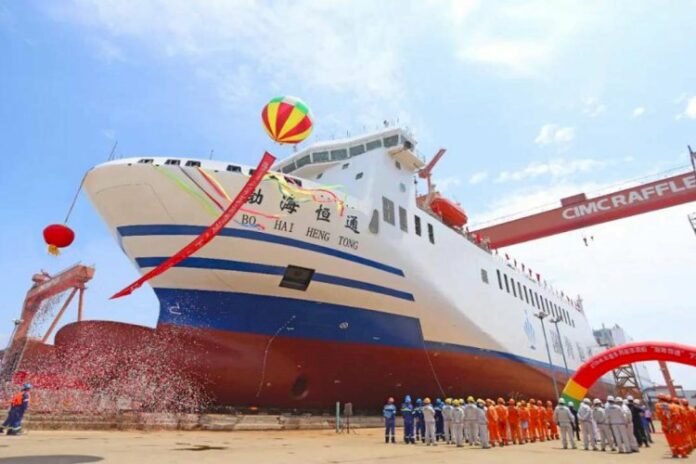
On the morning of June 30, 2020, “Bohai Hengtong”, the 2700-meter-lane multi-purpose ro-ro ship built by CIMC Raffles Offshore Engineering Pte Ltd. (“CIMC Raffles”) for Bohai Hengtong Ferry Co., Ltd. was successfully launched in Longkou Factory of CIMC Raffles. 

With a 15.4-meter-high upper deck, the 189.9-meter-long “Bohai Hengtong” has a molded breadth of 26.4 meters; it has a 2700m lane with a width of 3 meters and a three-storey vehicle compartment. The design draft is 6 meters, the maximum endurance is up to 5000 nautical miles, and the service speed is 17 knots (about 31.5 km/h).

It is currently the largest multi-purpose ro-ro ship in Asia. The ship is a large aft-engined ro-ro transport ship with double engines and double propellers. Its propulsion unit is composed of two marine medium-speed diesel engines, which respectively drive variable pitch propellers through reduction gear boxes and transmission shaft systems. It is a modern energy-saving and environment-friendly multi-purpose ro-ro ship for carrying various trucks, cars and containers. 

The ship is equipped with the bow thrust, fin stabilizer and anti-heeling device. The three decks are complete decks. The bow and stern are equipped with bow springboard, stern straight springboard, stern inclined springboard, ramp and lifting platform. The engine room facilities are international brands and is equipped with 2 MAN main engines with a maximum power of 4500 kW per engine.

The ship is equipped with advanced communication and navigation devices and power facilities; The fin stabilizers and anti-rolling tanks can improve the wind resistance, safety and comfort of the ship. The ship is also specially equipped with a gym to provide the crew with more leisure and entertainment space after work.

The ship will be delivered to Bohai Hengtong Ferry Co., Ltd. jointly established by Bohai Ferry, Hengtong Logistics and Longkou Port. It will operate the ro-ro transportation business in Bohai Bay and domestic coastal areas.

This project is the first one in the new energy field of CIMC Raffles ro-ro ship. 

Halliburton and TechnipFMC launch joint subsea fiber optic service

0

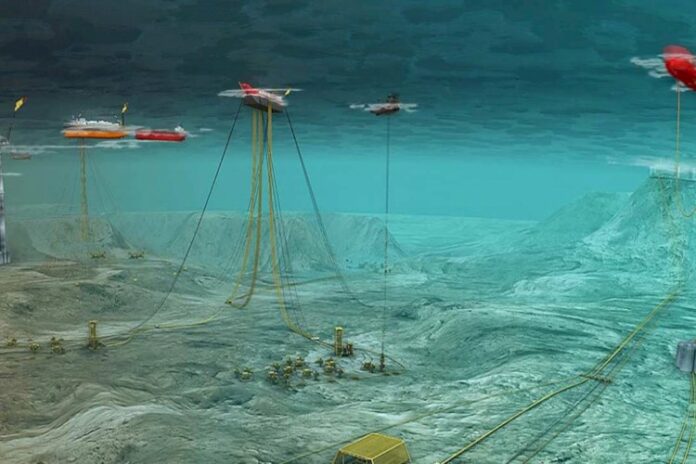
Halliburton Company and TechnipFMC today introduced Odassea™, the first distributed acoustic sensing solution for subsea wells. The technology platform enables operators to execute intervention-less seismic imaging and reservoir diagnostics to reduce total cost of ownership while improving reservoir knowledge.

The Odassea™ service integrates hardware and digital systems to strengthen digital capabilities in subsea reservoir monitoring and production optimization. Halliburton provides the fiber optic sensing technology, completions and analysis for reservoir diagnostics. TechnipFMC provides the optical connectivity from the topside to the completions. Through the collaboration, operators can accelerate full field subsea fiber optic sensing, design and execution.

Trey Clark, Vice President of Halliburton Wireline and Perforating, said:

“We are excited to introduce a new technology platform which allows our customers to monitor reservoir performance in real-time. By collaborating with TechnipFMC, we can harness our combined subsurface and subsea expertise to deliver differentiated products to the marketplace that provide value for our customers.”

Christina Johansen, Vice President of TechnipFMC Subsea Product Management Control & Automation, said:

“This project enables an enhanced level of reservoir understanding for our customers and expands our unique integrated subsea solution. We are proving that we can leverage the competencies and know-how to drive the change our industry needs for a higher level of sustainability.”

In the field, Halliburton and TechnipFMC are delivering solutions with the technology to multiple subsea projects at all stages from conceptual design to execution and installation.

North P&I Club calls for collective action on crew repatriation

0

Leading International Group (IG) Protection and Indemnity member, North P&I has urged maritime stakeholders to seize the opportunity provided by a UK Government summit on July 9th to establish an international action plan to deal with the crew repatriation crisis resulting from COVID-19.

Led by UK Maritime Minister Kelly Tolhurst, the virtual event is the first ‘international summit’ addressing the impact of COVID-19 on crew working conditions. It will bring together representatives from the International Maritime Organization, the International Chamber of Shipping, and other associations. IMO Secretary General Kitack Lim is expected to highlight the need to safeguard crews and the duties of states towards seafarers.

With more than 1.2 million seafarers at sea at any one time, around 200,000 have been caught up in delays to crew changes, as travel and border restrictions have been applied, repatriation refused and medical attention ashore denied. Stopgap contract extensions have been further prolonged, with seafarers trapped on board for months in a stressful limbo, despite many having had no contact with coronavirus and posing no risk, says North CEO Paul Jennings.

He says:

“The challenges brought by COVID-19 continue to have a significant impact on the health, safety and wellbeing of crew. Recent weeks have seen welcome action, especially as air routes have opened up, and certainly IG club correspondents have been working tirelessly at the sharp end to get things moving. However, this is not simply about logistics and good will.

Crew changes continue to be hindered by quarantining, visa issues and bureaucracy, and only governments have the power to ensure that different authorities act with common purpose. It is vital that port authorities and national governments treat seafarers with the fairness and respect they deserve, and this requires an orchestrated response.”

In its own right, the UK Government reckons to have helped more than 7,000 cruise ship crew return home, regardless of nationality or circumstance.

Jennings, who is also current Chair of the IG says responses to COVID-19 have included a new tracking tool developed by North for the IG providing daily updates on the virus and new guidance to crew from all 13 IG clubs on social distancing, as well as ongoing support to all IG Members.

However, only far-reaching actions such as recognising seafarers as ‘Key Workers of the Sea’ at a global level can side-step restrictions being re-imposed, in case of any future pandemic or a COVID-19 ‘second wave’, he says.

ChartWorld received ECDIS Type Approval to support Japan-Flag vessels

0

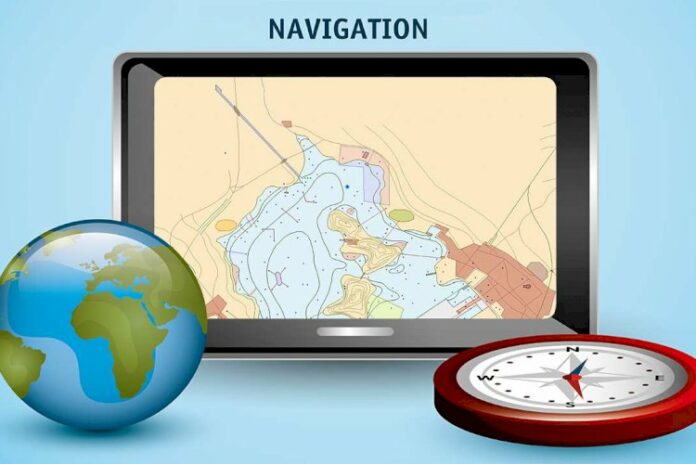
ChartWorld, one of the world’s leading providers of digital navigation solutions, received ECDIS Type Approval from the Japan MLIT (Ministry of Land, Infrastructure, Transport and Tourism) to support Japan-Flag vessels.

The certificate issued by the MLIT proves the system’s compliance with all ECDIS-related regulations valid for the Japan Flag State and covers the eGlobe G2 system in touchscreen and regular configurations. ChartWorld’s cyber-secure gateway, eChart Secure Gateway, is also included as part of the approved equipment.

ChartWorld’s dual eGlobe G2 ECDIS will be delivered along with a package of ENCs, digital publications, support services and other critical services for safe navigation, such as ChartWorld’s unique CIO+ data service. The systems will be installed and supported by ChartWorld’s team of global engineers and technical service representatives. 

Gary Garner, Managing Director, ChartWorld Japan K.K., commented:

“Since opening our Japan office in 2016, we have steadily won the trust of leading shipowners and managers across the country. We appreciate the support of these valued clients who have helped us grow our business, and to become leaders in digital navigation in Japan. Japan’s shipping industry demands the highest of standards in terms of quality, usability, and safety. With the Type Approval from MLIT, we can now meet the needs of owners with Japan-flag vessels and help them to further improve the navigational safety of their ships.”

SevenCs launches free “S-101 Reader for FME”

0

SevenCs, the company behind the world’s leading ECDIS software kernel, has announced the release of its S-101 Reader for FME (Feature Manipulation Engine). The development and release of the S-101 reader is an important step in the industry’s move to the S-101 data standard. The SevenCs S-101 Reader is available as a free 3rd party plugin for all editions of FME Desktop.

FME by Safe Software is the data integration platform with the best support for spatial data worldwide. FME allows users to convert data between +450 formats and automate integration workflows. Developers are able to build custom workflows that improve access to data, solve compatibility issues, and automate manual tasks without needing to code. 

With the move to the S-101 data standard, the maritime charting community is about to undergo one of the most significant transformations since the introduction of Electronic Navigational Charts. Currently, ENCs and their underlying source data are built to a common S-57 standard. However, as source data has become more complex and varied in its origin (including, for example, wind, tide, current, and weather to name a few overlays), it was becoming hard for the industry to balance both the usability of data and an increasing range of proprietary interests.

As a result, the International Hydrographic Organization (IHO) concluded that a new industry standard was needed to ensure the future compatibility of ENC related solutions. 

SevenCs’ Friedhelm Moggert-Kägeler, Solutions Director Maritime Spatial Data commented:

“Although Edition 1.0.0 of the S-101 standard was released at the end of 2018, it is not yet operational and no ENC production uses the S-101 standard. We are very much still in the testing phase. Across the industry, developers – the chart producing agencies – need to get accustomed to the new S-101 structures. The SevenCs S-101 Reader plugin allows users to read and query S-101 data sets in an FME environment and, to a certain extent, visualize them. It’s a big step forward, and it’s important that we are able to prepare for S-101, test data, and familiarize ourselves with the new data standard.”

The S-101 Reader for FME follows SevenCs’ development of an S-100 Kernel (Nautilus) and the 7Cs Analyzer (software for chart validation). Both the S-101 Reader for FME and 7Cs Analyzer are based on and include Nautilus. Additionally, an S-101 Writer is currently under development.

Friedhelm Moggert-Kägeler said:

“The IHO, though its industry Working Groups, has done a great job getting us to this point. The next step is delivering the tools needed to get the full potential out of S-101. This is a small, but important, part of this process.”

Dale Lutz, Co-founder of Safe Software, said:

“We are thrilled to have S-101 join the FME data integration platform as the latest development in a long partnership between Safe Software and SevenCs. This newest reader will play a key role in driving the adoption of this new standard.”

New research and development on the energy-saving rudder with bulb fins

0

Mitsui O.S.K. Lines, Ltd. today announced that a group company MOL Techno-Trade Co., Ltd., MOL, Japan Hamworthy Co., Ltd. and Akishima Laboratories Inc. are conducting research and development on the propeller-mounted energy-saving device called PBCF and the energy-saving rudder with bulb fins. The researchers confirmed the energy saving effect of more than 5% with only the energy-saving rudder with bulb fins.

In the development of energy-saving rudder with bulb fins (hereinafter the “developed rudder”), the researchers have enhanced the energy-saving performance and improved horsepower by taking advantage of the steering effect of the rudder of JHC, a specialized manufacturer of high lift rudder such as schilling rudder. The features of the developed rudder are as follows.

1) In order to recover the swirling flow of the propeller, the reaction shape is designed as a high thrust blade section and the rudder horn is also twisted and integrated so as to increase thrust due to the negative pressure on the rudder.

2) By reducing the size of the end plate under the rudder, the resistance is reduced and the propeller swirl flow is also blocked.

3) The large central bulb has a flat front surface to reduce the propeller inflow speed and improve propeller efficiency.

The researchers used JBC (Japan Bulk Carrier) hull, which is open to the public as a general large-sized hull and widely used in various research and development. Generally, it is difficult to improve the horsepower by 4% or more with a normal reaction rudder. However, with the developed rudder, CFD (Computational Fluid Dynamics) showed 5.7% improvement in horsepower and a self-propulsion test in a large towing tank confirmed 5.2% improvement.

The developed rudder has been applied to the slender ship types as well, and an energy-saving effect of 4.4% has been confirmed by CFD. In the future, we plan to conduct a large towing tank test after performing optimization work.

The researchers will continue to improve the efficiency by aiming for a synergistic effect with the torque reduction effect of PBCF for the future installation on actual ships. The developed rudder has been patented.

The pressure change (red to blue) on the rudder surface is caused by the rotation of the propeller. In other words, it flows in from the port side at the upper rudder and from the starboard side at the lower rudder. The researchers aim to develop a rudder that effectively recovers the energy loss of the swirling flow induced by a propeller.