The Nigerian National Petroleum Corporation (NNPC) Shipping, Stena Bulk, and Caverton Marine Limited have today announced the signing of a new joint venture that will transform Nigerian maritime transportation.
The agreement, signed in London last week, will create a new tanker operation serving Nigeria and West Africa’s regional and global crude oil, refined product and LNG shipping requirements.
The partners will explore options to create a modern and efficient fleet of tankers, comprising both new and existing tonnage depending on market factors and commercial opportunities in the region.
The companies will evaluate opportunities for both vessel acquisitions and long-term charter arrangements, with a focus on maintaining competitive operating costs while meeting the highest standards of safety and sustainability.
This fleet will primarily serve the logistics needs of NNPC, including crude, clean and LNG/LPG transportation.
Additionally, the new company will cater to other oil producers and traders, offering the strategic advantage of a modern fleet, strong financial backing, and maritime pedigree and heritage.
Speaking on the announcement, Panos Gliatis, Managing Director, NNPC Shipping, said: “This strategic partnership marks a significant milestone in NNPC’s commitment to modernising Nigeria’s maritime infrastructure. By combining our expertise with Stena Bulk and Caverton Marine, we’re creating a robust platform that will enhance our domestic refining, import and export capabilities and strengthen Nigeria’s position in global energy logistics.”
Erik Hånell, President & CEO, Stena Bulk, added: “We’re excited to partner with NNPC and Caverton Marine in this groundbreaking venture. This collaboration aligns perfectly with our pragmatic strategy of expanding our presence in key growth markets while maintaining our high standards of operational excellence and sustainability. Nigeria’s energy sector is undergoing remarkable transformation, and we’re proud to be part of this journey.”
Johan Jäwert, Head of Stena Bulk USA and Pool Manager SSSP, said: “We look forward to developing shipping activities locally with Caverton and benefiting from NNPC’s strong position in the oil market. Combined with our know-how across all aspects of commercial and technical shipping, we will create a world-leading shipping company providing first-class service to the energy market.”
Bode Makanjuola, CEO, Caverton Offshore Support Group, said: “This joint venture – the result of many years of planning – marks a significant stride in enhancing Nigeria’s maritime capabilities. By combining local knowledge with international best practices, we are establishing a world-class operation that will benefit not only Nigeria but the entire Sub-Saharan Africa region.”
This joint venture comes at a time when Nigeria is asserting its position as Africa’s largest economy. The country’s strategic location, growing population, and ambitious infrastructure developments are creating new opportunities for shipping companies.
By establishing this world-class tanker operation, the partners are not only meeting immediate logistical needs but also contributing to Nigeria’s long-term economic diversification and growth.
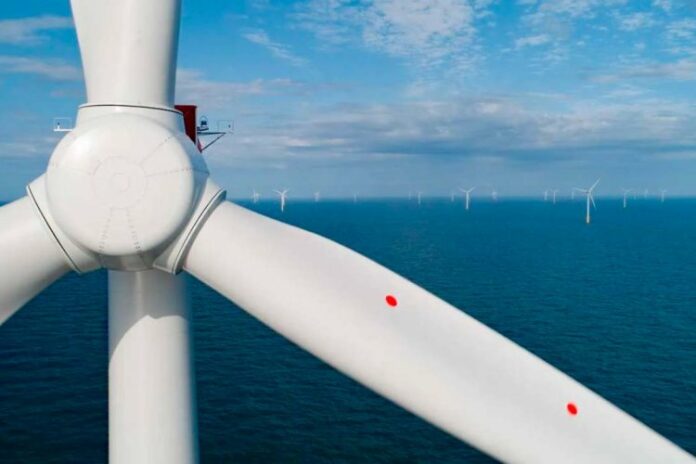
Swaywind announces a strategic partnership with EcoGen Energy, a renowned renewable energy solutions provider. Together, the companies will launch 14 new offshore wind turbines, marking a significant step forward in the expansion of clean energy infrastructure.
The 14 offshore wind turbines, each capable of generating 9,450 kWh of electricity daily, will collectively contribute to reducing carbon emissions by an estimated 48,000 tons annually. This project aligns with both companies’ shared vision of accelerating the adoption of renewable energy while providing reliable, long-term returns for investors.
“We are thrilled to partner with EcoGen Energy on this transformative project,” said Christopher Montgomery, CEO of Swaywind. “This collaboration not only strengthens our position as a leader in renewable energy investment but also demonstrates our shared commitment to creating a sustainable future. By combining our expertise, we are setting a new standard for offshore wind energy development.”
EcoGen Energy’s Patrick Sullivan, CEO, added, “This partnership with Swaywind represents a milestone in our mission to deliver scalable and impactful renewable energy solutions. Together, we are not only generating clean energy but also creating opportunities for individuals and businesses to invest in a greener planet.”
NYK and Partners Attained Approval-in-Principle from ClassNK for Ammonia Fuelled Ammonia Bunkering Vessel Designed by LMG Marin AS (a member of the Seatrium Group).
Seatrium, through its wholly-owned subsidiary, LMG Marine AS (LMG Marin) provided critical engineering expertise for the vessel’s design, which will now be submitted to the Maritime and Port Authority of Singapore (MPA) for evaluation.
Through this latest initiative, the consortium aims to address the industry’s urgent need to decarbonize and create a viable value chain for ammonia as a marine fuel. This collaborative effort underscores their collective commitment to fostering a greener, more sustainable maritime industry.
The AiP certification validates the ammonia fuelled ammonia bunkering vessel design’s compliance with stringent safety, technical, and environmental standards, solidifying the consortium’s leadership in the development of alternative fuels for maritime use. By enhancing the feasibility of ammonia as a future fuel, this project positions the consortium at the forefront of the maritime energy transition.
Tsutomu Yokoyama, Executive Officer, NYK Line, commented: “This Approval-in-Principle represents a critical milestone in our efforts to accelerate the adoption of clean ammonia as a sustainable marine fuel. With the rich ammonia expertise of NYK and our partners, as well as the great technical capabilities of Seatrium, we are setting new benchmarks for safety and efficiency while paving the way for a cleaner maritime future.”
Seatrium’s technology company, LMG Marin supported the consortium’s initiative with its vast technical capabilities and proven track record in designing complex maritime systems. LMG Marin provided cutting-edge design capabilities, leading to a Hazard Identification Study (HAZID) for design validation. The comprehensive HAZID conducted was instrumental in fulfilling the requirements of the AiP to ensure optimal safety, performance, and operational reliability. Through this concept design phase, safety philosophies on the safe use of ammonia for the ammonia fuelled engines in the engine room were developed to ensure compliance with the International Maritime Organisation’s interim guidelines for the safety of ships using ammonia as fuel, approved by the Maritime Safety Committee 109 in December 2024.
Also, the vessel design incorporates the consortium’s two key features to ensure safety and operational reliability: ammonia fuel dual-fuel engines from IHI Power Systems and a bunkering boom by TB Global Technologies. The engines significantly reduce GHG emissions using ammonia as a fuel. They are also installed on the world’s first commercial-use ammonia-fuelled tugboat, Sakigake, delivered in August 2024. The bunkering boom features a unique technology called the High Speed Ammonia Purging Emergency Release System (ERS), which enables a reliable and efficient disconnection between vessels in an emergency.
Aziz Merchant, Executive Vice President for Engineering, and Technology & New Product Development, Seatrium, and Chairman of LMG Marin, commented: “We are honoured to contribute to this industry-leading initiative led by NYK and its partners. The use of ammonia as a non-fossil-based marine fuel is a key distinction in this project. Collaborating on this visionary project reaffirms Seatrium’s commitment to advancing sustainability and supporting global decarbonization goals.”
The design for this ammonia fuelled ammonia bunkering vessel will be submitted to the MPA for evaluation, showcasing Singapore’s role as an innovation hub in sustainable maritime solutions. This vessel, if brought to fruition, will be the first bunkering vessel of its kind. It will contribute significantly to Singapore’s marine decarbonisation efforts, creating a positive ripple effect across the global maritime industry. The design is an essential contribution to developing the infrastructure needed for ammonia bunkering, a crucial component in reducing greenhouse gas (GHG) emissions in global shipping.
The deployment took place off the coast of Denmark from February 17 to 20 and was aimed at testing USV interoperability with a maritime task group.
During the operation, joint maneuvers and firing were practiced, as well as enhancing the situational awareness of the forces involved in the Baltic Sentry mission.
The Task Force X initiative was launched in early February 2025 to protect critical infrastructure in the Baltic Sea from sabotage threats.
The deployment of maritime drones as part of Baltic Sentry was announced at the beginning of the operation.
As reported by The War Zone, the operation will involve at least 20 naval drones.
On January 14, it was reported that NATO had announced the launch of a new operation, Baltic Sentry, to protect the region’s maritime infrastructure.
The announcement was made during the NATO Baltic Summit with the participation of Secretary General Mark Rutte, Finnish President Alexander Stubb, and Estonian Prime Minister Kristen Michal.
At the summit, the region’s leaders discussed the growing threat to critical underwater infrastructure.
As part of the Baltic Sentry, ships and aircraft will provide protection. The Secretary General also announced the deployment of a fleet of maritime drones.
In late January, F-35A multirole fighters of the Royal Netherlands Air Force also joined the mission.
EDGE and Fincantieri have signed a new Memorandum of Understanding (MoU) that extends and builds upon the agreement signed in November 2024 in Paris in the rapidly evolving underwater domain.
This enhanced cooperation aims to further strengthen the partnership between the two companies, through their Abu Dhabi-based shipbuilding joint venture MAESTRAL. The MoU is based on both companies collaborating to develop underwater technologies, supporting the United Arab Emirates (UAE) in becoming a regional pioneer in underwater technology innovation.
EDGE and Fincantieri’s cooperation will be focused on the design, development and creation of unmanned systems for critical underwater infrastructure protection and seabed mapping, next-generation submarines, drone-carrier ships, and lightweight torpedoes.
This agreement comes amidst a rapidly evolving landscape for national defence. New threats and vulnerabilities are changing global dynamics, intensifying geopolitical rivalries, and increasing demand for investment in maritime defence. Critical underwater infrastructure has become a target due to its exposure to threats and can only be protected with advanced technological solutions, highlighting the pressing need for governments to invest in this sector.
Building on their existing partnership through MAESTRAL, this MoU will allow both companies to share knowledge, technical expertise and production resources to develop state-of-the-art products suitable for the challenging and complex environment of the underwater environment.
Hamad Al Marar, Managing Director & CEO of EDGE Group, said: “Through MAESTRAL, EDGE and Fincantieri are advancing world-class underwater capabilities that will play a pivotal role in the future of subsea security and maritime defence. This partnership marks a significant step in positioning the UAE at the forefront of this strategically important domain, strengthening its role as a regional pioneer with globally competitive expertise. As underwater technologies become increasingly vital to national security, we are committed to driving innovation, enhancing sovereign capabilities, and setting new industry standards in this high-potential sector.”
Pierroberto Folgiero, Fincantieri CEO and Managing Director, stated: “Since 1909 Fincantieri has a long-standing history in submarine construction, and has already established itself as a pioneer in the underwater sector, leveraging decades of systems integration expertise and cutting-edge innovation with a ‘dual’ focus either in the military and in the civilian space. The underwater domain is projected to reach $400bn by 2030 as defence public needs for countries globally are rapidly evolving. Through MAESTRAL, we are pleased to support the UAE’s ambitious naval strategy and alongside a trusted partner like EDGE, we will seek to deliver ground-breaking underwater solutions to meet future needs for its national capabilities.”
This will increase Shell’s working interest (WI) in its operated Ursa platform, pipeline, and associated fields from 45.3884% to a maximum of 61.35%, following an agreement to acquire 15.96% WI from ConocoPhillips Company (COP).
“This targeted investment is the latest example of how we are unlocking more value from our existing advantaged Upstream assets and infrastructure,” said Zoë Yujnovich, Shell’s Integrated Gas & Upstream Director. “The acquisition expands our ownership in an established long-producing asset that generates robust free cash flow, while also providing more options for growth.”
The Gulf of America production has among the lowest greenhouse gas intensity in the world. Increasing our working interest in Ursa demonstrates our continued focus on providing secure supplies of domestic energy and pursuing the highest margin and most energy-efficient Upstream investments.
This deal is subject to regulatory clearance, preferential rights election and closing conditions. The deal is expected to be completed by end Q2 2025.
The National Oceanography Centre (NOC) are delighted to announce that Beyondly, an environmental consultancy, has committed to supporting a leading citizen science data collection project for the next five years, helping to advance our understanding of global ocean plastic pollution.
While much is known about ocean plastics, key questions remain—such as how they travel through our seas forming microplastic ‘hotspots,’ and how they degrade over time. Understanding these processes requires comprehensive global data.
Beyondly, a B Corp certified environmental compliance scheme and consultancy based in North Yorkshire, has supported NOC’s world-leading research for two years, contributing funding to support their work in gaining a deeper understanding of the ocean. The partnership began as part of Beyondly’s Fund for Change initiative, a commitment to donating 5% of profits to charitable causes. Since 2023, Beyondly has already donated over £50,000 to NOC’s work across blue carbon & ocean plastics.
Now, in 2025, Beyondly and NOC are taking their partnership to the next level, committing to a five-year partnership by enabling a group of ocean lovers – yacht owners – to collect vital water samples across the globe, which will be analysed by NOC’s leading microplastics team. This research will provide a global picture of the impact of plastic on our ocean, contributing to NOC’s Ocean Decade goals, an initiative to support the achievement of the UN Sustainable Development Goal – 14 Life Below Water.
In 2024, round-the-world sailor and yacht race winner Mike Golding and his family took part in the pilot year of this citizen science project. Engaging families like Mike’s in scientific research helps to grow awareness of the need for ocean science and provides needed data to inform government and industry legislation around plastic production and waste.
Beyondly’s support in extending this project will enable NOC to work with more citizen scientists over the next five years, expanding the availability of ocean plastics data which would take decades to collect through traditional research methods.
Holly Evans, Head of Philanthropy at NOC said, “We are delighted to continue our partnership with Beyondly and further our understanding of the impact of plastics on the ocean and the life within it. Despite covering over 70% of our planet, the ocean currently receives only 1% of global philanthropy, and SDG14 ‘Life Below Water’ is the least funded of all SDG goals.
“The ocean is seriously underrepresented, so it is wonderful to see organisations like Beyondly including ocean health in their ESG goals and demonstrating the impact that philanthropy can have in advancing our understanding of key ocean issues.”
Mel Harper, Brand and Impact Manager at Beyondly said, “We are very excited to share that our partnership with NOC will continue further, supporting the vital work that NOC do on understanding the true impact of plastics on the ocean. Through our Fund for Change Programme, we can support remarkable organisations like NOC.
“This commitment aligns with Beyondly’s broader company goals and presents opportunities for achieving a more significant and sustained impact within the environmental landscape over a longer period of time. We are looking forward to working with NOC and Seakeepers and are excited to see the progress and impact.”
With marine life and ecosystems facing a rising tide of threats, the ocean exploration community needs nimble, cost-effective tools for measuring and monitoring ocean health. To address this need, MBARI’s CoMPAS Lab developed the MOLA AUV, a portable autonomous robot primed to study marine environments.
The MOLA AUV—multimodality, observing, low-cost, agile autonomous underwater vehicle—features advanced sensors to survey marine ecosystems. MBARI engineers hope the broader marine science community will benefit from the MOLA AUV’s open-source design specifications and software algorithms. MBARI envisions a fleet of nimble robots gathering data to help guide decision-making about the ocean and its resources.
“The ocean is critical for all life on earth,” said Principal Engineer Giancarlo Troni, who leads MBARI’s Control, Modeling, and Perception of Autonomous Systems Laboratory, known as the CoMPAS Lab. “We urgently need to understand our changing ocean, but there are many barriers to ocean exploration. MBARI has been developing a versatile and portable robot that is capable of taking high-resolution measurements of seafloor terrain over large areas. We hope this tool expands access to and monitoring of ocean life and ecosystems.”
MBARI scientists and engineers build and adapt advanced technology that enhances ocean data collection. The team at MBARI’s CoMPAS Lab develops scalable marine technology that can easily be modified for use in a wide variety of vehicles and platforms. These open-source, scalable tools allow MBARI to share its expertise with other marine scientists.
CoMPAS Lab scientists and engineers spent 18 months developing the MOLA AUV. Measuring 45 centimeters (18 inches) wide and 72 centimeters (28 inches) long, and weighing 30 kilograms (66 pounds), the robot is the latest of MBARI’s work to create smaller, more nimble platforms for ocean research. Robust platforms like the Dorado-class AUVs remain invaluable to MBARI’s work. However, their large size requires substantial resources for deployment. Similar to MBARI’s long-range autonomous underwater vehicle (LRAUV), the MOLA AUV can be deployed with a limited crew, either from a small boat or even from shore.
At the core of the MOLA AUV is a commercially available Boxfish submersible, built to the CoMPAS Lab’s specifications and enhanced with custom instruments and sensors developed by MBARI engineers. The MOLA AUV is equipped with a 4K camera to record high-resolution video of marine life and habitats. Sonar systems use acoustics to ensure the vehicle can consistently “see” 30 meters (100 feet) ahead and work in tandem with stereo cameras that take detailed imagery of the ocean floor. Leveraging methods developed by the CoMPAS Lab, the vehicle’s six degrees of freedom enable it to move and rotate in any direction efficiently. This agility and portability set the MOLA AUV apart from other underwater vehicles and allow it to leverage software algorithms developed at MBARI to create three-dimensional photo reconstructions of seafloor environments.
The CoMPAS Lab plans to deploy the MOLA AUV for seafloor mapping missions. Previous mapping methods used sonar mounted on ships, but the distance between the ocean surface and the seafloor resulted in low-resolution data. The MOLA AUV can travel closer to the seafloor and visualize the terrain below in much greater detail, especially in rough terrain—imagine the difference between a picture taken a mile away and an up-close shot. The higher-resolution images will enable the team to create a searchable map of the ocean floor.
“GPS doesn’t work underwater, which makes mapping more difficult in the ocean than on land,” said Software Engineer Kevin Barnard. “To overcome this challenge, we’re developing sensors and software that allow us to navigate through many locations and see how they all fit together. We can then use that data to return to specific sites and track changes over time.”
In November 2024, the CoMPAS Lab traveled to the Maldives to field-test the vehicle for the first time. Partnering with MBARI Senior Scientist Aaron Micallef and the University of Milano-Bicocca, members of the CoMPAS Lab spent 11 days at the Marine Research and High Education (MaRHE) Center in Magoodhoo. Located just offshore from the research center, the complex coral structure of the shallow-water reef provided an ideal environment for safely testing the technology’s mapping capabilities.
Unlike other MBARI technology, which requires complicated logistics for field expeditions outside Monterey Bay, the MOLA AUV can be transported in a checked bag, demonstrating its portability.
During the November 2024 expedition, the MOLA AUV conducted eight dives across rugged terrain, collecting still imagery, acoustic imagery, salinity and temperature data, and 4K video.
The team deployed the MOLA AUV from a dhoni—a small, open-air, wooden passenger boat. While testing the vehicle’s mapping capabilities, they first operated it remotely via a tether to the boat. The team then completed two autonomous missions. These dives helped MBARI engineers identify opportunities to improve the vehicle’s ability to navigate rugged terrain and currents. The goal is for the MOLA AUV to use its sensors to find a reef and begin mapping autonomously without human oversight.
“The MOLA AUV is able to fly autonomously over flat areas, and we are building tools to navigate these reefs with more complicated terrain,” said Senior Electrical Engineer Eric Martin. “To put it another way, it’s capable of flying autonomously above the ‘forest,’ but we want it to be able to fly through the forest so it can get a clear picture of all of the complex features on the reef.”
During these dives, the CoMPAS Lab team was able to gather just as much data with the MOLA AUV as they could with some of MBARI’s larger research platforms. These are spectacular results for the vehicle’s first field test and a testament to this small robot’s robust capabilities.
The information the team collected will be instrumental in continuing to test and develop this powerful and portable robot.
Now, the CoMPAS Lab is growing its fleet of MOLA AUVs. MBARI engineers are currently working to outfit a second vehicle with an expanded diving range of 1,000 meters (3,300 feet), double that of the original MOLA AUV.
The MOLA AUV is just one example of the versatile ocean exploration technology that the CoMPAS Lab is developing. The MOLA AUV’s sensors are designed to be scaled and used in other vehicles and platforms. For example, the destination and navigation code is the same software programming used in MBARI’s MiniROV. Over time, MBARI plans to make the MOLA platform open-source. This will make all the information about the vehicle’s hardware and software available to the public, allowing other interested parties to adapt this technology for their own uses. With open-source technology, the CoMPAS Lab aims to make ocean exploration and science more accessible.
“The ocean is enormous. One robot out there collecting data won’t make a huge difference, but we’re hoping that by developing a portable, agile, cost-effective platform—and making the engineering behind the scenes accessible to all—we can enable better science because more people will be able to do it,” said Research Engineer Sebastián Rodríguez.
Development of the MOLA AUV was funded as part of the David and Lucile Packard Foundation’s longtime support of MBARI’s work to advance marine science and technology to understand a changing ocean. Fieldwork in the Maldives was partially supported by the BridgET Program and the MaRHE center, bringing together researchers from the University of Milano-Bicocca, the University of Athens, The Arctic University of Norway, Kiel University, the University of Malta, and the University of Liège.
With Norway’s Maritime CleanTech at the helm, 13 European partners will collaborate on the development of an innovative power distribution system tailored to the needs of tomorrow’s zero-emission vessels. This system will simplify the use of green energy sources on board while optimising the efficiency of existing technology. The project is expected to drive substantial emission reductions.
“The EU’s €8 million support enables us to develop solutions that not only cut emissions but also streamline the integration of sustainable energy sources. I am proud of our partners, who are working together to create a more efficient and climate-friendly shipping industry,” says Ada M. Jakobsen, CEO of Maritime CleanTech.
Targeting a 40% emissions reduction
The newly launched STEESMAT project will develop an innovative power system based on Medium Voltage Direct Current (MVDC), replacing today’s conventional alternating current (AC) systems.
This solution enables engines to operate more efficiently at variable speeds, while making it easier to integrate various renewable energy sources on large vessels, such as batteries, solar panels, fuel cells, and wind turbines.
The STEESMAT system will also make ships lighter and more energy efficient. With the potential to cut emissions by up to 40%, this marks a major technological breakthrough, positioning European industries at the forefront of sustainable maritime innovation.
Former coast guard vessel to serve as test arena
The former Norwegian Coast Guard vessel, KV Senja—now renamed RV North Star—will serve as a floating laboratory for the project. The ship will be equipped with the new direct current grid, which will be tested in real sea conditions.
“We are excited to leverage our test facilities to develop new solutions that will help reduce emissions from global shipping. The technology will first be tested at our onshore facility before being demonstrated at sea aboard the RV North Star,” says Willie Wågen, CEO of the Sustainable Energy Catapult Centre, who has made the vessel available as a test platform for the project.
With increasingly stringent international regulations and rising costs associated with shipping emissions, the STEESMAT project is a key component of the EU’s green shipping strategy, aiming for commercialisation of the new technology by 2029.
This was stated by a well-known ideologist of the use of naval drones, Brigadier General Ivan Lukashevych “Hunter” of the Security Service of Ukraine at the Defense Tech Innovation Forum 2025, where Militarnyi correspondents were present.
“The Russians, albeit a year or two late, are trying to replicate our technologies, our tactics, our methodology. Our partners realize that sooner or later the Russians will start using this. The absence of sailors on board unmanned ships allows them to use such things to conduct hybrid attacks. Therefore, along with the development of new systems to destroy a large fleet, we, together with the Ukrainian Navy, are developing a methodology, as well as the forces and means to combat such things. This is the next stage in the development of unmanned systems at sea, namely, preparing for Ukraine’s defense against such things,” Lukashevych said.
According to Hunter, the defense system may be multi-component, with specialized surface drones as one of the elements, which will patrol, search and destroy threats using machine guns integrated on board.
“Currently, you can see several models of machine gun drones that can go into a five-point storm with a range of 1700 kilometers. This means that they will be able to guard the Black Sea for several days and defend against similar maritime drones,” he said.
These surface systems are equipped with search and reconnaissance systems. Together with airborne drones, which are also deployed on board, they are capable of patrolling.
Hunter notes that the Ukrainian Defense Forces are already patrolling the Black Sea with these assets: “This is what we are actually doing. We do it quietly, not publicly”.
In his video presentation at the defense forum, Lukashevych presented previously unpublished footage of combat operations, showing a model of a machine-gun marine drone used against Russian helicopters in the Black Sea.
The offshore platform is equipped with a gyro-stabilized machine gun turret with a large-caliber KPVT machine gun. Its interface is identical to the one shown on drones during the December operation of the SSU special forces near Kerch.
This drone is also equipped with a mast with a small shipboard surface search radar station, which can be used to search for surface objects at short distances and navigate in low visibility conditions.
The Russian threat
In December 2023, the Russian Kingisepp Machine-Building Plant KMZ (St. Petersburg), which specializes in the production of boats for Russian Security Forces and marine drones, presented the Oduvanchik drone.
The drone, whose acronym stands for “fast-moving unmanned carrier boat,” was ordered by the Russian Ministry of Defense in the amount of ten boards for testing.
KMZ representatives say the drone can carry a warhead or other payload weighing up to 600 kilograms. For comparison, the SeaBaby drone that hit the Crimean bridge in July 2023 carried 850 kg of explosives.
The unmanned boat can cover a distance of 200 kilometers at a speed of up to 80 km/h. This is enough to strike Odesa if launched from Crimea. In addition, it is possible that they could be launched from ships at sea.