-1 C
New York
Home Blog Page 816

Peru and Ecuador get set to tackle invasive aquatic species

0

Such invasions have the potential to not only affect biodiversity and ecosystem health, but may also have measurable impacts on several economic sectors.

The project is working with 12 Lead Partnering Countries across the globe. Ecuador and Peru were the last two to hold their first National workshops and national task force meetings, to kick start the work in those countries. The meetings, originally scheduled for earlier this year but postponed due to the COVID-19 pandemic, were successfully organized and held virtually.

The first meeting in Ecuador (8-9 July), led by DIRNEA (National Directorate of Aquatic Spaces), highlighted the Galapagos Islands – a biodiversity reserve for marine species, which is now at risk from potential invasive aquatic species. Since 2019 scientists have identified more than 53 non-native species in the Galapagos marine environment and this number is expected to grow.

Peru held its national task force meeting on 14 July,  led by DICAPI (General Directorate of Captaincy and Coast Guard) and the IMARPE (Institute of the Sea of Peru). For Peru, a key concern is to preserve the biodiversity of its extensive coastline, including guano islands and peninsulas,  the national marine reserves of Paracas and San Fernando, and the Illescas Reserved Zone.

During both meetings, the representatives of national navy, port and environmental authorities discussed the challenges and opportunities related to the development of the national strategies and action plans to implement the IMO Biofouling Guidelines. They agreed on the next steps.

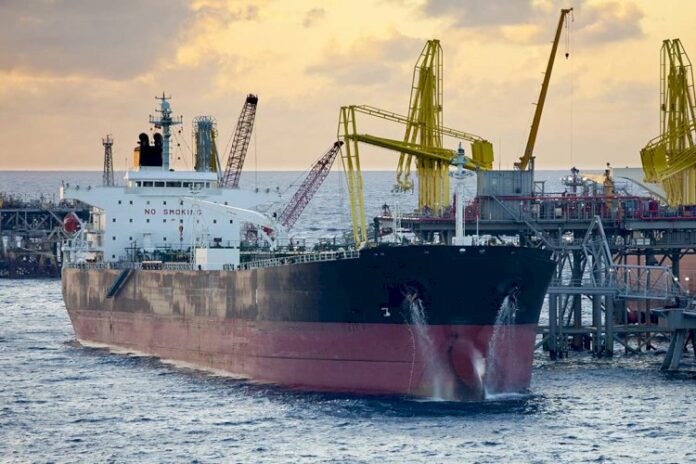
GloFouling Partnerships is a joint initiative of the Global Environment Facility (GEF), United Nations Development Programme (UNDP) and IMO to assist developing countries to reduce the transfer of harmful organisms through biofouling. Biofouling is the accumulation of microorganisms, plants, algae, or small animals on ship hulls or other marine mobile structures. It is one of the main vectors for unintentional transfer of invasive aquatic species. 
KVH receives $10 million order for TACNAV tactical navigation systems

0

KVH Industries has announced that it has received a new order with a net value of more than $10 million for its TACNAV® tactical navigation systems for use by an international military customer. All hardware deliveries for this order are scheduled to take place in 2020.

Dan Conway, executive vice president of KVH’s inertial navigation group, says:

“KVH’s battle-proven TACNAV systems provide the precise navigation that is vital to mission success. With militaries demanding assured positioning, navigation, and timing (A-PNT) solutions, this new order reaffirms the value of KVH’s unjammable TACNAV products and adds to our backlog.”

KVH’s fiber optic gyro (FOG)-based TACNAV systems are designed to provide unjammable inertial navigation data that fills in the gaps when GNSS is lost or unavailable, helping to keep soldiers and missions on track. The TACNAV solutions deliver critical, reliable performance in demanding environments for vehicles ranging from battle tanks and M-ATVs, to armored vehicles, reconnaissance, and combat support vehicles.

TACNAV systems are currently in use by the U.S. Army and Marine Corps, as well as many allied customers including Australia, Botswana, Brazil, Canada, Egypt, France, Germany, Great Britain, Italy, Malaysia, New Zealand, Poland, Romania, Saudi Arabia, Singapore, South Korea, Spain, Sweden, Switzerland, Taiwan, and Turkey.

KVH is a leading innovator for assured navigation and autonomous accuracy using high-performance sensors and integrated inertial systems. KVH’s FOGs and FOG-based inertial measurement units (IMUs) are in use today in a wide variety of applications ranging from optical, antenna, and sensor stabilization systems to mobile mapping solutions and autonomous platforms and cars.

Wärtsilä to equip 5 LNG gas-carriers with fully integrated bridge systems

0

The navigational systems are delivered by Wärtsilä Voyage, the new business responsible for digital solutions and decision support tools to enhance safety and reliability of shipping operations. 

The order with Wärtsilä Voyage was placed in the first quarter of 2020 and now is in process of execution, in partnership with Samsung Heavy Industries Co., Ltd shipyard. 

Under the contract two equivalent bridges will be placed in vessels’ superstructure; one of them is turned 180 degrees from the conventional position. This peculiar construction will allow icebreakers to move both forward and aft, thus ensuring safe vessels navigation under adverse climate conditions of the Arctics.  

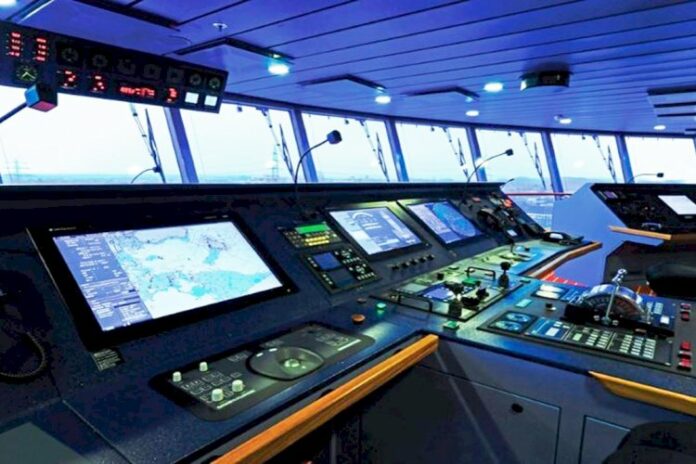
Both navigation bridges of all five LNG tankers will be equipped with the Multifunction Display system consisting of 12 multifunction workstations with a full set of basic applications, including ECDIS, Radar, Conning navigation information display system, BAMS alarm tracking system, and Navi-Planner for advanced route planning. The scope of Wärtsilä solutions also includes VSAT and IRIDIUM satellite communication systems. The workstations are fully integrated into a unified system, which allows the main operational functions to be duplicated, thereby improving safety of ice navigation. 

Similar sets of equipment were installed on gas-carriers built under “Yamal LNG” project during 2014-2018 (with «Christophe de Margerie» as the lead ship in the series). 

As of today, all the navigational systems planned for installation are ready for integration with Wärtsilä Fleet Operations Solution (FOS) – the first solution that puts previously fragmented services under one platform to lift ship-to-shore synergies and improve operational processes. 

Igor Gapeshko, Managing Director of Transas Navigator product line within Wärtsilä Voyage, said:

“I’m sure that our experience in Yamal-LNG project, along with the high professionalism of South Korean shipbuilders, and the advantages of integrated technologies, will make the LNG tankers under construction truly effective for solving urgent tasks and developing safe navigation in the Arctics.”

All the equipment installed on board is fully compliant with the requirements of the Russian Maritime Register of Shipping (RS) and Bureau Veritas (BV). It is designed and tested to operate all year-round in heavy Arctic conditions at temperatures down to 52°C below zero. The installation of the equipment is scheduled for 2020-2023. 

The Arctic LNG-2 project is dedicated to production, storage and shipment of liquefied natural gas (LNG) and gas condensate from the Salmanovsky gas field of the Gydan Peninsula. The project involves the construction of three LNG production lines with a capacity of 6.6 million tons per year, as well as stable gas condensate. The total capacity of three lines is projected to be 19.8 million tons of LNG per year.  

Since its inception in 1974, Samsung Heavy Industries Co. has successfully completed many of the world’s largest shipbuilding and offshore engineering, procurement, construction projects for polar regions. Amongst others, it has developed and built the world’s first Arctic shuttle tanker, Liquefied Natural Gas Floating Production Storage and Offloading units (LNG FPSOs), developed and constructed various Arctic icebreakers and container ships. 

MISC enters into purchase agreements and time charter parties for six VLECs

0

MISC Berhad (MISC) has entered into Memorandum of Agreements (MOAs) with six indirect wholly-owned subsidiaries of Zhejiang Satellite Petrochemical Co. Ltd. for the purchase of six newbuild 98,000 cubic meters Very Large Ethane Carriers (VLECs).

Concurrently, MISC, through its vessel-owning entity, Portovenere and Lerici (Singapore) Pte. Ltd. (PLS) has entered into Time Charter Parties (TCPs) with Zhejiang Satellite Petrochemical Co. Ltd. (STL) for the time charter of the six VLECs for operations in international waters.

The VLECs will be purchased by MISC for approximately USD726 million and chartered to STL through PLS for a firm period of 15 years. The charters for the VLECS are expected to commence in the fourth quarter of 2020. Samsung Heavy Industries Co., Ltd. and Hyundai Heavy Industries Co., Ltd., both shipyards in Korea, are constructing three vessels each.

MISC’s President & Group Chief Executive Officer, Mr. Yee Yang Chien said:

“A new chapter is in the making as we make our entry into the global ethane market with these six VLECs and a new alliance in China. The acquisition of these six VLECs marks a milestone in MISC’s offerings for large scale ethane transport. Adding to the strength and expansion of our existing fleets as well as diversifying our portfolios, we are now the proud owner of six VLECs – which are the largest vessels of its kind, aside from the existing seven VLECs in the world. As one of the only three owners of such vessels in the world, this new addition to our fleet would strengthen MISC’s competitive advantage in this segment. I would like to thank Zhejiang Satellite for the invaluable trust given to us. I believe the alliance formed here today will endure well into the future.

Despite the current challenging market environment, MISC Group has been making notable strides; as part of our effort to diversify our portfolio, develop new solutions and enlarge our presence with the addition of new markets. The long-term charter parties are instrumental to the built up of our sustainable income stream; a clear reflection of long-term drivers that sets our growth strategies and valuable investments. The fact that these milestones are achieved at a time like this, shows MISC’s resilience and consistency in its virtuous growth.”

During the signing ceremony, MISC was represented by Mr. Yee Yang Chien and Mr. Zahid Osman who is the Vice President of LNG Business, MISC Berhad while STL was represented by its Chairman & President, Mr. Yang Weidong and Vice President, Mr. Lu Wei Wei.

Mr. Yang Weidong commented:

“China and Malaysia have been having a very good relationship for quite a long time. Especially during the recent years, the cooperation between the two countries has been greatly increased. Today by entering into this agreement, Satellite and MISC have just started a new venture, in which the two parties will build a global logistics supply chain for chemicals together. This supply chain is going to safeguard the world-leading ethylene cracker that is being built by Satellite. Together, the two companies will help accelerating the development of global chemical industry. I believe that our cooperation will be very successful and last long.”

MISC is currently one of the largest single owner-operators of LNG tankers in the world with distinguished reputation for overall operational excellence, reliability, safety and on-time cargo deliveries. At present, its LNG fleet comprises of 29 LNG carriers and two FSUs with a combined deadweight tonnage (dwt) capacity of over two million dwt. Four LNG carriers are currently under construction.

Nine companies have started “Ship Carbon Recycling WG” of Japan’s CCR Study Group

0

Japanese nine companies have started the Ship Carbon Recycling Working Group (WG) formed within Japan’s Carbon Capture & Reuse (CCR) Study Group, and held its first meeting.

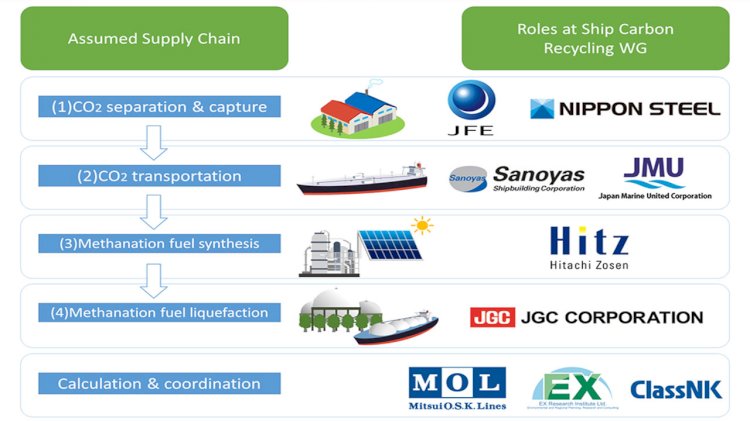
Participating members are EX Research Institute Ltd., Hitachi Zosen Corporation, Japan Marine United Corporation, JFE Steel Corporation, JGC Corporation, Mitsui O.S.K. Lines, Ltd., Nippon Kaiji Kyokai(ClassNK), Nippon Steel Corporation, and Sanoyas Shipbuilding Corporation.

As the effects of climate change become apparent, carbon recycling, a method used to capture and reuse emitted carbon dioxide (CO2), is attracting attention as one of the paths to a decarbonized society.

Formed within the CCR Study Group in August 2019, the WG aims to explore the feasibility of the concept of utilizing methanation technology for zero-emission ship fuels. Through its activities, the WG aims to reduce greenhouse gas emissions to zero in sea transportation, which accounts for 99.6% of Japanese imports and exports, and thereby contribute to the formation of a sustainable society.

Specifically, the nine companies listed above plan to assume carbon recycling supply chain of methanation fuel that involves the supply of feedstock CO2, transportation of the feedstock, methanation*, and conversion into marine fuel. They will calculate the estimated amount of CO2 emissions in the supply chain, and based on these results, identify technical challenges and develop a roadmap for its realization.

The first stage of activities involves:
1) Separation, capture and liquefaction of CO2 emitted from steelworks 
2) Transportation of liquefied CO2 by ship to a hydrogen supply site 
3) Generation of synthetic methane from CO2 and hydrogen by methanation reaction, and 
4) Liquefaction of the synthetic methane and using it as marine fuel.

In addition to obtaining an approximate value of CO2 emissions in this assumed supply chain, the group will also identify challenges and decide whether to proceed with subsequent next-stage activities along with the content of those activities. The acquired knowledge will also be widely disclosed in and out of the industry.

* Methanation is a technology for synthesizing methane, the main component in natural gas, by causing a chemical reaction between hydrogen and CO2 in a reactor vessel filled with a catalyst. It uses emitted CO2 separated and captured from industrial facilities. As the CO2 generated when combusting synthesized methane is considered to be offset by the separated and captured CO2, it is expected that CO2 emissions can be significantly reduced by using hydrogen generated by electrolyzing water with electricity derived from renewable energy.

About CCR

The CCR Study Group was established with the objectives of proposing effective carbon neutral measures to reduce the use of fossil fuels by offering alternative energies such as synthetic methane, which is generated by combining CO2 generated by industries with renewable energy-derived hydrogen, and contributing to the establishment of a new energy supply system by 2050.

Holland America Line sells four cruise ships

0

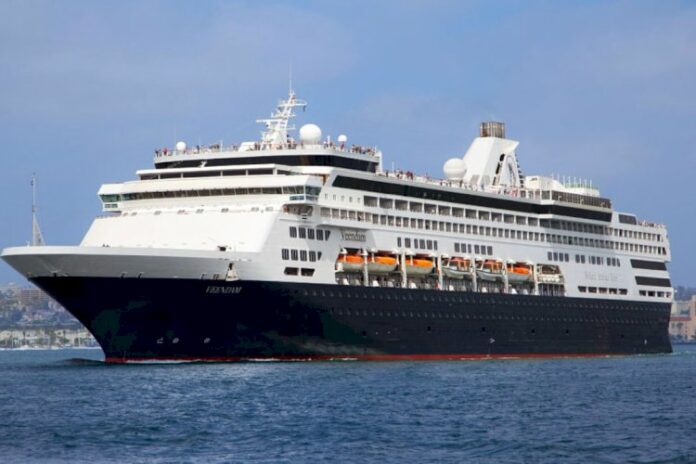
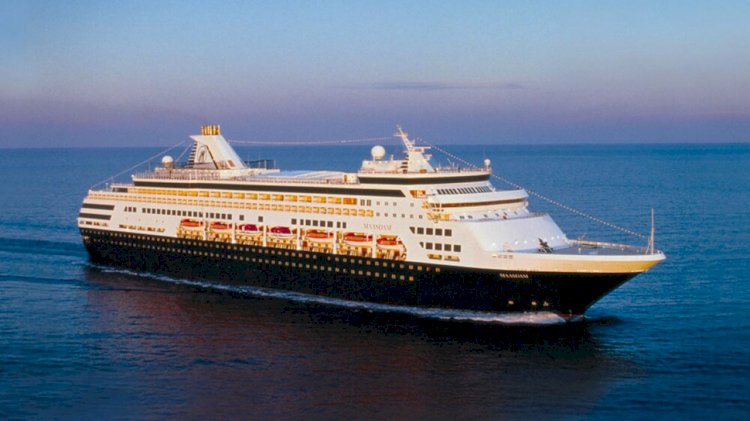
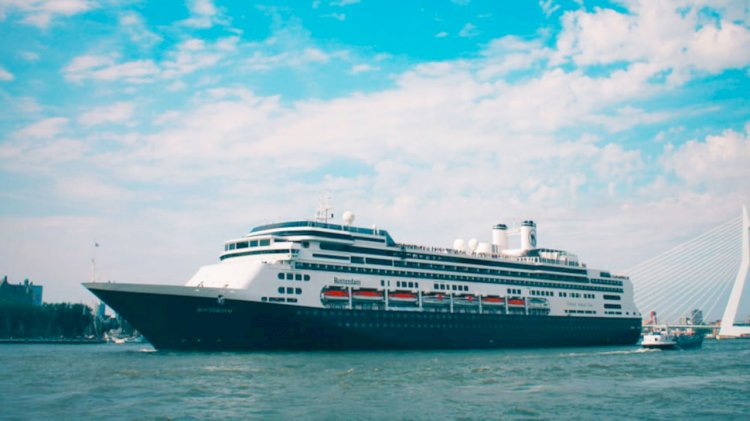
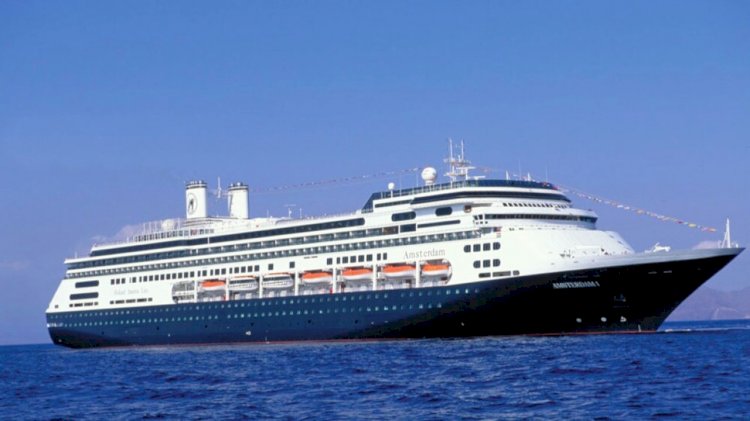
Holland America Line announced that Amsterdam, Maasdam, Rotterdam and Veendam will be leaving the fleet and transferring to undisclosed buyers. The ships have been sold in pairs, with the S-Class Maasdam and Veendam transferring to one company in August 2020, while the R-Class Amsterdam and Rotterdam will move to another company in fall 2020.

Holland America Line will cancel cruises for the four ships’ deployments, with some select itineraries being assumed by other ships in the fleet. The 2021 Grand World Voyage aboard Amsterdam will be postponed until 2022 and will now sail aboard Zaandam.  The Grand Africa Voyage departing Oct. 10, 2021, aboard Rotterdam will also sail aboard Zaandam on the same dates.

Stein Kruse, chief executive officer of Holland America Group and Carnival UK, said:

“It’s always difficult to see any ship leave the fleet, especially those that have a long and storied history with our company. However, Holland America Line has a bright future ahead that includes recent Pinnacle-Class additions, with a third sister ship next year that will continue to maintain our overall capacity in the marketplace.”

Maasdam joined the fleet in 1993 as the second of four S-Class ships. Carrying 1,258 guests, it is the fourth Holland America Line ship to bear the Maasdam name. Most recently, the 55,575-ton ship sailed longer South Pacific and Alaska voyages. Veendam, the final S-Class ship, was delivered in 1996. The fourth Holland America Line ship to bear the name Veendam, the 57,092-ton vessel carries 1,350 guests.

The first ship in the R Class, 61,849-ton Rotterdam was introduced in 1997. Carrying 1,404 guests, it is the sixth Holland America Line ship to be named Rotterdam. Amsterdam joined the fleet in 2000 as the final of four R-Class ships. Carrying 1,380 guests, it is the third Holland America Line ship to be named Amsterdam. Most recently, the 62,735-ton ship operated the line’s Grand World Voyage.

Guests with bookings on future sailings of these ships will be notified that these cruises will be cancelled or changed. Along with their travel advisors, guests will receive information if the cruise will operate with a different ship or information and special offers on how to book another Holland America Line cruise when operations resume. Guests who prefer a refund will be accommodated.

Cancelled cruises will include scheduled Canada/New England and Grand Voyages on Amsterdam; Mexico, South Pacific, Australia and Asia itineraries on Maasdam; Caribbean, Europe, Panama Canal, South America and Hawaii sailings on Rotterdam; and Caribbean and Europe itineraries on Veendam.

Veson Nautical releases new Data Lake module

0

Global market leader for commercial maritime software Veson Nautical has formally launched VIP Data Lake, the newest module of its innovative cloud solution, the Veson IMOS Platform (VIP).

One of VIP’s optional Data Solutions, Data Lake offers a cloud-native, scalable solution that allows users to interact with and download large amounts of data in a highly efficient manner. The module was first announced at Veson’s ONCOURSE user conference, which took place virtually last month.

Bill McConnell, Product Manager at Veson Nautical, commented:

“In a single day, the maritime shipping industry generates roughly 120 million data points related to contracts, vessel movement, cargo locations, and more. Without a proper solution, organizations are not able to effectively analyze their historical data. The Data Lake solution solves that problem by making data in the VIP operational database available on an ongoing basis, in a format compatible with leading data reporting and analytics tools.”

VIP Data Lake is designed handle vast quantities of data at one time, and is compatible with data warehouse, business intelligence and data analytics solutions. By increasing simplifying full access to historical operational data snapshots, Veson seeks to empower its clients to unlock powerful insights and make better, data-driven decisions.

Ben Thurecht, CTO at Veson Nautical, commented:

“Many of the conversations we have with our client base center around accessing, securing, and integrating data into downstream applications. VIP Data Lake allows clients to gain rapid access to all of the data stored in VIP, refreshed on either a daily or hourly basis. That data can then be downloaded and ingested into downstream systems, such as a custom data warehouse solution or a third party application. This allows our customers to retrieve and work with larger quantities of data easier than ever before, which in turn opens up a world of opportunity for extracting valuable insights and supporting decisions with data.”

VIP Data Lake joins 16 other modules on the Veson IMOS Platform as an optional Data Solution in the market-leading end-to-end system. The module is available today.


OneOcean’s EnviroManager chosen for Intership Navigation’s fleet

0

World leading digital compliance and navigation solutions provider, OneOcean, has announced its most recent alliance with Intership Navigation. 

The EnviroManager solution will support Intership Navigation by reducing environmental risks, avoiding potential fines, and maintaining its global reputation as a reliable shipping company; helping them to pursue a competitive zero-spillage policy.

Commenting on the partnership, Captain Piotr Rusinek, Fleet Superintendent at Intership Navigation, said:

“We have a longstanding relationship with OneOcean who have a global presence and a proven track record for reliability and excellent customer service. In answering this particular brief, they have proved to be flexible and open-minded by developing a unique support solution that will help our captain’s and crew meet all environmental regulations.”

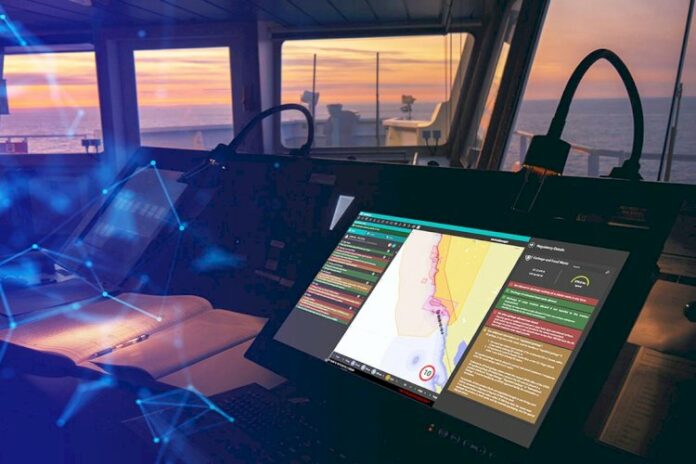
Failing to meet environmental regulations at sea can result in potential fines and detentions as well as affecting company reputation.Currently operating on over 2,000 vessels worldwide, OneOcean’s EnviroManager solution provides onboard crews the tools to ensure they are complying with the relevant MARPOL and environmental regulations. The traffic light notification system makes it easy to understand what action can be undertaken based on the current global position of the vessel, helping companies to avoid risks and minimize costs.

As a member of the Hartmann Group, Intership Navigation boasts more than 3,500 seafarers and approximately 160 skilled shore-side professionals at its purpose built headquarter in Limassol, Cyprus. The company continuously strives to decrease any negative impact on its vessels whilst maintaining a sustainable shipping industry.

OneOcean’s intelligent software integrates and analyses marine data in real time, providing onshore teams and onboard crew accurate and up to date information to help them make the best decisions. Currently unrivalled in the maritime industry, the OneOcean solution packages have been developed to help fleet owners and managers solve multiple navigation and compliance issues whilst enabling their ship and shoreside teams to communicate much more effectively.

Damen solds a full option Cutter Suction Dredger 500 to Servimagnus

0

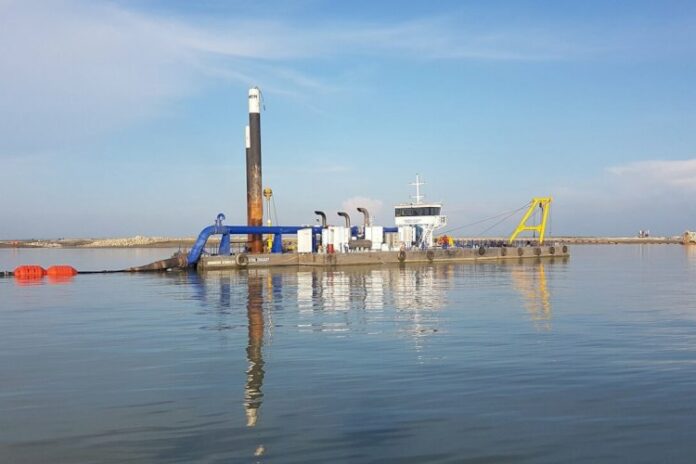
The Damen Shipyards Group has sold a full option Cutter Suction Dredger (CSD) 500 to the Argentinian dredging contractor Servimagnus. The CSD will work on the ambitious waterways programme in the province of Buenos Aires. The modular dredger is currently under construction in the Netherlands, and will be shipped to South America this autumn.

Ezequiel Najmias, Damen Shipyards Group sales manager Americas, explains:

“Currently, there is an important dredging project taking place in Argentina. One of the major rivers in the outstretched plains in the Argentinian Province of Buenos Aires, the Salado River, is undergoing major maintenance dredging.

Due to heavy siltation, flooding has become a regular occurrence in the past decade, threatening agriculture and livestock. This Damen CSD500 will be added to Servimagnus’ local dredge fleet to push forward the maintenance dredging job. The CSD500 will be fitted out with a spud carriage pontoon, resulting in an ultra-efficient dredging operation due to the impressive swing with of over 52 m – sweeping the river clean in wide strokes.”

The modular dredger will be customised using a number of standard optionals. These include a day accommodation which is placed underneath the operating cabin, a heavy duty cutterhead for breaking up compacted soils, a wedge piece for shallow water dredging and a position visualisation system for keeping track of the dredging works. Moreover, a non-radioactive production measurement system will be delivered to record the production of the suction dredger.

At present, the cutter suction dredger is under construction at the Damen Dredging yard in Nijkerk, The Netherlands. The dredger will be ready in time for spring in the Southern Hemisphere, when it will be shipped over to Argentina where to join the rest of the Servimagnus fleet – cleaning up the silted rivers.

AAL transports giant cable carousel for Taiwan offshore clean energy project

0

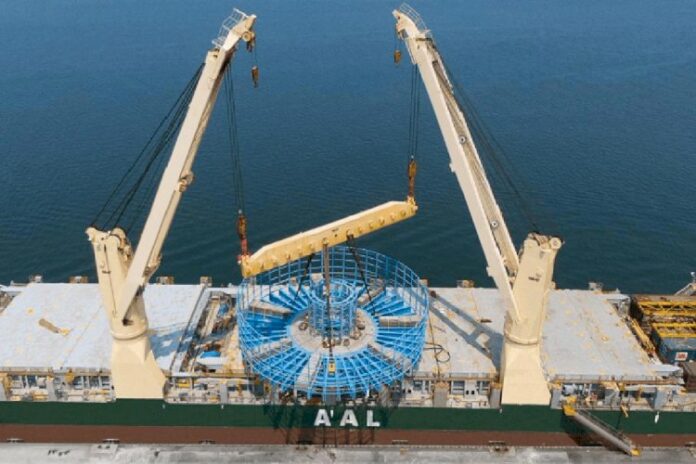
Breakbulk and project heavy lift carrier, AAL Shipping has delivered a cable carousel measuring 23 m in diameter (73 m circumference) to Jan De Nul Group, for the Formosa 2 offshore wind farm project, 9.5km off the coast of north-west Taiwan.

The cargo was loaded in Jebel Ali and transported on deck of the 19,000 dwt heavy lift (HL) multipurpose vessel AAL Nanjing to the project marshaling port Taichung. The cable carousel is one of the first major components to be delivered to Taichung Port where works have begun to develop the project’s operations and maintenance base. The Formosa 2 project started construction at the end of 2019 and the project will be in operation in 2021. The offshore wind farm is expected to produce enough green energy to power 380,000 households a year and offset 18.75 million mt of carbon emissions in its lifetime.

Yahaya Sanusi, Deputy Head of AAL Transport Engineering, commented:

“Manufactured in Norway’s Drammen Yard and designed to spool 3,000 t of undersea power cable, the carousel alone weighed over 370 t. The unit was loaded and discharged using both the Nanjing’s port mounted HL cranes and rigged in three points to a 22.5 m lifting beam (with a safe working load of 637 t), which proved to be the safest solution for the lift. Its significant diameter of just over 23 m was slightly less than the 23.4 m beam of the S-Class vessel, but wider than her 18.8 m hatch cover – so it ended-up protruding over both sides of the vessel. Safe to say that we do not leave any stone unturned when planning the optimum transport solution for such complicated cargo shapes and sizes.”

Christophe Grammare, Commercial Director of AAL, added:

“This particular cargo was carried on one of our four ‘S-Class’ vessels – a young 19,000 dwt class that is extremely flexible and features a significant 700 t heavy lift capability. With the fleet employment strategy we have in place, we can offer sailing frequency and vessel choice – from 19,000 dwt to 33,000 dwt – to our customers trading between the Middle East and Asia and westwards towards Europe and the US, for multipurpose cargoes of any type and size.

Of course, added safety and security measures worldwide due to COVID-19 have put a greater strain on our sea and land-based teams and operations, but we accept these measures are now part of the new normal in the shipping sector and carefully factor them into our scheduling and planning to ensure that we manage and then meet the expectations of our customers at all times.”