-2.2 C
New York
Home Blog Page 815

EU grant for hydrogen project in inland shipping

0

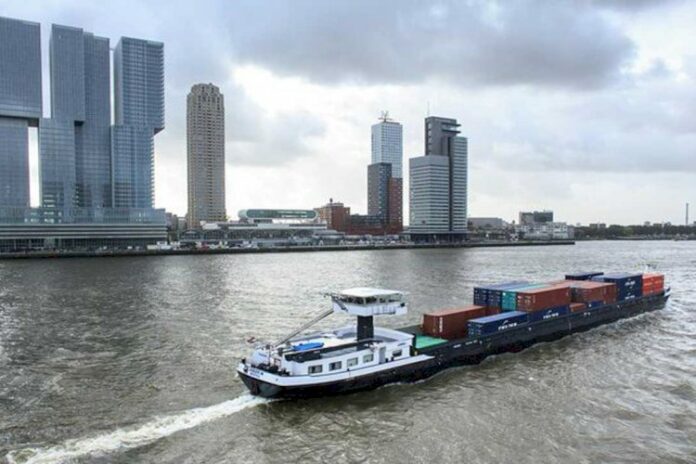
The transport of cargo with hydrogen-powered inland vessels along the freight corridor between Rotterdam and Genoa has just come a step closer.

The European Commission has awarded 0.5 million euros in funding for further research to the RH2INE partnership, whose members also include the Port of Rotterdam Authority. The application was jointly submitted by the Province of Zuid-Holland, the German federal state of North Rhine-Westphalia, the ports of Rotterdam and Duisburg and RheinCargo. The partners will also be contributing 0.5 million euros to the research budget.

The target is to have at least 10 vessels running on hydrogen along the Rhine-Alpine Corridor – the main freight route between the port of Rotterdam and Cologne – by 2024. This requires three hydrogen refuelling stations along the way. In the years following, the number of stations will be expanded so that hydrogen-powered freight vessels can continue to Genoa. To facilitate the use of hydrogen as a transport fuel, twenty parties – from both the public and private sectors – have joined forces in the RH2INE (Rhine Hydrogen Integration Network of Excellence) alliance.

The European grant will be used to fund research into which hydrogen refuelling stations are best suited for this purpose, hydrogen technology and which legislation will be required in the various countries and locations to allow inland vessels to switch to hydrogen. The network members also intend to learn from each other via RH2INE. They will achieve this by exchanging knowledge regarding the use of hydrogen in inland shipping. Each of these parties plays a role in a future hydrogen economy, from production to distribution to its utilisation in shipping.

As far as the European Commission is concerned, the RH2INE grant application came at an excellent time. It aligns seamlessly with Brussels’ sustainability targets in its search for alternative fuels and opportunities to raise sustainability after the Covid crisis. ‘It is a well-written, solid proposal. It shows the interrelationship between the set objectives, activities and budget,’ according to the funding body.

Floor Vermeulen, the Member of the Provincial Executive of Zuid-Holland responsible for traffic and transport, says:

‘Hydrogen is an inextricable part of the future economy and is one of the key solutions for the cleaner transport of heavy cargo across longer distances. To turn this plan into a reality, you need to work together, and I am proud of the range of parties who have joined the network. From production and distribution to users. I see this grant as an incentive through which the EU confirms that we are on the right track. Furthermore, it connects with Zuid-Holland’s ambition to achieve a better balance between transport and a pleasant social environment.’

Andres Pinkwart, North Rhine-Westphalia’s Minister of Innovation and Energy, says:

‘We are delighted with the EU’s positive decision with regard to the cross-border promotion of hydrogen technology. This confirms that with our RH2INE-programme, we have taken new steps forward, towards more climate-friendly freight transport. The future hydrogen market will be based on international connections.’

Halliburton forms strategic agreement with Microsoft and Accenture

0

Halliburton, Microsoft Corp. and Accenture have entered into a five-year strategic agreement to advance Halliburton’s digital capabilities in Microsoft Azure.

Under the agreement, Halliburton will complete its move to cloud-based digital platforms and strengthen its customer offerings by:

• Enhancing real-time platforms for expanded remote operations,
• Improving analytics capability with the Halliburton Data Lake utilizing machine learning and artificial intelligence, and
• Accelerating the deployment of new technology and applications, including SOC2 compliance, for Halliburton’s overall system reliability and security.

Jeff Miller, Halliburton chairman, president & CEO, said:

“The strategic agreement with Microsoft and Accenture is an important step in our adoption of new technology and applications to enhance our digital capabilities, drive additional business agility and reduce capital expenditures.

We are excited about the benefits our customers and employees will realize through this agreement, and the opportunity to further leverage our open architecture approach to software delivery.”

Judson Althoff, executive vice president, Microsoft’s Worldwide Commercial Business, said:

“Moving to the cloud allows companies to create market-shaping customer offerings and drive tangible business outcomes. Through this alliance with Halliburton and Accenture, we will apply the power of the cloud to unlock digital capabilities that deliver benefits for Halliburton and its customers.”

The agreement also enables the migration of all Halliburton physical data centers to Azure, which delivers enterprise-grade cloud services at global scale and offers sustainability benefits.

Accenture will work closely with Microsoft, in conjunction with their Avanade joint venture, to help transition Halliburton’s digital capabilities and business-critical applications to Azure.

Accenture will leverage its comprehensive cloud migration framework, which brings industrialized capabilities together with exclusive tools, methods, and automation to accelerate Halliburton’s data center migration and provide for additional transformation opportunities.

Julie Sweet, chief executive officer, Accenture, said:

“Building a digital core and scaling quickly across a business is only possible with a strong foundation in the cloud. Halliburton recognizes that this essential foundation will provide the innovation, efficiency and talent advantages to do things differently and fast. We are proud to be part of this transformational change, which builds on our long history working with Halliburton and Microsoft.”

The companies expect to complete the staged migration by 2022. 

MSC PALAK container incident in South Africa

0

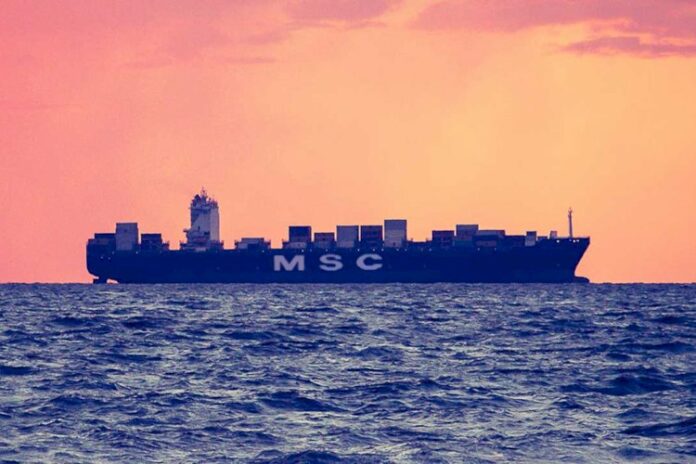
MSC Mediterranean Shipping Company is actively responding to the loss of a number of containers overboard from the cargo ship MSC PALAK after the vessel was caught in rough weather while at anchorage near the Port of Nqgura (Coega) in South Africa late on 14 July 2020.

According to a preliminary assessment, 22 containers were missing and presumed to have fallen overboard into the sea. These containers were mainly filled with biodegradable cargo and no dangerous or polluting cargo was spilled overboard.

MSC is in contact with local authorities to provide them with all necessary information about the contents of the missing containers and surveyors were already quickly appointed to search for the missing containers.

MSC will appoint experienced response companies to conduct further investigations and salvage operations, should this be required.

MSC understands that soon after the incident the South African Maritime Safety Authority (SAMSA) issued a warning notice in relation to this incident and Coega port was temporarily closed to ensure the safety of other vessels operating in the area.

MSC PALAK has subsequently returned to Coega where it was berthed for further surveys.

Bakker Sliedrecht services ships Anthony Veder remotely via AR-glasses

0

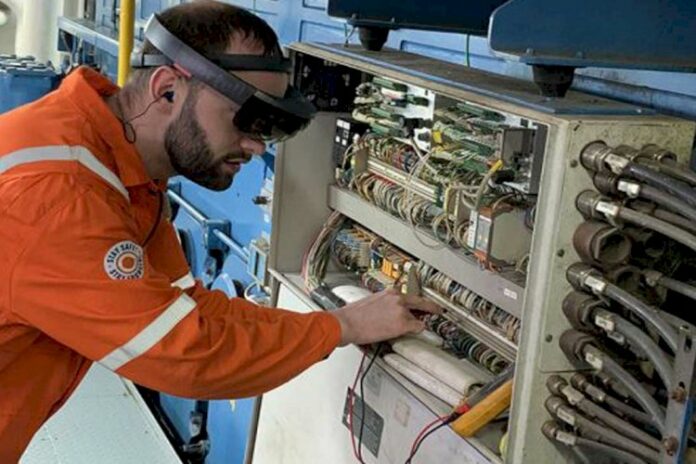
After a successful pilot, system integrator Bakker Sliedrecht and gas shipping company Anthony Veder intend to enter a partnership to provide ships with remote service through augmented reality glasses (AR-glasses). 

The companies have run a successful pilot on gas tanker Coral Favia. During the pilot, functionalities were tested via a dial-up connection and common failures were simulated. On board, an officer wore the AR glasses, guiding Bakker Sliedrecht experts virtually through the ship.

Thijs van Hal, Head of Main Contracting at Bakker Sliedrecht, says:

“Normally, emails and construction plans are sent back and forth first and phone calls are made to get to the core problem. Now we can watch live. We can solve the problem immediately, or we know what’s going on and we can make a better planning and bring the right parts directly with us.”

Thijs. Anthony Veder has a fleet of over thirty vessels transporting liquified gas on a worldwide scale, says:

“Now it can happen that a colleague is travelling for several days, while afterwards it turned out that the solution for the malfunction was relatively easy. As downtime for ships is very expensive, quick service is important. If you can offer them remote assistance through AR glasses, you can be ready in two hours instead of two days.”

All kinds of digital information can be projected or added to the screen on the glasses. This varies from construction plans, virtual arrows to a 3D impression of the engine room or the switch box. Computer screens on the glasses can also be shared. It is a kind of webcam on site, where you both see the same thing and where you have multiple additional tools to make an accurate assessment of the situation.

Wouter Boogaart, Digital Development Manager at Anthony Veder, says:

“It is a very useful tool when there are problems on a ship far away. You can see together what is the problem and how you can solve it.”

The AR glasses can also be used for tests and remote inspections. 

According to Van Hal, this type of remote assistance technology will become more important as ships are becoming more and more complex:

“We will do more things remotely. Then it is important that we are already successful with this.”

Anthony Veder wants to expand the deployment of the AR glass in phases over a part of the fleet. In addition to purchasing AR glasses, staff will be trained and the IT infrastructure will be upgraded.

Boogaart says:

“We believe that these kinds of developments are the future. Ships are becoming increasingly complex. As a result, much more expertise and specialism is needed to see what is going on. Something that is often not present on board. The glasses can save a lot of time, travel time and money, which is why the investment is worth it. Especially during Corona times, the glasses are a useful tool because borders are closed and planes stay on the ground. Then these kinds of innovations have proven to be necessary.”

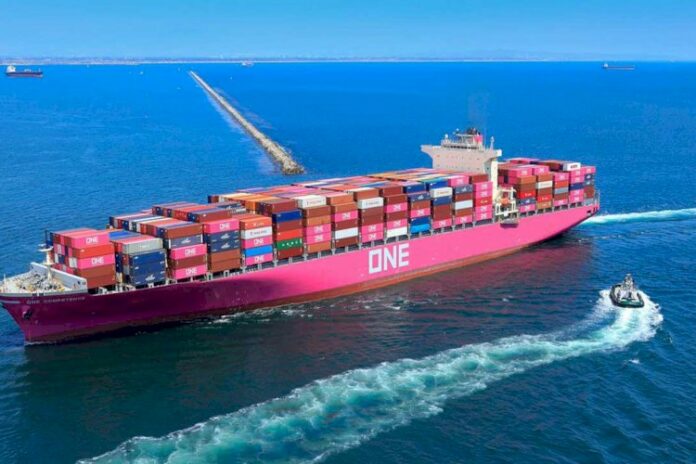
ONE initiates Marine Safety and Quality Campaign 2020

0

As a charterer, Ocean Network Express has carried out onboard Vessel Quality Standard (VQS) inspections since the start of its operations in April 2018.

In line with their core values, these inspections have enabled ONE to offer a reliable and quality service to their valued customers.

As a result of the Covid-19 pandemic ONE has launched a new self-inspection challenge for vessels, replacing their previous (VQS) inspections which are currently suspended.

The self-inspection challenge will be undertaken by the ships’ crew, as part of the ONE Safety and Quality Campaign 2020. This campaign will run from July through to December to maintain the safety and service quality of ONE’s fleet during the Covid-19 period.

All vessels under ONE’s operation are encouraged to identify and make good any potential defects using a ONE self-checklist. A VQS Excellent Cooperation award will be given to the most cooperative and motivated vessels.

Through the Marine Safety and Quality Campaign, ONE intends to raise safety awareness in collaboration with its business partners, further extending their efforts in safe and efficient operations.

Integrated data enhances remote ship management

0

StratumFive has incorporated Danelec Marine’s ship-2-shore data automation solution, DanelecConnect, into its market-leading Podium collaborative workspace as an approved third-party data source, the companies have announced today. The development continues StratumFive’s growing list of integration partners and third-party data sources for Podium with more anticipated in the coming months.

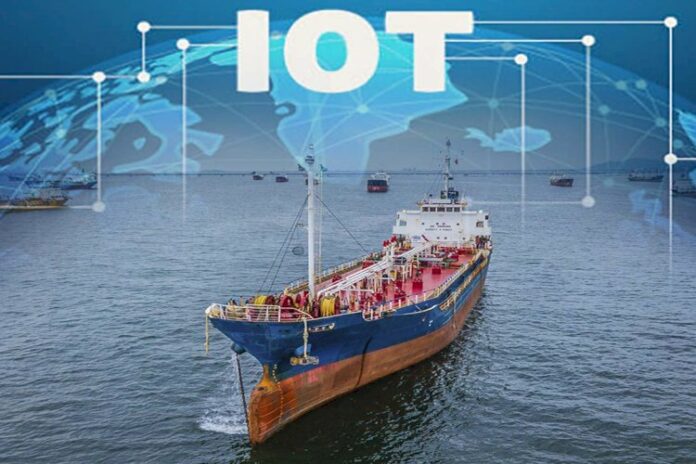
DanelecConnect uses IoT infrastructure to collect a range of operational and technical data onboard a vessel and packages it for end users. Podium will seamlessly correlate this data, alongside the 7.8bn other values it processes every day, to provide users with a full picture of their operations in a unique timeline architecture.

Users will further benefit from Podium’s capability to unify data from ship, shore, engine, and environment, with the integration of DanelecConnect data, which will unlock new efficiencies for the global fleet. Users will be able to integrate DanelecConnect data from their vessels across personalised dashboards, alerts, visualisations and KPIs to ensure that they have a complete picture of what is happening across their operations.

Ross Martin, Chief Operating Officer, StratumFive, said:

“The addition of Danelec Marine to the growing list of Podium integration partners provides our clients a complete end-to-end integrated IoT experience, without the prohibitive costs of alternative solutions. Accessing timely sensor data ashore has been historically challenging and expensive for many ship owners and operators, typically requiring bespoke onboard data networks with connections to hundreds of individual data points. Often this has involved custom interfaces to legacy equipment or delayed and unreliable manual inputs. When combined with Podium, the DanelecConnect solution addresses these problems, enabling all clients to quickly visualise correlated data streams, fleet-wide, in an agile shoreside dashboard environment. This is the solution that our industry needs in order to reap the promised cost savings and other operational efficiencies of digitalisation.”

Mike Powell, Strategy Director, StratumFive added:

“Accurate data allows for effective decision-making”,  “When we established Podium, we wanted to unify the shipping industry’s many disparate data sources into one single space. By incorporating DanelecConnect, we’ve successfully added another piece to this puzzle. We’re confident that as our network of integration partners, third-party data sources and core endpoints grows, Podium’s ability to offer shipping accurate and timely insights grows further in tandem.”

Casper Jensen, Chief Operating Officer at Danelec Marine, said:

“After more than two years of successful collaboration, we are delighted to grow the DanelecConnect Application Provider ecosystem to include StratumFive’s Podium collaborative workspace.With Podium’s full integration with our agnostic, cost efficient and robust ship-2-shore cloud-based data solution, both StratumFive’s existing customers and potentially the global fleet of vessels legally required to carry a VDR on-board can benefit from advanced digital capability.”

Viking to launch new ship for the Mekong river

0

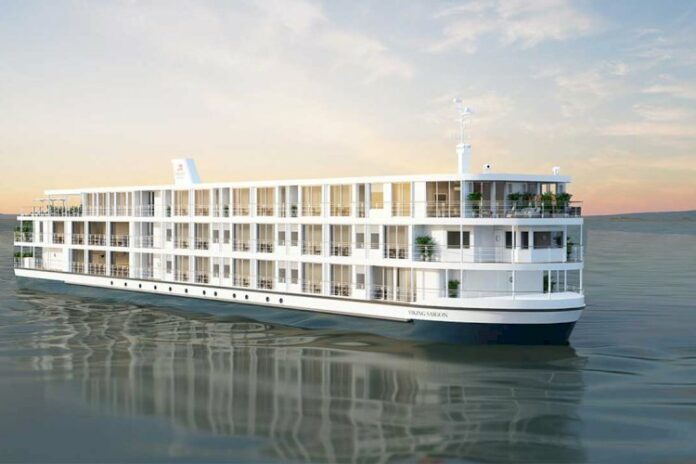
Viking® has announced it will launch a new ship next summer for its popular Magnificent Mekong cruisetour.

Currently under construction, the 80-guest Viking Saigon℠ is scheduled to debut for the August 30, 2021, cruisetour departure; the river cruise portion of the itinerary sails between Kampong Cham, Cambodia and Ho Chi Minh City (Saigon), Vietnam.

Torstein Hagen, Chairman of Viking, said:

“For many of our guests, Vietnam and Cambodia remain top destinations because of their significance in world history. We have led the river cruise industry with our fleet development and experiences that bring travelers closer to the cultures of the world for more than two decades. This will be the most modern vessel on the Mekong and will feel like ‘home’ to our loyal Viking guests who are familiar with the comfortable design of our ships.”

Purpose-built for the Mekong River, the new Viking Saigon will host 80 guests in 40 outside staterooms. 

Equinor awards new large development contract to Optime

0

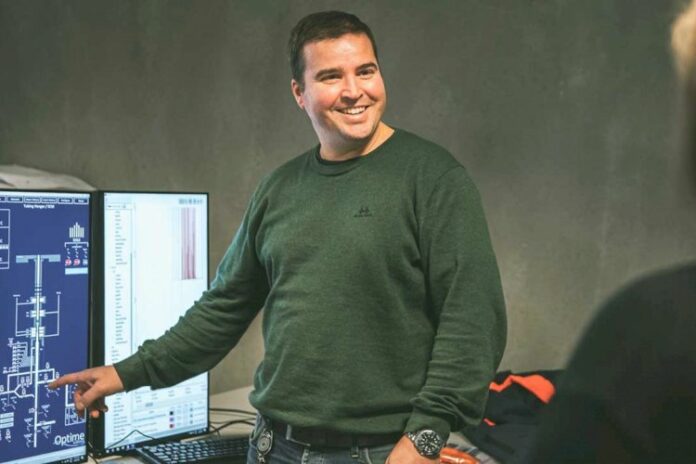
For over a decade, Optime has been the driver in moving hydraulic energy and control from topside to the seabed. This technology is also proving beneficial for All-Electric fields, where certain valve functions may require hydraulic control. Equinor have selected Optimes Hydraulic Pump for its future All-Electric initiative.

All-Electric solutions are attractive in subsea systems for enabling cost effective and standardised field developments. In traditional systems, hydraulic valves and equipment on the seabed is supplied and controlled from topside via hydraulic piping over long umbilicals. All-Electric fields may eliminate most of these hydraulic elements as well as related cost and risk by actuating all the valves and controls electrically. The last remaining valve to be operated by hydraulics is the Surface Controlled Subsurface Safety Valve (“SCSSV”). This is where Optime’s subsea hydraulic pump (“sHPU”) is providing local hydraulic power and control subea, and as such succesfully enabling the Operators to implement their new All-Electric technology.

Jan-Fredrik Carlsen, CEO Optime Subsea, said:

“We have worked with Equinor on identifying the most optimized technical and commercial solution for its All- Electric subsea production systems for a while. By leveraging our experience in subsea hydraulic pump technologies, we now have a single unit pump, with redundant pistons and electronics that only requires almost the same amont of power as a lightbulb. This sHPU will contribute to optimizing project implementation cost to assist future operators drive to more electric and potential unmanned subsea production fields”.

The implementation of an All-Electric water depth independent system is a big step towards cost effective subsea solutions for the future. It allows for digitalization to increase control, maintenance, and source all the power from cleaner resources. While it is the intent to have all electrical controls and equipment, Equinor has selected Optime to provide this very small, low-cost and robust sHPU to drive all of its SCSSV valves where electric controls is not preferred. Eliminating the hydraulics in the host umbilical will enable new opportunities in field development, as well as making smaller fields safer, greener and financially attractive.

Jan-Fredrik Carlsen, CEO Optime Subsea, said:

“Last year we delivered the subsea electric power and distribution control module for ABB with its partners in Equinor, Total and Chevron. Now, we are providing the sHPU for Equinor – both developments being All-Electric driven. Continuing this path, but with a significantly greater value directed at operators’ mature field and their cost reducing efforts, is our completed fully autonomous subsea battery and software controls system. The subsea industry is continously in the forefront technically and for future innovative, cheap and environmentally friendly solutions – we believe to be positioned as a preferred partner.”

HHLA and Port of Braunschweig enter strategic partnership

0

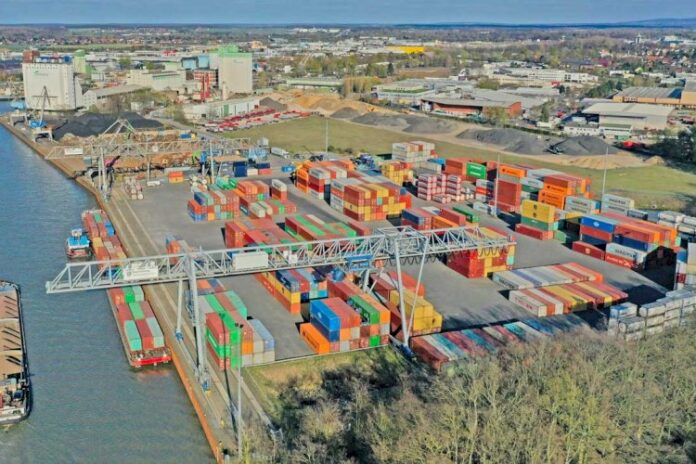
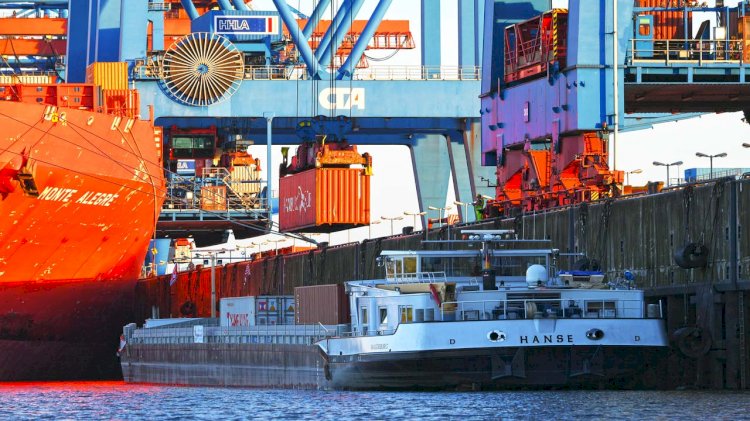
On Monday, 13 July, Hamburger Hafen und Logistik AG and Hafenbetriebsgesellschaft Braunschweig mbH (the Port of Braunschweig’s operating company) signed an agreement in Braunschweig’s town hall to begin a strategic partnership. 

The Port of Hamburg is the largest rail port in Europe, and rail-based hinterland traffic is one of its particular strengths. However, this competitive advantage often cannot be utilised on short routes. The distance between Hamburg and Braunschweig, approximately 180 kilometres, is too short for the train. Inland waterway shipping is an attractive alternative to truck transport on this route. Transit time via the waterway is approximately 24 hours.

HHLA Executive Board member Jens Hansen, responsible for operations, said:

“Hamburg and Braunschweig have excellent connections via the river Elbe, the Elbe Lateral Canal and the Mittelland Canal.”

He pointed out that 70,000 standard containers were moved between Hamburg and Braunschweig via the waterway last year, saving approximately 40,000 truck journeys.

Hansen said:

“In order to shift additional transport volume to environmentally friendly inland waterway carriers, we want to work together with the Port of Braunschweig to develop new transport concepts for companies interested in forwarding goods.”

This will relieve the burden on roads and reduce CO2 emissions at the same time.

Jens Hohls, managing director of Braunschweig’s port operating company, reported:

“We currently offer seven inland waterway departures between Hamburg and Braunschweig per week. This traffic must run reliably. Our strategic partnership with HHLA is therefore particularly important to us.”

This strategic collaboration with an inland port is a first for HHLA. Hansen has announced that additional ones shall follow; the company is already conducting discussions with further inland ports in the hinterland of the Port of Hamburg.

The Port of Hamburg is not only the largest seaport but also the second-largest inland port in Germany. Approximately 10,000 inland vessels call each year at the terminals in Hamburg. Since 2012, the annual volume of container traffic reaching or leaving the Port of Hamburg by inland waterway vessel has grown by 50 percent to approximately 140,000 standard containers.

The Hamburg Vessel Coordination Center (HVCC), a joint venture between Hamburger Hafen und Logistik AG and Eurogate Container Terminal Hamburg GmbH, helps to provide smooth processing. Last year, the HVCC developed a digital platform especially for inland waterway ships which centrally coordinates ship calls, routes within the port, the assignment of berths and terminal handling.

GTT signs a new global TSA with KNUTSEN OAS SHIPPING AS

0

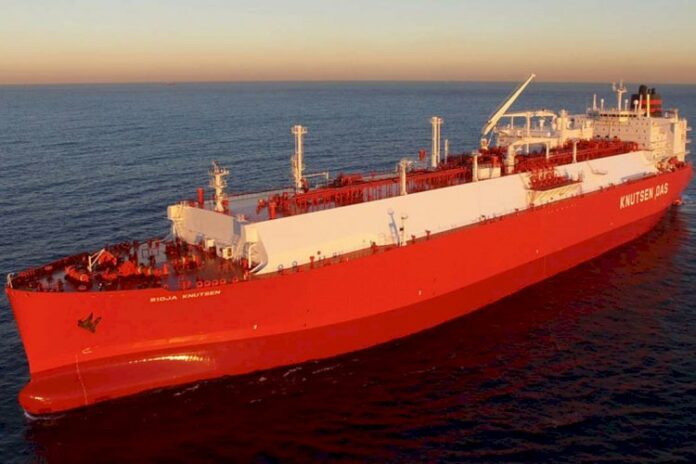
GTT has signed in June a Global Technical Services Agreement (TSA) with the Norwegian ship-owner KNUTSEN OAS SHIPPING AS.

This new agreement covers a fleet of 17 vessels by 2022 (12 currently in service and 5 under construction), all equipped with Mark III Flex or NO96 technologies, developed by GTT.

GTT will support KNUTSEN OAS SHIPPING AS with the maintenance and operation of the vessels. This agreement includes GTT on-site technical assistance for inspection, maintenance, repairs, operations and engineering services. KNUTSEN OAS SHIPPING AS will also benefit from access to the HEARS®[1] emergency hotline, which enables ship-owners and their crews to contact GTT’s experts 24/7 to respond to operational issues.

Philippe Berterottière, Chairman and CEO of GTT, said:

“We are pleased to renew and expand this agreement with a long term partner like KNUTSEN OAS SHIPPING AS, which owns and operates a growing fleet of vessels. Thanks to our tailor-made support services, adapted to the needs of our customers, we guarantee maximum efficiency and safety for vessels in operation.”