-5 C
New York
Home Blog Page 814

ABS launches a suite of fleet management and vessel compliance services

0

Unique Suite of Services Unlocks the Power of Data Insights to Anticipate Needs with Intuitive and Informed Decision Support

ABS today launches a unique suite of fleet management and vessel compliance services powered by smart functionality and advanced analytics which, in an industry first, will also be available through the new ABS App.

Designed to anticipate client needs and provide intuitive, informed decision support, the smart functionality is an enhancement to the ABS MyFreedom™ client portal and can be accessed through a mobile app or text. The portal and the industry’s most user-friendly digital tools simplify access to operational, technical and compliance fleet intelligence and all ABS Class services to manage the operating health and performance of fleets.
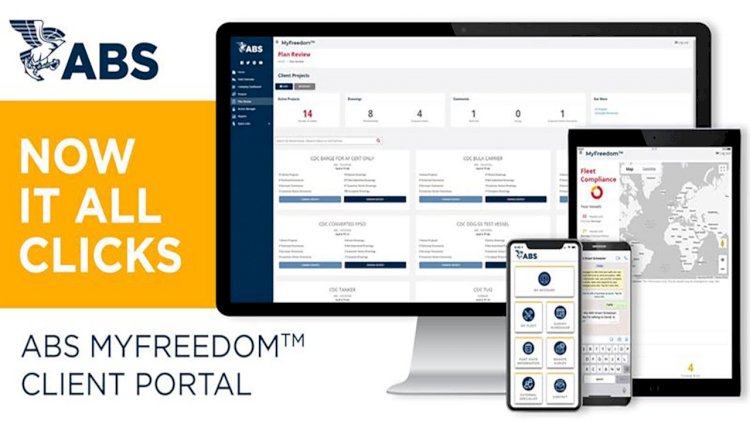
Photo:  ABS

New industry-leading smart functionality launched today includes:

  • The ABS Smart Scheduler™, which leverages real-time AIS data to maintain fleet compliance  and is the industry’s only mobile survey booking tool enabling any survey, including remote surveys, to be scheduled in less than a minute anytime, anywhere – even when there is no internet access. It tracks survey status for all vessels in a fleet and then issues alerts when surveys are due. 
  • Custom Checklist, which brings together port state data from all ABS-classed vessels to provide a port-specific checklist for crew and fleet managers prior to arrival at any port.
  • Fee Estimator, which provides a comparison of estimated survey fees across multiple ports.
  • Port State Control Risk, which provides customized port state control analytics by vessel or fleet.  It allows clients to view their destination’s top deficiency items and the client vessel’s matching findings from ABS class records, along with a vessel risk rating based on compliance health status.
  • International Safety Management (ISM) Findings, customized to individual vessel performance, which allows clients to view the destination port’s top ISM related deficiency items against their vessel’s matching findings from ABS class records.
  • Port-Specific External Specialists, which provides one-touch direct client connections for upcoming surveys.

Christopher J. Wiernicki, ABS Chairman, President and CEO, said:

“Leveraging unprecedented access to data, we are delivering truly smart functionality that learns from the user and, with experience over time, anticipates future requirements, making it even easier to work with ABS. These are just the first of many enhancements and increased smart functionality that ABS will continue to deliver through the MyFreedom client portal. The portal brings together all of our clients’ Class needs digitally for a complete overview, so now it all clicks. Centralized and connected, it streamlines interactions with ABS, making our client experience straightforward and insightful.”
Fugro starts Vattenfall site investigations at two UK offshore wind farms

0

The resulting Geo-data from Fugro’s geotechnical investigations will feed into the ground model for the Norfolk Vanguard and Norfolk Boreas wind farms, which will have a total installed capacity of 3.6 GW, enough to power more than 3.9 million homes.

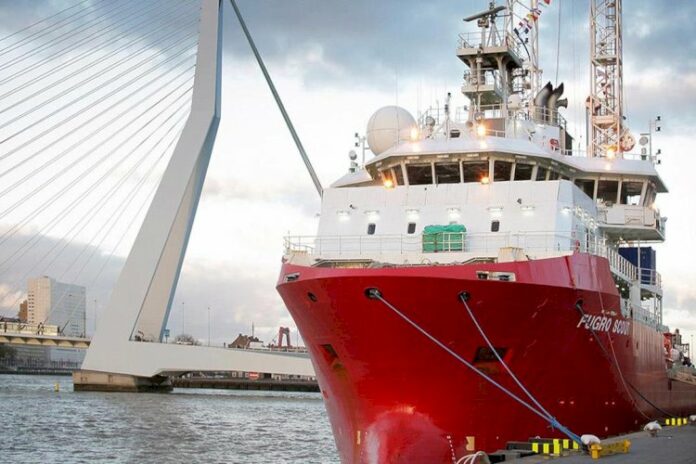
Working from its dynamically positioned (DP2) geotechnical drill ship Fugro Scout, Fugro is performing surveys and sampling using its proprietary SEACALF® Mk V DeepDrive cone penetration testing system at both sites, and will carry out testing both in situ and at the company’s world-class soils laboratories in Wallingford, UK, and Nootdorp in the Netherlands. The site characterisation work is split across two projects: the first will help Vattenfall optimise the wind turbine foundation engineering design; the second will assist Vattenfall in selecting the most efficient cable route from the onshore substation to the turbines.

Rob Anderson, Project Director of Vattenfall UK’s Norfolk Vanguard and Norfolk Boreas Projects, said:

“The Norfolk Vanguard and Norfolk Boreas projects are huge and complicated infrastructure projects requiring long-term planning and support from specialist service providers during their development and beyond. We are pleased to partner with Fugro on these important site investigation projects, who we can rely on to provide the necessary Geo-data for the next phase of engineering and procurement.”   

John ten Hoope, Fugro’s Marine Site Characterisation Director for Europe and Africa, said:

“We have been a trusted partner of Vattenfall in Europe for many years. These latest offshore wind contracts have further strengthened our working relationship, which is based not only on Fugro consistently delivering technical excellence but also on shared company values to create a safe and liveable world.”

Maersk Integrator will be back in action for Aker BP

0

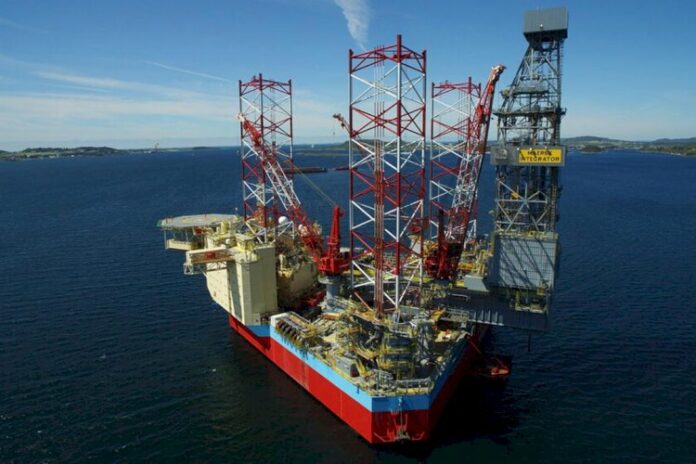
Maersk Drilling has secured an additional one-well contract from Aker BP, acting as operator of the Tambar license, for the low-emission jack-up rig Maersk Integrator.

In direct continuation of its current work scope, the rig will move to the Tambar field offshore Norway to drill the K-2B development well, with work expected to commence in February 2021. The contract has an estimated duration of 73 days and a contract value of approximately USD 18.5m, excluding integrated services provided and a potential performance bonus.

Maersk Integrator is contracted under the terms of the frame agreement Maersk Drilling entered into with Aker BP in 2017 as part of the Aker BP Jack-up Alliance which also includes Halliburton. The tripartite alliance uses a shared incentives model, thereby securing mutual commitment to collaborate and drive digital initiatives to reduce waste and deliver value. Contracts under the alliance are based on market-rate terms but add the possibility of an upside for all parties, based on actual delivery and performance.

COO Morten Kelstrup of Maersk Drilling says:

“We are delighted to confirm that Maersk Integrator will be back in action for Aker BP in early 2021. Our alliance with Aker BP and Halliburton is enabling new ways of working as one team across the value chain, and we have most recently seen the results of this in the safe and highly efficient operation delivered by Maersk Integrator in a complex campaign on the Ula field. This increased efficiency also translates into a reduction of the CO2 emissions associated with drilling, which will be further enhanced by the upgrades currently being performed on Maersk Integrator.”

Maersk Integrator is an ultra-harsh environment CJ70 XLE jack-up rig, designed for year-round operations in the North Sea. It was delivered in 2015 and is currently performing its scheduled Special Periodic Survey offshore Norway. The rig is further undergoing a series of upgrades to turn it into a hybrid, low-emission rig before expectedly moving to the Ivar Aasen field for Aker BP in August 2020.

WES awards £1.4 million for wave energy connection systems

0

Wave Energy Scotland (WES) has awarded £1.4 million to four projects developing quick connection systems to improve the installation efficiency and infrastructure of wave power devices. From the seven Stage 1 projects, four projects have come through the WES Stage Gate process to secure Stage 2 contracts in the Quick Connection Systems programme.

The European Marine Energy Centre (EMEC) is partnering on two of the successful projects, one led by Quoceant and the other by Apollo.

Quoceant’s Q-Connect is a set of modular subsystems that can be combined in different configurations to provide quick, safe, and low-cost mechanical and electrical connection and disconnection for wave and tidal energy devices. The ‘hands free’ system can cater for slack and taut moored devices on the surface or sub-sea. Led by Quoceant, the stage 2 funding of nearly £350k will see further design and analysis of the system supported by output from detailed numerical simulation of key operations. The project brings together an expert team of engineers, marine operational specialists and commercial expertise from leading marine companies including the European Marine Energy Centre (EMEC), Inyanga Maritime, Mocean, AWS Ocean Energy and SMD.

EMEC’s main role in the project is to assess compliance with electrical, mooring and environmental standards and provide third party review of functional and operational specifications. EMEC will also take part in the Technical Advisory Group and will support on the commerical side of the project, identifying potential routes to market.

Apollo’s Pull and Lock Marine (PALM) connector uses a passive locking mechanism that provides the connection and load transfer between the wave energy converter and its moorings. The core innovation is the design of a formed plug component and catcher arm. This function is purely mechanical and requires only the input of a suitable deck winch on the installation vessel.

In this project EMEC has been brought in to share environmental site data and provide third party reviews around health and safety, and marine operations.

The other two successful systems in the WES call are being designed by Blackfish Engineering Design and Nova Innovation.

Blackfish Engineering Design’s C-DART provides a remote installation system for a WEC or other floating system. The novel system allows quick connection and disconnection of a WEC to an offshore buoy, providing both a mechanical mooring and electrical connection.

Nova Innovation’s MECmate is a wet-mate connection solution specifically designed for marine energy converters (MECs). The project builds on their proven NovaCan technology currently in operation in Nova’s Shetland tidal array.

Commenting on the awards, Tim Hurst, managing director of WES said:

“This programme will develop technology that will reduce the cost of wave and tidal energy and ultimately help marine energy play a part in Scotland’s net-zero future. “Connecting and disconnecting devices quickly and remotely will increase safety in offshore operations, and the wider potential for these technologies is significant across offshore and subsea applications.”

The overall aim of the quick connection systems programme is to reduce the duration, cost and risk of offshore operation for wave energy convertors by supporting projects to design and develop quick connection and disconnection systems between devices and moorings and/or electrical systems.

The teams aim to develop their designs during the second stage of the programme, working with partners to test and model the technology prior to scale testing in the future.

Energy Minister Paul Wheelhouse said:

“This announcement represents an important step forward for Scotland’s world-leading wave energy sector. We believe that wave energy offers tremendous economic potential and can play an important role in Scotland’s response to the global climate emergency.”

Saipem: Scarabeo 8 resumes drilling activities in Norway

0

Saipem and the Norwegian operator Vår Energi have reached an agreement for the execution of 4 wells to be drilled in the Barents Sea and in the North Sea, after such activities had been originally postponed as a consequence of the market downturn.

The drilling campaign has been made possible by the temporary changes in the petroleum tax, adopted by the Norwegian parliament in June. This triggers a positive employment effect in the rig market.

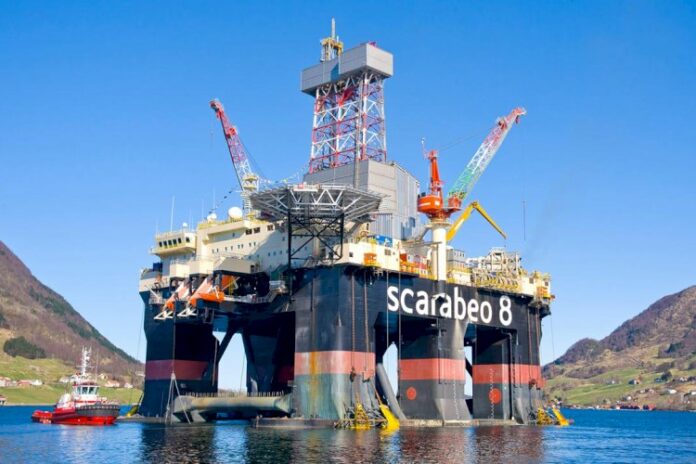
The drilling campaign, carried out by the Saipem-owned drilling rig Scarabeo 8, includes two production and one water injection well at the Goliat Field in the Barents Sea. In addition the King Prince exploration well, near the Balder/Ringhorne field in the North Sea, will be drilled.

Operations will start in the fourth quarter of 2020 and will allow the operating profile and equipment of the rig to remain active, in anticipation of the recovery of the market in the North Sea where the asset has been a key player since 2012.

Marco Toninelli, COO of the Onshore Drilling Division, said:

“Saipem expresses great satisfaction for having reached this important agreement and for resuming operations with an important customer, despite the current difficult times we are all facing”.

ClassNK releases Guidelines for Designing Cyber Security Onboard Ships

0

In the second edition of the “Guidelines for Designing Cyber Security Onboard Ships”, the control measures and the framework to implement such measures were updated to incorporate the international cyber security standards for industrial control systems IEC 62443 series and the latest recommendation on cyber resilience for new ships (Rec. No. 166) published by the International Association of Classification Societies (IACS) in May 2020. In addition, they introduced requirements for adding class notations to classification codes related to cyber security.

Based on the ClassNK Cyber Security Approach which outlines the Society’s basic approach to ensuring onboard cyber security for ships, the guidelines are a compilation of current best practices for newbuilding designs by shipyards and shipbuilding owners from the perspective of identifying computer systems that should be protected from cyber incidents and of building networks to protect them.

ClassNK will carry out cyber security verification during the design and construction stage of newbuildings based on the guidelines and issue a class notation to compliant ships in response to applications for registration inspection during manufacturing by shipyards.

Worley completes design assessment for Saitec Offshore’s floating wind turbine

0

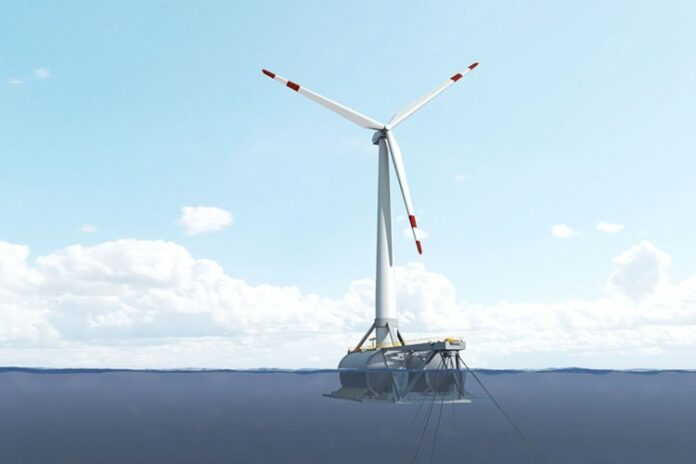
DemoSATH is a 2 MW turbine, mounted onto a concrete floating foundation. Once connected to the grid, DemoSATH is expected to supply electricity to almost 2,000 homes.

The project will test the very first floating wind foundation connected to the Spanish grid using SATH (Swinging Around Twin Hull) technology. 

The project has benefited from Worley’s extensive technical expertise, acquired through decades of project experience in the oil, gas and offshore wind industries.

Worley provided advisory services pertaining to the access, inspection and maintenance of boat landings and turret access design assessments. Worley also consulted on access materials, handling scenarios depending on the weather conditions, different human factors and Health, Safety, Security and Environment (HSSE) requirements.

David Carrascosa, Chief Technology Officer, Saitec Offshore, said:

“Maximizing availability of floating wind is one of our ultimate goals and having the opportunity to collaborate with Worley and taking advantage from their know-how and expertise serves as a stepping-stone towards a safe and optimal operation of SATH platforms.”

NKT awarded turnkey order for the on- and offshore project Shetland HVDC Link

0

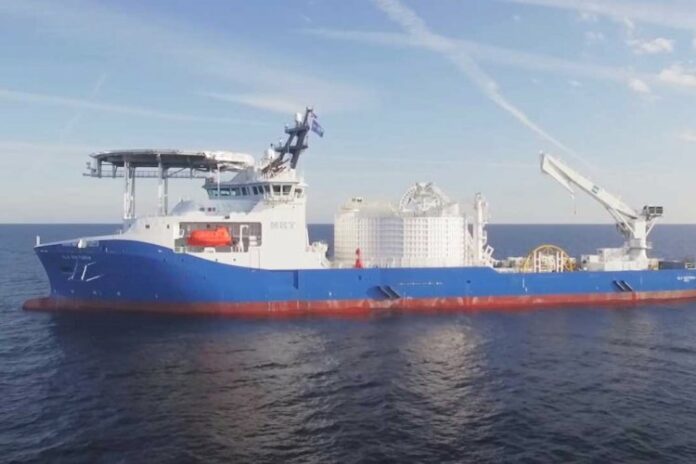
NKT has been awarded a contract of approx. EUR 235m (approx. DKK 1.75bn) by SSEN Transmission to deliver and install a high-voltage DC (direct current) interconnector to the Shetland HVDC Link project. The turnkey order comprises the manufacturing of approx. 2×260 km of 320 kV high-voltage DC on-and offshore power cables, installation by the cable-laying vessel NKT Victoria and protection of the cables.

NKT President and CEO Alexander Kara says:

“This turnkey order confirms NKT’s strong position in the market for high-voltage DC interconnectors. I am very pleased that we are selected as partner for the Shetland HVDC Link, which will provide a sustainable grid connection to Shetland and renewable energy supply from the island. With this opportunity we continue our good relationship with SSEN Transmission, with whom we also successfully completed the Caithness-Moray Link, connecting Eastern and Northern Scotland.”

The contract value of approx. EUR 235m in market prices corresponds to approx. EUR 230m (approx. DKK 1.71bn) in standard metal prices. The power cables will be manufactured in Karlskrona, Sweden, with expected production start in 2021 and with commissioning in 2024. 

The Shetland HVDC Link will be the first transmission connection between the Scottish mainland and the island of Shetland, located off the north-east coast of Scotland. The link will support Shetland’s future security of supply needs and will facilitate the connection of renewable energy generation to the main Great Britain electricity system, supporting the transition to net zero CO2 emissions. NKT further adds to the green solution by providing power cables produced in a plant running on 100% green electricity and by utilizing NKT Victoria, the industry’s most sustainable cable-laying vessel running on power from the quay-side when in harbour.  

The award of the Shetland HVDC Link project does not change the 2020 financial outlook for NKT.

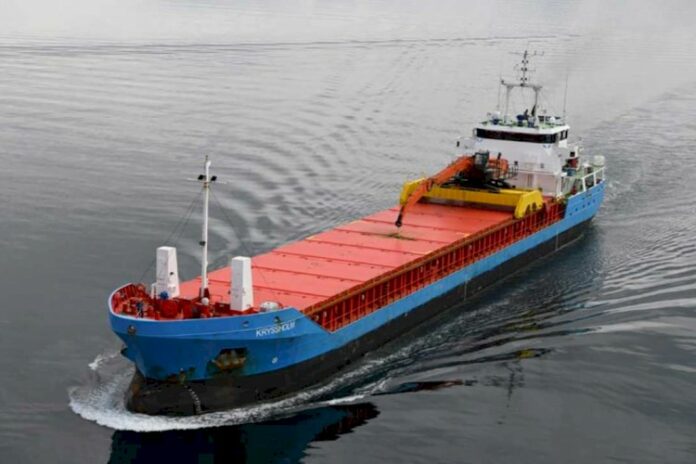
Schottel modernises Norwegian bulk carrier Kryssholm

0

Comparatively small installation effort will yield great advantages, such as increased manoeuvrability and lower environmental impact.

Nils Tore Øpstad Melingen, General Manager at vessel owner Bio Feeder AS, states:

“SCHOTTEL, with whom we have a long-standing and consistently good partnership, has again convinced us by finding an individual, custom-fit solution for the vessel. We are absolutely satisfied with the performance of the SCHOTTEL thrusters in our other vessel and thus decided the same way again. A decisive factor was also the spare parts and service supply – with SCHOTTEL as OEM, this is reliably secured in the long term.”

Two retractable rudder propellers type SRP 130 R (300 kW each) and two transverse thrusters type STT 1 (450 kW each) will be installed in addition to the existing main propulsion system of the vessel. This will maximize its manoeuvrability capabilities and its position stability will be increased enormously. In turn, this will extend the vessel’s operation profiles so that it can be used for a wider variety of future tasks.

To reduce the environmental impact, the SCHOTTEL propulsion units will be driven by electric motors powered by a hybrid grid of batteries and generators. By equipping the vessel with a state-of-the-art power management system, the required electric power is provided on demand according to operational needs.   

“Kryssholm”, built in 2011, measures an overall length of 89.9 metres and a width of 13.6 metres. The vessel will be operating for Biomar as fish feed vessel six months a year; the rest of the time it is charted to Wagle Chartering for transporting general cargo. It is considered to be the largest fish feed vessel in the world, boasting a cargo capacity of more than 3,000 tonnes. In years to come, it will be able to supply most of the coastal and ocean-based fish farms with feed.

Beyond the special task of supplying fish feed, “Kryssholm” will still be able to provide sustainable and efficient general cargo service. As the owner states, the vessel is the first in the world that is fit for such a hybrid operation. It sails under the Norwegian flag and will be classified by Rina.

Pino Spadafora, Marine Commercial Senior Director at Rina commented:

“Companies that have a deep knowledge of technology must use it for the never-ending improvement of the shipping industry. That’s why it’s important for us to be partners with Bio Feeder and SCHOTTEL in this project. Rina will carry out the review of the proposed solutions, the approval of the design, the certification of the components and the commissioning on board, applying the expertise in energy optimization and the competence in environmentally sustainable applications.”

The vessel is scheduled to be completed in the first quarter of 2021.

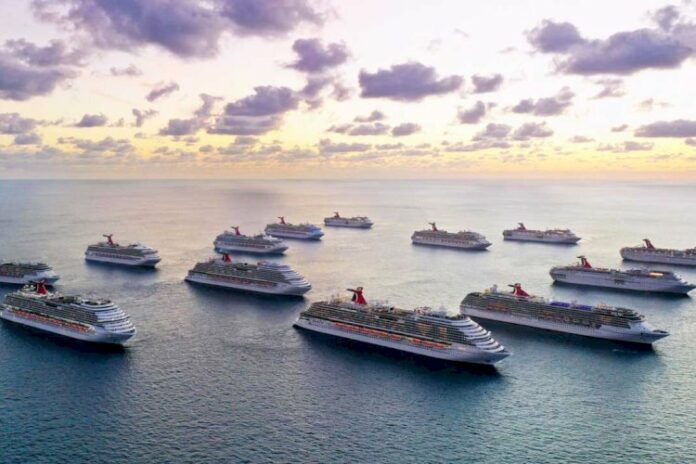
Carnival Cruise Line is in the final stages of repatriating its crew members

0

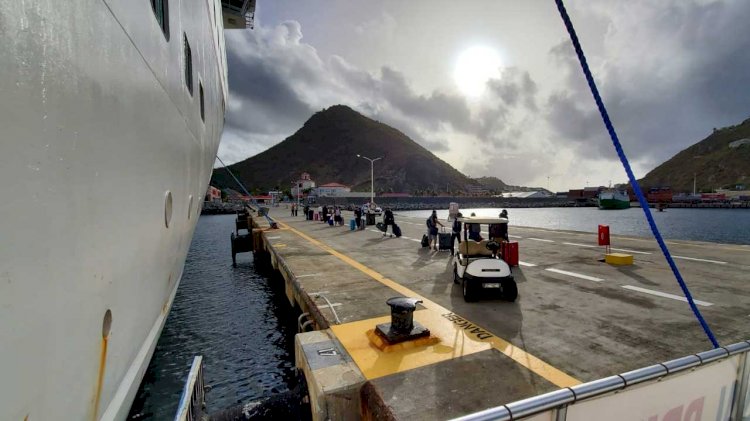
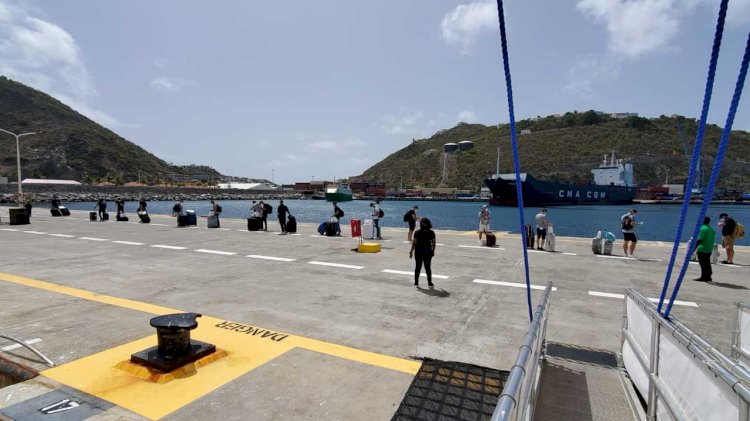
Countries across the region, including The Bahamas, Barbados, Colombia, Curacao, Mexico, Panama, St. Maarten and Nicaragua, have assisted in the repatriation effort through seaport operations as well as helping to facilitate the safe and efficient transfer of crew via chartered and commercial aircraft and as ground transportation.  

More than 26,000 crew members have been repatriated worldwide, including thousands of crew members who are citizens of more than 25 different nations throughout the Caribbean and Latin America.

By July 20, Carnival expects to have less than 400 crew members remaining on board awaiting repatriation once their home country borders are opened or travel restrictions are eased.

Christine Duffy, president of Carnival Cruise Line, said:

“Many of our partners in the Caribbean and Latin America have gone above and beyond in supporting our repatriation efforts and played a vital role in helping our team members return home safely. We offer our most sincere thanks to government officials, private transportation operators and maritime partners for their cooperation, hard work and gracious hospitality.”