-5 C
New York
Home Blog Page 813

BVS eAcademy: Maritime learning from Bureau Veritas goes global

0

Bureau Veritas (BV) has launched the BVS eAcademy to provide online learning to a global audience. The eAcademy is led by BV Solutions M&O (BVS) – the Technical Advisory, Asset Management and Assurance Solutions provider dedicated to Marine and Offshore Energy Markets.

Offering more than 25 maritime courses, BVS eAcademy was developed from BV’s own internal training academy which, since 2016, has delivered more than 20,000 training sessions to over 1,500 BV staff.

The courses are all delivered online and ‘on-demand.’ The e-learning modules allow students to set their own pace and manage their own learning experience in a carefully structured and engaging format. Suitable for maritime professionals or students looking to develop their awareness and understanding of specific areas of expertise, the courses address key technical areas related to:

  • naval architecture
  • materials, welding and non-destructive testing (NDT)
  • rules and regulations
  • classification and statutory matters.

One of the foundation courses is ‘The Introduction to Naval Architecture’, a multi-module course which, in 20 hours of training, delivers an extensive overview and detailed insight into the design and construction of ships. This course, as with many of the others, will be useful for professionals involved in ship operations, maritime regulation, ship broking, finance, insurance or other stakeholder groups and providers of ancillary services.

Paul Shrieve, President of Bureau Veritas solutions M&O, says:

“We are very excited to share our expertise and the success of our own approach to training. Our ambition is to share this knowledge with as many people as possible using the practical digital academy format to enable convenient distance learning for anyone with an internet connection.

This initiative is to about providing an education of the highest quality based on the breadth and depth of our maritime expertise and experience in a manner that is convenient, and accessible to all.”
Pew: Global fisheries need better governance to sustain key stocks

0

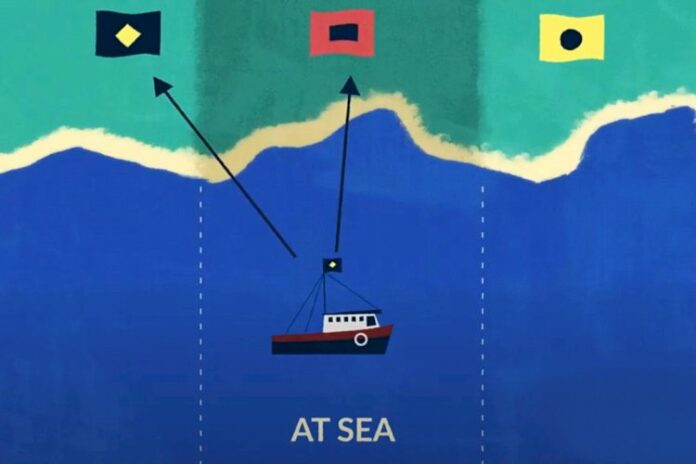
Despite the critical role that key species play in marine ecosystems and the billions of dollars they generate for the global economy, there are inadequate rules in place—particularly governing high seas fisheries—to ensure that catch levels are sustainable.

Where rules do exist, gaps in oversight allow unscrupulous operators to illegally traffic in valuable catch, and penalties are minimal if they are caught.

The Pew Charitable Trusts is working to strengthen the governance of global fisheries and bolster the health and resiliency of the world’s ocean. An improved system of rules and consequences would ensure that fisheries are sustainably managed and help governments better address illegal, unreported, and unregulated fishing.

Veson Nautical releases new Schedule Optimizer Module

0

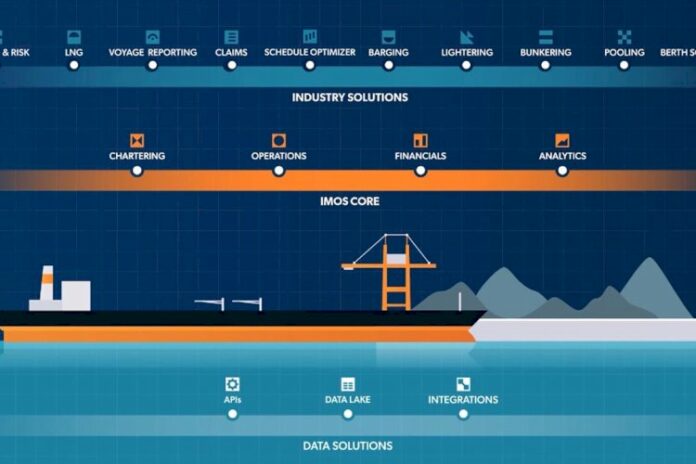
Global market leader for commercial maritime software Veson Nautical has formally launched VIP Schedule Optimizer, the newest module of its innovative cloud solution, the Veson IMOS Platform (VIP).

One of VIP’s optional Industry Solutions, Schedule Optimizer offers a proprietary scheduling algorithm which generates optimized scenarios for consideration based on two key user-prioritized target results: percent of laycans met and TCE of the voyage scenario. The module was first announced at Veson’s ONCOURSE user conference, which took place virtually last month.

Josh Luby, Product Manager at Veson Nautical, commented:

“The Veson IMOS Platform already houses all the contractual information necessary to feed into an optimization algorithm, such as CP quantities, vessel capacity and class, port restrictions, and more. The operational information that sits at the core of VIP updates in real time, which ensures the results produced by VIP Schedule Optimizer reflect the most accurate information, adjusting for any delays or adjusted performance.”

VIP Schedule Optimizer is designed to improve the historically manual process of voyage schedule optimization via an innovative digital solution. Rather than spend hours matching cargoes to vessels, schedulers with Veson’s newest module can run all information from their cargo book and open vessel position list through an algorithmic optimization engine, which returns the best potential plan for each pairing in one click – freeing up time to focus on value-added analysis and other tasks.

Eric Christofferson, CPO at Veson Nautical, commented:

“Schedulers manage multiple vessels and cargoes and are continuously balancing sensitive variables; often the best fit today is not the best fit tomorrow – or even the best fit in a few hours. VIP Schedule Optimizer adds accuracy and simplicity to the process, intelligently matching cargoes and vessels basis key parameters to target specific results – including laycan percentage and TCE – and present optimized scheduling scenarios for consideration at the push of a button.”

VIP Schedule Optimizer joins 17 other modules on the Veson IMOS Platform as an optional Industry Solution in the market-leading end-to-end system. The module is available today.

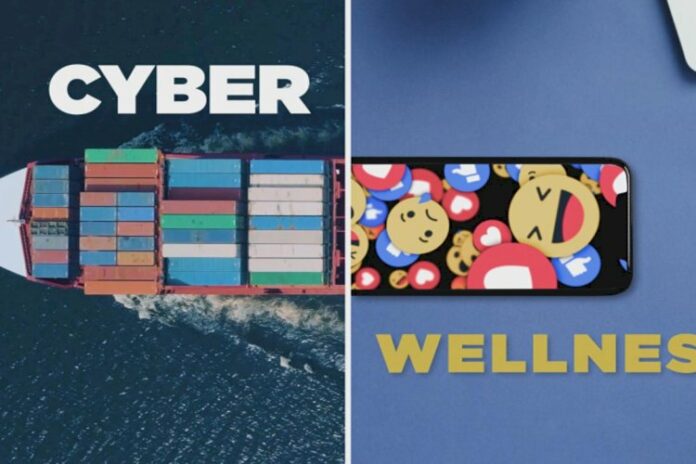
Seagull and Videotel launch cyber wellness at Sea Training Programme

0

With internet connectivity at sea growing rapidly amongst the world’s fleet, there are many advantages for seafarers being able to keep in close contact with family and friends, as well as using the web during rest periods for entertainment in the form of games, TV and access to social media.

However, it is important that seafarers carefully manage their screen time as too much can lead to increased fatigue and lower concentration levels when on duty which may adversely affect performance.

Equally, excessive use of the internet may also result in less socialising with colleagues which can heighten feelings of isolation and loneliness.

This film helps seafarers achieve a healthy balance between the virtual and real world by outlining three key principles:

1) Respect for self and others
2) Safe and responsible use
3) Managing non-work screen time

The programme follows the latest industry guidance and gives tips on how to achieve each of these principles and identifies the risks that can occur through overuse of smart phones, tablets, laptops and social media.

At a little under 8 minutes running time, it has been produced with a millennial audience in mind using production techniques designed to engage this target audience.

Raal Harris, MD of Videotel and Creative Director of Ocean Technologies Group, said:

“This new programme is very timely as internet use at sea is increasing exponentially especially during these uncertain times. Whilst connectivity is clearly a big positive, it is important that online use is managed properly and that personal devices don’t become addictive and detrimental to mental wellbeing. By following the key principles outlined in this programme, seafarers will achieve a healthy balance between their on-device and real-world interactions.”

The film demonstrates the growing cooperation of the two maritime e-learning heavyweights both now part of the Ocean Technologies Group of companies which also includes Coex, Maritime Training Services (MTS), and Tero Marine. The Group also recently acquired Marlins, the leading brand in English language testing and eLearning solutions for shipping.

The “Cyber Wellness” video is available to order and will be listed on the Seagull and Videotel training libraries.

Ports of Tallinn and Helsinki will receive up to EUR 10 million for infrastructure investments

0
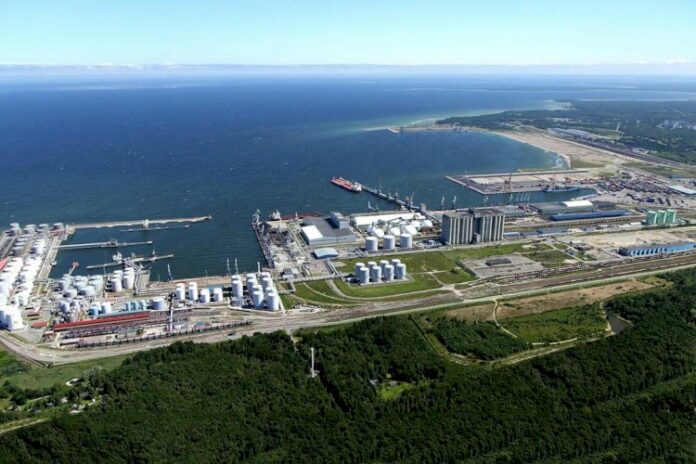
The ports of Tallinn and Helsinki will receive up to EUR 10 million of European Union support from the Connecting Europe Facility (CEF) for infrastructure investments. The total volume of planned investments is EUR 33 million.
Valdo Kalm, Chairman of the Management Board of Port of Tallinn, pointed out that TWIN PORT 4 investments are aimed at the development of both Tallinn-Helsinki as well as Muuga-Vuosaari vessel traffic and are related to the implementation of the sustainable development objectives of the Port of Tallinn. He says:
“Vessel connection between Finland and Estonia is one of the busiest vessel connections. In the Tallinn Old City Harbour, we are developing an infrastructure for servicing passengers and vehicles and are creating a high-quality public space connected to the local community. We will build new shore ramps in Muuga Harbour to divert even more of the heavy goods traffic from the Tallinn city centre to Muuga. We follow the principles of environmental sustainability in all investments.”
As the project number suggests, this is the fourth TWIN PORT project, the aim of which is to develop one of the most active shipping routes in Europe between two capitals on the shores of the Gulf of Finland. The first two TWIN PORT projects focused on the development of passenger terminals (Terminal D in Tallinn and West Terminal 2 in Helsinki), opening the Muuga-Vuosaari route, and establishment of the route for the LNG-fuelled passenger ferry MEGASTAR. The TWIN PORT 3 project, which is currently being implemented, is focused on the reduction of environmental impacts of the increasing Tallinn-Helsinki vessel traffic in ports and in their near vicinity by establishing, among others, the automatic mooring capacity and opportunities for using shore electricity both in Tallinn Old City Harbour as well as Helsinki West Harbour. With the fourth follow-up project, the ports continue making investments in both Tallinn and Helsinki ports as well as for the development of the Muuga-Vuosaari shipping route. Among others, double ramps that enable faster and more convenient embarkation and disembarkation of vehicles, especially trucks, are being built in the ports on the latter shipping route. The first storey ramp of one berth will be reconstructed and a new second storey ramp for servicing vehicles quicker and better will be built in Muuga Harbour. The Port of Tallinn intends to divert some of the heavy goods vehicles transporting goods between the two countries from Tallinn Old City Harbour to Muuga Harbour.
As a result of the project, passenger terminals running from Terminal D to the ship in Tallinn Old City Harbour are reconstructed and, among others, solar panels are installed on the roofs to use even more renewable energy in operations. In addition, the area in front of Terminal D is fully reconstructed in accordance with the development plan Masterplan 2030 covering the area of the Old City Harbour. The aim of the new solution is to reduce traffic congestion in the port area and to create more convenient solutions for arriving in and departing from the terminal on foot, by public transport as well as by car. In addition, the new solution will make it easier for passengers to travel between the two passenger terminals across the new open pedestrian bridge to be built within the context of the TWIN PORT 2 project.
The Port of Helsinki will continue to establish automatic mooring for ships and shore electricity systems to reduce noise and air pollution in the port area. In addition, digital port solutions will be upgraded and a second storey ramp will be built in the Vuosaari Harbour to service ships sailing on the Muuga-Vuosaari route.
The TWIN PORT 4 project will be implemented in 2020–2023. The largest volume investments in the project are made by the Port of Tallinn, whose estimated volume of investments is EUR 22 million. The Port of Helsinki is planning investments in the amount of EUR 11 million.

Sleipnir breaks records at the Jotun Field

0

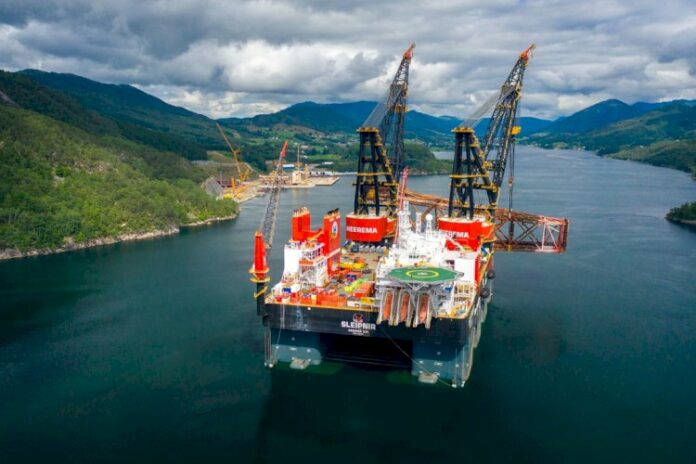
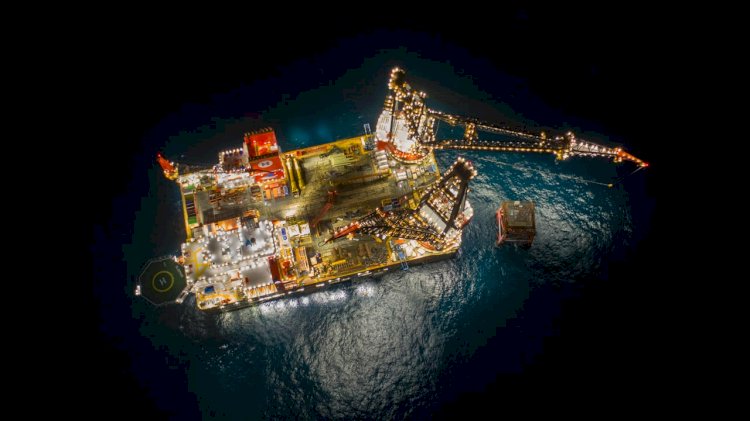
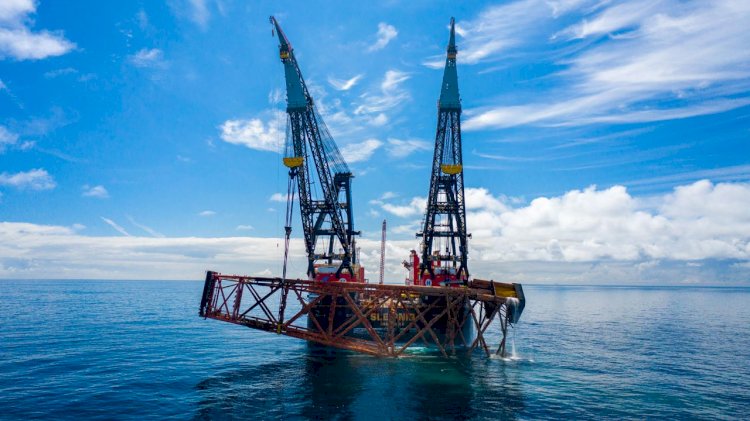
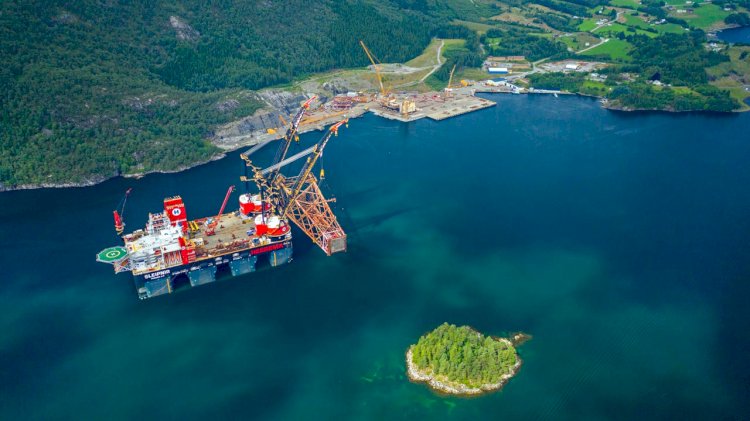
In the Norwegian North Sea, Sleipnir successfully removed the 8100 mT Jotun-B jacket for client Vår Energi. The platform was installed in 1998 by Heerema’s Thialf, who returned to the Jotun Field last year to remove the topsides and conductors – demonstrating the circularity of Heerema’s involvement in the lifecycle of these now retiring platforms.

For the jacket removal, Sleipnir arrived at the Jotun Field located 200 km west of Stavanger on Friday, July 11, and completed the project by offloading the jacket onto the quayside at the AF Miljøbase decommissioning site in Vats, Norway on Thursday, July 16.

The decommissioning work was completed safely, sustainably, and one day ahead of schedule; the result of excellent collaboration between Heerema and Vår Energi. The entire removal scope in the Jotun Field was completed in only four days.

During this project, skirt piles with diameters 2.7m and 80mm wall thickness were cut subsea, the largest ever done in this way. Additionally, Heerema fabricated a 40m long spreaderbar within 2mm tolerance for a tight, but perfect fit.

Sleipnir is the world’s most sustainable SSCV, and during the project, the vessel performed the full removal operations while running on emission-reducing LNG fuel. By using LNG, Sleipnir reduces CO2 emissions by 25%, reduces NOx emissions by 92%, reduces SOx emissions by 99%, and Particulate Materials by <99% compared to traditional Marine Gas Oil crane vessels.

Now that the Jotun-B jacket has been safely and sustainably transported to Vats, it will end its lifecycle by being recycled up to 99%.

Heerema’s CEO, Koos-Jan van Brouwershaven noted:

‘We set records to break them, and we are proud to have worked alongside our client Vår Energi to complete the Jotun-B removal with mighty Sleipnir safely, sustainably, and in the shortest possible time.’

It is essential to note that all companies involved followed the strict government guidelines to protect their workforces during the ongoing COVID-19 outbreak. For Heerema, safeguarding our employees and those who work alongside Heerema is always the top priority.

SBO clinches contract with MHI Vestas Offshore Wind

0

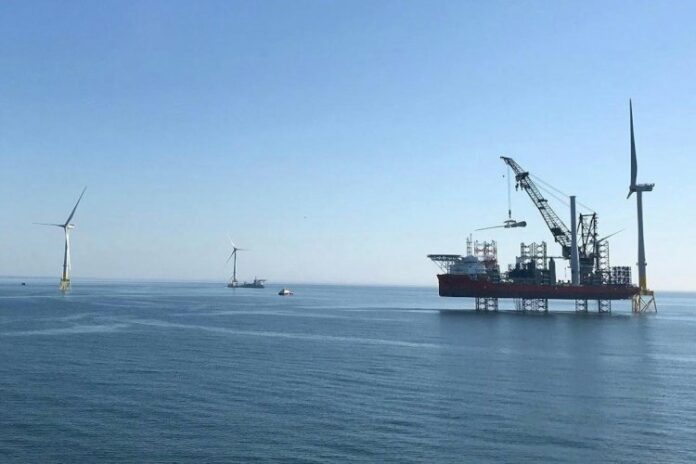
Swire Blue Ocean A/S (SBO) has been selected by MHI Vestas Offshore Wind for the transportation and installation of wind turbine generators at the Seagreen offshore windfarm in Scotland, for which SSE Renewables and Total reached FID on 3rd June 2020.

The project will be Scotland’s largest offshore windfarm upon completion, covering the energy needs of approximately one million homes. Seagreen is located 27 kilometres off the east coast of Scotland in the offshore wind market’s deepest waters utilising fixed foundations. SBO expects to commence the installation of 114 V164-10 MW turbines in the second half of 2021.

CCO, Swire Blue Ocean, Jacob Gregersen, says:

“We are delighted that MHI Vestas has selected SBO for the installation of wind turbine generators at Seagreen. We look forward to a successful collaboration with our project partners as we develop and execute this exciting project located at a complex site. Operating on difficult sites is one of our key competences.”

Head of Marine Operations & Vessel Management, MHI Vestas Offshore Wind, Dennis Mordhorst, says:

“This agreement between MHI Vestas and SBO for the Seagreen project exemplifies the strong and cooperative partnership that we have developed over the years. We look forward to continuing our close collaboration and ensuring a safe and successful execution of the project.” 

Over the course of the project, SBO will be working in close collaboration with MHI Vestas Offshore Wind, SSE Renewables and Total. SBO and its partners remain committed to serving the future development of offshore wind in Scotland and the rest of the United Kingdom. In 2019, SBO completed the installation of 84 wind turbines on the Beatrice Offshore Wind Farm, owned by SSE Renewables, CIP, and Red Rock Power.  In 2018, SBO and MHI Vestas worked together to install two V164-8.8 and nine V164-8.4 turbines on the European Offshore Wind Deployment Centre near Aberdeen.

CEO, SBO, Mikkel Gleerup, says:

“SBO is extremely proud to add a third Scottish project to our track record. Upon completion of Seagreen, offshore wind turbines installed by our vessels should be capable of meeting the energy needs of more than half of Scottish households; which is a great achievement for our company. We could not have reached this phenomenal milestone without committed project partners such as MHI Vestas and SSE, companies that have demonstrated dedication to the expansion of offshore wind in Scotland.”

Support from Brussels for the electrification of the terminals in the Port of Valencia

0

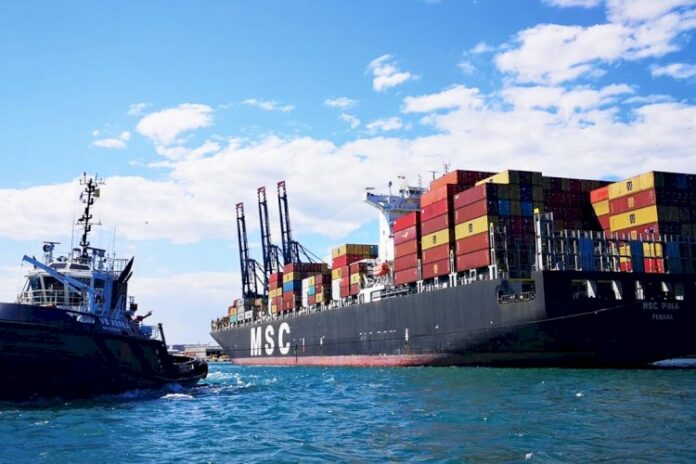
The European Commission’s Connecting Europe Facility (CEF) Committee has approved aid for two projects in the Port of Valencia that will facilitate and accelerate the possibility of connecting ships to the electricity grid.

One of the projects is a study (EALING) for the coordination of work on “electrified” European ports and the other (EALINGWorks Valenciaport) will allow the co-financing of the electrical substation of the Port of Valencia, which recently received the approval of the Generalitat. Both projects were studied and drafted by the Port Authority of Valencia (PAV) and the ValenciaPort Foundation.

The first of these, the Global EALING Project (European flagship Action for cold ironing in ports) expresses the need to accelerate efforts to tackle climate change, improve the security and performance of ports, contribute to the transition to cleaner energy for maritime transport services provided in port areas and meet the new conditions arising from the technological breakthrough towards electrification.

The project will focus on carrying out the necessary studies to meet the need to build new OPS (Onshore Power Supply) infrastructure or upgrade existing infrastructure in participating ports, in line with the implementation of land-based electricity use in TEN-T core network ports and other ports by the end of 2025, and on preparing the final documentation for the tenders, so that work can start after the completion of the necessary studies for each participating port. The project is thus in line with Directive 2014/94/EU, which in its Article 4(5) includes that inland electricity supply shall be installed as a priority in the ports of the TEN-T central network, and in other ports, by 31 December 2025 at the latest, unless there is no demand and the costs are disproportionate to the benefits, including environmental benefits.

The objective of the second of the projects, EALINGWorks Valenciaport: Preparation of the electrical grid of the Port of Valencia for Onshore Powel Supply, is to prepare the port’s electrical grid for the supply of OPS to container ships, ferries and cruise ships in the new terminals of the Port of Valencia, both the new container terminal and the new passenger terminal).

As the demand for electricity from ships at berth is quite high, the installation of OPS in a port requires the improvement of the entire electricity network. Currently, the port of Valencia receives medium voltage electricity (20kV) from three different high and medium voltage electrical substations: ST LA PUNTA, ST GRAO and ST ALAMEDA. The use of 20kV combined with the security of supply requirements in the ports means that the maximum amount of energy to be demanded from the general network for non-instantaneous use must not exceed 13 MW. The average total power demand in the port falls around 7 MW, with demands of around 10 MW being very common. Considering the current characteristics of the port’s power grid, it is not realistic to consider an OPS at the docks of the Port of Valencia, unless the power grid is improved.

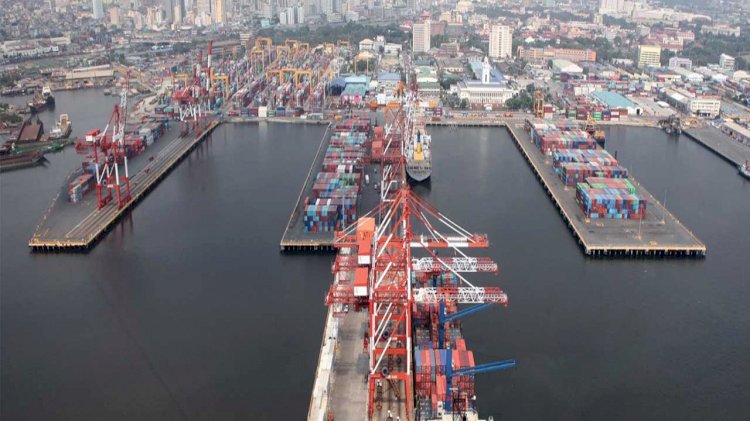
PPA digitizes personnel recruitment, system now online

0

The ORP is also in response to the ‘new normal’ being implemented by the government to help prevent the spread of the dreaded Coronavirus Disease 2019 by reducing, if not eliminating, face-to-face transactions—one of the single biggest contributors in the spread of the virus.

It is also in accordance with the directive of the Civil Service Commission to formulate and adopt guidelines allowing for online recruitment and selection processes.

PPA General Manager Jay Daniel R. Santiago said that the ORP will pave the way for the hiring of personnel needed to plug the additional manpower requirements of the PPA while the country is still under the state of public health emergency due to COVID-19.

Santiago said:

“The ORP is a solution and productivity tool serving as an online platform in facilitating the submission of employment applications both for internal and external applicants of PPA. The system likewise provides for online competency assessment, video conferencing for interviews, and deliberations by the PPA Promotion and Selection Board.”

PPA Human Resource Management Department Manager Mark Jon S. Palomar, for his part, said the portal is linked to the agency’s Human Resource Information System (HRIS) recruitment model.

Palomar added:

“HRIS automates various recruitment, selection and placement processes from the publication of vacant positions, evaluation of credentials, scheduling of exam/interview, shortlisting of applicants, and generation of relevant HR database, among others.”

Photo: PPA

The ORP also complements the Online PPA Examination which was implemented in April of this year in order not to disrupt the process amid the COVID-19 pandemic.

The PPA has approximately 3,500 plantilla positions and some 1,700 are already occupied. More than a thousand positions shall be filled using the ORP in order to provide vital personnel in all of PPA’s Port Management Offices and Terminal Management Offices as the agency has been undermanned for a sometime already.

It is also expected to help the government in its employment drive after massive unemployment and lay-offs have been experienced by Filipinos here and abroad because of the pandemic.

Santiago said:

“We are doing our best to provide Filipinos equal opportunities to land a government position amid this pandemic. If they meet the standard qualification for the job as well as other regulatory and statutory requirements to land the position, they will be hired by the agency.”

Commissioned by PPA in 2019, Cosmotech Philippines designed and developed the system in such a way that all interested parties, including incumbent PPA personnel in all corners of the country and abroad can access the portal.

To Register, visit http://jobs.ppa.com.ph.

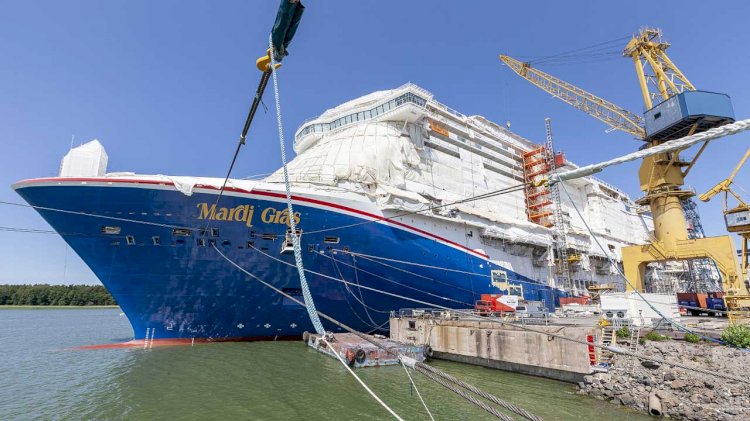
Mardi Gras construction progressing at Finland’s Meyer Turku Shipyard

0

Workers have installed nearly 800 feet of suspended track for BOLT, the first rollercoaster at sea, that will encircle upper decks and offer guests an exhilarating ride with dips and drops with breathtaking ocean views 187 feet above the water line.

All of the ship’s more than 2,600 staterooms, including 180 suites across 11 different categories, have been installed as well, with interior outfitters putting the finishing touches on these unique accommodations.

Mardi Gras’ six themed zones are also taking shape. These unique areas will include dining, beverage and entertainment options, including restaurants from Emeril Lagasse, Guy Fieri and Shaquille O’Neal.

Encompassing 21 decks, Mardi Gras will offer a groundbreaking new layout highlighted by Grand Central, a massive atrium with three-deck-high windows overlooking the sea.

Mardi Gras is scheduled to enter service Feb. 6, 2021, from Port Canaveral’s new Terminal 3 which has been specifically constructed to accommodate Mardi Gras and its LNG propulsion system.  Itineraries through April 2023 are open for sale at carnival.com, 1-800-CARNIVAL, or travel agents worldwide.