4.5 C
New York
Home Blog Page 80

Vår Energi discovers oil reserves in the Zagato prospect

0

Wildcat well 7122/8-3 S is the eleventh in production licence 229 in the Barents Sea. It was awarded in 1997 in a round of awards called the Barents Sea Project -97. The well was drilled by the COSL Prospector rig.

Preliminary estimates place the size of the discovery between 2.4 – 6.8 million standard cubic metres (Sm3) of recoverable oil equivalent (o.e.). This corresponds to between 15 and 43 million barrels of recoverable o.e.

The licensees will assess the discovery together with other discoveries and prospects in the vicinity, with a view towards a potential development tied back to existing infrastructure on the Goliat field.

Vår Energi is active in the area surrounding Goliat and plans to conduct further exploration. The next scheduled well for the rig is 7122/7-8, “Goliat nord”.

The well’s primary exploration target was to prove petroleum in Middle Triassic reservoir rocks in the Kobbe Formation. The well’s secondary exploration target was to prove petroleum in Middle/Lower Jurassic reservoir rocks in the Realgrunnen sub-group.

In the primary exploration target, well 7122/8-3 S encountered oil columns totalling 72 metres in the Kobbe Formation, distributed over three reservoir zones. The reservoir quality varies from good in the upper part to moderate in the lower part. The oil/water contact was not encountered.

In the secondary exploration target, the well encountered a 3-metre oil column in the Tubåen Formation, with a total thickness of 20 metres and very good reservoir quality. The oil/water contact was encountered 1427 metres below sea level.

In addition, a 2-metre oil column was proven in the Klappmyss Formation in a sandstone layer with moderate reservoir quality.

The well was not formation-tested, but extensive data acquisition and sampling have been carried out. The well was drilled to a vertical depth of 2542 metres below sea level and was terminated in the Klappmyss Formation in the Lower Triassic.

Water depth at the site is 410 metres. The well has been temporarily plugged and abandoned.

Damen Naval and Saab partner to deliver PES Frigate for Colombian Navy

0

This partnership combines Damen Naval’s design and engineering expertise with Saab’s advanced defence systems to deliver a naval solution tailored to Colombia’s operational requirements.

The PES frigate is based on Damen Naval’s SIGMA 10514 series. Damen Naval will provide design, engineering, technical support, and materials to enable Colombia’s leading shipyard, COTECMAR, to construct a frigate locally.

Saab will equip the frigate with its advanced 9LV Combat Management System and 9LV Fire Control System, alongside sensors and radar systems, including the Ceros 200 radar, EOS 500 electro-optical fire control director, Sea Giraffe 4A radars, among other systems.

This is the first SIGMA frigate to feature Saab technology. Damen Naval designs combat-neutral platforms that can be tailored to diverse operational requirements.

“This collaboration with Saab is a prime example of how North European cooperation can drive naval innovation and meet the evolving needs of international clients,” says Roland Briene, Damen Naval Managing Director. 

Carl-Johan Bergholm, Saab Senior Vice President and Head of Business Area Surveillance, adds: “The PES programme is state-of-the-art, and we are honoured that the Colombian Navy selected us to supply their combat system. Our partnership with Damen Naval marks an important collaboration for the naval domain.”

This partnership between Saab and Damen Naval shows the shared commitment of Sweden and the Netherlands to advancing defence innovation and global security. The PES frigate is scheduled for delivery to the Colombian Navy in 2030. 

Four new major Japanese maritime organizations join Digital Twin Project

0

Four new companies—Kawasaki Kisen Kaisha, Ltd. (“K” LINE), Kyokuyo Shipyard Corporation, Mitsui E&S Shipbuilding Co., Ltd., and Sumitomo Heavy Industries Marine&Engineering—have joined the collaborative cross-industry Digital Twin Project.

This expansion marks phase three of the Digital Twin Project, which aims to create a secure data-sharing framework between shipyards and shipowners to advance the use of digital twins throughout a ship’s lifecycle, contributing to improved operational efficiency and safety. The participants will engage in detailed discussions around the feasibility of increased data sharing between stakeholders, with the aim of tackling some of the hurdles around sharing sensitive design and operational data.

Through close collaboration between a diverse range of stakeholders, the Project aims to develop a new platform to allow the 3D models created during the ship design stage to be shared in a secure, access-controlled digital environment. It can also allow operational data to be fed back to shipyards, providing invaluable insights. This could create a new revenue stream for shipyards and solution providers, as well as mechanisms to share benefits between stakeholders.

The Digital Twin Project already includes some of the largest shipowners and shipbuilders in the world. The four new companies will join the original members, including shipowners Nippon Yusen Kabushiki Kaisha (NYK), NYK Group company MTI Co. Ltd. (“MTI”), Mitsui O.S.K. Lines, Ltd. (MOL), Marubeni Corporation (Marubeni) and Marubeni Group company MMSL Japan Ltd., shipbuilders Imabari Shipbuilding, Japan Marine United Corporation, and Usuki Shipyard, software and data services provider NAPA, and classification society ClassNK.

Mr. Yoshimichi Sasaki, General Manager, Digital Transformation Center at ClassNK, commented: “We are delighted to welcome new participants to this major Digital Twin Project. We now have people from across a diverse range of maritime business areas and roles offering their valuable perspectives. With “K” LINE, NYK/MTI, MOL, and Marubeni/MMSL Japan involved, we also have representation from many prominent Japanese shipowners, highlighting the significance of Digital Twin technology and the strength of the collaborative project.” 

Naoki Mizutani, Executive Vice President for NAPA Studios at NAPA, added: “These renowned new additions to the Digital Twin Project also mark a significant milestone for NAPA Studios; the Project forms a prominent part of the NAPA Studios initiative to bring together shipowners, charterers, shipyards, classification societies, financiers and insurers in joint projects. These efforts will provide more clarity on the practical implications of deploying new technologies or contracts and help develop the new technologies and operational frameworks needed for the transition to net-zero. We are grateful to all the participants for their engagement and look forward to the next collaborative developments.”

Akihiko Masutani, Director and Chief General Manager of the Business & Technical Division at Sumitomo Heavy Industries Marine&Engineering, said: “We take great pride in our company’s participation in such pioneering initiatives. Through this endeavor, we aspire to create innovation by integrating existing maritime technologies, such as wind propulsion, with cutting-edge ICT and digitalization techniques, with the goal of making a meaningful contribution to the industry.”

When used effectively, Digital Twins can offer unparalleled insights into a ship’s unique design profile and characteristics to inform decarbonization decisions. As a result, they can be a powerful tool supporting the shipping industry’s energy transition.

Intelligent drones increase offshore wind efficiency

0

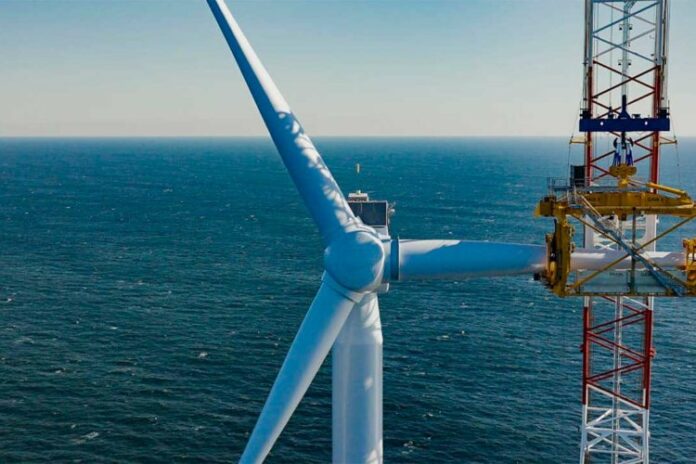
AI-equipped drones can work independently, find their required flight path and avoid obstacles. Some drones are piloted by a nearby pilot, while others are piloted by a remote-control center, which can even be located in another country. 

Data and images collected by inspection drones are merged and analysed by machine learning algorithms to detect cracks, erosion, dirt, and other anomalies. The data is stored in the cloud, categorised by severity, compared with historical data and finally reports are generated for maintenance teams. This enables proactive maintenance planning, which can prevent major repairs. 

By contributing technical expertise, Vattenfall is supporting the AIRTuB-ROMI initiative in the Netherlands, to improve offshore wind maintenance using in-blade monitoring and drone-crawler robots. The project, supported by the Dutch Ministry of Economic Affairs and an industry-academic collaboration, will evaluate three different sensor technologies in turbine blades. 

When the sensors detect an anomaly, AI algorithms help to predict the potential damage and its location. A drone-crawler is automatically deployed from its offshore docking station within the wind farm to perform a further inspection. 

Tomas Jansen, product manager O&M Automation for Vattenfall Offshore Wind in Germany, explains: “After take-off of the drone, it will autonomously capture high-resolution images of the blades from different angles. The drone will then land on the blade to conduct an ultrasonic scan of the potentially damaged area, giving us complete information of the structural health of the blade. With this detailed information, the maintenance team can initiate repair planning as needed.”

Thanks to advanced sensors and AI-powered software, cargo drones can fly safely in complex offshore environments, avoid obstacles and adapt to changing weather conditions. They can transport materials and equipment from a service operation vessel (SOV) to wind turbines, reducing the need for vessels to go back and forth. The use of an unmanned air vessel (UAV) speeds up the delivery of materials, saves time, and reduces CO2 emissions by eliminating the need for a crew transfer vessel (CTV). 

This innovation was recently tested in Vattenfall’s offshore wind farms DanTysk and Sandbank in the German North Sea. A collaboration between offshore service provider Ampelmann, Dutch Applied Scientific Research Institute TNO, and Vattenfall demonstrated the use of cargo drones in the offshore environment. 

Roddy Douglas, automation engineer at Vattenfall Offshore Wind in the UK, was involved in the test: “The innovation we showcased included using UAVs for rapid deliveries and pre-loading spare parts and tools to the turbine’s nacelle. This is especially beneficial when a part is needed unexpectedly, allowing the on-site team to work efficiently, without waiting for a ship, minimising downtime and revenue loss at wind turbine generators. For sites closer to the coast, cargo can be transported directly from the service center, where operators use automated drones to deliver essential cargo even in challenging weather conditions.”

Uncrewed vessels and remote-controlled drones enhance employee safety during inspections at sea and ensure environmentally friendly operations.

During installation works at offshore wind farm Hollandse Kust Zuid in the Dutch North Sea, Vattenfall deployed 12-meter-long uncrewed surface vessel Blue Essence, equipped with an electrical remotely operated vehicle (eROV) for inspections and seabed mapping. Developed in close collaboration with partner Fugro, this innovation reduces the reliance on crewed vessels, speeds up inspections and minimises environmental impact. The uncrewed vessel with eROV features advanced sensors, sonar, and high-definition cameras that provide real-time data on cable and foundation conditions. 

Both the uncrewed vessel and eROV can operate 24/7, withstand wind speeds of up to 38 kilometers per hour (wind force 5), and handle wave heights of up to one and a half meters. They are remotely operated from Fugro’s control rooms in Aberdeen, Scotland. As offshore wind projects move further offshore, the advantages of remote-controlled vessels become increasingly significant. Initial operations have shown that uncrewed vessels emit approximately 95 per cent less CO2 compared to traditional survey vessels. Additionally, their smaller size reduces the impact on marine life.

Damen Air Cavity System fuel efficiency capabilities verified by Lloyd’s Register

0

DACS’ efficiency boosting potential had earlier been confirmed by classification society RINA. 

DACS is the result of a collaboration between Damen and the Delft University of Technology (TU Delft). The air cavity system maintains a thin layer of air over the flat bottom of the vessel’s hull, lowering resistance in the water and, thereby, fuel consumption.

Last year, Damen installed the DACS system to Amisco’s cargo vessel Danita in Estonia. During Danita’s sea trials, Damen collected a range of data on the vessel’s performance. Independent verification of this information by RINA confirmed that DACS enabled the vessel to make significant savings in fuel consumption (6-7%). 

To add weight to the findings, Damen wanted a second opinion. Its next step was to provide Lloyd’s Register with the same data. With this, Lloyd’s performed a further independent verification, applying its own methodologies.

Lloyd’s findings were similar to those of RINA, demonstrating that, at the vessel’s typical operating speeds, DACS enabled a reduction in fuel consumption by between 7-8%. 

With this increased fuel efficiency comes a considerable reduction in emissions. This paves the way for more straightforward compliance with environmentally focused regulations such as the EU Emissions Trading System (EU ETS), Carbon Intensity Indicator (CII) and Energy Efficiency Existing Ship Index (EEXI). 

Marcel Onink, Managing Director of Damen Green Solution said, “We’re very pleased with this second, independent verification from Lloyd’s Register. The results confirm our expectations and back up the verification earlier undertaken by RINA. Such findings highlight the potential for air lubrication to increase vessel efficiency and reduce environmental impact.”

Rutger van Dam, responsible for business development at Damen Green Solutions added, “With these considerable savings in fuel, DACS offers vessel owners a reduced emissions operation with a rapid return on investment within approximately three years of installation.”

Maarten Veenstra, Business Development Manager at Lloyd’s Register, said, “In having DACS verified by more than one classification society, Damen offers the market increased confidence in the potential of air lubrication. Given the current challenges posed to maritime operators by a range of environmentally focused regulations, there is a clear argument to be made for investing in energy saving technologies with proven credentials.” 

WinGD debuts X‑DF‑M platform with biggest ever methanol-fuelled engine

0

The ten-cylinder, 92 bore X-DF-M engine is destined for a 16,000 TEU container ship and is the biggest methanol-fuelled engine built to date.

There are 56 X-DF-M engines on order across bore sizes ranging from 52 to 92, in similar cylinder configurations and engine rating fields as diesel-fuelled X-Engines. The addition of methanol capability to WinGD’s engine line-up further extends the decarbonisation options available to deep-sea ship operators, which include the long-established X-DF LNG-fuelled engine platform and a new ammonia-fuelled
X-DF-A platform.

WinGD CEO Dominik Schneiter said: “Production of sustainable, renewable fuels of all types continues to advance, but long-term availability and cost remain uncertain. Ship operators can place their trust in WinGD to deliver reliable, efficient engine designs that enable decarbonisation across all candidate fuels. As interest in methanol and regulatory clarity increases, we anticipate the X-DF-M platform will become a key contributor to reducing greenhouse gas emissions from global shipping.”

The milestone was marked by a delivery ceremony held at engine builder CMD in Shanghai, attended by senior executives from WinGD, CMD and China State Shipbuilding Corporation as well as local government officials and global customers and partners. Eight classification societies were also present for a signing of the X-DF-M type approval certification, which assures that the engine can be built to WinGD’s design by all engine builders.

A spokesperson for CMD said: “It is a big responsibility to build the first engine of any type, especially one for an emerging fuel with the potential of methanol. Our debut methanol-fuelled engine performed as expected across all tests and we are looking forward to offering the X-DF-M platform as a new option for shipbuilders.”

As previously reported, the first X-DF-M engine will be installed on the fourth vessel of a new series. The previous three engines were fitted with 10X92-B engines which will be converted to 10X92DF-M engines once the first, newbuild methanol engine is commissioned. Dual-fuel methanol conversion packages will be available for all WinGD single-fuel and dual-fuel engines.

Wärtsilä inks lifecycle agreement with Middle East’s largest dredger fleet operator

0

The agreement represents a significant step forward in strengthening the partnership between Wärtsilä and NMDC. It will focus on optimising the availability and operational efficiency of NMDC’s dredging fleet. The order was booked by Wärtsilä in Q1 2025.

This comprehensive agreement covers seven of NMDC’s dredgers, with the potential to expand the scope to additional vessels in the future. The scope includes a tailor-made maintenance programme for the engine and propulsion equipment onboard the vessels, as well as digital solutions and performance guarantees. These are all aimed at increasing fleet availability and optimising maintenance costs.

With demand for its services increasing, the availability of its vessels is essential to NMDC’s operations. By leveraging Wärtsilä’s cutting-edge digital tools, such as Expert Insight, delivered through Wärtsilä’s global Expertise Centres, NMDC is expected to significantly reduce planned downtime, leading to increased revenues. According to estimations made, the additional uptime made possible by the agreement may increase the operational and charter/client schedule flexibility, and provide the potential for additional earnings up to 3,000,000 EUR. Similarly, the contract includes Dynamic Maintenance Planning, which reduces maintenance costs by 14%.

“Increasing availability and reducing downtime of our vessels is a priority for our company. That’s why this new agreement with Wärtsilä serves as a cornerstone in our efforts to advance reliable and sustainable operations within the Middle East,” says Peter Marvin, Chief Technical & Resource Pool Officer at NMDC Group. “We have a long-standing history with Wärtsilä, and we value their ongoing support in maximising our fleet’s potential so that we can continue to meet customer objectives in an ever-changing environment.”

“NMDC’s fleet operates in highly demanding environments, where uptime and vessel flexibility are critical. Our tailored digital solutions and expert operational support will ensure that their vessels are not only more reliable but also operate at peak efficiency throughout the contract duration, in turn, saving fuel and lowering emissions,” comments Henrik Wilhelms, Director, Agreement Sales at Wärtsilä. “This agreement is a testament to Wärtsilä’s commitment to delivering long-term value and enabling our customers to meet their growing operational challenges.”

Deltamarin partners with Wallenius Wilhelmsen on upsized Shaper Class vessels

0

The contract includes six of the fourteen vessels currently on order with Jinling Shipyard, which will be increased in size from 9,300 to approximately 12,100 CEUs, making them the largest PCTCs ever to sail.

Deltamarin will provide the shipyard with comprehensive design services, covering both basic and detail design, with a focus on optimizing fuel efficiency, safety and sustainability. This new contract extends our ongoing collaboration with Wallenius Wilhelmsen on the Shaper Class, allowing us to further enhance the operational performance of the six upsized units.

The upsized vessels will share many of the integral design features of the Shaper Class, including dual-fuel engines capable of running on methanol, which will significantly reduce fuel consumption and emissions compared to the current fleet.

Integral to Wallenius Wilhelmsen’s net-zero end-to-end service, these upsized vessels will address customer demand for greener transport by minimizing emissions at every stage of vehicle transport. Additionally, with enhanced ramp strength and high-and-heavy cargo capacity, they are designed to meet the future needs of global logistics.

The first Shaper Class vessels are scheduled for delivery in the second half of 2026, with the larger, upsized versions due for delivery in late 2027.

REV Ocean selects V.Ships Norway as ship management partner

0

The vessel, which is currently at Vard Søviknes, Norway, will be equipped to conduct research across the entire marine ecosystem, using advanced technology systems developed by world-leading knowledge clusters in Norway. It will be used by scientists and other experts for innovative research expeditions to find solutions to issues such as the impact of CO2 emissions, plastic pollution, and unsustainable fishing on the ocean.

The vessel is constructed to run on diesel electric engines, with an additional 3MW lithium-ion battery pack for peak shaving, ensuring optimum efficiency onboard.

Dag Christoffersen, Managing Director of V.Ships Norway, said: “REV Ocean’s decision to build the biggest vessel of its kind in the world, featuring the world’s most advanced technology and scientific equipment, necessitates ship management support from a partner with unmatched capacity to deliver.

“In addition to V.’s global reach and service offering, REV Ocean will benefit from the local expertise of our Norway office, which has strong ties with the Kjell Inge Røkke group of companies, and extensive knowledge of working within the guidelines set out by the Norwegian Maritime Authority.”

Per Bjørnsen, CEO of V.Ships Leisure, added: “We are delighted to welcome the REV Ocean – which in addition to being a research vessel is the world’s largest yacht – to our fleet at a time where we see an increased demand for our yacht management services. Many owners of very large yachts in private use are looking for a global partner combining the safety culture, operating platform, global reach and scale of V. with our dedicated yacht management team providing bespoke services.

“This exciting new partnership with REV Ocean will allow us to leverage V.’s unique range of expertise and experience, and our powerful digital ship management platform, ShipSure, to contribute to vital scientific research. In doing so, we will maximise our positive impact on a vessel that is at the cutting edge of green ship technology.”

Nina Jensen, CEO of REV Ocean, commented: “At REV Ocean, our mission is to make a true difference in improving the state of our ocean. To achieve this, we are establishing partnerships with other leading organisations with similar goals and values, and especially those that hold a commitment to sustainability and the future health of our planet.

“V.’s unrivalled experience across a range of maritime sectors means they are well equipped to handle the need for versatility and specialisation that will be required for REV Ocean. Their excellent track record in expedition cruises, including those operating in polar waters, will ensure that our vessel, and the crew onboard, will be able to tackle the most demanding of environments. At the same time, their digital platform will play an integral role in ensuring that all operations are efficient and optimised, with the benefit of 24/7 real-time data which will help to inform decisions and actions on each expedition.

“Together we will make sure that the ocean continues to thrive and can provide oxygen, food, and jobs for mankind for generations to come. After all, there is no alternative.”

An independent science and innovation board will evaluate and recommend research projects for REV Ocean to pursue and ensure the highest level of scientific standards and research quality onboard. The vessel has the capacity to take 106 people, of which around 50-65 will be crew depending on the planned operations. The ship features state-of-the-art scientific equipment, such as echo sounders and sonars to study fish and other marine species, an advanced eco-harvesting trawl sampling system for selective live catch of biomass and pelagic samples, a submarine, an advanced ROV, and multiple on-board laboratories.

REV Ocean will sail from Vard Søviknes on 2 March 2025 to Damen Shiprepair in Vlissingen, the Netherlands for final yacht outfitting work, before being put into full operation from the beginning of 2027. V. commenced management of the vessel from December 2024, and amongst the organisation’s first tasks was the sourcing of experienced crew for this initial voyage.

V. will manage the vessel during outfitting in the Netherlands, as well as when the ship enters full operation at the beginning of 2027.

Inmarsat appoints Pulsar International as first NexusWave reseller partner in the Mediterranean

0

Inmarsat Maritime, a Viasat company, has appointed Pulsar International as the first reseller partner for NexusWave in the Mediterranean market. 

The agreement will also enable Pulsar to act as a local installation partner in the region. Pulsar will be offering its customers round-the-clock first-line support in local language. Pulsar has already secured commitments to deploy NexusWave to several Mediterranean-based operators including Greek fleet owners Spring Marine, Roswell Tankers, and Newport.

Inmarsat’s NexusWave is underpinned by a unique multi-dimensional bonded network that brings together Global Xpress (GX) Ka-band, low-Earth orbit (LEO), coastal LTE, and L-band services for fast, resilient, always-on connectivity with unlimited data and global coverage. As a fully managed service, it delivers consistent performance levels, while offering complete transparency into total cost of ownership – with no throttling, or unexpected charges.

Konstantinos Zacharias, ICT Officer, Spring Marine, said: “In modern shipping, connectivity plays a vital role in streamlining processes and meeting the diverse needs of stakeholders. NexusWave stands out as a fully managed service that seamlessly integrates the strengths of multiple networks, eliminating administrative burdens, helping control costs, and delivering consistent quality. The unified approach enhances efficiency and reliability across the board.”

Antonis Alogakos, IT Officer, Roswell Tankers, said: “The increasing complexity of connectivity demands in modern maritime operations require multi-orbit networks that work in harmony, such as Inmarsat’s NexusWave – whose orchestration of various networks provides the speed, reliability, and global coverage that ship owners, managers and operators increasingly rely on.”

While the rapid development of maritime connectivity presents unprecedented opportunities for shipping companies to enhance operational efficiency, safety, and crew welfare, it also raises cyber-security concerns as the number of attack surfaces increases. NexusWave addresses this issue through its secure-by-design infrastructure.

Theofano Somaripa, CIO, Newport, commented: “With vessels becoming more connected, the risk of costly cyber-attacks grows significantly, making network security a top priority. This was a key factor in our decision to choose NexusWave, which offers enterprise-grade security, including encrypted data, segregated networks, and the option to include advanced value-added security services.”

Robert Sakker, President and CEO, Pulsar International, commented: “Since its launch in 2024, NexusWave has found a ready audience in a maritime industry that is increasingly reliant on high-speed, always-on connectivity with robust cyber security. We are looking forward to strengthening our relationship with Inmarsat as we bring the power of bonded networks to shipping companies around the world.”

Gert-Jan Panken, Vice President Sales, Inmarsat Maritime, said: “As a significant part of Inmarsat’s strategy for growth, our first partner agreement for NexusWave in the Mediterranean will make the benefits of bonded connectivity readily available in this crucial ship-owning market. We look forward to working with Pulsar International to serve clients across the region.”