-8.5 C
New York
Home Blog Page 809

Damen to deliver two RSD Tugs 2513 for Port of Antwerp

0

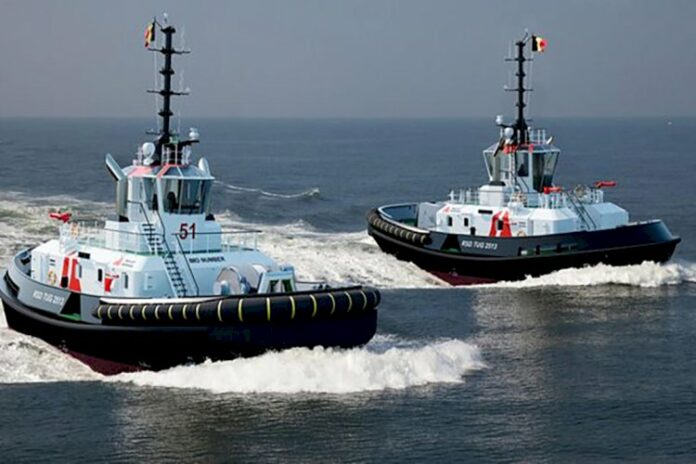
On 8th of July, Damen Shipyards Group was awarded a contract by the Port of Antwerp to deliver two RSD Tugs 2513 after an intensive tender process. After a legal stand-still period of fifteen days, the award became final. The vessels are part of Damen’s Next Generation Tugs series and are built with the latest technologies in regards to safety, sustainability, efficiency and reliability.

The Next Generation Tugs combine elements of Damen’s proven track record in tugs with state-of-the-art innovations leading towards a most efficient vessel; the RSD Tug 2513 produces considerably lower emissions than an equivalent tug. Examples include Damen Safety Glass – shatterproof glazing similar to that used in cars – and a highly ergonomic human machine interface (HMI).

The RSD Tug 2513 is a dedicated ship-handling tug both compact and – with 70 tonnes bollard pull – powerful. It has two bows, which means optimal performance in both bow and stern assisting operations. As a result of the always bow first approach, Damen has been able to incorporate a higher freeboard than would usually be possible on a tug of this size – meaning no water on deck, improved seakeeping and increased safety.

Both Damen and the Port of Antwerp have a focus on sustainability and innovation. These ambitions became apparent in this tender. For example, the Port of Antwerp selected to have the vessels fitted with Damen’s in-house developed, fully certified Marine NOX reduction system, making them IMO Tier III compliant.

The Port of Antwerp has also selected to have the vessels outfitted with FiFi 1 firefighting capabilities. Damen offers numerous options for its vessels; in this way the shipbuilder is able to deliver standardised, proven vessels, tailored to the individual requirements of its clients.

Celine Audenaerdt, technical manager Port of Antwerp, said:

“We attach great importance to creating a sustainable port. In our role as operators we wish to set a good example by investing in greening our fleet. We are systematically replacing our tugs by modern type, more environmentally friendly tugs. Buying the two Damen tugs fits in this framework. The new tugs have more fuel-efficient engines and a more efficient propulsion, which significantly reduces fuel consumption. In addition, we are developing two new prototypes for hydrogen and methanol propulsion.”

Vincent Maes Damen area sales manager Benelux says:

“We are very proud to deliver the first Damen tugs – and also the first azimuth driven tugs – to the Port of Antwerp to match their sustainable and operational ambitions. I must also congratulate to Port of Antwerp team with their continuous focus on lowering emissions and their courage to invest in the latest technologies. It is a pleasure to work with such a Customer.”
ADNOC announces new Chinese partner in offshore concessions

0

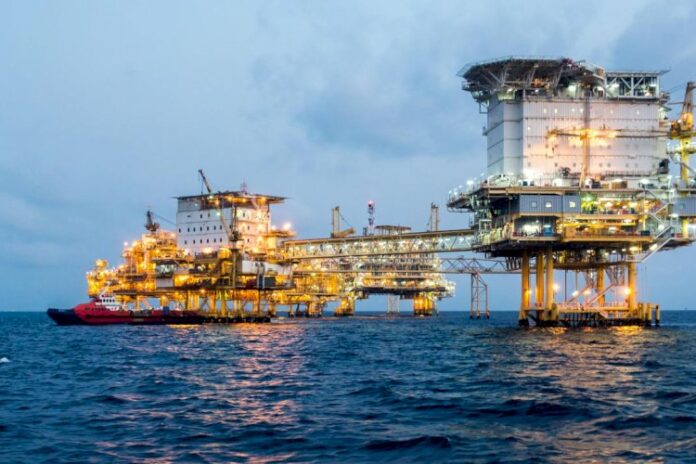
The Abu Dhabi National Oil Company (ADNOC) has announced its agreement to the transfer of rights in its Lower Zakum and Umm Shaif and Nasr offshore concessions from the China National Petroleum Corporation (CNPC) to China National Offshore Oil Corporation’s subsidiary CNOOC Limited (CNOOC). The transfer has been approved by Abu Dhabi’s Supreme Petroleum Council (SPC) and marks the first time that a dedicated Chinese offshore oil and gas company joins ADNOC’s concessions.  

The transfer of concession rights to another key Chinese company reinforces the strong and strategic bilateral ties between the United Arab Emirates (UAE) and the world’s second-largest economy, China. 

The transfer comprises of CNOOC acquiring (through its holding company, CNOOC Hong Kong Holding Limited (CNOOC HK)), a 40 percent interest in CNPC’s majority-owned subsidiary PetroChina Investment Overseas (Middle East) Ltd (PetroChina). 

His Excellency Dr. Sultan Ahmed Al Jaber, UAE Minister of Industry and Advanced Technology and ADNOC Group CEO, said:

“The transfer of part of CNPC’s share in two of ADNOC’s major offshore concessions to CNOOC reflects the long-standing strategic and economic bilateral relations between the UAE and China, and highlights the continued pull of the UAE as a leading global energy and investment destination, backed by a stable and reliable business environment. The transfer also illustrates ADNOC’s strengthened access to international markets and partners and our commitment to generating sustainable returns for the UAE.

“CNOOC joins our other international partners in the Lower Zakum and Umm Shaif and Nasr concessions and bring world-class expertise and technology to help us continue to maximize value from the concessions as we create a more profitable upstream business and deliver our 2030 strategy.”

PetroChina holds a 10 percent interest in the Lower Zakum concession and a 10 percent interest in the Umm Shaif and Nasr concession. As a result of the transfer, CNOOC will hold a 4 percent interest in the Lower Zakum concession and a 4 percent interest in the Umm Shaif and Nasr concession, while PetroChina will retain a 6 percent stake in the concessions.

Mr. Dai Houliang, Chairman of CNPC, said:

“CNPC has had successful cooperation with ADNOC, and we believe that the cooperation with CNOOC will bring more value to ADNOC and the partners of the concession. We will leverage the strengths of the two Chinese companies, which will help reinforce the development of these two concessions.”

Mr. Wang Dongjin, Chairman of CNOOC, said:

“We are very pleased to participate in the Lower Zakum and Umm Shaif and Nasr concessions. This further strengthens the strategic relationship with ADNOC and PetroChina. CNOOC will leverage our extensive expertise in the offshore sector and be dedicated to value creation in these concessions for our mutual benefit.”

This agreement follows the signing of a comprehensive framework agreement between ADNOC and CNOOC in July 2019 to explore new opportunities for collaboration in both the upstream and downstream sectors as well as in liquified natural gas (LNG). 

CNOOC joins an ONGC Videsh-led consortium (10 percent), INPEX Corporation (10 percent), CNPC (6 percent), Eni (5 percent), and Total (5 percent) as participants in the Lower Zakum concession; and Eni (10 percent), Total (20 percent), and CNPC (6 percent) as participants in the Umm Shaif and Nasr concession. ADNOC retains a 60 percent majority ownership interest in both concessions.

CNOOC is the largest producer of offshore crude oil and natural gas in China and one of the largest independent oil and gas exploration and production companies in the world. As at the end of 2019, the company owned net proved reserves of approximately 5.18 billion barrels of oil equivalent (BOE).

Chinese energy companies have steadily increased their participation in ADNOC’s upstream and downstream operations. At the same time, ADNOC has identified China – the world’s second-largest oil consumer – as an important growth market for its crude oil and petrochemical products.
 

Growing plastic pollution in the ocean in wake of COVID-19

0

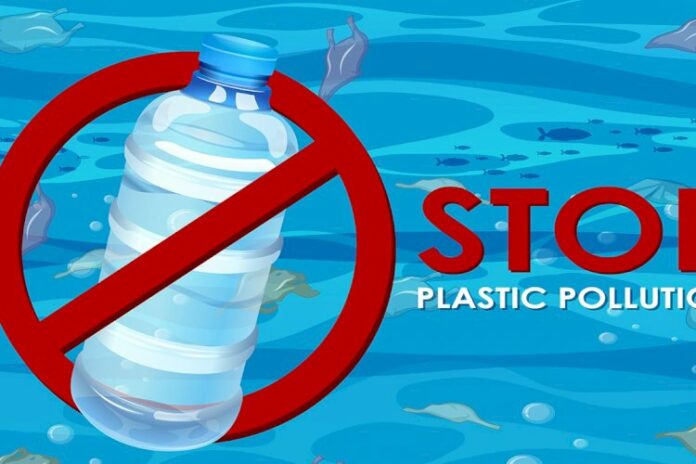
Coronavirus lockdowns around the globe have led to a dramatic 5% drop in greenhouse gas emissions, according to UNCTAD estimates, but not all measures to contain the pandemic have had a positive impact on the environment.

Pamela Coke-Hamilton, UNCTAD’s director of international trade, said:

“Plastic pollution was already one of the greatest threats to our planet before the coronavirus outbreak. The sudden boom in the daily use of certain products to keep people safe and stop the disease is making things much worse.”

Global sales of disposable face masks alone are set to skyrocket from an estimated $800 million in 2019 to $166 billion in 2020, according to business consulting firm Grand View Research.

But this is only part of the story. Social distancing has also led to a flood of products delivered daily to homes – wrapped in a plethora of packaging – as people turn to online shopping and takeout services. The ensuing plastic waste is enormous.

For instance, during Singapore’s eight-week lockdown that eased on June 1, the island city-state’s 5.7 million residents discarded an additional 1,470 tons of plastic waste from takeout packaging and food delivery alone, according to a survey cited by The Los Angeles Times.

Historical data tell us that about 75% of coronavirus plastic will likely become waste clogging our landfills and floating in our seas.

The negative spillover effects of plastic waste on fisheries, tourism and maritime transport, for example, add up to an estimated $40 billion each year, according to the UN Environment Programme.

Plastic is an ingredient in countless products traded internationally every day – from cars to toys to household appliances. Even goods that contain no plastic, such as apples or chocolate bars, are shipped in millions of tons of plastic packaging each year.

Ms. Coke-Hamilton said:

“Plastic production and consumption are a global system that has lots of trade dimensions. But the important role that global trade policies could play in the fight against plastic pollution has not garnered the attention it deserves.”

The number of trade measures mentioning plastics – such as technical regulations, subsidies, licenses and bans – reported to the WTO has increased annually by 28% over the past decade, showing growing concern among WTO members.

Ms. Coke-Hamilton said:

“But the way countries have been using trade policy to fight plastic pollution has mostly been uncoordinated, which limits the effectiveness of their efforts. There are limits to what any country can achieve on its own.”

She said the 164 developing and developed economies that make up the WTO have the ability to write multilateral trade rules that could more effectively address the fundamental issues of the global plastics economy.

Source: UNCTAD

First floating wind farm in continental Europe is now fully operational

0

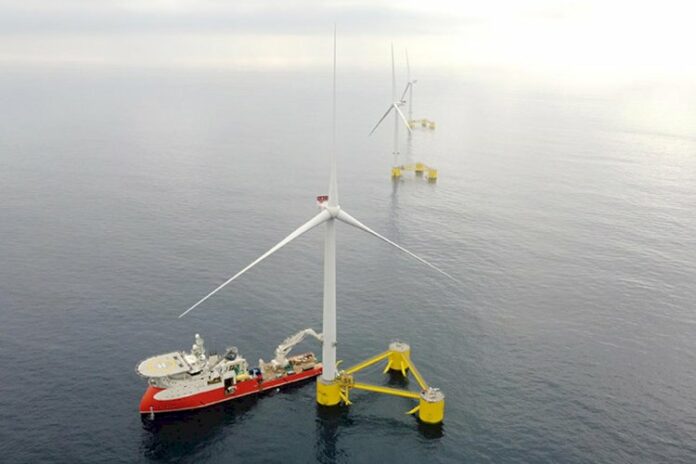
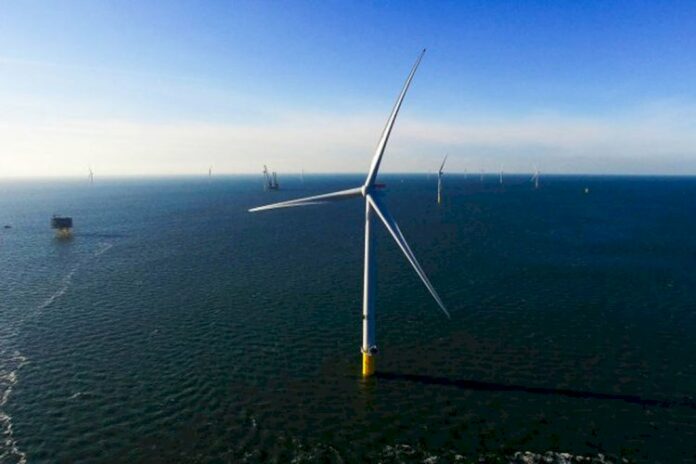
With a total installed capacity of 25 MW, WindFloat Atlantic is the world’s first semi-submersible floating wind farm.

WindFloat Atlantic is now fully operational and supplying clean energy to Portugal’s electrical grid. Following the connection of the last of the three platforms to the 20 km export cable connecting the wind farm to the substation at Viana do Castelo, Portugal, the construction of the wind farm is now complete. WindFloat Atlantic, which has a total installed capacity of 25 MW, is the world’s first semi-submersible floating wind farm, and it will generate enough energy to supply the equivalent of 60,000 users per year, saving almost 1.1 million tons of CO2.

This milestone cements the success of a decade-long project by the Windplus joint venture, ensuring access to the best wind resources in water depths that have previously been inaccessible. Windplus* has successfully installed and connected three platforms – measuring 30 m in height with a 50 m distance between columns. Each is able to accommodate an 8.4 MW turbine, the largest ever installed on a floating platform.

The success of this project is rooted in its technology. Its mooring technology, for example, allows for installation in waters over 100 m deep, and its design offers stability in adverse weather and sea conditions. Another key advantage has been the assembly technology used: dry-dock assembly has provided significant logistical and financial savings, and the platforms have been towed using standard tug boats.

These technical advantages, among others, clearly show that Windfloat Atlantic’s model is replicable in other areas where adverse seabed conditions or significant water depth mean that traditional bottom-fixed offshore wind technology is not an option.

*Windplus is a consortium between EDP Renewables & ENGIE (now Ocean Winds -OW-), Repsol, and Principle Power 

Ice-breaking LNG carrier makes first call at Japan

0

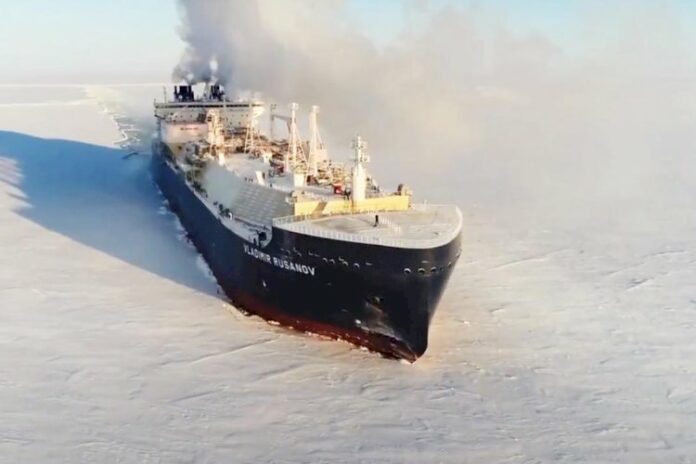
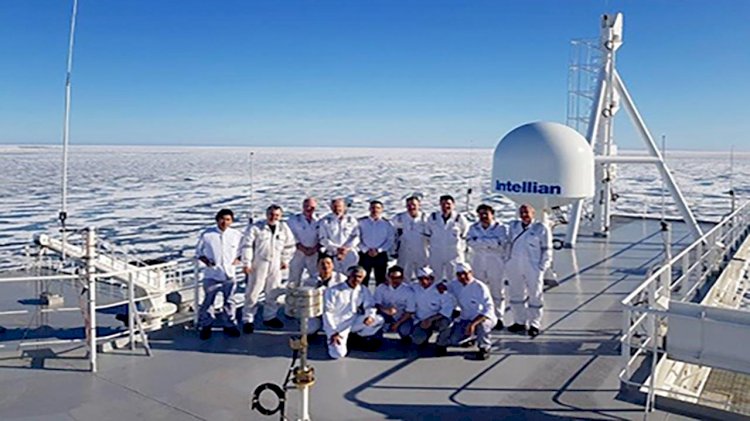
Mitsui O.S.K. Lines has announced that the Ice-Breaking LNG Carrier “Vladimir Rusanov”, which is jointly owned and operated by MOL and China COSCO Shipping Corporation Limited for the Yamal LNG project, made its first call at the LNG Terminal in Ohgishima, located inside Tokyo Bay in Japan, on 23rd July. This is historically the first time an Ice-Breaking LNG Carrier has called at Japan.

The vessel started sailing from the Yamal LNG plant at Sabetta port on 29thJune,and transported its LNG cargo to Japan by sailing eastwards along the Northern Sea Route via the Kara Sea, the Laptev Sea, the East Bering Sea, the Chukchi sea, and the Bering Strait. Although the ice in the Northern Sea Route generally melts in the period from the end of June to the beginning of July, during the time the vessel was navigating this region some ice remained, particularly in the East Bering Sea. The vessel either avoided sailing through or conducted ice-breaking navigation in areas where ice remained, which resulted in approximately 7 days (15 knots average navigation speed) navigation through the Northern Sea Route from Sabetta port to the Bering strait.

Transportation from the Russian Arctic through the Northern Sea Route contributes to reducing greenhouse gas emissions as the required navigation distance is 65% shorter than that via the Suez Canal. Additionally, energy transportation through the Northern Sea Route enables Asian countries, including Japan who relies on natural energy imports, to develop a new energy supply route.

New COVID-19 app for river cruise ports in Europe

0

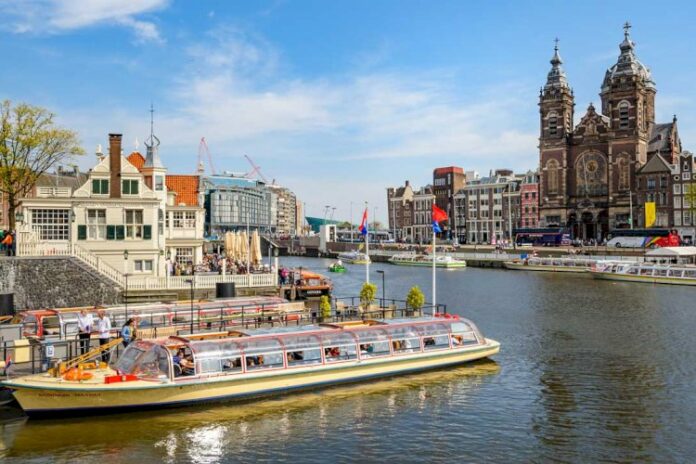
River cruise ports in the South and West of the Netherlands, Port of Amsterdam and MUST SEE are launching the app PORT SEE for up-to-date insight into the accessibility of ports for river cruise ships.

The corona crisis has literally stopped many cruise ships. Fortunately, the business is slowly recovering, but the situation is still changing on a daily basis. That is why it is important for shipping companies to be able to easily check at any time which ports are open and what measures, if any, apply there. It is important for ports to be able to update changes in COVID measures quickly. The Port SEE app meets this need and is a new platform for the river cruise sector in Europe. The app contains up-to-date data on the accessibility of berths in ports for river cruise ships and which COVID measures apply there. The system is intended for shipping companies, ports, tour operators, cities and city marketing.

Dutch Delta Cruise Port, Port of Amsterdam, Amsterdam Cruise Port and the international tourist platform MUST SEE have joined forces to support and strengthen the river cruise sector. The app PORT SEE makes it easier for shipping companies and tour operators to quickly find information per port.

Monic van der Heyden, commercial manager cruise at Port of Amsterdam, says:

“We see across Europe that the rules in ports for the river cruise are different everywhere, even within a country. It is impossible for shipping companies and tour operators to keep track of all the websites of the various port cities. That’s why, together with Cruise ports in the south and west of the Netherlands, we have had the Port SEE system developed.”

The cruise ports in Europe can add their own data to the app. Users can then easily create a login after which all data of the relevant port will be at their disposal. Think about which COVID measures apply in the port in question, up to available berths and facilities.

A port may be open to river cruise ships, but if the city or area itself is largely locked (due to a corona outbreak) it is not an attractive landing place. 
Later this year, the follow-up version of the system will be launched that includes the crowd control function. Maikel Coomans of MUST SEE says:

“You will then be able to see in real time where, for example, cities are going to be too busy because of tourism. Shipping companies could choose to skip a city or visit this area at another time.”

It is also interesting for shipping companies and tour operators to see the flow of tourists from the river cruise sector.

The app is available on Android as well as IOS.

Intertek provides environmental modelling services to Dŵr Cymru Welsh Water

0

Intertek, a leading Total Quality Assurance provider to industries worldwide, has been awarded a contract for Dŵr Cymru Welsh Water (DCWW) based on the company’s expertise in river and coastal environmental modelling and assessment, particularly for the UK water industry.

Under the contract, Intertek provides specialist environmental modelling services to support investigations and asset investment by DCWW under the AMP7 National Environment Programme (NEP). The scope involves numerical modelling and analysis to improve water quality in rivers and coastal waters while continuing the management and improvement of the aquatic environment in Wales.

The first awarded assignment is for assessment of bathing water quality compliance in Barry, South Wales, under the UK’s Bathing Water Regulations. The Barry Bathing Waters investigation will update models developed and updated since the 2000s to understand the impact of DCWW discharges on water quality. This new study will reflect more recent investment by DCWW that should further improve bathing water quality; ensure that DCWW are taking steps to contribute to the highest quality possible; and help maintain Wales’ reputation as having the best quality bathing waters in the UK.

Richard Dannatt, Associate Director, Intertek Energy & Water, said:

“This new contract is a continuation of our long and valuable relationship with DCWW. The framework builds on 30 years of providing environmental consultancy services to the UK water industry and further reinforces our reputation as the leading water quality assessment specialist. We now advise ten water companies in the UK and Ireland, and we look forward to assisting DCWW with their AMP7 programme.”

DCWWs Wastewater and Environment Services Manager says:

“DCWW have been working with Intertek for nearly 20 years and we value their global water quality project experience including their wider experience with other sectors, planning, developing and implementing of water quality assessments. Intertek provide us with numerical modelling, data gathering and analysis, and compliance assessment against statutory and policy requirements.”

OneOcean launches EnviroManager+

0

OneOcean’s new add-on to EnviroManager enables shipping companies to apply their own environmental procedures in an instant, to deliver timely, position-based information and clarity across the fleet with location specific policies.

Available to commercial maritime companies as well as cruise and superyacht operators, EnviroManager+ allows company-specific regulations to be applied across a full fleet, a select group, vessel type or location. Updates can be added and deployed within minutes to reflect company policies and ensure position-based data is delivered quickly. This ensures crews have the right information at the right time to make the best decisions.

Today’s ever-changing environmental regulations mean that companies must ensure vessels are operating efficiently to avoid penalties incurred for non-compliance. EnviroManager+ has been developed to help mitigate the risk of making costly errors such as straying into territorial waters, for example, extra buffers and instructions can be added to indicate when and where it is best to drop anchor. By incorporating bespoke procedures and regulations, EnviroManager+ enables ship operators and management companies to go above and beyond minimum regulation requirements whilst demonstrating that they are doing their bit to promote environmental awareness.

OneOcean’s CEO, Martin Taylor, said:

“We are delighted to announce the roll out of EnviroManager+ to the maritime industry. Through insights gathered from customer input, we identified a need for shoreside teams to provide onboard crew with clear guidance around company policies quickly and timely. Understanding what actions can be undertaken based on company policies, in relation to maritime legislation and the location of a vessel, is a big task for onboard crew.  Our aim is to help the shipping industry go above and beyond minimum regulatory requirements, providing customers with a practical way to enforce company policies and reduce risk.”

EnviroManager+ can instruct vessels to carry out a number of checks and procedures before entering local or environmentally controlled zones such as US Waters. Customised messages can be created and displayed alongside the regulations within EnviroManager for the company’s crew to see.

OneOcean solutions solve multiple issues and integrate with existing monitoring and management systems, supplying both onshore and onboard teams with the crucial real-time information they need, when they need it. 

Petrobras advances in the development of Búzios, in the Santos Bay pre-salt

0

Petrobras’ executive management has approved the beginning of contracting processes for three new FPSO-type platforms for the Búzios oilfield,  in the Santos Bay pre-salt. FPSO refers to a unit that produces, stores and transfers oil and gas.

The three new units will be the first ones contracted after acquisition of the surplus volumes of the Búzios oilfield onerous cession, in november of 2019, in a partnership with Chinese companies CNOOC Petroleum Brasil Ltda. (CNOOC) and CNODC Brasil Petróleo e Gás Ltda. (CNODC). The acquisition of the additional volumes, for which Petrobras paid  R$ 61,4 billion as a signature bonus, is the result of the active portfolio management made by the company. The sale of assets that bring lower financial returns and that do not relate to the main activity of the company frees resources for investment in more promising and more profitable projects, as in the case of the Búzios oilfield. 

The new platforms are part of the asset’s Development Plan, which projects a total of 12 units installed until the end of the decade. Until the end of the development phase, the Búzios oilfield is expected to produce more than 2 million barrels of equivalent oil per day, becoming thus the biggest asset of Petrobras, with the greatest production.

There are currently four units in operation in Búzios, responding for more than 20% of Petrobras total production and more than  30% of the pre-salt oilfields production. In 13 of July, these platforms have reached the field’s production records, of 674 thousand barrels of oil per day (bpd) and 844 thousand barrels of equivalent oil per day (boed).

A fifth platform, with a production capacity of 150,000 bpd of oil, is under construction. Named FPSO Almirante Barroso, its production is expected to begin in the second semester of 2022.

OMCE and Ørsted partner to develop new sea state forecasting tool

0

The UK’s national Operations & Maintenance (O&M) Centre of Excellence has partnered with global offshore wind leader Ørsted in a £400k project to develop an innovative approach to sea state forecasting, which aims to deliver a significant reduction in missed working days.

The Humber-based O&M Centre of Excellence (OMCE) is a £2 million collaboration between the University of Hull and the Offshore Renewable Energy (ORE) Catapult to drive solution-focused innovation and improvements in O&M.

The project team, led by academics from the University of Hull, is working closely with Ørsted to help improve wave forecast modelling with direct industrial impact. The model will contribute to improving the accuracy of sea state forecasting at an individual offshore wind turbine level with the potential to drive efficiency gains in operations and maintenance, increasing safety, as well as contribute to further reductions in the Levelized Cost of Energy (LCoE) for offshore wind.

Turbine accessibility is a key determinant of a wind farm’s profitability. Technicians attempting to undertake maintenance can face a number of barriers to safe access, which in turn can be a factor in limiting turbine performance and ultimately overall energy output of a wind farm.  This new project will result in a wave forecasting model that will give greater accuracy and offer a more granular insight into the sea state within an offshore wind farm than current state-of-the-art methods can.

With total O&M costs contributing around 25% to the lifetime costs of a typical offshore wind farm, the positive impact on planning by owners/operators is clear, with ORE Catapult analysis suggesting that innovations in forecasting techniques could help to reduce missed working days by a quarter. This project highlights how vital innovation is in achieving the ambitious targets of the Offshore Wind Sector Deal, with the previous commitment by Government and industry to install at least 30GW of offshore wind by 2030 recently revised to 40GW.

Multiple downward-facing radar have been installed at turbines at Ørsted’s Burbo Bank Extension wind farm off Liverpool to record wave height, direction and period together with combined met-ocean data and existing forecasts. This big-marine-data approach, along with bathymetry and site configuration data, is enabling researchers to produce an artificial intelligence-based method that will be used to make a step-change in the resolution and accuracy of fine-scale at offshore windfarm sites.

Lucas Marion, R&D roadmap manager Wind & Wave said:

“Safe access to turbines is a key factor in O&M planning in the offshore wind industry and having a greater insight into the localised, intra-array sea states and wave heights is a valuable resource. The UK is the world leader in offshore wind and if we are to maintain this position while continuing to bring down costs, collaboration between industry and academia is an important factor. Therefore, we’re pleased to be partnering with the O&M Centre of Excellence on this project.”

Project lead Dr Rob Dorrell, from the Energy & Environment Institute at the University of Hull, said:

“This project is tackling critical challenges in operations and maintenance at the interface of offshore wind and the hostile marine environment. We are delighted to translate state-of-the-art artificial intelligence and remote monitoring systems to provide new solutions and methods to meet industrial challenges, enabling the drive towards enhanced cost-efficiency in offshore wind, thus furthering its viability as a clean energy solution. My colleagues and I – Drs Evdokia Tapoglou and Rodney Forster –  are very much enjoying working with our partners on this collaboration, adding value and impact to an industry challenge.”

Johnathan Love, ORE Catapult’s project manager added:

“With Ørsted, the University of Hull and the Catapult coming together on this project, we are combining insight into real industry challenges with cutting-edge academic research to develop new products to improve offshore wind operations and maintenance and wind farm efficiency and performance.”