-8.5 C
New York
Home Blog Page 810

Vistrato releases ‘COVID-19 Guide for Ship/Shore Interactions’

0

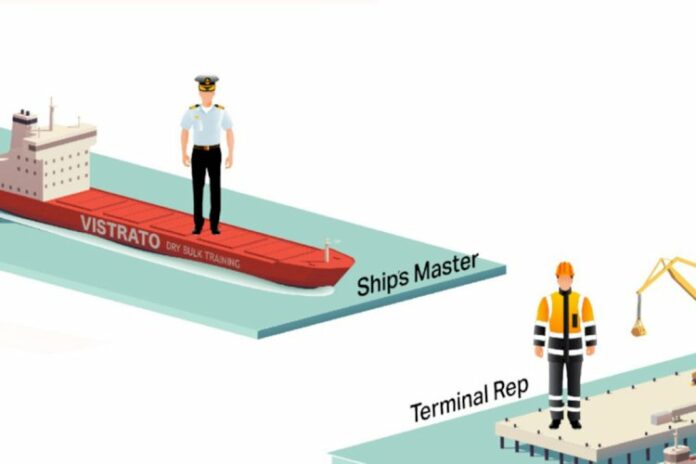
Vistrato Limited, the specialists in online dry bulk training, have produced a comprehensive ‘COVID-19 Guide for Ship/Shore Interactions’ for ships and terminals handling solid bulk cargoes during the current global pandemic. This handy online guide is focused on minimising face-to-face contact between ship and shore personnel during loading/unloading operations while still ensuring compliance with mandatory documentary exchanges and procedures.

In a unique joint effort, both INTERCARGO (International Association of Dry Cargo Shipowners) and DBTG (International Dry Bulk Terminals Group) have teamed up with Vistrato to support and distribute this visually engaging guide throughout their membership. As a result of this collaboration, the trio aim to improve awareness around the need to avoid unnecessary face-to-face interactions between ships and terminals during dry bulk operations.

The guide has been reviewed and highly praised by terminal and port operators, ships’ agents, masters and officers. It facilitates the dry bulk sector in implementing the IMO recommendation (Circ. Letter 4204/Add.6) which encourages the use of electronic solutions in order to reduce the risks posed by interactions and document exchanges between ship and shore personnel at the ship/shore interface.

The shipping of solid bulk cargoes is subject to a range mandatory checks and exchanges as required by the BLU Code and IMSBC Code. While some of these exchanges are carried out in advance of the ship’s arrival, others are normally carried out jointly by master or chief officer and terminal representative on board after the ship has berthed.

The use of the Vistrato guidelines, together with compliance with flag state and port state Covid-19 protocols, will help in ensuring that the loading/unloading of solid bulk cargoes continues to be carried out properly, safely and in compliance with IMO regulations.
MacGregor to supply deck handling solutions for two T-ATS class vessels

0

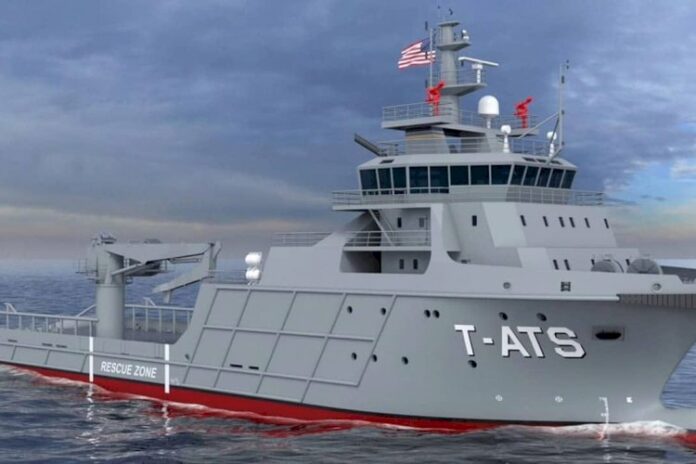
MacGregor, part of Cargotec, has secured an order to provide deck handling solutions to two T-ATS class vessels to be built at Gulf Island Shipyards LLC, a subsidiary of Gulf Island Fabrication Inc.

The order was booked into Cargotec’s second quarter order intake, with deliveries planned during the last quarter of 2021 through to the first quarter of 2022. 

This order represents the 4th and 5th shipsets that will be supplied to the new T-ATS class, which will be deployed for worldwide naval service including open-ocean towing, supporting salvage operations and submarine rescue missions.

Scope of supply includes deck machinery, towing winch, traction winch, shark jaws, towing pins/pop-up pins, stern roller, offshore crane and other accessories.

Leif Bystrøm, Head of Offshore Solutions Division, MacGregor, says:

“This new order further confirms MacGregor’s position as a trusted provider of solutions for naval logistic vessels, with equipment installed on a broad spectrum of ship types.”

ABS and SHI target end-to-end 3D model-based class process

0

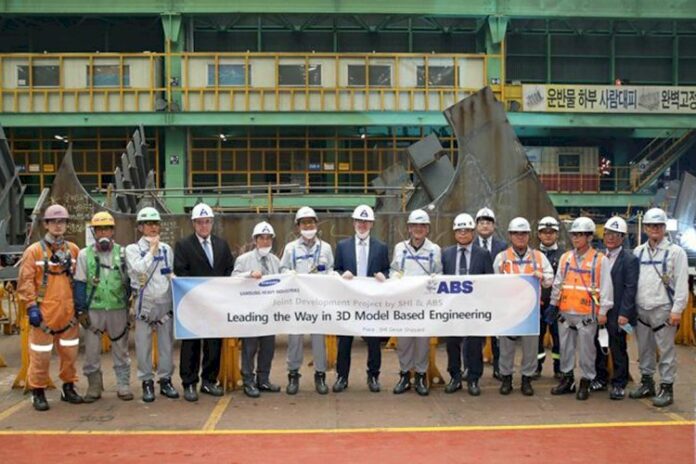
ABS and SHI celebrated completion of a landmark 3D model-based Review project by signing a new joint development project (JDP) to develop 3D model-based Surveys.

The signing follows ABS and SHI’s development of a paperless 3D model-based design and review process, completing a JDP signed at Gastech in Houston, Texas, in September 2019. The project moves into the next phase now with pilot 3D Model-Based surveys of an LNG carrier.

Patrick Ryan, ABS Senior Vice President, Global Engineering and Technology, said:

“We are excited to be extending this technology to Class survey to further demonstrate reduction of paper documentation is feasible. These projects demonstrate that ABS and SHI can support the design, review, and now survey during construction of ship structure using 3D models in place of 2D drawings. Together, SHI and ABS have invested in proving these fully digital approaches will facilitate delivery of next generation class services with reduced program risk and increased quality and safety.  This next step of using 3D digital solutions in the survey process will complete the safety cycle during construction.” 

Jong H. Youn, SHI’s EVP & Head of Engineering Division, said:

”A 3D model-based Design and Approval Process will change the traditional labor-intensive shipbuilding industry to a digitalized high-tech industry, based on the flow of digitalized 3D model data, in order to increase efficiency, safety and risk management at work.  SHI have been applying 3D model-based Design process for a couple of years and we are now preparing to implement 3D model-based construction and survey, to achieve a high quality and safer environment throughout the whole process of shipbuilding in our shipyard. This can be achieved by seamlessly applying advanced digital technology from engineering until delivery, including Class survey.”

The project feeds into SHI’s Smart SHI, which looks to create a digitalized and future-oriented shipyard with a completely drawing-less shop floor that assures digital continuity of all integrated solutions and enables cyber-physical manufacturing systems.

Benin Terminal welcomes a 300 m container ship for the first time ever

0

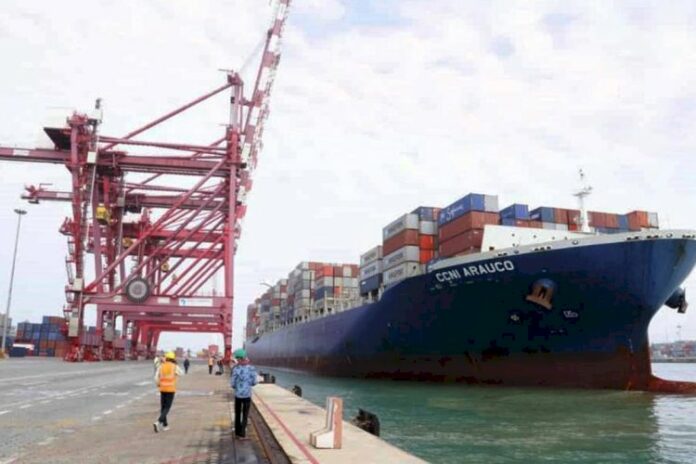
Benin Terminal has welcomed the “CCNI ARAUCO”, the largest ship to have ever berthed at Cotonou. This 300-metre long, MAERSK ship weighing over 100,062 tonnes, sailing under the Hong Kong flag, berthed at Benin Terminal’s berth No. 10.

This ship coming from Shanghai has a loading capacity of 8,700 twenty-foot equivalent unit (TEU) containers. It allowed Benin Terminal’s teams to unload containers intended for Benin and for bordering countries and to load containers of products for export.

Thanks to the actions implemented by Benin Terminal in synergy with the Autonomous Port of Cotonou, four other ships of this size have already been announced over the next few days on Benin Terminal’s berths.

Arnaud Jobard, Director of operations for Benin Terminal, said:

“This operation, resulting from the partnership between the Autonomous Port of Cotonou, MAERSK and Benin Terminal, is the culmination of the plan to modernise the Port of Cotonou’s container terminal. With significant investments in equipment, information systems, and staff training, Benin Terminal is helping to make the Port of Cotonou a driving force for the social and economic development of Benin.”

Large-capacity ships calling at the Port of Cotonou reinforces Benin Terminal’s aim of becoming a growing regional logistics hub for Niger, Mali, Burkina Faso and Nigeria. This is helping to strengthen Benin Terminal’s contribution to the economic development of Benin.


VIDEO: Spirit of Adventure leaves building dock

0

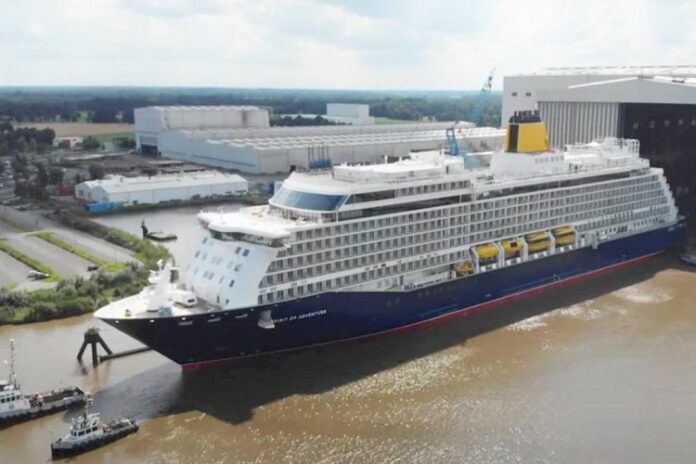
On Friday, July 24, the Spirit of Adventure, the second new cruise ship for the British shipping company Saga Cruises, has leaved MEYER WERFT’s covered building dock I (hall 5).

During the following days and weeks, more tests will be executed at the outfitting pier of the shipyard. In August the ship will probably start her passage on the River Ems to the port of Emden to start seas trials later on.

The 58,250 GT cruise ship has an overall length of 236 metres and a breadth of 31.2 metres. It has 554 cabins for 999 passengers and reaches a speed of more than 18 knots.

Klaipeda oil terminal records a jump in cruide oil handling

0

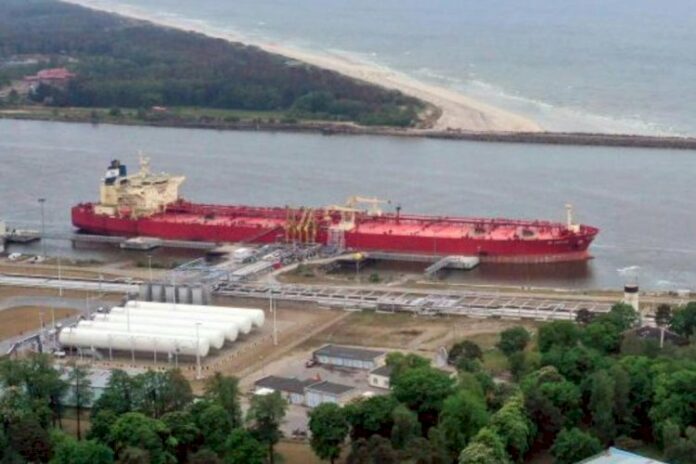
At the beginning of August, Klaipeda oil terminal operated by KN (AB Klaipedos Nafta) is expecting to receive the tanker UMLMA, which will deliver the second crude oil cargo from US to Belarus. The tanker will bring approximately 75 thousand tons of crude oil and it will be the 9th crude oil tanker for Belarus received in KN’s terminal this year.

The tanker UMLMA will visit Klaipeda oil terminal for the first time. A tanker arriving from the US Port Neches (Beaumont) in Texas, built in 2006 sailing under Qatar flag, should reach Klaipeda port between 6-8th August.

Crude oil will reach the Belarusian refinery from Klaipeda port by rail.

KN, according to the long-term contract signed in 2016 with the Belarusian Oil Company (BNK), ensures the transit of oil products and crude oil through the KN’s Klaipeda oil terminal. This agreement, which was renewed last year, is valid until the end of 2021.

Darius Šilenskis, CEO of KN, comments:

“Our cooperation with BNK lasts for more than a decade: KN is part of the supply chain to ensure the export of oil products and this year – the supply of alternative crude oil to Belarusian refineries. This year, as many as 64 percent oil imported by BNK from the maritime market travels to Belarus through a terminal operated by KN. In this way, KN contributes to Belarus’ aspiration to diversify oil supply sources – this year Belarusians are importing the second oil cargo from the US via Klaipeda. Over the last few years, our company has been consistently investing in the development and improvement of infrastructure to meet the changing needs of customers and the market. We have been able to accept various types of crude oil since 2019 and at the same time not to limit our customers’ opportunities to continue exporting oil products.”

During the first half of this year, approximately 669 thousand tons of crude oil (8 tankers) were handled in KN’s Klaipeda oil terminal, while in 2019 – about 100 thousand t (two tankers) were handled during a whole year.

According to the head of KN, the 9th crude oil import tanker this year allows to assume that this service becomes relevant to customers and its continuity is likely in the long run.

The first cargo for Belarus with 77 thousand t of crude oil originating from the US was delivered to KN in May.

innogy chooses 14 MW turbines for its 1.4 GW Sofia offshore wind farm

0

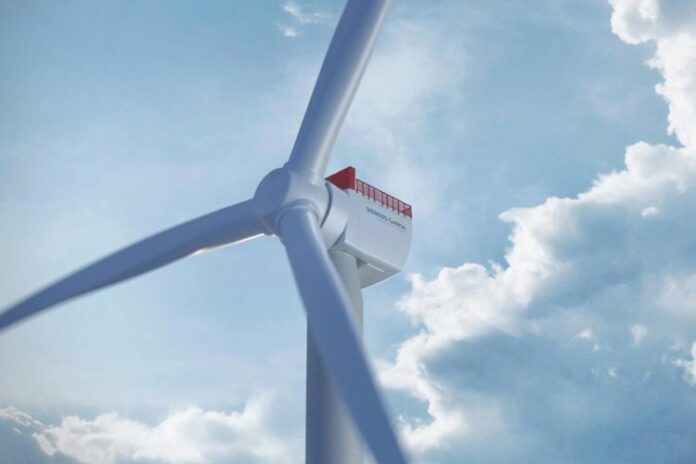
innogy SE has chosen the latest state-of-the-art 14 megawatt (MW) offshore wind turbines for its 1.4 gigawatt (GW) Sofia Offshore Wind Farm, located 195 kilometres from the UK coast on Dogger Bank in the shallow area of the central North Sea.

A corresponding preferred supplier agreement was signed with Siemens Gamesa Renewable Energy S.A. The agreement includes the manufacture, installation and commissioning of a total of 100 turbines, each standing 262 metres tall. The execution of the agreement will be subject to contract and final investment decision, anticipated in the first quarter of 2021.

Sven Utermöhlen, Senior Vice President Renewables Operations Offshore at innogy SE, explains:

“The selection of these state-of-the-art offshore wind turbines for Sofia, our largest offshore wind development project, reflects our ambition to strive for continuous innovation. Siemens Gamesa’s towering 14 MW machine is a perfect match for our flagship Sofia project, together cementing offshore wind‘s central role in the world’s clean energy future. This turbine embodies the impressive technology we need to build our ground-breaking project, that is further from shore and more technically challenging than any of its predecessors.”

Sofia is set to be the first European project to install the new 14 MW model (SG 14-222 DD), that will be market-ready by 2024, right on time for installation on Dogger Bank. Construction of the wind farm is expected to start onshore at its Teesside converter station site in early 2021, with offshore construction expected to get underway in 2023. The 100 turbines together could generate enough green electricity to satisfy the annual electricity needs of almost 1.2 million average UK homes.

Andreas Nauen, Siemens Gamesa CEO, said:

“We’re delighted that innogy has shown its confidence in our new machines and proven its commitment to creating a clean future with us now. In uncertain times, we are proud that innogy is choosing machinery with a pedigree of being solid and reliable. As an economic recovery around the globe safely and slowly begins, we’re confident that offshore wind power will strongly contribute to providing jobs and energy stability at attractive prices.”

Allseas developed a new waste collection system at rivers

0

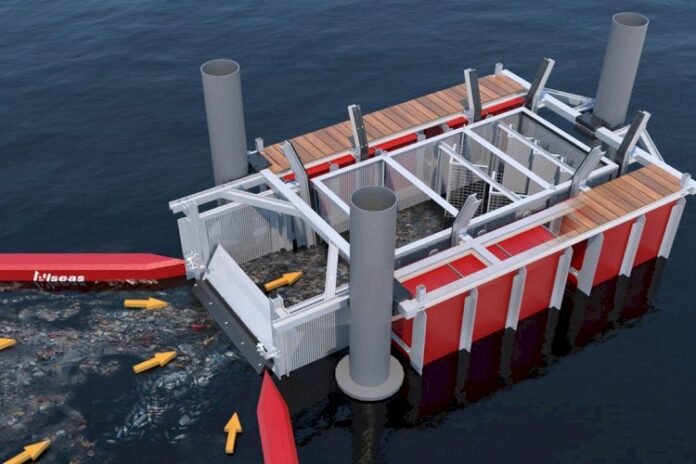
Catchy, Allseas’s new waste collection system, was developed to catch litter and plastic flowing through South Holland’s Nieuwe Maas River.

Allseas has designed the system to catch both large waste floating on the surface and smaller debris – mainly plastics – suspended in the water column. Later this month, Allseas will be installing Catchy  close to a nature reserve in the Vijfsluizer harbour, between the cities Schiedam and Vlaardingen.

Waste, primarily plastic, has become a serious problem for the environment, especially our seas and oceans. Rijkswaterstaat, the Dutch authority for public works and water management, is looking into ways to collect the waste in rivers before it can spread to the sea. For the Nieuwe Maas River in the Netherlands, Rijkswaterstaat commissioned Allseas to develop a waste collection system for the Vijfsluizer harbour, located between the cities Schiedam and Vlaardingen.

The predominant southwest wind drives waste into the Vijfsluizer harbour making it a “hotspot” for (plastic) waste and litter. North of the harbour lies a preserved natural area that is home to wildlife such as seals, marine birds and fish. Allseas is developing a system to catch waste and prevent it from reaching this protected area and the neighbouring North Sea.

The system, named “Catchy”,  comprises three elements: two floating booms, a floating frame and collection cage. The floating booms, 200 m and 10 m in length, guide waste under the effect of the wind and currents towards the collection cage. Both booms are equipped with an underwater skirt to catch both surface and submerged waste. The floating frame is secured to piles that allow it to move vertically with the tides. Waste captured in the cage is emptied regularly into a container, which is transported by truck to a site for processing.

Allseas’ waste collection system is simple, robust and works entirely on wind and currents to catch waste. The system collects larger (plastic) waste floating on the surface as well as smaller debris in the upper part of the water column.

The system is to become operational in August 2020 and will remain in the Vijfsluizer harbour for one year. In addition to the development and installation of the system, Allseas will analyse the collected waste to provide Rijkswaterstaat with information on the types and amounts of plastics and recommendations for sustainable and cost-effective post-processing possibilities.

Torqeedo provides hybrid-electric propulsion systems for XOCEAN’s vessels

0

The three-year-old company XOCEAN based in Ireland provides turnkey underwater data acquisition services with its growing fleet of innovative unmanned surface vessels (USVs) which deliver an unprecedented combination of safety, versatility, efficiency and productivity.

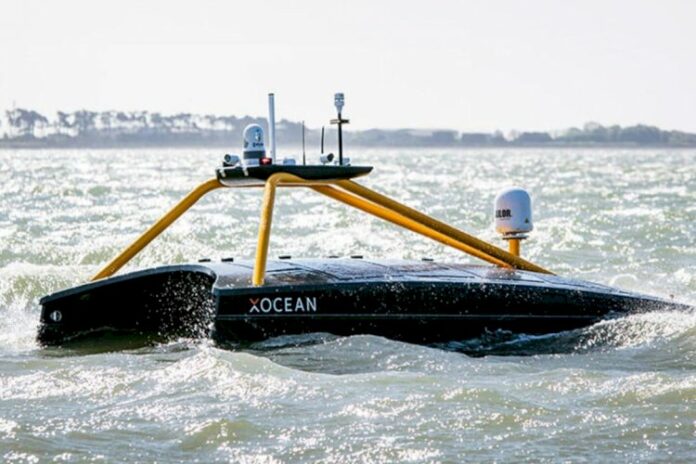
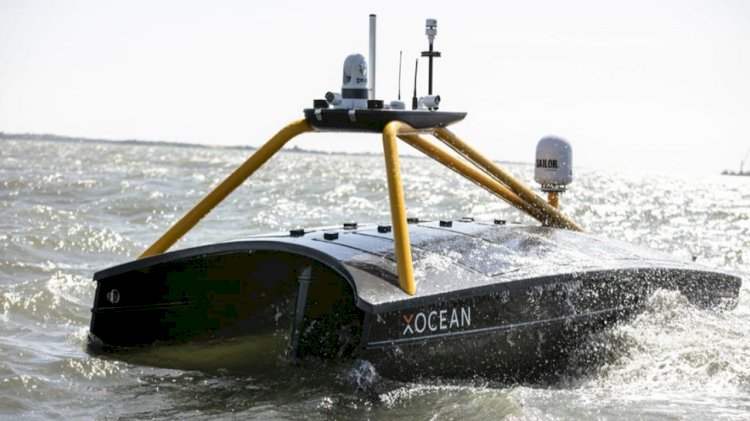
XOCEAN’s XO-450 USV is a custom-designed composite wave-piercing catamaran about the length of a typical automobile. The lightweight vessel is powered by a pair of Torqeedo Cruise 2.0 electric pod drives, with a Power 24-3500 lithium-ion battery and a lightweight micro-generator. Solar panels on deck provide efficient recharging during daylight hours.

The two electric thrusters are controlled separately to adjust the speed on each side, steering the boat on the desired course. A pair of Torqeedo Ultralight outboards at the bows enhance the vessel’s stationkeeping abilities when gathering data.

The XO-450 USVs are designed to be easily and quickly deployed. When underway, the crewless vessels are controlled remotely by qualified pilots at XOCEAN’s operations centre, which also monitors battery status and quality of the data being collected. The onboard broadband satellite transceiver provides continuous over-the-horizon connectivity.

In a recent deployment, a XOCEAN XO-450 USV completed a pioneering live seabed-to-shore data harvesting mission from an array of Sonardyne pressure monitoring transponders at the Ormen Lange natural gas field off the coast of Norway. The 30 sensors measure and record pressure, temperature and inclination data at the seafloor at 800-1,100 meters depth. The USV transited more than 160 nautical miles from Kristiansund out to the Ormen Lange field, spent 12 hours on station retrieving data from the sensors using an acoustic array and completed the return trip to Kristiansund in a total of just over three days.

The extremely low noise signature of the Torqeedo electric drives was also an essential element in the success of the mission, which used an acoustic transceiver to retrieve data wirelessly through the water, according to XOCEAN.

XOCEAN CEO James Ives said:

“Sustainability is a central value for us. Our USVs have a negligible carbon footprint, only producing about one-thousandth of the emissions of a conventional survey vessel. We are also employing offsets for all carbon produced in the delivery of our projects resulting in fully carbon-neutral survey data for our customers.”

Sea Machines raises $15 million for autonomous ship navigation

0

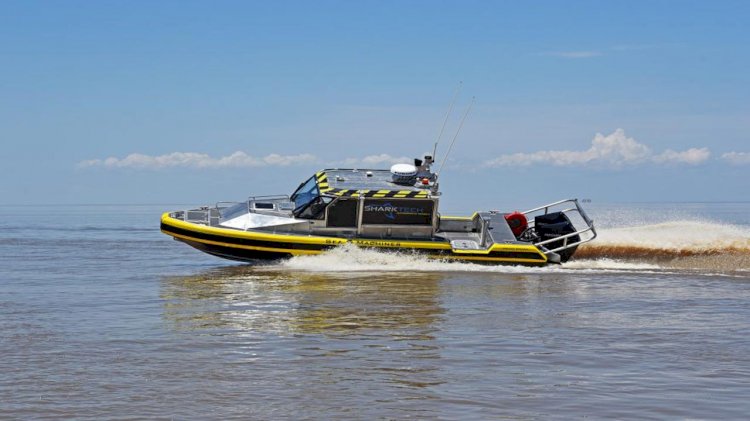
Boston-based Sea Machines Robotics, a leading developer of autonomous systems for ocean-going vessels and workboats, announced today that it has closed a new $15 million financing round with significant participation by Huntington Ingalls Industries (HII), America’s largest military shipbuilding company and a provider of professional services. This investment in Sea Machines marks one of the largest venture rounds for an advanced technology company serving the marine and maritime industries.

The strategic investment and associated partnership with HII will accelerate the deployment of self-piloting technologies in the rising market of unmanned naval boats and ships and is a continuation of HII’s expansion in the rapidly growing autonomous and unmanned maritime systems industry. 

Michael G. Johnson, CEO, Sea Machines, said:

“This reinforces Sea Machines’ position as the leading developer of autonomous navigation and wireless vessel control systems. Our ability to secure significant financing during a challenging economic environment is an indicator of investors’ confidence in our ability to reshape and retool the marine industries with modern-day, advanced technologies. And being selected as technology partner by HII, a leader in every right, further affirms our course in product and market approach.”

Andy Green, executive vice president and president of technical solutions, HII, said:

“This investment represents our commitment to advanced innovation and competencies across the unmanned systems market. Sea Machines is making significant strides in the unmanned surface vessel (USV) industry. We want to invest in their growth and continue to form complementary partnerships across this key domain.”

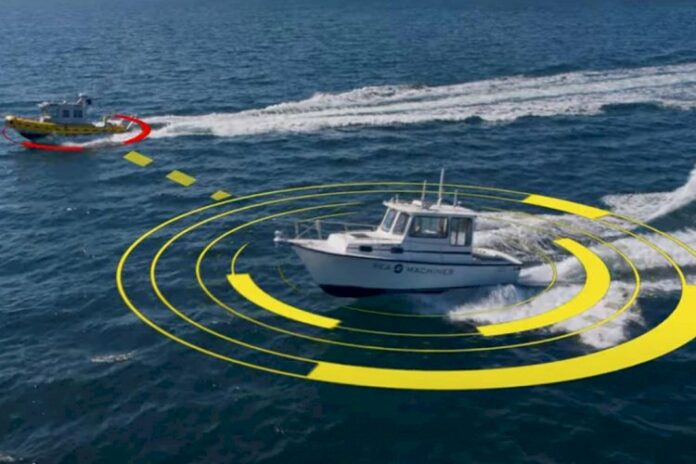
Sea Machines’ autonomous systems serve the modern mariner. They markedly increase productivity of vessel operations by assuming active domain perception and navigation duties. A Sea Machines system works under the command of a human operator and, by taking on the long duration and often repetitive control duties, it boosts the predictability and precision of operations while lowering the risk of fatigue-related incidents. The technology also enables new capabilities on water, such as the onshore command of remote offshore vessels. 

Johnson said:

“We are entering a phase of growth and universal interest like what was witnessed in the self-driving automotive space starting five years ago, but the difference being that marine self-piloting systems are already operationally deployed. We expect to see broad adoption of autonomous technology on water ahead of that on roads.”

Since launching its first family of products in late 2018, Sea Machines has deployed systems on vessels serving a multitude of sectors. From large cargo vessels (such as the previously disclosed program with A.P. Moller-Maersk) to U.S.-flag ATBs and data-collecting survey boats, oil-spill response craft, search-and-rescue (SAR), patrol and crew transfer vessels. Sea Machines systems are now operating in four of the world’s eight geographical regions and this reach is enabled through a dealer-partner program with established marine electronics integrators.  

This investment round was led by Accomplice with further participation by Toyota AI Ventures, Brunswick Corp. (through investment partner TechNexus), Geekdom Fund, NextGen Venture Partners, Eniac VC, LaunchCapital and others. 

Ryan Moore, partner, Accomplice, said:

“Five percent of global GDP is directly fueled by the marine economy and the industry is poised for technology innovation. Michael and the Sea Machines team have achieved significant progress and this financing underscores our strong position.”