-7.5 C
New York
Home Blog Page 808

The Ocean Tracking Network goes deeper with 1000-metre rated Falcon

0

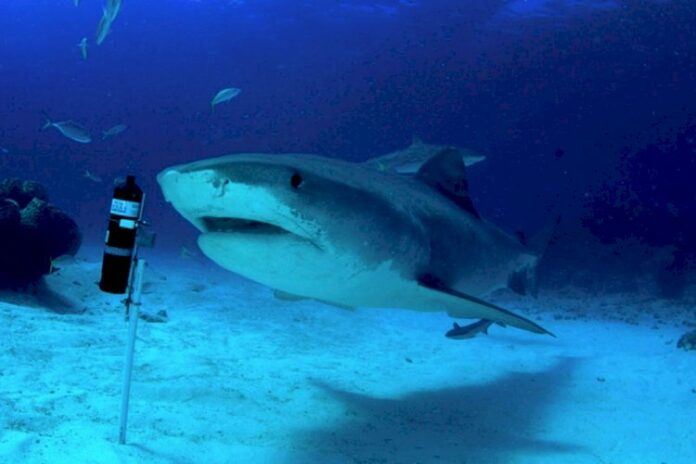
The Ocean Tracking Network (OTN), a global aquatic research, data management and partnership platform headquartered at Dalhousie University in Canada, has upgraded their remotely operated vehicle to a 1000-metre rated Saab Seaeye Falcon DR.

Chosen in a competitive bid process, the Falcon was selected as the most powerful and capable ROV of its size, class and depth rating.

Greater depth capability of the Falcon DR extends the potential for maintenance and recovery of lost tracking equipment, lends itself to oceanographic and biological surveying, and expands opportunities for OTN’s research into deep-water habitats.

OTN Executive Director, Dr. Fred Whoriskey, says:

“The Falcon is compact, easily mobilized and versatile, making it attractive to potential partners who are keen to share the vehicle for joint venture research, monitoring and recovery projects.”

With its high-definition colour camera and built-in tools — including an arm for non-invasive sample collection — the ROV will provide new insights on aquatic animals by offering a new, safer, and less intrusive way to study them underwater. 

OTN’s Falcon also comes with an ultra-short baseline acoustic tracking system, a Tritech multi-beam sonar, a Kongsberg high definition video camera and an associated lighting system, making it a highly versatile platform for the maintenance and recovery of OTN infrastructure equipment and providing high quality video for scientific and communications purposes.

OTN has more than 2,000 acoustic tracking stations deployed across five oceans, spanning seven continents, and in freshwater systems that serve as highways to the ocean for species that migrate between fresh and salt waters.

Worldwide, the Falcon can be sent to find stranded stations that have shifted from their coordinates for a variety of reasons, saving the loss of valuable equipment and data.

Just a metre long, with five powerful thrusters and intelligent control, the Falcon has precise manoeuvrability in strong cross-currents and is the most successful underwater vehicle of its class in the world.

Petrofac doubles UK well portfolio with NEO Energy award

0

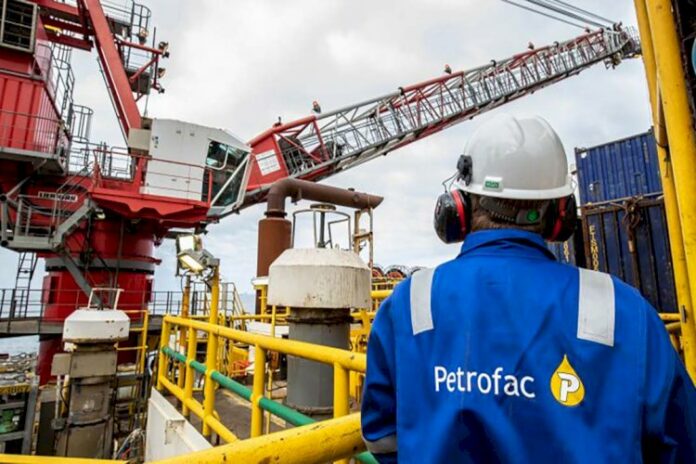
Under the terms of the agreement, Petrofac will provide Well Management and Well Operator support for 25 production wells across the Affleck, Balloch, Dumbarton, Flyndre and Lochranza fields. The contract also positions Petrofac to support future well construction and intervention campaigns.

The announcement builds on Petrofac’s previously awarded Integrated Services Contract for NEO Energy, through which it provides ongoing operational, maintenance, engineering and construction support in support of the Operator’s UK activities.

As Well Operator, Petrofac will be responsible for direct procurement and management of all sub-contracted services. Petrofac will also deploy its industry-leading project management software, Turus, to ensure efficient and assured project delivery.

Commenting, Nick Shorten, Managing Director for Petrofac Engineering and Production Services in the Western Hemisphere, said:

“Through the deployment of our extensive asset and well management expertise, we will work closely with NEO Energy to assure the integrity of its wells and deliver safe and cost efficient construction in support of any future field development. This award builds on our existing track record for delivering Well Operator services for clients in the UKCS, bringing the size of our well portfolio in the basin to 50.”

Petrofac pioneered the outsourced Well Operator model in 2015. Under regulations set by the Offshore Safety Directive Regulator, it takes responsibility for the monitoring and management of wells on behalf of its clients. Petrofac is currently Well Operator for seven North Sea clients.

IMO: Digitalization of shipping – more important than ever

0

​Digitalization, big data, and new technologies such as artificial intelligence are key in enabling the post-COVID recovery, IMO Secretary-General Kitack Lim told a a webinar (28 July) on Digital Connectivity and Data Standards.

Mr. Lim said:

“Cooperation between shipping, ports and logistics will be vital for enhancing the efficiency and sustainability of shipping and therefore facilitating trade and fostering economic recovery and prosperity. Digitalization and new technologies will also be the key to allowing standardization and therefore enhancing the efficiency of shipping.”

The need for standardization was also highlighted by IMO’s Facilitation Head, Julian Abril, who noted the mandatory requirement for electronic data exchange in the Facilitation Convention, effective since April 2019.

Discussions are currently underway towards making a single maritime window mandatory – so that all data for arrival and departure of ships is submitted through a single point and transmitted to the relevant agencies involved. The standardization and harmonization needed for this to happen is captured in the IMO Compendium on Facilitation and Electronic Business, a tool for software developers that harmonises the data elements required for regulatory purposes during a port call and standardises electronic messages, reducing the administrative burden for ships linked to formalities in ports.

The goal is to make it easier for companies involved in maritime trade or transport to create software that can communicate, no matter which standard they are based on. Cooperation, communication and collaboration between the various stakeholders to maintain and further develop the compendium, as well as looking into expanding its data set and data model to areas beyond the FAL Convention, has been formalised in a partnership agreement signed in March 2020 between IMO, the World Customs Organization, the United Nations Economic Commission for Europe and the International Organization for Standardization.

Maersk Drilling invests in new technology to facilitate carbon-neutral drilling

0

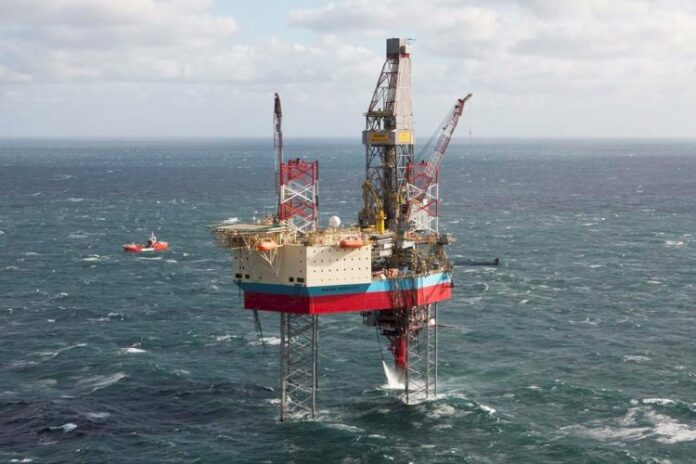
The concept builds on proven technology originally developed for the aerospace industry, which is now being deployed in a process that is expected to result in net-negative carbon emissions. For Maersk Drilling, this is one of several opportunities being pursued in order to help the company’s customers move towards carbon-neutral drilling.

A full-scale deployment of the Carbon-Negative Energy concept will produce renewable fuel and power, and simultaneously remove greenhouse gases from the atmosphere. The net negative carbon emissions can be converted into carbon credits. The agreement between Clean Energy Systems and Maersk Drilling gives Maersk Drilling an option to offset the emissions resulting from drilling for its customers or for the company itself.

COO Morten Kelstrup of Maersk Drilling says:

“By investing in Clean Energy Systems’ concept, we are helping to bring alive a new technology which can remove CO2 from the atmosphere. We believe the world needs a broad portfolio of technologies and solutions to meet the challenge posed by climate change, and by engaging in this project, we support the development of carbon capture and storage in a way that could allow us to progress towards carbon-neutral drilling.”

The Carbon-Negative Energy concept is based on using biomass waste as fuel to produce syngas, from which renewable natural gas and hydrogen is separated for sale. The resulting hydrogen-depleted syngas will be used to produce electricity with full capture of associated CO2 emissions. By using fuel that consumes CO2 over its lifetime, combined with safe and permanent CO2 storage, the process results in net-negative emissions, effectively removing CO2 from the atmosphere.

Keith Pronske, President and CEO of Clean Energy Systems, says:

“We are very excited to work with Maersk Drilling on these innovative projects to remove CO2 from the atmosphere in the near term, while producing renewable transportation fuels. Carbon-Negative Energy can be a key contributor to helping companies meet their net carbon zero goals, and these projects can be replicated in Europe and other markets.”

Maersk Drilling is working to reduce the emissions associated with offshore drilling in multiple ways. The company recently announced that it has joined a consortium that is maturing one of the most progressed CO2 storage projects inside Danish jurisdiction, and other solutions include the first-ever rig to operate on shore power and the upgrade of two jack-ups to hybrid, low-emission rigs.

Speedcast executes new bandwidth agreement with Intelsat

0

Speedcast International Limited has announced that it has signed a new contract with Intelsat S.A., operator of the world’s largest integrated satellite and terrestrial network.

Under the new multi-year contract, Speedcast will leverage the unparalleled reach and reliability of Intelsat’s global connectivity infrastructure and innovative service offerings to support Speedcast’s customer operations across the energy, maritime, cruise, mining, enterprise, media, humanitarian, and government sectors. Intelsat’s advanced global fleet includes more than 50 satellites that operate seamlessly with the IntelsatOne ground network, offering the world’s most extensive, flexible, reliable, and secure communications network.

Peter Shaper, Chief Executive Officer at Speedcast, said:

“This new agreement will offer us the flexibility and global scale we need to best support our customers. As we navigate the near-term headwinds stemming from the global COVID-19 pandemic and work toward finalizing our recapitalization process, it is critical that we find opportunities to reassess our overall bandwidth purchasing to better support our network, while also allowing us to help our customers through these unprecedented times. We look forward to expanding our use of the Intelsat network, and further transforming our business.”

This agreement marks a significant milestone for Speedcast as the company looks towards emergence from its chapter 11 proceeding and seeks to cement renewed relationships with key suppliers. It will provide increased capacity to assist customers with critical short-term requirements as the industry continues to adapt to the current environment. The agreement was approved by the U.S. courts overseeing the financial restructuring cases for both Speedcast and Intelsat.

New initiative to digitalisation in the maritime-port sector

0

MoU signed at first webinar in MPA’s Maritime Perspectives series to discuss new normal in maritime

The Maritime and Port Authority of Singapore (MPA) has signed a memorandum of understanding (MoU) with five international partners, to develop and adopt common data standards and Application Programming Interface (API) specifications, which will facilitate data exchange for port and maritime services transactions. These partners are CargoSmart (solution provider for the Global Shipping Business Network), GTD Solutions (representing TradeLens), GeTS and PSA International (jointly representing CALISTA), and the Port of Rotterdam Authority. The signing was witnessed by MPA’s Chairman, Mr Niam Chiang Meng and the International Maritime Organization (IMO)’s Secretary-General, Mr Kitack Lim.

The MoU to drive interoperability is timely as port authorities have developed or are developing maritime single windows to implement IMO’s Convention on Facilitation of International Maritime Traffic to facilitate the electronic exchange of information for port clearance. This collaboration will also support MPA’s digitalOCEANSTM initiative, where individual data platforms of port authorities, port operators, shipping lines, logistics companies and platform providers can exchange data and interoperate through a common set of APIs. MPA and its partners will also hold a series of technical workshops to design, test and publish the API specifications.

Mr Niam said:

“The maritime sector is a global business. Different players in the maritime ecosystem are pursuing digitalisation at varying paces. To truly reap the benefits of effective information exchange, we need to move beyond digitising single nodes in the maritime supply chain. MPA and our partners have taken the first step with this MoU. We hope that more will join us in linking up ships, port authorities and platform providers into a seamless digitalOCEANSTM to facilitate port-to-ship connectivity and efficient trade transactions across the globe.”

The MoU was signed at the Maritime Perspectives Series Prologue: Digital Connectivity & Data Standards, the first webinar organised by MPA under the Maritime Perspectives series. The series, comprising four webinars to be conducted from 28 July to 8 October 2020, will bring together experts and industry leaders to share insights on digitalisation, decarbonisation and trade in the new normal post COVID-19. Mr Lim delivered the keynote speech at the webinar to an audience of more than 250 from the port, shipping and technology sectors.

Mr Niam said:

“COVID-19 has exposed vulnerabilities in global supply chains on a scale never seen before. As the backbone of global trade, the maritime sector has to evolve to meet the challenges of a new normal economy. Digitalisation, decarbonisation and adaptation to new global trade order are issues that have to be addressed by the industry. We hope the Maritime Perspectives series will be a useful platform to gather insights on these issues, exchange ideas and pave the way for collaborative solutions.”

Maersk launches a digital supply chain management platform

0

To further assist small and medium sized businesses with the complexity of managing their supply chains, Maersk is launching Maersk Flow – a digital platform which provides customers and their partners with everything they need to take control of their supply chain, from factory to market.

The solution enables transparency in critical supply chain processes and ensures that the flow of goods and documents is executed as planned. It also reduces manual work and costly mistakes, while empowering logistics professionals with all the current and historical data they need to sustainably improve their supply chain.

Martin Holme, Global Head of SCM & E-commerce Logistic, A.P. Moller – Maersk, said:

“We are very excited to release Maersk Flow, which will give these customers a digital supply chain management tool that is designed specifically for their needs. Maersk Flow will allow our customers to significantly improve their supply chain performance with less time and effort. This lets them focus more resources on their core business and achieve happier customers and higher sales growth.”

NYK becomes member of the Hydrogen Council

0

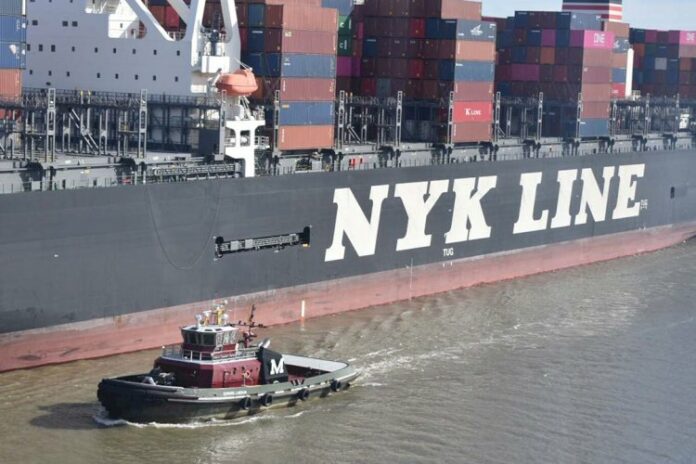
NYK became one of the first shipping companies to become a member of the Hydrogen Council,* a global initiative of leading energy, transport and industry companies with a united vision and long-term ambition for hydrogen to foster the energy transition.

In the future, NYK will not only transport hydrogen but will also work to realize a hydrogen society, including the development of technology for utilizing hydrogen as a marine fuel. The company will also seek to accurately grasp business opportunities related to hydrogen, which is said to be the ultimate clean energy, and become involved in the entire supply chain.

The NYK Group is dedicated to achieving the SDGs through its business activities and its medium-term management plan “Staying Ahead 2022 with Digitalization and Green.” Among them, NYK places climate change as one of the most important issues, is promoting the conversion to alternative fuels to aid marine-fuel decarbonization, and is contributing to the conservation of the global environment. NYK’s membership in this Council will contribute to the below SDGs.

* Hydrogen Council

The Hydrogen Council is a CEO-led organisation that uses its global reach to promote collaboration between governments, industry and investors, and to provide guidance on accelerating the deployment of hydrogen solutions around the world. The Council acts as a business marketplace, building a comprehensive hydrogen economy and shifting the perception of hydrogen globally. In addition, the Hydrogen Council serves as a resource for safety standards and an interlocutor for the investment community, while identifying opportunities for regulatory advocacy in key geographies. The coalition of 92 members including large multinationals, innovative SMEs and investors collectively represents total revenues of over €18.9 trillion and over 6.5 million jobs around the world. 

Rivertrace and Prevention at Sea join forces on bilge water monitoring system

0

Market leading developers of smart water quality monitoring technology, Rivertrace Limited have integrated the multi Lloyd’s List awarded ε-ORB (PAS electronic Oil Record Book) software application developed by maritime technology and marine risk prevention firm, Prevention at Sea Ltd into their SMARTSAFE ORB bilge overboard security system monitoring equipment.

The bringing together of the two systems through an API created by digital technology provider Intellore, will allow data collected by Rivertrace’s SMARTSAFE ORB to be automatically entered into the certified Electronic Oil Record Book, the Prevention at Sea Ɛ-ORB, removing the need for manual entries.

The SMARTSAFE ε-ORB has been developed under a newly formed joint venture SENSƐAS, in which both companies are exclusively working together to develop sensor technology with maritime software to provide the industry with a smarter, simpler way to improve processes and recording data.

Rivertrace originally developed SMARTSAFE ORB as a complete interlocked system that enables the electronic recording of discharges, to prevent the use of “Magic Pipes”, illegal discharges and to minimise discrepancies in a ship’s oil record book. In its simplest form, SMARTSAFE Ɛ-ORB utilises GPS and records each ‘event’ of the bilge water discharge process.

Recent updates to SMARTSAFE ORB have made the system smaller and lighter with installation requirements simplified. The system now features a camera that is integrated into the separator interface to capture tampering for increased security.

The integration of Prevention at Sea’s ε-ORB software application will now allow users to replace traditional paper oil record books (ORB) (Part I and Part II) and facilitate accurate ORB entries into an efficient electronic format. This prevents the input of vague entries, incorrect ORB format and code mismatches and supports automatic and secured transmission  of records between the fleet and their operator offices by using the existing communication systems on board. Prevention at Sea’s ε-ORB system was the first ORB to be approved by a major flag state (Liberian Registry). Since then it has achieved certification from 3 IACS members and several approvals from most major flag states.

Together the combined SMARTSAFE ε-ORB promotes transparency, credibility, and traceability in accordance with the MARPOL,  IMO Circ. 736/Circ. 2 and MEPC 312(74) requirements.

Martin Saunders, Operations Director at Rivertrace, said:

“We believe that the collaboration between Rivertrace and Prevention at Sea will be very beneficial for the customer bases of both companies. Digital technology is changing the landscape of our industry and through this strategic technology integration, we are supporting our customers in their quest for simplified, continuous monitoring and efficient operations.”

Petros Achtypis, CEO, at Prevention at Sea, said:

“We are proud that Rivertrace have integrated our ε-ORB software application into the SMARTSAFE ORB discharge monitoring system. The joint project SENSεAS reflects our commitment to innovation and environment protection. This sharing of expertise between our two companies will allow users of the system to achieve greater efficiencies in record keeping and prevent discrepancies in the ship’s ORB. We will continue working towards delivering more ‘smart’ products in the future. This is a huge step forward for the industry which we are delighted to support with our technology.”

Arcadis Ost 1: construction of platform kicks off at Gdansk Shipyard

0

At the former Lenin shipyard in polish Gdansk the steel construction for another offshore substation in the Baltic Sea has started.

The platform was ordered by wind farm operator Parkwind in coordination with 50Hertz. On this platform, the electricity generated by the Arcadis Ost 1 wind farm located east of Rügen island, will be collected and transformed to the 220 kV level. From there, the electricity will flow through the Ostwind 2 submarine cables. After 95 kilometres, these reach the Lubmin substation at the Greifswald Bodden, where the electricity is integrated into 50Hertz’s extra high voltage grid. The contractor for the platform is specialist company Bladt Industries from Denmark.

The shipyard in Gdansk became world-famous in the 1980s because the independent trade union So-lidarnosc was founded there and this was the beginning of the collapse of communism in Eastern Europe. The most important part of the platform is the bare steel structure: the substation bulding itself, the so-called topside. A total of almost 1,000 tonnes of prime steel was cut, sanded and partial-ly installed at the Danzig shipyard. The steel construction is expected to last until first half of 2021. A seaworthy coating will then be applied to the still empty steel structure to effectively protect it against corrosion.

Photo: Ralph Kühn. The steel construction for the topside of the offshore-substation has already been welded together. 

After the steel construction has been completed, the topside will be shipped across the Baltic Sea to Aalborg in Denmark on a pontoon. At the local Bladt shipyard, the empty substation structure will then be filled with eletrotechnical installations: transformers, gas-isolated switchgear and other operating facilities. At its offshore destination to the east of Rügen island, the platform will be anchored onto a single pile that has been driven into the seabed. The topside and foundation are then connected to each other.

According to the current planning, the offshore substation for the Arcadis Ost 1 wind farm, with a planned capacity of 247 megawatts, should be installed in 2022, followed by work for the grid connec-tion. 50Hertz is planning three submarine cable systems at the 220 kV alternating current level with a total capacity of 750 MW to connect Arcadis Ost 1 and the neighboured wind farm Baltic Eagle with the german extra high voltage grid. Currently 50Hertz co-ownes four offshore substations in the Baltic Sea, Elia in Belgian operates one offshore substation in the North Sea.