-6.2 C
New York
Home Blog Page 807

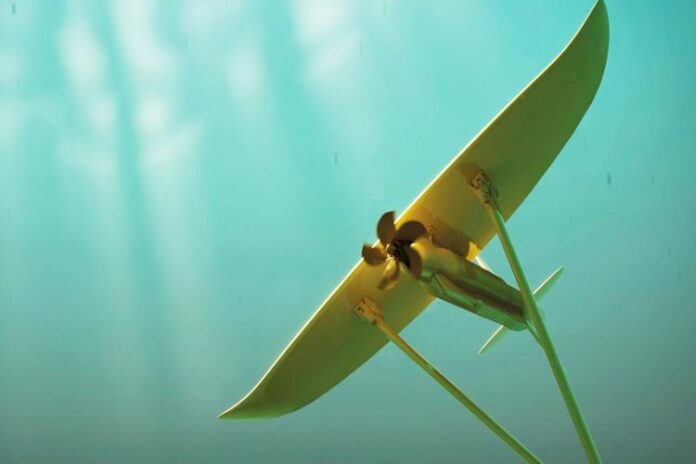
Tidal energy project: Minesto completes the installation of subsea infrastructure

0

Minesto also successfully installed the first DG100 tidal energy converter, but during the initial commissioning phase a mechanical failure occurred in the powerplant’s mooring interface and denied further operations.

After the concluded installation of the subsea export cable, which connects the kite system powerplant to the onshore control station, the Vestmannasund site infrastructure is now operational and the offshore site connected to the Faroese electricity grid. The DG100 kite system has been recovered for service and re-fitting of the failed component in the mooring system. 

Dr Martin Edlund, CEO of Minesto, said:

”We have gained increased important experience of subsea installations, service towing procedures and powerplant launch and recovery operations. Of course, we would prefer to be operational rather than still being in the installation and commissioning phase, but each step towards grid connected electricity generation is significant progress. The work towards power production in the Faroes is a top priority for Minesto and powerplant operation will commence as soon as favourable tidal conditions and service lead times allows.”

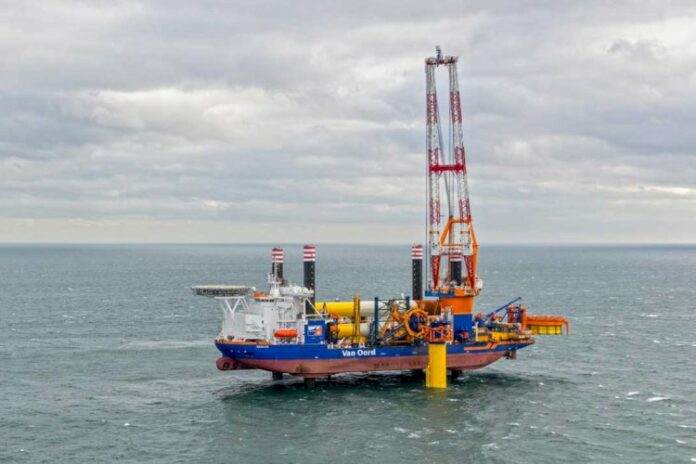
Van Oord awarded contract to construct Hollandse Kust offshore wind farm

0

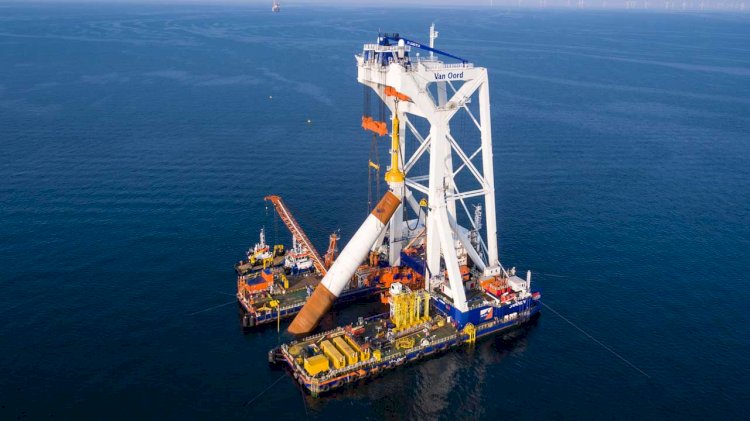
Following the announcement that CrossWind received the permit for the Hollandse Kust (noord) offshore wind farm, Van Oord has confirmed that it has been contracted for the Balance of Plant scope. CrossWind is a joint venture between Shell and Eneco.

Offshore wind is essential in achieving the energy transition in the Netherlands. In the 2030 Roadmap for offshore wind energy, the Dutch government states that more than 11 gigawatts (GW) of offshore wind farms will be built and connected to the mainland by 2030. Over the past years, Van Oord has played an important role in the development and construction of several Dutch offshore wind farms, such as Gemini Offshore Wind Park and offshore wind farm Borssele III & IV and site V. Hollandse Kust (noord) will have an installed capacity of 759 MW, generating at least 3.3 TWh per year. This is enough renewable power to supply more than 1 million Dutch households with green electricity. CrossWind plans to have the wind farm operational by 2023.

Tjalling de Bruin, Project Director CrossWind, said:

“We are looking forward to working with our partner Van Oord to deliver the offshore wind farm Hollandse Kust (noord) in the Netherlands. With signed contracts in place and the Final Investment Decision taken, work can start in order to deliver clean energy by 2023.”

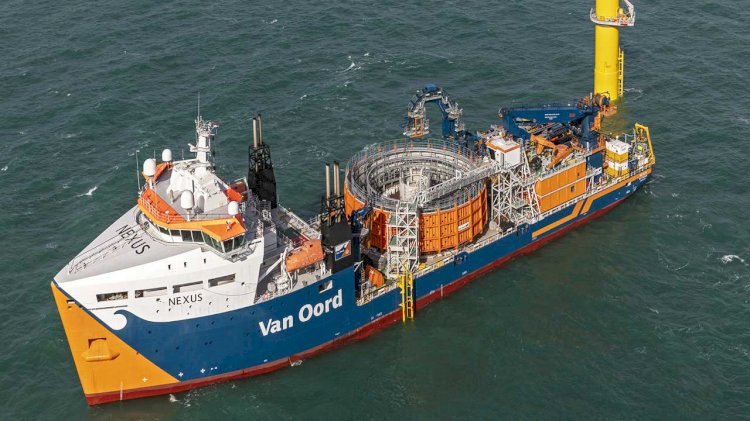
As Balance of Plant contractor, Van Oord’s activities encompass the engineering, procurement, construction and installation of the foundations, inter array cables and transportation and installation of the wind turbines. Van Oord will deploy its offshore installation vessels Aeolus, MPI Adventure and MPI Resolution and cable-laying vessel Nexus.

Arnoud Kuis, Managing Director Van Oord Offshore Wind:

‘We are very proud to be working together with Shell and Eneco as the Balance of Plant contractor for Hollandse Kust (noord). We can combine all our in-house knowledge and expertise for the construction of this offshore wind farm. Being part of this innovative project, Van Oord is again at the forefront of projects that contribute to the transition to renewable energy in the Netherlands.’

Ruben Dijkstra, Director Offshore Wind Eneco:

‘We are very happy to have Van Oord as a partner for the development of the Hollandse Kust (noord) offshore wind farm. Van Oord has had a successful track record for many years in a number of our offshore wind farms. They are a trusted partner, offering high-end technical solutions and on time delivery. We are looking forward to the start of the construction together with Van Oord.’

Port of Valencia studies Baleària’s bid for new passenger terminal

0

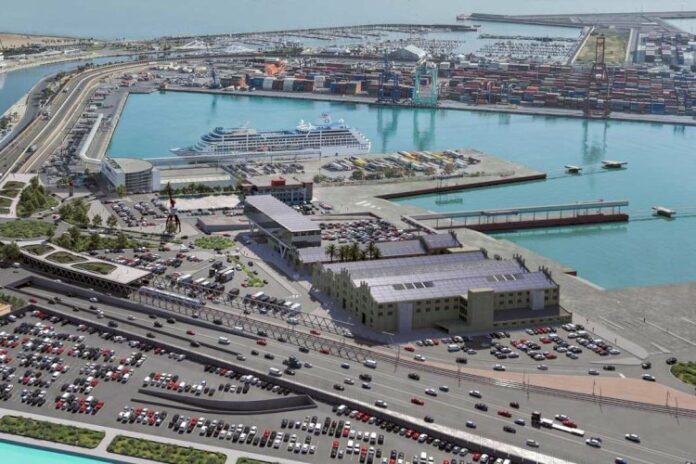
The Contracting Committee of the Port Authority of Valencia has met to find out about Baleària’s bid for the tender for the construction and operation of the new passenger terminal in the Port of Valencia and to start studying it. This infrastructure will be located between the Muelle de Poniente and the Muelle del Espigón del Turia, in the area previously occupied by the Unión Naval de Valencia shipyard, and which has approximately 100,000 m2. The concession will be granted for a period of 35 years, extendable to a maximum of 50 years.

The shipping company Baleària, the only company that submitted a bid, plans to build and operate the new passenger terminal in the port of Valencia with a project that guarantees that 100% of the electrical energy required will be produced at the facilities themselves and will be of renewable origin: photovoltaic, wind, renewable hydrogen or biofuel. According to the project presented to the competition of the Port Authority of Valencia, the maritime station will operate with zero contaminating emissions and will bet on the circular economy. The new passenger terminal, destined for both regular ferry lines and cruise ships, has been designed to become a reference of sustainability in the environment of the port of Valencia and to generate added value to the seafront.

Baleària, which aspires to be the concessionaire of the new passenger terminal, will invest over 37 million euros in the infrastructure, which will include some 63,000 square meters and 13,462 of concessional water on the former grounds of the Unión Naval de Levante (UNL), between the Poniente wharf and the Espigón del Turia wharf.  The project prepared by Baleària calls for annual traffic of 370,000 passengers in the first five years of operation (which would begin in 2023), which would be around half a million in the following years, with annual growth of 2%, according to the shipping company’s conservative estimate. The company estimates that, during the life of the operation contract, the Port Authority of Valencia will collect around 70 million euros for the obligatory taxes on ships, passengers, and goods.

The former UNL facilities will house the terminals for regular line passengers and cruise passengers, with separate and independent spaces and operations. Four ferry and cruise quays will be provided. A 215-meter central dock: with berths on both sides for ferries and a north and south dock for cruise ships. All will be prepared to accommodate ro-ro and ro-pax vessels. The new infrastructure of the Port of Valencia for international passenger traffic will have two esplanades of about 15,000 and 6,000 meters for pre-boarding from the south and west accesses. The project includes an Innovation and Eco-efficiency Centre and a space for cultural promotion.

Global Ports Holding (GPH), the world’s largest cruise operator, will oversee managing the cruises. It will be committed to a notable reduction in noise, as well as to recycling 100% of its waste in the biomethane plant to be built in that area, which will also digest ship and terminal waste to obtain biogas. This biofuel will feed a fleet of vehicles that will eventually be replaced by others that are electric, rechargeable at the supply points set up in the two car parks. There will be four times more recharging points than required by the regulations.

The Baleària project includes the preservation of the heritage elements of this environment that stand out for their historical value, as determined by the Demetrio Ribes chair of industrial archaeology. In addition to the warehouses, two cranes will be preserved, the water tower and the slipways of the former UNL shipyards.

The project also contemplates a training centre of the Baleària Business School (EdEB) with offers in different areas of the maritime sector and especially aimed at the Nazareth district, within an action plan to involve the main actors and interest groups.

Baleària, which is the number one shipping company in the port of Valencia in terms of the volume of passengers, vehicles, and road freight, has been operating on the Turia quay since 2007 and actively participates in various environmental projects together with the port community, such as the Green C. Ports, the Loop-Ports Project, Security & Safety or the Linghive 2 vessels demand: green and smart links.

Halliburton to provide digitalization for PETRONAS exploration activities

0

Halliburton Company has announced it received a scope expansion from Petroliam Nasional Berhad (PETRONAS) to support their upstream digitalization initiatives and reduce exploration time by increasing collaboration and efficiency.

PETRONAS is the custodian of Malaysia’s oil and gas resources and a Fortune Global 500 energy company with a presence in more than 50 countries.
Halliburton Landmark will deliver DecisionSpace® 365, its E&P cloud software that provides an integrated platform to help operators like PETRONAS achieve their business objectives.

DecisionSpace 365® seamlessly connects the operator’s workforce in a cloud environment and leverages machine learning and artificial intelligence for knowledge sharing across the operator’s asset portfolio. By improving collaboration in real-time, operators can make faster decisions to reduce exploration time and cost.

Nagaraj Srinivasan, senior vice president of Landmark and Halliburton Digital Solutions, said:

“We look forward to collaborating with PETRONAS and delivering this digital solution for their exploration activity. DecisionSpace® 365 enables seamless integration into existing applications and will allow PETRONAS to quickly put optimized workflows in the hands of its end users.”

The cloud solution will connect all international and domestic operations across the PETRONAS global portfolio.

Port of Rotterdam Authority becomes a member of the Hydrogen Council

0

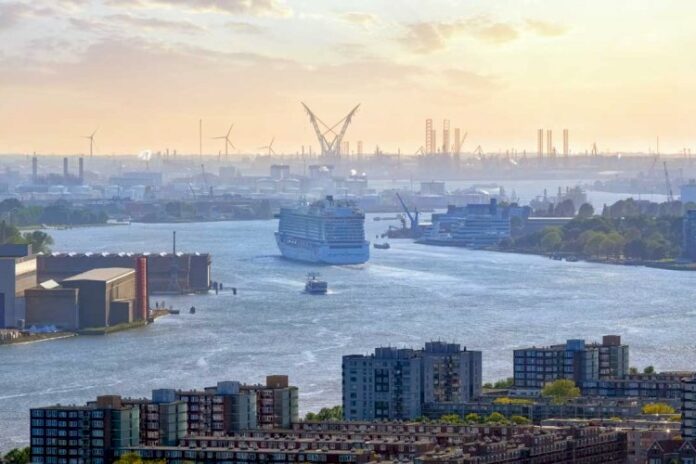
The Hydrogen Council was founded in 2017 and currently has 92 members, mainly global companies active in the field of energy and transport, such as Air Liquide, Air Products, Aramco, BP, Shell, Vopak, BMW, CMA CGM, Daimler, GM and Toyota.

Large banks and investment companies are also affiliated with the Hydrogen Council.

Benoît Potier, CEO of Air Liquide and co-chairman of the Hydrogen Council, said:

‘Policymakers, the business sector and investors worldwide consider hydrogen development indispensable for the recovery from the current economic downturn following the pandemic. The recently announced European, German and Korean hydrogen plans are clear examples of this. This point in time is decisive for energy production and consumption for at least one generation. The Hydrogen Council companies recognise that we have arrived at a critical time to accelerate clean energy development to achieve climate goals. Hydrogen is of the utmost importance in achieving this.’

Allard Castelein, CEO of the Port of Rotterdam Authority, said:

‘Hydrogen is the energy carrier of the 21st century. The hydrogen economy is currently rapidly emerging in Rotterdam through the development of a number of projects. As a member of the Hydrogen Council, we expect to be able to share our experiences, learn from others and help boost this climate-friendly fuel and raw material.’

NOV receives flexible pipeline system contract from Subsea 7

0

Subsea 7 has awarded the Subsea Production Systems business unit within NOV a sizeable contract for the flexible pipeline system for the Sangomar, Phase 1 project offshore Senegal, West Africa, Woodside, headquartered in Australia, is the technical operator for this greenfield development.

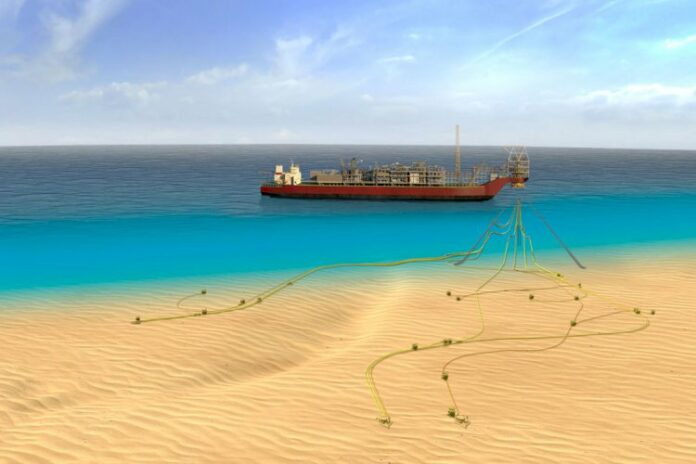
The overall scope on the contract constitutes up to eight dynamic risers installed in a lazy wave configuration, as illustrated in the above image, and up to 47 associated jumpers and flowlines to make the total scope in the range of approximately 28km of flexible pipes and associated ancillary components.

The project demonstrates the value of early engagement to create an integrated subsea umbilicals, risers, and flowlines (SURF) tender. 

PDE Offshore supports Taiwanese offshore wind build out using Sonardyne technology

0

The company has ordered a Mini-Ranger 2 Ultra-Short BaseLine (USBL) system and Wideband Sub-Mini 6+ (WSM 6+) transponder/responders to accurately track the position its underwater equipment, which includes a seabed frame used to guide geotechnical corers.

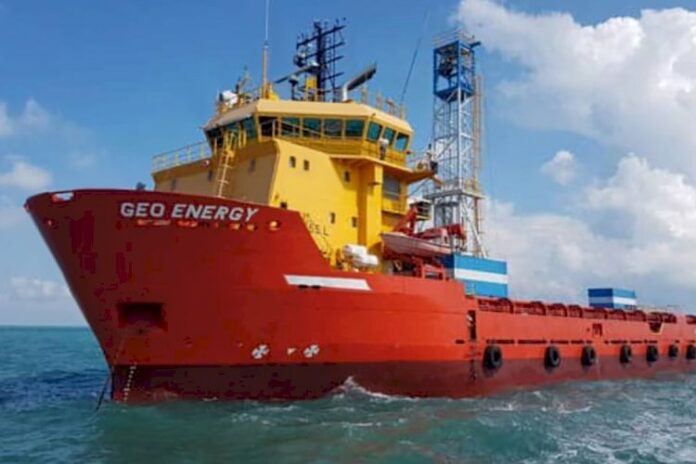
The Mini-Ranger 2 will be installed and operated from PDE Offshore’s 72-metre long survey vessel, MV Geo Energy, which is scheduled to spend this summer  working in the Taiwan Strait, evaluating proposed locations for turbine foundations..

Mini-Ranger 2 is built around Sonardyne’s 6G hardware and Wideband 2 digital acoustic technology platforms. At its heart is HPT 3000, a highly capable surface-deployed USBL transceiver optimised for performance in shallow water, as well as high elevation and long lay back operating scenarios and data telemetry. 

The size and positioning performance of WSM 6+ makes it a transponder choice for fitting to and tracking underwater vehicles and equipment. Its built-in depth sensor improves USBL precision, while a responder mode allows fast moving targets to the tracked at the highest possible update rate.

Huang Hsin-chih, president of PDE Offshore, said:

“Where we work in the Taiwan Strait, water depth is from 20 to 60 meters; in the future, there might be a chance to work in offshore wind farm with water depth from 50 to 200 meters, so whilst we do need a very precise USBL, we don’t need the one that’s full ocean depth capable. Through renting, we have become familiar with Mini-Ranger 2 and the benefits it’s brought to our busy geotechnical operations. So it was a simple choice to decide to go ahead and purchase one of our own.”

Dan Tan, Regional Sales Manager for Sonardyne in Singapore, said:

“Taiwan’s ambitions of becoming a green island means it is fast becoming a leading player offshore wind in Asia Pacific. We’re pleased to be a part this energy transition through PDE Offshore’s investment. Although this will be a permanent installation, Mini-Ranger 2 is also a great option for moving between vessels and even unmanned surface vessels (USVs).”

World’s first CarbonClear certification to Lundin Energy’s Edvard Grieg Field

0

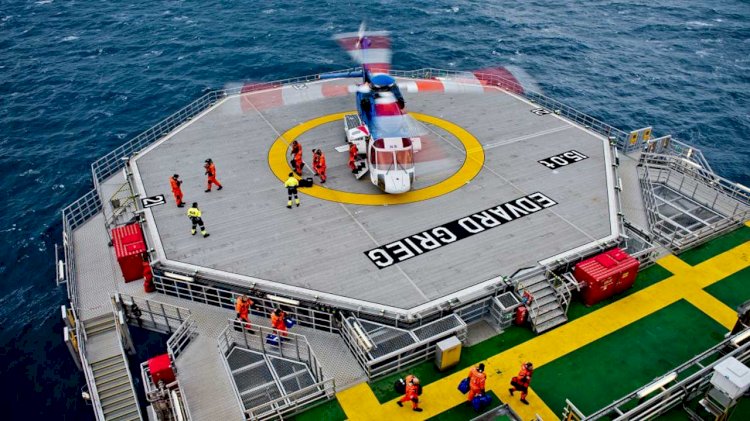
Intertek, a leading Total Quality Assurance provider to industries worldwide, announces the first certification awarded under its new CarbonClear independent upstream carbon intensity certification program. The first certification was awarded to Lundin Energy, one of Europe’s leading independent oil and gas exploration and production companies, for its Edvard Grieg field in the central North Sea.

The CarbonClear Certification is designed to drive transparency, precision, and assurance of carbon emissions performance, while also serving as a catalyst for accelerating investment and performance in carbon footprint reduction across the energy sector, reducing emissions for current and future generations. In a recent independent survey*, 89% of investors said they would like oil & gas companies to adopt certifications that verify carbon transparency.

Intertek’s CarbonClear will enable traders, refiners, regulators and other stakeholders to confidently rely on certified and standardized emissions intensities, to further compare and differentiate the value of production streams, and how the purchase of commodities from these streams impacts a company’s or country’s overall progress toward emissions targets across the energy value chain.

Alex Schneiter, Chief Executive Officer of Lundin Energy, said:

“Oil and gas will continue to play an important role in the future energy mix, but when it comes to emissions, we know not all barrels of oil are created equally. At Lundin Energy, we are proud of our Decarbonization Strategy, the investments made to materially reduce emissions from Edvard Grieg production, our leadership on low carbon intensity and our drive towards carbon neutrality by 2030.

The CarbonClear Certification for Edvard Grieg is an important part of that strategy and creates an independent and verified validation of one of the lowest carbon intensive fields in the world. If you can certify the provenance of a barrel of oil, it should have clear benefits for everyone in the value chain seeking to deliver a product which has inherently reduced emissions intensity, aiding the shift towards a lower carbon future and ultimately be an enabler for the energy transition.”

The comprehensive CarbonClear process enables producers to spot clear and actionable high-impact emissions improvement opportunities by field across operations and supply chains and compare detailed performance year-over-year versus peers.
Today, an estimated 6% (Source: McKinsey1) of total global emissions originate from the production of oil and gas, but emissions vary significantly from field to field and opportunities exist to help operators gain transparency on where to improve to reduce climate impacts.

André Lacroix, Chief Executive Officer of Intertek, said:

“As more and more companies and countries make commitments to emissions reduction and even carbon neutral targets, stakeholders are looking for ways to confidently verify progress and differentiate performance in the market. Building on our position as the industry-leading provider of Total Sustainability Assurance solutions, Intertek’s CarbonClear program enables companies to demonstrate their end-to-end commitment to sustainability, further incentivizing the industry in delivering the lowest carbon Oil & Gas production in the world. In fact, we envision a future where companies will require emissions certification before acquiring assets to ensure acquisitions are in alignment with their path to carbon reduction targets.

Certification under the CarbonClear program represents a historic shift in emissions transparency in the energy sector and is a meaningful step in the direction of emissions reduction. Our core purpose at Intertek centres around quality, safety and sustainability, and we are delighted to award the world’s first Intertek CarbonClear certification to Lundin Energy and support their commitment to Sustainability and the drive toward a low-carbon future.”

As part of the CarbonClear program, Lundin Energy’s production from the Edvard Grieg field will carry the CarbonClear certification mark, and additional details of the certification are publicly listed for verification by investors, traders, refiners, regulators and other stakeholders in Intertek’s Global Sustainability Directory.

Norsepower unveils first tiltable rotor sail installation with Sea-Cargo agreement

0

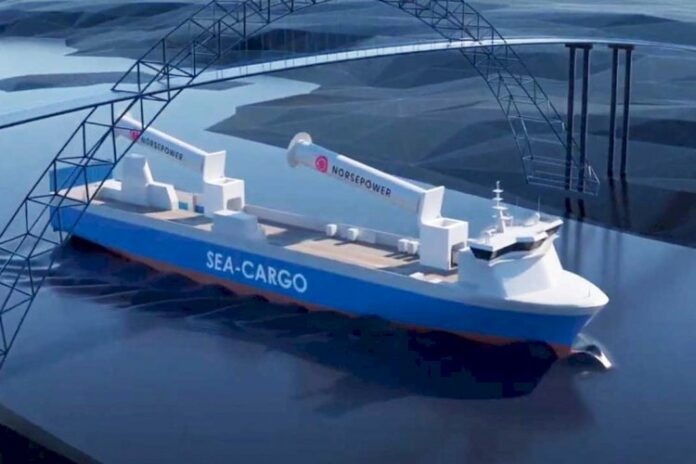
Norsepower Oy Ltd., the leading global provider of auxiliary wind propulsion systems, and SEA-CARGO, leading logistics provider in the North Sea market, have announced an agreement to install two of Norsepower’s largest Rotor Sails on board the SC Connector, a sidedoor Ro-Ro. The agreement also heralds the installation of the world’s first tiltable Rotor Sail, showcasing the innovative design adaptations that can be made for individual vessel requirements.

The SC Connector, a 12,251 gross tonne (GT) Ro-Ro cargo vessel operates in the North Sea, which allows for some of the most favourable wind conditions for Rotor Sails. The routes involve navigating under multiple bridges and powerlines which require the Rotor Sails to have a tilting function. Working in tandem, Norsepower and SEA-CARGO combined their expertise to develop the 35m high and 5m wide Rotor Sails to enable them to tilt to almost horizontal when required.

The Norsepower Rotor Sail Solution – which can be installed on new vessels or retrofitted on existing ships – is a modernised version of the Flettner rotor, a spinning cylinder that uses the Magnus effect to harness wind power to thrust a ship. Preparations for the retrofit on the SC Connector are currently taking place with the installation scheduled for Q4 2020.

With growing international and public pressure on the maritime industry to move towards decarbonisation, the ability to harness the wind to generate thrust, reduce fuel consumption and emissions, is a natural next step for the maritime transport industry. Norsepower has analysed the routes for the SC Connector and estimates that its technology would be able to achieve a carbon emissions reduction of 25% for this vessel.

Commenting on the agreement, Tuomas Riski, CEO, Norsepower, said:

“We are delighted to be working with SEA-CARGO, not only as they are keen to demonstrate their commitment to maximising the propulsive power of wind to reduce emissions, but also for their cooperation and innovation in making tilting Rotor Sails a realisation. Rotor Sails are particularly well suited to Ro-Ro vessels and working with SEA-CARGO to deliver a tilting Rotor Sail ensures we are providing an adaptable solution which fits with particular vessel requirements, specifically demonstrating vessels with height restrictions to benefit from the Rotor Sail solution.”

Ole Sævild, Managing Director, SEA-CARGO, added:

“With a growing international focus on reducing CO2 emissions and other gases/particles – the ability to harness wind to generate energy, reduce fuel consumption and emissions is a natural next step for the maritime transport industry. The goal of this project has been to design more environmentally friendly vessels by combining several existing technologies. In good wind conditions, the sailing hybrid vessel will maintain regular service speed by sail alone.”

The Norsepower Rotor Sail is the first third-party verified and commercially operational auxiliary wind propulsion technology for the global maritime industry. The solution is fully automated and detects whenever the wind is strong enough to deliver fuel and emission savings, at which point the Rotor Sails start automatically.

Eni, bp, Total hit gas discovery off Egypt

0

The well encountered 102 meters net gas pay in high quality sandstones of the Abu Madi formation.

A production test was conducted with flow rates of up to 32 million standard cubic feet of gas per day (MMscf/d), limited by testing facilities. It is estimated that future deliverability per well will be up to 100 MMscf/d, along with up to 800 barrels of condensate per day. Future plans foresee development through tie-in to nearby existing infrastructures.

Kevin McLachlan, Senior Vice President Exploration at Total, said:

“We are very pleased to announce this discovery in Egypt. These results support our strategy to allocate a significant share of our exploration budget to the search of hydrocarbons in the vicinity of existing infrastructures. These resources have low development costs since they can rapidly be tie-in and put into production.”

Total holds a working interest of 25% in the North El Hammad license, alongside operator ENI (37.5%) and BP (37.5%).