-6.2 C
New York
Home Blog Page 805

ABS to class first taiwan-built offshore installation vessel

0

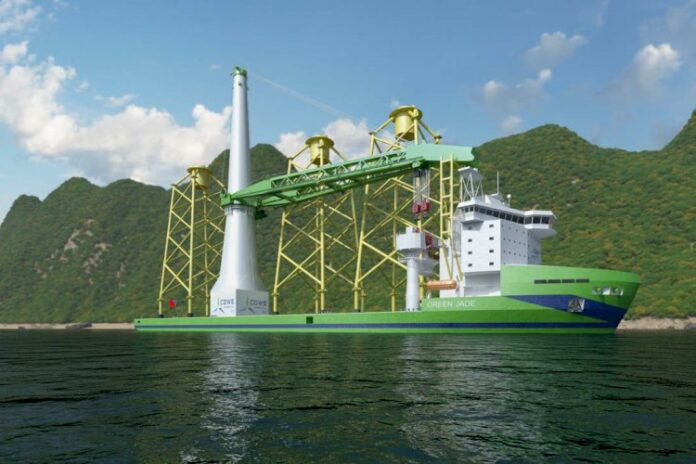
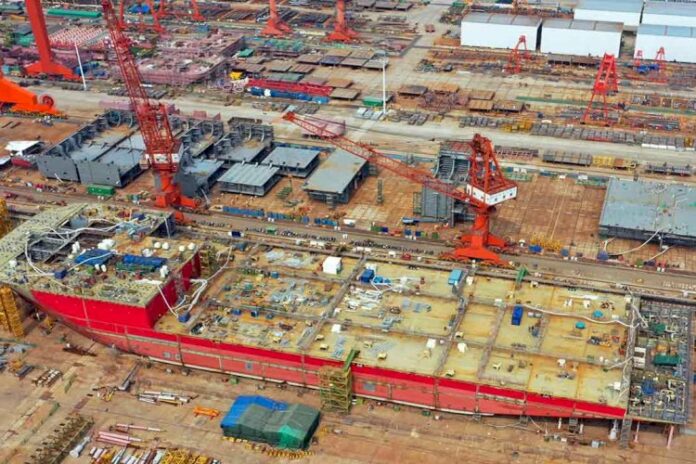
Named ‘Green Jade’, the vessel has been commissioned by CDWE, a joint venture between Taiwanese company CSBC and Belgian offshore contractor DEME, and will be built at CSBC in Taiwan for delivery in 2022 for deployment in the region’s offshore wind market.

Matt Tremblay, ABS Senior Vice President of Global Offshore Markets, said:

“This is a key development for the region’s offshore wind capability and for the Taiwanese shipbuilding industry and we are delighted to be able to support it. Offshore wind has huge potential for growth globally and ABS has the experience to help the industry achieve its ambitions with an unwavering focus on safety.”

At 216.5 meters in length and with a crew of up to 160 people, Green Jade will be equipped to handle the heaviest monopiles, jackets and turbines and features a 4,000-tonne capacity crane. As well as Dynamic Positioning 3 capability and dual fuel engines Green Jade features a waste heat recovery system that converts heat from the exhaust gases and cooling water to electrical energy.

Xodus Group and E&E Solutions form Japanese offshore wind partnership

0

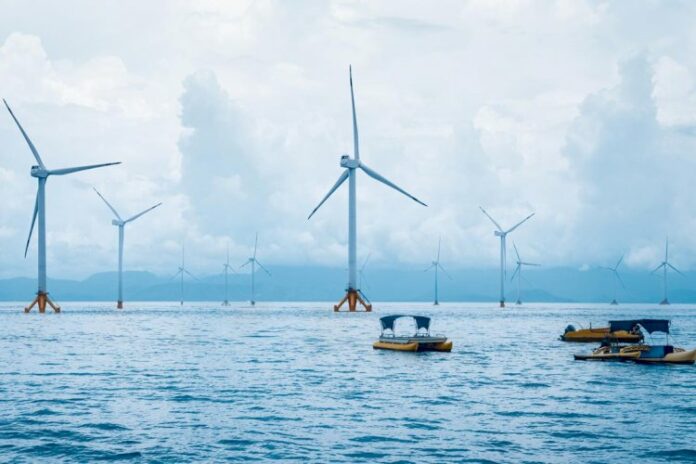
The collaboration will bring together Xodus Group’s international track record in helping clients address industry challenges to enable offshore wind, alongside E&E Solutions’ extensive experience of providing environmental and renewable energy consulting services across Japan. The partnership will provide integrated advisory and technical services to deliver value to offshore wind developers, owners, operators and lenders.

As the leading consultants for wind projects in Japan, E&E Solutions has significant local market knowledge, including an extensive understanding of Japanese environmental laws and the country’s leasing and consenting system.

Xodus brings multidisciplinary expertise in offshore wind. The company’s integrated skills base covers techno-commercial advisory capabilities along with subsea infrastructure, pipelines and cables engineering, offshore engineering, risk management, environmental, supply chain analysis and project development planning. Xodus also brings a proven track record in the European and Asian offshore wind, cables and interconnectors market.

Adrian de Andres, head of offshore renewables development at Xodus Group said:

“Japan is becoming one of the world’s leading countries in offshore wind development, driven by the need to accelerate the energy transition in this country and the rapid cost reduction of offshore wind technology worldwide.”

“There are considerable opportunities within the Japanese market, especially around the ongoing and future offshore wind licencing rounds. As pioneers in the floating wind sector, delivering work for the Hywind Scotland project, we are confident that by bringing our practical expertise and combining it with the local experience of E&E solutions, we can share lessons learned from global developments, maximise technical solutions and efficiencies and ultimately support Japan’s carbon reduction goals.”

Tomohiko Ike, Director of E&E Solutions added:

“With a background of providing support to renewable energy projects around the world, the cooperative arrangement with Xodus Group will allow us to provide a holistic service covering engineering, environmental and commercial advice. By engaging with Xodus, which has expertise in floating offshore wind power generation, we will be able to support the further growth of offshore wind especially within Japanese waters, where few shallow waters are present, providing independent advice for consentable, constructible and commercially viable offshore wind projects.”

UMITRON launches a web-based service for monitoring ocean environmental data

0

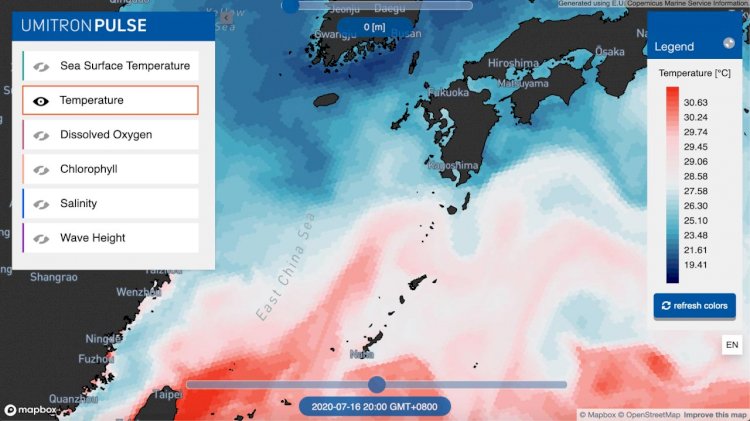
UMITRON PTE. LTD. is launching PULSE, a web-based service for monitoring ocean environmental data. PULSE provides a high resolution map view of a range of water quality parameters which are updated daily. The service utilizes satellite remote sensing technology to provide the accurate, near real time measurements.

Fish, shellfish, and seaweed farmers depend on the ocean for their livelihood, and changes in the environmental conditions can have dramatic effects on their farm’s production. PULSE gives farmers an easy way to regularly monitor changing water conditions. This allows them to make key decisions about when to feed, plant, or harvest their crops as well as manage risks such as high water temperatures or harmful algae blooms.

The service has an intuitive and user friendly interface that allows farmers to quickly zoom in and out to see both local and large scale trends. Now farmers can use the service to check water temperature, salinity, dissolved oxygen, chlorophyll concentrations, and wave height. In addition to real time data the service also provides a forty-eight hour forecast that predicts how the water quality will change in the near future. Soon to be released features include year over year historical data comparisons, additional environmental parameters, and hourly data for select parameters. A mobile application version will also be available soon to provide added usability and convenience.

Andy Davison, Product Manager, UMITRON, said:

“We are excited to release a product that provides utility to a wide range of farmers. Seaweed, shellfish, and fish farmers can all benefit from having access to additional information about the environment they are working in every day.”

New Logica Yacht features powerful SCHOTTEL Pump Jet between rudders

0

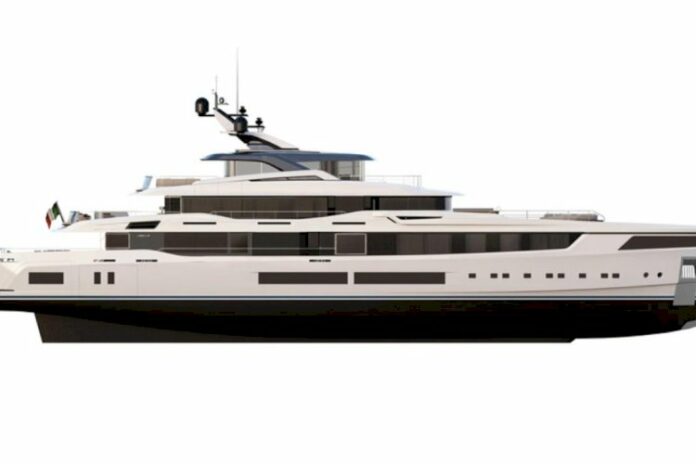
“Logica 183”, recently launched at shipbuilder Logica Yachts’ facilities in Viareggio, Italy, is equipped with one electrically driven SCHOTTEL Pump Jet type SPJ 57 (150 kW). The extremely compact pump jet provides maximum manoeuvrability to the 56-metre-long yacht.

The SPJ allows silent electric propulsion over short distances as well as in DP mode.

To meet the special installation requirements in the stern area of the yacht, the pump jet was placed between the rudders. In close cooperation with the rudder manufacturer, a special interface was developed that enables the pump jet to generate lateral thrust by opening up the rudders to an angle of 90 degrees. This allows interferences between the jet flow and rudders as well as thrust deduction to be kept to a minimum.

When higher speeds are reached, the pump jet can be put into a parking position using the control system. This involves a steering angle of zero degrees and ensures that interactions with the inlet, nozzles and impeller are reduced at higher speeds.

The SCHOTTEL Pump Jet provides full thrust in all directions and can be used as a reliable manoeuvring system, take-home device, and main propulsion unit on a wide range of vessels. Its space-saving installation achieves minimum displacement loss thanks to its extremely compact design.

A further advantage of the SPJ is that vessels can also be manoeuvred quietly and vibration-free even in shallow waters, such as channels. Since the jet is installed flush with the yacht’s hull and provided with a protective grid at the intake, there is no risk of injury to divers or swimmers when the SPJ is in operation.

Designed by Acube Design and Martin Kemp Design with Pierluigi Ausonio developing the naval architecture, the new yacht encompasses 860 gross tonnes with a beam of 10.5 metres. Key features of the three-deck yacht include a private foredeck area as well as a sundeck that can be completely enclosed by wrap-round glazing. It is able to accommodate 12 guests in six staterooms.

“Logica 183” is expected to be handed over in May 2021, and is intended to be the first in a mini-series. 

MHI and CIP enter into Joint Venture to develop offshore wind in Japan

0

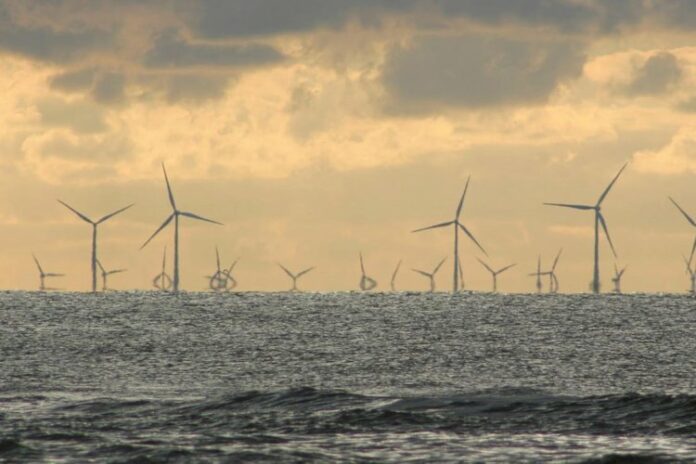
Mitsubishi Heavy Industries (MHI) and Copenhagen Infrastructure Partners (CIP) are pleased to announce a joint venture regarding the development of offshore wind projects in Hokkaido, Japan.

The joint venture is jointly owned by MHI (50%) and CIP (50%), and a team with experts from both owners will be established.

The partners have high ambitions to be significant parties in the Japan offshore wind market which is expected to experience significant growth. The partnership will jointly develop projects in Hokkaido, where conditions are attractive for offshore wind.

MHI has established significant presence within offshore wind via the joint venture MHI Vestas Offshore Wind, which has successfully delivered turbines in Europe and expanding its business to emerging markets in Asia Pacific. As part of its growth strategy, focusing on the entire value chain of the offshore wind power business, MHI has agreed with CIP to participate in the Japan offshore wind market.

CIP is a leading global fund management company within renewable infrastructure investments established in 2012, having seven funds with approximately EUR 10 billion under management, investing in offshore wind, onshore wind, power transmission, biomass, “waste to energy” and solar projects. CIP entered the Japanese market in 2018, with the ambition to contribute to Japan’s delivery on the renewable energy target.

Kentaro Hosomi, President and CEO, Energy Systems, Mitsubishi Heavy Industries, says:

“MHI’s partnership with CIP, a company with extensive experience in offshore wind projects in the world, is a very meaningful starting point for MHI’s offshore wind generation business, which is one of our growth strategies. MHI is excited to develop the offshore wind generation business through partnership with CIP and by leveraging MHI’s long experience in the wind turbine OEM business and onshore wind generation business in Japan and overseas.”

Michael Hannibal, Partner in Copenhagen Infrastructure Partners, says:

”We are excited to announce the partnership with MHI for the joint development in the Hokkaido area. This is an ideal partnership combining the expertise of the partners. MHI brings innovative technical solutions and extensive local knowledge where CIP brings global state of the art offshore wind development and investment experience to the partnership.”

Ørsted to use BareFLEET system to track CTV ops

0

Ørsted, the global leader in developing and building offshore wind farms, has selected Reygar Ltd.’s innovative BareFLEET remote monitoring and reporting platform to track and analyse the performance of its chartered fleet of Crew Transfer Vessels (CTVs) operating across wind farms in Europe. Reygar is the leading provider of advanced vessel performance monitoring systems to the offshore renewable energy sector.

Ørsted has 9.9 GW offshore wind capacity installed and under construction. By adopting the vessel-agnostic, cloud-based BareFLEET system, the wind farm developer and operator can be confident that it is getting the best possible service from the vessels it charters.

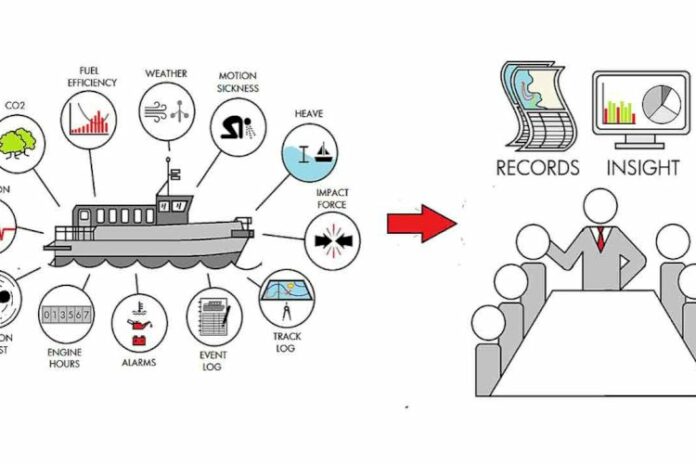
Ørsted has commissioned Reygar’s BareFLEET system to log vessel motion, fuel consumption, and PAX movements. The system will provide an accurate record of events – including transit, push on, transfer, and crane lifts – so that all operational activity may be assessed for improvement or enhancement.

The system will collate data from existing onboard sensors across the firm’s varied fleet, supplementing this with motion sensor measurements, observations added manually by the Captain and video of transfers. The complete picture of vessel performance and safety that this provides will be accessed through Reygar’s cloudbased portal and daily reporting systems, as well as offering access to raw data for independent analysis by Ørsted’s team.

Chris Huxley-Reynard, Managing Director, Reygar Ltd, said:

“By monitoring and acting on data-based insights into motion, fuel consumption, and skipper logged activity, Ørsted will be able to maximise “time on turbine”– whether this is part of the course of operations and maintenance or during construction phases. We are extremely proud to be supporting the firm in realising its offshore ambitions.”

OHT: Contract signed for transport and installation of foundations at Dogger Bank

0

Following announcement of the award of a Preferred Supplier Agreement on 28th November 2019, OHT Alfa Lift AS has now signed the contract for the transport and installation of foundations for the first phase of Dogger Bank Wind Farm, Dogger Bank A. The contract for the second phase, Dogger Bank B, is expected to follow in due course.

The project will be the monopile installation debut for OHT’s specialist new build vessel Alfa Lift which is currently under construction at CMHI’S shipyard in China.

Alfa Lift will transport the monopile foundations and transition pieces to the offshore site, more than 130km off the north-east coast of England, and install them in water depths up to 35 metres, utilising the vessel’s class leading 3,000-tonne crane, state-of-the-art mission equipment and smart deck handling system.

Steve Wilson, Dogger Bank’s Project Director, said:

“It’s great news to confirm the OHT Alfa Lift vessel for Dogger Bank A. Their vessel is one of the most innovative heavy transportation and installation vessels on the market and we are very pleased to have them working with us as we deliver this ground-breaking project.”

Halfdan Brustad, vice president for Dogger Bank in Equinor, said:

“We look forward to working with Norway’s OHT to make Dogger Bank a success. The Alfa Lift is an excellent example of the new, efficient and innovative vessels which we need to revolutionise the offshore wind industry and make it even more competitive.”

The foundations will be amongst the largest ever used for offshore wind and are expected to be installed at Dogger Bank A between 2022 and 2023.

Torgeir E. Ramstad, CEO, OHT, said:

‘The contract is a significant milestone for OHT and we welcome the opportunity to demonstrate Alfa Lift’s market leading capabilities in delivering this landmark project. We are privileged to be working with likeminded, forward-thinking colleagues at SSE Renewables and Equinor.’

Since the preferred supplier contract was announced in November last year, planning for the project is well underway and OHT is keen to engage with the local supply chain.

Lars Kjuul Kristensen, Project Manager for Dogger Bank, OHT, said:

‘We are already in detailed discussions regarding supply contracts with multiple UK companies and we will soon be announcing details of some of the remaining key suppliers we are looking for.’

Companies interested in supplying OHT can register on the supplier portal on their website.

OHT’s Alfa Lift vessel, of Ulstein design, will arrive in Europe in good time before project mobilization. Construction is progressing as expected and has experienced no significant delays due to the COVID-19 pandemic, thanks to the diligence, dedication, and strong focus on safety of all parties involved.

The Dogger Bank Wind Farm is being developed by SSE Renewables and Equinor, with first power expected in 2023. The contract is subject to the project’s final investment decision.

Tallink Silja to offer new cruises from Stockholm to Höga Kusten

0

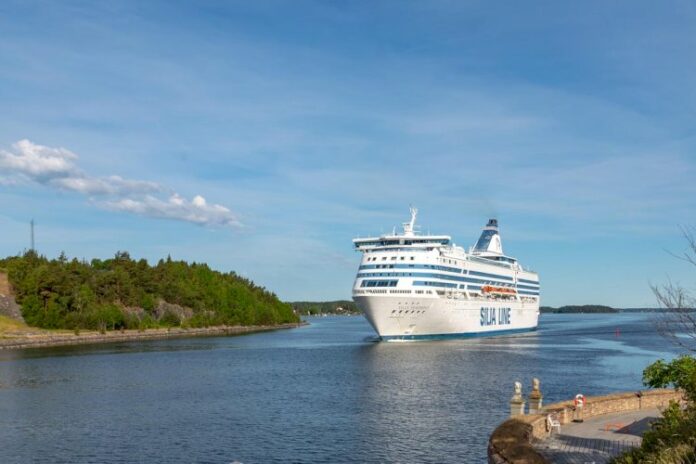
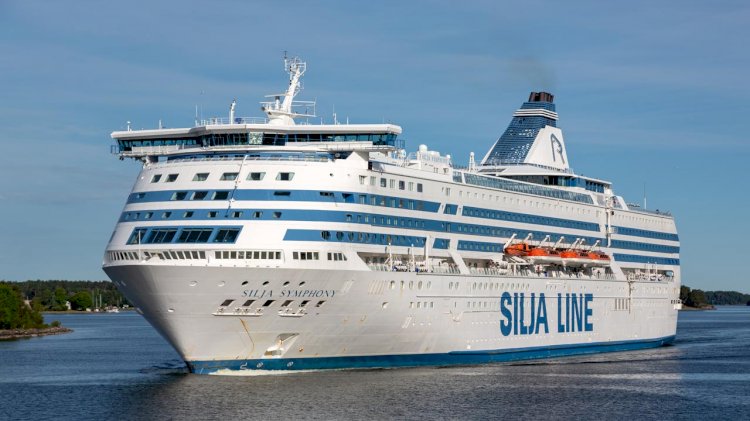
Tallink Silja AB, Tallink Grupp’s Swedish subsidiary, has announced that it will offer a number of new domestic special cruises to the Swedish market in late August and September, this time on a completely new route between Stockholm and the Swedish World Heritage site, the High Coast – Höga Kusten.

The cruises will depart from Stockholm on 21, 28 August and 4, 11 and 18 September 2020. Thereafter, additional departures may be added. Departures take place from Värtahamnen in Stockholm on Fridays at 16.00, Saturday is spent in Härnösand and the ship will arrive back in Stockholm on Sundays at 14.00.

The cruises will be operated with the company’s flagship vessel Silja Symphony. The cruises will go via Mariehamn and can thus offer tax-free shopping opportunities for the travellers.

Marcus Risberg, CEO of Tallink Silja AB, commented:

“Höga Kusten is an increasingly popular travel destination and this summer, interest in the area has sky-rocketed, not least thanks to increased domestic tourism in Sweden.”

In order to ensure the highest levels of passenger and crew safety on board, Tallink Silja has adopted new safety standards and processes with a number of concrete safety measures that apply in both terminals and on-board ships.

Risberg said:

“We have introduced a large number of safety measures on board that are well established and the new normal by now. We also continue to limit the number of passengers and it is possible to bring the car on board for a safe boarding and disembarkation without queues and congestion.”

MSC Cruises forms joint venture with Palumbo Group

0

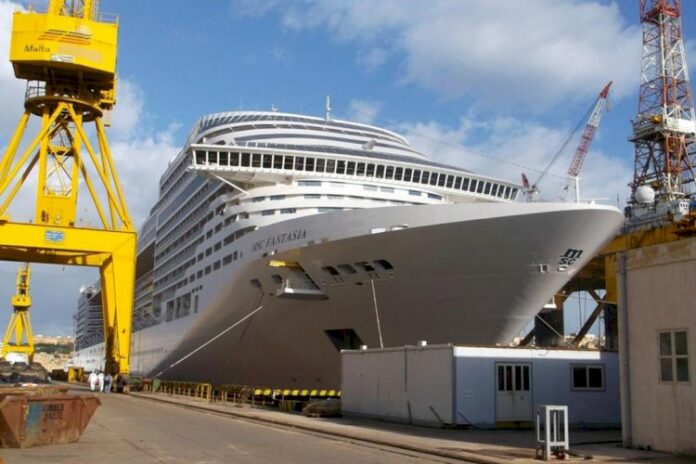
MSC Cruises and Palumbo Group have formed a joint venture to operate the Palumbo Malta Shipyard.

The new joint venture sees MSC Cruises take a 50% stake in the shipyard and become an equal partner alongside the current owner Palumbo Shipyards. The shipyard has become an international professional center of excellence for shipping repairs over the last ten years since Palumbo Group took it over.

A major upgrade is now envisaged for the shipyard to further enhance every aspect of its already market leading operations as well as intensifying its specialist cruise line focus.

The Palumbo Malta Shipyard will receive custom from MSC Cruises’ vessels as well as from MSC Group cargo ships and ferries, while continuing to serve the shipyard’s loyal clientele.

Of note will be the potential introduction of cutting-edge technology to allow servicing and repair of the next generation of LNG powered cruise ships being built for the MSC Cruises’ fleet. LNG is the greenest and most environmentally friendly maritime fuel currently available. This will support MSC Cruises’ objective of achieving zero environmental impact operations as part of its drive towards a more sustainable cruise line industry.

Pierfrancesco Vago, Executive Chairman, MSC Cruises said:

“I am proud to be forming this joint venture with Mr. Palumbo and his group today. This is a natural culmination of our already warm and close relationship that has developed from the professionality he has shown over the years. We look forward to the professional service and repairs our vessels will receive.”

Antonio Palumbo, the founder and Chairman of Palumbo Group, added:

“I am happy with this joint venture with the Aponte family because, in addition to having a personal and consolidated friendship over the years, it unites us with a common business philosophy. This agreement is not just a financial transaction but is aimed at strengthening our network and is part of a group corporate strategy.

Today I am proud to expand our services, consolidated over the years thanks to far-reaching experiences, through this partnership with a world-class player. I am sure that the future will prove us right, leading this shipyard to consolidate itself as one of the most important multi-purpose structures in the markets of cruise, merchant and advanced-technology ships, providing refitting services, general maintenance and installation of Eco-Friendly systems where Palumbo Shipyards already holds a leading position. Not least, the whole Maltese community will benefit from a new economic boost.”

Norway committing US$1.5 million to support improved ship recycling in Bangladesh

0

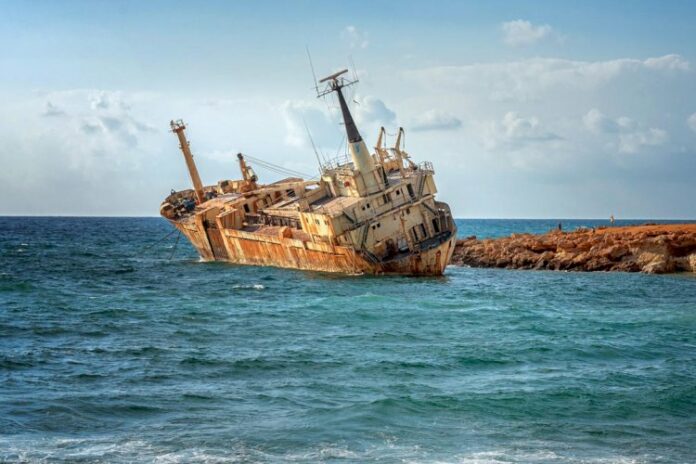
The third phase of an IMO-implemented project to enhance safe and environmentally sound ship recycling in Bangladesh has been given the go-ahead, with Norway committing approximately US$1.5 million (14 million Norwegian Kroner) to support improved ship recycling in Bangladesh.

The agreement between IMO and the Government of Norway to support Phase III of the project on Safe and Environmentally Sound Ship Recycling in Bangladesh (SENSREC) was signed on 24 July 2020. This will pave the way for Bangladesh to move forward on its path towards becoming a party to the IMO Hong Kong Convention, the treaty that will set global standards for safe and environmentally-sound ship recycling. 

The Agreement follows the successful implementation of Phase I (2015-17) and Phase II (2018 – 2020) of the SENSREC Project, both mainly funded by Norway. With the additional funding, Phase III of the project will be implemented over 18 months, starting from November 2020.

SENSREC Phase III will focus on improving ship recycling standards in compliance with the Hong Kong Convention and enhancing capacity building for the Government of Bangladesh on legislation and knowledge management. Specific technical assistance will be provided to the Government of Bangladesh to establish a facility for treatment, storage and disposal of hazardous wastes. There will also be a focus on evaluating the impact of Covid-19 on the ship recycling industry in Bangladesh.
The Ambassador of Norway to Bangladesh, Ms Sidsel Bleken, said that the SENSREC Project had already achieved significant progress, thanks to the commitment of the Government authorities as well as the ship-recycling industry of Bangladesh.

Her Excellency Ms Bleken said:

“Norway is pleased to extend its support to Bangladesh and our thanks go to IMO for their important role in this Project. Through IMO, we will continue to support the authorities, the industry, and other stakeholders in strengthening their efforts to develop Bangladesh’s ship-recycling industry and the country’s economy. We hope to see more yards complying with the requirements of the Hong Kong Convention, so that Bangladesh can be ready to accede to the Convention in the soonest possible time.”

The Agreement was signed by the Her Excellency Ms. Bleken and IMO Secretary-General Mr. Kitack Lim.

Thanking the Government of Norway for their generous contribution, Mr. Lim said:

“The continuation of this project will greatly enhance national capacities for Bangladesh for safe and environmentally sound recycling of ships. The success of this Phase III of the project will be seen in the crucial technical assistance role that will support the goals of Bangladesh to establish a facility for treatment, storage and disposal of hazardous wastes and ultimately support its aim to accede to the Hong Kong Convention.”
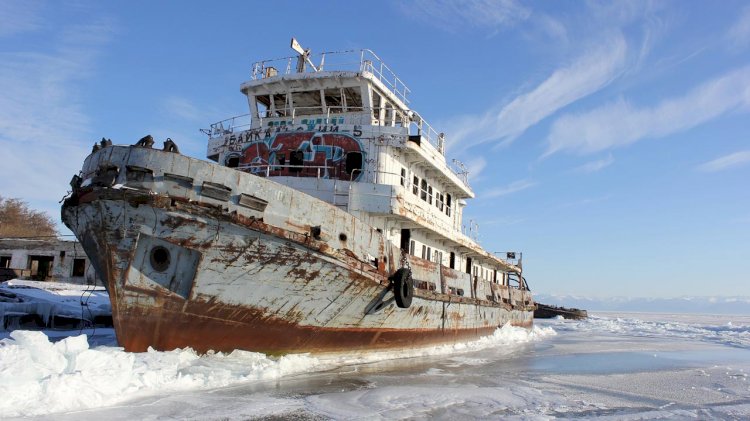
The Hong Kong Convention1 covers the design, construction, operation and maintenance of ships to ensure they can be recycled safely and in an environment-friendly way at the end of their lives. It also deals with how ships should be prepared for their final voyage to a recycling facility, without compromising their safety or operational efficiency.

Under the Hong Kong Convention, ships sent for recycling are required to carry an inventory of all hazardous materials on board. Ship recycling facilities are required to provide a “Ship Recycling Plan”, specifying how each ship will be recycled, based on its particular characteristics and its inventory of hazardous materials.

The treaty will enter into force 24 months after three separate criteria have been met. It must be ratified by 15 States – but these States must represent 40% of world merchant shipping by gross tonnage, and a combined maximum annual ship recycling volume (during the preceding 10 years) of not less than 3% of their combined gross tonnage.

The number of States2 required has now been reached, but further tonnage and recycling volumes are needed before the convention can enter into force.

The top five ship recycling countries in the world, between them accounting for more than 98% of all ship recycling by gross tonnage3, are Bangladesh, China, India, Pakistan and Turkey (of these, two are already Parties to the Hong Kong Convention  – India and Turkey).