-6.2 C
New York
Home Blog Page 804

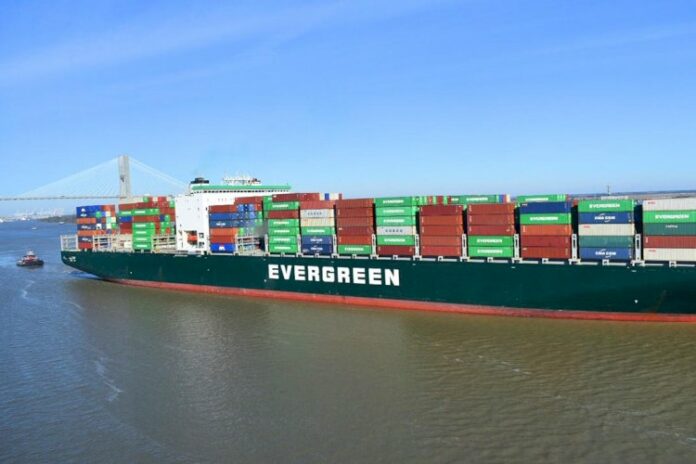
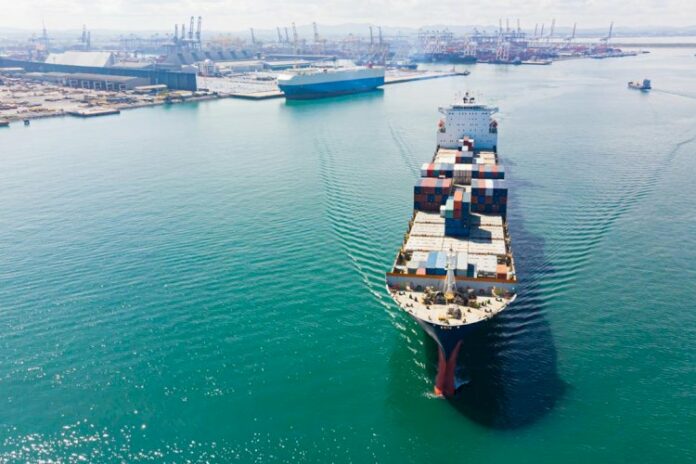
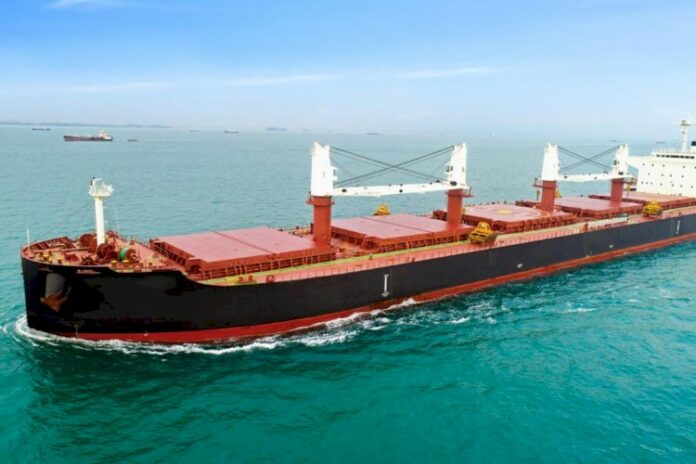
Evergreen Marine joins the Ship Recycling Transparency Initiative

0

In a corporate statement Evergreen said:

“We are committed to the planning of a completely sustainable life cycle for our vessels from design, construction, operation and ultimately to decommissioning. As such, we are delighted to join SRTI, through which signatories can share their ship recycling information via an online platform, helping the industry to improve its eco-friendly recycling policies and practices, and to work together in sustaining an ‘ever green’ global environment.”

Andrew Stephens, Executive Director of the Sustainable Shipping Initiative that hosts the SRTI, said:

“We believe transparency is a key driver of change in the ship recycling value chain. We welcome Evergreen Marine to the growing SRTI family that includes like-minded shipowners who are holding themselves to account before key stakeholders, including clients, investors, and the wider public.”

The shipowner, headquartered in Taiwan, is the fifth signatory to join the SRTI in 2020, bringing the total number of signatories to 26.

The SRTI continues its growth and development conducting outreach across and beyond the industry. The recent SRTI webinar series has seen an increasingly diverse range of stakeholders engaging on the topics of data and transparency; circularity; and the role of financial stakeholders in sustainable and responsible ship recycling, in the  absence of global regulation. 

Fugro performs fully remote platform inspection on UK continental shelf

0

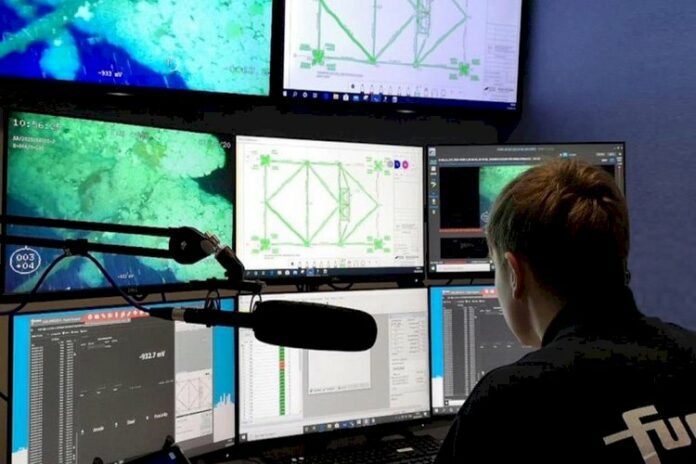
Fugro has delivered the first fully remote inspection of an oil and gas platform in UK waters, 250 km east of Scotland, using a remotely operated vehicle (ROV) and Fugro’s state-of-the art remote operations centre (ROC) in Aberdeen.

In a first for the UK sector, the platform’s entire jacket structure was inspected remotely, demonstrating Fugro’s proficiency in remote operations capabilities.

Fugro originally intended to trial the remote inspection provision during the campaign. However, when only one offshore inspection engineer was able to mobilise to the platform due to Covid-19, inspection engineers based at Fugro’s ROC in Aberdeen stepped in and delivered the whole project remotely to stay on schedule. The ROV was mobilised with dedicated remote systems for visual inspection, cathodic protection (CP) and flooded member detection (FMD), and all systems were base-checked to confirm communications links with the ROC. Fugro also transacted a COABIS database across the onshore and offshore locations; this allowed the client and ROC personnel to access data acquired by the ROV in near real time.

Karl Daly, Fugro’s Director for IRM services in Europe, said:

“This innovative approach allowed for efficient scope delivery and demonstrates to all our clients the opportunities for maximising operational windows whilst reducing offshore HSSE exposure, which is always important but even more so during the current pandemic.”

Fincantieri and Saipem: deep-seabed mining agreement

0

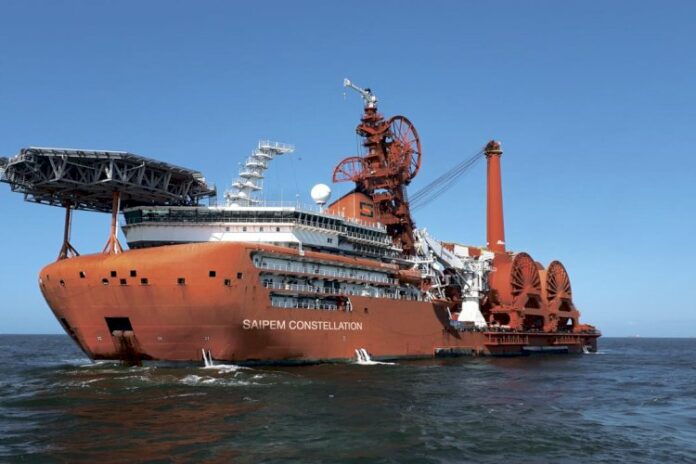
Fincantieri and Saipem have signed a Memorandum of Understanding (MoU) to promote the development of deep-seabed mining (DSM), i.e. the sustainable exploitation of deep-sea floors over 3,000 metres in depth. This agreement sets the ground for a strategic partnership aimed at developing and pursuing business opportunities in the field of designing, engineering, building and managing DSM systems.

Deep-sea floors are rich in minerals, mostly sulphides (sulphur), cobalt crusts and polymetallic nodules, all of which are essential to modern digital economy. There are no appropriate industrial extraction applications, however, that can enable mining companies to extend their activities in open water.

Fincantieri and Saipem decided to pool together their expertise to provide these professionals with innovative solutions. Therefore, the first goal of the partnership will be to draw up an industrial plan containing evidence of the technical and economic feasibility and sustainability of new DSM projects.

Stefano Cao, CEO of Saipem, commented:

“The agreement signed with Fincantieri brings together two Italian leaders involved in promoting deep-seabed mining. Saipem boasts innovative technologies, distinctive skills, assets and an outstanding track record in the sector that will be put to use in the joint project with Fincantieri with the aim of finding environmentally compatible solutions so that sea beds can be used sustainably.”

Fincantieri’s CEO, Giuseppe Bono remarked:

“The minerals in underwater deposits will turn out to be essential, should we manage to move from a fossil-fuel based economy to a green economy. Actually, many renewable technologies require huge amounts of metals that are available in high concentrations in deep-sea floors, and those who will be ready to encourage the use of such metals will move in this direction.’ Bono concluded: ‘Technologically speaking, these are extremely complex activities: the engagement of major industrial groups such as Saipem and Fincantieri will therefore help preserve the environment, thanks to their long-standing wealth of proven engineering and management experience and skills”.

Neptune Energy confirms significant discovery at Dugong well

0

The volumes are estimated to be in the range of 6.3 – 19.0 million standard cubic meters (MSm3) of recoverable oil equivalent, or 40 – 120 million barrels of oil equivalent (boe). 

In addition, the Dugong discovery has significantly de-risked another prospect in the licence estimated by Neptune at 5.2 million standard cubic meters (MSm3) of recoverable oil equivalent, or 33 million boe. This brings Neptune’s estimate of the total resource potential in PL882 to as much as 153 million boe.

Neptune Energy is the operator of the Dugong licence with a 40% ownership interest. 

Neptune Energy’s Managing Director in Norway, Odin Estensen, said:

“This is a significant discovery and strategically important for Neptune Energy in this region. It underlines our commitment to continue investing in activities in the Norwegian sector which is an integral part of our geographically-diverse portfolio. Dugong may also open up additional opportunities in the surrounding licences, with the potential for a new core area for Neptune in Norway.” 

Dugong (PL 882) is located 158 kilometres west of Florø, Norway, at a water depth of 330 metres, and is close to existing production facilities. The Dugong prospect consists of two reservoirs that lies at a depth between 3,250 – 3,500 metres.

Neptune Energy’s Director of Exploration & Development in Norway, Steinar Meland, said:

“The discovery gives new and valuable understanding of the subsurface in this part of the Tampen area. We are very pleased to see that our exploration model developed together with our partners has proved to be successful. We will now initiate studies, as well as consider development options for the discovery.” 

The discovery well 34/4-15 S and the down-dip sidetrack 34/4-15 A proved oil in the Viking and Brent Groups of the Dugong prospect. These are the first exploration wells in production license 882. The license was awarded in 2017 as result of the Norwegian licensing round Awards in Predefined Areas (APA).

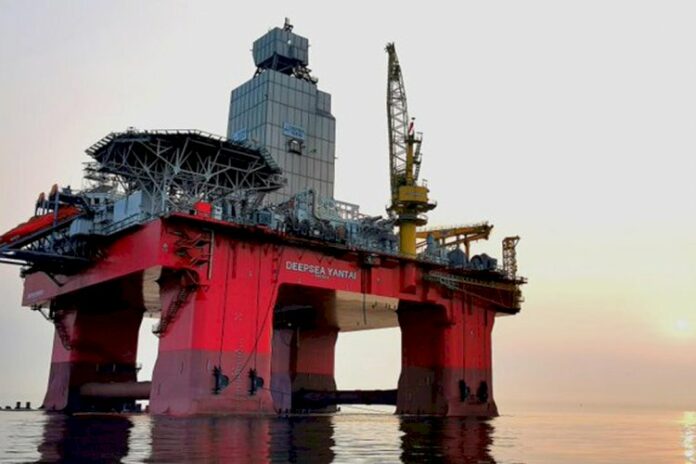
Dugong was drilled by the Deepsea Yantai, a new semi-submersible rig, owned by CIMC and operated by Odfjell Drilling. The well will be plugged and abandoned. 

Dugong partners: Neptune Energy (operator and 40%), Concedo (20%), Petrolia NOCO (20%), and Idemitsu Petroleum Norge (20%).

Jan De Nul installed the subsea export cables for TPC Offshore Wind Farm in Taiwan

0

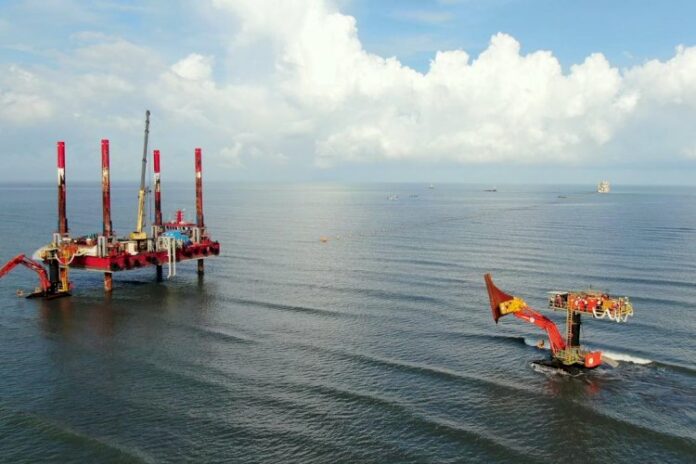
Jan De Nul Group reaches another significant milestone by completing the installation of four medium-voltage export cables connecting the offshore wind farm to the shore, as well as the upgrade of the onshore substation in Changhua County.

This substation upgrade was essential for the connection of the first state-owned wind farm ‘Taiwan Power Company Offshore Windfarm Phase 1 Project – Demonstration’ to the Taiwanese power grid.

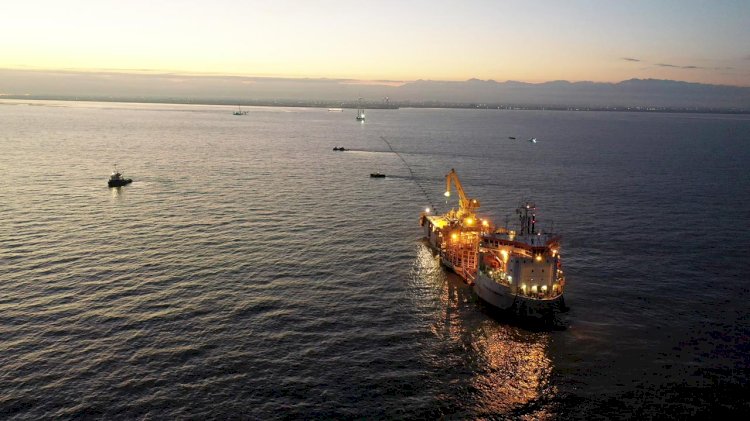
Jan De Nul’s Cable-Laying Vessel Willem de Vlamingh successfully installed the four subsea export cables from the offshore wind farm site, 10 km off the coast, to the shore where they were connected at the landfall area near Fangyuan.

For the complex beach pull-in operations including passing over a shallow water sandbank, Jan De Nul Group teamed up with its Taiwanese partner Hung Hua Construction who provided essential marine equipment, including a jack-up barge.

Due to the presence of a nearshore oyster farm and an important shipping lane for fishermen on the subsea export cables route, the cables had to be pulled through 1km-long underground ducts, which had previously been installed by horizontal directional drilling (HDD) up to 21 metres below the seabed.
Jan Kop, Project Director at Jan De Nul Group, says:

“Originally, the HDD’s were stipulated in the contract to be 300 meters long, but Jan De Nul decided to extend them in order to prevent any damage to the sensitive coastal zone and fish farms. As such, we demonstrate once more Jan De Nul’s global care for the environment. Our offshore cable team did an amazing job, as did our onshore civil construction team who worked on the HDD together with Taiwanese companies Hung Hua and Magitech.”

After the cable installation, trenching works started. For the nearshore trenching works, Jan De Nul’s Starfish excavators used an in-house developed plough-skid and jet-skid. For the offshore trenching operations, the Cable-Laying Vessel Willem de Vlamingh also acted as a Trenching Support Vessel.

Together with its Taiwanese subcontractor Chung-Hsien Chen, Jan De Nul Group completed the installation and commissioning of new electrical equipment, including high voltage transformers, high-voltage and medium-voltage switchgear, a new SCADA control room and emergency power supply, inside the onshore substation in Da Cheng. This custom designed upgrade was essential for the substation to be able to receive power generated by the new offshore wind farm.

After passing a 24-hour energization test, the upgraded substation was successfully connected to the national grid for the first time in this new configuration.

In the meantime, the offshore foundation installation of 84 pin piles and 21 jackets is making steady progress and Jan De Nul Group’s consortium partner Hitachi Ltd. continues preparing the wind turbines in the Taichung marshalling port. The turbine installation campaign, due to start in August, will feature Jan De Nul’s Offshore Jack-Up Installation vessel Taillevent.

VIDEO: 11 workers crushed to death after crane collapses at Hindustan Shipyard

0

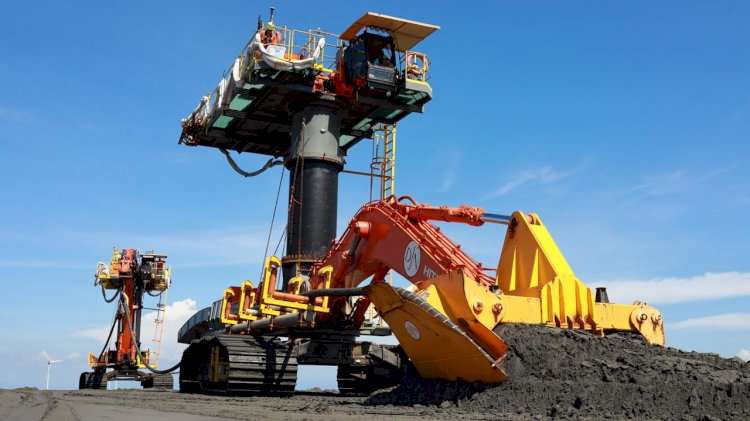
The incident took place at Hindustan Shipyard Limited (HSL), a central government undertaking. The mishap, that occurred on Saturday afternoon, also left several others injured. 

The accident happened when workers were carrying out an inspection of the crane. The huge crane suddenly crumbled and crashed to the ground with a massive sound. As per reports, three bodies were retrieved from under the debris of the crane. The remaining bodies were believed to be crushed, said reports.

Four of the victims were employees of HSL while the rest belonged to a contracting agency, District Collector Vinay Chand informed while speaking to reporters. It is said it is the first such mishap at Hindustan Shipyard.

The crane, which used to carry equipment for shipbuilding, was bought by HSL almost a decade ago. The crane’s operation was recently outsourced to a private agency. State minister for tourism Muthamsetty Srinivas Rao, who hails from Visakhapatnam, inquired about the accident and asked the district authorities to take up the rescue operations.

TV visuals showed the giant 75-tonne crane falling on the ground with a loud thud.

MOWI installs AI system on twenty Scottish salmon farms

0

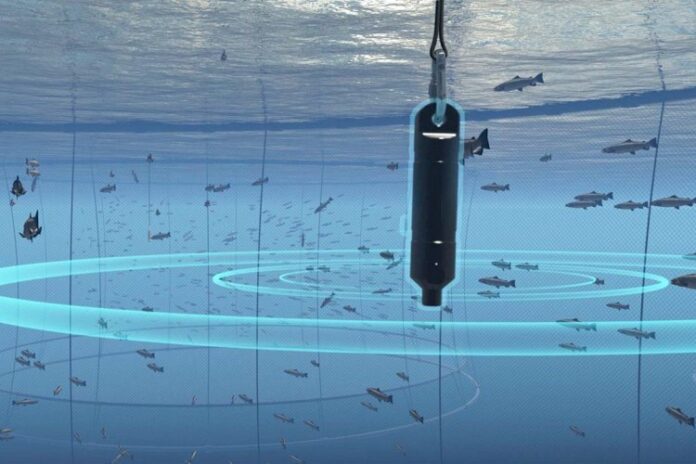
The world’s largest producer of Atlantic salmon, MOWI, has selected Innovasea’s Aquaculture Intelligence (AI) systems to monitor twenty of its Scottish salmon farms.

The AI system will monitor dissolved oxygen and temperature at each farm by using cableless sensors. In turn, this will provide the farms, central management, and the MOWI fish health teams with real time data and alerts on changing oxygen concentrations.

Innovasea’s wireless aquaculture monitoring system aquaCurrent allows producers to monitor environmental conditions online in real time. Each farm is populated with a suite of cableless sensors called aquaMeasures, which use a unique underwater acoustic transmission protocol to send data to a central telemetry unit called the aquaHub. The aquaHub pushes the data online in real time, over the WiFi, cellular or Iridium network.

Other monitoring systems – e.g. meterological stations, current monitors and wave and tide sensors – can also be added.

As Innovasea’s UK distributor, RS Aqua worked with MOWI to specify the multisite system and its custom online data portal.

Shell Shipping and Inmarsat offer $13,000 prize for solutions to better crew welfare

0

Inmarsat, the world leader in global, mobile satellite communications, has joined forces with Shell Shipping and Maritime and maritime digital consultancy Thetius to launch a new ‘Open Innovation Challenge’ for start-ups and small and medium sized enterprises (SMEs). The Challenge aims to identify technology that can benefit crew safety, health and wellbeing at sea at a moment when COVID-19 has exposed the welfare of seafarers to global scrutiny.

The six-week Open Innovation Challenge is looking for novel solutions that have the potential to improve crew safety and welfare across four innovation challenge areas spanning deck safety, fatigue, administration reduction and overall wellbeing.

Nick Chubb, Managing Director of Thetius, who will run the Challenge, said:

“We are seeking applications for solutions from start-ups and SMEs who want to conduct a proof of concept onboard a vessel supported by Shell Shipping and Maritime and Inmarsat. Start-ups and solution providers who apply to the Open Innovation Challenge will be required to submit a pitch that details their proposed solution and a proof of concept onboard a Shell vessel.”

From the submitted applications a shortlist will be generated. The successful solutions will be invited to pitch their idea to a decision-making jury at the end of September. The majority of the jury will be made up of serving seafarers, with representatives from Inmarsat, Shell Shipping and Maritime and the welfare sector also taking part.

The team behind the chosen idea will be awarded a £10,000 GBP cash grant to test their idea by implementing a proof of concept onboard a vessel and the winning start-up will also receive support from Thetius, Inmarsat and Shell Shipping and Maritime.

Richard Holdsworth, Shell’s Maritime Ventures Lead, said:

‘Shell is committed to improving the safety and wellbeing of seafarers. We are excited to learn more and help support new technologies that could make a difference to the welfare of crews.”

CorPower Ocean secures 9 MEUR equity funding for breakthrough wave energy tech

0

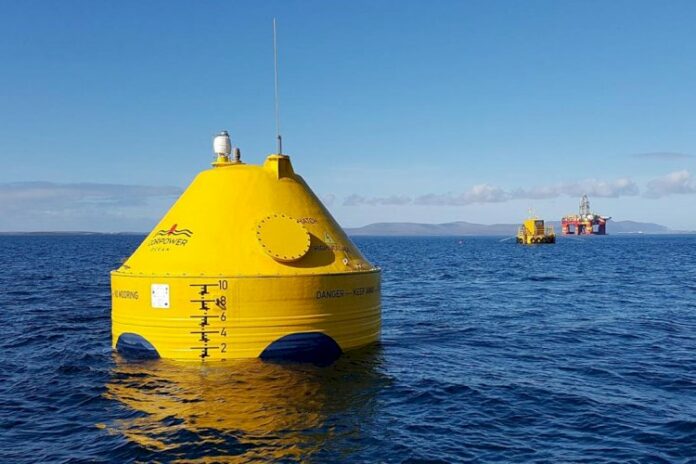
CorPower Ocean’s new generation of high-efficiency WECs (Wave Energy Converters) are inspired by the pumping principles of the human heart. Advanced control technology allows large amounts of energy to be harvested using small, low-cost devices. A unique solution makes them transparent to storm waves, which provides survivability in the harshest ocean conditions.

Proceeds will be used to demonstrate the first commercial scale WEC within CorPower’s flagship​ HiWave-5 project​ -​ and for the long-term development of supply and service capacity for commercial wave energy farms.

The equity funding, which is combined with public investments that co-fund the program, will support CorPower’s pan-European efforts in Sweden, Portugal, Scotland and Norway.

​Patrik Möller​, CEO of CorPower Ocean ​said:

“This funding package marks another significant milestone in the firm’s mission to introduce a new class of ​​certified and​ ​warrantied WEC products​. We are pleased to see continued strong support from investors who share our vision of bringing reliable and competitive wave energy technology to the world, unlocking one of the largest untapped sources of clean energy on earth​.”

The HiWave-5 demonstration project aims to convert CorPower’s wave technology into a bankable product by 2024, by proving the survivability, performance and economics of a grid-connected array of WECs in northern Portugal. This will unlock mainstream renewable project financing for commercial array projects developed by our customers. ​

This funding announcement comes shortly after CorPower released plans for a new 16 MEUR (USD 18.1m) R&D, Manufacturing and Service Centre in Viana do Castelo, Portugal. The site will become a core focus for the HiWave-5 project with a showcase pilot wave farm planned in Aguçadoura.

Ingvar Eriksson, BCO of EIT InnoEnergy Scandinavia, said:

“We have supported CorPower since 2012 and are happy with progress made to this point, having proven the principles and physics of the technology at sea. InnoEnergy has evaluated many ocean energy technologies and found CorPower advancing to a leading position in the race to make it a mainstream energy source. We look forward to the continued journey and are convinced that CorPower can play a significant role in the evolving sustainable energy mix and contribute to the European decarbonization targets.”

Andreas Gunnarsson of Midroc New Technology ​said:

“CorPower keeps delivering on targets and their prudent step-by-step approach brings credibility to the sector. This technology definitively has the capacity to make the world a better place and we are happy to see more and more of leading utilities and project developers engaging.”

Markus Hökfelt of ALMI Invest Greentech​ said:

“We see wave energy as a key technology in the transition to a 100% renewable electricity system. Wave energy can become a balancing source that enables high penetration of renewables with the lowest possible system cost​.”​

Armed guard rioted, took control of Eagle Bulk’s vessel

0

Eagle Bulk Shipping Inc., one of the world’s largest owner-operators within the Supramax / Ultramax Drybulk segment, has reported that it has successfully resolved a security incident on board the vessel M/V Jaeger involving an armed security guard.

On July 21, 2020, M/V Jaeger embarked three security guards in the Indian Ocean before sailing towards the Red Sea, as the Company has done for all transits through the High Risk Area (HRA) over the past 10+ years, in accordance with industry best practices. Once on board, one of the guards did not surrender his weapon to the vessel’s Captain as is normal protocol, and then took control of and deviated the ship from its course as he voiced his grievances and demanded compensation. While the guard discharged his weapon on board the vessel, at no time did he directly threaten or harm any of the crewmembers. The remaining two guards did not participate in this action. Unbeknownst to the Company, there was an employment dispute between the guard and his employer, and he had not been paid for several months.

Eagle Bulk, in coordination with maritime security experts, worked to deescalate the situation and after a period of approximately three days, the guard surrendered his weapon and allowed the ship to continue on its original course. Relevant authorities were kept appraised throughout the incident, and the guard was disembarked.

The Company maintained regular contact with the Captain throughout this event, and V Ships, the vessel’s crewing manager, also maintained an active dialogue with the crew’s families to keep them updated. Eagle Bulk and V Ships’ primary concern was the safety of the crew, and as a point of clarity, neither company was a party to the employment dispute. Eagle Bulk expresses its appreciation for the professionalism shown by the vessel’s Captain and crew throughout this ordeal. The Company is very grateful for the efforts of its crew, the V Ships team, and our partners who worked around the clock over the past 10 days to ensure a safe and successful resolution.

Due to the sensitive nature of the incident the Company will not be releasing any more information at this time.