-7.4 C
New York
Home Blog Page 802

Fugro’s ROV survey services help install world’s longest subsea interconnector

0

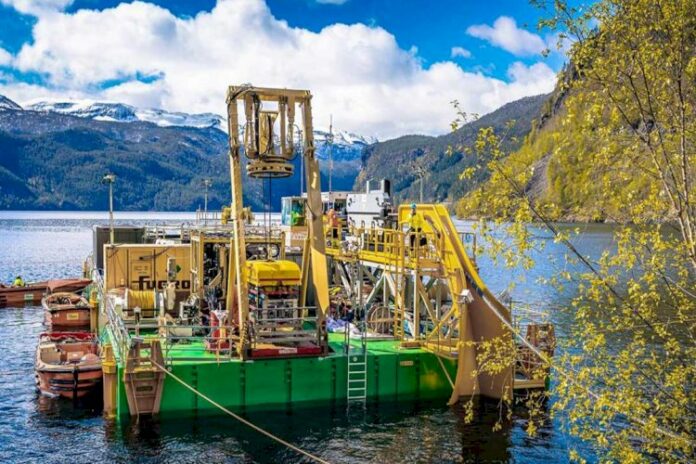
Fugro has completed a contract for Nexans to provide remotely operated vehicle (ROV) survey and monitoring support services to lay the North Sea Link cable through a mountain and along a lakebed in Norway.

National Grid NSN Link Ltd and Statnett SF are building an electricity interconnector between Kvilldal in Norway and Blyth in the UK which, on completion, will be the longest subsea interconnector in the world. Fugro’s innovative survey and monitoring solutions supported the installation of two cables through the mountain between Hylsfjorden and Lake Suldalsvatnet, and along the lakebed at a depth of 210 m.

Working closely with their client Nexans, the project took 12 months of careful planning and preparation before Fugro provided 1 month of remote and crewed services to support installation of the two power cables. The cable work platform (CWP), purpose built onsite, was mobilised with an FCV1000 work class ROV to perform touchdown monitoring during cable installation. During the cable lay, the cable’s departure angle was monitored in near real time using Fugro’s vision-based InclinoCam system, which does not require sensor packages to be fitted onto the monitored asset, making it quicker and safer than conventional monitoring systems.

Due to limited space for personnel onboard the CWP, the acquired survey Geo-data were streamed in real time to Fugro’s remote operations centre (ROC) in Aberdeen for real-time monitoring and project support, including near-real-time processing, and also to Nexans in Oslo. This remote strategy approach ensured operational continuity and allowed the client to monitor their project with minimal personnel onsite.

Einar Betten, Nexans’ Project Manager, commented:

“Fugro performed excellent work during the challenging times of Covid-19 and in a complex technical environment.”

Alastair McKie, Fugro’s Director for Positioning and Construction Support in Europe, added:

“We are delighted to have worked with Nexans to help deliver this project. Our team’s extensive planning was time well invested, which kept our client on target and achieved a positive result.”

PSA Sines launches the tender for the expansion of this port infrastructure

0

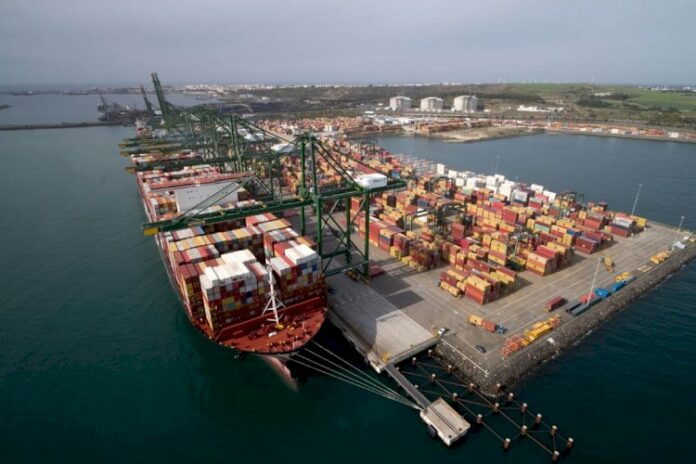
PSA Sines, concessionaire for the Sines Container Terminal (Terminal XXI), launched the tender for the expansion of this port infrastructure.

This expansion phase includes the construction of another 204 meters of quay in order to provide the terminal with a 1,150 meters long quay by the end of 2021, representing an investment of 16.5 million euros. This is the first expansion phase after the renegotiation of the Terminal XXI concession, which, in its final configuration, will offer a 1,750 meters quay, to be built by stages.

Terminal XXI is a part of the main international maritime routes in which the largest container ships in the world in operation are located, and this investment reinforces the terminal’s capacity to receive several megacarriers simultaneously and thus increase its operational offer.

It is recalled that in October 2019 the Ports of Sines and the Algarve Authority (APS) and PSA Sines signed an amendment to the concession contract that allows new investments to be made regarding the expansion of the quay and the resizing and modernization of the terminal, projecting an increase in the annual handling capacity from 2.3 to 4.1 million TEU (20-foot containers).

In February 2020, APS consigned the Contract for the 3rd Phase of Expansion of the East Breakwater of the Port of Sines, in an amount of around 72 million euros, including the extension of the breakwater in 750 meters, which will allow to reinforce the protection of the east part of the Port of Sines where Terminal XXI is located. This works is part of a project approved by the Operational Program for Competitiveness and Internationalization (COMPETE 2020) and will benefit from community financing, through the Cohesion Fund, of approximately 25 million euros.

VIDEO: Australia’s new icebreaker on the move

0

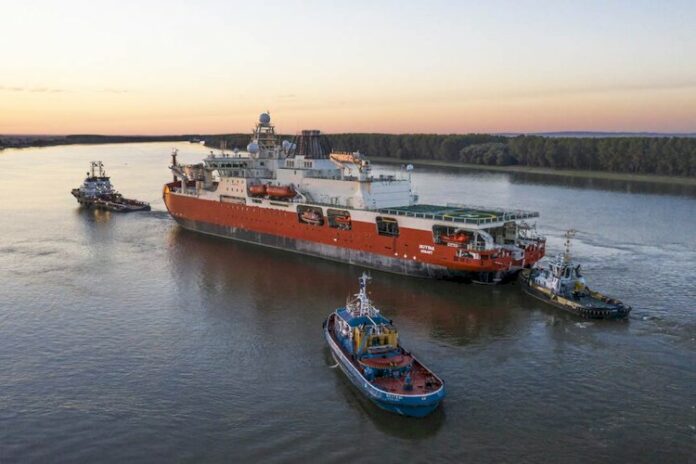
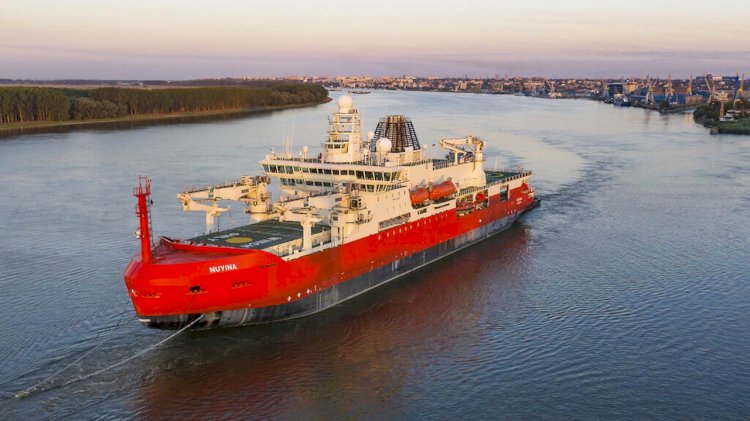
One of the world’s most advanced scientific research vessels, the Nuyina has been built in the Romanian shipyard of Galati and is now on a month long journey, under tow to the Dutch port of Vlissingen.

This will allow teams of equipment installers from Western Europe to access the ship for final commissioning of essential propulsion, electrical and navigation systems, after work was suspended due to the pandemic.

Australian Antarctic Division General Manager Assets and Infrastructure, Rob Bryson, said the vessel is built to break ice 1.65 metres thick and its bow had an unexpected test in the Danube River.

Mr Bryson said:

“The ship made contact with the riverbank while being steered away from an uncharted pontoon. Visual inspections show only superficial damage and after an hour delay, Nuyina continued to the Black Sea and then to the city of Constanta, where divers are now undertaking a thorough examination of the hull. This is a 16,300 tonne icebreaker, with a reinforced steel hull designed to crack through sea-ice, so while this is the ship’s first scrape, it certainly won’t be its last!”

The move to the Netherlands is a big step forward for the project and will give technical experts greater access to the ship after months of COVID restrictions.

The RSV Nuyina is being towed 6,800 kilometres through the Black Sea, the Mediterranean Sea and the Strait of Gibraltar to reach the Netherlands by the end of August.

A single 50 metre tug boat is towing the vessel on the ocean passages, and up to three tugs will be used through some of the narrower canals.

Because the icebreaker hasn’t undergone sea trials, it doesn’t have the required regulatory certificates to conduct international voyages under its own power.

It’s expected the RSV Nuyina will arrive in Hobart in the middle of next year.

Royal IHC awarded major contract for supply of FPSO equipment for Yinson

0

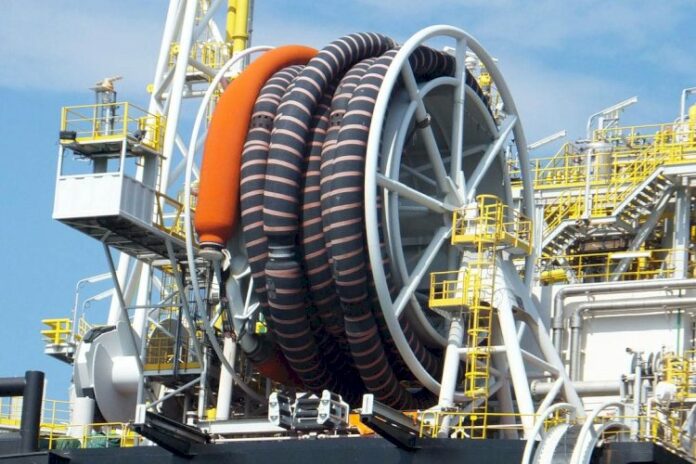
The equipment will be placed onto the Anna Nery floating production, storage and offloading (FPSO) vessel on behalf of Yinson.

The FPSO vessel will be installed around 150 kilometres off the Brazilian coast, in a water depth of 930 meters. The Anna Nery FPSO will be able to produce 70,000 barrels of oil and 4 million cubic metres of gas per day. The production start-up is scheduled for the years 2022 and 2023, The units will be operated and chartered for 25 years.

The innovative design of IHC’s offloading and riser pull-in system minimises the space needed on board for storage. IHC has a proven track record in the delivery of over 20 turnkey systems of this type worldwide. The tandem mooring & offloading system and riser pull-in system will be delivered next year.

Andre Merlino, Royal IHC’s Executive Director Offshore, says:

“We are proud to have been awarded this contract by Yinson for this significant project. This contract provides further evidence that IHC is firmly established as a reputable partner for the design and development of advanced equipment for the floating production market, we look forward to building what we hope will be a long-term partnership with Yinson by working collaboratively on this important project.”

Single, digital report to sail anywhere on the Western Scheldt and in Flanders

0

From then, skippers and inland shipping companies will only have to submit a single, digital report on their route, cargo and ship’s data for voyages on waterways in Flanders and on the Western Scheldt.

Lydia Peeters, Flemish Minister for Mobility and Public Works, said:

“The reporting platform SWINg is an important milestone in the digitization of inland shipping, which contributes to efficiency and safety. This collaboration and initiative, which also includes the Dutch Rijkswaterstaat (Ministry of infrastructure and Water Management) and other actors, puts the partners involved among the forerunners in Europe in the field of digitization.”

Currently, skippers and barge operators must repeatedly report (the same) travel, cargo and ship data to every authority they encounter on their route.

Chris Danckaerts, managing director of De Vlaamse Waterweg, says:

“While one authority allows this in digital format, another requires it through VHF radio, and in some cases, one even has to disembark to submit a form at the shipping desk. The new reporting platform SWINg – an acronym for Single Window for Inland Navigation – puts an end to this extensive administrative work.”

The skipper or inland shipping company uses existing or new software to submit the data to the reporting platform, which automatically forwards it to all the shipping and port authorities on the vessel’s route. After all, the reporting platform and the authorities’ own digital applications are already coordinated. This means that the reporter only has to submit the data once, digitally. The data exchange takes place in accordance with the GDPR legislation.

SWINg offers administrative simplification, while making inland shipping even safer and more efficient. Reporting less often means that the skippers have fewer distractions and the risk of accidents decreases because people no longer have to go ashore. In addition, the shipping and port authorities will be able to better estimate the risks of incidents and respond more quickly if an incident does occur. They have advance information about the types of ships and cargos that are in the port or on the waterway. The reporting platform will also permit better planning of ships’ routes. Bridge and lock operations planning is optimized.

Software suppliers are making existing reporting packages compatible with the new SWINg reporting platform. So, those who already report digitally will not need to install any new software on board. In view of the upcoming introduction of mandatory digital reporting, those who do not yet use software will benefit from doing so. The current target is to make this mandatory for ships with dangerous goods from 1 January 2021, and shortly afterwards for other vessels.

Sumitomo was granted an AiP for a medium-size high-pressure LNG dual-fueled tanker

0

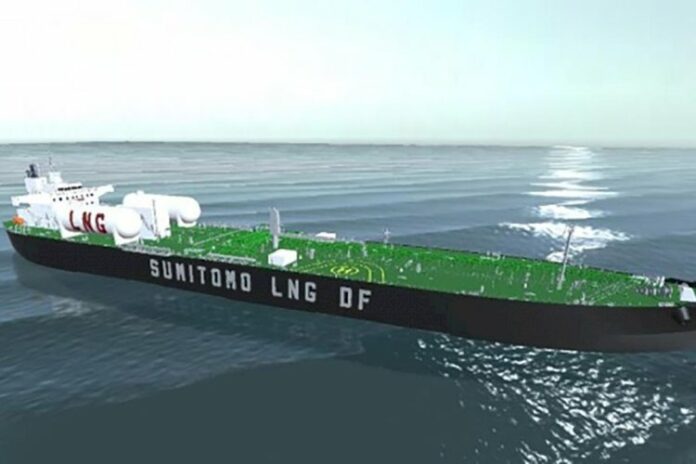
On July 9, 2020, Sumitomo Heavy Industries Marine & Engineering Co., Ltd. was granted an “Approval in Principle” (AiP) from Lloyd’s Register Group Limited for a medium-size tanker equipped with a high-pressure LNG dual-fuel system.

This tanker is equipped with an LNG dual-fuel system and large-capacity LNG tank. The vessel can substantially reduce the amount of sulfur oxide (SOx), nitrogen oxide (NOx) and carbon dioxide (CO2) contained in the engine exhaust gas by using LNG as primary fuel. LNG fueled engine present environmental challenges in that unburnt methane (a greenhouse gas) is emitted into the atmosphere from their exhaust gas.

However, the ME-GI type main engine designed by MAN Energy & Solutions that will be installed on the vessel will substantially reduce those emissions and also improve fuel efficiency. High-pressure LNG that has been pressurized to approximately 300 bar will be supplied to this main engine through an LNG pump and vaporizer.

As the global efforts are made to accelerate the reduction of greenhouse gas emission in the international shipping, demand for environmental-friendly ships will be growing. Sumitomo’s state of the art tanker will far exceed the level of Phase 3 of the Energy Efficiency Design Index (EEDI), which will be mandatory to ships deployed in the international trade.

Ecochlor receives IMO BWMS code type approval

0

Ecochlor system with IMO BWM Code AnnouncementEcochlor is pleased to receive Type Approval from the Norwegian Maritime Authority (NMA) for the IMO BWMS Code (MEPC.300(72) / revised 2016 G8) standards.

The new certification applies to the entire range of Ecochlor ballast water management systems (BWMS), with flow rates of between 500 m3/hr. and 16,200 m3/hr., meaning that vessel owners may continue to install Ecochlor’s BWMS after the IMO BWMS Code October 28, 2020 deadline. The Company completed the additional testing required for active substance technologies for full approval in marine, brackish and fresh waters earlier in the year. The tests confirmed that no changes in equipment or in the operation of the Ecochlor BWMS were required.

Ecochlor is a market leader in the BWM industry and uses a two-step treatment process to treat ballast water; filtration and chlorine dioxide. Treatment is during uptake only, with no discharge neutralization step required. The Company has the capability to supply, service and support its systems worldwide and has a reputation for delivering an easy-to-use system for ship crews. The system requires minimal crew involvement during operation and does not have any TRO components, which can cause interruption to both ballasting and de-ballasting operations. Treatment dosage and efficacy are not affected by salinity, temperature or “dirty” water ─ all factors that result in uncertainty as to the efficacy of other technologies. The system energy requirement is very low, possibly the lowest of any BWMS on the market.

Ecochlor’s Vice President of Operations, Pete Thompson, has coordinated the testing and documentation efforts for Type Approval. He commented:

“For two decades we have continued to test the effectiveness of our system to the highest standards available worldwide. This commitment reinforces our determination to bring a quality, reliable BWMS to the maritime industry.”

After 28 October 2020, all vessels installing a BWMS must comply with the international BWMS Code. Approval pursuant to the previous G8 guidelines (MEPC.174(58)) will no longer be acceptable.  Ecochlor stands alongside a limited number of BWMS manufacturers in providing G8 compliance to shipowners.

Steve Candito, Ecochlor’s CEO, said:

“This latest regulatory approval is another example of Ecochlor’s unwavering commitment to obtain and maintain regulatory approvals from Class Societies and Flag Administrations across the globe, even as the requirements continue to evolve.”

Port of Antwerp: the solution to the ecological problem is finally found

0

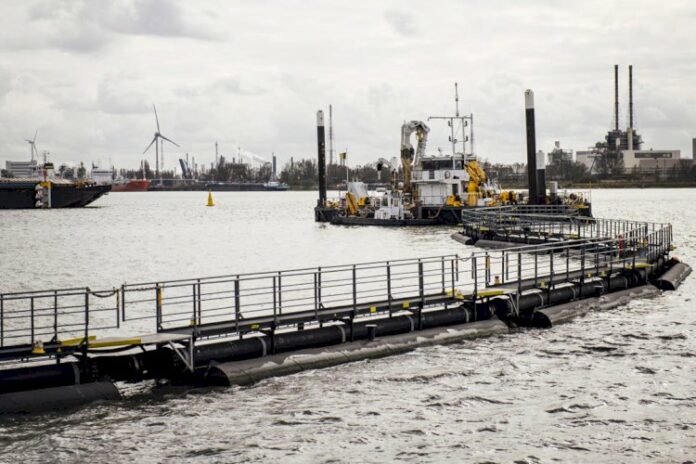
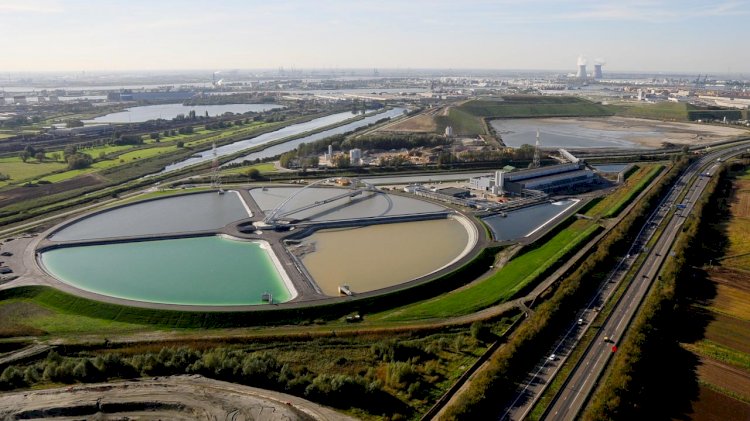
The Flemish government, Port of Antwerp and contractor SeReAnt (a partnership between the Jan De Nul GROUP and DEME environmental companies) will begin dredging and processing the most polluted dredging sludge at the port, the so-called TBT sludge, this month.

Lydia Peeters, Flemish Minister of Mobility and Public Works, says:

“After years of research, there is now finally a solution to this historical pollution. This is a worldwide first and a milestone for Flanders and Port of Antwerp. We will remove the most contaminated sludge from the docks. As a result, water quality will improve substantially.”

The Flemish government and Port of Antwerp are keeping the docks of the port of Antwerp accessible for contemporary shipping together. Every year, enormous quantities of sludge are dredged for this purpose and then processed by the AMORAS dewatering installation. 

Yi-Bin Shan, Head of the Maritime Access Department at the Department of Mobility and Public Works, says:

“But there was one type of sludge we couldn’t process yet: sludge with elevated organotin concentrations or Tributyltin, or TBT sludge for short. TBT had been used worldwide in ship paint since the 1970s to prevent the growth of mussels and algae on hulls, but has been completely banned since 2003. After all, the product is enormously harmful to the environment and is also difficult to break down. The sludge has been storing TBT like a sponge all these years and is gradually releasing this contamination. This is disrupting the metabolism and hormone action of molluscs in particular, such as snails and mussels.”
Jacques Vandermeiren, Port of Antwerp’s CEO, says:

“Along with the University of Antwerp, we have been investigating for several years how to get TBT out of the port. We are proud that we can finally tackle this historical pollution. Currently, the water quality in the docks scores below the European standard. This project will greatly improve it. As a port authority, we believe it’s important to take responsibility in respect of society. This makes us the only port in the world that not only removes polluted sludge, but also processes it sustainably.”

The Flemish government and Port of Antwerp are jointly releasing the necessary resources for dredging and processing the most polluted dredging sludge.

Flemish Minister Lydia Peeters says:

“Flanders makes 25 million euros available annually for the operation of AMORAS. We are now making an additional investment of 700,000 euros a year to dispose of TBT spoil in an ecologically responsible manner. This way, we can increase the accessibility of the port, an important task for the Flemish government. Port of Antwerp has invested 1 million euros in the preliminary phase of this project and will release 1.5 million euros a year for the effective processing of TBT spoil,” port alderman Annick De Ridder continues. “Port of Antwerp wants to be an inspiration for other ports and take a pioneering role in the field of sustainability”.
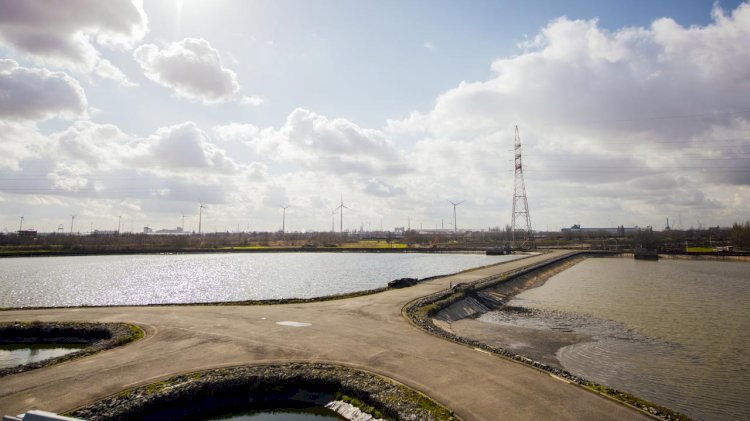
Processing the total quantity of polluted sludge at the port of Antwerp is a long-term task. A pilot project was started in 2018 after obtaining the necessary permits and some modifications to the water treatment plant.

Yi-Bin Shan, Head of Maritime Access, says:

“We have added an extra step to our processes and installed activated carbon filters. These filter the toxic substances out of the water after it passes through our treatment plant. During that pilot project, we had already dredged, transferred and processed 185,000 m³ of heavily contaminated sludge on AMORAS. In this way, we were able to properly map out the impact on the installation and all possible risks. Now, there is an agreement to remove 800,000 m³ of sludge from the harbour docks over the next five years and process it into 500,000 tonnes of filter cake. We’ll first remove the sludge that obstructs nautical access and the worst TBT hotspots in the older, southern part of the port. Then we’ll deal with the other areas.”

How will this work?

  1. The contaminated TBT spoil is dredged at the port. With a 15 m³ environmental grab, the spread of pollution in the surrounding water is avoided.
  2. The dredging sludge is transported in 2,400 m³ transport containers to the AMORAS processing plant.
  3. SeReAnt, the contractor operating the AMORAS plant, extracts the sludge from the transport containers and pumps it into the treatment plant.
  4. Coarse dirt and sand are removed.
  5. The waste water is purified via a water treatment plant. TBT sludge is also purified by activated carbon. Then the water flows back into the docks.
  6. The sludge is processed into a dry end product: filter cakes that are safely stored on site.

AMORAS: innovative cooperation between government, port and dredging companies

Through AMORAS, the Flemish government and Port of Antwerp are working together on the sustainable and long-term storage and processing of maintenance dredging sludge from the Antwerp docks. AMORAS stands for Antwerp Mechanical Dewatering, Recycling and Application of Sludge. The Department of Mobility and Public Works provides 80% of the funds, while Port of Antwerp provides the other 20%. Since 2011, the dewatering plant has been processing 450,000 tonnes of dry matter into filter cakes every year. The temporary trade association SeReAnt operates the installation.

SeReAnt is a collaboration between the environmental companies DEC of Deme Group and Envisan of Jan De Nul Group. AMORAS is constantly looking for solutions for re-using the dry matter obtained from non-polluted dewatered sludge in useful applications. There are several routes, but the concrete industry in particular is showing interest in the filter cakes.

Carnival Cruise Line joins industrywide pause in U.S. through October 31

0

Consistent with the decision announced today by the members of the Cruise Lines International Association (CLIA) to voluntarily extend the pause in U.S. cruise embarkations until Oct. 31, 2020.

Carnival Cruise Line has informed guests and travel advisors that the company has cancelled all cruises scheduled to embark between Oct. 1 and Oct. 31.

Guests are being offered an enhanced value package of a future cruise credit and onboard credit, or a full refund.

If conditions in the U.S. change and short and modified sailings are possible, the industry may consider an earlier restart, and Carnival Cruise Line would consider that as well. In the meantime, the company will continue to work with public health and government officials to finalize enhanced health and sanitation protocols and procedures that will guide our eventual return to service.

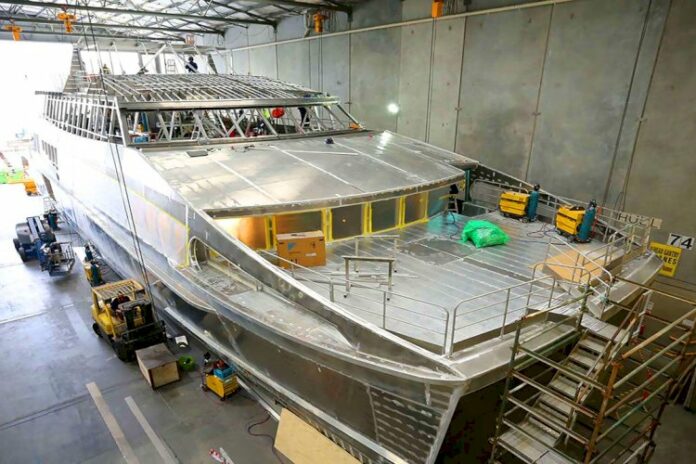
World Heritage Cruises’ eighth Incat Crowther catamaran under construction

0

Under construction at Richardson Devine Marine, the vessel is due to launch by the end of the year. It will draw on the many successful features of World Heritage Cruises’ current Incat Crowther 35, Harbour Master. This vessel has garnered acclaim for its efficient and stable platform, leading to expressions of interest in purchasing the vessel.

WHC saw this as an opportunity to take their immense knowledge of the operation and build a new vessel that takes the best of Harbour Master and improves the package in key areas. The competitive operating environment of Tasmania’s World Heritage-listed Gordon River means that the bulk of the improvements fall under the banner of passenger amenity. Primarily, the vessel is 1m wider to provide greater space, more aisles and smaller groups of seats.

A bar has been added to the mid-deck, linked to the main deck food preparation space by a dumb waiter. One of the highlights of WHC’s tours is the gourmet lunch featuring local produce. To further enhance the offering, main deck service spaces have been expanded, with the bar and food preparation now separated and a larger serving island installed.

The cabin will be lighter and brighter with deep windows and the absence of the main stair tower, which has been moved aft amongst other obstructions such as bathrooms. On-board amenity will also be boosted by wi-fi and multiple device charging options.

The new vessel will be powered by quad Scania DI16 076M main engines. These will drive a quartet of Doen DJ200 water jets. The quad Scania package has proven itself in Harbour Master, and the addition of jets will provide an efficient, reliable package with inherent redundancy. The vessel will operate at 25 knots.

Plans are well progressed to optimise Harbour Master for its new owners to operate to Rottnest Island, with Incat Crowther’s expertise in vessel support coming to the fore. The new owners will take delivery of Harbour Master upon completion of the new vessel.