-7.4 C
New York
Home Blog Page 801

Jan De Nul signs contract with Dogger Bank Wind Farm

0

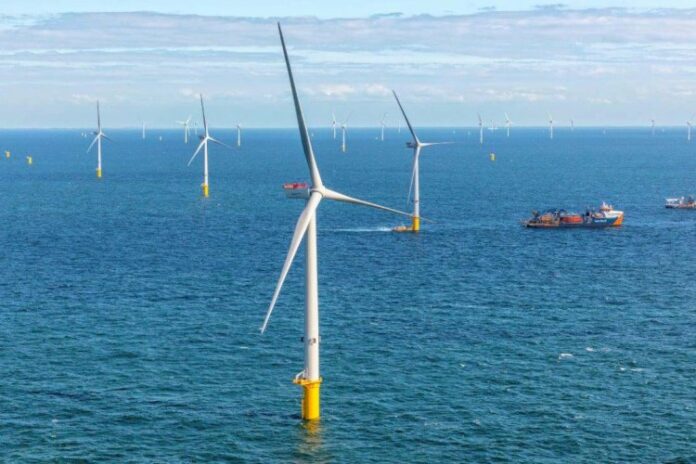
Dogger Bank Wind Farm and Jan De Nul Group announce the signing of the final contract for the transport and installation of the GE Haliade-X offshore wind turbines at Dogger Bank A and Dogger Bank B, 130 km off the Yorkshire coast, starting in 2023.

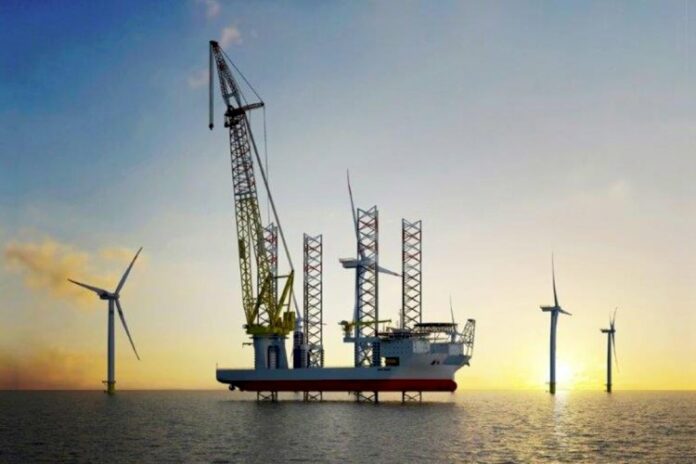
Turbine delivery and installation at the first two phases of Dogger Bank Wind Farm will be the first assignment for the world’s largest Offshore Jack-Up Installation Vessel owned by Jan De Nul Group, the Voltaire.

The 3.6GW Dogger Bank Wind Farm, which is being delivered in the North Sea in three 1.2GW phases, is set to be the world’s largest offshore wind farm when complete and is a joint venture between SSE Renewables and Equinor.

When complete, Dogger Bank will generate enough energy to power over 4.5 million homes every year – around 5% of the UK’s electricity needs.

Dogger Bank Wind Farm secured 3.6 GW of offshore wind contracts in the UK Government’s 2019 contracts for difference auctions. Record low prices were awarded for the three projects making up Dogger Bank Wind Farm: Dogger Bank A, Dogger Bank B and Dogger Bank C. Dogger Bank A and Dogger Bank B are now moving towards final investment decision, expected by the end of 2020. SSE Renewables is leading the development and construction phases of Dogger Bank Wind Farm and Equinor will lead on operations for its lifetime of at least 25 years, creating around 200 jobs in the North East.

Steve Wilson, Dogger Bank Wind Farm’s Project Director at SSE Renewables:

“We’re very pleased to have signed the final contract with industry leader Jan De Nul Group to transport and install the turbines for Dogger Bank A and Dogger Bank B. Jan De Nul has a proven track record of transporting and installing new generation offshore wind turbines at scale and its state-of-the-art Voltaire vessel will be the largest and ultra-clean jack up vessel ever seen in the industry when operational. This contract further demonstrates the industry-leading status of Dogger Bank Wind Farm and the innovative supply chain partners such as Jan De Nul that are delivering the project.”

Halfdan Brustad, Vice President for Dogger Bank at Equinor:

“Dogger Bank is a record-breaking project, leading the way in terms of technology and scale. We are so pleased to have secured the Voltaire vessel for this project, not only is it the largest of its kind, but also the first Ultra-Low Emission jack-up vessel, which is truly pioneering. Innovation across all levels of the supply chain has enabled offshore wind projects to grow in size whilst reducing costs, and this has been a large factor in the growing success of offshore wind.”

Philippe Hutse, Director Offshore Division at Jan De Nul Group:

“We are delighted to have signed the first contract for our new generation jack-up vessel Voltaire and to work together with industry leaders SSE Renewables and Equinor. When taking the decision to build this exciting vessel we had exactly the type of project in mind like Dogger Bank Wind Farm in terms of scale and characteristics of the offshore sites and the turbines. We are proud to contribute to the worldwide transition to renewable energies by installing the offshore wind turbines at Dogger Bank A and Dogger Bank B in the most efficient and clean manner possible.”
Sanmars Sirapinar commences operations in Baltic Sea

0

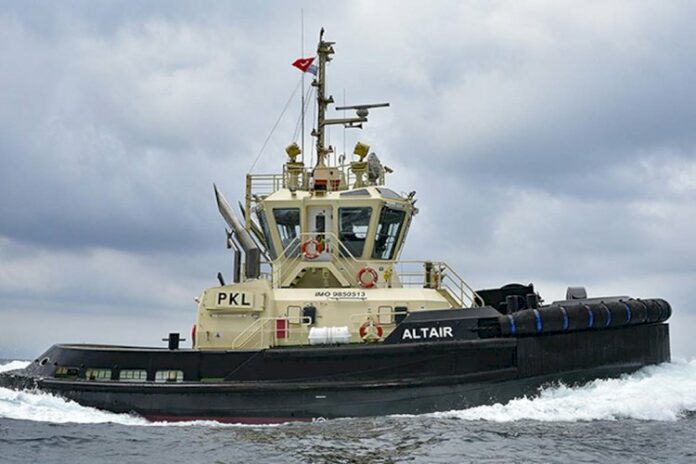
The latest delivery is a Robert Allan Ltd. designed RAmparts 2200 Class 50t BP ASD tug, the 8th of the series from Sanmar. Originally named simply Sirapinar VIII, AS PKL Flote has re-named her ALTAIR. Sanmar is currently building the 18th sister of the series.

Sergejs Odincovs, Chairman of the AS PKL Flote, commented:

“Sanmar Shipyards’ tugboat series “Sirapinar” was chosen, amongst other leading Turkish & European shipbuilders, as the best combination of technical characteristics, high quality and reasonable price. During the tender Sanmar’s commercial & technical team suggested good solutions which were very flexible and quickly adapted to our wishes. During the construction process we paid special attention to relationship building with Sanmar’s team – including all staff from the artisan to senior management, all were extremely helpful and cooperative at every stage and put a part of their soul into our new tugboat. All our demands during the construction process were implemented in the best way possible. The schedule was very tight (8 months only) but all stages were completed on schedule. Cooperation was always smooth, and we would be happy to continue our collaboration in the future.”

Ruchan Civgin, Commercial Director of Sanmar Shipyards, said:

“ALTAIR has been modified by means of ice-strengthening the hull in order to operate in icy conditions. We are very proud to build and deliver this tug to AS PKL Flote and we feel certain that this first tug is only the start of a long-lasting relationship.”

ALTAIR will operate in the port of Ventspils – a thriving deep-water port on the East coast of the Baltic Sea. For centuries Ventspils has connected transiting Russian and Belarus cargoes, such as fertilizers, potassium salt, coal, grain, general cargo, ro-ro and others. The annual throughput of the port is around 20 million tons. The technical capabilities of the ice-free port allow to service the largest vessels entering the Baltic Sea all year round.

PKL Flote, a member of the Alfons Hakans Group, is a Latvian tugboat company which specialises in harbour and sea towage in the Latvian ports of Riga and Ventspils. PKL Flote has 6 modern and powerful ASD tugs and the entire group owns and operates more than 50 tugboats, barges and workboats.  In addition to core tugboat services, the PKL fleet is used for icebreaking, firefighting, transporting people and small cargoes and for emergency services.

First power achieved at Blauwwind project

0

As of today, the 731.5 MW Borssele III/IV offshore wind project has achieved first power, a result of close collaboration between the Blauwwind project partners and the supply chain. The turbine installation campaign began in late May 2020 and has now seen 36 of the 77 V164-9.5 MW MHI Vestas turbines secure at site.

Borssele III/IV is due for completion in October 2020 and when fully installed, will supply enough clean renewable energy to power more than 825,000 Dutch households, accounting for up to 2.3% of total Dutch electricity demand.

Laurens van Pijkeren, MHI Vestas Project Director, said:

“With the Borssele III/IV offshore wind project now online and delivering electricity to the grid, Dutch consumers can be certain they are moving towards a clean energy future. The collaborative efforts of all project partners has enabled MHI Vestas to install 36 of the largest turbines in the world on schedule, despite a myriad of challenges arising from Covid-19. We look forward to continuing our collaboration with the Blauwwind project partners as we move towards completion of the project later in 2020.”

Roeland Borsboom, Project Director and CEO for Blauwwind, says:

“I am proud of the team that has managed the safe execution and the commissioning phase, achieving first power on time. Keeping a project of this scale and complexity on track in these challenging times can only be managed through good collaboration and flexibility. The delivery of first power has been achieved in close collaboration with partners Van Oord, MHI Vestas and TenneT, who has provided grid readiness one month ahead of time.”

Throughout the rest of the installation campaign, it is anticipated that one additional turbine will become operational per day, following control testing. Following installation and full commissioning, MHI Vestas also holds a 15 year service agreement to operate and maintain the Borssele III/IV project.

The Borssele III/IV offshore wind project, which is situated 22 km off the coast of Zeeland, Netherlands, is being developed by the Blauwwind consortium, consisting of Partners Group, Shell, Eneco, Diamond Generating Europe and Van Oord.

Eco-friendly intermodal solution connects Spain, UK and Ireland

0

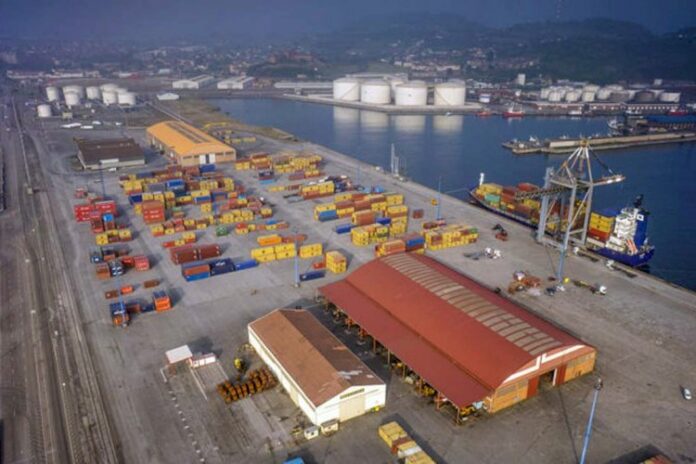
Together with Containerships (CMA-CGM group), APM Terminals Gijon has formed an eco-friendly logistic chain connecting major Spanish cities to the UK and Ireland.

Block trains connect APM Terminals Gijon with Seville, Murcia, Valencia, Barcelona, Zaragoza, Madrid and Burgos up to twice a week. Scheduled to arrive at APM Terminals Gijon in time for a Friday departure, the vessel will arrive in Liverpool, UK on Monday and Dublin, Ireland on Tuesday. The service is suitable for all types of containerized cargo, including hazardous cargo.

Located on Spain’s northern coast, APM Terminals Gijon is ideally placed for the UK. Terminal Manager, Miguel Ruiz, says:

“In addition to the clear environmental benefits offered by this service, customers can also cut the time to UK and Irish markets from Spain, compared to shipments made from other Spanish ports.”

Each block train has a 52 TEU capacity and the potential to remove up to 26 trucks from the road. As well as reducing traffic congestion, the diesel locomotives used for this block train service are, according to statistics published by the Association of American Railroads, estimated to be three to four times more fuel efficient than diesel trucks and lower greenhouse gas emissions by up to 75% compared to trucks.

APM Terminals Gijon is equipped with a 450m on dock track for fast and efficient loading and a separate rail yard with two 350m tracks for optimum flexibility. In the future, the service has the capacity to scale up to a daily service for the cities currently served.

North P&I gives practical advice on the long-term storage of liquid cargoes

0

In general terms, a more refined product has a shorter shelf life than crude oil. However, due to a vast range in characteristics, compositions and potential additives, it is difficult to exactly determine the shelf life for a particular cargo. So practically how can an owner and a vessel’s crew help protect themselves against a potential claim?

1. Good vapour management

From a basic operational perspective, careful vapour management is key. Excessive venting through PV valves can result in not only cargo losses but also lead to a change in the quality or specification of the cargo.

If venting is required, it is important to check that local regulations permit this. Some areas, such as California, do not permit tank vapour venting even as a means to control tank pressures arising from an increase in pressure due to diurnal variation.

2. Risk of decomposition

From a more complex perspective, the rate of decomposition of a refined cargo depends on many factors. These include the nature of the original crude, the distilling process, water content, additives used (anti-stat, antioxidant etc) and vessel-related factors such as tank coating condition.

A certificate of analysis and quality should be provided on loading and used as a reference for composition, additives and water content.

3. Monitoring the cargo

Monitoring by analysis may be the only way to truly know how well a cargo is surviving storage.

Before the vessel goes into storage mode, take samples of the cargo and have them tested in the presences of an independent surveyor.

When in storage mode, take regular samples and analyse them to determine the quality of the cargo. However, this level of analysis may be reliant on laboratories being located close by and is not always an option. If this is the case, then the vessel’s crew should continue to regularly take samples and check them visually for colour, viscosity and sediments as well as noting the odour.

In addition to this, take regular ullages and record them along with cargo temperatures, bottom soundings (such as free water and sediments), inert gas readings and external temperatures.

It is also important to record any controlled or uncontrolled venting and, if required, operation of the inert gas plant.

Capesize bulker “Wakashio” aground off Mauritius

0

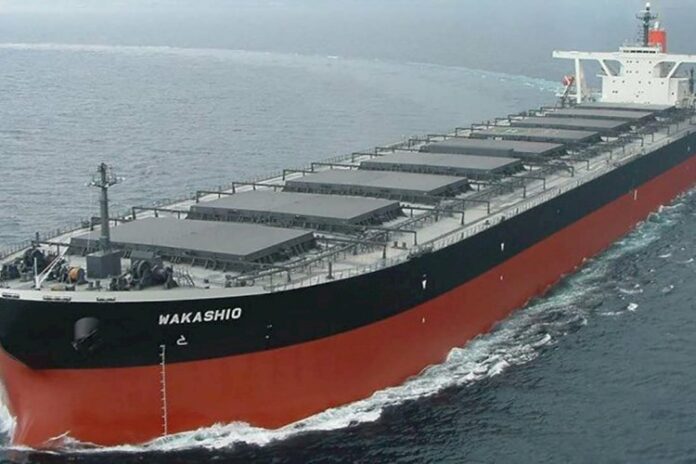
MOL received following statement from Nagashiki Shipping Co. Ltd.(Nagashiki) who is the owners and managers of bulk carrier Wakashio and Time Chartered to MOL.

“Nagashiki Shipping, provides the following update on the grounding of the vessel off the east coast of the island of Mauritius at approximately 1925 hrs, local time, Jul 25.

Due to the bad weather and constant pounding over the past few days, the starboard side bunker tank of the vessel has been breached and an amount of fuel oil has escaped into the sea. Oil prevention measures are in place and an oil boom has been deployed around the vessel. ITOPF (International Tanker Owners Pollution Federation) is advising the owner, salvage team and the Government on the pollution and possible effects.

The Owner and its P+I Club have contracted a specialist oil response and salvage team who are coordinating with the Mauritian authorities to mitigate the effects of any pollution. Nagashiki Shipping takes its environmental responsibilities extremely seriously and will take every effort with partner agencies and contractors to protect the marine environment and prevent further pollution. The situation is being closely monitored and in view of poor sea conditions, salvage efforts are currently on hold. The decision has been made to remove the crew from the vessel, who are all safe and have been transferred to the shore. The cause of the incident will be fully investigated, and the Owner/Manager will continue to work closely with the authorities to determine the cause.”

MOL is fully aware of the incident and the regretful harm to the beautiful nature in Mauritius. After the incident, MOL has organized “Emergency Control Headquater” lead by President Ikeda to deal with the situation rapidly. MOL will cooperate with related parties based on the advice from authorities of Mauritius and Japan, as well as is to send company personnel to Mauritius and will provide necessary support to the Owner as much as possible. 

  • Type of ship : Capesize Bulker
  • Length/Breadth : 299.95M / 50.00M
  • Built : May 2007
  • Seafarers : 20 (Indian, Srilankan, Phillipino)
  • Flag : Panama
  • Shipowner : Okiyo Maritime (Nagashiki Shipping Co. Ltd.)

Maersk revamps Europe to Middle East & Indian Subcontinent network

0

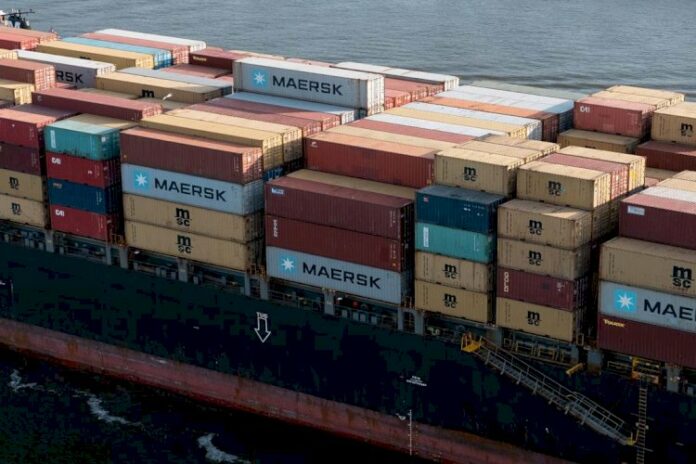
A.P. Moller – Maersk announces improvements to its network between Europe and the Middle East & Indian Subcontinent (West Central Asia). The aim is to enhance reliability while building a network that helps customers with more resilient and agile supply chains.

The updated network will connect more cargo via the Maersk hub in Colombo (Sri Lanka), allowing customers to do consolidation from different origins and better connect their cargo from both Asia and West Central Asia. Furthermore, by linking Middle East stronger to Maersk key hubs in Europe, the changes provide customers additional flexibility and agility to move cargo between different markets.

Johan Sigsgaard, Head of Europe and Middle East Trades at A.P. Moller – Maersk, says:

“To meet changing customer needs, we have reviewed our service network and identified opportunities to create new solutions for how we connect Europe and the Middle East & Indian Subcontinent region. Through increased flexibility and connectivity these changes will offer new, interesting ways for our customers to connect their supply chains both from an import and export perspective.”

The North Europe and West Mediterranean regions will be served via Maersk’s AE1 and AE7 services which offer a direct connection with Salalah (Oman) and Colombo. As a result of the changes the ME1 service will be suspended without impacting the capacity in the network. This will also reduce the need for ad-hoc blankings in times of volatile demand, which will provide greater supply chain predictability on these routes going forward.

Highlights:

  • New access for West India and Pakistan to Maersk’s cross-consolidation service in Colombo
  • New direct connection between the Western Mediterranean and North West India via the ME2 service
  • Access to new inland destinations in Northern India
  • Opportunity to utilise the Maersk Flex Hub storage solution in Salalah, Port Said (Egypt), Tangiers (Morocco) and Algeciras (Spain)

MSC Cruises returns to service in the Mediterranean

0

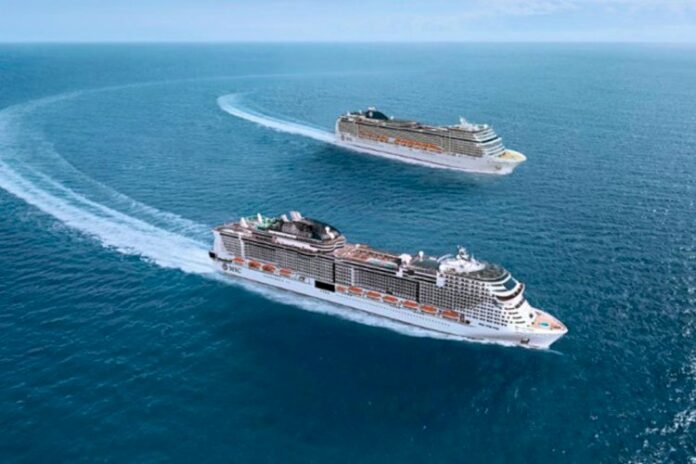
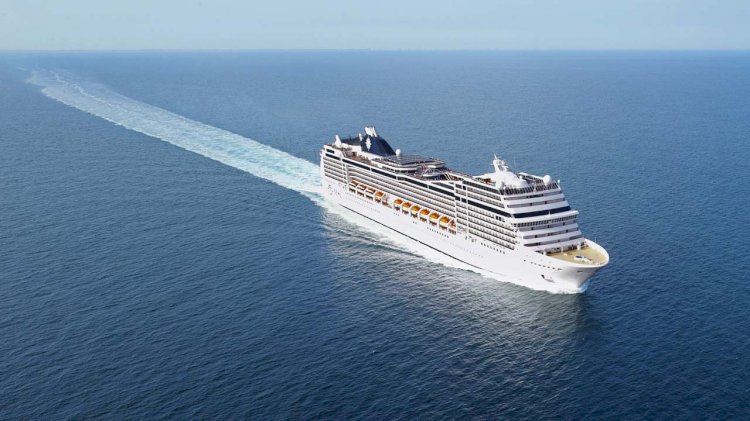
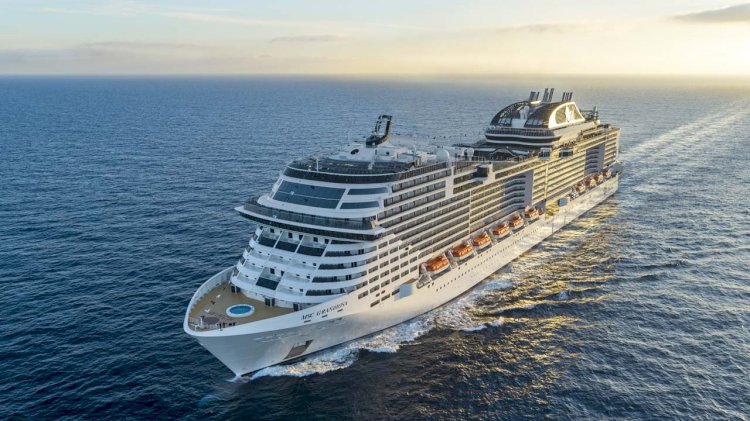
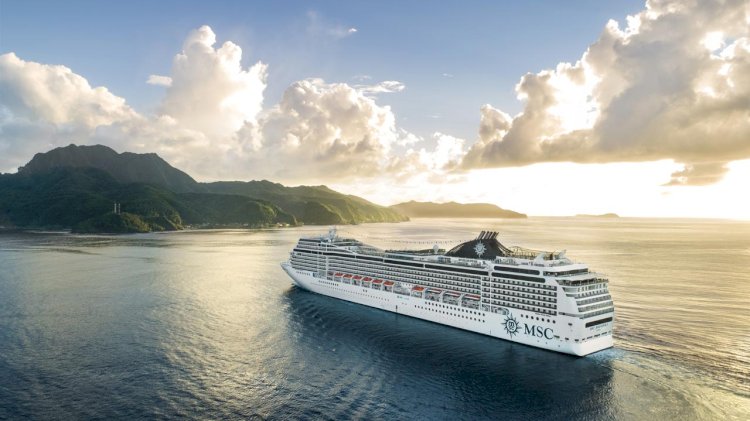
MSC Cruises has announced that flagship MSC Grandiosa and MSC Magnifica will resume operations in the Mediterranean starting from 16 and 29 August 2020 respectively, offering guests full-experience cruise holidays with the opportunity to discover five different destinations during a 7-night cruise.

The two ships will be the first to implement a new comprehensive health and safety protocol that has been approved by the relevant national authorities from the countries that the ships will call along their East and West Mediterranean itineraries this summer.

Pierfrancesco Vago, MSC Cruises’ Executive Chairman commented:

“During the pause in our operations we focused on developing a comprehensive operating protocol that builds upon already stringent health and safety measures that have long been in place on board our ships. We have worked closely with the relevant EU-level, national health and other authorities from the countries that MSC Grandiosa and MSC Magnifica will call along their Mediterranean itineraries to develop a comprehensive set of procedures designed to protect the health and safety of all passengers on board our ships as well as ashore to ensure that local communities feel comfortable welcoming our guests.”

Pierfrancesco Vago continued:

“The new procedures include universal COVID-19 testing for all guests and crew prior to embarkation, protected ashore visits at each destination only with an MSC Cruises excursion as added level of protection for our guests and the introduction of a COVID Protection Plan for further peace of mind for our guests. With all of these measures in place we aim to offer our guests the safest possible holiday.”

MSC Grandiosa, the Company’s flagship, will offer seven-night cruises in the Western Mediterranean calling at the Italian ports of Genoa, Civitavecchia/Rome, Naples, Palermo and Valetta. MSC Magnifica will offer seven-night cruises in the Eastern Mediterranean departing from the Italian ports of Bari and Trieste, calling at the Greek ports of Corfu, Katakolon and Piraeus.

MSC Cruises’ new operating protocol has been designed to protect the health and safety of guests, crew as well as the local communities that the Company’s ships visit. For this reason, it meets and goes beyond guidelines provided by key international and regional regulatory and technical bodies, as well as regulations set forth by the governments in the countries in which MSC Cruises ships operate. Additionally, RINA, the independent maritime certification corporation, has verified that the protocol meets the European Maritime Safety Agency (EMSA) Guidance, which incorporates additional health standards including those from the EU Healthy Gateways Joint Action. MSC Cruises has worked to encompass every aspect of the guest’s journey from the moment of booking to embarkation, life on board and through to the return back home, whilst preserving the uniqueness of the guest experience.

For this initial phase of the restart of operations, the two MSC Cruises ships operating in the Mediterranean for the current summer season will initially only welcome guests who are residents in Schengen countries . Additionally, their itineraries have been designed according to the accessibility of the ports, reducing where possible, the need for guests to use of public transport or flights and have been planned in conjunction with the authorities.

MSC Cruises has cancelled all other cruises in the Mediterranean from 16 August through to and including 31 October. Guests who are resident in Schengen countries and subject to any restrictions imposed by the Italian authorities, booked on any MSC Cruises itinerary until 31 October can transfer their booking to either MSC Grandiosa or MSC Magnifica, receiving up to three complimentary shore excursions, depending on the category they book.

NOAA, U.S. Navy will increase nation’s unmanned maritime systems operations

0

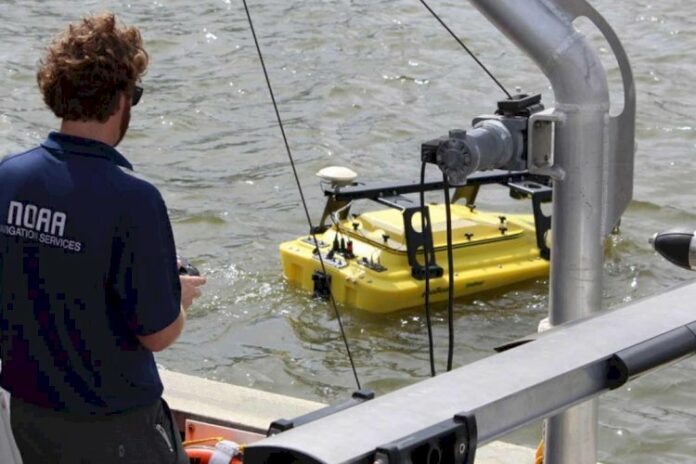
This will enable NOAA to leverage the Navy’s expertise, infrastructure, best practices and training to accelerate its science, service and stewardship mission.

Retired Navy Rear Adm. Tim Gallaudet, Ph.D., assistant secretary of commerce for oceans and atmosphere and deputy NOAA administrator, said:

“With the strengthening of our ongoing partnership with the Navy, NOAA will be better positioned to transition unmanned maritime technologies into operational platforms that will gather critical environmental data that will help grow the American Blue Economy.”

NOAA conducts research and gathers data about the global ocean and atmosphere to forecast weather, predict climate, protect the ocean and sustainably manage marine resources. These missions rely on a continuous process of testing and evaluation of new technologies such as unmanned systems to improve data gathering. 

The Naval Meteorology and Oceanography Command’s mission is to define the physical environment from the bottom of the ocean to the stars to ensure the U.S. Navy has freedom of action to deter aggression, maintain freedom of the seas and win wars. For over twenty years, Naval Oceanography has been a global pioneer in the development and use of unmanned systems. 

RDML John Okon, Commander Naval Meteorology and Oceanography Command, said:

“This agreement lays the foundation for collaboration, engagement, and coordination between NOAA and the U.S. Navy that our nation has never seen before. It will help us take advantage of each other’s strengths to advance each of our strategic and operational mission priorities.”

The new arrangement corresponds with rapid expansion and innovation in the use of unmanned systems across the government, academia and private enterprise. A timely example of how NOAA and the Navy are working together with unmanned systems is the ocean unmanned glider project to improve hurricane prediction. For the third year, NOAA, the Navy, academia and private industry are deploying unmanned ocean gliders from the Caribbean Sea to the eastern seaboard that demonstrate unmanned maritime system’s observations can improve hurricane intensity forecasts.

The new pact formalizes the Commercial Engagement Through Ocean Technology Act of 2018, that directs NOAA to coordinate with the Navy on a wide range of functions including research of emerging unmanned technologies, protocols for acquisition of these systems, and sharing facilities for testing and evaluation. It is an annex to the broader NOAA and Navy Memorandum of Agreement signed in 2013.

Additionally, this agreement is among NOAA’s follow up actions from the November 2019 White House Summit on Partnerships in Ocean Science and Technology and is an outcome of the NOAA Unmanned Systems Strategy. It also aligns with the Executive Order on Maintaining American Leadership in Artificial Intelligence.

IMO report on GHG finds a decoupling between trade and emissions in shipping

0

However, the report demonstrates that improvements in technical efficiencies alone will not be enough for the sector to reach the target of halving emissions by 2050, compared to 2008 levels. 

The Study shows a 40% increase in seaborne trade between 2008 and 2018 while also recognising that CO2 emissions from shipping fell by 10% over the same period. Notably, seaborne trade doubled between 1999 and 2018.

This vital decoupling has been made possible by significant improvements in carbon intensity, which is now between 21 and 29% better than in 2008, across international shipping. This is just one of many factors that makes shipping the most environmentally friendly mode of transport for goods.

The study has not considered the COVID-19 pandemic, which is currently having a significant impact on the industry. The WTO expects a 15-30% contraction in worldwide trade in 2020, which will further reduce the level of emissions from shipping.

However, as underlined in the report, further improvements in the efficiency of conventional oil-fuelled ships will not be able to phase out carbon emissions entirely. The development of zero-emission technology remains crucial. This is why the industry put forward proposals last year for a levy to be placed on the cost of a tonne of fuel to create a $5bn R&D fund that aims to develop zero-carbon ships.

The International Chamber of Shipping (ICS) and the entire shipping community is fully committed to forging a net-zero future for the sector. Through the continued decoupling between trade and emissions, growing efficiency savings and the development of zero-carbon technologies, the industry is confident it will be able to achieve the necessary target of halving emissions by 2050.

Guy Platten, Secretary General for the International Chamber of Shipping said:

“It’s encouraging to see that shipping continues to be the most environmentally friendly mode for the transportation of goods. The findings of the report strongly reflect the industry’s ongoing efforts to decouple trade and emissions growth. While these are encouraging signs, it’s clear that if we are to achieve a 50% total cut in CO2 by 2050 efficiency gains will not be enough. To realise our goal for a decarbonised future, governments must get behind the adoption of the international R&D fund proposal submitted to the IMO last year.

This has the potential to develop the vital technology that will allow us to reach our zero-emission future. The R&D fund will pave the way for vital technological advancements, including the development of zero-carbon fuels and ships. In the short term the reduction in worldwide trade, due to the COVID-19 pandemic could result in reduced emissions. However, this will also severely impact economies and the attainment of the UN Sustainable Development Goals. Governments will therefore need to work with the IMO to ensure that shipping can play its part in the global recovery, whilst also ensuing the development of the zero-emission ships of tomorrow.”

Source: ICS