-8.1 C
New York
Home Blog Page 800

PETRONAS leads 5G technology test aimed to strengthen local oil and gas industry

0

PETRONAS is now in the midst of running a 5G Testbed Programme, as part of the Malaysian Government’s 5G deployment strategies.

The Programme, involving a cutting-edge demonstration facility set up at Institut Teknologi Petroleum PETRONAS (INSTEP) in Kuala Nerus, is being carried out with the support of the Malaysian Communications and Multimedia Commission (MCMC).

Minister of Communications and Multimedia, Dato’ Saifuddin Abdullah visited the Programme site recently, accompanied by EXCO members from the Terengganu State Government and a Celcom representative. Also present were MCMC Chairman Dr Fadhlullah Suhaimi Abdul Malek; PETRONAS Chief Technology Officer Dr Nasir Darman and INSTEP Chief Executive Officer Idris Ibrahim.

Dato’ Saifuddin told journalists that to date, there were 71 use cases (steps) for 5G technology being demonstrated under the 5G Demonstration Projects initiative, which are expected to contribute meaningfully towards the Government’s preparation to implement commercial 5G technology in the near future. He said: 

“For individual usage, MCMC naturally wants to optimise 4G access for now, but for industries, there is definitely a need for 5G technology.”  

Dato’ Saifuddin pointed out that for the oil and gas industry, only PETRONAS is participating in the demonstration project so far. Nevertheless, MCMC believes that more companies would be interested in using 5G technology. 

Dr Nasir Darman said:

“The 5G technology is in line with PETRONAS’ aspiration towards automation and digital implementation, both within the Group as well as the oil and gas industry. PETRONAS aims to have fully remote operations in the near future. This fully remote operation will be conducted from an onshore control centre utilising 5G network, therefore significantly reducing hazard risks at offshore facilities while at the same time, supporting pace and sustainability.”  

Dr Nasir highlighted that PETRONAS’ initiative in leading 5G tests for the industry’s 5G use cases is aimed at benefiting the ecosystem as a whole. He also urged the industry to deploy their own 5G use cases early to ensure that the needs of industry players are equitably addressed in 5G spectrum planning and policymaking. 

The anticipated 5G adoption is an enabler to propel PETRONAS’ digital transformation agenda, leading to improved operational efficiency, safety enforcement, asset optimisation and increased productivity.
APM Terminals to acquire ALC´s container terminal in Aarhus

0

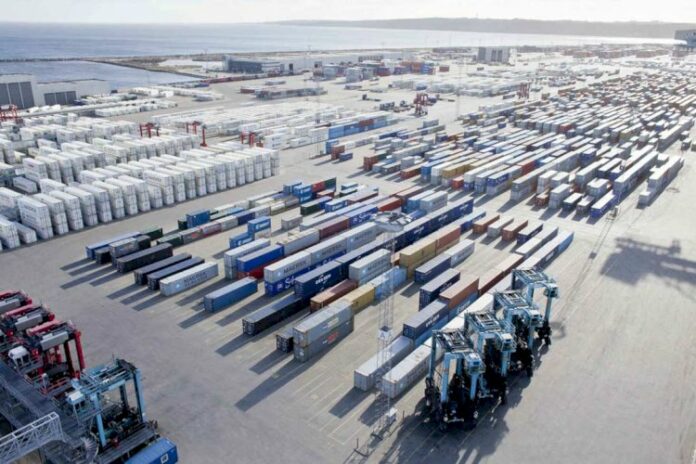
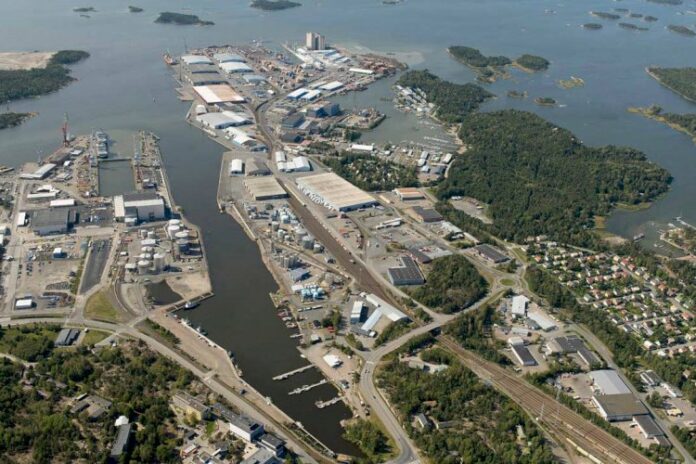
Aarhus Logistics Center A/S (ALC) divests its container terminal in the port of Aarhus to APM Terminals, with neighboring APM Terminals Aarhus acquiring operations as well as the port areas of ALC. The transfer of ownership will have effect as of 1 September 2020.

The terminal was established by ALC in the spring of 2017, after which ALC has managed to develop a strong activity level. However, due to limitations regarding area capacity and lack of prospects of further developing the business, ALC consequently decided to divest the terminal to the much larger operation at APM Terminals in Aarhus.

Jan Dam Poulsen, Managing Director, ALC, says:

“Aarhus has a central position for the container traffic, and in ALC, we have within a few years attained a strong activity level. However, we estimate that from a long-term perspective, it will be difficult to further develop our activities. Consequently, it will also involve challenges to continue servicing our clients in the most appropriate way. By selling the terminal to APM Terminals, we also ensure improved possibilities for the clients.”

With APM Terminals’ acquisition of ALC’s container terminal, the clients will experience more operational benefits in the normal run of things such as increased opening hours, less necessary interactions, increased capacity of reefer containers and a higher level of productivity.

With APM Terminals as owners, the clients will also have direct access to regular train services as well as a worldwide liner network.

Dennis Olesen, Managing Director Nordics, APM Terminals, states:

“We are acquiring an interesting business with loyal clients, who will now gain access to a bigger network, and with that new development opportunities for their business. At the same time, we expect to be able to make the clients’ workday more efficient as administration decreases with just one operator.”

Launching new port app in Port of Rauma

0

Sixtyfour users are currently sharing and getting real-time time tables for port calls. Users are representing the many aspects of the port call: terminals, tugs, pilots, agents, port authority, moorers, captains and even the local shipbuilding company.

After internal testing with partners Port of Rauma (PoR), Port of Gävle (PoG), Swedish Maritime Administration (SMA) and Satakunta University of Applied Sciences (SAMK), PoR and SAMK invited key stakeholders from Port of Rauma for testing, commenting and for further development of this new app.

Euroports, as an agent, Finnpilot as a pilotage organisation, Alfons Hakans, as a tug company and of course mooring services from port of Rauma. These are part of the stakeholders which sat down already in 2018 to evaluate need needs and possibilities. Due to covid-19 meetings were arranged online using SAMK webexhill-system. Weekly online meetings ended with notification testing. This possible feature came out during these online meetings and was finally tested with this main stakeholder group in June. Normally phone calls are the main information sharing tool but if the last contact cannot adhere to the suggested time the whole round of phone calls must take place again.

One example is if there are one inbound vessel and two departing vessels at 18:00. The limited number of tugs available makes the first received order served first, and the time table for the other two is adjusted. All “pinned” partners can see the time table for all three vessels without a single phone call. Development work continues still to show suitability to all partners more easily as now you need to read notification list.

Besides the above mentioned stakeholders few ships, especially, captains having a pilot exemption to Rauma have downloaded this app so they can follow the traffic situation when planning departure at the berth before manning the bridge. Also local shipbuilding company called Rauma Maritime Construction (RMC) downloaded PoR app to follow their ship blocks arrivals. In July there is 64 registered users and when “official” launching will take place in late August there will be new users from local agents, terminal operators etc.

Second tanker manufactured in Azerbaijan launched for the next stage of construction

0

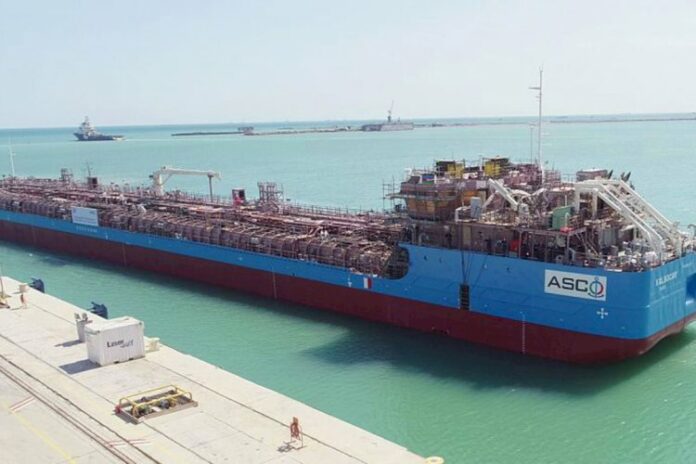
The construction of the hull is complete for 100%. The rest of the finishing works will continue at the quay of the Shipyard. For this, the tanker “Kalbajar” was launched from the construction site of the plant by hydraulic trolleys through the floating dock.

The concept of this vessel was developed jointly with the Odessa Marine Engineering Bureau and experienced ASCO specialists. The ship, designed according to the Volga-Don MAKS project, has the ability to cross the Volga-Don canal at maximum carrying capacity.

The new generation tanker “Kalbajar” has a length of 141 meters, a width of 16.9 meters, and a height of 6 meters. A ship with a crew of 15 members will be able to move at a speed of 10 knots per hour. The tanker has 6 cargo tanks with a total capacity of 9212 cubic meters for the transportation of crude oil and oil products. The vessel with a deadweight of 7,875 tons at sea and 5,447 tons on the river is equipped with two Wartsila engines, each with a capacity of 1200 kW.

After completion of operational tests at the quay of the Shipyard, the tanker will be tested at the sea. It is planned to operate the tanker in foreign waters.

Distinguished by a unique design and a wide range of technical capabilities, this vessel is the second oil tanker built at the Baku Shipyard. The first tanker “Lachin”, launched last year, is already exploited in outer waters under our three-color flag.

At the same time, following the schedule, the construction of two more vessels of the same type is underway for ASCO. Along with this, negotiations are ongoing with the Baku Shipyard regarding the construction of vessels of various purposes for ASCO fleets.

Train 3 of Cameron LNG project begins commercial operation

0

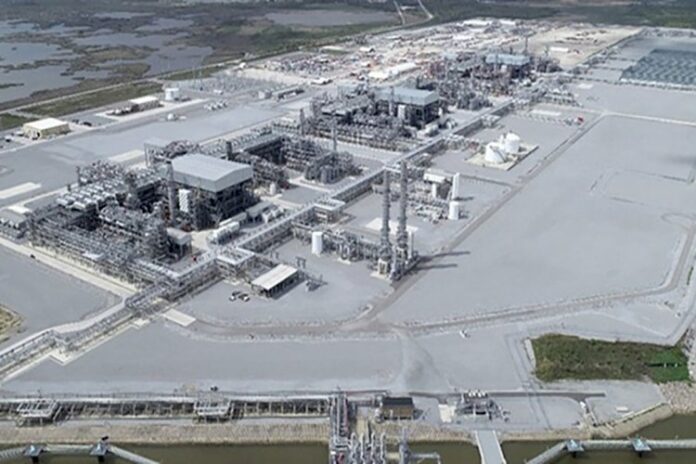
McDermott International Ltd. today announced the beginning of commercial operation of Train 3 at Cameron LNG, which is jointly owned by Sempra LNG, Total S.E., Mitsui & Co., Ltd. and Japan LNG Investment LLC , a company jointly owned by Mitsubishi Corporation and Nippon Yusen Kabushiki Kaisha (NYK).

Samik Mukherjee, Group Senior Vice President for Projects, said:

“This is a major accomplishment. It’s a testament to our dedication and resilience in reaching commercial operation on this world class project during these challenging times. We share this achievement with our partner, Chiyoda. I want to thank Andy Dadosky , our project director, and the thousands of team members, both past and present, that made it possible.”

McDermott and Chiyoda have provided the engineering, procurement and construction for the Cameron LNG project since the project’s initial award in 2014. The project includes three liquefaction trains with a projected export of 12 million tonnes per annum of LNG, or approximately 1.7 billion cubic feet per day.

Mark Coscio, McDermott’s Senior Vice President for North, Central and South America, said:

“I commend the entire team for their focused efforts on safety, quality and delivery as they finish the third, and final train, of the Cameron LNG project. Their commitment and hard work made it possible to reach full commercial operation.”

CSP Abu Dhabi Terminal launches new direct services to Europe and Indian Subcontinent

0

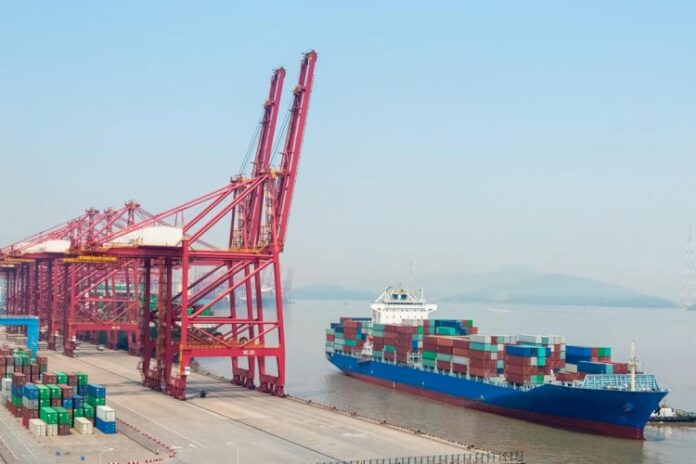
CSP Abu Dhabi Terminal, the first overseas greenfield project of COSCO SHIPPING Ports Limited (CSP), has announced the start of a direct, weekly service to several ports across Europe and the Indian Subcontinent.

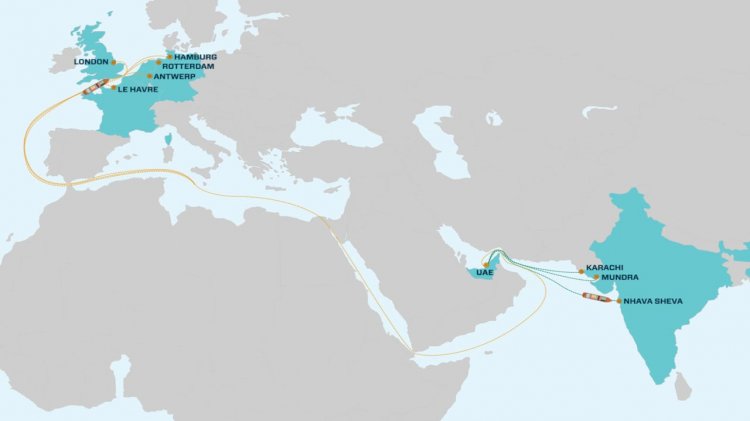
Operating from Abu Dhabi Ports’ flagship deep-water port, Khalifa Port, where the terminal was established as part of a 35-year agreement with CSP, and serving as a regional base for COSCO SHIPPING Ports’ global network of 37 ports, the new direct service will be served by a fleet of eight vessels on rotation, ranging in capacity between 10,000 to 13,000 TEU.

Direct exports from Abu Dhabi to the ports of Rotterdam, Hamburg, London, Antwerp, and Le Havre, will consist primarily of polymers while returning vessels will carry a mix of general and project cargo imports. The ports of Karachi, Nhava Sheva, and Mundra will also benefit from the new service.

Naser Al Busaeedi, Deputy CEO, CSP Abu Dhabi Terminal, said:

“More than a year on since CSP Abu Dhabi Terminal officially launched, we are now well-positioned to bring our direct service offering to a global audience. Our new services will significantly increase the movement of cargo exports and imports between Abu Dhabi, Europe and India, providing our customers with solutions to tackle their international shipment needs, as well as the opportunity to target new markets.”

Mohamed Eidha Tannaf Al Menhali, Acting Director, Khalifa Port, said:

“This new dedicated service marks an important strategic step in Abu Dhabi Ports’ vision to transform Khalifa Port’s end-to-end logistics capability. The ability to connect with some of the world’s most important maritime hubs in Europe and the Northwest Indian Subcontinent will enhance Abu Dhabi’s reputation as a leading facilitator and enabler of global trade in the 21st century. Not only does this announcement bolster our existing partnership with COSCO SHIPPING Ports Limited (CSP), but it also ensures our other customers will be well positioned to broaden their horizons by engaging with new trading and logistics opportunities all around the world.”

Since its inception, CSP Abu Dhabi Terminal has facilitated the local manufacturing, warehousing, and logistics sectors to not only flourish within the emirate of Abu Dhabi, but to also expand their reach across markets in the Middle East, Africa, and beyond. 

The direct services are expected to lend additional support to customers across the region and clients of the Khalifa Industrial Zone Abu Dhabi (KIZAD), providing faster transit and competitive rates for their import and export activities.With expectations that the new offering will increase CSP Abu Dhabi Terminal’s weekly handling of cargo, the development is also expected to help add more feeder services from CSP Abu Dhabi Terminal.

In April 2020, on the passing of the first anniversary of its soft launch, CSP Abu Dhabi Terminal’s AED 1.1 billion deep-water semi-automated container terminal marked several milestones including the handling of over 540,000 TEU.The close of April also saw the terminal achieve more than 1 million hours without lost-injury time (LTI), a feat that was realised thanks to CSP’s adoption of several global HSSE best practises including strong compliance with health and safety protocols within the working environment, and a drive to continuously improve safety performance across the entirety of the organisation.

Offshore energy integration can deliver 30% of UK’s net zero target

0

The Oil and Gas Authority’s (OGA) Energy Integration Project report, published in collaboration with Ofgem, The Crown Estate and the Department for Business, Energy and Industrial Strategy (BEIS), also highlights the additional potential for offshore renewables (wind, wave and tidal) to contribute approximately a further 30% towards the UK’s net zero target. This means the UK Continental Shelf (UKCS) could support, in combination with complementary investments in onshore energy infrastructure, around 60% of the UK’s decarbonisation requirements.

There are over 30 energy integration projects already underway across the UKCS, with more than 10 actively being engaged by the OGA alongside this study.

The report also concludes that not only is the close co-ordination of these technologies valuable in terms of energy production and cutting greenhouse gases, but that their integration would help technologies become economically more attractive.

The findings of the report include:

  • Oil and gas platform electrification is essential to cutting sector production emissions in the near term, and critical to the industry’s social licence to operate. Electrification can abate operational emissions by 2-3MtCO2 p.a. by 2030. This is the equivalent of reducing 20% of today’s production emissions, rising to 40% by 2030.
  • Oil and gas capabilities, infrastructure and supply chain are crucial to energy integration, and can potentially support further offshore renewables expansion, including floating windpower.
  • Re-using oil and gas reservoirs and infrastructure can accelerate Carbon Capture and Storage (CCS), connecting to onshore net zero hubs and saving 20-30% Capex on specific projects.
  • To reach the CCS scale in support of net zero, the UK needs to develop around 20 individual CO2 stores for a total capacity of over 3GtCO2 by 2050 (with large CCS projects featuring multiple stores)
  • Blue hydrogen (produced from natural gas) has the potential to decarbonise around30% of the UK natural gas supply by 2050, potentially supporting circa half of CCS expansions in the same timeframe.
  • Green hydrogen (from renewables) can support and enable the significant expansion of offshore renewables in the 2030s and beyond, providing an efficient storage and energy transportation solution. Reducing the costs of the technology involved (electrolysis) would be needed to support the faster uptake of this technology.

OGA Chief Executive, Dr Andy Samuel, said:

“The UK Continental Shelf has the potential to make a deep and meaningful impact on the UK’s overall net zero target and offshore energy integration can be the game changer. By closely co-ordinating our energy systems a secure energy supply can continue to be delivered from a diverse mix of production, while unlocking more and more of the green energy and carbon capture needed to help take the UK to net zero.”

Minister for Energy and Clean Growth, Kwasi Kwarteng, said:

“It is great to see this report set out a clear path towards net zero, highlighting that the offshore energy sector has the capacity to help deliver huge carbon reductions. Sharing existing expertise and infrastructure from the oil and gas industry will be integral in the development of our outstanding renewable energy sector, helping us meet our climate change commitments.”

VIDEO: Navantia launches the first Corvette for Saudi Arabia

0

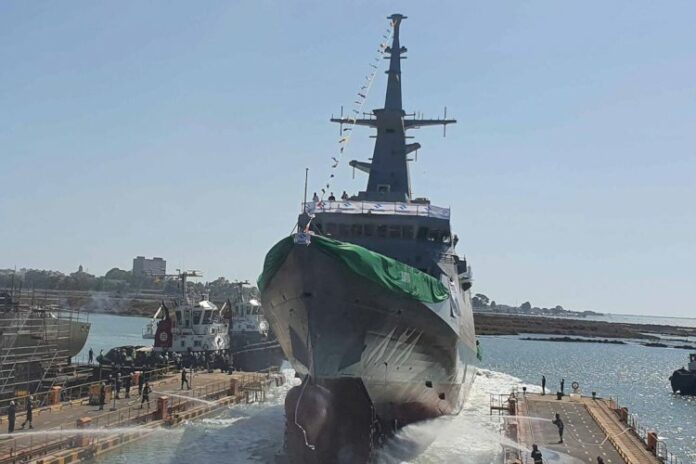
Navantia has successfully carried out the launching of AL-JUBAIL, the first of five corvettes built for the Royal Saudi Naval Forces (RSNF). 

The AL-JUBAIL has a length of 104 metres, a beam of 14 metres and will be able to accommodate 102 people (crew and additional personnel). It will reach a maximum speed of 27 knots and, among other aspects, it has the capacity to carry 21 days’ supplies on board.

The corvettes are the latest generation of successful Navantia-designed combatants, and incorporate state-of-the-art Navantia products, such as the CATIZ Combat System, DORNA Gun Fire Control System, NAVCOMS/HERMESYS Integrated External and Internal Communications System, MINERVA Integrated Navigation and Bridge System, or COMPLEX-SIMPLEX Integrated Platform Management Platform together with equipment manufactured by Navantia under license such as the Leonardo SUPER RAPID 76mm main gun, Rheinmetall Air Defence MILLENNIUM 35mm close-in weapon system, MTU propulsion engines and diesel generators, and RENK gearboxes.

AL-JUBAIL, hull number 828, has been successfully built despite the slowdown in activity caused by the Covid-19 pandemic. In fact, the safety protocols for the launching ceremony required all attendees to have their temperature taken, wear a face mask and maintain the required safety distance.

For the follow-on sister ships, the objective is to recover time and meet the initial milestones, so that the second corvette can be launched in November 2020. 

SME secures contract for world’s first floating tidal energy array

0

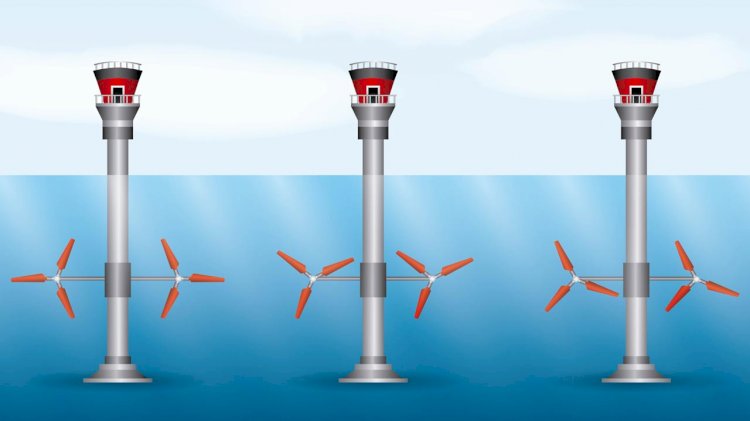
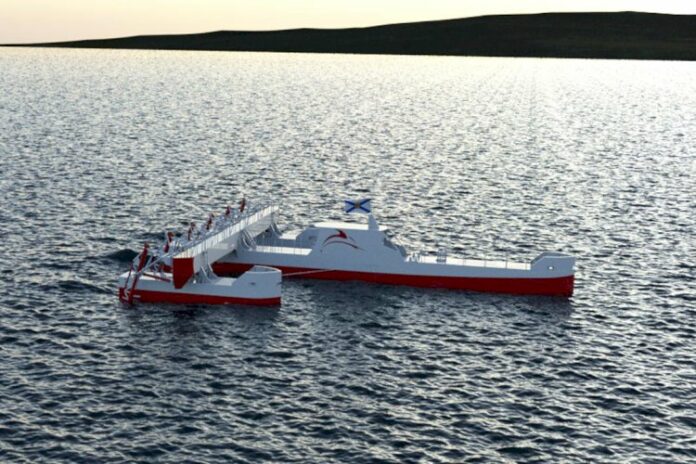
Sustainable Marine Energy (SME) will supply three next generation PLAT-I floating tidal energy systems, with a rated power output of 420kW each, to project entity Spicer Marine Energy who has signed a Design Build and Operate (DBO) agreement with reconcept GmbH for the first phase of the Pempa’q In-stream Tidal Energy Project.

Spicer Marine Energy will deliver and operate the project over its 15 year lifetime, on behalf of reconcept’s RE13 Meeresenergie investment fund. Reconcept Managing Partner Karsten Reetz said:

“With the signing of the DBO contract we have reached a significant milestone. It provides the basis for further successful reconcept investment offers in the field of marine energy. Our first investment fund named ‘RE13 Meeresenergie’ attracted great interest from the financial market. Around 250 German private investors participated in this tidal energy investment to deliver the first project in Nova Scotia’s Bay of Fundy. Now the doors are open for further high-yield offers.”

Jason Hayman, CEO of Sustainable Marine Energy said:

“This is a fantastic achievement for the whole Sustainable Marine Energy team in Canada, Scotland, and Germany who have spent the past two years solving a range of technical, environmental, and commercial challenges to get this project across the line. Support has been provided for this project, the first of its kind in the world, by a large number of stakeholders including the provincial government of Nova Scotia who have steadfastly promoted the potential of the Bay of Fundy’s tidal energy resource. We look forward to working with reconcept to deliver a successful project that will provide an attractive return for their investors. Now that the first phase of the project has commenced we will be working with them on financing for subsequent phases.”

Sustainable Marine Energy’s first PLAT-I prototype has been deployed at a test site in Grand Passage, Nova Scotia for almost two years. During this time the performance of the system has been extensively tested in a range of conditions, and comprehensive monitoring of potential environmental effects has been undertaken. To date there has not been any evidence of adverse effects on fish or marine animals.

Components for the first of the next generation 420kW PLAT-I platform have already started arriving at Sustainable Marine Energy’s new systems integration facility in Dartmouth, Nova Scotia.The platform will be assembled and launched at A.F. Theriault & Son Ltd in Meteghan later this year prior to being installed the Grand Passage site for commissioning trials through the winter. Construction work will then start at the Fundy Ocean Research Centre for Energy (FORCE) in the 2nd quarter of 2021 where this first platform, alongside a further two, will be installed to deliver phase 1 of the Pempa’q In-stream Tidal Energy Project.

Fugro has ordered two 12m SEA-KIT X class USVs

0

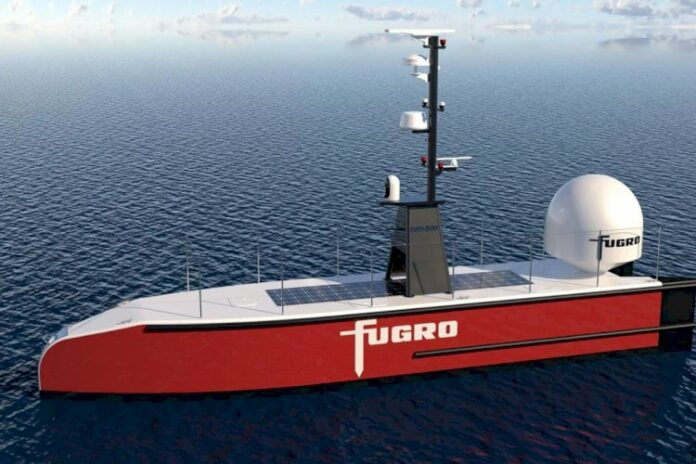
Fugro has ordered two 12m SEA-KIT X class Uncrewed Surface Vessels (USVs); with one bound for their Asia-Pacific region and the other for North Sea operations. 

Ivar de Josselin de Jong, Director Remote Inspection at Fugro, said:

“This order cements Fugro’s strategy to lead the development of remote and autonomous solutions, which is key to delivering a safer, more sustainable and more efficient approach to the construction and maintenance of marine assets. Integration of the new USVs into our global network of remote operation centres (ROCs) will allow us to provide our clients with an entirely remote-controlled inspection solution for the first time in history. In addition to applications in the oil and gas industry, we specifically foresee an important role for our new remote inspection solution in the rapidly growing offshore wind sector.”

The two new USVs are the first of multiple planned builds for Fugro as part of the partnership, with the schedule also including the design, build and delivery of SEA-KIT’s 24m Omega class USV in 2021.

Ben Simpson, SEA-KIT CEO, commented:

“This order, our first for the delivery of a vessel for commercial use, is a real milestone for the team and testament to their hard work over the past three years. Our company vision is all about providing the technology to solve future offshore challenges now and this order is a major step forward in proving the capabilities of our USVs in addressing those challenges. It also clearly demonstrates an industry shift towards uncrewed operations and the commitment of key industry players to reducing the carbon footprint of commercial offshore operations.”

The first of the 12m SEA-KIT X class USVs is expected to be delivered to Fugro in Perth, Australia, in Q4 2020 and will feature remotely operated vehicle (ROV) and autonomous underwater vehicle (AUV) launch-and-recovery systems and station-keeping capabilities. The vessel will be used to conduct completely uncrewed ROV pipeline inspections in up to 400m water depth on Australia’s North West Shelf.

The second USV, which will have a similar fit-out, is scheduled for delivery to Fugro in Aberdeen in Q1 2021.

The first order is already under construction at SEA-KIT’s bespoke facility in Tollesbury, Essex, where the fit-out of the hull and the integration of the onboard systems and sensors will take place.

Together, Fugro and SEA-KIT are committed to improving safety and efficiency and to reducing the environmental impact of offshore operations. The new USVs will consume up to 95% less fuel than traditional, crewed vessels, supporting international ambitions for net zero global emissions in the marine industry.