-8.4 C
New York
Home Blog Page 796

Brazil: Total launches Phase 3 on the giant mero field development

0

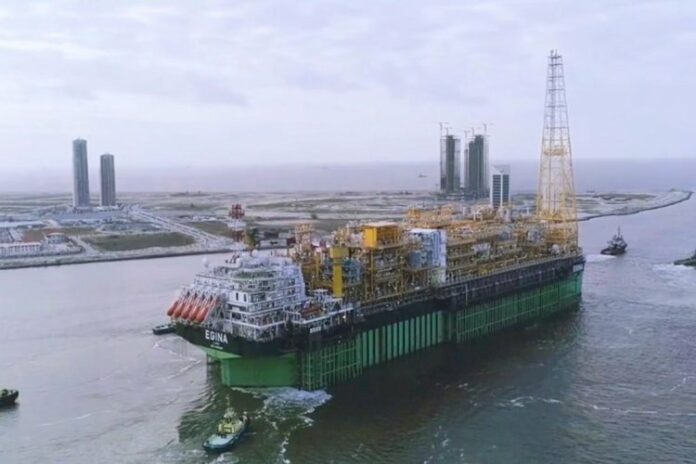
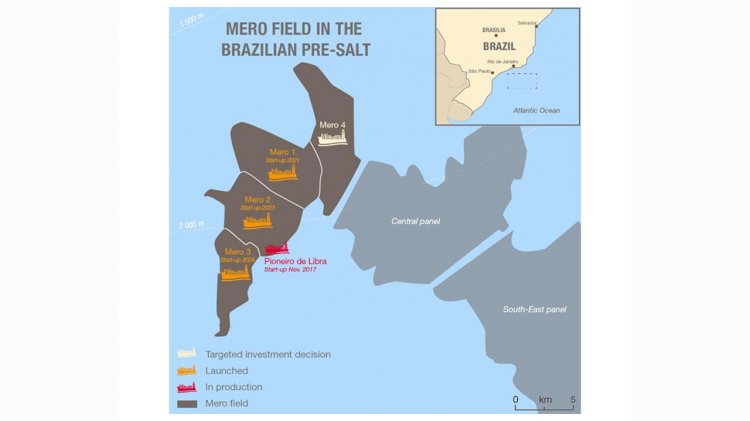
Total and its partners have taken the investment decision for the third phase of the Mero project (Libra block), located deep offshore, 180 kilometers off the coast of Rio de Janeiro, in the prolific pre-salt area of the Santos Basin.

The Mero 3 FPSO1 will have a liquid treatment capacity of 180,000 barrels per day and is expected to start up by 2024. It follows investment decisions for Mero 1 (startup expected in 2021) and Mero 2 (startup expected in 2023) FPSOs, both of which have a liquid processing capacity of 180,000 barrels per day.  

Arnaud Breuillac, President Exploration & Production at Total, said:

“The decision to launch Mero 3 marks a new milestone in the large-scale development of the vast oil resources of the Mero field – estimated at 3 to 4 billion barrels. It is in line with Total’s growth strategy in Brazil’s deep-offshore, based on giant projects enabling production at competitive cost, resilient in the face of oil price volatility. The Mero project will contribute to the Group’s production from 2020 onwards, and we are targeting a production of 150,000 barrels per day in Brazil by 2025.”

The Mero field has been in pre-production since 2017 with the 50,000-barrel-per-day Pioneiro de Libra FPSO. The Libra Consortium is operated by Petrobras (40%) as part of an international partnership including Total (20%), Shell Brasil (20%), CNOOC Limited (10%) and CNPC (10%). Pré-Sal Petróleo (PPSA) manages the Libra Production Sharing Contract. 

Maersk Blockchain Tradelens Program is now active on YILPORT

0

YILPORT completed and implemented integration studies with TradeLens.

Data flow will be provided via API messages, and 6 main messages have been initiated between YILPORT and TradeLens. These messages include; gate in, gate out, vessel load, vessel discharge, actual load date list, actual discharge date list.

TradeLens is a digital shipping platform powered by blockchain technology created by IBM/Maersk. It provides transparency, efficiency and collaboration opportunities to the global supply chain.

TradeLens makes it easy to control and manage shipping-related data. It offers innovative applications to all stakeholders in the supply chain such as shippers, agencies, port operators, customs authorities and financial service providers. More than 120 events in the supply chain can be tracked instantly. This technology platform provides end-to-end supply chain information, facilitating seamless data sharing, collaboration and improved trade flows.

Modernizing the processes by which logistics operate is critical to building a robust and more efficient supply chain. TradeLens will contribute to delivering best-in-class service and visibility to supply chain partners for YILPORT Holding brand.

Risk Intelligence signs an agreement with ICS for the Risk Intelligence System

0

Risk Intelligence A/S has announced that the company has signed an agreement with the International Chamber of Shipping (“ICS”) for the Risk Intelligence System (MaRisk+PortRisk) and bespoke reports.

The International Chamber of Shipping (ICS) represents the interests of shipowners at the International Maritime Organisation (IMO). Their membership includes 80% of the world’s merchant fleet, from whom they host working groups on all matters maritime, including security. From these working groups they develop and promote shipping industry best practice.

Jim Pascoe, Sales Director of Risk Intelligence says:

“The role ICS plays at the International Maritime Organisation is absolutely critical in ensuring that the voice of shipowners is heard. Part of this is making sure that the very best information is made available to their security working groups so that a unified message can be formulated from a shared understanding of the situation, wherever that situation may be. We are very proud to be working with ICS and grateful that we could formalise the relationship we have had with them. Whilst the System will assist in their global threat and risk awareness, the bespoke reports will ensure the security working group have the very latest intelligence and access to expert analysis.”

The Risk Intelligence System is a digital security intelligence solution developed in close collaboration with global businesses that are established within the fields of shipping, offshore, oil and gas. The digital platform is designed on the basis of insights directly from customers and their needs as well as Risk Intelligence’s experienced security risk analysts and developers’ knowledge of intelligence and assessment needs.

The Risk Intelligence System offers customers a complete picture of immediate, short- and medium-term security risks for coastal areas, ocean, port and landside threats. The analysis is focused on insurgency, piracy, organised crime, activism, terrorism, military conflicts and any interplay between these. 

Risk Intelligence clients currently operate more than 14.7% of the global merchant fleet.

The parties have agreed not to disclose the value of the contract.

HIPP awards Fugro Gulf St Vincent charting project for AHO

0

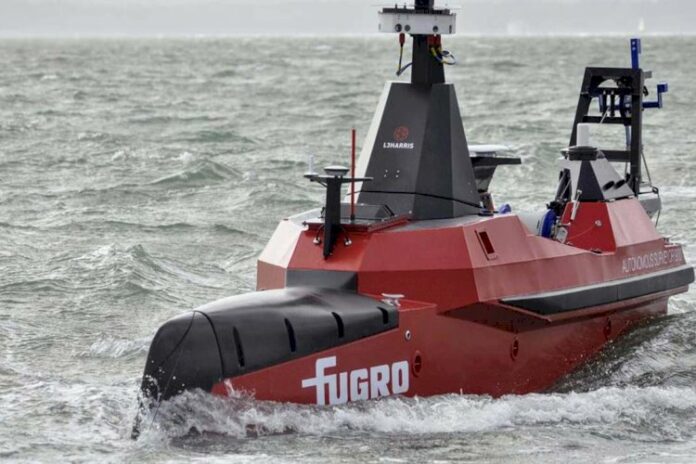
The 998 km2 survey will be conducted on behalf of the Australian Hydrographic Office (AHO), who will use the data to update nautical charts for safer navigation. Data will also be shared with scientific agencies, including Geoscience Australia and the national AusSeabed community.

This area within Gulf St Vincent and Investigator Strait is the major waterway for the approach to Port Adelaide and features adjacent marine parks and habitat protection zones of national significance. Fugro will deploy a new uncrewed surface vessel (USV), Fugro’s Autonomous Surveyor-900 (FAS-900), to expedite data collection, the first time this technology has been deployed in Australia for the AHO and a demonstration of the innovations being developed to improve the safety and efficiency of data collection in the marine estate. Fugro will also utilise other technologies developed in Australia, including remote operations centres (ROCs) and Back2Base™ data transfers, to achieve significant environmental, safety and efficiency gains.

Mark Sinclair, Director of Hydrography for Fugro in Asia-Pacific, said:

“Fugro is proud to be supporting the AHO as part of the HIPP. Long-term strategic partnerships help support innovation, such as our USV for faster data acquisition, and contribute to developing an enduring national hydrographic industry.”

The nautical charts of Gulf St Vincent and Investigator Strait that support marine traffic, fishing, tourism, recreational boating and environmental management currently consist of historical data of varying reliability, some going as far back as Matthew Flinders and Nicolas Baudin in the early 1800s. As part of the hydrographic survey, Fugro will also deploy a number of tide gauges and current meters to improve understanding of the gulf’s oceanography and support the development of an accurate tide model for future vessel traffic and to resolve known tide datum anomalies in this complex region.

Chevron Marine Lubricants takes temperature of 2020 fuel switch

0

‘Taking the Temperature of the 2020 fuel sulphur switch’ includes findings based on work with ship operators worldwide to manage the transition from traditional high-sulphur fuel oil (HSFO) to very low-sulphur fuel oil (VLSFO) – the most widely used means of complying with IMO’s 2020 regulation. The paper also explores what these experiences mean for shipping as it prepares for even greater changes in the future, as decarbonisation and other sustainability targets further influence fuel choices.

Ian Thurloway, Brand, Marketing and Business Development Manager for Chevron Marine Lubricants, says:

“Chevron’s observations show that most ship operators managed the transition very well. Fuel quality has been less variable than expected and accurate recommendations on cylinder lubrication helped prevent the worst fears from being realised. But there have been engine condition concerns and rigorous monitoring remains a fundamental of any fuel change – particularly faced with a whole new range of clean fuels to choose from.”

Chevron notes in the whitepaper that VLSFO in general has a higher energy content than HSFO, offering good value for users. But its rapid ignition has caused problems for some older engines. Meanwhile the practice of flushing high-sulphur residues from tanks ahead of the regulation’s entry into force also contributed to an increase in cylinder condition challenges early in the year.

The lower sulphur content in marine fuel also reduces the safety margin between normal piston running, with a limited but manageable level of corrosion, and damaging abrasive or adhesive wear. To detect these conditions before they lead to irreversible engine damage Chevron recommends that operators employ a robust onboard drip oil monitoring programme, supported by frequent onshore laboratory analysis. Chevron’s own DOT.FAST® service now includes a separate indicator for abrasive/adhesive wear in its onshore laboratory analyses.

Luc Verbeeke, Senior Engineer, Chevron Marine Lubricants, says:

“Ship operators can use the DOT.FAST® onboard kit to check if total iron in the drip oil rises. The deeper laboratory analysis then identifies if the drip oil contains greater levels of magnetic iron particles. This would indicate abrasive/adhesive wear, meaning that operators should adjust either the base number or the feed rate of their cylinder lubricant.”

Renewable energy could reduce Asia Pacific LNG plant emissions by 8%

0

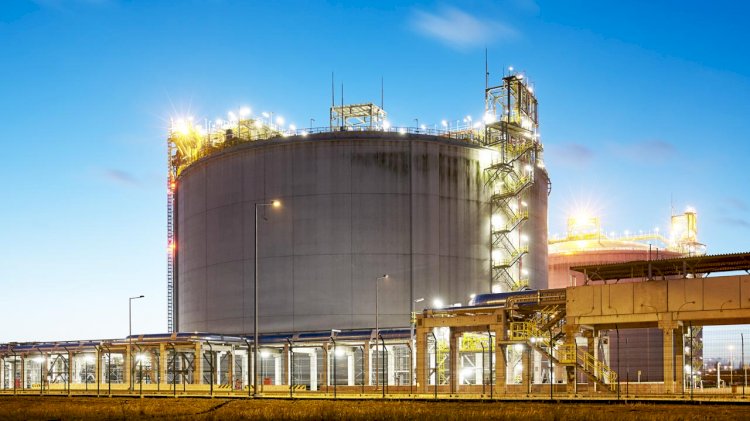
Using renewable energy to power liquefied natural gas (LNG) plants in Asia Pacific could reduce emissions by about 8%, says Wood Mackenzie.

Asia Pacific produces over a third of the world’s LNG, but also generates over 50 million tonnes of carbon dioxide equivalent (MtCO2e) of emissions during liquefaction. Australian LNG projects account for over half or 29 MtCO2e of liquefaction emissions from LNG projects in the region.

Many of Asia Pacific’s LNG facilities are located in remote areas, far from the power grid. As a result, feedgas is used to generate electricity to run the plant and fuel the liquefaction process. Typically, 8% to 12% of feedgas is consumed at the plant to run these processes. Older, more inefficient plants, as well as nascent floating LNG (FLNG) vessels operate with far higher losses.

Wood Mackenzie senior specialist Jamie Taylor said:

“Three main decarbonisation levers could help reduce emissions at LNG plants, namely operational efficiency, design changes, and the use of renewable energy, which could be sourced from the grid or generated onsite.”

Feedgas is used to fuel gas turbines to generate electricity to power the plant. Replacing these gas turbines with electricity could greatly reduce emissions, assuming the grid power is less carbon intensive. 

The other option is to install on-site renewable power, in particular solar.Taylor said:

“If a solar plant or a hybrid solar plus battery storage plant is installed at the LNG facility, back-up generators could be switched off and renewable electricity could be used to meet the power load. As costs continue to decline and technology improves, renewable plus battery storage could become an alternative in the future, especially for new LNG plants.

We are already seeing Australian LNG plant operators examining ways to reduce carbon emissions throughout the value chain. Initiatives are underway at the upstream assets supplying the North West Shelf and QCLNG, and Darwin LNG has installed a battery that reduces the need to run one of the gas turbines.

Our analysis shows that installing renewable energy generation could reduce emissions at Asia Pacific’s LNG plants by 8% in 2020 alone.”

While LNG has clear benefits over other fossil fuels in power generation, the industry is increasingly scrutinising the emissions intensity of its upstream supply and the production process. Several industry players have set carbon neutrality 2050 targets, and there are indications LNG buyers are looking more closely at the emissions associated with cargoes they are procuring. Stricter project financing criteria, especially from European banks, is another cause for concern for companies developing capital intensive greenfield projects.But perhaps the biggest driver for decarbonisation is the potential for carbon tax or tighter regulations in both exporting and importing countries. This would significantly impact the already strained project economics post oil price crash.

Taylor said:

“A carbon tax is likely to be the biggest driver for LNG projects to switch to renewable energy at the plant or deploy carbon capture and storage to reduce emissions from upstream gas, or both. Using less feedgas as a fuel would result in more gas being available to supply either the domestic market or be converted into LNG for exports. Rather than increasing annual LNG output, which would only be possible by debottlenecking the plant, this ‘saved’ gas would be used to extend the plateau LNG production level by a few years. Revenues associated with the resulting extended plateau could reach into several billion dollars longer-term.

In APLNG for example, installing 60 megawatts of solar in 2020 at a cost of US$60 million increases the remaining value of the project by US$62 million. This is due to the additional revenues generated from selling the ‘saved’ feedgas. The relative benefits of installing solar are increased further when a carbon tax is considered.”

Neart na Gaoithe enters first phase of offshore construction

0

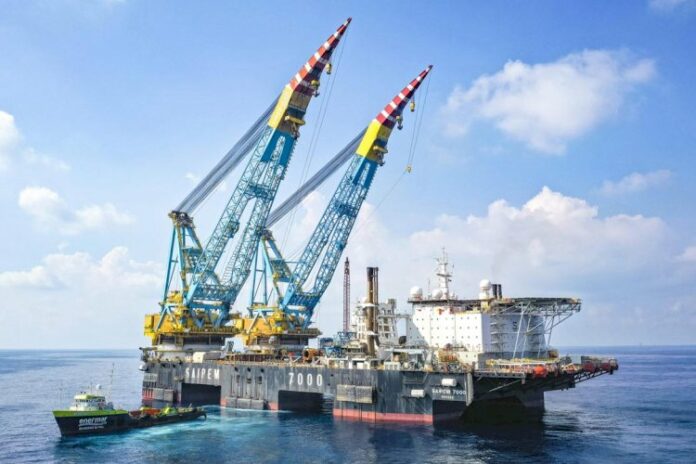
The S7000, Saipem’s semi-submersible crane vessel, will start the installation of casings for piles. The vessel will also work on preparing the seabed in advance of the arrival of the steel foundation jackets on which the 54 wind turbine generators and two offshore substations will be installed.

This giant vessel is 197.5 metres long and can work in the most challenging weather conditions. It can carry out heavy lift operations up to 14,000 tonnes at sea.

NnG will supply enough low carbon electricity for around 375,000 homes* and has a capacity of c. 450 megawatts (MW) of low carbon energy and will offset over 400,000 tonnes of Co2 emissions each year. Full commissioning will complete in 2023.

Matthias Haag, NnG Project Director, said:

“The construction phase of the NnG offshore wind farm is now well under way and many people will be able to see the S7000 starting construction work offshore. It will be visible from much of the East Neuk of Fife and from North Berwick and Dunbar. We have carefully considered the implications of COVID-19 and Scottish Government guidelines as the work gets under way offshore and for the continuing onshore works.”

Guido d’Aloisio, Saipem Head of Offshore Renewable Business line, said:

“It’s very important for Saipem to start offshore construction on the NnG offshore wind farm, a milestone for our new business line, and this positions Saipem as a key player in the offshore wind industry. Strict protocols and continuous monitoring of the situation will ensure that the health and safety of our employees, clients and partners are protected throughout our operations on the NnG project.”

Saipem will supply and install the foundations for the turbines. It will also supply and install an additional two jackets for the offshore substations.

Onshore work continues on the project at various locations along the cable route which starts at Thorntonloch beach and finishes in the Lammermuir Hills.

NOC renews Memorandum of Understanding with the Royal Navy and Dstl

0

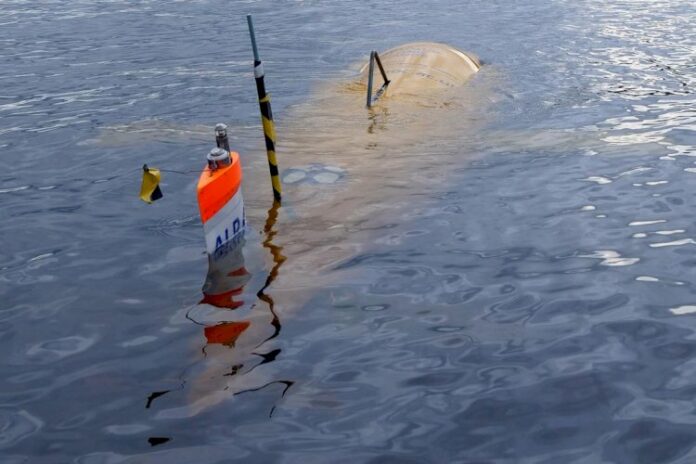
The Royal Navy, Defence Science and Technology Laboratory (Dstl) and the National Oceanography Centre (NOC) have renewed and expanded their Memorandum of Understanding (MoU) within the underwater environment and collaboration in trials and testing of Marine Autonomous Systems (MAS) and novel sensors for the collection of marine data. The MoU will broaden the RN’s capability in the utility and deployment of autonomous and robotic underwater systems.

The RN, Dstl and the NOC all have a great interest and wealth of expertise to share about the ocean environment, albeit from slightly different perspectives – classically the RN representing the warfighter/tactical view, whereas the NOC is focused on Science and Technology (S&T) and Research and Development (R&D), with Dstl falling into both tactical and S&T spheres. However, as the RN leans forwards into innovation, agile working and new methods of operating, seeking support from the NOC’s world-class academic and research pedigree, is a ‘no-brainer’. 

The first iteration of the MoU – signed in 2014 – focused on the joint development and trials of unmanned underwater vehicles (UUVs) and other marine robotics. However, as Defence and the RN in particular has re-focused its attention on the North Atlantic, seeking operational advantage in this area, the breadth of the MoU has been adjusted to encompass a wider scope of potential collaborative projects and information sharing. 

Commodore Mike Knott, ACOS Maritime Capability and Force Development, and RN sponsor for the MoU, said:

“The Royal Navy is on an exciting journey to modernise and optimise our ability to collect and exploit hydrographic and oceanographic information. This enduring MoU allows the Royal Navy to work closely with the National Oceanography Centre and Defence Science and Technology Laboratories to collaborate in developing our world leading expertise in Marine Science. Consequently, it will ensure that the operational decisions we make will be based on the most up-to-date environmental data.”  

As the UK’s centre of excellence for oceanographic sciences, the core remit of the NOC is to provide national capability and leadership for big ocean science. Naturally, this has great relevance for the RN and Dstl, particularly at a time when operational advantage is determined by an organisation’s ability to use data, information, and intelligence effectively. 

NOC Associate Director, National Marine Facilities, Leigh Storey, commented:

“There continues to be multiple opportunities for the NOC to work closely with the Royal Navy and Dstl, from scientific interpretation of oceanographic data to joint development of autonomous systems, from the coast to the deep ocean. I very much hope this MoU acts as a launch pad for even closer collaboration and focussed alignment of future development opportunities.”

Dstl’s role in the partnership is to help shape the RN’s direction of travel in terms of future capability, through their own research, but also through enabling a greater level of engagement with other researchers and academics in the field. 

Dstl Senior Principal Scientist (Ocean Environment), Timothy Clarke, said:

“As the science providers for UK national security, Dstl provides impartial and evidence-driven analysis to customers. By harnessing the latest technologies and expertise within the National Capability we will enhance the RN’s understanding of the applications of autonomous underwater vehicles for operational advantage.”

Potential collaborative projects in the short to medium term include enabling access to the National Marine Equipment Pool (NMEP) – equipment within the Marine Autonomous Robotics Systems (MARS) fleet such as marine gliders, remotely operated vehicles, autonomous surface and underwater vehicles, as well as the research vessels RRS James Cook and RRS Discovery. Through the MoU all three organisations will continue to develop and test Marine Autonomous Systems (MAS), that the NOC is famous for, and their application to defence contexts and scenarios. 

Additionally, this is a key time for ship operators with mounting pressure to de-carbonise operations and infrastructure, particularly with the UK Government’s Net Zero 2050 goal. Hence, another prospective line of work is investigating the possibilities and options for designing, developing and operating a net zero fleet, to cement the NOC, RN and Dstl at the forefront of sustainable oceanographic science and technology. 

 

SCHOTTEL to propel Med Marine-built salvage tug for Kenya Ports Authority

0

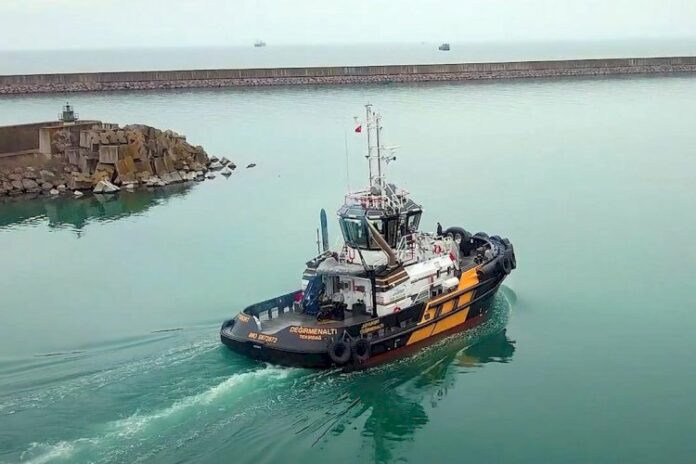
It will be equipped with main and auxiliary propulsion systems from SCHOTTEL, achieving an expected bollard pull of more than 120 tonnes. The Robert Allan RAstar 4200 (MED-A42120) design vessel is considered the largest tugboat on the East African Coast of the Indian Ocean.

Recai Hakan Şen, CEO of Med Marine, explains:

“The marine business is rapidly changing towards greater environmental awareness and improved operational efficiency. This new tugboat will reflect this change, thanks largely to SCHOTTEL’s proven and reliable propulsion solutions. It will truly represent the new generation of vessels, with vastly increased power.”

The new vessel will be driven by two SCHOTTEL Rudderpropellers type SRP 710 with an input power of 3,700 kW each at an input speed of 1,000 rpm. The SRPs feature propellers measuring 3.4 metres in diameter. The azimuth thrusters will be powered by diesel engines. This thruster configuration will achieve an expected bollard pull of more than 120 tonnes. Furthermore, one hydraulically-driven SCHOTTEL Transverse Thruster type STT 170 (250 kW) will ensure maximum manoeuvrability.

This highly effective propulsion system will enable the tug to provide more efficient ship handling and coastal towing services. Measuring 42 metres in length and at a width of 16 metres, the salvage tug is equipped with extensive towing facilities, extinguishing monitors for firefighting, external bilge systems for leak detection, workshops, ship cranes and dinghies.

The state-of-the-art vessel, scheduled for delivery in 2021, will be a vital addition to East Africa’s largest port of Mombasa. As part of the Kenya Ports Authority equipment modernization and maintenance programme, it aims to improve efficiency at the port.

KPA is mandated to manage and operate the Port of Mombasa and all scheduled seaports along Kenya’s coastline. In addition, the Authority manages inland waterways as well as inland container depots.

The Port of Mombasa is the gateway to East and Central Africa and is one of the busiest ports along the East African coastline. It provides direct connectivity to over 80 ports worldwide and is linked to a vast hinterland comprising Uganda, Rwanda, Burundi, the Eastern Democratic Republic of Congo, Northern Tanzania, Southern Sudan, Somalia, and Ethiopia by road.

Costa Cruises: in September cruises in Italy for Italian guests only

0

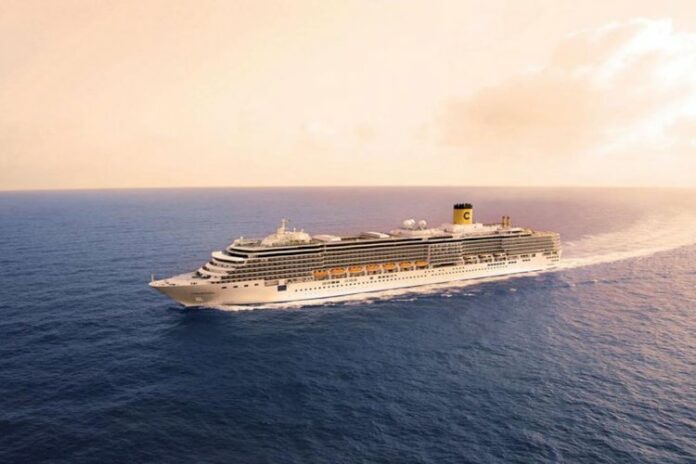
With the aim of ensuring maximum safety for guests, crew and the destination communities, and in line with its decision to restart responsibly, Costa Cruises announces that the September cruises of Costa Deliziosa from Trieste and Costa Diadema from Genoa will be reserved exclusively for Italian guests, with one-week itineraries calling at Italian ports only, allowing to rediscover in safety Italy’s finest destinations.

The decision was made considering the evolution of the epidemiological scenario and taking in account the regulation issued today by the Italian Ministry of Health regarding mandatory checks for travellers returning from some European and foreign destinations, which suggests a cautious approach. Therefore, this solution will allow Costa guests to better enjoy their holiday, with less worries.

The departure dates of the two ships are confirmed – Costa Deliziosa on September 6, 13, 20, 27 and Costa Diadema on September 19 – while further details on the itineraries will be announced as soon as possible. Costa is continuing to work in close cooperation with Flag State authorities, Italian Regions, local institutions, health authorities, harbour master’s offices, ports and terminals and RINA to ensure a responsible, smooth and well organized application of the new regulations and protocols approved by the Italian Government for the restart of cruises.

The company also confirms the extension until 30 September 2020 of the pause for all the other cruises, except for the above-mentioned departures of Costa Deliziosa and Costa Diadema. Costa is informing the impacted Guests and travel agents. They will be guaranteed a reprotection in accordance with the applicable legislation.

Costa is working for a responsible and safe resumption of its cruises starting from 6 September, as already announced in recent days, tirelessly monitoring the epidemiological situation that is constantly evolving. The company hopes that from October the situation will allow to welcome on board its ships also guests of other nationalities.