-4.2 C
New York
Home Blog Page 795

Four big logistics challenges of COVID-19 – and how to overcome them

0

The challenges are imposing. From much-reduced air and ocean cargo capacity and a rapid shift from in-store buying to e-commerce to the COVID-19 “bullwhip effect” on inventories and supplies, never have so many businesses and consumers had to adjust, improvise and innovate so rapidly. Here are four key logistics challenges that spurred the search for new solutions.

Capacity

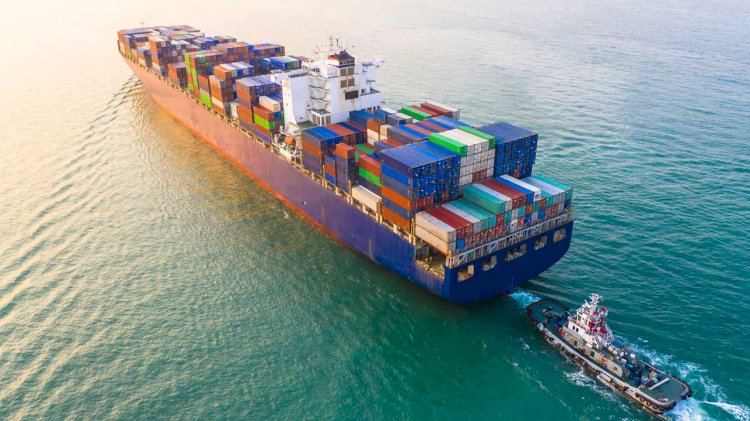
Capacity evaporated. In normal times, ocean freight is typically around 90% of global trade volume. But the pandemic initially curtailed the supply of manufactured goods out of Asia, then rippled across the world and sent demand for goods shipped by ocean freight plummeting. Ocean carriers responded by removing shipping capacity from the market: cancelling sailings and eliminating “strings” where vessels call on several ports before reaching a final destination. Air freight capacity also dropped, in large part because a significant portion of air cargo flies in the bellies of passenger flights, many of which were cancelled as passenger traffic dried up. Meanwhile, driver shortages and cross-border restrictions shrank road freight capacity in certain places and led to long backups and delays.
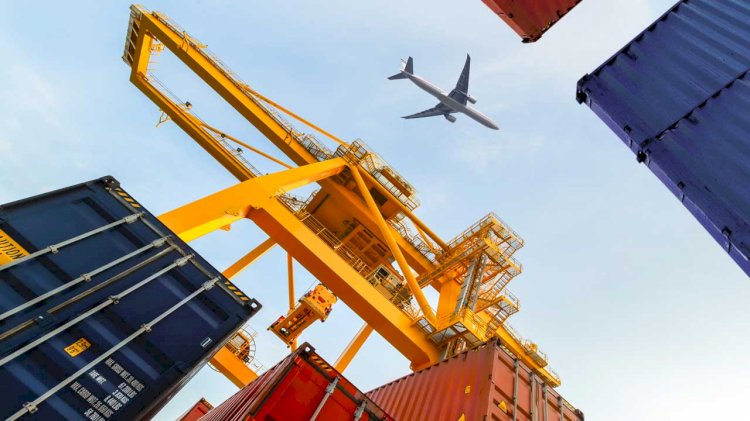
Ocean freight capacity is starting to bottom out and stabilize. In the meantime, a number of other answers have emerged, including:

  • Shift of ocean cargo to air, despite higher shipping rates and a scramble for space. Makers of tech products – laptops and headsets – saw demand soar as millions around the world left the office and began working from home for extended periods;
  • Use of air charters for urgent, high-value cargo that would otherwise go aboard freighter aircraft or in the belly of widebody passenger flights;
  • Conversion of empty passenger aircraft to “passenger-freighters” that can carry cargo in specially packed passenger cabins, in addition to belly cargo;
  • Charter sharing and freight consolidation among forwarders or shippers that might normally be competitors;
  • Alternative modes such as rail from China to Europe, then long-haul trucking across borders;
  • Alternative airports, ports, and trucking routes where there is extra capacity.

Fluctuating demand

COVID-19 has turbocharged the consumer shift to online buying. In Italy, e-commerce sales of consumer products rose by 81% in a single week; McKinsey forecasts that 55% of consumers in China will continue shopping online as the crisis eases – for example, buying cars without ever visiting a showroom. Businesses weathering the storm include those with omni-channel inventory strategies that have pivoted to BOPIS (buy online, pick up in store) models, and smaller firms such as restaurants that transformed their websites into points-of-sale and converted themselves into delivery-led operations.
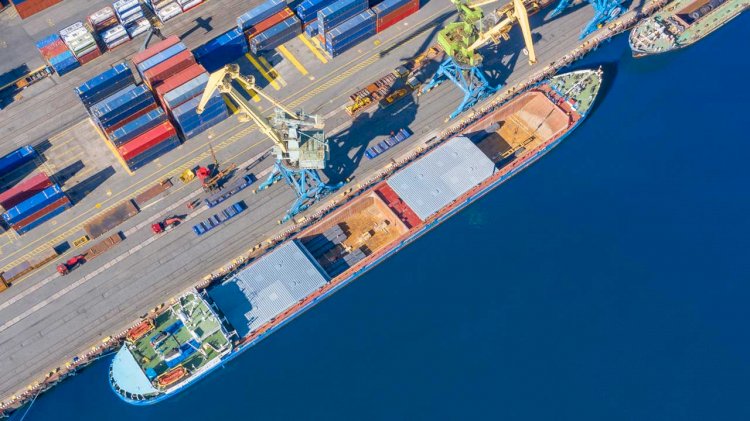
The retail-to-go approach presents logistics hurdles. E-commerce demands rapid fulfillment and delivery that is also inexpensive for the consumer. Among the solutions is alternative inventory storage: more warehousing close to point-of-origin or destination, conversion of stores into storage as distribution and fulfillment hubs, or strategic use of ocean freight as “floating storage” through careful timing of orders and deliveries.

Geographic risk

The crisis also provides an opportunity to re-evaluate supply chain locations. At the start of the pandemic, when China shuttered production, some US fashion retailers said more than 70% of their stock was sourced from the country. Disruption to its industries have left electronics retailers facing delays of 10 weeks on shipments. The same is true for brands producing in other nations.

Will the crisis alter global production and sourcing patterns? Will it prompt companies producing or sourcing in Asia to diversify by spreading production, or to adopt near-shoring or reshoring strategies? There are signs some US manufacturers are looking at bringing production closer to home, mainly in Mexico.
For many, it will be hard to cut or loosen ties to China. Supply chains there are highly efficient, the labor force large and skilled, the market vast and growing. Chinese production is deeply integrated with inputs from and production in other Asian markets. China, for instance, is a major source of fabric for garment manufacturers in the region, making it hard to remove from the equation altogether. And a “China+1” strategy to spread supply chain risk is also potentially expensive.

Many companies with the flexibility to move have already done so, as the result of US-China trade friction that began in 2016, or because labor costs in China were rising. Pre-COVID-19, the Agility Emerging Markets Logistics Index 2020 found 70% of those with operations in China were planning to stay put, despite global trade tensions and other headwinds. This sentiment may endure after the pandemic, suggesting a logistics-led solution, smoothing supply and demand issues, is the best approach.

Inventory management

Consider the COVID-19 “bullwhip effect”  – the changes in consumer demand that ripple through the supply chain at ever greater magnitudes, creating long-term problems for production and supply. This can be seen in the one-off surges in demand for toilet paper – stockouts one week, then excess inventory buildup the next. From goods delayed to goods unwanted, the pandemic has created inventory chaos.
Some solutions exist in creative logistics:

  • Improving visibility tools and using advanced data analytics for better modeling;
  • Moving stock closer to key markets;
  • Working out whether smaller volumes of inventory are needed in order to be more responsive to fast-paced trends;
  • Demand planning and ordering in shortened, more frequent cycles.

One lesson of this crisis is that without people, technology is of little value. Companies that reacted quickly to the supply chain disruption caused by the pandemic typically did so because, as Biju Kewalram, Chief Digital Officer of Agility GIL, says:

“Technology doesn’t make itself useful. People make technology useful. We’ve found that the customers that have a high degree of digital supply chain already built in were able to flex a lot better and more quickly with us. But they also had agile organizations where internal collaboration and collaboration with customers and suppliers were already part of the culture, data and visibility were shared, and people were empowered to be nimble in how they responded.”

Source: Agility
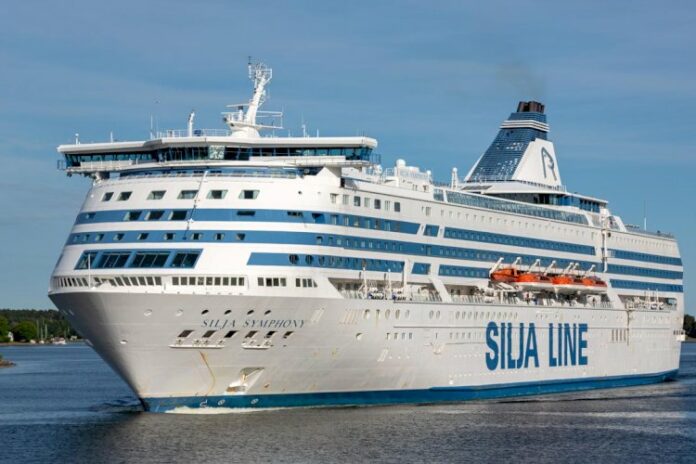
Tallink will start to operate on the Tallinn-Stockholm route from September

0

The company announced already in early August that it will reopen the Tallinn-Stockholm route from 26 August with one return trip per week.

Following the announcement from the Estonian Government today that Estonia will replace the two-week quarantine requirement in place for people arriving from countries with high COVID-19 infection rates with a virus testing alternative, the company has announced it will add a further return trip per week to the route from September onwards.  Which vessels will be operating on the route will be decided in the near future.

From September 2020 it will be possible to travel on the Tallinn-Stockholm route on the following days (all departure times are local times):

Sundays –         18.00 departure from Tallinn 
Tuesdays –       17.30 departure from Stockholm 
Wednesdays – 18.00 departure from Tallinn 
                          17.30 departure from Stockholm

Paavo Nõgene, CEO of Tallink Grupp commented on the decision by the company, says:

“The decision and announcement has made by the Estonian Government to replace the quarantine requirement for people arriving in Estonia from countries with a high COVID-19 infection rate with the virus testing option, will allow us to gradually start restoring travel options for those people who have unavoidable reasons for travelling between Estonia and Sweden for family or work reasons.

Further, the additional departures will enable us to increase cargo transport capacity on the vital route between Estonia and Sweden and thus enable us to restore and stabilise cargo transport between our two countries. This decision certainly doesn’t mean that tourism traffic between Estonia and Sweden is restoring as the departures we are offering from September will still predominantly be meant for cargo transportation and for those people with unavoidable reasons for travelling.“

Tallink Grupp continues to limit the numbers of passengers on all its departures to provide all passengers with safe social distancing opportunities. Strict hygiene requirements are in place on all the vessels and all passengers must confirm at check-in that they are healthy and have no virus symptoms. Passengers with virus symptoms or who are ill will not be allowed to board.

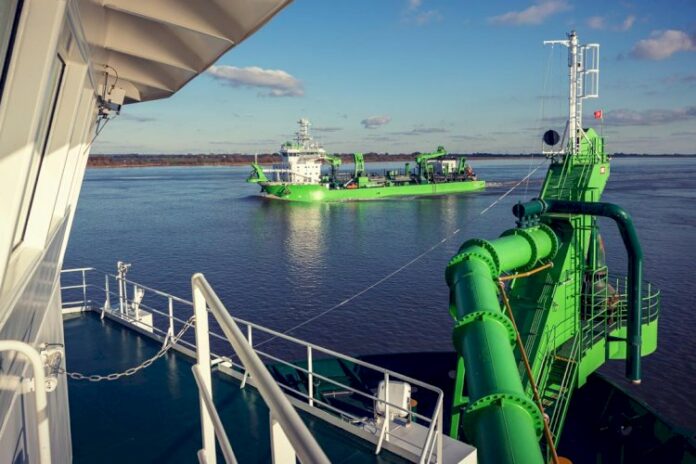
DEME successfully installed two of three OSP for the Moray East wind farm

0

In the meantime jacket installation is also progressing with 20 jackets installed. The installation marks a major milestone in the progress of the construction of the 950 MW offshore wind farm.

DEME Offshore deployed a novel concept for this complex project, whereby the OSP jacket and wind turbine foundation design, construction and installation were fully aligned. Both offshore substation platforms were transported from the ENGIE yard in Hoboken, Belgium to the Port of Nigg in Scotland.

Under the management of DEME Offshore, which is the EPCI contractor, the first topside was installed by offshore installation vessel ‘Scylla’ early August , while the second topside has now also been successfully installed. DEME Offshore’s seamless installation of the topsides enables the construction of Moray East to swiftly proceed to the next phase and the follow-on activities such as the export cable works.

Jan Klaassen, Business Unit Director DEME Offshore, emphasises:

“We are proud to have proven that combining the design, construction and installation of the offshore substation foundations and wind turbine foundations is clearly a workable solution for the industry, especially in an EPCI contract format. Both foundation types were designed in a similar way and fabricated with the same companies so that we could optimise synergies such as design teams, fabrication set-up, transport and installation tools. It all worked out as planned and designed, and crucially, resulted in significant direct cost and schedule benefits for the customer.

Given the extensive scope and logistical challenges represented by this contract, DEME Offshore had made sure it was fully prepared well in advance of the start-up phase. We have dedicated a specialist team and significant management resources to this mammoth project to ensure operations are conducted to the highest safety and quality standards and that every detail is thoroughly considered before the next stage of the wind farm’s development.”
 

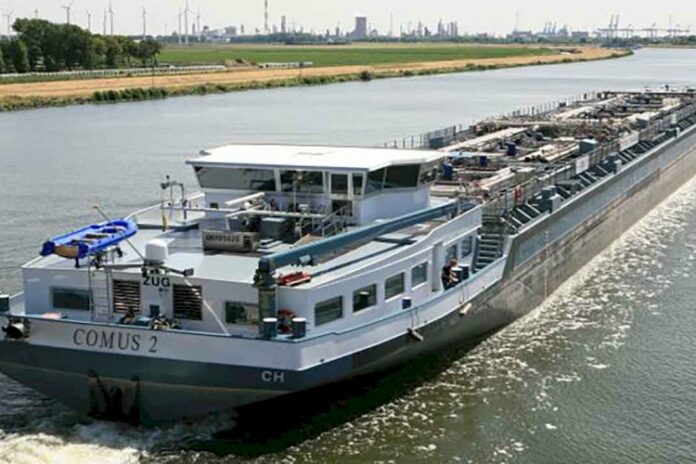
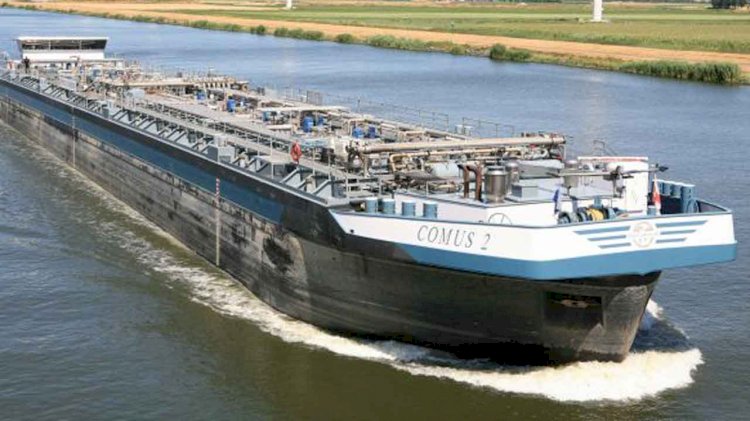
Bakker Sliedrecht improves operational performance of tanker Comus 2

0

The improved system makes the tanker more manageable for owner ChemContrans and allows the company to schedule maintenance more efficiently. This leads to a reduction in operational costs.

The upgraded Bakker Integrated Modular Alarm Control system (BIMAC-system) allows data from the vessel to be safely logged and made available. This gives the crew insights to all events and the history of the vessel’s installations.

Automation engineer Bart van Wijngaarden of Bakker Sliedrecht explains:

“The market is increasingly requiring data logs which can be analysed at the office. This allows companies to better manage their fleet and schedule maintenance more efficiently. This reduces costs and improves the operational deployment of their vessels.”

ChemContrans owner David Olislagers is pleased with the upgrade. The Comus 2 has thirteen separate tanks and transports various chemicals in the ARA area. The barge has been sailing day and night for twelve years and is only stationary during loading and unloading. He says:

“In all those years, Bakker Sliedrecht’s vessel management system worked perfectly, therefore we chose BIMAC again. The upgrade tailored to our vessel. We are now able to collect and analyse more data and service engineers of Bakker Sliedrecht can log in remotely to provide remote support.

According to David, the ship can perform optimally thanks to the BIMAC system. Additional to that, the new system allows ChemContrans to easy demonstrate customers and authorities that the ship is in order and properly maintained. During the entire upgrade, the ship was decommissioned for only three days. At that time, the system was upgraded and five new computers with touchscreens were installed and tested.”

The BIMAC-system is a vessel management system, which enables the crew to control the entire ship with screens and computers. From bridge to engine room and from power management system to propulsion. The ship management system can be customised with all desired functions, such as ballast pumps, tank level measurements and remote assistance and diagnostics. 

Joint group launches the Cargo Owners Zero Emission Vessel Initiative

0

The Aspen Institute, in collaboration with University College London’s Energy Institute, UMAS, Clean Air Task Force, ClimateWorks Foundation, Environmental Defense Fund, Ocean Conservancy, and others, has launched the Cargo Owners Zero Emission Vessel Initiative (coZEV).

A highly ambitious initiative with the purpose of creating a precompetitive platform for cargo owners to develop and make joint commitments to:
• Provide specific volumes of freight over time to the first zero-ready ocean-going vessel(s)
• Set a target for exclusively buying zero emission maritime freight service by a future year
• Urge carriers to meet specific GHG reduction benchmarks with existing technologies and operational methods now

Some public-facing brands—the cargo owners are the shipping industry’s biggest customers. Many major cargo owners have made commitments to reduce emissions across their operations and supply chains over the coming years, some ambitiously aiming for net-zero emissions and alignment with a 1.5-degree trajectory. For these brands, becoming a first mover in stimulating the transition to zero-carbon transoceanic shipping can be a key component of those strategies.

As public-facing global brands strive to reduce their environmental footprints generally, and their supply chain (scope 3) emissions in particular, they have an important opportunity and responsibility to address pollution from maritime shipping. A precompetitive initiative, supported by a coalition of cargo owners that have already issued public declarations of their commitments to reduce greenhouse gas emissions throughout their supply chains, would maximize the impact of their corporate buying power, eliminate first-mover disadvantages that would otherwise impose higher costs on the most progressive companies, and inspire accelerated adoption of ambitious targets for transitioning to zero-emission shipping. Cargo owners coming together to commit enough cargo to fill the first zero-emission shipping route for a set duration of years would give investors confidence in a business case to build the first zero-emission vessel for transoceanic shipping.

The coZEV Coalition is eager to partner with corporate leaders to help accelerate implementation of technology and innovation and play a significant role in reducing global greenhouse gas emissions and fighting the existential planetary threat of climate change. 

Qatar Petroleum enters exploration agreement in Angola

0

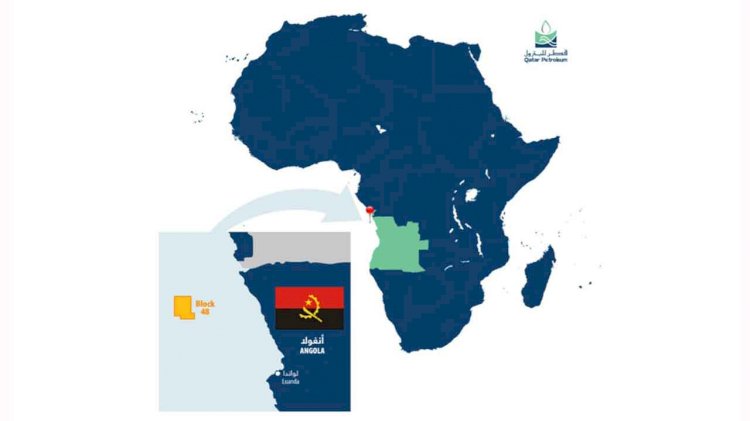
Qatar Petroleum entered into a farm-in agreement with Sonangol, the national oil company of Angola, and Total to acquire a 30% participating interest in Block 48, located in the ultra-deep waters offshore Angola.

The block, with a drill ready opportunity covers an area of approximately 3,600 square kilometers, and is expected to be drilled as part of a 2020/2021 drilling program.

Commenting on the agreement, His Excellency Mr. Saad Sherida Al-Kaabi, the Minister of State for Energy Affairs, the President and CEO of Qatar Petroleum, said:

“Continuing on our journey to build a world-class exploration portfolio, by securing interests in promising exploration blocks in diverse geographies, we are pleased to be part of this exciting ultra-deep water opportunity in Angola, a leading oil and gas producing country.

This is our first opportunity in Angola with both Sonangol, and our long-term partner, Total, an experienced operator with significant in-country presence. We would like to thank the Angolan authorities, and our partners in this block for their support. We look forward to a longstanding and fruitful partnership.”

The farm-in agreement is subject to customary approvals by the Angolan Government. Upon receipt of such approvals, the parties respective interests in Block 48 will be as follows: Total (40% – Operator), Sonangol (30%), and Qatar Petroleum (30%).

Block 48 is located in the ultra-deep waters offshore Lower Congo Basin, approximately 400 km northwest of Luanda and 200 km West of Soyo onshore facilities. The average water depth in the block is around 2,500 meters.

PTTEP awards Halliburton digital transformation project

0

PTTEP, a national petroleum exploration and production company in Thailand, awarded Halliburton a contract to design and implement a series of digital transformation projects as part of PTTEP’s Advanced Production Excellence (APEX) Initiative.

APEX will improve operational efficiency and production in four offshore fields: Arthit, Greater Bongkot South, Greater Bongkot North and the Myanmar Zawtika Field.

Landmark, a Halliburton business line, will deploy its DecisionSpace® Production Suite in the cloud to improve production operations from the subsurface to processing facilities. The DecisionSpace® Enterprise Platform will integrate with Honeywell Forge, a powerful analytics software solution providing real-time data and visual intelligence, so PTTEP can implement more productive and efficient work processes.

Using advanced physics-based and data science models, the solution includes modeling of surface and subsurface components to manage and optimize operations from the wells to the point of delivery. This includes short-term production planning and optimization, flow assurance monitoring and control, sand production monitoring and control, condensate stabilization optimization, CO2 membrane optimization, fuel gas optimization and processing facilities
performance monitoring and analysis.

Nagaraj Srinivasan, senior vice president of Landmark and Halliburton Digital Solutions, said:

“We look forward to collaborating with Honeywell to support PTTEP on its digital transformation journey. Effectively leveraging and implementing digital technologies improves efficiency to increase production, reduce operating expenses and maximize the value of the operator’s portfolio.”

DNV GL: Shipowners must stay vigilant to upcoming environmental regulations

0

The maritime industry is facing several upcoming environmental regulations, in addition to the broad range already in place. The general self-perception of the industry is that it has done a tremendous job in achieving compliance with, for example, ballast water regulations and, more recently, the global sulphur 0.50% cap. While this is true, even tougher challenges lie ahead.

Greenhouse gas reductions: first regulations under discussion

The IMO greenhouse gas (GHG) strategy has been agreed, and the first tranche of regulations intended to fulfill its goals is under discussion at the IMO. Of importance are the proposals for EEXI (EEDI for existing ships) and enhanced Ship Energy Efficiency Management Plan (SEEMP). These are proposed separately by distinct groups of countries and are intended to ensure that the GHG strategy’s 2030 goals are achieved by having new regulations become effective by end-2022 latest. Note that even though these are technically challenging proposals they are only a first step; more is expected to come. Efforts to encourage the development of carbon-neutral fuels are particularly critical, as these are absolutely crucial, if shipping is going to achieve its 2050 goals as well as the ultimate goal of becoming carbon neutral. 

Some stakeholders are increasingly of the view that a key component in finding commercially viable alternative fuel solutions is to impose Market Based Measures (MBM). The EU in particular, with its new and greener European Parliament and Commission elected last year, added to the political pressure for even more rapid action at the IMO, by establishing the European Green Deal. One of the key policy proposals in the EU is including shipping in the European Emission Trading System , which will certainly add complexities to the nascent MBM discussions at the IMO. 

The shipping industry will need to adapt to significantly stricter GHG related regulations , these will likely further drive a shift towards slower sailing speeds, alternative fuels and an even greater uptake of efficiency technologies. From a business perspective, the consequence of increasingly tightened performance standards on the competitiveness of old tonnage versus new should not be underestimated and will need to be considered when designing new ships i.e. future-proofing vessels will become even more critical than it already is. 

Air pollution: additional regional restrictions are likely to come

While the transition to the 0.50% sulphur limit has been relatively smooth, there are still upcoming changes the industry needs to be aware of.

The acceptability of scrubber discharge water remains under discussion at the IMO and may be concluded in 2021, even if the outcome remains highly uncertain. It is worth noting that there already are discharge limits in existing IMO regulations, but stakeholder’s views on the adequacy of these diverge widely. Irrespective of any IMO decision on the matter it is also important to realize that individual countries will continue to be at liberty to impose whatever additional regulations they want in their own coastal waters.

There is also a proposal for a new Emission Control Area coming to the IMO in the near future, namely for the Mediterranean. This will, at least initially, be a proposal for a sulphur-only ECA with a 0.10% limit. The proposal is expected to have 2024 as the target year for entry into force, though this is of course subject to IMO agreement. 

Rising concerns on bio-fouling, plastic pollution and underwater noise

Despite GHG and air emissions being core issues for shipping and subject to significant attention by regulators, it is important to note that there are other environmental issues that are becoming more prevalent on the radar of policy makers and regulators.

In the wake of the implementation of the ballast water management convention there is a growing realization of the need to also deal with the alien invasive species that are travelling on the hull. As a consequence, IMO work has commenced on reviewing and most likely strengthening the existing bio-fouling guideline.

Plastic pollution is rightfully seen as a global problem that needs urgent action. IMO has agreed on a comprehensive action plan with all actions intended to be completed by 2025.

Lost fishing gear is an area of focus, but is of course not an issue for merchant shipping. However, questions remain regarding gray water as a potential source of micro-plastics. While the scientific jury is still out on whether ships are a significant source, it should be realized that any regulations established to address this could have potentially significant impact on at least some shipping segments.

Underwater noise has been on the IMOs agenda for a long time, driven by the concern that ship noise may have a detrimental impact on a broad range of sea-life. IMO guidance was issued in 2014, and some countries have been particularly active in engaging in studies and knowledge building. While the IMO is presently at a stage of monitoring research and conducting studies into the issue, it is not inconceivable that proposals for at least area-specific control measures may be forthcoming from member states. These could range from proposals for speed reductions (as lower speed means less noise in general) to proposals for noise emission standards. From a shipping perspective the first option should be relatively simple to manage, while the latter could be more challenging.

Increasing number of local environmental regulations

Finally, DNV GL notes that there is in general an increasing tendency towards establishing local regulations around the world, whether in regions or ports. These are generally in response to local needs and concerns, and not least influenced by local politics. Unsurprisingly there is scant regard to international politics and regulations in these local/domestic decision-making processes, despite the impact it may have on international trading ships. DNV GL thinks that an international business needs international regulations.

Source: DNV GL 

Semco Maritime tests devices using Augmented Reality to speed up service

0

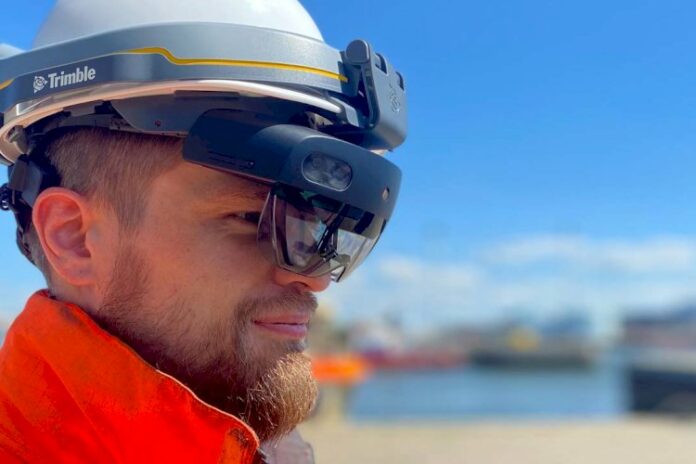
The company is testing different devices using Augmented Reality to carry out remote collaboration between offshore service personnel and onshore experts. Today, a service technician is wearing Trimble XR10 – a device that integrates the HoloLens 2 from Microsoft into a hardhat, as he walks around an offshore rig in the North Sea. Meanwhile, from the comfort of the office in Esbjerg, Denmark, the project teams see exactly what the technician sees.

Bjarke Nordsen, Mechanical Engineer at Semco Maritime, says:

“A lot of service and maintenance on our equipment requires special knowledge but doesn’t necessarily take long to perform. Travelling to and from offshore rigs is time consuming and costly, and if we equip the offshore personnel with a HoloLens or a similar device, a large part of these tasks can be carried out by local staff with remote assistance from our experts onshore.”

The expert and the local technician can talk to each other, the expert can see the technician’s field of vision and draw or write in a digital layer that the technician can see on top of the real world through the glasses.

Especially regarding unplanned stops, avoiding the waiting time for just one specialist to arrive is a huge benefit for the customers. But Semco Maritime expects benefits in all parts of the value chain and that is why they are testing all options to implement a full-scale program rather than just shipping AR glasses to customers for online collaboration.

Alexia Jacobsen, Innovation lead at Semco Maritimes, says:

“We are already saving time and money with the participants in our test program – and we have kept operations going through the travel restrictions due to COVID-19. As we grow more experienced and start adding more data in the digital layer, we expect to cut down travelling significantly in every step from product development over commissioning to maintenance.”

In addition to offshore, Semco Maritime has identified FAT (Factory Acceptance Tests) as a main area to benefit from remote collaboration. During COVID-19, Semco Maritime assembled equipment in their Singapore factory, but due to travel restrictions, the FAT could not be carried out, slowing down delivery to the customer. Remote collaboration through Augmented Reality can help overcome this challenge – not only during times of crisis.

Sai Thane Han, Team Lead Commissioning at Semco Maritime, says:

“If you include the lost time and the time spent on coordination, travel expenses are through the roof for some FATs. When we use remote collaboration for FAT, the customer only needs to send one person, and then the rest of their team can join a Teams meeting and guide their colleague to perform the tasks of their expertise. The process will be cheaper, and in most cases, we will be able to ship the finalized equipment sooner.”

An added benefit is that Semco Maritime’s most qualified specialists can serve many more customers, as they can participate in remote assistance meetings all over the world from wherever they are. Remote collaboration is performed through an ordinary Microsoft Teams meeting, which also means that different specialists can participate in the same meeting if more than one field of expertise is needed.

To make the most of remote collaboration using Augmented Reality, Semco Maritime has performed tests with different equipment and digital setups for their solution. They have been assisted by the Danish company Virsabi that delivers Virtual and Augmented Reality solutions to businesses.

Adrian Marcel Rozso says:

“Finding the right equipment and starting to use it is just the first step. To fully utilize this technology for the benefit of our customers, we are also working on defining the right setup for service centers, cloud solutions and future tailored software applications. Working with an experienced partner like Virsabi eases all of those steps.”

Oil and gas markets brace for impact of pandemic’s second wave

0

The coronavirus pandemic has already had far-reaching consequences for global energy demand. Lockdown measures imposed around the world shuttered businesses shuttered and severely curtailed freedom of movement. The impact on consumption of fossil fuels and power demand was immediate.

As lockdowns began to ease around the world, demand started to recover. But, the risk of a second wave of coronavirus is increasing, and with it, fresh lockdowns appear likely. These could deepen the global recession.

What would a new wave of lockdowns mean for oil and gas markets? And what are the implications for industry stakeholders?

Dulles Wang, director, Americas gas research at Wood Mackenzie, said:

“Our H1 2020 outlook anticipates an oil price rebound as demand starts rising post-coronavirus. However, a second large-scale lockdown would deepen the recession, and possibly delay any rebound in GDP until 2022. This would have a significant impact on the oil and gas sectors.

In our base case forecast, Brent rises to US$86/barrel annual average in real terms by 2030. In a coronavirus-lockdown second wave (CSW) scenario, this falls to US$70/barrel.”

Wang said that global gas demand has proved to be relatively resilient this year. As lockdowns began to ease, demand began to recover relatively swiftly. But this recovery is inextricably linked to the economic outlook, and a second wave would take its toll.

He said:

“Our Global Gas Model Next Generation (GGM NG) shows that a second wave of large-scale lockdowns would result in global gas demand reducing by 4.5% in 2020 (vs 2019).

Global LNG demand would also fall, putting further pressure on Europe to absorb the LNG oversupply – and causing further delays to LNG projects under construction. Pre-FID projects could become even more challenged as the need for new LNG supply could be stalled. Low-cost gas production – namely Russian pipeline gas in Europe and Qatari LNG – would be a key driver for prices.

In North America, LNG under-utilisations could become a recurring theme, with full utilisation not expected until the end of 2020s. However, supply flexibility between associated and dry gas plays would absorb much of the demand shock from lower economic activity level. Some parts of the supply landscape, such as production from dry gas plays, could be surprisingly unscathed coming out of the second wave of lockdowns.”

He added that fresh lockdowns could prompt a further decline in North American domestic demand, led by the industrial and power sectors.

As power demand is price sensitive, rising gas prices post-2022 are likely to compound the reduction in structural demand caused by lower GDP forecasts.

The energy transition is weighing heavily on industry strategy, and could deter some investment, especially as the sector grapples with tight budgets and low oil prices. Lower 48 operators, for example, were already under pressure when the oil price crashed, and many have since been under significant financial distress.

Wang said:

“A second wave of lockdown measures would only increase the pressure. Building resilience could be more crucial than ever for many industry players. But US gas producers could be better placed than most to manage this, as the lower oil price – and therefore loss of associated gas production – insulates Henry Hub prices from demand losses.”

However, the overall size of the North American gas market shrinks by 6.5 billion cubic feet per day in the CSW case as Henry Hub rebalances between supply pullback and demand and export reduction.

Wang added:

“While subdued tight oil production would provide headroom for non-associated gas producers, ensuring sustained long-term profitability for lower-cost producers, one crucial question remains: can gas producers survive another year of low gas prices?”