1.1 C
New York
Home Blog Page 791

BPA creates Autonomous Shipping in Ports Network

0

Maritime Autonomous Surface Ships (MASS) involves the automation of vessel and onboard processes which could alter how ports and ships interface with each other. The BPA which represents the majority of UK port activity including 85% of the shipping movements in and out of the country, is keen to explore what the future developments of shipping will mean for the sector.

As part of the initiative the BPA is creating a new Autonomous Shipping in Ports Network and today is opening a call for evidence from the wider maritime community on what ports should consider to prepare for receiving autonomous ships in the future.

This will feed into the BPA’s own MASS analysis as well as its discussion with industry partners through bodies such as the industry umbrella group Maritime UK. Commenting on the new programme Richard Ballantyne, the Chief Executive of the British Ports Association said:

“The prospect of seeing autonomous ships in UK ports is definitely on the horizon but there will be much to do to prepare ourselves. This includes the consideration for port and marine operations, regulatory frameworks, infrastructure and receptions facilities, land to vessel communications and vessel safety.

Although we are at the early stages, a lot of work is taking place across the maritime community. Many UK ports are now starting to ask what they should be considering as they develop their ports and recruit the next generation.

This will be an ongoing initiative for the BPA but initially we are inviting evidence from a cross section of maritime sector organisations. This will be in relation to issues that they see specific in to ports and harbours moving forward into autonomous maritime operations. It will also help us to support and participate in various government initiatives in the UK such as Maritime 2050, the work of the Maritime Skills Commission and other innovation, sustainability and infrastructure projects.”

The BPA’s new Network will be open to all its port members but it will also be drawing on external expertise from specialists working in the marine and MASS sectors.

Samskip renews Amsterdam-Hull for UK trade requirements

0

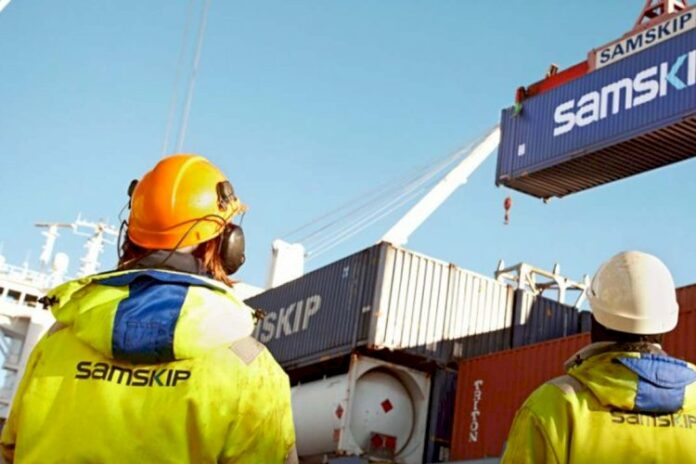
Multimodal transport operator Samskip is responding to recovering North Continent-UK unitised traffic by reintroducing direct links between Amsterdam and Hull, in a service renewal that reinforces containerised short sea options ahead of finalised Brexit trade negotiations.

Starting from September 5th, the three-times weekly service will depart from the TMA Terminal Amsterdam and connect into Associated British Ports’ terminal at Queen Elizabeth Dock, Hull, once more augmenting Samskip’s regular and separate Rotterdam-UK routing.

The Amsterdam-Hull link was suspended in March, as lockdown impacted on volumes across UK container and ferry trades, even though Samskip container services won new market share from importers prioritizing service reliability to replenish empty supermarket shelves.

David Besseling, Samskip Head of UK Trade, says:

“While the total market dropped, the reliability of multimodal transport into the UK persuaded new shippers to convert from trailers to containers during lockdown, especially from Italy. Some trades remain subdued, but structural volumes from the paper, construction and chemicals sectors are returning to pre-COVID levels: the time is right to re-establish Amsterdam-Hull as a distinct and robust intermodal product for the post-Brexit era.”

Initially, the 300 teu capacity container ship Vanquish will depart on Mondays, Wednesdays and Saturdays for next-day UK arrival, with services largely focused on 45ft container loads. However, with expectations high of rising demand for multimodal after UK-EC trade negotiations are concluded, Besseling says Samskip is keeping its options open on adding capacity from early 2020.

The short sea relaunch also follows hard on the heels of last week’s debut of dedicated rail shuttle services connecting Duisburg and Amsterdam in collaboration with Nunner Logistics. Nunner operates weekly trains from the Chinese cities of Xi’an and Changsha to Duisburg and is seeking to take share from deep sea and air freight service providers. Besseling says that Chinese exports by rail to North Europe are increasing fast, adding that the Duisburg-Amsterdam rail service creates the seaport link for the UK to participate in a routing alternative with strong potential for growth.

Besseling says:

“There is also strong and growing demand for cross docking services in Amsterdam, where trailer loads are increasingly being converted to container loads for the UK. Higher frequency sailings into Hull create new supply chain possibilities for UK importers.”

He adds that the service relaunch coincides with other events that benefit multimodal over road-ferry transport. With drivers in short supply in Europe, low diesel prices are encouraging hauliers to focus on Continental business and pass over opportunities to run trucks into the UK. Recent trailer rate rises represent hard evidence of a short sea market tipping in favour of the container, he says.

Besseling adds:

“Our experience has been that container transport’s ability to scale-up quickly and reliably proved compelling in the face of the uncertainties brought by previous deadlines, but then some of that freight returned to ferries as those deadlines simply became negotiation staging posts. This time, faced with new bureaucracy, driver shortages, trailer parks on motorways and COVID-related ferry schedule uncertainties, we expect a sizeable chunk of clients to stay with multimodal.”

Specialized camera system gives unprecedented view of ocean life

0

Plankton are critical to ocean ecosystems and our planet. These mostly microscopic organisms—plant-like phytoplankton and tiny animals known as zooplankton—form the base of most ocean food webs. Phytoplankton also play a key role in producing oxygen and removing carbon dioxide from the atmosphere, helping to regulate Earth’s climate.

In spite of their importance, plankton communities in the ocean are poorly understood—in part because the ocean is vast, and plankton communities vary widely by location and over time. In the past, the only way scientists could study the distribution of plankton was by towing a net from a ship. Using this method, it is impossible to know the depth at which a particular animal was collected or to reliably generalize the results from sampling in one location to a broader geographic region. In addition, many species of plankton are gelatinous and fragile, making it difficult or impossible to collect them using a net without damaging them.

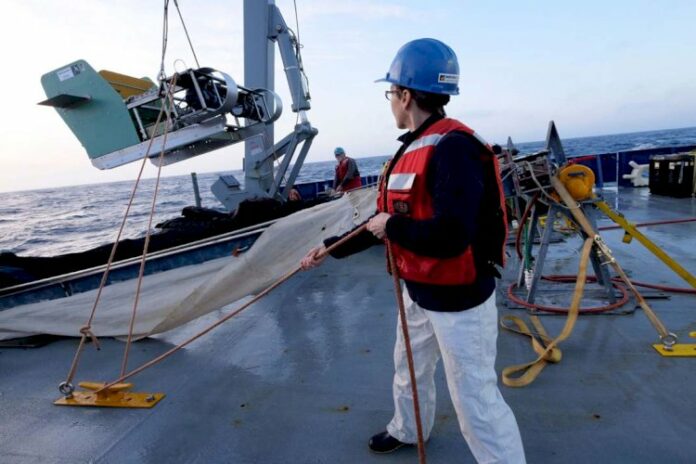
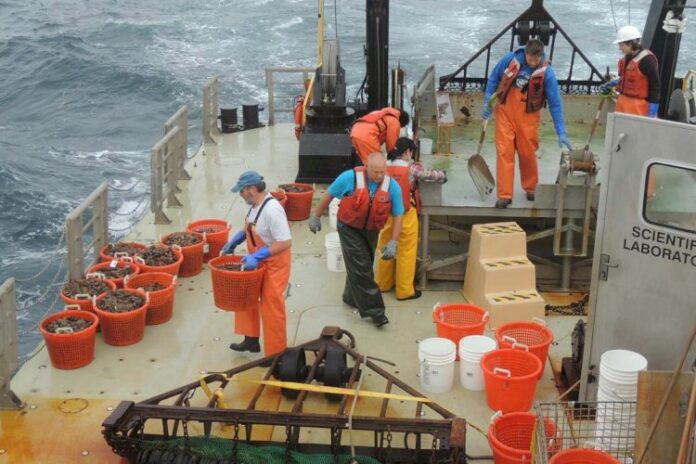
Today, new technologies are giving scientists an unparalleled look at ocean life. WHOI biologist Heidi Sosik leads the Northeast U.S. Shelf Long-Term Ecological Research (NES-LTER) project, which aims to understand and predict how plankton food webs are changing, and how those changes may impact fish and other marine life. The NES-LTER stretches more than 100 miles from Martha’s Vineyard to the edge of the continental shelf, and from the surface down hundreds of feet into the ocean twilight zone. Such a vast area would be impossible to sample comprehensively with conventional net tows, so Sosik is using a specialized underwater camera system to image plankton in situ, under the water. 

The In-situ Ichthyoplankton Imaging System (ISIIS) is towed behind a ship on a small Stingray “sled.” The system’s shadowgraph optics can capture incredibly detailed images of zooplankton, jellies, and small fish, at the rate of 14 frames per second, while other sensors on the Stingray simultaneously measure depth, oxygen, salinity, temperature, and other water characteristics.

The images are spectacular, and scientifically, the results have been unprecedented. Using ISIIS, Sosik and her team have been able to collect millions of images from a swath of water spanning the entire continental shelf, producing one of the most comprehensive plankton datasets ever collected. Sosik is now working to apply artificial intelligence and machine learning to analyze this massive treasure trove of biological and environmental data. The findings are certain to revolutionize our understanding of plankton community dynamics, with implications for ocean food webs, fisheries, and global climate.

Opinion: Tuna-1 gas discovery could have far-reaching implications

0

Turkey is chiefly reliant on piped gas from Russia, Azerbaijan and Iran but the share of liquefied natural gas imports has also continued to grow.

Thomas Purdie, an analyst on Wood Mackenzie’s upstream research team, said:

“Even if the official 320 billion cubic metre figure given by President Tayyip Erdogan when he announced the discovery is treated as an estimate of gas in place, this is Turkey’s biggest-ever find – by a wide margin – and one of the largest global discoveries of 2020. What’s more, it reaffirms the deepwater Black Sea’s hydrocarbon potential after several disappointing wells in Bulgaria. However, no matter the political and economic importance, reaping the supply rewards will be complex and a 2023 date for bringing the discovery – renamed Sakarya – looks ambitious.

First and foremost, the discovery will need to be appraised by more wells – to improve understanding of the geology and confirm resource estimates. It’s early days, but any future development would cost billions of dollars. Deepwater projects are complex in any environment, but the Black Sea poses additional logistical challenges that must be managed. This is one of the factors that has stalled Romania’s Neptun Deep megaproject, located just 100 kilometres north of the Tuna well.” 

Purdie said TPAO would benefit from bringing an international partner into the project, adding:

“There could be attractions despite the market outlook – highly competitive tax terms in a basin that international oil companies know increasingly well over recent years. Majors operating across the border in Romania and Bulgaria have had mixed recent success, but will take note of this momentous news.” 

Murray Douglas, director, Europe gas, said:

“The Turkish gas market is large, with 2019 demand of almost 45 billion cubic metres. Gas demand has fallen year-on-year since 2017. Much of that is down to the weak Turkish economy and increased competition from coal-fired and renewable generation. However, despite coronavirus, Turkish gas demand has only fallen 3%, year-to-date, versus last year. That is a less severe fall than many other European markets. In the 2020s, this discovery could have far-reaching implications for future gas imports and upcoming negotiations with suppliers – with Gazprom, Azerbaijan and Iran.” 

CMA CGM Group launches “A Humanitarian Ship for Lebanon” campaign

0

By launching “A Humanitarian Ship for Lebanon” campaign, the CMA CGM Group contributes to international solidarity efforts by transporting medical equipment and essential goods and products to support the Lebanese population, following the devastating explosions that hit Beirut.

The campaign will allow for the transport of emergency equipment and essential goods and products provided by the CMA CGM Foundation’s NGO partners and the Group’s partner companies. The initiative also has the support of deeply engaged French public institutions which have been highly mobilized (Crisis and Support Centre of the French Ministry for Europe and foreign affairs, the Provence-Alpes-Côte d’Azur region, the Bouches-du-Rhône department, the City of Marseille, Marseille’s Naval Fire Brigade, Marseille’s Public Hospitals – APHM).

One of the CMA CGM Group’s ro-ro vessels will be deviated from its usual service to travel from Marseille to Beirut in the very near future (the date is to be determined). Roll-on/roll-off or ro-ro vessels are perfectly suited to the needs of humanitarian transportation. They can carry containers, motor vehicles (fire engines, ambulances, civil engineering vehicles) and pallets. The CMA CGM Group is bearing all shipping and port operation costs and providing a storage facility in Marseille until the vessel departs.

The CMA CGM Group is mobilizing its teams to centralize, consolidate and transport the humanitarian supplies of participating organizations which have a clearly identified and vetted structure to receive them on Lebanese soil. The CMA CGM Group is setting up an operational unit in Marseille and Beirut to review requests and organize delivery as quickly as possible.

Abyssal joins Marine Robotics Innovation Centre’s community

0

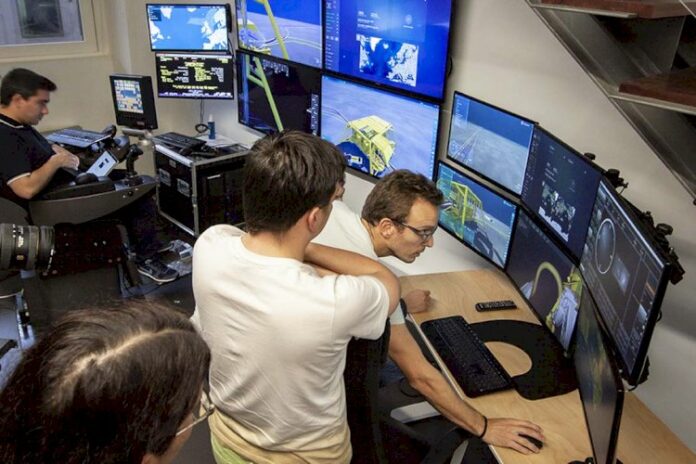
Abyssal is an independent software engineering company that delivers advanced 3D Visualisation, Simulation, Digitalisation, and Artificial Intelligence solutions.

With its growing multidisciplinary team of 34 people, the company has built long-term relationships with the subsea industry, delivering bespoke state-of-the-art products and technology to key players in this industry ensuring a completely contextualized real-time view of projects, and ensuring that operations can be conducted safely and efficiently.
 
Abyssal’s technology has been extensively applied in multiple remote, difficult, and hostile environments, mainly in the subsea context, positioning the company at the forefront of delivering products and tools for remote operations and data collection and thus enabling the offshore industry to unlock higher cost savings, driving down risk, taking people out of harm’s way, decreasing CO2 emissions, and increase the quality of data acquired and speed its availability so that better decisions and actions can be taken more quickly.
 
Aidan Thorn, Innovation Centre manager, said:

“Abyssal is a company that we have been aware of for some time now and we’ve been really impressed with their capabilities. We hope that this new partnership – bringing them into the UK’s hub for the development of pioneering Marine Autonomous Systems – will help them to achieve their goal of fully unmanned operations across multiple sites, vehicles and service providers.”

Rafael Simão, CEO, Abyssal, said:

“We are very happy to be joining the Innovation Center and to be able to engage and collaborate with the NOC community and network. We believe that fully autonomous operations will only be possible through a collaborative effort, and we expect to contribute for that with our expertise in the areas of visualisation, simulation, artificial intelligence and remote control.”

SEA-KIT USV successfully completes 22 days of offshore operation

0

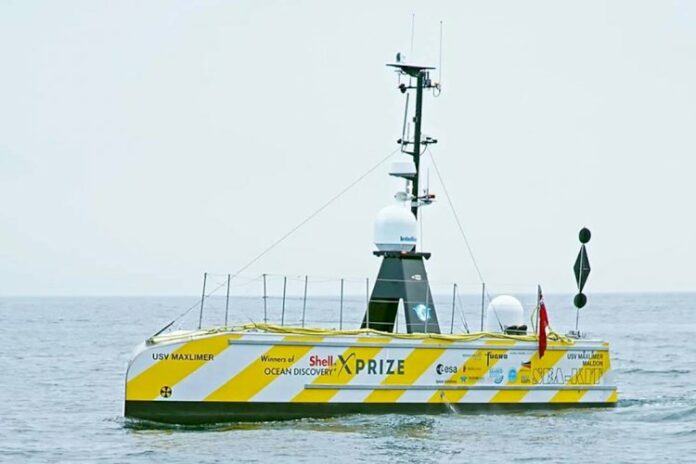
Since late July the USV has mapped over 1000sq km of ocean floor, controlled around-the-clock by SEA-KIT via satellite communications from its Remote Operation Centre in Essex. Notably, the uncrewed vessel returned to Plymouth with its fuel tank still around a third full.

The successful completion of this project is a major achievement for the British SME, clearly demonstrating the capabilities of their remotely-controlled USV design in terms of over-the-horizon operation, endurance and ocean-going ability.

Ivar de Josselin de Jong, Director Remote Inspection at Fugro, said:

“This proof of concept is exciting and confirms Fugro made the right choice to partner with SEA-KIT to develop a range of USVs that will transform the marine industry. We are on track with our strategy of leading the development of remote and autonomous solutions.”

Peter Walker, Director of Technology at SEA-KIT, expressed delight at welcoming Maxlimer back to Plymouth:

“It has been a tense but exciting few weeks. The project’s overall aim was to demonstrate the capabilities of current technologies to survey unexplored or inadequately surveyed ocean frontiers and we have absolutely done that. It is a ground-breaking achievement to prove true over-the-horizon capability and the team are elated to have successfully pushed the boundaries of our USV design once again.”

Named UTAS (Uncrewed Trans-Atlantic Survey) and co-funded by the UK Space Agency through the European Space Agency’s Business Application programme, the project was originally planned to be trans-ocean. However, due to travel restrictions and other planning complications resulting from COVID-19, this was ultimately not possible. 

SEA-KIT worked collaboratively with a number of industry partners on the UTAS project. Fugro, Global Marine Group, Map the Gaps, Teledyne CARIS, Woods Hole Group and The Nippon Foundation-GEBCO Seabed 2030 project all played a part in its successful completion.

Jamie McMichael-Phillips, Director of Seabed 2030, said:

“The data gathered on this Atlantic voyage will be a valuable addition to the global seabed. More importantly, this is another milestone on the journey towards the development of the kind of scalable, environmentally-friendly technology that we are going to need in order to reach our goal of mapping the whole of the world’s ocean floors by the end of the decade.”

McMichael-Phillips continued:

“We are immensely proud of the SEA-KIT team and of what they have achieved in being able to operate an uncrewed vessel over the horizon. What began as a scientific challenge taken on by the talented members of the GEBCO-Nippon Foundation Alumni team became an award-winning technology that has now matured into a viable commercial company. This is exactly the kind of innovative ecosystem that GEBCO and The Nippon Foundation were trying to create when they launched Seabed 2030.”

The Nippon Foundation/GEBCO Alumni through Map the Gaps, with their global distribution, allowed for 24 hour bathymetric surveying as they remotely operated the multibeam and ensured optimised data acquisition.

Travis Hamilton, Product Manager at Teledyne CARIS said:

“At Teledyne CARIS, we are inspired by projects that align with our passion for innovation in hydrographic survey. We were pleased to support this project with our automated hydrographic processing solutions CARIS Onboard and CARIS Mira AI that apply workflows designed to remotely support the unique challenges of uncrewed surveys from shore-based stations.”

The proven ability to conduct remote survey operations with USVs has many beneficial applications across the offshore sector. For example, critical tasks such as trans-ocean cable route surveys, needed to meet the increase in demand for data communications, can be completed without risk to personnel and with significant savings on mobilisation and operational costs when compared to executing the same task with crewed vessels. 

UK Space Agency Chief Executive, Graham Turnock, summed up how USVs are set to redefine offshore operations:

“On its 22-day mission the Maxlimer vessel used satellites in the sky to show us what we can do under the sea. Robot boats could radically change the way we work at sea and this project, backed by the UK Space Agency, has given us a unique window into the future potential of satellite-enabled maritime operations.”

NOAA designates two new offshore aquaculture development zones in US waters

0

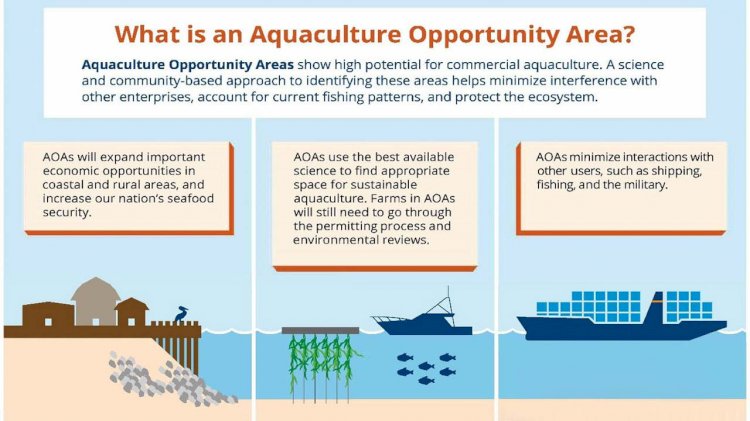
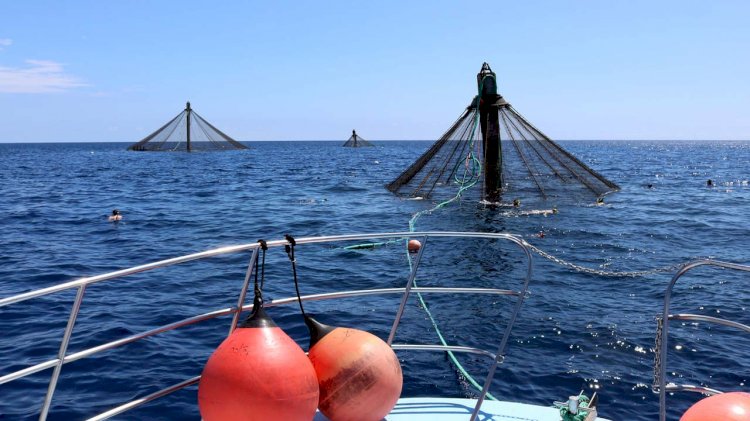
NOAA Fisheries has announced federal waters off southern California and in the Gulf of Mexico as the first two regions to host Aquaculture Opportunity Areas.

The selection of these regions is the first step in a process designed to establish 10 Aquaculture Opportunity Areas nationwide by 2025. These two regions were selected for future aquaculture opportunity area locations based on the already available spatial analysis data and current industry interest in developing sustainable aquaculture operations in the region.

Chris Oliver, Assistant Administrator for NOAA Fisheries, said:

“Naming these areas is a big step forward. The creation of Aquaculture Opportunity Areas will foster the U.S. aquaculture industry as a needed complement to our wild capture fisheries. This type of proactive work creates opportunities for aquaculture farmers and maintains our commitment to environmental stewardship.”

Aquaculture Opportunity Areas are called for in the May 2020 Executive Order on Promoting American Seafood Competitiveness and Economic Growth. They are defined as geographic areas that have been evaluated for their potential for sustainable commercial aquaculture. Selected areas are expected to support multiple aquaculture farm sites of varying types including finfish, shellfish, seaweed, or some combination of these farm types. To identify each area, NOAA will use scientific analysis and public engagement to highlight spaces that are environmentally, socially, and economically appropriate for commercial aquaculture.

Nicole LeBoeuf, Acting Assistant Administrator for the National Ocean Service, said:

“While NOAA has selected the regions for these first Aquaculture Opportunity Areas, the exact locations will be identified based on best-available science, including data-driven siting analyses using hundreds of data layers of ocean conditions and uses. Stakeholder input is also essential to ensure the Aquaculture Opportunity Areas are sited in the best locations for aquaculture and to avoid conflicts with other industries or environmental harm.”

There is no predetermined size for an Aquaculture Opportunity Area. Each of the first two areas may accommodate approximately three to five commercial aquaculture operations, but this will vary depending on the specifics of the location. The size and shape of operations in each area will be determined as part of the Aquaculture Opportunity Area identification process. During this process, NOAA will work with federal and state partners, tribes, and interested stakeholders to determine the appropriate size of each.

Ampelmann and BSP extend their collaboration in Asia Pacific

0

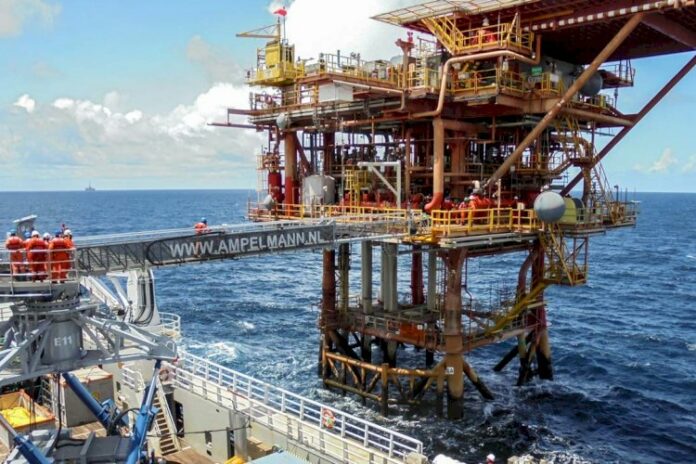
Ampelmann, the Dutch offshore access provider, has signed a new, three-year contract with Brunei Shell Petroleum (BSP) for work in Asia Pacific. The company will provide two of its latest version L-type systems to enable daily crew change operations in the region.

Joeri Poelmann, Ampelmann’s Area Manager for Asia Pacific, said:

“We are excited to continue our collaboration with BSP and are thankful for their continued trust in our services. This contract is proof of the local industry’s push to make offshore access ever safer and more efficient.” 

In 2020, Ampelmann is operating no less than seven motion compensated gangways in Brunei, making it the preferred offshore access provider in the country.

In 2013, BSP was the first to choose Ampelmann for their crew change operations in the region. With a decade of experience and offices in Singapore, Brunei and Malaysia, Ampelmann has extensive knowledge of the state of the local market.

Ampelmann’s first version of the L-type system was initially developed in collaboration with BSP for their crew change operations and made its first transfers in Brunei back in 2013. After many iterations, the latest system is a compact and electrically powered plug-and-play system enabling continuous access from vessel to offshore platform, and vice versa, capable of transferring 50 people in less than five minutes. The L-type can be deployed in sea states beyond 2m significant wave height, making it possible to use year-round, also during the monsoon season.

The latest version of the system, the version 4, has been in use since 2018 now, and with a proven track record and unsurpassed workability in many regions throughout the globe, it remains the most suitable solution for crew change operations.

650 km of inter-array cable to be installed at world’s biggest wind farm

0

DEME Offshore has been awarded a substantial EPCI contract for the inter-array cables at the Dogger Bank A and Dogger Bank B wind farms in the UK, the first two phases of the 3.6 GW Dogger Bank Wind Farm which is the world’s biggest offshore wind farm under development.

The far-reaching scope includes the engineering, procurement, construction and installation of the subsea cables for the combined 2.4 GW wind farm. DEME Offshore will supply, install and protect 650 km of 66 kV inter-array cables and all related accessories.

Dogger Bank Wind Farm is located more than 130km off the North East coast of England and is currently being developed in three 1.2 GW phases by joint venture partners SSE Renewables and Equinor. Dogger Bank will be the world’s largest offshore wind farm when complete and will generate enough energy to power over 4.5 million homes every year – around 5% of the UK’s electricity needs.

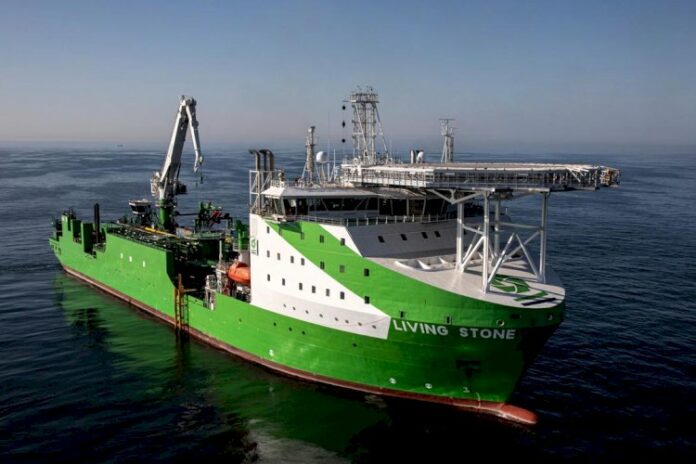
Production of the cable for Dogger Bank A and Dogger Bank B will start in 2021 and will be installed using our state-of-the-art DP3 cable installation vessel ‘Living Stone’.  She was selected based on her huge cable capacity of more than 10,000 tonnes, and proven track record. This unique vessel boasts a DEME-designed dual lane system, consisting of two cable highways – one for laying the cable and one where the next cable can be simultaneously prepared and have the cable protection system (CPS) installed. This significantly reduces the time needed for preparing the cables, minimises manual handling, increases the vessel’s workability and ultimately, improves production rates. DEME Offshore will work closely with SSE Renewables and Equinor to engage with the UK supply chain in the delivery of the project.

Bart De Poorter, General Manager DEME Offshore, comments:

“We are very proud to have been awarded this exceptional project, which represents the largest ever inter-array cable contract in the world to date. The renowned cable-laying capabilities and stellar reputation of ‘Living Stone’ were key factors in securing this important contract.”

Steve Wilson, Dogger Bank Wind Farm’s Project Director at SSE Renewables, says:

“We are delighted to welcome DEME Offshore to the Dogger Bank project to undertake the manufacturing and installation of the 66 kV inter-array cables for Dogger Bank phases A and B in what is the largest ever inter-array cable order of its type. DEME, using its state of the art ‘Living Stone’ vessel, has a proven track record in delivering large inter-array cable scopes, and this experience and capability will be essential to successfully install the 650 km of cable required for Dogger Bank A and B.” 

Halfdan Brustad, Vice President for Dogger Bank at Equinor says:

“Dogger Bank Wind Farm is pioneering new technology, and at the forefront of scaling up significant energy infrastructure. This contract, for the largest ever order for inter array cables, demonstrates the sheer scale of this project: when complete it will be able to generate around 5% of the UK’s electricity needs with power from the wind. The dual lane system on the ‘Living Stone’ means we can reduce the time needed to install the cables, which for a project of this size greatly helps to reduce costs.” 

The contract with DEME Offshore is subject to joint venture partners SSE Renewables and Equinor reaching Financial Close on Dogger Bank A and Dogger Bank B, expected in late 2020.