2.8 C
New York
Home Blog Page 789

Port Esbjerg accelerating climate efforts through unique technology partnership

0

In its efforts to become climate neutral, Port Esbjerg has formed a partnership with technology company Honeywell. The project is a global first. No other port anywhere has launched such an extensive climate project.

A shore power supply station complete with batteries, allowing ships to hook up and tap green electricity when docked at the port. Digitalisation of the shore power supply to measure the reduction of the carbon footprint. Digitalisation of the energy consumption of vehicles and mobile equipment at the port to measure the reduction of carbon emissions when converting from fossil fuels to electric power. These are just some of the ideas being discussed by a new technology partnership between Port Esbjerg and technology giant Honeywell.

Honeywell is a global leader in measuring and managing digital transformation for cities and airports working to become greener and smarter. The company also works to digitalise and manage energy systems in buildings, and now it will also assist in making the port of Esbjerg emissions free by developing a system for managing and monitoring resources, energy consumption and carbon emissions at the port.

Port Esbjerg CEO Dennis Jul Petersen, explains:

“We have an obligation to reduce our carbon footprint, and given our size, the many ships calling and the broad range of activities going on here in general, carbon emissions at the port are quite substantial, and we intend do something about it.”

However, there is no simple solution. It is a big and complex task. The shore power supply installed for ships calling at the port is a good example. 
Jul Pedersen says:

“It’s easy to supply power to ferries that arrive and leave again at specific times on a daily basis. The rest of the traffic at the port is different, and that makes it difficult to implement a green transition which also makes business sense.”

To solve this challenge, Port Esbjerg has teamed up with Honeywell to develop a complete digitalised solution that will compile data on energy consumption at the port while also flagging up potential improvements. This solution is a global first for ports anywhere in the world.

Lana Sukhodolska, Head of Sales and Business Development at Honeywell, says:

“The solution we’ll be developing together with Port Esbjerg is absolutely unique in terms of its scope. Other ports may have energy efficiency solutions for their buildings, but no one has ever done what we’ll be doing at the port of Esbjerg. We’ll include everything from vessels, infrastructure and maybe also various companies operating at the port.”

In its initial phase, the project will map the energy consumption and carbon emissions of ships, buildings and port operations. Next, it will develop methods for additional electrification, digitalisation and management of energy consumption and emissions relative to port operations.

Sukhodolska explains:

“The people at Port Esbjerg know what they want, and in many ways, we see Port Esbjerg as a benchmark for other ports, especially in terms of sustainability. However, in order for this project to succeed, we need to establish what the company’s current position is. During this initial phase, we will map, monitor and manage current energy consumption and carbon emissions.”

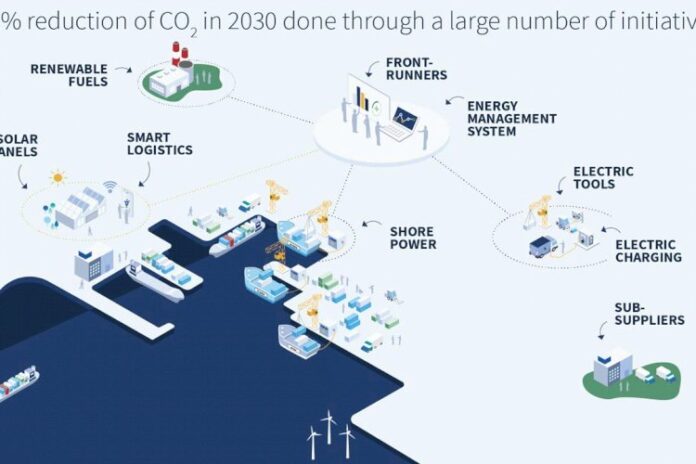
Honeywell and Port Esbjerg are now collaborating on the development of the system which can provide a complete picture of carbon emissions at the port. Once in use, the system will enable Port Esbjerg to trace and manage all energy consumption remotely and in real time – it may even be able to do the same for energy generated by solar panels and battery-charging infrastructure to be installed in the future. This will also benefit the companies operating at the port, as they will be able to track their individual carbon footprints.
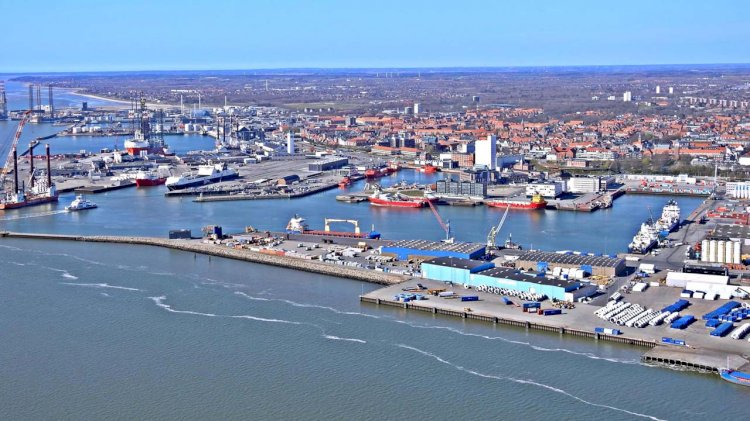
Port Esbjerg has prepared a carbon pledge with a target of a 70 per cent reduction of carbon emissions by 2030. The idea of the pledge is to voice the company’s support for businesses showing leadership and making the changes necessary to reduce the carbon footprint at the port of Esbjerg.

As part of the work to achieve their 2030 targets, Port Esbjerg and the oil and gas companies have prepared a road map, illustrating the actual progress of the port and the companies in meeting their climate commitment. For example, every company will need to look at the possibility of using power generated by green energy sources, such as wind turbines or solar panels. In addition, Port Esbjerg and the companies are working to establish smart lighting and smart heating. Plans are also to have shore power facilities providing access to green power for ships and for both Port Esbjerg and the companies operating at the port to step up investments in electric vehicles.

The system being developed in collaboration with Honeywell will make it easier for Port Esbjerg to reduce the carbon footprint at the port and achieve the 2030 target, but there will also be other positives from digitalisation.

Sukhodolska explains:

“The system will facilitate maintaining and optimising the consumption of resources at the port, because it’ll be easy to spot where improvements may be made. If something is not working as it should, it will be simple to rectify, and that will mean financial benefits for the port in general.”

Port Esbjerg will have the initial data from the system available in the autumn. Based on the new knowledge to be generated, the company will then have to decide on the next steps to reduce carbon emissions.

Jul Pedersen says:

“For us as a port, the new system will mean that not only can we lower our carbon footprint and we can do it faster, we’ll also be able to do it in a way that makes sound business sense. If it meant we’d incur higher costs, it would be to the detriment of our customers at the end of the day, and that wouldn’t be fair. This way, we’re making the port more attractive by facilitating the green transition while also staying open for business.”
Bureau Veritas issues approval in principle for KM’s DP Digital Survey application

0

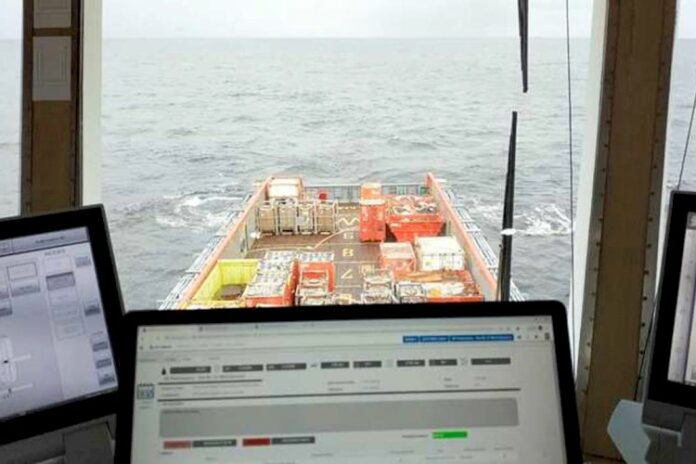
Following two years of careful development and thorough trialling, Kongsberg Maritime’s Dynamic Positioning Digital Survey (DPDS) application has been endorsed by Bureau Veritas (BV) through their designation ‘Approval in Principle’.

In the wake of last year’s successful pilot trials, conducted with the assistance of offshore service provider BOURBON Offshore (https://bit.ly/3f8zGyU), BV and Kongsberg Maritime have been working in close collaboration to leverage the insights derived from the initial installation. BV is now allowing vessel owners and operators to conduct DP Annual trials using the DPDS application. Kongsberg Maritime has also used this time to prepare and equip for widespread delivery.

The DPDS application digitises all the data derived from the DP Annual tests, carried out in accordance with IMO MSC Circ 1580 guidelines and IMCA M 190, to verify the performance and redundancy of the vessel-specific DP system. This encompasses the complete installation necessary for dynamically positioning a vessel, comprising, but not limited to, the following sub-systems: power system, thruster system and DP control system.

Running on a validated, industrial data recording and management platform that provides incomparable data quality and consistency, the KM DPDS application provides access to data acquired directly from the DP system. The data is transferred to class surveyors via KONGSBERG’s secure cloud infrastructure upon completion of the trials. The surveyor can then play back the DP Annual trial program onshore, based on the high-quality DP data accumulated. Each test is unique and can be played back individually. Surveys can be carried out at any time from any location once the data is uploaded to the KM cloud.

This data-driven aspect of the application is of particular value for ship owners, who can use the digital survey tool to collate and present concrete evidence that the necessary test procedures have been carried out and completed.

Thanks to maintenance management system interfaces and tamper-proof image upload functionality, the test visualisation provided by the DPDS application is far superior to the paper-based evidence collection – complete with photo and video recordings – which has tended to act as the industry norm for many years.

Egil Haugsdal, President, Kongsberg Maritime, says:

“The benefits of the DPDS application to vessel owners are numerous. The digital survey tool enables substantial savings to be made because far less time needs to be spent off-hire, and it obviously removes the requirement to cover travel expenses for surveyors. It can also improve crew competence, simplifying DP Annual trials and making the approval process far more efficient and straightforward. Furthermore, as the application is essentially an add-on to our existing K-IMS application suite, it’s easy for vessels to integrate and deploy DPDS.”

Bureau Veritas’ own progress in the digitalisation of surveys has seen the development of an additional BV class notation, DDPS (Digital Dynamic Positioning Survey), an addition to the existing DYNAPOS notation. 

Laurent Leblanc, Vice-President and Marine Operations Director, Bureau Veritas, adds:

“It should be very apparent that BV approval is not issued lightly. The DPDS application has met our stringent criteria to demonstrate compliance in principle with the BV additional class notation DDPS (Digital Dynamic Positioning Survey). The quality, detail and security of the transferred data have to meet our exacting standards, and we’re satisfied to confirm that the KM DPDS application fulfils its function admirably.”

McDermott awarded FEED contract by Delta Offshore Energy for gas pipeline in Vietnam

0

McDermott International Ltd. has been awarded a contract by Delta Offshore Energy to provide front-end engineering design (FEED) services for a subsea gas pipeline. The pipeline will connect a regassification platform, located approximately 22 miles (35 kilometers) offshore, to the planned 3,200 MW power plant in Bac Lieu Province, Vietnam.

McDermott has also been awarded the pre-engineering geotechnical and geophysical survey services being carried out as a part of the FEED scope.

McDermott’s Houston office is leading engineering services—supported by its Kuala Lumpur office, which has a long track record of delivering solutions to customers in Vietnam. McDermott will perform project management, execution planning and estimation services. Installation studies will be performed by McDermott’s marine operations.

Mark Coscio, Senior Vice President for North, Central and South America, said:

“This award illustrates the confidence Delta Offshore Energy and its partners have in McDermott’s ability to deliver a turn-key EPCI solution for the subsea gas pipeline FEED scope for its Sisyphus project. We look forward to expanding our partnership and achieving a successful outcome.”

McDermott’s extensive experience in Vietnam and recent work for Delta Offshore Energy were key factors for this contract win. McDermott has more than 20 years of experience working in Vietnam and will leverage its relationship with local partners to smoothly execute the scope. Three months prior to the award, McDermott commenced a project feasibility study for the project, which was converted into the FEED.

McDermott anticipates the FEED contract will be converted into an EPCI contract in the first quarter of 2021.

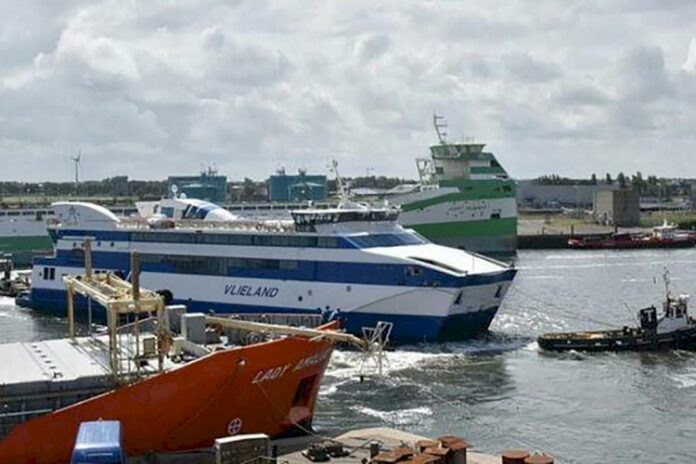
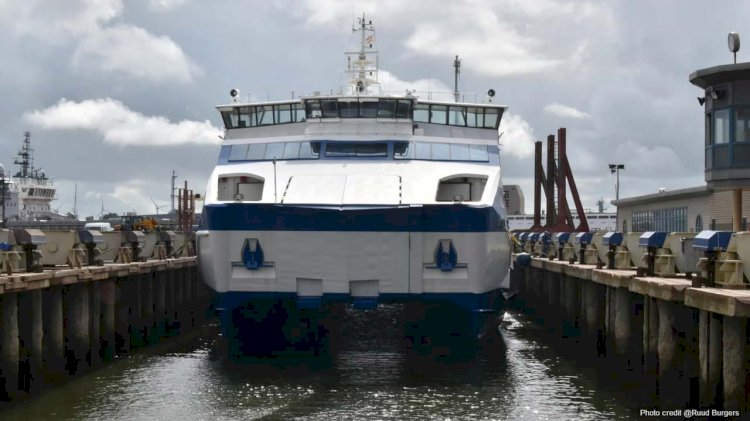
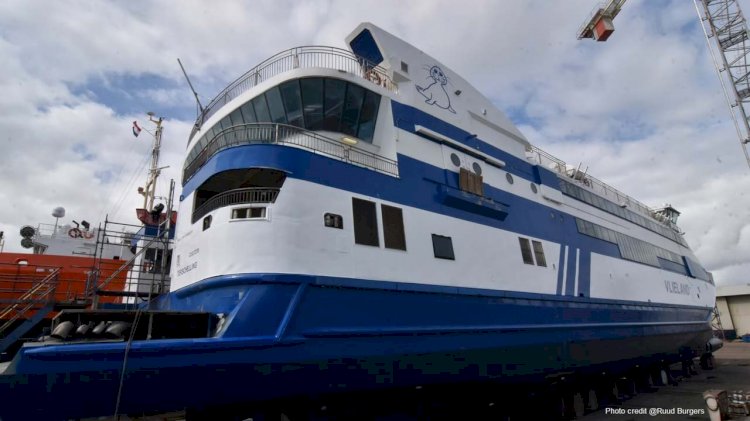
DSHl has completed a repair project to Rederij Doeksen’s ferry “Vlieland”

0

The vessel operates a ferry service across the Wadden Sea between Harlingen in the north of the Netherlands and the island of Vlieland.

The Vlieland required repair following a recent incident that took place as she was departing the harbour in Harlingen. As a result of the accident, the vessel’s SB engine room became flooded. DSHL carried out an emergency operation, closing the hole, before moving the vessel on to the yard for full repairs.

At the yard, DSHL carried out a series of works on the vessel, including the removal of the main- and auxiliary engines, the gearboxes and all electrical equipment and wiring – of which there is over 4 kilometres. Following this, the yard undertook the rebuilding of the engine room. This included re-installing the CAT 3508 main engines and Cat 3406 & 3408 auxiliary engines cpl/w generator sets that had been overhauled by PON. Klaas Krook account manager product support at PON explained:

“We value our relationships, most of which are long-term. When Doeksen was faced with the damage on the Vlieland, we went for the extra mile. Together with our valued partner Damen, we overhauled the engines in the SB engine room, and used REMAN parts to get it done cost efficiently.”

At the same time, the yard blasted the hull and repainted the vessel. A local company, electrical technicians Piet Brouwer installed a new monitoring and safety system to the Vlieland – Rederij Doeksen having decided to take the opportunity to do so while the vessel was in dock.

Damen Shiprepair & Conversion sales manager Klaas Kuper says:

“Rederij Doeksen is a long-standing client of Damen Shiprepair Harlingen, visiting the yard on a regular basis for the scheduled maintenance of their fleet. We enjoy an excellent relationship and are pleased to be able to assist them in getting the Vlieland safely operation again.”

Richard de Vries, manager operations at Rederij Doeksen:

“We are pleased to be able to take MV Vlieland back into active ferry service. We are very satisfied with the cooperation between the various parties, who have made every effort to get this job done as quickly and professionally as possible.”

Tallink suspends Turku-Tallinn route

0

Tallink Grupp has announced that it will suspend the Turku-Tallinn route, which was temporarily launched between the two countries in early July this year and which it originally planned to continue to operate throughout the coming autumn-winter season on weekends.

The company’s vessel Baltic Queen was due to continue to operate one return trip on the route Tallinn-Turku-Tallinn every weekend at least until the end of the year as the route had proved extremely popular among the company’s customers during the summer period after travel restrictions were lifted between the two neighbouring countries.

Paavo Nõgene, CEO of Tallink Grupp, commented:

“As a direct result of significant information noise and mixed messages circulating in the Finnish media regarding the latest travel advice, the ticket sales of ferry companies have significantly reduced as passengers are confused about the travel advice and nervous about purchasing tickets for fear that they will face the possibility of a quarantine at very short notice if they do travel. This has resulted in great numbers of customers cancelling their trips for the months ahead and requesting refunds instead.

After detailed analysis of the forecasts and our best current estimates of how the pandemic and travel restrictions situation is likely to unfold in the coming weeks and months, we have today made the decision to cancel the plans we had for operating the Tallinn-Turku route this autumn and winter and to suspend this route already from this Friday, 28 August. This to ensure that we take necessary action as early as possible and thus limit any potential losses that would result from delaying this decision.

The tourism sector will be under significant pressure until at least until next summer. Decisive action by our governments is vital and requires swift action for the survival of our sector in this pandemic situation.”

Passengers who have purchased a ticket for this Friday, 28 August to travel from Aland to Tallinn will be transferred to the company’s vessel Baltic Queen, which will pick those passengers up from Marienhamn port in Aland en route back to Tallinn from Stockholm.  

All other passengers with bookings for the Turku-Tallinn route sailings, will be contacted by the company regarding the cancellations as soon as possible.

Triton Knoll completes the installation of all 90 turbine foundations

0

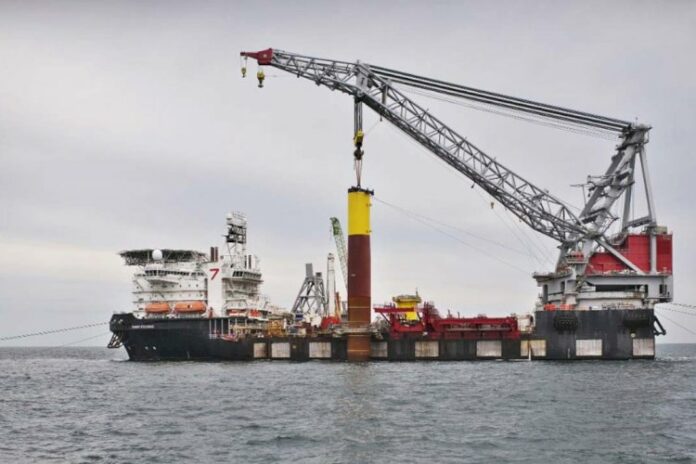
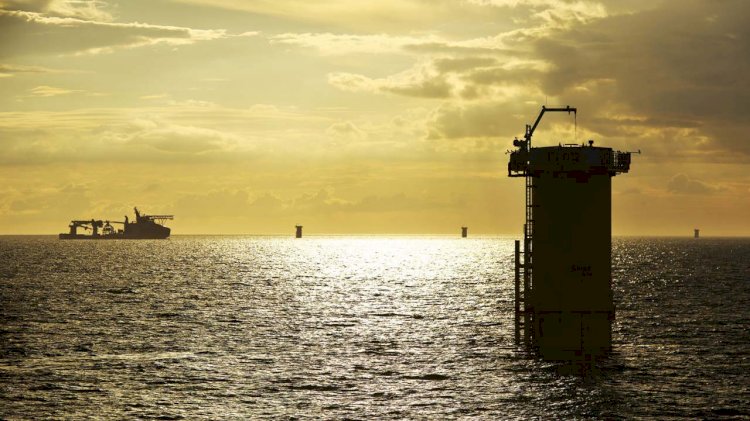
Triton Knoll has taken another huge step towards first power generation in early 2021, completing the installation of all 90 turbine foundations and two 50 kilometre long export cables, this week.

The successful delivery was achieved during one of the project’s most challenging times due to the impact of Covid19, and has been completed within the planned summer delivery window.

Throughout construction, the safety and welfare of everyone working on the project has been and remains a top priority for Triton Knoll and its contractors. Covid19 forced the implementation of significant changes in working practices, requiring regular screening and testing of personnel, long periods of isolation for many of those working on the project, and site and vessel lockdowns to ensure the safe and timely delivery of the critical energy infrastructure project could continue.

Project Director for Triton Knoll and RWE Renewables, Julian Garnsey, said:

“We are delighted to have completed this phase of construction within the summer delivery window despite the impacts of Covid19. This is a great credit to all of our supply chain partners and everyone working in the Triton Knoll team.

“We have made excellent progress on the project to date, and look forward to installation of the first offshore turbines in early 2021.”

Each foundation consists of a c.600 tonne steel monopile and c.160 tonne bright yellow transition piece, manufactured using state of the art methods to be significantly lighter than previous technologies. The installation contract was awarded to, and managed by Seaway 7, and the foundations were installed by Heavy Lift Vessels Seaway Strashnov and DEME Innovation.

Both 50km export cables were also completed this week with the jointing of the final length of NKT-manufactured subsea offshore export cable, undertaken by NKT from the vessel Olympic Zeus.

Boskalis, part of the VBNK partnership with NKT, laid and plough buried both lengths of 220kV subsea cables, which link the two offshore substation platforms to the onshore electrical network, using the vessel Ndurance. Each circuit, once energised, will transmit the high voltage electricity generated by the wind farm back to the shore, and ultimately into UK homes and businesses.

With continuing concern over the pace and impact of climate change, the need for nationally significant offshore wind projects like Triton Knoll to help decarbonise the UK’s energy infrastructure is greater than ever. The state-of-the-art offshore wind farm will have a maximum installed capacity of 857megawatts and, once fully operational, will be the most powerful in the RWE fleet and capable of powering the equivalent of over 800,000 UK homes.

The project is located over 32 kilometres off the Lincolnshire coast, with a turbine array that covers an area of 145 square kilometres, bigger than the City of Manchester. It is jointly owned by RWE, J-Power and Kansai Electric Power, with RWE managing the wind farm’s construction and long-term operation and maintenance works, on behalf of its project partners.

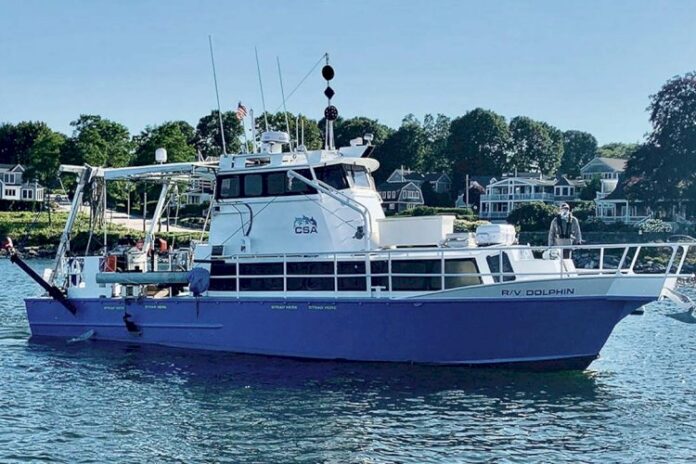
CSA Ocean Sciences launches research vessel Dolphin

0

The 15 m multipurpose vessel has been specially configured to support marine geophysical survey. Building upon the capabilities of CSA’s existing nearshore fleet, the R/V Dolphin’s layout includes a large aft working deck, a raised wheelhouse with 360° viewing windows, and a spacious multi-use salon area below decks.

The vessel is powered by twin Detroit Diesel 8-71 motors and a 20 kW generator. On deck are two high speed integrated research winches, each with 6-pass slip rings to support custom instrument interfacing. Each winch is capable up to 1,500 lbs pull with electronic controls for local or remote operation. A 1,500 safe working load (SWL) articulating A-frame is located on the vessel’s transom. The legs are spaced 3 m wide for the launch and recovery of large towed instruments.

Two modular J-frames are incorporated on the outboard side of each cross member to provide additional tow points and wider spread for the simultaneous deployment of towed gear. The R/V Dolphin is currently configured to simultaneously tow a Transverse Marine Gradiometer (TVG) and side-scan sonar, with an additional magnetometer concurrently operating multi-beam, single-beam, and sub-bottom profilers, and an ultra-short baseline (USBL) transceiver.

The survey salon features an enclosed, climate-controlled cabin 7 m long by 3.5 m wide, and survey desks with three dedicated workstations. The port side has a small galley with full size refrigerator and the starboard side head is complete with shower. A server rack contains data acquisition computers, uninterrupted power supplies, and rack-mounted instrument accessories. Forward, two workstations are dedicated for protected species observers and/or client representatives. A cellular-based WIFI network supplies high speed internet throughout the entire salon deck. The vessel is complete with all mandated Health, Safety, Security, and Environment (HSSE) gear such as an emergency position-indicating radio-beacon (EPIRB), automatic identification system (AIS), search and rescue transponder (SART), life raft, immersion suits, and personnel locator beacons.

Kevin Peterson, CEO of CSA, stated:

“The R/V Dolphin gives CSA the capability to perform surveys in coastal and nearshore environments to the highest specifications with a fully integrated vessel. This is a rugged, long range vessel that has been designed and outfitted with the latest technology and equipment to ensure safe and reliable operations in water depths ranging from hundreds of meters to shallow nearshore sites.”

Hybrid electric cranes deliver major emissions savings at Port of Oakland

0

The Port of Oakland’s largest marine terminal said today it has cut diesel emissions from all 13 of its massive yard cranes by 95 percent after retrofitting them with hybrid electric engines. Terminal operator Stevedoring Services of America (SSA) said that the project will eliminate about 1,200 metric tons of greenhouse gas emissions annually from each crane.

Crane Manager Ken Larson, at SSA Marine’s Oakland International Container Terminal (OICT), said:

“Retrofitting our rubber-tire gantry cranes to battery power produced remarkable results. We’re impressed with the huge drop in emissions from equipment that we regularly use on the marine terminal.”

SSA said that the clean air project would result in a 93 percent reduction in diesel fuel. The older engines used 10 to 13 gallons of diesel fuel an hour whereas the hybrids use about three-quarters of a gallon an hour, according to Mr. Larson.  Mr. Larson said: 

“We were honestly surprised to learn how little diesel fuel we need to use now.”

The hybrid retrofit is the first project of its type at SSA terminals. SSA replaced 1,000-horsepower diesel generators on its yard cranes with 142-horsepower diesel hybrids. The new power plants have small diesel engines used only to charge a crane’s pack of batteries. Each crane has a housing unit that contains the hybrid generator.

Mr. Larson said that the project was challenging, including the construction of new electrical systems for input power protection when converting current from AC to DC on a crane. Mr. Larson added that the hybrid generators capture energy as a container is lowered. Besides saving fuel and reducing emissions, the hybrid performs better than the older diesel generators because there is no delay in power delivery to the crane.

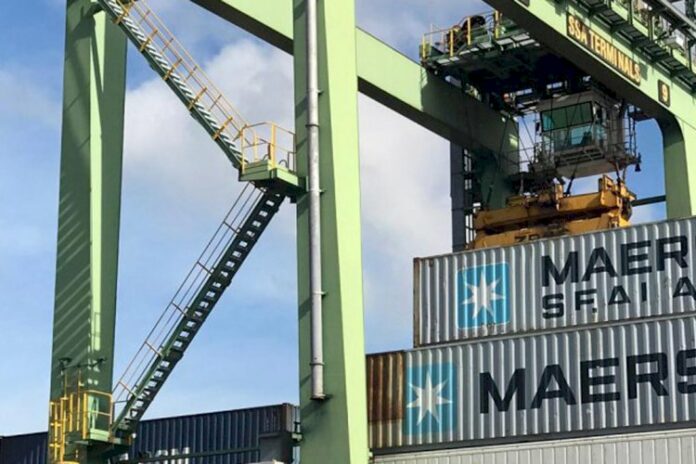
Rubber-tire gantry cranes are industry workhorses at marine terminals throughout the world. Combined, the thirteen 90-foot-tall cranes can lift as many as 1,000 containers a day on and off trucks at OICT.

Jack Broadbent, Executive Officer of The Bay Area Air Quality Management District (Air District), said:

“We are pleased that an Air District grant has enabled the completion of the SSA hybrid crane project that will significantly reduce harmful emissions for many years to come. The hybrid engine technology installed on these large yard cranes will help improve air quality and protect the health of those in the communities surrounding the Port of Oakland.”

The Air District awarded SSA $5 million in grant funding as part of the Air District’s Community Health Protection Program (CHP – AB134) to replace 13 diesel powered rubber-tire gantry crane engines with Tier 4 Final hybrid engines in order to bring about immediate emissions reductions benefits.

The SSA Terminals project is part of California Climate Investments, a statewide program that puts billions of Cap-and-Trade dollars to work reducing GHG emissions. The Cap-and-Trade program also creates a financial incentive for industries to invest in clean technologies and develop innovative ways to reduce pollution.

Costa Cruises obtains RINA Biosafety Trust Certification

0

Costa Cruises continues to work for a responsible and safe start of its operations, scheduled for September, and becomes the first cruise company to earn the Biosafety Trust Certification from RINA, the over 150-year-old testing, inspection, certification and ship classification company that developed the innovative management system certification program.  
 
The certification process, carried out through audits, examines all aspects of life on board and ashore – from the embarkation procedures to hotel services, catering, fitness, relaxation areas and shore excursions – and assesses the compliance of the system with the scheme procedures aimed at the prevention and control of infections.  
 
To obtain certification from RINA, specific training modules for crews have been created in strict compliance with the new health protocols and with the associated shipboard management system implemented by Costa.  These training programs reinforce the already strict procedures in place on board Costa’s ships, in the embarkation terminals and during shore excursions, introduced with the Costa Safety Protocol, the new health protocol developed by Costa, with the scientific support of independent experts, in response to the COVID-19 situation.  
 
Based on the actual epidemiological situation and considering the opinion of experts, from the first departure of the Costa Deliziosa, scheduled for September 6 from Trieste, and to follow on all ships that will return later into operations, the company will perform the antigenic Covid-19 swab tests to all embarking guests.  
 
The test will be carried out within the wider pre-boarding procedures that have been defined according to the protocols of the health authorities and the Costa Safety Protocol. The quick antigenic test will identify any suspicious cases that may be subjected to a PCR test for further check, thus determining the possibility of embarkation. The company is also offering its guests the option to subscribe a dedicated insurance, with specific services in case of need.   
 
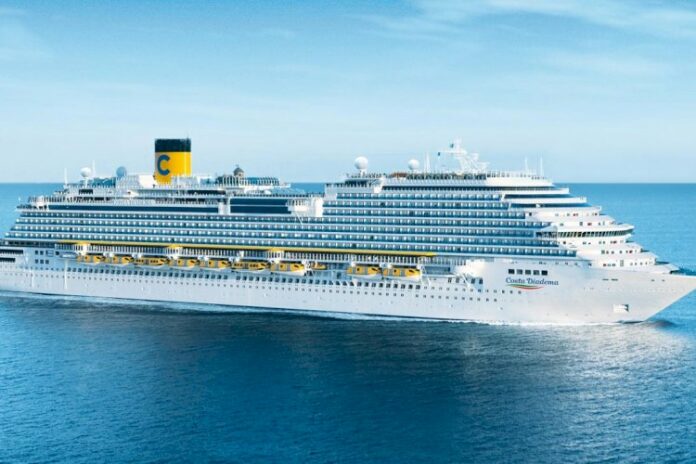
The return of Costa cruises will be progressive and in the name of maximum safety for guests, crews and destination communities. For this reason, the company has chosen to offer itineraries only in Italy, reserved exclusively for Italian guests, for its September cruises. The first ship to sail on September 6 will be Costa Deliziosa, which will sail every Sunday until September 27 offering cruises from Trieste to visit Bari, Brindisi, Corigliano-Rossano, Siracusa and Catania. Costa Diadema will follow on September 19, 2020, with a seven-day cruise from Genoa in the Western Mediterranean, to visit Civitavecchia/Rome, Naples, Palermo, Cagliari and La Spezia. 

VIDEO: New leading light line on the Elbe

0

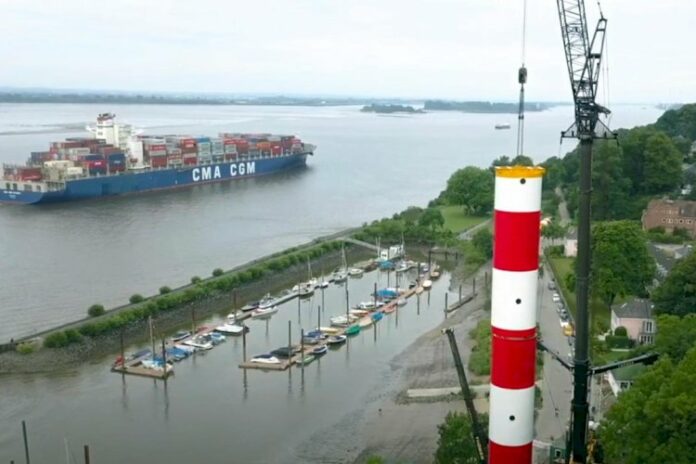
The leading lights in Blankenese have to be replaced as part of the fairway adjustment.

The navigation channel will not only be deepened but also widened between Wedel and Blankenese so that ships can meet each other on the Elbe. This will shift the optimal course line for ships heading for the port of Hamburg. As the fairway is under water and not visible, ships orientate themselves by a so-called leading light line, which consist of a front and a rear light. These leading light line mark the line on which the ships can navigate within the fairway.

With a height of more than 62 metres the new rear light belongs to the highest lighthouses in Germany.

The big-scale project “fairway adjustment” is not only limited to a deepening of the fairway. It also widens the fairway between Mühlenberger Loch and Lühe curve by around 225 metres to roughly 385 metres to allow for two large ships to easily pass one another in future. Because the courseline will then move to the south, the leading light between the low and rear light in the centre of the fairway must also be moved 125 metres to the south so that ships can safely manoeuvre within the so-called passing box. For this reason, two new leading lights are being erected, after which the old one will be removed.

In the centre of the water is where the more than 32-metre-high steal tower will be located. Situated in the embankment area of the Elbe, the tower will soon feature a 22-metre-long access bridge for visitors. This is especially for pedestrians an excellent outlook, as the steps shall also lead to a platform where they can get a wonderful view of the ships.