2.9 C
New York
Home Blog Page 788

New container crane is opened at the port of Riga

0

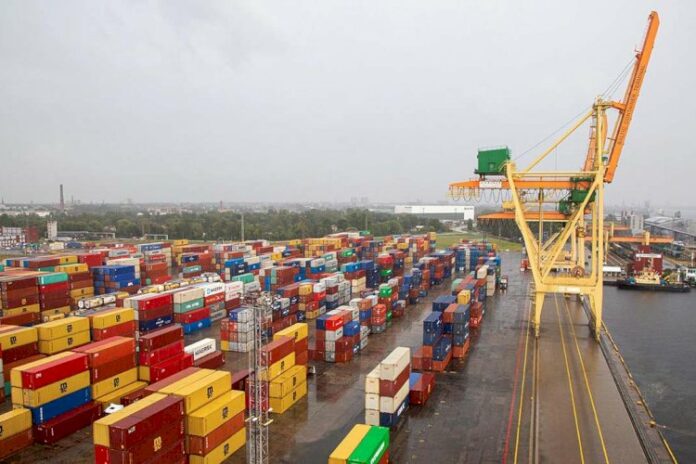
On August 25, in a solemn ceremony, unloading the first containers from the COSCO container line ship, a new container crane, which will further complement the most modern container handling logistics system in the Baltics and facilitate faster container handling, was opened at the Baltic port company Baltic Container Terminal (BCT).

Mr. Talis Linkaits, Minister of Transport, in his congratulations to the company, emphasized:

“Container cargo is the safest and most environmentally friendly way of transporting and storing cargo, which every port wants to ensure in its cargo handling environment. It is an opportunity to develop logistics centers and create added value by cargo handling and its further distribution using multimodal transport options. I would like to express my satisfaction with the fact, that the companies operating in the Port of Riga are developing and investing in growth, modernization and technologies that strengthen not only their own, but also the overall offer and competitiveness of the Port of Riga.”

The impressive 100-meter-high (98.5 m) and 870-ton container crane with a lifting capacity of up to 45 tons and a lifting speed of 1 meter per second provides the opportunity to promptly and safely service the state-of-the-art container carriers with up to 15 container rows across the overall breadth. This means that this crane, unlike the smaller ones, is able to unload and load containers on board the vessel to the required width, eliminating the need to move the ship at the berth during loading, thus providing much faster cargo handling. The crane’s lifting capacity provides perfect handling of any type of container. Like all other Baltic Container Terminal STS cranes, it is equipped with the Quay Crane Automation System – a smart, unique solution that fosters increase of the vessel loading efficiency, as well as ensures work safety in the berth area.

Mr.Ansis Zeltins, the CEO of the Freeport of Riga, noted:

“We have determined that one of the important measures for improving the competitiveness of the Freeport of Riga is the introduction of modern technologies and solutions, increasing the efficiency of the port’s operations and the speed of cargo handling. The example of the Baltic Container Terminal proves that modern technologies are one of the cornerstones of international competitiveness. Our goal is to become a leader in the implementation of smart or digital port solutions in the Baltic region.” 

The new container crane is made in China by SANY Marine Heavy Industry. At the end of January this year, it was loaded onto a barge and transported by water to the port of Riga, where it arrived in May. After the crane assembly, installation of systems and technologies, which was carried out with the participation of Chinese specialists, the crane has been commissioned and now is fully operational.

The new powerful SANY container crane is an important addition to the BCT container logistics system, which is already considered to be the most up-to-date in the Baltic States. The BCT is the largest specialized and technologically best-equipped container terminal in the Port of Riga, which invests significant funds into smart terminal management and cargo movement automation technologies, providing efficient cargo movement, accounting and tracking. Already in January of this year, the Baltic Container Terminal put into operation a new, modern warehouse for general cargo handling and storage with a total area of 11,700 m2. The heated warehouse is equipped with energy-efficient LED lighting and a railway ramp, which provides direct access to each section of the warehouse.

Mr.Gerard Sammut, the CEO of the BCT, at the opening of the new container crane, said:

“The Baltic Container Terminal works relentlessly to remain the Client’s first choice in the field of container cargo handling not only in the port of Riga and Latvia, but also in the entire Baltic region. Our competitiveness is based on efficiency and productive capacity provided by a continuous process of innovation, investment in new technologies and modern equipment. The new container crane will further increase the efficiency of our terminal by providing faster and safer ship service to meet the growing demands of our clients.”

The BCT is the second largest terminal in the port of Riga in terms of cargo turnover. In the seven months of 2020, the BCT has handled 65% of all containers in the port of Riga and 9% of all sea-borne freight in the port of Riga. In the first seven months of this year, the terminal has already handled 179,037 TEUs or 1.8 million tons of cargo.

Over the last ten years, the volume of container cargo in Riga has grown by an average of 7% per year, reaching a turnover of 4.9 million tons in 2019. In 6 months of this year, 2.123 million tons of container cargo were handled in the port of Riga.

The main parameters of the container crane SANY:

  • Lifting capacity: 60 tons;
  • Lifting capacity under the spreader: 45 tons;
  • Boom length (outreach): 47.0 meters (which allows to handle container vessels with bigger breadth);
  • Lifting height: 48 meters (34 meters above the berth and 14 meters below the berth in the ship’s hold);
  • Lifting speed: 1m / second.

Crane dimensions:

  • Width: 27 m;
  • Height (with raised boom): 98.5 m; 
  • Weight: 870 tons.

COSCO Shipping Lines, owned by the Chinese COSCO SHIPPING Holding Co., Ltd, is one of the world’s largest international sea container shipping companies, which regularly arrives at the BCT terminal in the port of Riga within the Baltic Sea route.
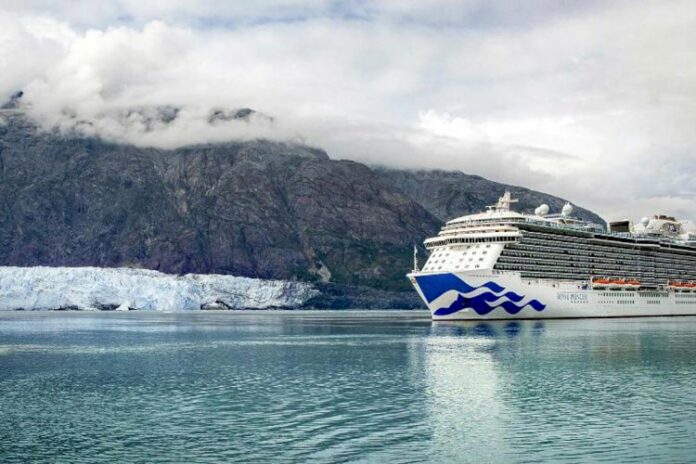
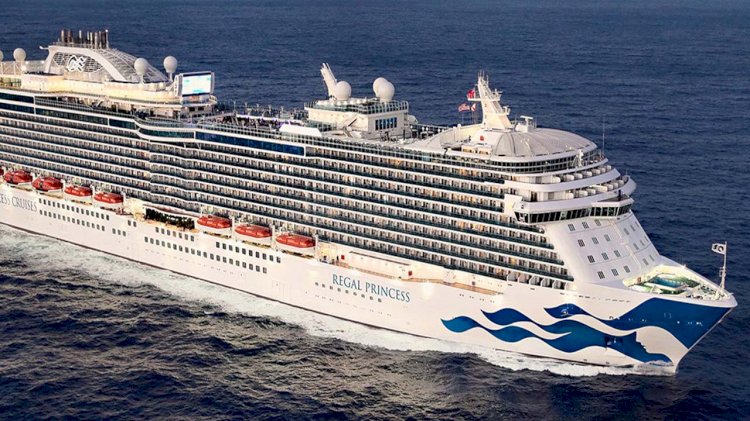
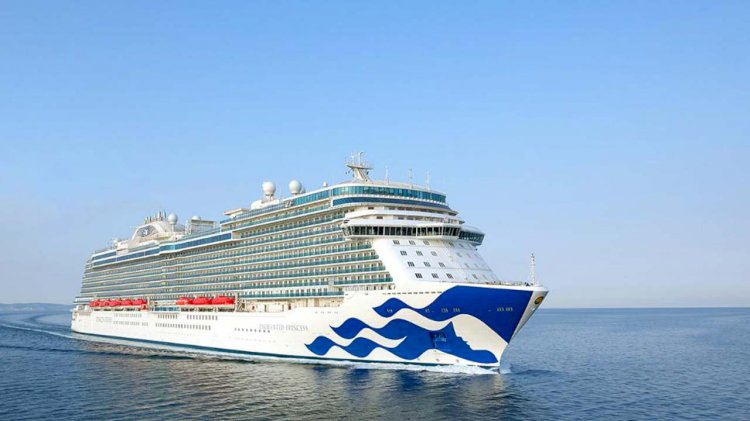
Princess Cruises cancels its cruise operations in Australia and South America

0

Due to the continued progression of COVID-19 and related decisions of various governments, health authorities, and airlines regarding travel restrictions, Princess Cruises is extending its pause in cruise operations in Australia through December 12, 2020 which includes cruises throughout Australia and New Zealand.

Guests who have paid in full on these cancelled voyages will receive a refundable Future Cruise Credit (FCC) equivalent to 100% of the cruise fare paid plus an additional non-refundable bonus FCC equal to 25% of the cruise fare paid. To receive the above FCCs, no action is required by the guest or their travel advisor.

For guests who have not paid in full, Princess will Double the Deposit, providing a refundable FCC for the money currently on deposit plus a matching bonus FCC that can be used on any voyage through May 1, 2022. The matching bonus FCC is non-refundable, will not exceed the base cruise fare amount of the currently booked cruise, and will have a minimum value of $100 per person.

Alternatively, guests can forfeit the bonus FCC offer and request a refund for all money paid on their booking by using this online form. Guests have until September 30, 2020 to elect a refund, or they will automatically receive the default offer listed above.

Princess will protect travel advisor commissions on bookings for cancelled cruises that were paid in full, in recognition of the critical role they play in the cruise line’s business and success. 

Also Princess Cruises is cancelling its early 2021 World Cruises and Circle South America cruises on two ships:

  • Island Princess 2021 World Cruise sailing from North America, including associated segments and remaining voyages sailing immediately prior
  • Pacific Princess 2021 Circle South America sailing from Australia, including associated positioning cruises.

Jan Swartz, Princess Cruises president said:

“We share in the disappointment of this cancellation for guests of our world cruises because it’s a pinnacle cruise vacation experience, booked by some of our most loyal guests.”

Guests currently booked on these cancelled voyages will receive a refundable Future Cruise Credit (FCC) equivalent to 100% of the cruise fare paid plus an additional non-refundable bonus FCC equal to 25% of the cruise fare paid. To receive the above FCCs, no action is required by the guest or their travel advisor.

Alternatively, guests can forfeit the bonus FCC offer and request a refund for all money paid on their booking by using this online form. Guests have until September 30, 2020 to elect a refund, or they will automatically receive the default offer listed above.

Princess will protect travel advisor commissions on bookings for cancelled cruises that were paid in full, in recognition of the critical role they play in the cruise line’s business and success.

The most current information and instructions for booked guests affected by these cancellations, and more information on FCCs and refunds, can be found online at Information on Impacted & Cancelled Cruises.

KVH expands award-winning TracVision Series for entertainment at sea

0

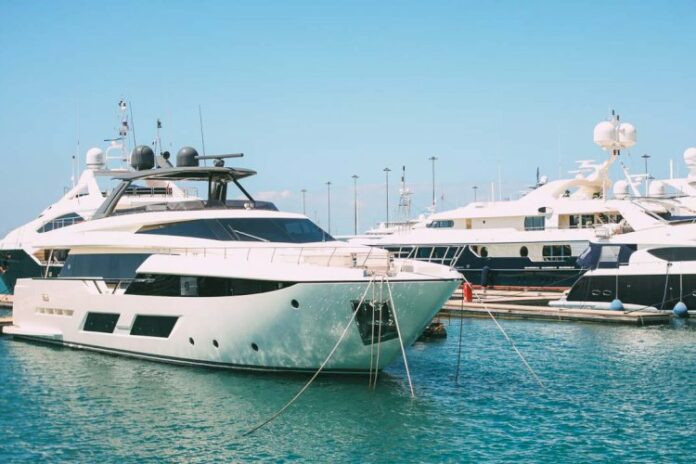
KVH Industries, Inc. has introduced TracVision® TV10, the newest marine satellite TV antenna in KVH’s award-winning TracVision series. A 1-meter ultra-high efficiency marine antenna, the TracVision TV10 provides the biggest coverage footprint in KVH’s TracVision series and is designed to provide boat owners, charter yacht guests, and commercial vessel crews with access to live news, local channels, and TV and movie programming from leading satellite TV providers worldwide.

TracVision TV10 – the world’s lightest 1-meter Ku-band marine satellite TV antenna, weighing up to 10% less than leading competitive products – features KVH’s advanced inertial-based stabilized search functionality for fast satellite acquisition and proprietary RingFireTM technology for strong signals, wide geographic coverage, and clear reception. For easy upgrades, the TracVision TV10 features an antenna mounting pattern that matches competing 1-meter systems; system configurations support multiple receivers with simple onboard integration. The innovative belowdecks TV-Hub and TracVision app are designed to enable straightforward setup and operation.

Jim George, KVH’s senior director of global leisure sales, says:

“Whether it is a guest on a superyacht wanting to watch a favorite show or a seafarer hungry for news about world events, the TracVision TV10 provides crystal clear reception and reliable coverage offshore and in remote locations.”

The TracVision TV10 supports HD and SD programming from circular and linear Ku-band services around the globe. Boaters and crews can choose from an array of popular satellite TV programming services including DIRECTV®, DISH Network®, Bell TV, SKY, Canal+, TrueVisions, Orbit Showtime Network (OSN), DIRECTV Latin America, and more.

A recognized leader in marine satellite antenna technology, KVH’s TracVision line of products has won Product of Excellence awards from the National Marine Electronics Association (NMEA) for 22 consecutive years. KVH TracVision products include worldwide technical support delivered by more than 4,900 factory trained technicians in KVH’s global Certified Support Network (CSN) and KVH’s expert field service and technical support teams.

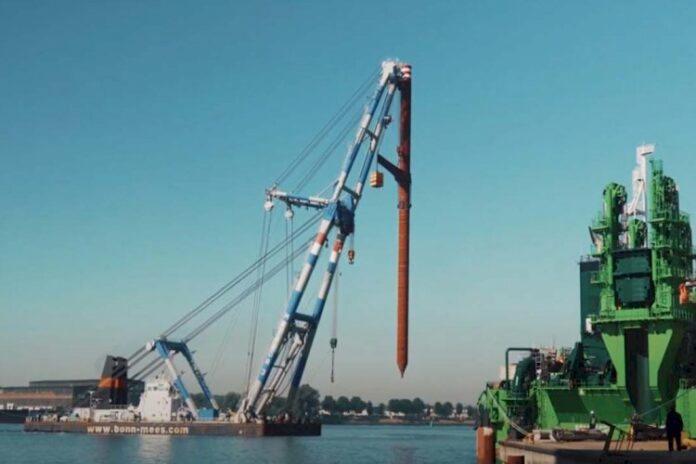
VIDEO: Installation of spuds on the world’s largest cutter suction dredger

0

The SPARTACUS will be the world’s first LNG-powered (liquefied natural gas) CSD and follows the order for the first LNG-powered trailing suction hopper dredgers (TSHDs) MINERVA and SCHELDT RIVER, and ‘LNG-ready’ BONNY RIVER, that are currently under construction at IHC’s shipyards. 

The concept and basic design for this mega cutter was done in close cooperation with DEME, Vuyk Engineering Rotterdam (a 100% subsidiary of IHC) and IHC.

The four main diesel engines can run on LNG, MDO and HFO, and the two auxiliary engines have dual-fuel technology. The application of LNG to power TSHDs has proven to be a very complex puzzle. In close cooperation with DEME, the two organisations have managed to fit all the pieces together. The SPARTACUS will benefit from this joint effort and forward-thinking and represents a new milestone in the industry.

This environmentally-friendly CSD will also have other innovations on board, such as a waste heat recovery system that converts heat from the exhaust gasses to electrical energy. The dredge control is arranged for a one-man operation. The vessel will have a heavy-duty cutter ladder and can reach a dredging depth of 45m.

PSA Marine launches carbon cutting digital solution

0

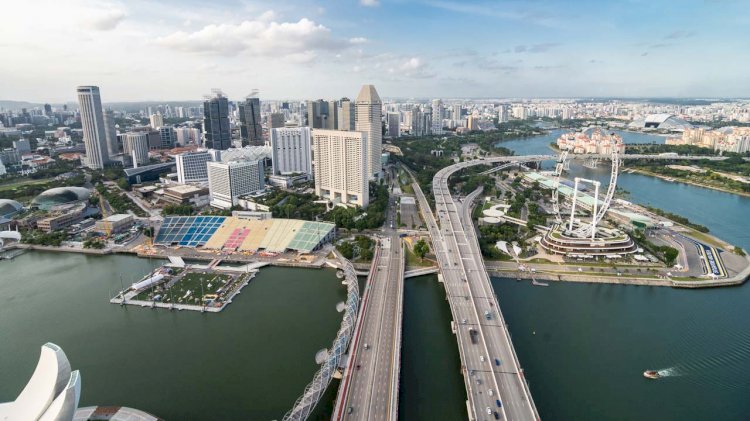
PSA Marine Ltd (“PSA Marine”) joins the global movement towards sustainable shipping by reducing carbon footprint with the use of a digital solution – Vessel Pilot Communication (“VPC”), launched on 25 August 2020.

With VPC, PSA Marine ensures that critical and timely updates on pilot boarding times and traffic conditions in and around the pilot boarding grounds are communicated to vessel masters.

Timely updates allow the vessel masters to adjust their vessels’ speed and time their arrival to Singapore, thereby achieving fuel optimisation and reduction in greenhouse gas emissions.
As a pilotage services provider in Singapore, PSA Marine supports the Maritime and Port Authority of Singapore’s call for decarbonisation efforts and is excited to partner like-minded maritime stakeholders in contributing towards a sustainable environment.

Mr Jimmy Koh, Head of Digital Transformation and Chief Pilot of PSA Marine, said:

“We are delighted to garner support from the major shipping lines in our digitalisation and decarbonisation journey. During the pilot trial, the participating shipping lines have provided valuable feedback on the VPC digital solution. With its launch, all vessels calling at the Port of Singapore can benefit from information that can help them play their part in environmental sustainability.”

Mr Dannis Lee, Managing Director of Yang Ming (Singapore) Pte Ltd, said:

“With VPC, there is significant improvement in the way we monitor our fleet. Our ship masters will be notified of any changes to the pilot boarding time by the VPC. In addition, with information of the traffic conditions available on the VPC, they can adjust the vessels’ speed to derive a more accurate estimated time of arrival at the Port of Singapore. Hence, this enables our vessels to achieve a more efficient fuel consumption and allows us to contribute towards decarbonisation.”

Mr Takashi Kase, Senior Vice President of Global Vessel Operations of Ocean Network Express (“ONE”) Pte Ltd, said:

“ONE expects the new procedure of ship-shore communication will contribute more optimised traffic and pilotage at one of the world’s busiest channels, and further improve operational efficiency.”

Mr Nicolas Romero, VP Group Operations of CMA CGM SA, said:

“While CMA CGM does not experience much waiting time in the efficient Singapore port with various initiatives already in place (Smart Speed approach / scheduled API sharing between PSA Terminals and CMA CGM), the VPC digital solution will reinforce the safety and efficiency of the workflow between pilots, CMA CGM vessels and local CMA CGM Operations.”

The VPC is a module of PSA Marine’s ONEHANDSHAKE™ digital platform which is designed to share information on port activities with a network of maritime stakeholders. PSA Marine is committed to play its part for the environment and will continue to work alongside all maritime stakeholders to offer innovative and sustainable digital solutions which will benefit all parties.

Shell reveals Brazil FPSO decision

0

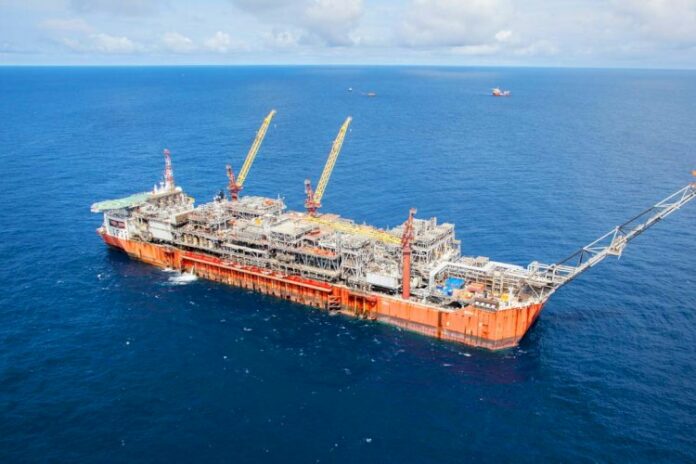
Shell hasc announced today a final investment decision taken by the Libra Consortium, operated by Petrobras, to contract the Mero-3 floating production, storage and offloading (FPSO) vessel to be deployed at the Mero field within the offshore Santos Basin in Brazil.

This is the third production system to be deployed in the Mero field, with final investment decisions to contract the Mero-1 and Mero-2 FPSOs already taken. Each unit has a daily operational capacity rate of 180,000 barrels of oil equivalent, with production coming online over the next four years. The Pioneiro de Libra FPSO (50,000 barrels of oil equivalent/day) has been producing at Mero since 2017 and is a key source of information for the consortium to aid further development and productivity of the field, reservoir and wells.

Wael Sawan, Upstream Director, Royal Dutch Shell, said:

“Mero-3 is the latest addition to our world-class asset portfolio in the Brazilian pre-salt. Shell is the largest foreign producer in Brazil, and we are proud to progress another valuable growth opportunity in the country to support the long-term strategy of our Upstream business.”

As one of Shell’s core Upstream themes, Deep Water is set to deliver resilient cash generation from high-value barrels. Shell’s global deep-water business enjoys an attractive funnel of long-life, resilient development and exploration opportunities in Brazil, the US, Mexico, Nigeria, Malaysia, Mauritania, and the Western Black Sea.

MacGregor secures contract for OHT’s Alfa Lift wind foundation installation vessel

0

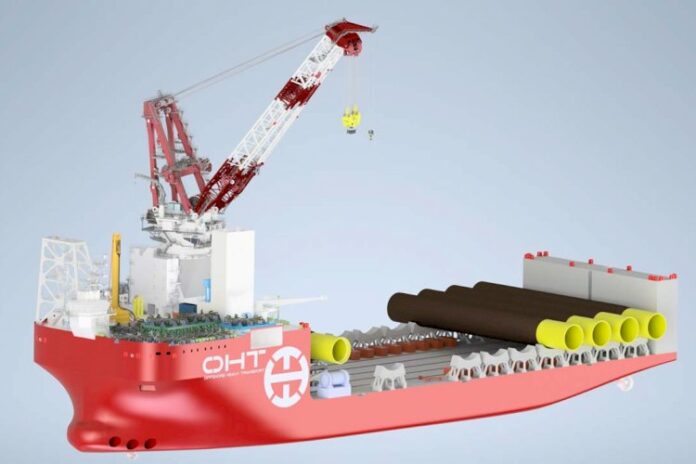
MacGregor, part of Cargotec, has received a significant order for delivery of the mission-critical system to be installed on the OHT offshore wind foundation installation vessel, Alfa Lift, being built at the China Merchants Heavy Industry shipyard in Jiangsu, China.

The order, which is the largest single vessel contract secured to date by MacGregor, was booked in Cargotec’s 2020 third quarter order intake. The monopile installation system is scheduled to be delivered during the fourth quarter of 2021.

Scope of supply includes the engineering, procurement and construction of the monopile lifting, skidding and transfer system, which is an integral part of the installation process undertaken by employing an upending tool and motion compensated gripper frame.

The motion-compensated gripper frame will be closely interfaced with the vessel’s dynamic positioning and control system in an integrated solution developed jointly by MacGregor and Kongsberg Maritime. Both companies believe that the application of automated handling solutions will increase the safety, productivity and consistency of the installation operation, resulting in substantial cost and time savings.

Alfa Lift is scheduled for delivery in 2021 and will be the world’s largest custom-built offshore wind foundation installation vessel. She will feature a 3,000t main crane, a 10,000+ m² ‘smart deck, capable of carrying and installing up to 14 XL monopiles per voyage and will be able to fully submerge the main deck to a depth of 14.66m.

Torgeir E. Ramstad, Chief Executive Officer, says:

“OHT is committed to continuously advancing the development of technologies within offshore wind operations, thereby enabling complex operations to be undertaken at the highest levels of safety and efficiency. The monopile installation solution is the result of applying our collective capabilities and experience to solve market challenges and achieve optimum operability for our vessels. Whenever we ask MacGregor to solve operational challenges in the demanding marine environment they, together with partners, demonstrate excellent technical understanding and respond quickly. We are extremely pleased to be working together on the exciting Alfa Lift project.”

Gunnar Thorsen, SVP Business Concepts, Kongsberg Maritime AS, says:

“Working closely with MacGregor, we have developed an innovative solution that improves the efficiency of foundation installation vessels by replacing lengthy, temporary mooring processes with full DP in combination with an integrated guidance system and hydraulic frame mechanism.”

Leif Byström, Head of the Offshore Solutions Division, says:

“MacGregor is delighted to be selected to supply the mission-critical work system for the Alfa Lift vessel. We have worked intensively over several years to develop a state-of-the-art solution that provides the most precise installation method for all monopile ranges. We appreciate and highly value the hard work and great cooperation between the OHT, Kongsberg Maritime and MacGregor teams that have made this possible.”

Michel van Roozendaal, President, MacGregor, says:

“MacGregor has invested in applying its vast knowledge of offshore technology into enabling the progression of renewable energy, with the OHT Alfa Lift contract being an excellent example of where these advanced technologies can be put to work. I would also like to add my appreciation of the trust that OHT has placed in MacGregor, and equally recognise the collaborative team effort that has resulted in the innovative monopile installation solution being developed.” 

Høglund to supply Integrated Automation and Gas Control Systems for two VLEC newbuilds

0

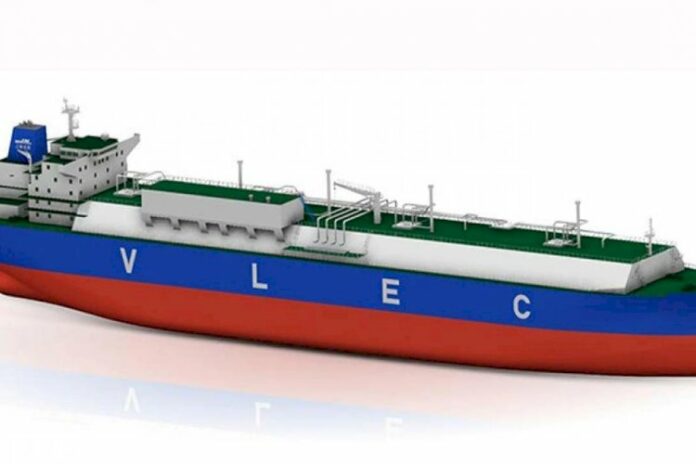
Høglund has signed contracts with Babcock LGE and Jiangnan shipyard (Group) Co Ltd to supply Integrated Automation and Gas Control Systems for two Pacific Gas-owned Very Large Ethane Carrier (VLEC) newbuilds.

Høglund Marine Solutions will be responsible for providing the following management systems for the VLEC newbuilds: IACS, ship performance monitor, control system for cargo handling and fuel gas supply system based on a Babcock LGE design.

It is a significant engineering challenge to effectively integrate automation and gas handling systems on gas newbuilds. Without proper consideration for automation and integration, vessels are at risk of becoming too complex and a significant challenge to operate and maintain. With effective collaboration amongst yards, suppliers and marine solutions specialists on the design and installation of these integrated systems, these VLEC newbuilds will have significantly enhanced reliability, efficiency and simplified lifetime maintenance.

Commenting on these multiple contracts, David Gunaseelan, Vice President of Sales at Høglund Marine Solutions:

“I’m thrilled Høglund has been chosen to deliver a fully integrated solution encompassing cargo handling and wider vessel management systems for Pacific Gas. These contracts demonstrate how the industry is recognising the need for joined-up thinking and systems in the growing gas fleet, and the performance and reliability benefits this delivers. As such, Pacific Gas will have peace of mind that their VLEC will operate as efficiently and reliably as possible.”

Adding their thoughts to the contract, Capt. Tao Yong, Vice President of Pacific Gas:

“By having Høglund involved in the project, we are drawing on their proven track record of delivering effective and seamless automation systems among multiple vessel types. We are confident that together, we will be able to provide the technology that is expected on a modern VLEC and demonstrate the value that advanced system integration can bring to the evolving gas sector.”

NOAA awards $2.7 million in grants for marine debris removal and prevention

0

NOAA has announced a total of $2.7 million in grants supporting 23 projects to address the harmful effects of marine debris on wildlife, navigation safety, economic activity, and ecosystem health. With the addition of non-federal matching contributions, the total investment in these marine debris projects is more than $5.9 million.

The grants, selected after a rigorous and competitive review process, are spread across 18 U.S. states and territories. Ten marine debris removal projects will receive a total of $1.3 million, while 13 prevention projects will receive a total of nearly $1.4 million. 

Retired Navy Rear Adm. Tim Gallaudet, Ph.D., assistant secretary of commerce for oceans and atmosphere and deputy NOAA administrator, said:
“NOAA is the federal government’s lead for addressing marine debris. These grants are going to help clean up our coastal and Great Lakes communities and further power the American blue economy by creating more attractive recreational opportunities.” 

Among the projects selected are the removal offsite linkof 21,000 pounds of marine debris from NOAA’s Florida Keys National Marine Sanctuary; the removal offsite linkof at least 20 abandoned and derelict vessels from estuaries in North Carolina; the engagementoffsite link of 500 students in Michigan to become Marine Debris Prevention Ambassadors and reduce waste produced in school lunchrooms;.and the development offsite linkof a recycling program for fiberglass boats in Washington State and across New England. 

Nicole LeBoeuf, acting director of NOAA’s National Ocean Service, said:

“Communities face the harmful effects of marine debris every day, from trash on beaches to abandoned vessels. The projects supported by these grants will help coastal communities to remove and prevent marine debris, ultimately protecting our coastal habitats and waterways, wildlife and the economy.”

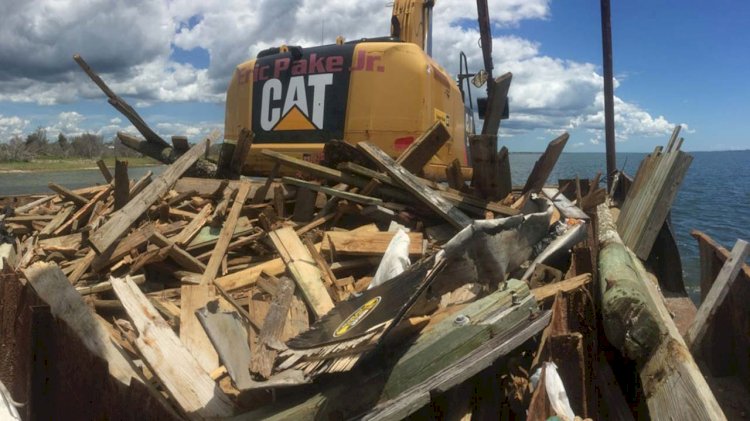
Photo: NOAA. Removing dock debris left in the wake of Hurricane Florence, September 2018.

Approximately $1.3 million in grants will support 10 community-driven debris removal projects in Alaska, California, Delaware, Florida, Hawaii, Maine, North Carolina, Oregon, Puerto Rico and Texas. The grantees will implement locally based, cost-effective activities to remove marine debris, including derelict fishing gear and other medium- and large-scale debris. 

Approximately $1.4 million will support 13 marine debris prevention projects in Alabama, Alaska, American Samoa, California, Florida, Hawaii, Illinois, Massachusetts, Michigan, Rhode Island, Virginia and Washington. These projects will provide the knowledge and resources necessary to change behaviors, raise awareness and promote the long-term prevention of marine debris.

Marine debris is not only a threat to wildlife in our ocean, Great Lakes and waterways, but can adversely affect navigation safety and the economy. To address this growing challenge, the NOAA Marine Debris Program is dedicated to identifying, determining sources of, assessing, preventing, reducing and removing marine debris and addressing the adverse impacts of marine debris in our nation’s marine environment and Great Lakes. The Marine Debris Act authorized the NOAA Marine Debris Program in 2006 as the lead federal program for addressing the problem. This program was reauthorized in 2018 through the Save Our Seas Act.

ABB and Kongsberg announce digitalization collaboration on edge data collection

0

The companies will work towards a common data infrastructure and accelerate the development of value-added digital applications and services.

The agreement will enable ABB Turbocharging to use Kongsberg Digital’s data infrastructure solution for vessels, Vessel Insight – which runs on Kongsberg Digital’s Kognifai ecosystem. It will be used as an additional data infrastructure service for ABB Turbocharging’s digital solutions. Such exchange of data between cloud platforms is fundamental to enabling remote diagnostics on vessel engines. The recent introduction of continuous performance evaluation functionality in ABB’s advisory software for engines, ABB AbilityTM Tekomar XPERT, allows timeseries engine data to be transferred between platforms.

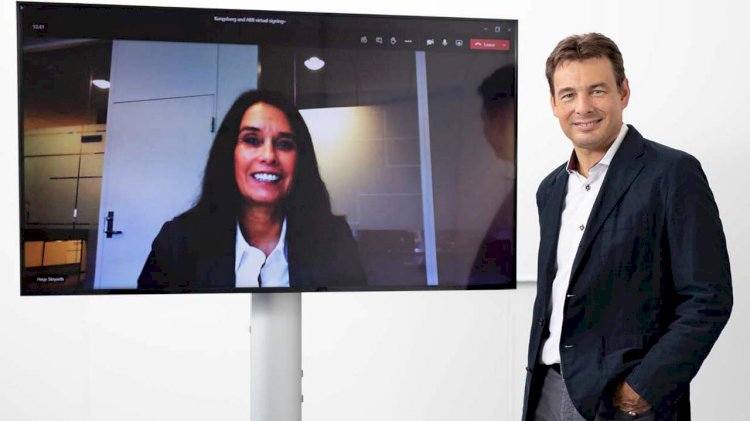
Hege Skryseth, President of Kongsberg Digital, says:

“Partnerships between major players are key in bringing about high value digital solutions to the maritime sector at a lower cost and faster pace. With Kongsberg Digital and ABB Turbocharging working together to increase the value offering to customers, we can deliver an even more attractive return on investment to vessel owners and operators. We are excited about working together with ABB Turbocharging and our customers to accelerate their digitalization journey.” 

ABB Turbocharging and Kongsberg Digital have a common interest in accelerating the adoption of digital technologies in a safe, reliable and sustainable manner with the aim of delivering solutions for a safer, smarter and greener maritime industry. The partnership will enable performance analysis of engines, through fully automated solutions supported by sensors, that will give transparency and confidence in data and can then be easily shared with other parties and OEMs to help generate more value. This translates into less workload for the crew.

Cristian Corotto, Vice President Digital Customer Solutions, ABB Turbocharging, says:

“This collaboration will take our customers further, faster. Our goal is to empower ship owners and operators to extract the maximum value from their engine data. This co-operation will help to deliver the tools and insights into engine performance needed to make their vessel operations better, their fleet management more efficient and their businesses more profitable and sustainable. It is a simple and valuable choice for a next step towards operational transparency and the digitalization of shipping.”

Vessel Insight is an out of the box solution to solve the ship-to-cloud data transmission and combined with Tekomar XPERT, ABB and KONGSBERG’s customers benefit from a fully automated engine performance diagnostics system. It is available anywhere, anytime.

Although both systems are fully independent and able to integrate with other data sources or share data with other parties, the package works seamlessly and comes tailor-made for each ship, applying the highest cyber security standards. The cooperation will focus on keeping projects as lean as possible and delivering results within short lead times.

As both ABB’s and KONGSBERG’s solutions have a strong market position in their respective areas, this partnership will provide a tremendous benefit to ship owners, -managers and -operators who are looking for a state-of-the-art implementation.

ABB has an industry-leading portfolio of digital solutions – ABB Ability™ brings together over four decades of industrial digital leadership, advanced connectivity and the latest digital technologies to create unparalleled customer value.

The agreement was signed 21 August 2020 and enters into effect immediately.

Photo: Helge Skryseth, President of Kongsberg Digital and Cristian Corotto, Vice President Digital Customer Solutions, ABB Turbocharging, at the virtual signing of the new partnership.