3.7 C
New York
Home Blog Page 787

Royal IHC delivers 3,000m³ TSHD to the Port Authority of Douala

0

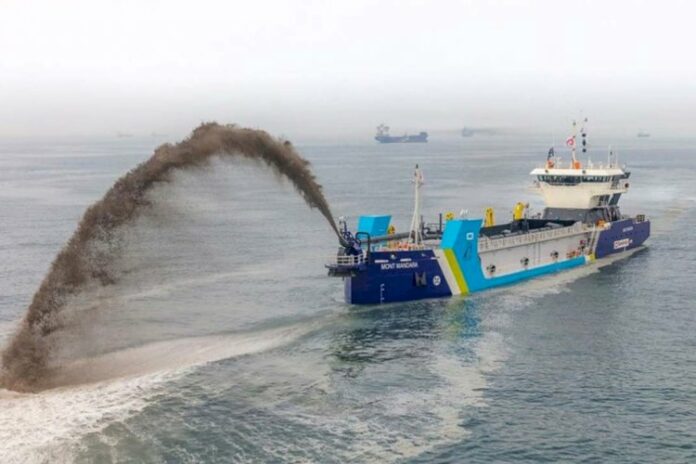
On 20 August, Royal IHC (IHC) handed over the 3,000m³ trailing suction hopper dredger (TSHD) MONT MANDARA to Cameroon’s Port Authority of Douala (PAD). This successful delivery completes the PAD fleet, following its acquisition of an IHC Beaver 50® cutter suction dredger and a DMC work boat in 2019. 

The new TSHD is an IHC Easydredge® from IHC’s popular standardised range of dredging vessels, which are ideal for common maintenance and land reclamation projects. The MONT MANDARA offers exceptional flexibility to PAD as it can be customised to adapt to its dedicated working environment. Initially, it will be used to execute vital dredging work to maintain the access channel to the port of Douala-Bonabéri.

Thanks to the high level of cooperation between IHC and PAD, the TSHD was delivered extremely quickly following the effectiveness of the contract in March this year. The new vessel was constructed in Poland, and sea trials were completed in the Baltic Sea and off the Dutch coast, following delivery in The Netherlands. 

In addition to the delivery of MONT MANDARA, IHC will also supply a spare parts package, ancillary equipment and extensive training to support PAD’s technical staff. Arne de Kock, IHC’s Executive Commercial Director, says:

“We are delighted to continue our excellent partnership with PAD with the quick delivery of this latest vessel. At IHC, we remain fully committed to supporting and increasing the capacity of our customers in their dredging activities.”

Alaska’s salmon are getting smaller, affecting people and ecosystems

0

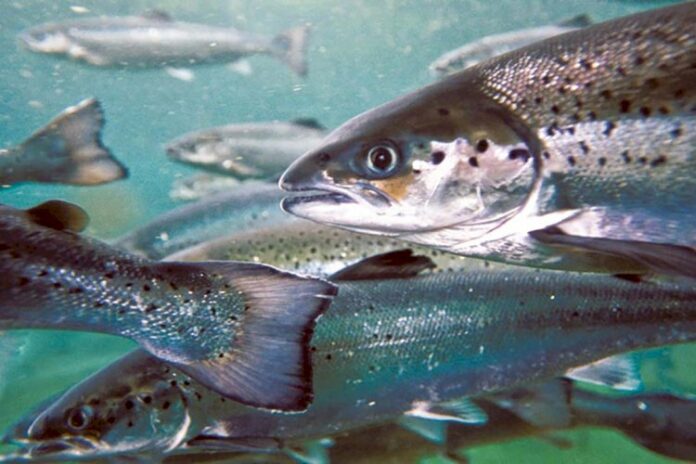
The size of salmon returning to rivers in Alaska has declined dramatically over the past 60 years because they are spending fewer years at sea, according to a new study led by researchers at the University of California, Santa Cruz, and the University of Alaska Fairbanks.

Salmon are critically important to both people and ecosystems in Alaska, supporting commercial and subsistence fisheries and transporting nutrients from the ocean to inland areas, fertilizing the ecosystems in and around the rivers where they spawn. Smaller salmon provide less food for people who depend on them, less value for commercial fishers, and less fertilizer for terrestrial ecosystems.

For years, people in Alaska have been noticing that wild salmon were getting smaller, but the reasons have been unclear. In the new study, published in Nature Communications, researchers compiled and analyzed data collected over six decades (1957 to 2018) from 12.5 million fish by the Alaska Department of Fish and Game. This unprecedented dataset enabled them to see patterns of body size changes for four species of salmon—Chinook, chum, coho, and sockeye—across all regions of Alaska.

The results showed that the decreases in body size are primarily due to salmon returning to their spawning grounds at younger ages than they have in the past. Alaskan salmon can spend up to seven years at sea, although this varies by species. During this time they feed and grow to maturity, migrating great distances in the North Pacific Ocean before returning to fresh water to spawn.

Corresponding author Eric Palkovacs, professor of ecology and evolutionary biology and associate director of the Fisheries Collaborative Program in the Institute of Marine Sciences at UC Santa Cruz, said:

“There are two ways they could be getting smaller—they could be growing less and be the same age but smaller, or they could be younger—and we saw a strong and consistent pattern that the salmon are returning to the rivers younger than they did historically.”
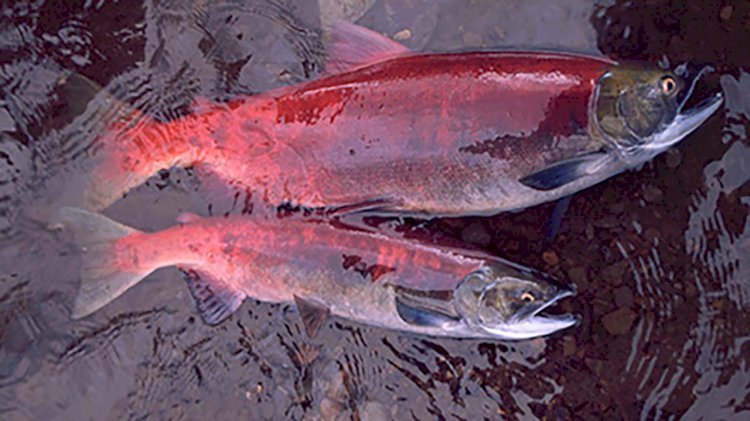
Photo: Andrew Hendry. One additional year in the ocean makes a big difference in the size of salmon, as seen in these two female sockeye salmon from Pick Creek, Alaska. The top salmon spent three years at sea, the other two years.

The researchers identified a range of factors that appear to be driving this shift, some acting across all regions and others affecting only certain species or populations.

Two factors—climate change and competition with growing numbers of wild and hatchery salmon in the ocean—have clearly contributed to size declines across all species and regions, Palkovacs said. In contrast, the effect of commercial fishing appears to be important only for some salmon populations. Similarly, the results were mixed for another proposed driver of size declines, the recovering populations of marine mammals that prey on salmon.

Palkovacs said:

“We know that climate drives changes in ocean productivity, and we see a consistent signal of climate factors associated with decreasing salmon size. Another consistent association is with the abundance of salmon in the ocean, especially pink salmon. Their abundance in the North Pacific is at historic highs due in part to hatchery production in Alaska and Asia, and they compete with other salmon for food.”

The observation that salmon are returning to freshwater streams at younger ages implies that the ocean is becoming a riskier place for them to be, he said. By staying in the ocean longer and growing larger, salmon can have greater success in spawning and lay more eggs, but each additional year increases the risk of not returning to reproduce at all.

Palkovacs said:

“Natural selection has always pushed in both directions, but the balance between the two is changing, pushing harder against the older, larger salmon. It seems that the ocean is becoming a riskier place to be.”

The consequences for people and ecosystems, however, are more clear. Smaller salmon means fewer meals per fish for subsistence fishers, lower profits for commercial fishers, fewer eggs laid to sustain salmon populations, and fewer nutrients to support the productivity and biodiversity of freshwater and riparian ecosystems.

On the ecosystem side, the nutrients delivered by salmon runs provide critical support for bears, insects, birds, trees, and juvenile salmon themselves. Palkovacs noted that an extensive body of research has tracked the movement of marine nitrogen from salmon into the terrestrial ecosystems around the streams where they spawn.
He said:

“Salmon go up into these small streams, and whether they are caught by predators or die after spawning, their nutrients are transferred into the forests and freshwater ecosystems. It’s a classic salmon ecosystem service, and the amount of nutrients they deliver depends on their body size.”

The study had its origins in a working group organized by the National Center for Ecological Analysis and Synthesis (NCEAS) at UC Santa Barbara through its State of Alaska’s Salmon and People project. With funding from the Gordon & Betty Moore Foundation, the researchers were able to work with the Alaska Department of Fish and Game to compile data the agency had been collecting for decades, but which was dispersed among different field offices in various smaller databases.

Palkovacs said:

“At NCEAS, we had two data scientists who compiled all the data into one massive database on Alaskan salmon that is now publicly available. It took a lot of time and energy, but that’s what enabled us to do this comprehensive analysis.”

Author Krista Oke, a postdoctoral scientist initially at UC Santa Cruz and now at University of Alaska Fairbanks, added that getting the data in the first place was no small task either:

“When you think about the fact that we used data from 12.5 million salmon, that’s how many times someone from ADF&G measured a salmon. It’s an exceptional amount of work to make a dataset like this possible.”

In addition to Oke and Palkovacs, the coauthors of the paper include corresponding author Peter Westley at University of Alaska Fairbanks, as well as researchers at Alaska Pacific University in Anchorage, UC Davis, UC Berkeley, NCEAS, McGill University in Montreal, Washington Department of Fish and Wildlife, Virginia Polytechnic Institute, Alaska Department of Fish and Game, Simon Fraser University, and Tanana Chiefs Conference, Fairbanks.

Hutchison Ports and Egyptian Navy to build new container terminal

0

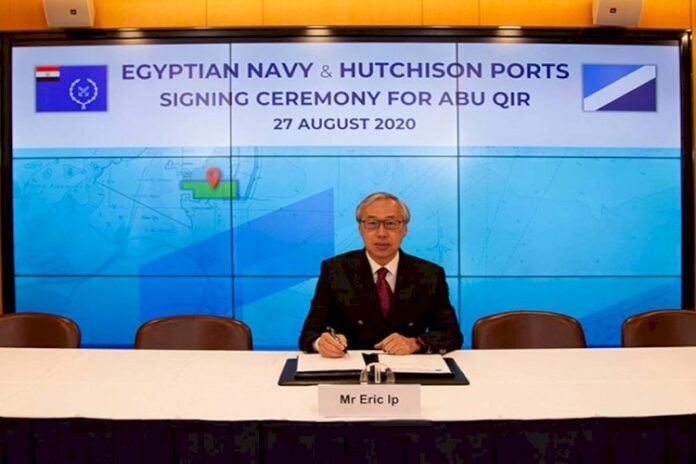
Hutchison Ports has announce the signing of a long-term agreement with Egyptian Navy on the development and operation of a new container terminal in Abu Qir, Egypt.

An online signing ceremony was jointly hosted by His Excellency Commander in Chief Vice Admiral Ahmed Khaled Saied, Egyptian Navy and Mr. Eric Ip, Group Managing Director of Hutchison Ports together with the management team joining from Hong Kong and the United Kingdom.

The new terminal will be located inside the Abu Qir Naval Base, naturally being sheltered by the Abu Qir peninsula. The greenfield project will be connected to a new two-way highway with 3 traffic lanes on each side and residential bypass, linking it to Alexandria within 20 kilometers, as well as to the national road network to the capital city of Cairo and other major cities across the country.

Speaking at the ceremony, His Excellency Ahmed Khaled Saied said:

“Today is a special day for us. The development of Abu Qir signifies the continuation of our successful partnership with Hutchison Ports, the world’s renowned port investor and operator. We are seeing an increase in export cargoes, there is a need for a world-class container terminal to facilitate growing trade. This also echoes with the President EI Sisi’ Egypt Vision 2030 of regional leadership and sustainable development.”

Commenting on the significance of the Abu Qir project, Mr. Eric Ip said:

“We have been investing in Egypt since 2005, and it has always been an important market to us justified by the country’s growing population and economy that are fueling container trade. We are honoured with the trust from the Egyptian government and are excited with this project, which is designed to have a draft of 18 metres and capable of handling mega vessels. The pandemic has created many challenges globally, I strongly believe that as a company we are resilient, and I remain positive about the strength of a rebound in global demand.”

The US$730 million project will be funded primarily by the joint investment of the two partners in phases, with handling capacity of 2.0 million TEU (twenty-foot equivalent unit) upon completion. It will have a total quay length of 1,200 metres and a 60-hectare terminal yard, additional 100 hectares of land exclusively reserved for yard expansion. The new terminal has a concession period of 38 years and the first phase is expected to commence operations in 2022.

Shell signs an agreement with Kongsberg Digital for digital twin software

0

The agreement covers digital twin cloud-based services for the global portfolio of assets and capital projects within the Anglo-Dutch energy and petrochemical company’s upstream, integrated gas, downstream and manufacturing business lines.

The Kognitwin® Energy Software-as-a-Service (“SaaS”) solution will provide integration, visualization and analytics capabilities to Shell assets globally. The solution will be supplied through Kongsberg Digital’s cloud-native Kognitwin® Energy dynamic digital twin service platform, which will integrate and contextualize real-time sensor data, historical data, engineering information and other transactional business data across a variety of data sources, enabling Shell to improve work processes and optimize facility performance through digitalization. When adopted, the solution will provide Shell with the ability to access its portfolio assets from anywhere, expanding the scope of remote operations.

Hege Skryseth, President, Kongsberg Digital, said:

“Shell is a frontrunner when it comes to the development and adoption of cutting-edge technologies for the energy industry, and now they are looking to increase operational optimization and value creation through broad and deep digitalization of their asset portfolio. They are a perfect partner for Kongsberg Digital, where we proudly invest in deep industrial solutions that turn digital value creation into reality. We are delighted to have this opportunity and confident that our approach, which combines deep industry domain and digital expertise with hybrid analytics, will be of great benefit to Shell.”

Leading up to the award, Shell had run a competitive tender process that consisted of several stages of competitive down-select steps. The final step of the evaluation was a competitive Proof-of-Concept, where Kongsberg Digital’s solution emerged as the leading solution.

Yuri Sebregts, Chief Technical Officer Shell says, Our collaboration with Kongsberg Digital in developing digital twins brings in a new era of visually interacting with data and models at the asset, equipment and component level. Digital twins drive efficiency by enabling remote operations, automation and significantly improved collaboration. It supports our front-line operations to better leverage insights from big data, transforming ways of working to unlock value and increase resilience in the changing business environment.

In October 2019, Shell Norway and Kongsberg Digital entered a digitalization partnership to operationalize an advanced dynamic digital twin of the Nyhamna onshore gas plant facility. The solution has been in service since January 2020 and is continuously evolving through new product releases.

Vattenfall joins the European Clean Hydrogen Alliance

0

In July, the European Commission presented a EU Hydrogen Strategy, underlined by the launch of the European Clean Hydrogen Alliance.

Vattenfall will be one of the members of this network, which currently includes more than 250 members.  

Gunnar Groebler, Senior Vice President Business Area Wind and Vattenfall’s representative in the European Clean Hydrogen Alliance:

“As a fully integrated European utility, Vattenfall is investing in the growth of renewable energy sources, in particular offshore wind, in various European markets. With wind energy as a crucial source for renewable hydrogen projects we are aiming to further implement hydrogen technology in collaboration with  industrial partners in various sectors to thereby help achieve climate neutrality in Europe. Being part of the European Clean Hydrogen Alliance is a great opportunity for us to use our experience, expertise and strengths to actively contribute to the creation of a European hydrogen market.”

The European Clean Hydrogen Alliance is set to facilitate the implementation of actions of the recently published EU Hydrogen Strategy. By building up a clear and concrete pipeline of renewable hydrogen projects and investment plans, the Alliance will play a crucial role in achieving the commitment of the EU to become carbon-neutral by 2050.

Following the goal of enabling fossil-free living within one generation, Vattenfall sees an important role for renewable hydrogen in the decarbonisation of the so-called hard-to-abate sectors. These are areas where direct electrification is not possible, such as the steel industry, refineries and heavy-duty transport.

Vattenfall’s accelerated renewables growth is an important pillar for reaching this goal. In particular  investments in large offshore wind projects such as the Dutch 1.5 GW project Hollandse Kust Zuid can help trigger the large-scale development of renewable hydrogen use cases. Thanks to its high number of full-load hours, offshore wind is well suited to fuel electrolysers with renewable electricity for the production of hydrogen.

This goal does not only hold true for Vattenfall’s own energy production. Instead Vattenfall is also actively supporting the transition of a number of other (industrial) sectors, that account for a high degree of CO2-emissions. Against this background, Vattenfall is cooperating with industrial partners to enable the decarbonisation of industrial processes making use of renewable hydrogen, e.g. HYBRIT, the fossil free steel project run by Vattenfall together with SSAB and LKAB.

VIDEO: The next generation of shallow draft Transloaders

0

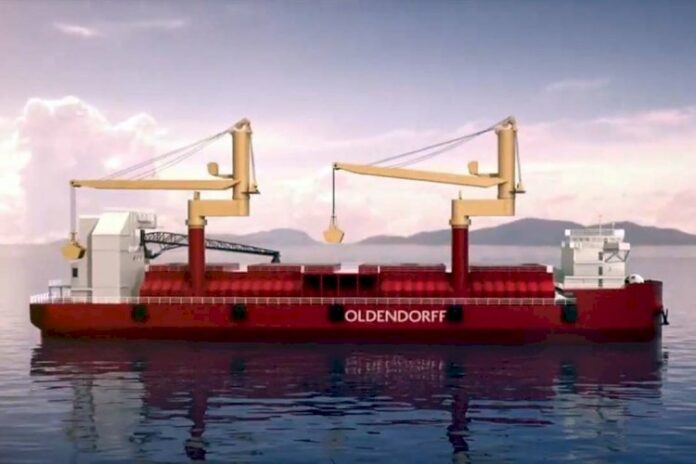
This is the next generation of shallow draft Transloaders, a purpose built shallow draft self-loading and self-unloading vessel (2 units):

* 18,000-tdw each
* Installed fenders on starboard side
* Crane SWL 35 Tons with outreach 46 m
* 2 X Bow Thruster 1200kW & 2x Azipod 1900kW
* Gravity self discharing system with a rate up to 2.500 t / hour
* Discharging boom ouotreach 35m
* Crane discharge rate up to 1.300 t / hour
* Eco features for sustainability 

Oldendorff has established a JV company together with Haivan Shipping Services Corporation and Continental Co., Ltd to provide transshipment services and delivery of cargo for NS2PC in Vietnam. 

These large capesize vessels will transport about 4.1 million tonnes of cargo per year from 5 Indonesian ports to a deep-water anchorage about 11 miles from the NS2PC location. Two purpose built 18,000-tdw shallow draft self-loading and self-unloading vessels will shuttle the cargo from the anchorage to the power station jetty.

The vessels will self-load from the capesize vessels using deck cranes and then transport the cargo to the NS2PC jetty where they will self-unload the cargo using a gravity feed belt conveyor system to feed a hopper on the jetty. The system has been designed to be both efficient and environmentally friendly.

ST Engineering iDirect, Paratus, KNS bring connectivity to African mining ships

0

ST Engineering iDirect, a company of ST Engineering North America, has announced that its long-term customer Paratus, a pan-African telecommunications group which provides satellite connectivity across Africa, has deployed its iDirect modems with marine antenna from manufacturer and integrator KNS Inc., to provide reliable, high-speed connectivity to mining ships based in Guinea, West Africa.

The vessels and their crew require constant and reliable communications to keep in permanent contact with their headquarters on land, and with other shipping vessels during operations at the Boffa port in Guinea, where 3G/4G connectivity is poor and internet services are limited.

The ships were installed with the iDirect modem and KNS 1.2m Maritime Antenna Z12Mk2 in Shanghai, China, enabling bandwidth-intensive applications including video, email and WeChat to be run. Paratus remotely configured the modems and commissioned the antennas for the ships when they arrived in Boffa. Commissioning is completed with the ships being operational.

Colwyn van Rensburg, Chief Development Officer at Paratus, said:

“We are pleased to be working alongside our long-term partner ST Engineering iDirect as we continue to address poor connectivity issues that currently affect Africa. The work we have undertaken has more than satisfied our customer, and the company is looking to implement further connectivity for its offices in the future. We look forward to our continued success together.”

EZ Gao, Manager of Asia and MENA at KNS, commented:

“Our collaboration with ST Engineering iDirect stretches back for over a decade. We already have plans in place to expand our collaboration to the market, building upon this very strong foundation to drive expansion towards more price-sensitive customers in certain market segments and regions to enable this kind of mission-critical connectivity at sea.”

Pieter-Paul Mooijman, Regional Vice President for Africa at ST Engineering iDirect, said:

“We are excited to extend our relationship with Paratus, whom we have worked with for many years to provide data rates and multi-service capabilities to their customers. Paratus is already utilizing ST Engineering iDirect hubs to power connectivity in Angola, Namibia and South Africa. This collaboration further demonstrates how satellite is an effective and reliable form of connectivity for traditionally hard-to-reach locations, with the versatility to serve diverse markets and applications.”

ClassNK releases “Guidelines for Digital Smart Ship”

0

Leading Classification Society ClassNK released its “Guidelines for Digital Smart Ship” which stipulates the procedures for class notations for ships with advanced digital technology. 

The “Digital Smart Ship Guidelines” set out the requirements to grant class notations, “Digital Smart Ship”, for the ships equipped with systems utilizing digital technology, such as energy efficiency analysis, hull or machinery monitoring, sloshing detection and prediction, onboard data processing and data transmission to shore, routing/speed optimization and remote monitoring/operation.

ClassNK is going to add and update the guidelines in response to future industry needs and advances in digital technology so that the society continuously supports the industry’s efforts to promote and develop innovative technology.

The guidelines are available to download free of charge via ClassNK’s website www.classnk.com for those who have registered for the ClassNK “My Page” service. 

Accel-KKR makes majority growth investment in NAVTOR

0

NAVTOR, the leading provider in navigational software for the maritime industry, today announced that it has received a majority growth investment from Accel-KKR, a leading global software-focused investment firm headquartered in Silicon Valley.  

The investment also marks Accel-KKR’s 42nd completed investment in the EMEA region since 2013 when it established a European headquarters, making Accel-KKR one of the most active software private equity firms in Europe and specifically, Scandinavia. It also marks Accel-KKR’s 15th completed investment globally since the second half of March 2020.

NAVTOR is the world’s leader in cloud-based e-navigation solutions including Electronic Navigational Charts (ENCs), digital maritime publications, route optimization and fleet management across an integrated platform – effectively providing all critical voyage information at the fingertips of navigators and solving the complex challenges of passage planning. The global maritime e-navigational industry is on a multi-year technological expansion in large part due to new regulations, an increased focus on safety and ESG goals and advances in technology.

Tor Svanes, CEO and Founder of NAVTOR, said:

“The entire NAVTOR team is very excited to work with Accel-KKR in our continued momentum as a leader in the e-navigational space. Through a relentless focus on serving the needs of commercial seafaring fleet managers and navigators, we have built a superior technological offering with an industry-leading reputation for customer service and support. We look forward to writing NAVTOR’s next chapter together with the AKKR team.” 

Børge Hetland, Chief Commercial Officer and Co-Founder of NAVTOR added:

“With Accel-KKR’s backing, we see tremendous opportunities to take NAVTOR to the forefront of our industry, and to further serve our customers with a total ship operations platform – from navigation excellence to fleet optimization and crew performance. Specifically, we are very excited to be working with Accel-KKR given their breadth of software-specific and M&A capabilities to accelerate NAVTOR ‘s growth.”

Maurice Hernandez, Head of the European office at Accel-KKR, said:

“The sheer size of the global maritime industry and the continuing digitization of fleets bode well for the future of NAVTOR. Pairing NAVTOR’s mission-critical software and the deep domain expertise of its management team with AKKR’s know-how in accelerating growth in software companies will lead to exciting outcomes for the marketplace and customers. We look forward to working closely with the NAVTOR team in the coming months and years.”

Accel-KKR partnered with Crescent Capital Group LP via its European Specialty Lending strategy on financing for this investment.

ABG Sundal Collier served as M&A and debt advisor to Accel-KKR.  Brodies LLP, Kirkland & Ellis and Selmer served as legal advisors to Accel-KKR. Pareto Securities and Advokatfirmaet Schjødt AS served as M&A and legal advisors, respectively, to the sellers.

Equinor completes world’s first logistics operation with a drone to an offshore installation

0

Arne Sigve Nylund, Equinor’s executive vice president for Development and Production Norway, says:

“Development is rapid, and we see a huge potential within drone technology that could transform the way we operate, both under and above the sea surface. Equinor aims to lead the way in utilising new technology on the Norwegian continental shelf.

Drones could reinforce safety, boost production efficiency and contribute to lower CO2 emissions from Norwegian oil and gas. Drones will also play a role as we shape new energy solutions on the Norwegian shelf.”

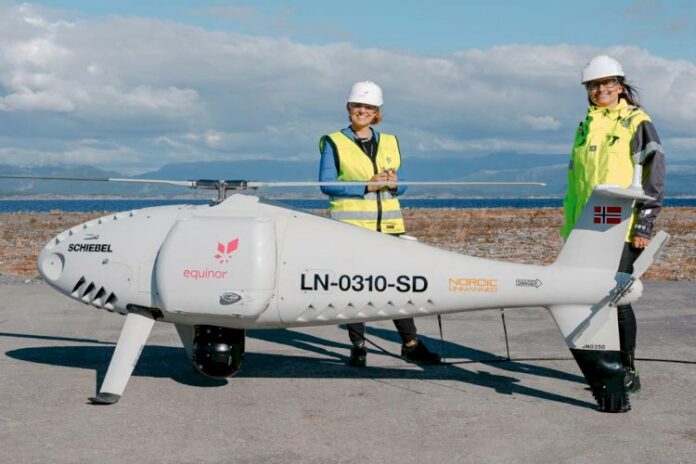
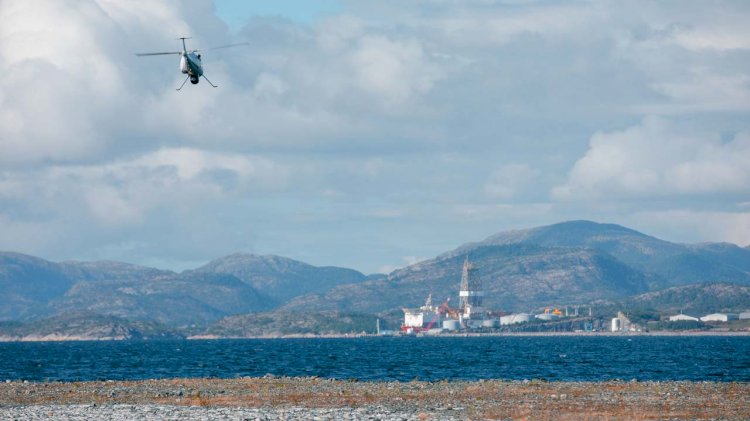
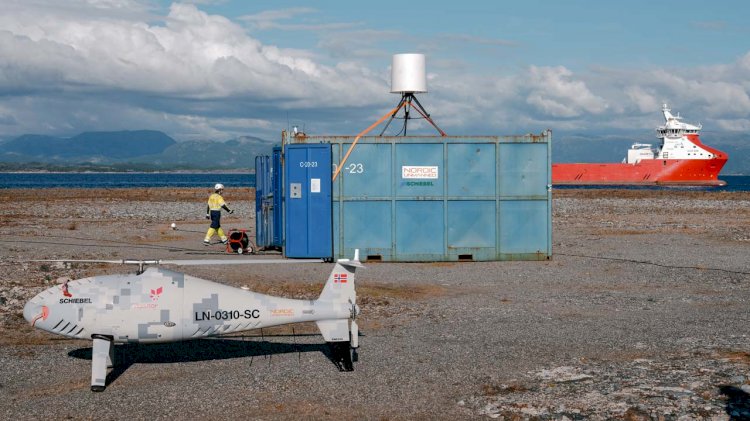
The flight spanning around 80 kilometres to the Troll field took about one hour, at an altitude of approx. 5000 feet. The flight was a test, the world’s first of its kind, where an actual freight operation was conducted over a lengthy distance to an operating offshore installation. The drone was a Camcopter s-100 model, manufactured by Schiebel.

This type of drone has been thoroughly tested and has logged around 70,000 flying hours from other types of operations within the defence and coast guard services. The drone is more than four metres long and weighs in excess of 100 kilograms. It has a cruising speed of more than 150 km/h and it can carry cargo weighing up to 50 kg.

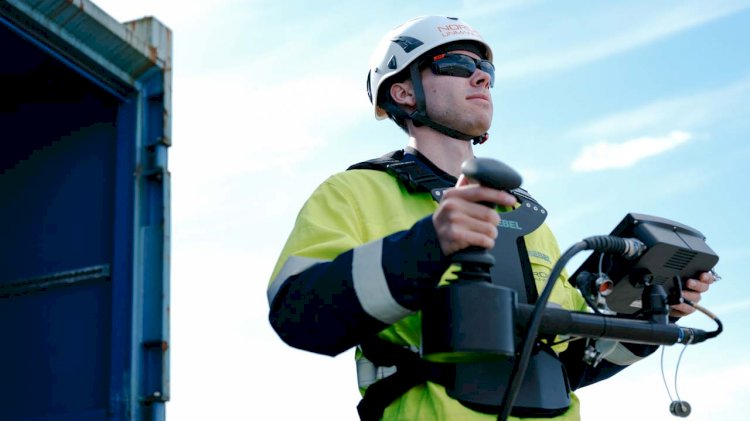
The operator of the drone is the Sandnes-based company Nordic Unmanned, a leader in drone services in Europe. Equinor and the drone operator have enjoyed good cooperation with the Civil Aviation Authority, Avinor Air Navigation Services and the Norwegian Communications Authority in completing this ground-breaking transport operation.

Alena Korbovà Pedersen, who heads the work on developing logistics solutions in Equinor, says:

“Over the longer term, we expect to see new infrastructure for logistics and support operations, which can reinforce what we already have within vessels and helicopters. If we are to develop the logistics solutions of the future on the Norwegian shelf, where drones could play an important role, we must cooperate across all of the industry’s players; operating companies, suppliers, the authorities and the trade union and safety interests.”

In addition to conducting logistics operations, airborne drones can also be used for inspections and observations of the technical condition of our offshore installations and onshore facilities. They have extremely advanced camera equipment and can be used in search and rescue operations, for example to locate people who have fallen into the sea, or for early detection of pollution on the sea. These abilities were also tested during yesterday’s flight.

Drones will also play a role in new energy solutions on the NCS. Drones can inspect wind turbines, deploy equipment to be used by personnel performing maintenance and repairs, and they can deliver critical parts, fast. Using drones will also enable us to avoid some vessel lifts that can be both more costly and leave a greater environmental footprint.