3.7 C
New York
Home Blog Page 786

COS Master signs a contract for the building of a new type of vessel

0

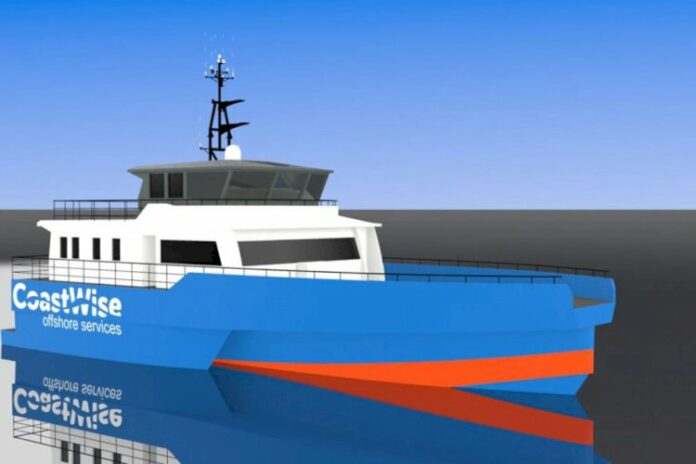
The signing took place at Next Generation Shipyards on Lauwersoog (the Netherlands). The contract involves a special new type of vessel which combines the stability of a catamaran with the speed and fuel efficiency of a monohull. The building of the vessel was at the initiative of Coastwise Offshore Services, the new shipping enterprise owned by Messrs Eelko Wijdieks, Douwe van den Berg and Onno Nienhuis. The project also gives a significant impulse to the province of Groningen. 

A new, Lauwersoog-based shipping company which applies itself to the offshore wind industry, an innovative, homebuilt vessel, and an investment of € 5 million – the harvest of more than 20 months of enthusiasm, dedication and faith in a lasting future. And the festive climax: the signing of a contract between shipping company COS Master and the Groningen shipbuilder Next Generation Shipyards in Lauwersoog for the building of an offshore service vessel. Harlingen-based SeaZip Offshore Service will be responsible for the commercial management of the vessel.
Shipping entrepreneurs Messrs Eelko Wijdieks and Douwe van den Berg, who have operated in the dry cargo market for years, are extending their operations to the offshore energy market. Everything fell into place after they had contacted Mr Albert Keizer, the Managing Director of Next Generation Shipyards, and the Ondernemershuis Noord-Groningen.

Says Douwe van den Berg from Coastwise:

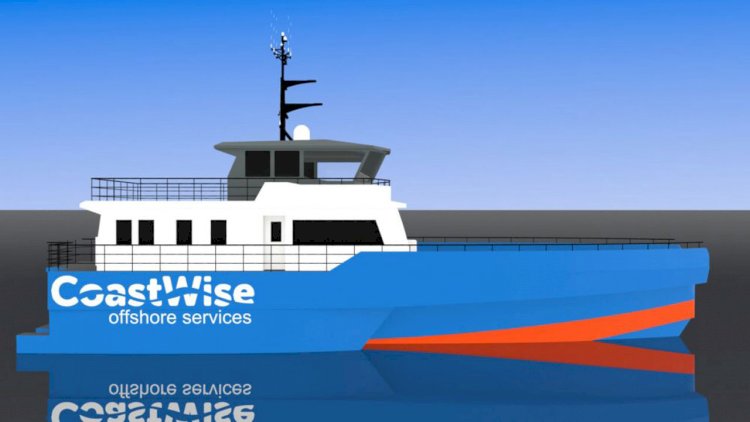
“For quite some time already, Albert Keizer intended to design a crew tender himself. Our plans complemented one another well. In close collaboration with marine architect Fred van Dorresteijn (VDD Design, Dordrecht), Next Generation Shipyards succeeded in translating our basic principles into an unparalleled vessel design. The design provides the stability of a traditional catamaran and the speed and fuel efficiency of a monohull, which implies ultimate comfort combined with the best possible performance. Absolutely the best of both worlds”.
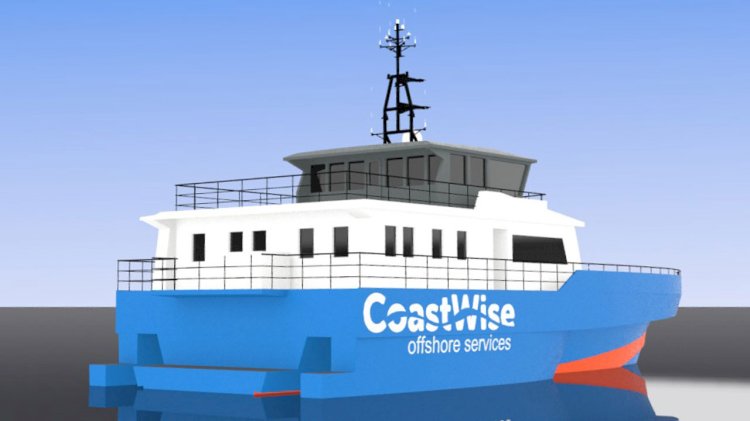
This combination is reflected in the name under which the new type of vessel is put onto the market: 30 Pax Monomaran Crewtender- Endurance class NG2727. The vessel will be delivered to Coastwise December next year and sail under the name of COS Master. The aluminium vessel is over 27 metres long, provides ample and comfortable room for 30 passengers and can carry a load of 15 to 22 tons. It will be fitted with a deck crane. Its cruising speed is 27 knots. The design is innovative and sustainable, which means that Next Generation Shipyards presents a concept which appeals to the market and symbolises the role which the Groningen region wishes to play in the field of energy transition and renewable energy.

Once the vessels have been completed, Coastwise Offshore Services will outsource the commercial management of the Monomaran Crewtender to SeaZip Offshore Service in Harlingen. Over the past decade, SeaZip has built up a substantial network in the offshore wind, oil and gas industry, both in Northern Europe and elsewhere in the world.
Yang Ming extends Japan-Taiwan-South China express to Southeast Asia

0

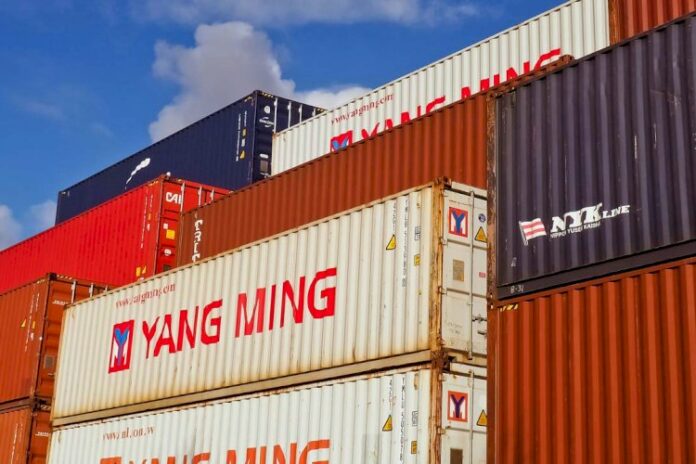
Yang Ming Marine Transport Corp. (Yang Ming) continues to expand its Intra-Asia service network by extending Japan – Taiwan – South China Express (JTS) to Malaysia, Singapore, and the Philippines. The upgraded JTS service will be effective from 21st October, 2020 (Estimated Time of Berth from Nagoya).

The extended JTS service will employ four 2,800 TEU class vessels on a 28-day round trip schedule. The revised port rotation will be Nagoya – Tokyo – Chiba – Yokohama – Keelung – Kaohsiung – Hong Kong – Shekou – Port Kelang – Singapore – Manila South Port – Kaohsiung – Hong Kong – Shekou – Xiamen – Nagoya.

With the progress in the RCEP negotiations, the steady economic growth in the Southeast Asia region is highly anticipated. In light of the development, Yang Ming continues to strengthen its coverage in the area. The improvement of the JTS service will enable Yang Ming to optimize its competitiveness between Japan, Taiwan, South China, and Southeast Asia.

Furthermore, the linkage of Yang Ming’s main port, Kaohsiung, and transit hubs of Southeast Asia, Port Kelang and Singapore, will complement current offerings in Southeast Asia and provide an easy connection with Yang Ming’s global service network.

Port of Great Yarmouth to benefit from Offshore Energy Investment funding

0

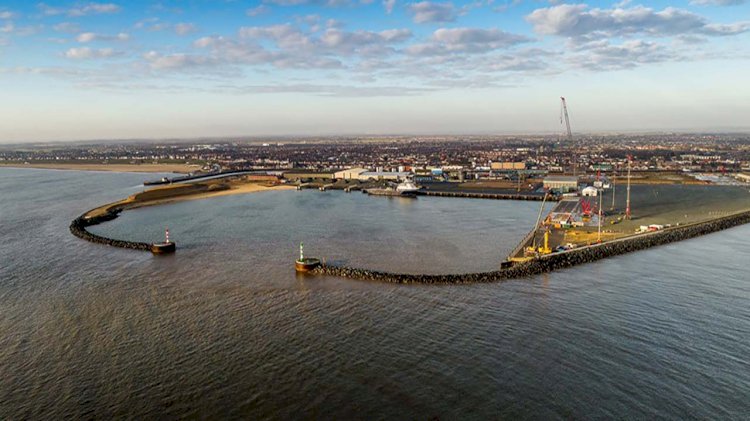
Working with rejuvenated parts of land owned by Great Yarmouth Borough Council and Peel Ports Great Yarmouth, it is a positive response showing plans for investment within East Anglia and for the Offshore Wind Sector.

The funding is part of an overall £32 million awarded to 13 organisations across Norfolk and Suffolk from the Government’s £900 million ‘Getting Building Fund’ to help deliver jobs, skills and infrastructure as part of the post-pandemic recovery.

The site, which will be located at the entrance of River Yare will have a closer proximity to the Southern North Sea Offshore Energy developments and will reduce O&M costs and maximise efficiency of supporting activities. The site will also be within close proximity to Great Yarmouth’s Outer Harbour, giving clients access to deep water as well as the river port, making this attractive to O&M businesses looking to invest in the new site.

An estimate by NCC suggests that 650 new jobs are expected to be located at the new campus.

The Southern North Sea has the largest concentration of offshore wind projects in the world and majority of them sit within 100 miles of Great Yarmouth Port. The Port has more than 50 years’ experience in delivering major offshore projects and has invested approx. £12 million upgrading its quays, equipment and storage areas to support the industry.  With these investments the Port was selected to act as the marshalling harbour for the Galloper Windfarm and more recently the EA1 windfarm that became fully operational this year.

EA1 Windfarm saw 102 turbines being installed in the Southern North Sea with capacity to generating 714MW of Green Power.  That is enough to power approx. 630,000 UK homes.

With further Windfarm projects in the pipeline it is estimated that an approx. 6.4GW capacity is still yet to be installed just off UK’s Norfolk and Suffolk coast, powering in the region of 5.6 million UK homes with Green Energy. 

Richard Goffin, Port Director at Peel Ports Great Yarmouth, said:

“The offshore energy sector is a huge opportunity for the region, with the UK targeting a third of electricity to be produced by offshore wind power by 2030.

At Great Yarmouth, we have continually invested in our facilities to ensure we are well positioned to deliver large-scale offshore projects, whether that’s assisting with the construction and assembly of new larger windfarms or the decommissioning of old oil and gas platforms.

The new funding will allow us to achieve the next milestone of upgrades at the port and ensure Great Yarmouth remains at the forefront of the offshore sector. We are grateful to be one of the two projects awarded funding in Norfolk and will work closely with Norfolk County Council to create a specialised hub for O&M businesses.”

Announced in June, the Government’s Getting Building Fund will support over 300 successful projects in England including housing and infrastructure, creating jobs and supporting economic recovery following the Covid-19 pandemic.

In Norfolk and Suffolk alone, the new projects delivered by the funding will create 1,100 new jobs, safeguard more than 2,900 jobs and unlock a further £85 million of private and public sector investment.

Under the Government’s criteria, projects must be deliverable within 18 months and link with the region’s Economic Strategy, Economic Recovery Restart Plan and the Government’s Recovery Plan. 

APM Terminals Apapa deploys scalable 4G wireless network

0

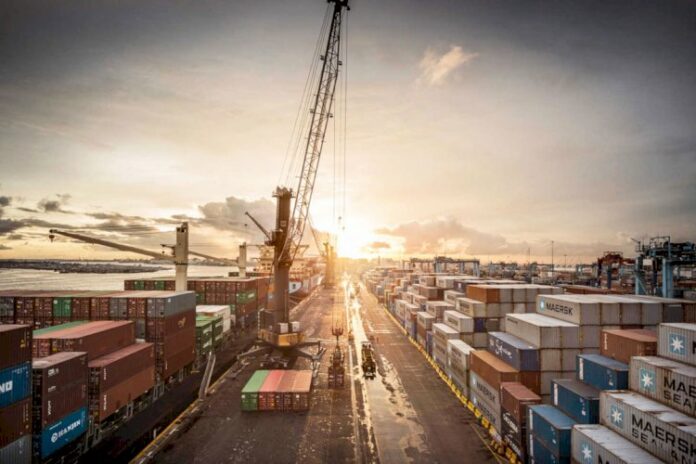
Wireless connectivity supports APM Terminals’ global initiatives such as the standardisation of Terminal Operating Systems, reporting and support; Asset Digitalization; and GPS based Position Detection Systems used for auto-locating containers in a yard. 

4G LTE (Long-Term Evolution) is a standards-based network that uses radio equipment to service the terminals applications and services and can be tailored to process a very high volume of data messages with minimal delay. The base station allows it to be independent of traffic peaks in the wider network. 

A secure VPN tunnel is used as an encryption mechanism to segregate APM Terminals data from general carrier data to ensure compliance with the company’s global security requirements.

The existing Wi-Fi network at APM Terminals Apapa could no longer support roaming container handling equipment such as Terminal Trucks, Reach Stackers and Empty Handlers. Frequent changes in yard topography and long distances between mounting points for radios were adversely affecting signal coverage. The Wi-Fi network also suffered from interference from radios in nearby facilities and vessels and interference from uncontrolled radio transmission power which is an issue in this part of the world.

The new 4G LTE connectivity solution, which has already been tested and rolled out at other APM Terminals locations, meets ground level coverage and performance requirements in the entire yard with three dedicated sectors for APM Terminals and limited infrastructure deployment at terminal. 

APM Terminals Nigeria Country Manager, Klaus Laursen says:

“In recent years, APM Terminals Apapa has embarked on massive digitization of its operations and services. This is in keeping with APM Terminal’s global transformation drive. Our customers can expect greater efficiency and higher productivity with the deployment of the 4G wireless network, as it will allow for better collaboration in our terminal operations.” 

Other benefits of the network include improved wireless coverage in the yard for roaming container handling equipment (CHE), eliminate loss of critical TOS updates (missing yard containers) resulting in revenue loss, real time tracking of CHE, and improved safety for terminal employees.

An optimized, standardized, cost effective, and security compliant Industrial Wireless connectivity solution, the 4G LTE network is scalable to meet future terminal requirements. Ultimately customers will benefit from improved operations -Truck Turn Around Time (TAT), terminal efficiency and stability.

Giant icebreaker pulls into Netherlands for final fit-out

0

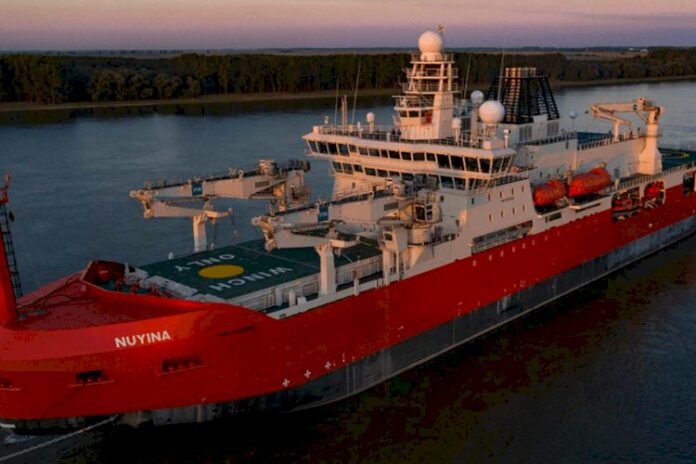
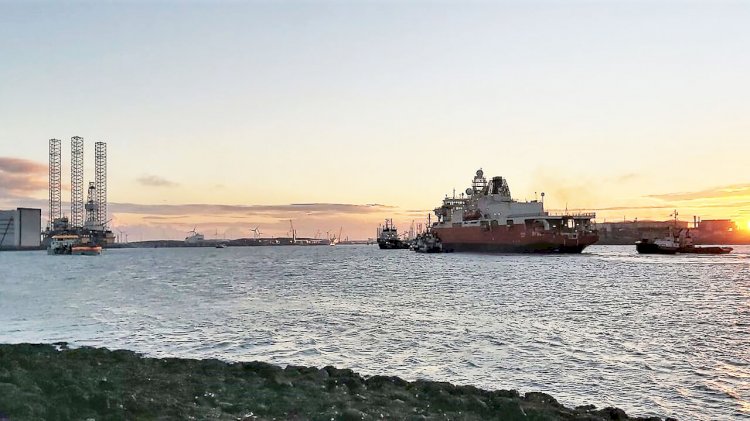
The relocation of the ship to Damen’s Vlissingen shipyards from Romania, where work was suspended due to COVID, will enable equipment manufacturers to check and test the installation of its complex systems.

Australia’s Minister for Environment with responsibility for the Antarctic Division, Hon Sussan Ley, thanked shipbuilders Damen, operators Serco and the AAD’s Icebreaker Project team for working together to deliver an exceptional ship.

Minister Ley said:

“From an original concept designed in Denmark, the icebreaker has been brought to life by a Dutch company in a Romanian shipyard for the Australian Government – Nuyina is already a multinational vessel. Construction of the icebreaker has been much like an Antarctic expedition – a test of courage, critical thinking and international cooperation.”

The ship was towed to the Netherlands because it needs to undergo sea trials before the issue of regulatory certificates required to conduct international voyages under its own power.

Photo: Mark de Wolf

After sea and ice trials, the ship is expected to be delivered to its owners the Australian Antarctic Division, in its home port of Hobart, in mid-2021.

AAD’s General Manager of Assets and Infrastructure, Rob Bryson, said Nuyina will be one of the most capable scientific research vessels in the world. He siad:

“Nuyina is really three ships in one – a world-class scientific research platform, a highly capable icebreaker, and a resupply vessel with three times the cargo capacity of its predecessor. The ship’s construction during a global COVID crisis is testimony to the ways teams have adapted and innovated, and her long journey through the Black Sea, the Mediterranean Sea and the North Atlantic to the Netherlands is a tribute to the flexibility of the teams involved.” 

The Australian Antarctic Division has chartered an interim vessel, the ice-strengthened MPV Everest, to resupply Australia’s Antarctic stations and sub-Antarctic Macquarie Island this summer.

Westerschelde Ferry BV and the OOS Group are joining forces

0

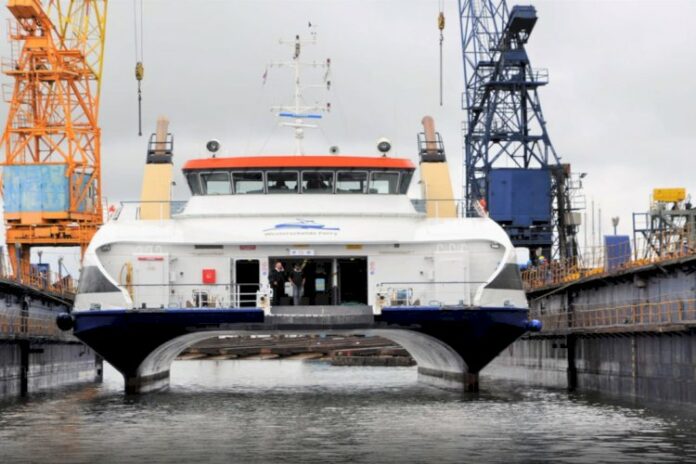
The contract details the agreements regarding the collaboration in which the OOS Group will support WSF with the (technical) management of both ships.

In recent months OOS has already provided support to WSF. For example, last June WSF and OOS docked the Princess Maxima for a necessary repair on both rudders. The ship was brought back into service on time and well within budget, creating significant savings in docking alone.

During this period an honest and transparent environment was established, resulting in mutual trust and the decision to continue in contractual form.

Raymond Winterswijk (Director Westerschelde Ferry BV) said:

“WSF is a relatively small organization, which is limited in its capacity and possibilities. With the cooperation with OOS we can use their extensive expertise, experience, network and capacity. It is therefore expected that this will enable us to achieve significant savings on the maintenance costs of our ships.”

Leon Overdulve (CEO OOS Group) said:

“OOS is extremely honored to receive the confidence of the entire WSF team. In recent months we have experienced a fun and down-to-earth cooperation in Zeeland, which has also saved a lot of money. Over the years we have invested a lot in people, offshore/ship management software, systems, procedures, etc., so including these two ferries was easy to do. In Serooskerke alone we have over 1000 man-years of offshore/ship management experience and it is nice to be able to support the WSF which is just ten kilometers away from our offices.”

Research: Sea ice loss is accelerating in the Eastern Arctic Ocean

0

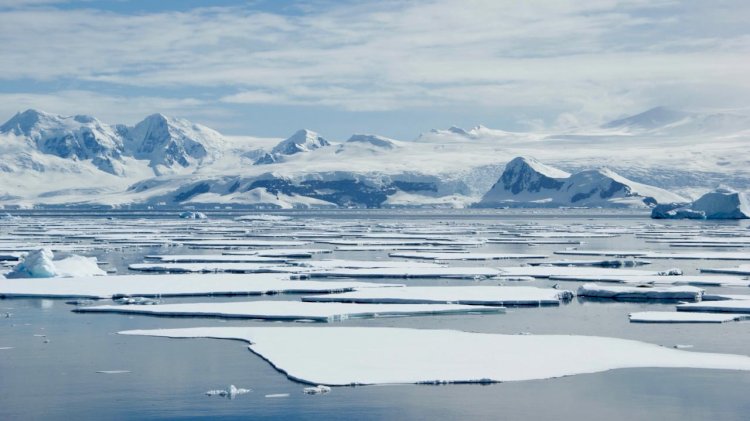
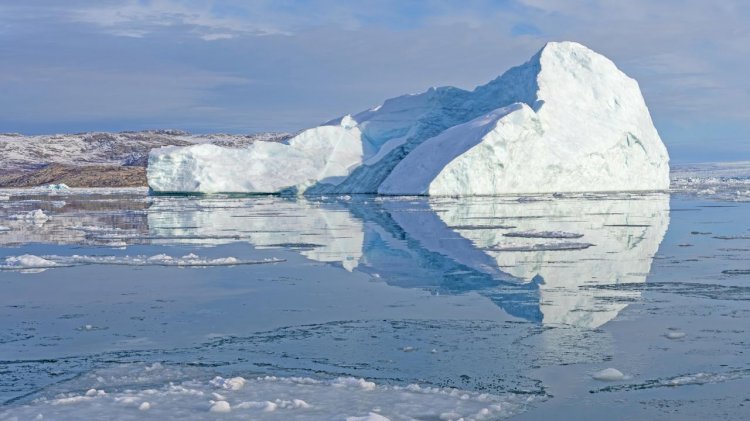
New research has shown that the eastern Arctic Ocean has experienced an over two-fold reduction of winter sea ice growth over the last decade due to the growing influence of heat from the ocean’s interior.

The finding came from an international study, led by the University of Alaska Fairbanks and Finnish Meteorological Institute together with Bangor University and others, which used data collected by ocean moorings in the Eurasian Basin of the Arctic Ocean from 2003-2018.

The moorings measured the heat released from the ocean interior to the upper ocean and sea ice during winter. In 2016-2018 the estimated heat flux was 10 watts per square meter, which is enough to melt 80-90 centimeters of sea ice each year. This is more than double that estimated over previous winters.

Lead author Igor Polyakov, an oceanographer at UAF’s International Arctic Research Center and FMI, said:

“In the past, when weighing the contribution of atmosphere and ocean to melting sea ice in the Eurasian Basin, the atmosphere led. Now for the first time the ocean leads. That’s a big change.”

Professor Tom Rippeth from Bangor University’s School of Ocean Sciences, a co-author, added further comment:

“These new results show the growing and spreading influence of heat associated with Atlantic water entering the Arctic Ocean. They also suggest a new feedback mechanism is contributing to accelerating sea ice loss.”

Typically, across much of the Arctic a thick layer of cold fresher water (a halocline) isolates the heat associated with the intruding Atlantic water from the sea surface, and from sea ice.

This new study shows that an abnormal influx of salty warm water from the Atlantic Ocean is weakening and thinning the halocline allowing more mixing. According to the new study, the warm water of Atlantic-origin is now moving much closer to the surface.

Polyakov explained:

“The normal position of the upper boundary of this water in this region was about 150 meters, now this water is at 80 meters.”

A natural winter process is further extenuating this mixing. As sea water freezes, the salt is expelled from ice into the water. This brine-enriched water is heavier and sinks. In the absence of a strong halocline, the cold salty water mixes much more efficiently with the shallowing, warm Atlantic water. This heat is then transferred upwards, to the bottom of sea ice, limiting the amount of ice that can form during winter.

Polyakov emphasized:

“Winter mixing associated with sea ice formation reduces the rate of sea ice growth dramatically.”

Polyakov and his team hypothesize that the oceans ability to control winter ice growth is a new feedback mechanism for sea ice loss in the Arctic. In this feedback, both declining sea-ice and the weakening halocline barrier cause the ocean’s interior to release heat to the surface resulting in further sea ice loss. The mechanism augments the well-known ice-albedo feedback — which occurs when the atmosphere melts sea ice causing open water, which in turn absorbs more heat, melting more sea ice.

When these two feedback mechanisms combine, they accelerate sea ice decline. The ocean heat feedback limits sea ice growth in winter, whilst the ice-albedo feedback more easily melts the (thinner) ice in the summer.

Polyakov said:

“As they start working together the coupling between the atmosphere, ice and ocean becomes very strong, much stronger than it was before. Together they can maintain a very fast rate of ice melt in the Arctic.”

This research was described in a scientific paper published in the Journal of Climate.

The contribution of co-authors Tom Rippeth (Bangor University, UK) and Markus Janout (Alfred Wegener Institute, Germany) were supported through the Changing Arctic Ocean Programme (PEANUTS project) jointly funded by UKRI NERC and the BMBF.

Allseas removes another ageing North Sea giant

0

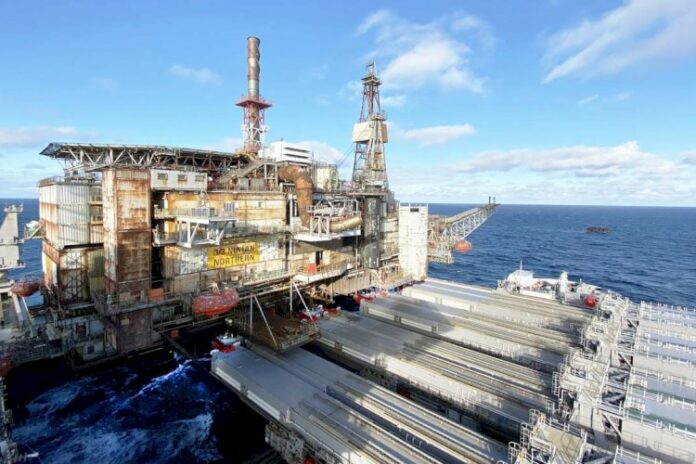
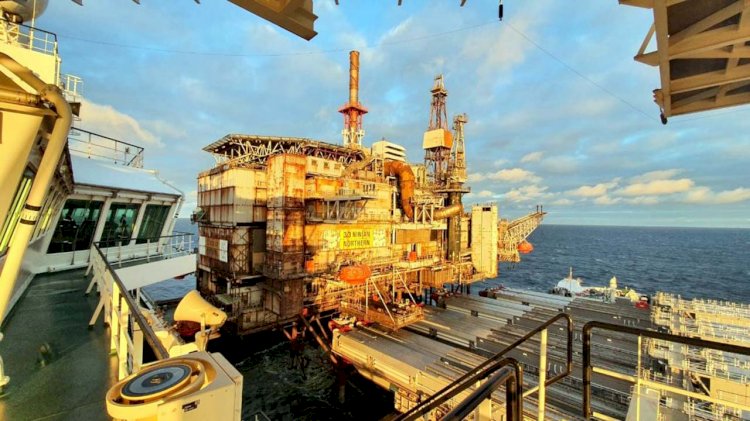
Allseas’ heavy lift vessel Pioneering Spirit has successfully completed her third and final decommissioning job of 2020, a single-lift removal of the North Sea’s 14,200 t Ninian Northern topsides for CNR International (CNRI).

Completed Friday morning, 28 August, the operation took approximately 2 hours, from connecting the vessel’s lifting beams to the platform to the lift, ensuring environmental emissions from the removal activities were kept to a minimum with the efficient vessel systems. The actual “fast lift” of the topsides took only 7 seconds.

Pioneering Spirit will now deliver the topsides to the Peterson-Veolia yard in Dales Voe, Shetland, for disposal. The facility will target over a 97% reuse/recycle ratio and create a number of jobs over the period the topsides is dismantled. The lift successfully concludes several months of offshore works to prepare the platform for single-lift removal.

Located in the North Sea, 160 km northeast of the Shetland Islands, the Ninian Northern platform comprised topsides modules for drilling, production and accommodation, supported by an eight-legged jacket standing in 140 m water depth. The eight steel legs were cut during a second phase of preparations in 2019.

Pioneering Spirit will return to the Ninian field in summer 2022 to remove the supporting jacket structure. After transfer and load-in of the Ninian Northern topsides at Dales Voe, the vessel will sail to Rotterdam, the Netherlands, for Jacket lift system installation works and to prepare for upcoming projects. 

VoltH2 prepares to build a green hydrogen plant in North Sea Port

0

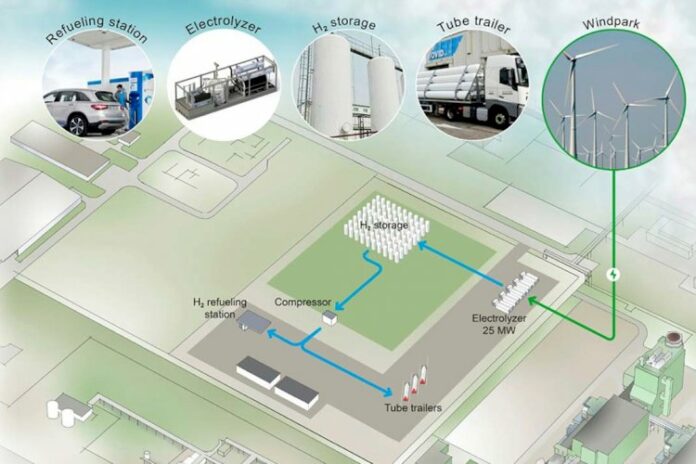
VoltH2 B.V. has signed a cooperation agreement in preparation of a long-term concession contract with North Sea Port for an industrial plot covering 27,950 m2 in Vlissingen. The company has started planning and developing the construction of a green hydrogen plant with storage, refuelling and distribution facilities. The agreement also provides for the possible construction of a pipeline to a tanker transfer point.

VoltH2 envisages the construction of a 25 MW electrolysis unit using proven, commercially available technology. The plant will produce up to 3.6 million kg (3,600 tonnes) of green hydrogen annually. By integrating hydrogen storage, local filling stations can also be supplied, thus contributing to increased sustainability for North Sea Port. The design of the green hydrogen plant will allow for an expansion of up to 100 MW with a potential production of 14.4 million kg (14,400 tonnes) of green hydrogen per year.

The site is accessible by road, rail and waterway for the supply and distribution of green hydrogen in the wider area or to the gas network. The investment for the first phase is budgeted at €35 million, subsequently rising to more than €100 million.

The site is strategically located in Vlissingen, next to the existing Sloe gas-fired power station and close to other important industrial companies that will start using green hydrogen in the future in addition to grey and blue hydrogen. VoltH2 is also examining the feasibility of a truck transport point exclusively for the use of hydrogen.

Andre Jurres, founder and CEO of the company, says:

“With the signing of this agreement with North Sea Port for our first site in Vlissingen, we are giving the starting signal for the expansion of VoltH2. We thank North Sea Port for their cooperation and support in the preparatory phase so that we can take this first step in the development of a green hydrogen hub in Vlissingen.”

André Jurres says:

“The idea of using available commercial green hydrogen is one of the keys to the global energy transition aimed at reducing the use of fossil fuels and is rapidly becoming an economic reality. The COVID-19 crisis has increased the focus on a CO2-free economy now that we see how quickly nature responds positively to a slowdown in economic activity.”

The Netherlands has medium-term and long-term climate targets, including green hydrogen, to reduce its carbon footprint by 49% by 2030 and by 95% by 2050.

Daan Schalck, CEO North Sea Port, says:

“VoltH2’s investment in a green hydrogen plant is in line with the energy transition that North Sea Port is working on with many partners. It also contributes to the port’s development as an Energy Port. The power station will also makes it possible to further develop North Sea Port as a multimodal port, with transport of hydrogen by road, rail and water.”

Andre Jurres says:

“VoltH2 is already in discussions with various companies on the supply of green electricity to the site, including long-term supply contracts. Other potential partners that anticipate using green hydrogen as part their future energy mix are always welcome.”

DNV GL and DHSC cooperate to develop small-size LPG carriers

0

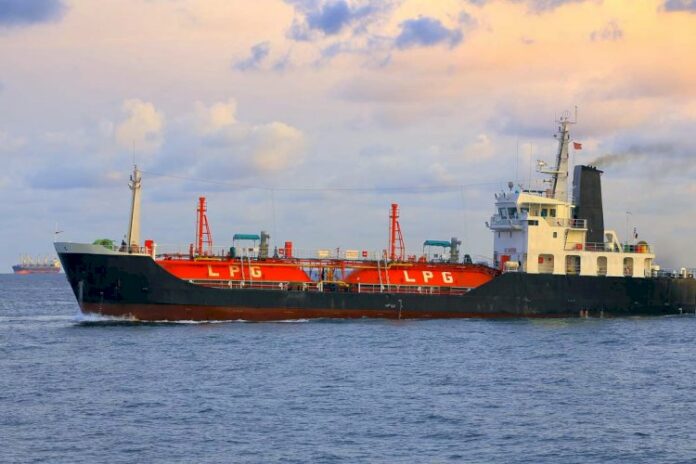
DNV GL entered into a Joint Development Project (JDP) with Daehan Shipbuilding Co., Ltd. (DHSC) to develop small-size LPG carriers. Mr. Dae-Seong Jeong, DHSC President & CEO, and DNV GL’s Hwa Lyong Lee, Regional Business Development Manager Korea & Japan, signed the JDP in the DNV GL office in Busan.

With the agreement, DNV GL and Daehan Shipbuilding will jointly develop small-size LPG carriers. The JDP process will commence from early September 2020 and is scheduled to be completed by the end of December 2020. 

Due to tightened emission regulations and a shale gas boom, the demand for LPG and LNG carriers is expected to increase. A hike in freight rates also stimulates the growth in LPG carrier orders. To keep pace with this industrial trend and seize opportunities, DHSC has decided to diversify its ship type lines and start to develop LPG carriers. 

Mr. Jeong of DHSC said:

“DHSC already established its position as a reliable shipbuilder with the capability to build different ship types other than gas carriers. As the industry is changing rapidly, we are now strengthening our competitiveness by developing LPG carriers and show our technological competence to ship owners.”

DNV GL will review the basic and detailed designs for the vessels in accordance with the relevant rules and regulations as well as provide technical advice and recommendations to help enhance the design development.

Vidar Dolonen, DNV GL Regional Manager Korea & Japan, said:

“For decades, DNV GL has led the way in the gas carrier segment, working in partnership with stakeholders to improve vessel performance. We are the most appropriate partner for DHSC’s new challenge, and we anticipate a fruitful result for both parties.” 

About one fifth of the global gas carrier fleet is sailing with DNV GL class, totaling 18 million GT. To serve the growing demand for gas transport and storage, DNV GL recently established a Gas Carrier Excellence Center that is working closely with the industry to foster the development of new gas technologies by applying established rules and standards.