3.6 C
New York
Home Blog Page 785

LR and Methanol Institute launch guidance on methanol bunkering.

0

As stakeholders across the maritime industry assess future fuel options in support of the International Maritime Organisation’s 2030 and 2050 greenhouse gas reduction ambitions, LR and the Methanol Institute have produced a Bunkering Technical Reference on Methanol, which is among the future fuels receiving close attention.

The new guidance outlines the procedures required for the safe bunkering of methanol and incorporates dedicated checklists to assist shipowners/operators, ports, bunker suppliers and other stakeholders with safe storage and handling.

Methanol is already in use as a marine fuel on several vessel types. Compared with traditional heavy fuel oil options, its sulphur-free characteristics and lower GHG emissions than conventional fuel can support owners with efforts to meet IMO2020 regulations.

As a low-flashpoint fuel and a contact-hazardous product the partners identified the need for a Technical Reference that draws on the experience of industry players using methanol successfully on their vessels to offer clear and concise best practice for bunkering. Safely handled as a chemical commodity for decades, methanol’s more recent use as fuel calls for a detailed understanding of options for shoreside and barge delivery as well as onboard tank configuration.

Chris Chatterton, Methanol Institute Chief Operating Officer (COO), said:

“Methanol is increasingly seen as one of the candidate fuels to be used in the decarbonisation of shipping. It is already in use as marine fuel on tankers, bulkers, ferries and harbour craft. Its lower pollution and greenhouse gas emissions profile offers owners the opportunity to meet IMO2020 regulations and move towards IMO2030 compliance, whilst also gaining valuable knowledge towards IMO2050 ambitions.”

Douglas Raitt, LR’s Regional Advisory Services Manager, commented:

“The maritime industry is sizing up many decarbonisation options in its journey from low carbon to net zero. Methanol is among these and it offers a pathway that will enable owners to progressively lower their emissions’ profile while using conventional engine systems and technology to achieve net zero. This Technical Reference will support the industry with clear and useful advice around best practices.”

Currently methanol is usually produced by the steam reforming of natural gas, but as the simplest of the alcohols, it can also be made from various forms of biomass or waste materials, or even from the atmosphere itself, using CO2 from non-fossil fuel power sources alongside renewable hydrogen, thereby adding to its environmental pedigree.

One of the major attractions of methanol as a fuel type is that it has a single molecular structure, irrespective of production route – unlike, for example natural gas or petroleum-derived liquid distillate and residual fuels that each represent mixtures of a range of different hydrocarbon types – hence engines can be more tightly tuned since ‘fuel flexibility’ is required only for methanol and a pilot fuel such as MGO.

The International Organization for Standardisation is in the process of developing a methanol marine fuel grade specification and the regulatory process is moving towards final adoption of new rules for inclusion of low-flashpoint fuels into the IMO’s IGF Code.
ABS and Chevron Shipping launch Digital Journey

0

ABS and Chevron Shipping Company LLC have taken the first step in a pioneering digital fleet management journey with ABS Smart notations for vessels.

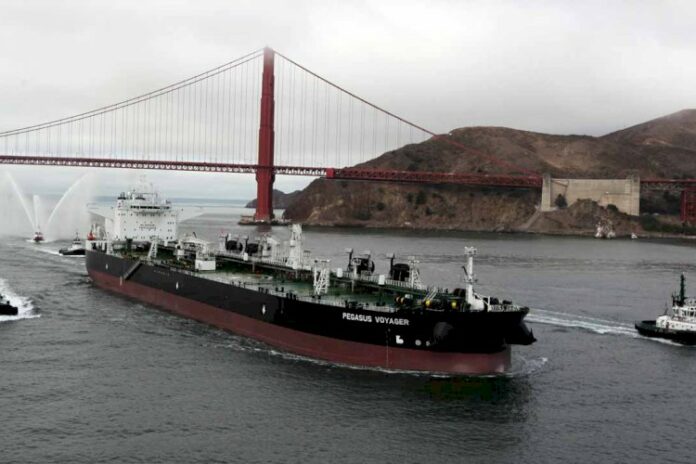
The Suezmax lightering vessel Pegasus Voyager is the first vessel in Chevron’s fleet to receive the ABS maintenance optimization notation SMART-MHM (Machinery Health Monitoring), with the Polaris Voyager on course to receive the notation soon with more vessels expected to follow. The Pegasus Voyager is the first ABS-classed vessel to qualify for the SMART-MHM notation.

It is just the beginning of ABS and Chevron’s journey to condition-based maintenance for the company’s fleet of 28 vessels. Chevron’s Asset Integrity team and the ABS Digital Solutions team are working closely on digital strategies to drive enhanced risk management, streamline the class interface and increase asset availability.

Kash Mahmood, ABS Senior Vice President, Digital Solutions, said:

“Together, ABS and Chevron are shaping the next generation of maintenance methodologies, delivering future class services and driving the evolution of maritime safety in a digital world. As a leader in maritime digital technologies, ABS is proud to be working with industry leaders such as Chevron to challenge traditional approaches and develop advanced services for the benefit of our clients and members.”

Steve Brady, Asset Integrity Manager, Chevron Shipping, said:

“We value the opportunity to partner with ABS and further utilize the investment Chevron Shipping has made with predictive maintenance tools. The ABS Smart Function approved technology provided by the DEI Group is installed on twenty of Chevron’s vessels and clearly demonstrating value. The system provides visibility into equipment health that is unavailable with any other monitoring systems allowing us to quickly identify and act on degrading conditions. Not only do these tools make our vessels more reliable, but they also reduce our costs by avoiding expensive equipment failures.”

Chevron has long been a leader in proactive maintenance, acquiring the PMP (Preventative Maintenance) notations for its fleet and utilizing a range of ABS remote survey services. The ABS SMART-MHM notation leverages Chevron’s investment in fleet sensor technologies to support remote analytics, utilizing machinery data for Class crediting. The notation allows ABS and Chevron to align maintenance strategies for the Pegasus Voyager and Polaris Voyager to specific condition-based survey approaches.

All foundations for Kriegers Flak Offshore Wind Farm installed successfully

0

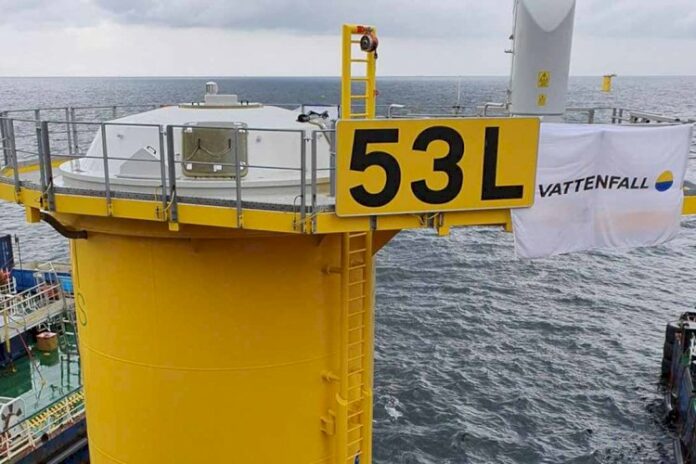
Although working under special circumstances due to Covid19, the installation of the foundations, which started in May, were completed on schedule in a little over three months.

Once completed, Kriegers Flak will be Denmark’s largest offshore wind farm with a capacity to cover the annual electricity consumption of approximately 600,000 Danish households.

Next major step in the project will be the installation of cables and turbines. Cable installation and testing is scheduled to be completed in November this year, and the turbine installation is expected to start in early 2021. This puts the wind farm on schedule to be in full operation by the end of same year.

Kriegers Flak is the latest and largest of Vattenfall’s recent offshore projects in Denmark. The others being Horns Rev 3, which was inaugurated last year, and Vesterhav Syd & Nord, which are scheduled to be in full operation by the end of 2023, at latest.

About Kriegers Flak Offshore Wind Farm:

  • With a production capacity of just over 600 MW, Kriegers Flak will be Denmark’s largest offshore wind farm
  • The offshore wind farm’s production can cover the annual electricity consumption in 600,000 Danish households
  • The 72 turbines have a total height of 188 metres and each monopile foundation weighs up to 800 tonnes
  • The wind farm is located in the Baltic Sea, 15-40 kilometres off the Danish coast

World’s first small-scale CO2 capture plant on vessel

0

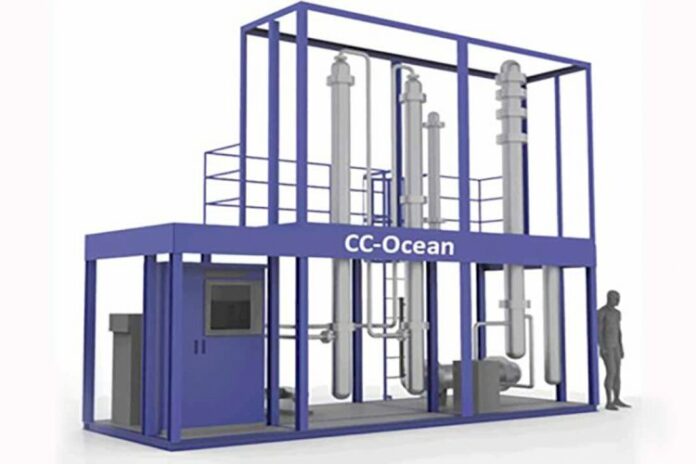
Kawasaki Kisen Kaisha, Ltd. (“K” Line) has announced it will deploy a small-scale, marine-use demonstration plant for CO2 capture onboard a vessel and conduct research and development on compact facility design, in collaboration with project partners Mitsubishi Shipbuilding Co., Ltd. (“Mitsubishi Shipbuilding”) and non-profit organization Nippon Kaiji Kyokai (“ClassNK”).

The project is supported by the Maritime Bureau of the Ministry of Land, Infrastructure, Transport and Tourism (“MLIT”) as part of its programs to support research and development for advancing marine resources technologies. With the support of MLIT, “K” Line will collaborate with Mitsubishi Shipbuilding and ClassNK to install a small-scale CO2 capture demonstration plant onboard its vessel, conduct test operations of the plant, and measure its performance.

The marine-use CO2 capture demonstration plant will be based on an onshore plant and designed to capture a portion of a vessel’s gas emissions. This project will not only verify the efficacy of capturing and storing CO2 from a vessel’s gas emissions, but also the operability and safety of CO2 capture facilities at sea. These demonstration tests are aimed at promoting the development of more compact equipment required by marine environments along with the development of system requirements necessary for stable continuous operation at sea.

The two-year project will begin in August 2020 with the launch of a HAZID (hazard identification) evaluation of the demonstration plant and deployment on vessels, with verification from ClassNK.

Mitsubishi Shipbuilding will begin development and construction of a small-scale CO2 capture demonstration plant and evaluation of system safety. In the middle of 2021, Mitsubishi Shipbuilding will begin test operation of the demonstration plant at its factory, followed by deployment of the plant on “K” Line’s CORONA UTILITY, a thermal coal carrier operated for Tohoku Electric Power Co., Inc. By the end of fiscal 2021, the project partners will start operating the demonstration plant on-board the vessel and measuring the system’s performance under marine conditions, with the aim of jointly developing a new marine system for vessels.

As the world’s first marine demonstration test, the project will provide invaluable insights into facilities design and technologies for capturing CO2 emissions and achieving zero emissions onboard vessels. Additionally, the captured CO2 is expected to be recycled as a new CO2 source for Enhanced Oil Recovery (EOR) processes or as raw material in synthetic fuel through methanation. In this way, the project will significantly contribute to the long-term reduction of greenhouse gas emissions. 

Japan’s first effort to achieve zero emissions by using hydrogen to power vessels

0

NYK Line, Toshiba Energy Systems & Solutions Corporation, Kawasaki Heavy Industries Ltd., Nippon Kaiji Kyokai (ClassNK), and ENEOS Corporation (i.e., “the Companies”) have announced that the New Energy and Industrial Technology Development Organization (NEDO) has approved the Companies’ participation in a demonstration project for the commercialization of high-power Fuel Cell (FC) vessels.

The project, which will begin in September2020, is Japan’s first effort to develop a commercially available FC vessel and carry out a demonstration operation involving the supply of hydrogen fuel. By using FCs as a power source, it will be possible to completely eliminate greenhouse gas (GHG) emissions during navigation.

The Companies will develop an about150 ton class (i.e. passenger capacity: approx.100) high-power FC vessel that will function as a medium-sized tourist ship, and in 2024 carry out a demonstration operation of the FC vessel together with a demonstration supply of hydrogen fuel. The Companies will begin an FC vessel and hydrogen-fuel-supply feasibility study in September2020 and start designing the vessel and hydrogen-fuel-supply equipment in 2021. Construction and production is expected to start in 2023, and pilot operation of the vessel along the coast of Yokohama port is scheduled to begin in 2024.

With the entry into force of the Paris Agreement in 2016, global momentum for decarbonization has increased, and reducing GHG emissions has become an issue in the shipping sector. In 2018, the International Maritime Organization (IMO) set a goal of halving GHG emissions from the international shipping sector by 2050 and reaching a target of zero as early as the end of this century. The utilization of FC systems in transport beyond passenger cars is cited as an issue in the action plan of industry, academia, and government for the realization of a hydrogen society in the “Strategy for Developing Hydrogen and Fuel-Cell Technologies ” formulated by the Japanese government in 2019. From the development of small FC vessels (gross tonnage less than 20 ton) that have already been promoted in Japan, the spread and expansion of high-power FC to larger vessels is expected.

The Companies will target newly constructed domestic vessels in the entire vessel value chain (i.e., hydrogen equipment development, hull design and construction, operation, fuel supply), focusing on the following items:

1. Implementation of high-power FC system on vessels and development of operation technology
2. Development of onboard hydrogen fuel supply system/equipment; development of energy management system (EMS) combining FC and storage battery
3. Development of hydrogen fuel supply system
4. Application to vessels through new vessel design and development (i.e., newly design and develop the vessel’s hull so that it can optimally operate with FC as power)

DNV GL’s remote in-water ship surveys using ROV mark a world first

0

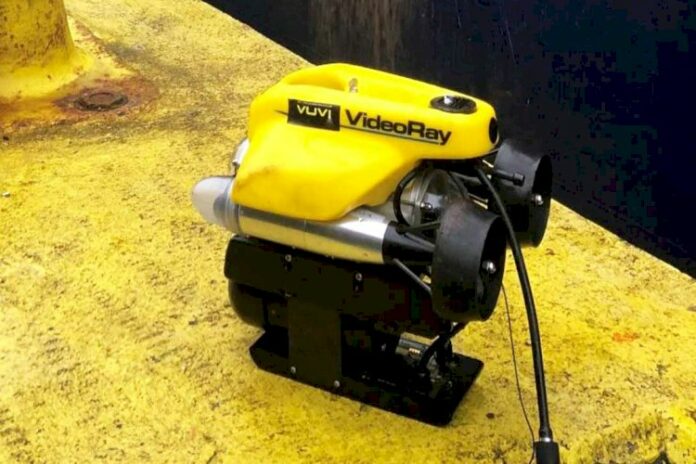
In-water bottom surveys using ROVs have now been carried out on three separate Wilson ASA-managed vessels with the first having been completed on the Wilson Fedje in December 2019 by a surveyor from Høvik. 

The latest in-water survey of this kind was performed earlier in July on another ASA Wilson-managed vessel in Bergen, Norway. Elias Triantafyllidis, the remote surveyor, attended the survey from the DNV GL DATE (Direct Access To Experts) hub in Piraeus, Greece. 

As with the two previous surveys, it was conducted in collaboration with VUVI AS, a Norwegian inspection company certified by DNV GL to perform underwater inspections for ships and offshore platforms using ROVs.

Knut Ørbeck-Nilssen, CEO of DNV GL – Maritime, said:

“We are delighted to have collaborated with VUVI and Wilson ASA to deliver this exciting new approach to remote surveys. DNV GL has been carrying out remote surveys since 2018, so this service is an extension of a broad suite of remote services that are already available.” 

Ørbeck-Nilssen added:

“Naturally, the pandemic has pushed us to scale up the intensity of remote service delivery and we are fortunate that our longstanding commitment to digital advancement has meant we are well positioned to respond to the needs of our customers during this difficult time.”

Survey planning and review of hull drawings were completed the day prior to the survey, thereby optimizing the degree of survey assurance. During the inspection, the surveyor used VUVI’s sonar technology to scan the vessel’s bottom in order to locate the hull equipment, such as echo sounder sensors; speed log sensors and sea chests, while simultaneously assessing the general condition of the hull.

Seamless connectivity was ensured throughout the survey thanks to the use of a powerful router. The in-water survey was concluded in a similar timeframe to traditional surveys, i.e. two-and-a-half hours, achieving the same level of assurance as an in-person survey. DNV GL’s digital industry platform Veracity was used by VUVI AS, DNV GL and Wilson ASA to ensure secure data transfer when saving and sharing the video stream from the remote survey.

Thorbjørn Dalsøren, General Director of Wilson Ship Management, said:

“Working in a modern world, with technologies allowing us carry out a bottom-survey without deviation or off-hire, we are really enabling a huge potential for efficiency and environmentally friendly solutions. We trust this will be adapted to several more of our operations, taking advantage of digital solutions.” 

VUVI CEO, Frode Rødølen, said:

“VUVI AS has since the company was founded in 2013 focused on in-water survey of vessels as one of the company’s core services. We became DNV GL certified to perform in-water inspections in 2017, and re-audited earlier this year. We are proud to have become a trusted partner by DNV GL to perform inspections with our ROV teams, and we are inspired by the fact the we contribute in the shaping of the inspection-services for the future.”

Statutory and class regulations require two bottom surveys of a vessel within a five-year period, with an interval of less than 36 months in between. The certification of VUVI AS was conducted in accordance with Class Programme DNV GL-CP0484 for in-water inspections. 

DNV GL has recorded a 33% uplift in the weekly number of remote surveys conducted compared to pre-pandemic levels. In total, DNV GL has now conducted an estimated 17,400 remote surveys worldwide since 2018 with on average 300 remote surveys being carried out every week.

Aberdeen awards two new contracts to Van Oord for South Harbour work

0

Aberdeen Harbour Board has awarded two new contracts for rock removal and revetment work at the South Harbour expansion site, with a total value of £20 million.

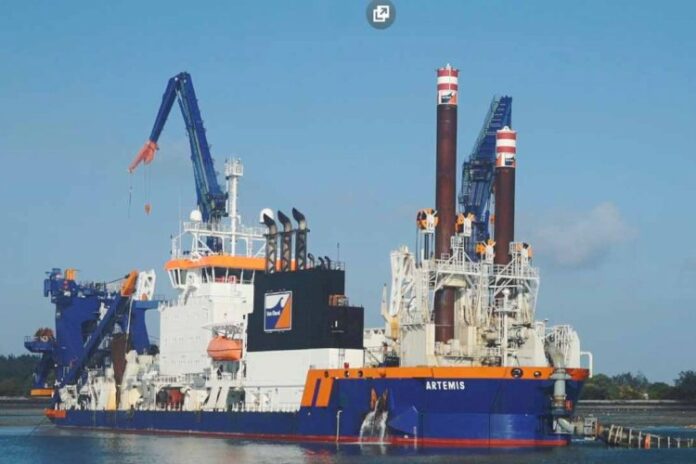
The contracts have been awarded to Van Oord, the global maritime contractor which specialises in dredging, marine engineering, and offshore projects.  The contract awards will see the completion of profile work for the harbour basin and add protection to sections of the shore in time for the coming winter.

Part of the work will be carried out using the Goliath backhoe dredger, which is the world’s largest backhoe dredger. The Goliath has worked on large-scale port expansion projects around the world.

Michelle Handforth, Chief Executive of Aberdeen Harbour Board, said:

“We are pleased to announce the award of these contracts to Van Oord, who have been heavily involved in the South Harbour expansion project for several years.

“As the most ambitious development for driving future trade and the largest marine infrastructure project underway in the UK, our Harbour expansion will ensure Aberdeen is a major hub for the maritime and energy economies of Scotland and the UK. Aberdeen Harbour will open significant opportunities for the region, in both new and existing international markets.

“Work on site has made considerable progress despite the challenges faced by the COVID-19 pandemic, with 70% of construction work completed. It is an amazing sight to see one of the world’s largest dredgers working on our project, and I am looking forward to seeing the rest of the Harbour quickly taking shape.”

Joost van Duinen, Project Manager for Van Oord, said:

“The expansion of Aberdeen Harbour is a significant project for Scotland, and we are proud to continue our involvement, having been part of the project since 2017.  We look forward to working towards the completion of the expansion, utilising our world-class equipment, international experience and marine ingenuity.”

All work on the Aberdeen Harbour Expansion Project is being carried out in line with Scottish Government COVID-19 guidelines.

GCT continues to invest in innovation with Navis N4

0

Navis a part of Cargotec Corporation and provider of operational technologies and services that unlock greater performance and efficiency for the world’s leading organizations across the shipping supply chain, today announced that Global Container Terminals (GCT) New York has gone live with Navis N4. The terminal upgraded its TOS during the pandemic and completed the go-live via remote assistance from the Navis team.

As a full-service container and general cargo facility in the New York harbor, GCT New York is a gateway to the world’s largest and most affluent markets in the US. The terminal, located on Staten Island sits on 187 acres and features on-dock rail, complete container freight station services and easy access to major interstate highways. GCT New York consistently delivers best-in-class service, the highest productivity in the harbor and industry leading, reliable turn times. 

Despite the uncertain market conditions as a result of COVID-19, GCT decided to push forward and continue investing for the future to stay ahead of the curve – enabling better visibility and enhancing its already excellent service and productivity levels to exceed customer expectations. This included making the transition to N4. Navis is the TOS of choice for GCT company-wide as it offers the flexibility to operate multiple operational models and strategies while providing GCT the ability to both modernize and standardize its IT infrastructure. GCT worked with Navis to devise a strategy for remote implementation to bring the New York facility online with N4 without disrupting daily operations.

Erik Ward, Chief Information Officer, GCT Global Container Terminals, said:

“GCT is committed to modernization and investment in technology, people and processes across our terminals to enhance fluidity, visibility, safety and service. The deployment to N4 not only ensures that our teams have the right tools to manage day-to-day operations and customer service, but also equips us with new, innovative features for our customers and better prepares us to execute future strategic initiatives.”

While GCT remained steadfast in its commitment to pushing forward with the project, the added challenge of going live during a pandemic required that the Navis project team pivot quickly to a remote operation. 

Chuck Schneider, Chief Customer Officer, Navis, said:

“During these uncertain times, it is imperative that we are able to offer options for terminals to go forward with their business plans so they can continue to provide top-notch service to their customers. At the start of the outbreak, the Navis team was able to quickly alter our go-live strategy, and have since successfully completed several N4 go-lives 100 percent remotely. By upgrading to N4, GCT now has the structure in place to adapt quickly to changing expectations and market conditions and the flexibility to implement new strategies and models as a result. At the end of the day, having a flexible solution that allows you to pull different levers to meet your current needs can make all the difference and we look forward to helping other terminals map their plans forward.”

Stolt Tankers to purchase five chemical tankers from CTG

0

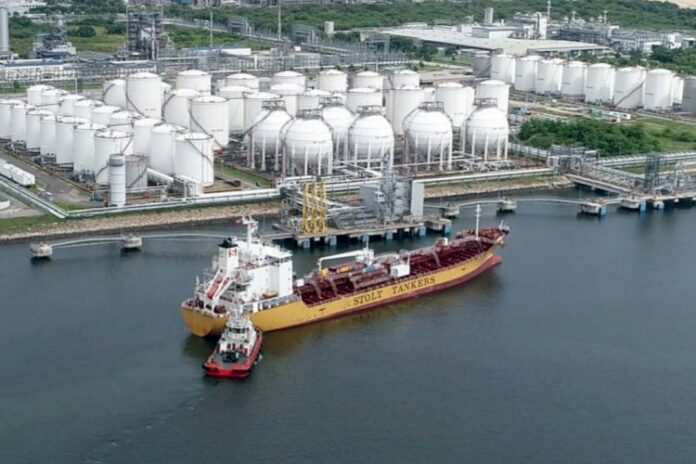
Stolt-Nielsen Limited has announced that Stolt Tankers B.V. has agreed to acquire five chemical tankers from Chemical Transportation Group (CTG) for trading in the Stolt Tankers Joint Service.

The five ships, which are 26,000 dwt and with stainless steel cargo sections, were built in China in 2016 and 2017.  The purchase of each ship is expected to close between December 2020 and February 2021. Further terms of the transaction were not disclosed.

Commenting on the purchase, Stolt Tankers President, Lucas Vos, said:

“This acquisition is an excellent opportunity for Stolt Tankers to replace ships being retired in the next few years, lowering our fleet age profile with competitively priced ships that can trade in any of our deep-sea lanes. Newer, fuel-efficient ships help us reduce our carbon footprint while buying existing tonnage means capacity is not added to a market that doesn’t need it. In a cyclical industry like ours, buying the right ships at the right price is the path to financial sustainability. In the end, Stolt Tankers’ customers are the real winners in this deal, as these ships will support our proven platform that provides a high quality, reliable and flexible service offering.”

Maersk Drilling secures 20-month extension for jack-up rig Maersk Convincer

0
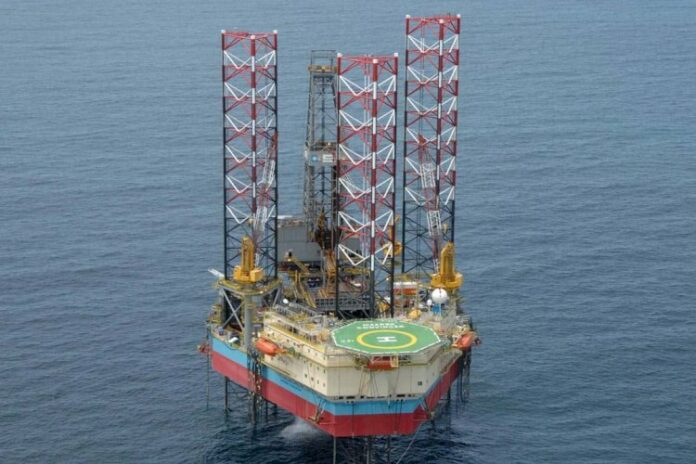
Brunei Shell Petroleum Company Sdn. Bhd. (BSP) has exercised the contract extension option for the jack-up rig Maersk Convincer that allows the rig to continue operating offshore Brunei Darussalam. 
The contract extension has an expected duration of 602 days and will commence in May 2021 in direct continuation of the rig’s current work scope, which means that Maersk Convincer is now contracted by BSP until the end of 2022. The extension has a firm contract value of approximately USD 47m, excluding a potential performance bonus.
COO Morten Kelstrup of Maersk Drilling says:
“We’re delighted to firm up this long-term extension for Maersk Convincer which is a confirmation of the strong and productive collaboration that has been established between the customer and the rig team. The rig has again and again delivered brilliant operational excellence for BSP, including a strong focus on safety and successful efforts to reduce fuel consumption and thereby limit the rig’s carbon footprint. We look forward to continuing this outstanding partnership.”
Maersk Convincer is a Baker Pacific Class 375 cantilever jack-up designed for year-round operation which was delivered in 2008. The rig is currently operating on the Seria field offshore Brunei Darussalam and was named Jack-up Rig of the Year by Shell in both 2018 and 2019.