7.9 C
New York
Home Blog Page 778

NOAA improves marine navigation near Georgia and New Hampshire naval bases

0

Two new Physical Oceanographic Real-Time Systems, also known as PORTSⓇ, are improving maritime safety near Kings Bay, Georgia, and Portsmouth, New Hampshire, near two U.S. Navy installations. NOAA and the U.S. Navy partnered to install the first new PORTS in two years, the 34th and 35th in the nationwide network.

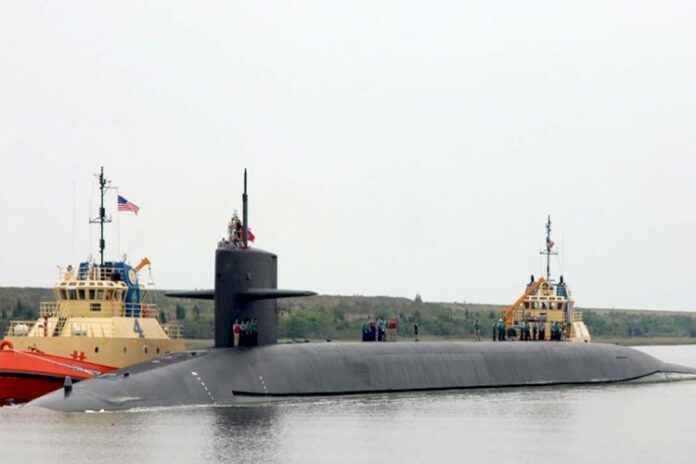
The system near Naval Submarine Base Kings Bay, the East Coast home to America’s Ohio-class submarines, is an integrated series of sensors which will provide critical real-time information on oceanographic and meteorological conditions. This will greatly increase the navigation safety of vessels entering and exiting the channels of the St. Marys River and the Cumberland Sound. 

Retired Navy Rear Adm. Timothy Gallaudet, Ph.D., assistant secretary of commerce for oceans and atmosphere and deputy NOAA administrator, said:

“New PORTS systems play a vital role in our nation’s blue economy. Making shipping and freighting in busy channels easier and safer is a NOAA priority, now that U.S. seaports move international cargo of nearly $1.5 trillion each year. With these new PORTS systems, we are making significant contributions to national security as well.”

The second site is near the Portsmouth Naval Shipyard, whose primary mission is the overhaul, repair and modernization of the Navy’s nuclear-powered attack submarine fleet. A new tide station on Seavey Island along the Piscataqua River will help protect shipyard personnel, critical facilities and U.S. Navy submarines. Other local mariners and agencies will also have access to the real-time water level information, helping them better plan vessel transits and prevent mishaps. 

Nicole LeBoeuf, acting director of NOAA’s National Ocean Service, said:

“These two new systems, and the others like them around the country, reduce ship accidents by more than 50 percent, increase the size of ships that can get in and out of seaports, and reduce traffic delays. They also provide real-time, resilience-ready data as coastal conditions rapidly change, potentially threatening our coastal communities.”

PORTS is a partnership program with local port authorities, pilot associations, the U.S. Coast Guard, the U.S. Army Corps of Engineers, the U.S. Navy, academia, and other stakeholders across the nation. In addition to other noted benefits, these systems also improve hazardous spill response and enhance recreational activities.

Commander Navy Region Southeast Rear Adm.Gary Mayes said:

“The PORTS system installed is a critical navigational tool. This NOAA technology will provide submariners and pilots with real-time data to help them make informed decisions that will assist in minimizing risk to both personnel and Navy assets.”

The first PORTS was established in 1991 in Tampa Bay following a deadly collision that occurred in 1981; an inbound freighter collided with the Sunshine Skyway Bridge, causing a bridge collapse that killed 35 people. The accident underscored the need for integrated real-time information to provide comprehensive situational awareness to mariners making safety and operational decisions.
Höegh Autoliners: RoRo saves the day for large breakbulk shipment amidst Coronavirus pandemic

0

With a deadline to meet, the customer chose Höegh Autoliners for its reliable RoRo liner service and experience in safely handling large breakbulk cargoes.

With road transportation blocked during the Coronavirus pandemic, Höegh’s Europe to Middle East RoRo service offered a reliable alternative to Kuwait.

Ajish Venugopal, Sales Manager in Dubai explains:

“Having a reliable liner service with a fixed schedule allows the customer to plan the shipment in advance. This was particularly important for the customer who had numerous breakbulk units that needed to be delivered at the same time, to meet a project deadline.”

The large shipment consisted of 64 static breakbulk units, with the heaviest unit weighing 60 metric tonnes. To transport non-rolling cargo, Höegh Autoliners has a wide fleet of rolltrailers that cater for various breakbulk dimensions. With all units needing to be shipped together on one vessel, the cargo handling team presented an optimal solution using 17 rolltrailers.

To ensure the sensitive pieces did not move during transportation, they were secured on to the rolltrailer using lashings. Transporting sensitive cargo on rolltrailers means that no high-lifting is involved, as the cargo is rolled on and off the vessel. This reduces the risk of damage to the cargo and ensures a much safer operation.

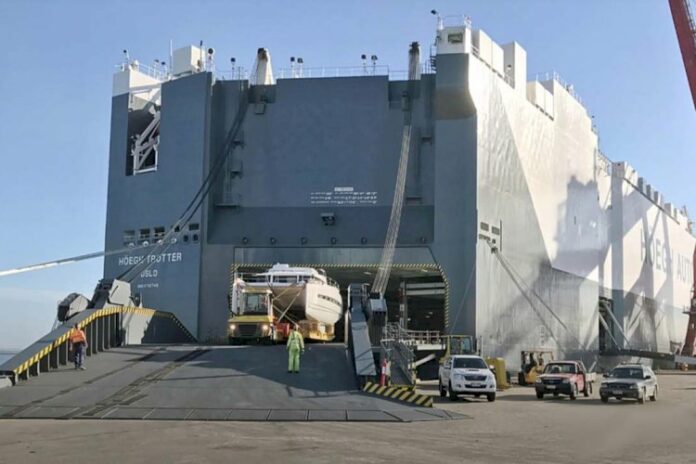
The transformer and accessories were safely loaded on board Höegh Trader in Sohar ready for its sea voyage to Shuwaih.

Höegh’s RoRo vessels stow cargo under-deck in ventilated cargo holds. This keeps cargo safe and dry away from seawater and other environmental elements during its ocean transportation.

Ajish shares:

“The customer was impressed with the safety and reliability our RoRo solution offered. The successful shipment comes down to the great collaboration between the customer and our experienced cargo handling team.”

A representative from Haven Shipping states:

“We are very impressed with the service provided, and this shipment was a perfect example of the dedicated focus and level of professionalism and technical expertise provided by Höegh Autoliners.”

Offshore wind sector calls for action now to secure green hydrogen economic boom

0

Development of an indigenous green hydrogen industry could generate £320bn for the UK economy and sustain up to 120,000 jobs by 2050 according to a new report released by the Offshore Wind Industry Council (OWIC) and the Offshore Renewable Energy (ORE) Catapult.

The Offshore Wind and Hydrogen: Solving the Integration Challenge Report examines the potential for hydrogen to play a key role in providing the flexibility, and short and long-term energy balancing, required for integrating high percentages of offshore wind into the UK energy system and achieving our net-zero climate change targets.

The report highlights that the UK has the right level of offshore wind capacity potential, and a strong industrial base, combined with world-leading academic research, to develop a sustainable, low-cost green hydrogen industry, one that produces hydrogen without CO2 emissions from electrolysis of water.

This will create a major new manufacturing sector for the UK and substantial export opportunities, bringing significant economic benefits. By 2050, green hydrogen from UK offshore wind can be cheaper than blue hydrogen, which is produced from methane using carbon capture and storage.

However, to capitalise fully on this opportunity, the report calls for government intervention now and a new national strategy to support the creation of supply and demand in the new industry. This includes an integrated approach to deliver accelerated deployment, supported by appropriate regulation and policy, targeted research and development, and the infrastructure to carry out full-scale demonstration and validation of new products and services.

Julia King, The Baroness Brown of Cambridge, Offshore Wind Sector Champion and Chair of the Solving the Integration Challenge Sector Deal working group set up by OWIC, said: 

“Offshore wind and hydrogen together form a compelling combination as part of a net-zero economy for the UK, with the potential to make major contributions to jobs, economic growth and regional regeneration as well as attracting inward investment, alongside delivering the emission reductions needed to meet our commitment to net zero.

This is an exciting opportunity for the UK, we must act with urgency to get this industry operational and build on the UK’s strengths.”

Benj Sykes, Industry Chair of OWIC, said:

“This visionary report is a direct result of the landmark Offshore Wind Sector Deal between Government and Industry, involving a wide range of partners collaborating on cutting-edge technology. Offshore wind is on track to become the backbone of our electricity system and that role will become even more important as it becomes the power source to make low-cost renewable hydrogen at scale. The UK needs to build full-size pathfinder projects as soon as possible to secure our position as a world leader in this exciting new combination of innovative technologies”.

Andrew Jamieson, CEO of ORE Catapult added:

“We firmly believe that the same forces of rapid innovation and scale-up that have underpinned a spectacular drop in the cost of offshore wind, will also apply to hydrogen technologies, such as electrolysers. UK industry and academia have a lead in this fledgling industry. We have set out a ten-year programme for the UK to convert these advantages into an economic success story.”

Japan ship operator to pay $9M over Mauritius oil spill

0

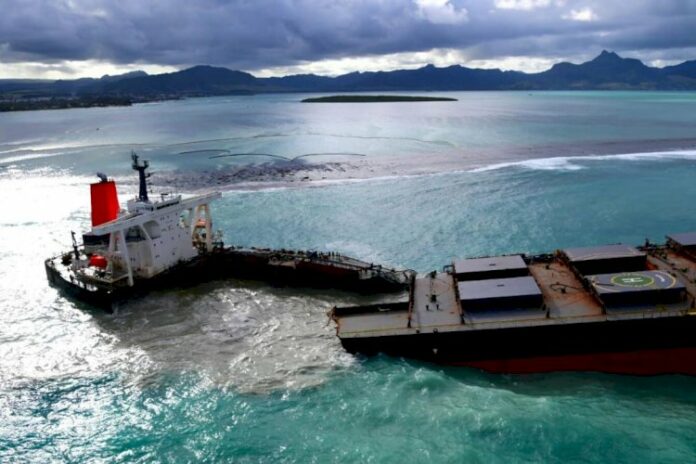
Mitsui O.S.K. Lines, Ltd. has announced to provide long-term contributions to the environment and the society of Mauritius with the support and cooperation of experts and organizations with specialized knowledge of environmental restoration and protection, and working closely with the government of Japan.

Thirteen MOL Group employees have been dispatched to the site, and MOL has procured and transported essential items for the collection and recovery of leaked oil as well as other relief supplies. The details of the projects are as follows.

1. Protecting and restoring the natural environment
The Japanese Ministry of the Environment has already dispatched experts to Mauritius to conduct mid and long-term environmental monitoring and consider measures to restore the environment. MOL will implement the following projects in cooperation with Japan’s Ministry of the Environment

  • Mangrove protection/nurturing project
  • Coral reef recovery project
  • Protecting seabirds and conducting research on rare species of seabirds
  • Establishment of the Mauritius Natural Environment Recovery 

2. Financial contributions to local NGOs, the government of Mauritius, and funds from the international public organizations
MOL will make donations to several local NGOs and contribute to funds established by public agencies such as those related to the government of Mauritius and the United Nations (UN). It plans to contribute a total of about 100 million Japanese Yen.

3. Personnel contribution

  • Continue to dispatch MOL employees to the site
  • Establishment of the Mauritius Representative Office (already announced)
  • Employee Training

4. Contributions to the community and industries

  • Contribution to fisheries and marine product industries
  • Contribution to tourism industry

MOL plans to contribute a total fund of about 1 billion Japanese Yen over several years to support measures 1 – 3 above. 

MOL continually engages in efforts to resolve the situation in Mauritius and restore the environment in cooperation with authorities in Mauritius and Japan, other concerned parties around the world, and the shipowner.

Heerema’s Sleipnir completes first wind project

0

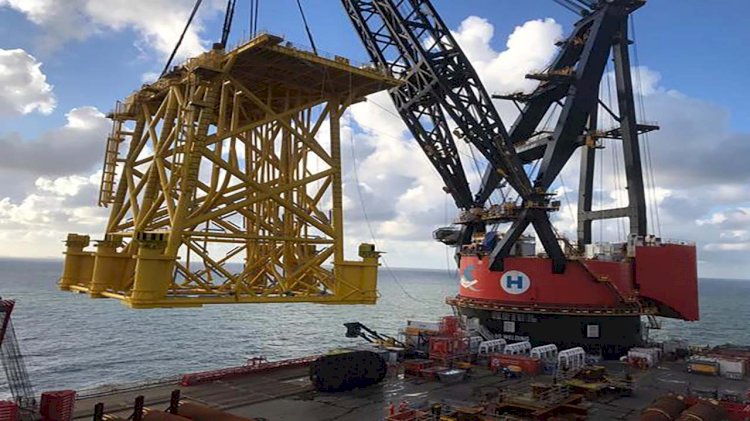
Heerema secured the contract for this project with the jacket and topside main contractor, Petrofac. While the HKZ windfarm developer is Vattenfall, and the transformer station is owned by the Dutch grid provider TenneT. 

This project is Sleipnir, Heerema’s largest vessel, first job within the wind sector. Their fast-moving DP crane vessel Aegir is currently working on the TPC Offshore Wind Farm in Taiwan. 

For the HKZ installation, Sleipnir picked up the Alpha Jacket in Vats, Norway, on September 2 before sailing to the HKZ location around 23 km from Scheveningen, The Netherlands. Installation was safely and successfully finalized on September 9, and the vessel was close enough to shore to be visible from the beaches nearby. 

Sleipnir is the world’s most sustainable SSCV, and during the project, the vessel performed the full installation operations while running on emission-reducing LNG fuel. Using LNG, Sleipnir reduces CO2 emissions by 25%, reduces NOx emissions by 92%, reduces SOx emissions by 99%, and Particulate Matters by around 99% compared to traditional Marine Gas Oil crane vessels. 

So far, Sleipnir has had a busy summer campaigning of decommissioning and installation work and will continue to be busy these coming months. 

Heerema’s CEO, Koos-Jan van Brouwershaven, noted:

‘Heerema is proud to have worked in Dutch waters to contribute to a more sustainable energy future for The Netherlands, and we are looking forward to delivering more safe and successful projects within the wind sector.”

Port of Tallinn launches a new shore power solution

0

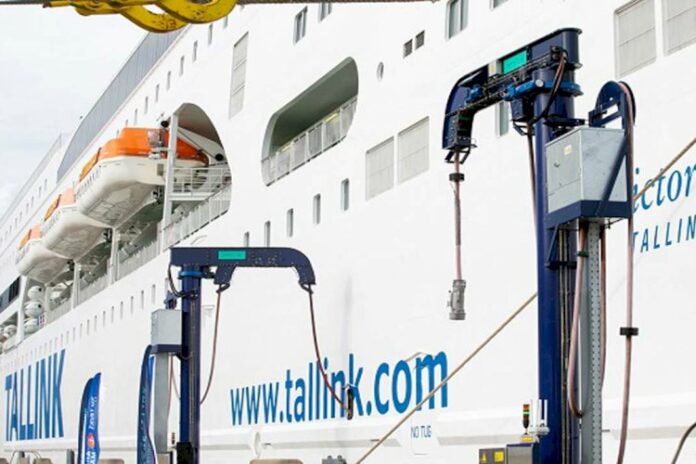
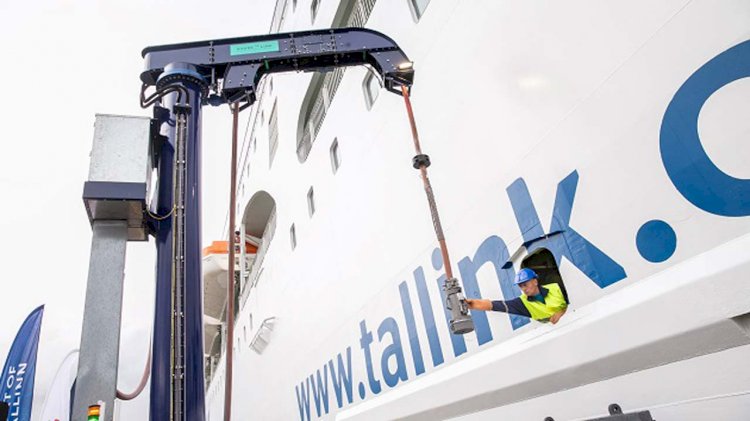
The Port of Tallinn installed the latest ABB shore power systems on five of its piers in Old City Harbour, total investment amounting to 3.5 million Euros, which enable the vessels to reduce emissions and noise pollution by using the shore power during port stays and cut ships‘ fuel consumption.

To date, Tallink Grupp has invested 3 million euros in shore power systems for 5 cruise ships. In the coming years, the company plans to equip a total of 12 cruise ships with shore power systems, amounting to 6 million euros in total.

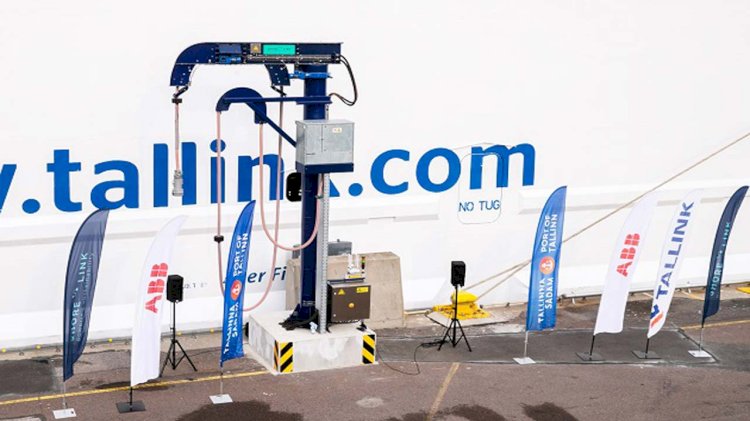
The shore power solution launched by Port of Tallinn today improves air quality and reduces noise in Old City Harbour and City of Tallinn (Photos: Port of Tallinn, photographer Raul Mee)

The mayor of Tallinn Mihhail Kõlvart said:

“Innovative use of shore power at Tallinn sea gate contributes to reducing emissions into the atmosphere and thus also to combating global warming. The transition to shore power is the only possible way – both air pollution and noise will decrease, meaning the city will become even more cleaner and quieter. The Port of Tallinn is firmly on its way to being the greenest port in Europe and this step supports the pursuit of City of Tallinn for the title of the European Green Capital in 2022.”

Valdo Kalm, chairman of the management board of the Port of Tallinn, said:

“Clean Baltic Sea and clean air are the priorities of sustainable development of the Port of Tallinn. Tallinn Old City Harbour is one of the busiest ports in Europe and the creation of shore power capacity is a significant step in reducing the environmental impact of ship traffic on urban space. Considering the improving air quality and decreasing noise, this is positive news for all citizens and visitors of Tallinn, as well as for ship operators who can contribute to ensuring cleaner and higher quality living environment with us.”

From now on, after mooring, the ship’s engines will be switched off and the vessel will be connected to the shore power supply. The ship’s energy load shall be transferred to the shore-side power supply without interfering with the services provided onboard.

The shore power solution is not only a significant reduction in emissions and noise pollution, but also an important step towards more sustainable operations for shipping companies.

Paavo Nõgene, CEO of Tallink Grupp, said:

“I am glad that as of today our ships can use shore power already in two of our Baltic Sea home ports and we have jointly created the green bridge of shore power between Tallinn and Stockholm, where our ships have been using this solution for almost a year now. When renewing our entire fleet, we have set as one of the priorities to equip every cruise ship with shore power systems and currently already three of our ships can enjoy a greener stay in the Old City Harbour simultaneously. It is estimated that the CO2 emissions of one of our vessels using green shore power will decrease by 100 tons per month.”

The technical solution of shore power enables to connect the ship to the terrestrial network at a voltage of 11 kilovolts. To ensure safety, duplicate control mechanisms are in place to ensure that the high voltage is switched off in all emergency situations. The connection of the vessel to the shore network is controlled by the vessel crew with a remote control. The ship’s power system operates without interruption in transition to shore power as well as when switching over to generator power.

Jukka Patrikainen, regional manager for ABB Baltics, said:

“Our nearly twenty years of experience in the field of shore power solutions is at the disposal of the citizens of Tallinn in the form of a complete solution created for the Port of Tallinn and shipping companies. We are pleased to say that our shipping companies think big and are environmentally sustainable. It is an honour to be a part in creating Estonia’s first such solution and to contribute to the development of a greener urban space.”

The shore power solution was built by AS Elero. Scaleup (Shore-Link), whose engineers developed solutions for shore-based systems and a remote-controlled crane required for power connection, took part in creating the integral solution. The equipment and automation of the substation was ensured by the power network unit of ABB AS, i.e. today the already independent company ABB Power Grids Estonia AS. ABB engineers also helped to develop ship navigation system to make Tallink’s ships shore power capable.

The shore power project of the Port of Tallinn was co-financed by the European Union through TWIN-PORT III measure.

Vineyard Wind develops the utility-scale offshore wind project in the USA

0

Vineyard Wind, the Town of Nantucket, and leading Island nonprofits announced today plans to create The Nantucket Offshore Wind Community Fund, which will support local initiatives to combat the effects of global climate change, enhance coastal resiliency, and protect, restore, and preserve Nantucket’s cultural and historic resources.

Vineyard Wind has agreed to provide an initial $4 million when construction financing is obtained for its first project to seed the Fund, which will be administered by the Community Foundation for Nantucket. When its subsequent projects move forward, Vineyard Wind will provide additional funding to further support the Fund, which will also accept contributions from other wind developers and philanthropists.

The parties will work closely together to further engage the extensive Nantucket community of stakeholders to ensure that residents and other interested parties are informed of the Vineyard Wind projects and the associated community benefits. 

Vineyard Wind CEO Lars T. Pedersen said:

“We’re pleased to reach this agreement, and look forward to a long and collaborative relationship with the community of Nantucket in the years ahead. Our goal is to not only set the best industry standards, but to also be good neighbors as we work to launch an industry that will create thousands of jobs and take major steps forward in the fight against climate change.”

Vineyard Wind is developing the nation’s first utility-scale offshore wind project in the U.S., to be located approximately fifteen miles from from Madaket Beach, its closest point on Nantucket.

Nantucket Town Manager, C. Elizabeth Gibson, explained:

“When we first learned of the planned wind project, we were especially concerned about visual impacts because our entire Island is a National Historic Landmark. But Vineyard Wind’s top executives worked constructively with Nantucket leadership to resolve these concerns. They agreed to move the first row of turbines farther away from Nantucket, to install a lighting system that will be activated only when planes are nearby that reduces nighttime lighting to fewer than four hours per year, and to paint the turbines an off-white color to reduce their visibility.”

In addition to those design changes, Vineyard Wind worked with the Town, the Maria Mitchell Association (MMA), and the Nantucket Preservation Trust (NPT) to create a fund to support community-led projects. 

Dawn Hill Holdgate, Chair of the Town’s Select Board, explained:

“This creates a model for other offshore wind companies to follow when engaging with Nantucket.”

Mary Bergman, Executive Director of NPT, said:

“The Fund will further the important work happening across Nantucket to protect, promote, and preserve the island’s unique architectural heritage and sense of place.”

Jason Bridges, interim Executive Director of MMA, added:

“Vineyard Wind’s investment in our community will help create more opportunities for all to develop a life-long passion for science through education, research, and first-hand exploration of the sky, land, and sea of Nantucket Island.”

The Town will announce more details about the Fund in the coming months, with plans for the Fund to issue its first grants in late 2021.

Two new cranes offloaded at the Port of Montreal

0

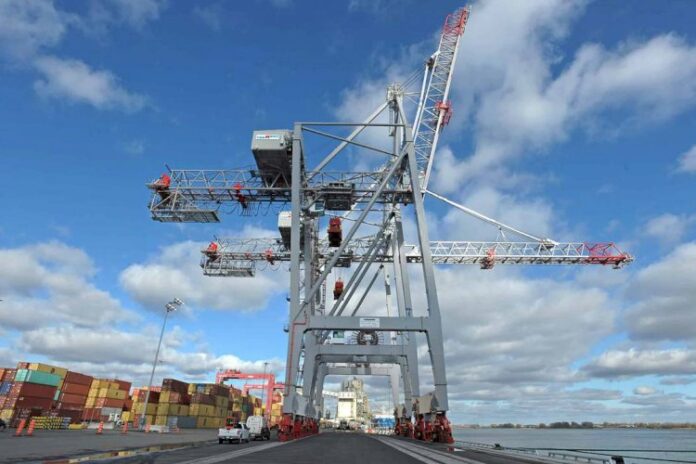
Built in Ireland, these two Liebherr cranes will be installed on the Viau terminal, now in the second phase of its construction.

The first one is a ship-to-shore Post-Panamax crane, with a 48-metre outreach and lift height over rail of 33.5-metre.

The second one is a 100% electrically operated rail-mounted gantry crane. The first of its kind at the Port of Montreal, this machine can hoist loads weighing up to 65 tonnes and provides the considerable advantage of optimizing space at the terminal. In addition to avoiding GHG emissions, it is equipped with extensive soundproofing features.

Over the next few months, the cranes will be assembled and tested before they are finally installed on the terminals. Commissioning of the new container terminal is on track for the end of 2020. The terminal will then have reached its maximum handling capacity of 600,000 TEUs.

Cafimar Group opts for Med Marine’s proven tug

0

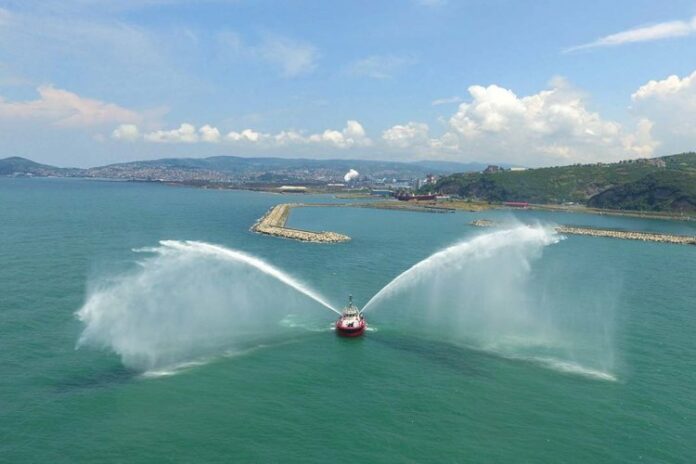
Med Marine and successful Italian operator Somat S.p.A., part of Cafimar Group, inked a deal for a MED-A2575 model tugboat for which the contract was remotely signed last week.

MED-2575 model belongs to RAmparts 2500W design series by Robert Allan Ltd. and it is the one of the most versatile ASD tug design for ship-handling, coastal towing, general purpose or escort duties. After being in the sector for more than 25 years as an operator and builder, Med Marine shared its own expertise knowledge input to Robert Allan during the design stage of MED-A2575.

Once delivered, MED-A2575 model tug (Hull Name: EREGLI 83) will operate in Sicily. Med Marine has already built and delivered eight units of the design with different main engine and propulsion profiles in previous years. Med Marine is also operating MED-A2575 tugs in its national fleet in Turkey, hence the company is well aware of the operational aspect.

Melis Üçüncü, Sales Manager from Med Marine said:

“We are pleased with this new contract from Somat S.p.A. and appreciate their trust in Med Marine especially during these difficult times affecting all sectors on a global scale. We have a very strong expertise in building tug boats including MED-A2575 models as we not only build and deliver them internationally but also operate them in our national fleet. Italy is a location that we are well up on. Therefore, we know that ER83 is a perfect match for Somat S.p.A.”

Alessandro Russo, CEO of Cafimar, expressed his thoughts about this new collaboration with following words:

“We are very happy to increase our fleet with a MED-A2575 tugboat; this addition allows Somat S.p.A. to offer its services in Sicily with greater versatility. Med Marine met our requirement in a very prompt manner”

The tugboat’s general specifications include:       

LENGTH O.A.              25,20 m
BEAM                          12 m
DEPTH                        4,60 m
BOLLARD PULL          70 tons
SPEED                        12 knots
MAIN ENGINE             2 x CAT 3516C 2100 kW @1600rpm
PROPELLER               Rolls Royce (Kongsberg) US255SP30 FP
GENERATOR SET      2 x CAT C4.4 99 ekW  @ 1500 rpm, 50hz
FIFI E SYSTEM           1 x 1400 m3/hr. Pump, 2 x Foam/water monitor                      
ACCOMMODATION    7 people

MHI Vestas to source additional key turbine components locally in Taiwan

0

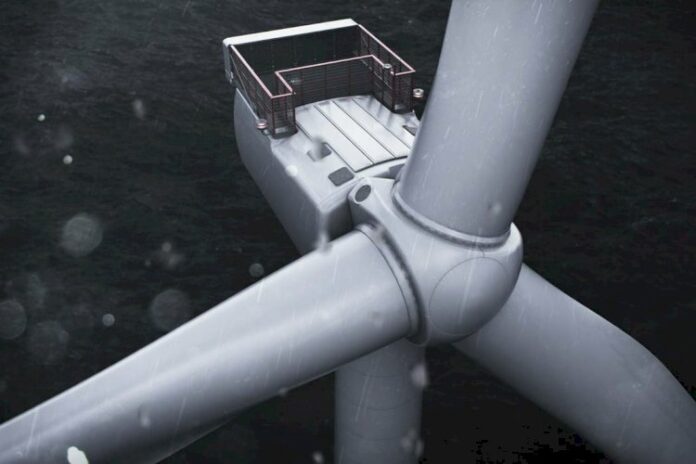
Adding to its already lengthy list of components to be sourced in Taiwan for upcoming projects, MHI Vestas has concluded a purchase agreement with the Fassmer Atech Composites Taiwan Ltd. (FACT) joint venture for local supply of spinner covers and nacelle covers.

Spinner covers and nacelle covers are made of a composite glassfiber material and protect the wind turbine systems from the external environment at sea, particularly valuable for often-harsh conditions off the coast of Taiwan.

These components will be used at MHI Vestas’ Changfang Phase 2, Xidao and Zhong Neng projects, adding further credibility to the world’s most ambitious localisation plan currently being delivered by MHI Vestas in Taiwan.

The spinner covers and nacelle covers will be produced for MHI Vestas’ V174 turbines at FACT’s facility in Kaohsiung, Taiwan.

Maida Zahirovic, MHI Vestas Taiwan Business Director, said:

“While the offshore wind supply chain is advancing in Taiwan through our early projects, creating opportunities for knowledge transfer is important. The joint venture between Fassmer, a known supplier for wind products, and Atech Composites, a skilled manufacturer with a top class facility, is a perfect fit for building technical knowledge in spinner and nacelle covers in Taiwan. This purchase agreement demonstrates how we are able to facilitate sustainable localisation in Taiwan through certainty in volume.”

Holger Fassmer, Managing Director at Fassmer and Chairman of the Board at FACT, said:

“We are delighted to be working with MHI Vestas to supply some of the first offshore wind projects in Taiwan with locally-made spinner covers and nacelle covers. Our joint venture with Atech Composites, and this contract, creates significant value for the offshore wind supply chain in Taiwan. The production of spinner covers and nacelle covers for MHI Vestas’ V174 platform will ensure that these components made in Taiwan become globally competitive through consistency in volume.”

Chris Chen, Managing Director of Atech Composites and FACT, said:

“Partnering with Fassmer, an established wind power business, is a wonderful opportunity for our company to enter the offshore wind industry. Our facility in Kaohsiung will be the production and operation centre for the spinner covers and nacelle covers, so we will create many sustainable, local jobs in offshore wind here in Taiwan. We are pleased to be supplying MHI Vestas for their V174 turbines.”

Contracts have now been signed by MHI Vestas in Taiwan for local supply of blades, blade materials (bonding glue, resin, pultruded carbon plates), towers, switchgear, rotor hubs, hub plates, nacelle base frames, low voltage cabinets, UPS systems, PCM assembly, spinner covers and nacelle covers with further local supply chain contracts planned for 2020.

At present, MHI Vestas is the only wind turbine manufacturer to procure blades, blade materials, switchgear, fasteners and cables from within Taiwan.