7.9 C
New York
Home Blog Page 777

Opinion: UK food industry under threat from maritime crisis

0

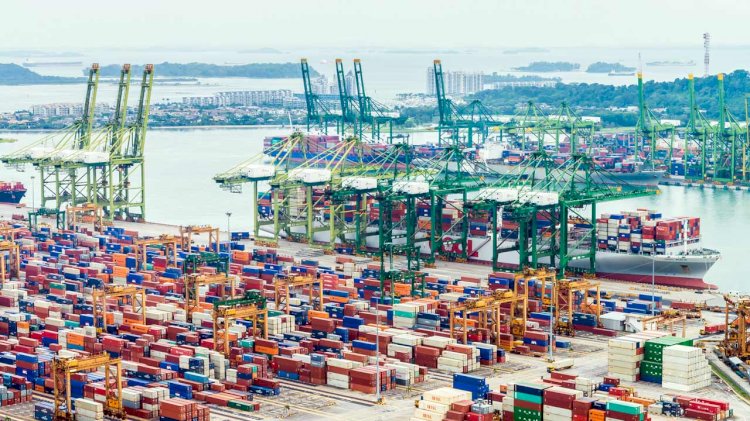
Ian Wright CBE, chief executive of the FDF, says food and drink has kept flowing into the UK from Europe thanks to government interventions allowing the movement of lorry drivers. But he notes that imports from further afield, that rely on transportation by sea, could soon be affected if governments around the world don’t take action to ease the burden on seafarers.

Among the items at risk he lists tea, coffee, sugar, bananas, spices, certain spirits, and wines from the New World.

Wright says:

“It seems illogical that lorry drivers have been acknowledged since the start of the crisis as key workers and entitled to travel across borders. Yet seafarers – playing the same role at sea – are not afforded the same status. We should all be clear that seafarers enable the movement of vital products around the globe – not just food and drink but medicines and other household items. In fact, 90% of goods are transported by sea. They are the unsung heroes of global trade.”

Graham Westgarth, Vice President of the UK Chamber of Shipping and CEO of ship management company V.Group, says his industry has tirelessly lobbied governments around the world to have seafarers recognised as key workers but is exasperated by the refusal of some to act.
He says:

“The UK government has done its best to lead on this issue.  Last month, the Department for Transport organised an international summit on crew changes and pledged to urgently resolve the situation but many countries failed to participate so the crisis continues.

“The media was happy to cover the plight of holiday makers and crew stuck onboard cruise ships but has paid scant attention to the 300,000 seafarers currently marooned at sea, unable to disembark, and their 300,000 counterparts who are stranded ashore, unable to start their contracts and who are, therefore, without income.

“Many of those onboard haven’t stepped off their vessel for well over a year. Just consider that for a moment. This isn’t just an economic crisis, it’s a humanitarian one and it has the potential to get much worse. There have already been reports of crews downing tools in exasperation. If others follow suit then the issues we are currently facing will seem small in comparison. It really is a desperate situation, a ticking timebomb.”

The warning is supported by the global body which represents 1.4 million seafarers working aboard cargo ships – the International Transport Workers’ Federation (ITF). The federation’s General Secretary, Stephen Cotton, says global supply chains, including for critical products like food and medicines, are at risk of disruption as seafarers increasingly take matters into their own hands by exercising their right to stop working at the end of their contracts:

“Until now this has been a humanitarian crisis for the seafarers trapped working at sea, but not for the consumers or patients ashore who rely on these supply lines. As we approach the six-month mark of this intolerable situation, seafarers will reach for drastic action to end their floating misery and get back to their families. More ships being stopped, more risk of accidents with tired and fatigued crew, more detentions and MLC breaches, means more disruption to critical supply chains.”
UK Chamber of Shipping Chief Executive Bob Sanguinetti echoed the concerns:

“Seafarers have been the unsung heroes of global trade during the coronavirus. Ships and their crew have continued to keep supplies coming into the UK, ensuring we have enough food, medicines and essential goods.

“But this has come at a cost. Since the start of the pandemic we have seen many countries shut down their borders. The time for talking is over, we need action now from governments to allow crew changes to take place.”

Guy Platten, Secretary General of the International Chamber of Shipping, also recognised the urgency of the situation:

“This issue is a ticking time bomb. Seafarers have gone above and beyond the call of duty to keep food flowing, medical supplies delivered and supply chains open. The system is at full stretch and governments across the world need to recognise this emerging risk, designate seafarers as key workers and facilitate crew change before it’s too late.“

Source: V.Group
OES releases “Blue Economy and its Promising Markets for Ocean Energy”

0

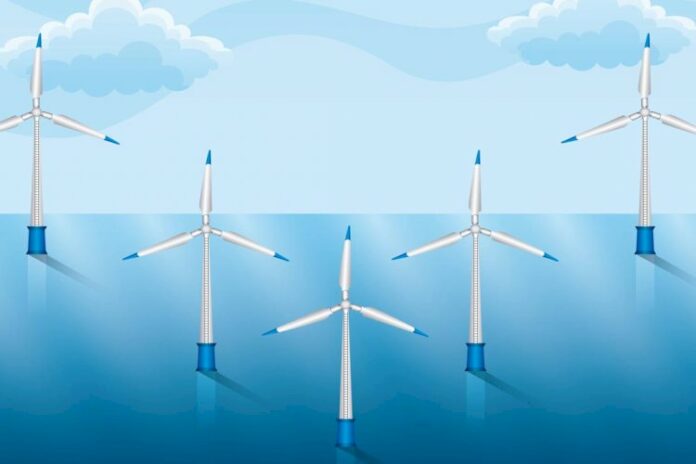
Many ocean-based applications and markets are located far from the coast, facing important offshore challenges, such the need for clean power. From the experts interviewed by OES there is a consensus that ocean energy can meet these anticipated needs and unlock the growth potential of the blue economy.

Commenting on those markets and applications where ocean energy could have a more promising impact, Alejandro Moreno, Director for the Water Power Technologies Office in the U.S. Department of Energy said:

“It has been clear through our research and work with partners that there are myriad opportunities for thinking about energy and the blue economy, particularly as it relates to marine energy”.

Matthijs Soede of the European Commission’s DG Research & Innovation Unit stated:

“Niche sectors are not pushing for big, but for quality. And that is what ocean energy has to deliver. Ocean energy has to proof to be a reliable and sustainable technology via niche applications in the next years, and by doing this it will be able to reduce its costs and to enter other markets as well.”

Ocean energy has made great strides in recent years, with projects now being built on a large scale and deployed under real sea conditions, an indicator of the shift of the sector towards industrialization. However, a supportive policy scenario is essential for future large-scale deployment. Rémi Gruet, CEO of the Ocean Energy Europe argues:

“Mature renewables wouldn’t be where they are today without large scale deployment underpinned by a supportive policy landscape – and it is no different for ocean energy”.

Several developers around the world are progressing with projects to supply maritime applications or remote islands and attracting the attention of investors from other sectors such the oil & gas industry. In response to whether wave energy systems can have a general acceptance by the oil and gas industry, Cameron McNatt & Chris Retzler of Mocean Energy said:

“At this point, there is more than a willingness to engage, companies are eager to find solutions that reduce their carbon footprint.”

Speaking about Southeast Asia, Srikanth Narasimalu of the Energy Research Institute at Nanyang Technological University said:

“Looking to the integration of renewable energies, such as ocean energy, into microgrids, can benefit remote islands and villages in terms of a more stable and resilient power supply.”

John Whittington, CEO of the Australian BLUE Economy Cooperative Research Centre said:

“The research projects recently commissioned by the Blue Economy CRC will contribute to develop a clear understanding of existing technologies, solutions, knowledge and trends, and to identify the major challenges and opportunities, increasing links to global value chains, to see success in the ocean energy sector.”

VIDEO: New digital project to tackle flood hazard

0

Led by Dr Jenny Brown, NOC Coastal Oceanographer, the new project ‘Coastal REsistance: Alerts and Monitoring Technologies’ (CreamT) will develop a new point-of-impact flood hazard nowcasting system to meet national coastal management needs, which will have the potential to issue flood alerts to the National Flood Forecasting Service.

This work carries on from the WireWall project which developed a novel field instrument able to measure the speed and volume of individual waves as they overtopped a sea wall. 

Dr Brown said:

“Our team of collaborators, including scientists, engineers and artists, are eager to tackle the challenges of the high energy coastal environments at Penzance and Dawlish. We’re thrilled to have the opportunity to benefit local communities by developing this innovative real-time flood hazard observation system, with the potential for integration into navigation systems diverting people away from flood hazard. We will also be engaging the local community in coastal hazard monitoring through the development of a self-guided coastal walk accompanied by an Augmented Reality phone app that will allow people to visualise storms during calm conditions.” 

As part of the NERC-led ‘Constructing a Digital Environment’ Programme, these seven projects all seek to develop tools and systems that will tackle real-life environmental challenges. The Programme aims to construct a digitally enabled environment which benefits researchers, policy makers, businesses, communities and individuals. It is funded through the Strategic Priorities Fund. 

Dr Simon Gardner, Head of Digital Environment, Strategic Partnerships Directorate at NERC, said:

“The grants announced today demonstrate NERC’s commitment to environmental research. They will support important projects that are building digital tools and systems to combat environmental challenges such as flooding, tree disease and reduced biodiversity.”  

The programme is supported by the Engineering and Physical Sciences Research Council (EPSRC) and the Department for Environment, Food & Rural Affairs (Defra). In total, the grants comprise an investment of more than £6 million. You can find out more about the seven successful projects, all lasting 24 months, on the NERC/UKRI website.  

MacGregor receives an order for two RoPAX ferries

0

MacGregor, part of Cargotec, has secured two new orders, one from Asia for two RoPAX ferries and another from Scandinavia for a group of Linkspans.

Both orders are booked into Cargotec’s third quarter 2020 order intake, with deliveries planned to commence during the fourth quarter of 2021 and completed during the third quarter of 2022.

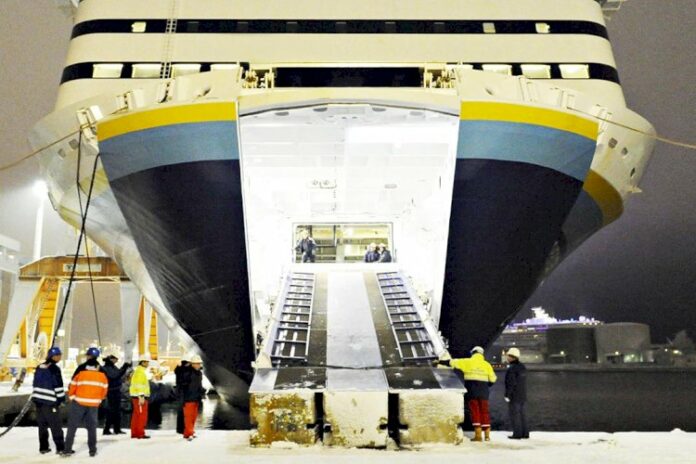
The RoPAX order is one of the largest RoPAX contracts that MacGregor has secured in recent years, with scope of supply encompassing bow and stern doors and ramps, ramp covers, tiltable ramps, top hinged doors, hoistable car decks, pilot doors, bunker doors and passenger doors, all of which will enable reliable and durable operations throughout the ferries’ lifetime. The Linkspans order consists of several ramps for efficient loading of both the main and upper decks. 

Magnus Sjöberg, Senior Vice President, Merchant Solutions Division, MacGregor, says:

”We are very pleased that our customers have placed these significant contracts with us, which demonstrates very well the importance of our global presence and strong customer relationships.”

Spliethoff Group delivers first monopiles for Wind Park Fryslân

0

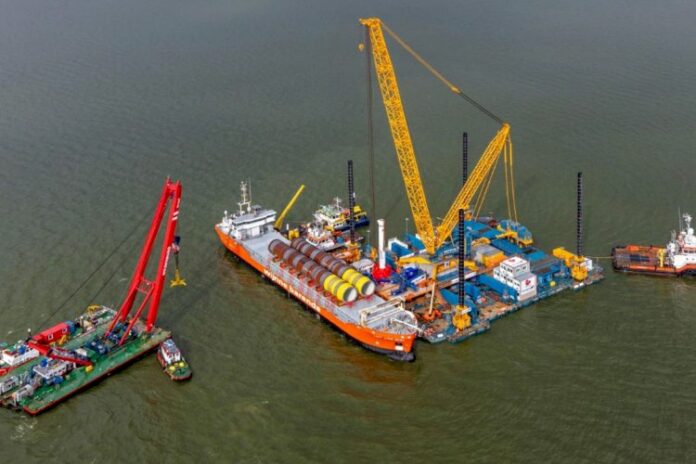
Spliethoff Group will perform 26 more shipments for the project in the coming months, transporting a total of 89 monopiles and four platforms.

Spliethoff has positioned three Lady A-Type vessels of sister company Wijnne Barends to ship a total of 23 consignments from manufacturer EEW Group’s production site in Rostock, Germany, directly to the installation platform in Breezanddijk. Additionally, Spliethoff’s H-type vessels will carry out four shipments of concrete platforms from Świnoujście, Poland, to Harlingen in The Netherlands.

Fryslân Wind Farm is being built by the contracting consortium Zuiderzeewind, consisting of Siemens Gamesa Renewable Energy and Van Oord. It will be the largest wind farm in the world to be built in an inland water. The wind farm comprises 89 turbines of 4.3 MW. With a capacity of 382.7 MW, Wind Farm Fryslân will supply enough energy for approximately 500,000 households. The wind farm will be operational in 2021.

HELCOM publishes maps on fish habitats

0

The maps were produced under the recently concluded Pan Baltic Scope project on maritime spatial planning (MSP) in the Baltic Sea region and to which HELCOM was a partner.

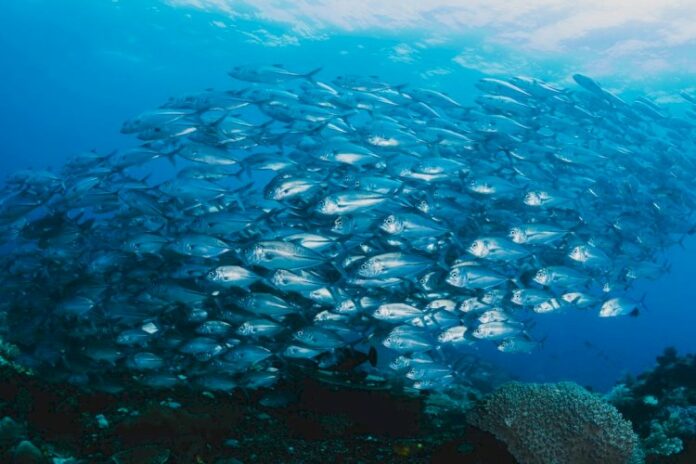
The maps show potential spawning areas of cod, sprat and herring, which are the commercially most important fish species in the Baltic Sea region, as well as key areas for European and Baltic flounder, perch and pikeperch. 

SLU Aqua’s Lena Bergström who was responsible for this component within the Pan Baltic Scope project, said:

“With the maps on essential fish habitats, we now have another tool at our disposal to identify and evaluate marine areas of greater ecological importance.”

Combined with corresponding data for other ecosystem components, the maps on essential fish habitats can be used to identify regions of high ecological value and areas which have the potential to deliver various essential ecosystem services.

The Pan Baltic Scope project was co-founded by the European Maritime and Fisheries Fund of the European Union. In the project, HELCOM notably collaborated on a data sharing activity to support regional cooperation and transboundary coherence in MSP which lead to the development of BASEMAPS, a web-based tool showing decentralized MSP data through open standard services.

AutoNaut USV maps North Sea soundscape during lockdown

0

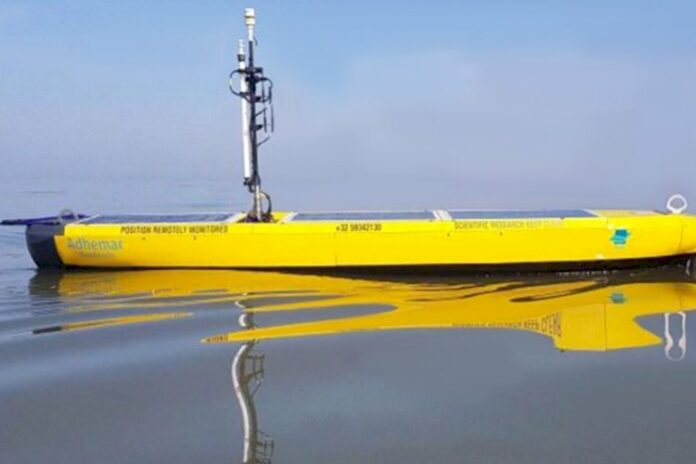
Using its near silent AutoNaut USV research vessel, Adhemar, VLIZ has been able to record current noise levels, which will be compared with the marine soundscape once normal sea traffic and marine activities recommence. This will help to determine the impact of manmade noise on natural sea life and the marine environment, building a picture of the marine soundscape in conditions that may never again be possible. 

Following a 15% fall in shipping intensity in the North Sea since the start of the pandemic, VLIZ put its AutoNaut USV robot Adhemar into action to carry out measurements of the underwater noise in the turbid and shallow coastal waters of Ostend-Bredene. Some footage of Adhemar in operation can be seen here.

Using Seiche’s MicroPAM monitoring and mitigation system, developed specifically for autonomous surface vehicles (USVs), underwater sound was captured using two hydrophones trailed on an 8 m in-water cable with depth sensor. The onboard Seiche electronics module acquired and recorded all data.

Undertaken with the support of the agency for Maritime and Coastal Services (MDK) and FPS Mobility and Transport, the project took advantage of the unique current circumstances that allow a record of reduced human activities to be compared with a more normalised soundscape in post Covid-19 conditions. 

Under normal circumstances, human interventions such as noise emanating from shipping, pile driving, and other activities can affect the soundscape of the coastal waters and North Sea, impacting on marine animals. Masking natural ambient noise, this extra underwater sound can disturb sea animal behaviour or even result in hearing damage. This is because sound is carried more than four times further in water than in the air, which is precisely why many marine animals use sound to communicate, determine their position and search for prey.

Supported by AutoNaut’s wave foil propulsion technology, which produces virtually no underwater noise, VLIZ utilised its USV Adhemar as a non-invasive, flexible method of capturing sound data, deploying Seiche Passive Acoustic Monitoring (PAM) technology to build a sound-map of the waters for future comparison. 

VLIZ will analyse the sound recordings to identify underwater sounds originating from marine animals and the environment, including sounds from fish, invertebrates and other species that are typically masked by anthropogenic activities. This will allow VLIZ to investigate whether a different underwater soundscape can be observed as a result of reduced shipping traffic.

VLIZ executed the mission in close collaboration with the Flemish agency for Maritime and Coastal Services (MDK) and the Federal Public Service for Mobility and Transport, which have responsibility for the safety and regulation of shipping, and in close coordination with the Maritime Rescue and Coordination Centre (MRCC) in Ostend, which stipulates conditions and provides permits for USV activity. Several missions took place in April and May 2020, conducted during daylight hours and only in conditions of good visibility in order that the missions were planned, undertaken and executed without impact on shipping traffic.

The results from the study, which are currently being processed, will be announced later this year in the autumn, followed by a further programme of additional measurements – part of the LifeWatch observation programme – which are planned for the future.

Phil Johnston, Business Development Manager at AutoNaut, comments:

“We are thrilled to see VLIZ running Adhemar, not just for the data collection in these strange times but also for the adaptations they’ve made to operate the 5 m USV in the southern North Sea. We look forward to working with VLIZ on future development and missions.”

HST centralises mission-critical data with BareFLEET and CrewSmart

0

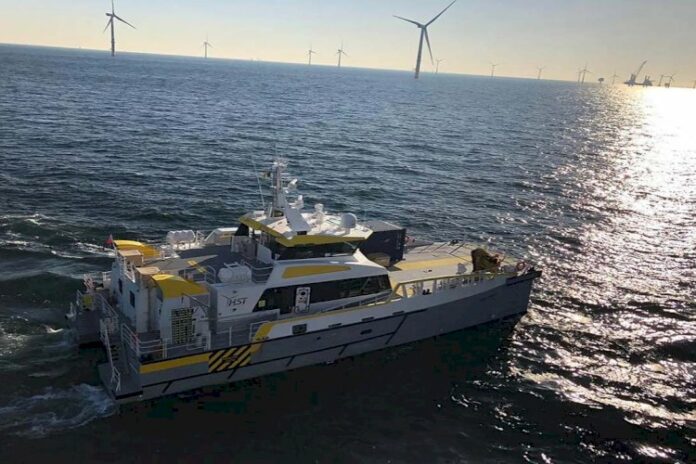
Reygar Ltd., the leading provider of innovative remote monitoring and reporting platforms to the offshore wind industry, and CrewSmart, an end-to-end management tool for compliant, effective fleet operations, have announced a collaboration to provide an integrated system for High Speed Transfers (HST), an established Crew Transfer Vessel (CTV) operator supporting the offshore energy industries.

Vessel operators are investing in expanding their fleet and operational capabilities in response to increased demand for CTVs to meet Europe’s burgeoning offshore wind capacity. Central to facilitating this rapid expansion is the extent to which these vessel operators are able to digitalise their operations.
Christopher Monan, COO, HST, said:

“HST has commissioned an integrated system to deliver complete oversight over our fleet and personnel compliance, as well as to stay on top of vessel health. Having a central point of access for fleet-wide performance and operational reporting has significantly cut our administrative burden across the board – enabling crews to focus on maximising ‘time on turbine’ whilst empowering the shore team to expand our operational capabilities with innovative new vessels like the HST Ella, a hybrid Chartwell 24.”

Christian Adams, Managing Director, CrewSmart, said:

“Crew managers have one of the hardest jobs in the industry – a challenge which is compounded as an operator expands. CrewSmart is designed to support them by adding flags and safeguards around ongoing crew and vessel compliance, streamlining the process of allocating the right crew to the right vessels and the right vessels to the right projects.”

BareFLEET and CrewSmart’s integrated reporting function also supports HST’s aim to be as open and communicative as possible with its clients, a positive relationship building exercise that the firm believes is key to its ongoing success.

Christopher Monan continued:

“Accessed via CrewSmart’s vessel diary feature, BareFLEET’s reporting allows us to demonstrate to our clients where we add the most value. We can provide evidence to illustrate which conditions our vessels operate best in, how these conditions effect the vessel, and demonstrate our safety record in a clear, concise manner. This data not only allows us to make informed operational decisions around which vessels to deploy to which projects, but also improves our understanding of our suitability to tender to specific projects.”

Chris Huxley Reynard, Managing Director, Reygar Ltd, said:

“While BareFLEET was initially created to drive operational and commercial efficiencies for vessel operators, a key feature of the platform that has emerged over the last couple of years is how it allows leading operators like HST to respond directly to their end customer’s priorities. We are able to support HST’s focus on operator-to-project owner transparency by creating client-specific reporting templates that bring each company’s KPI’s front and centre.

The BareFLEET system also leaves HST well placed to bring innovative new vessels into the fleet. For example, HST have commissioned the largest battery bank option for its new Chartwell 24, HST Ella, and our vessel health and performance monitoring function will support HST in demonstrating that it is possible to eradicate fuel burn in ports and when moving between turbines by relying on electric propulsion alone – this will cut emissions, engine noise, and fuel costs.”

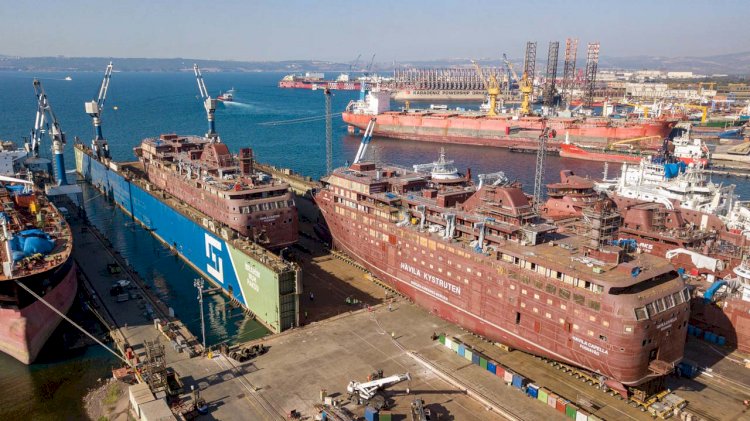
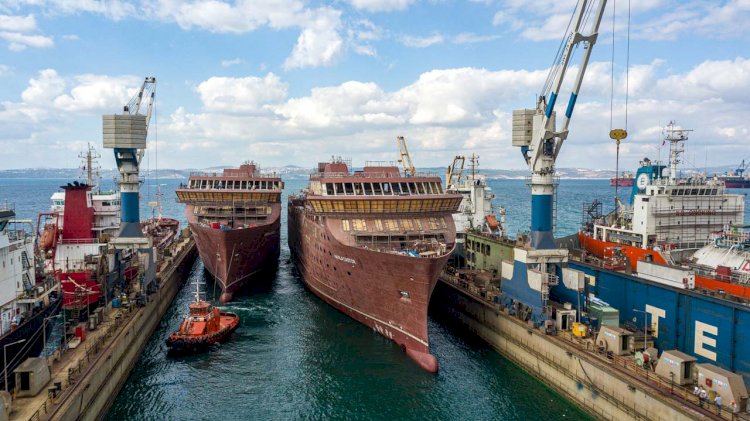
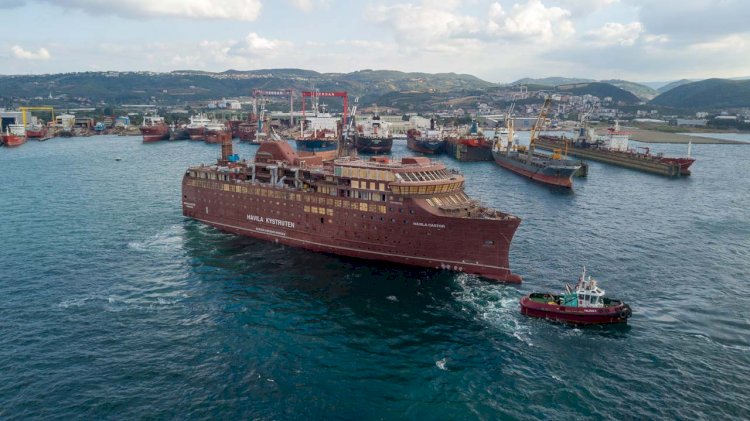
First two Havila Voyages ships have been launched

0

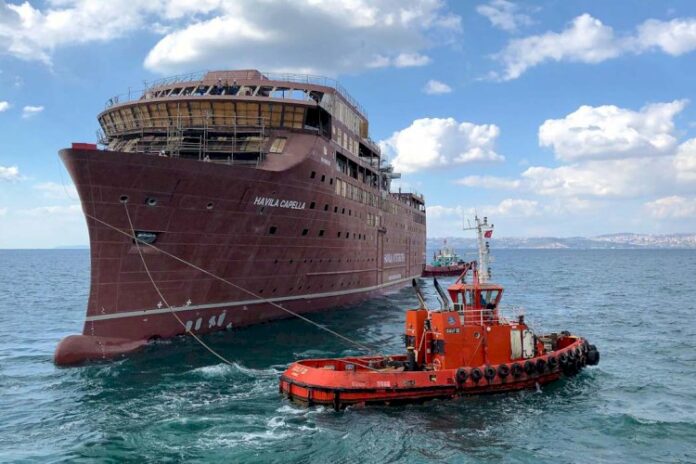
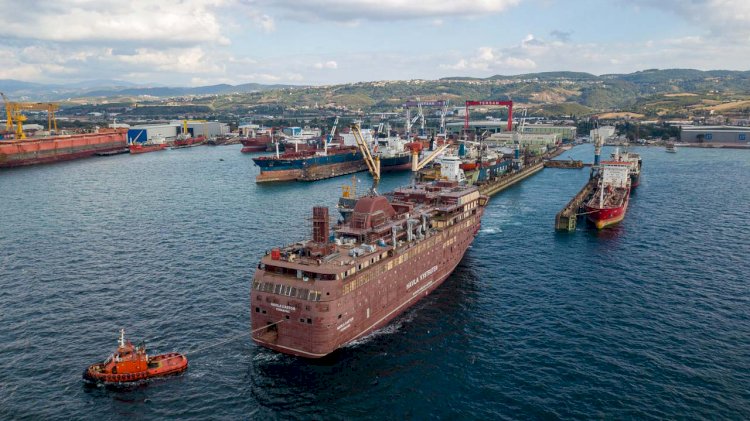
The coastal cruise ships, Havila Castor and Havila Capella, were launched at the Tersan shipyard in Turkey.

Arild Myrvoll, CEO of Havila Voyages, was present as the ships’ keels came into contact with salt water for the first time:

“It will be good to start providing people living along the coast, and tourists, with safe transport and environmentally friendly sailing on the world’s most beautiful coastal voyage.”

Over the last six months, the coronavirus pandemic has affected the shipyard in Turkey and construction of the new coastal ships meaning that the first two ships will not be ready for the new year as originally planned. But Arild Myrvoll says that based on current knowledge, it looks like delivery may take place during the first quarter of 2021.

In order to expedite the construction process as much as possible, despite the challenges of the coronavirus pandemic, the ships have been on land for longer than usual. Because of this, several tasks have been streamlined.

Arild Myrvoll said:

“This means that the work on the ships that have been launched is well underway with regard to plumbing, machinery, electricity and fixtures and fittings.”

In anticipation of the new ships, Havila Voyages has received approval for two replacement vessels, but the demand for the coastal route between Bergen and Kirkenes is currently very uncertain, and the need for capacity at the start of the new contract on 1 January 2021 is under evaluation.

Giant DFDS ship makes peak call at North Sea Port

0

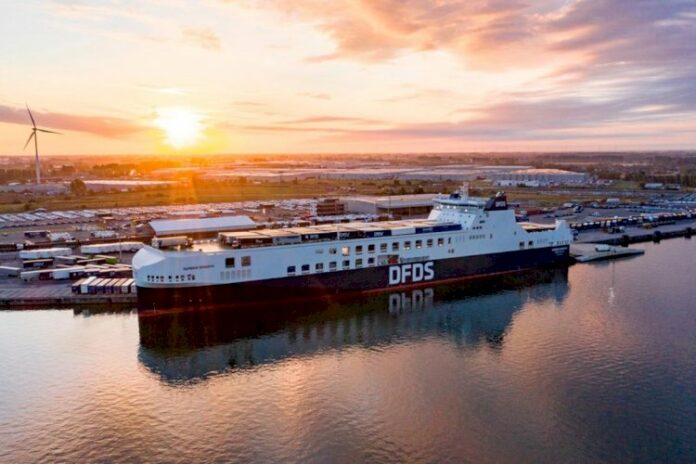
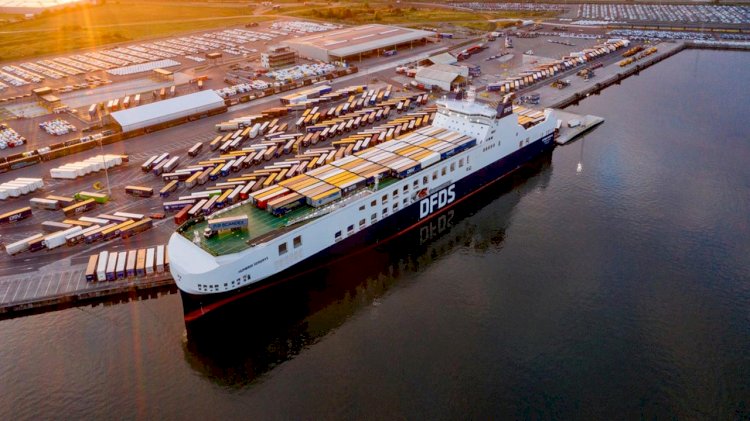
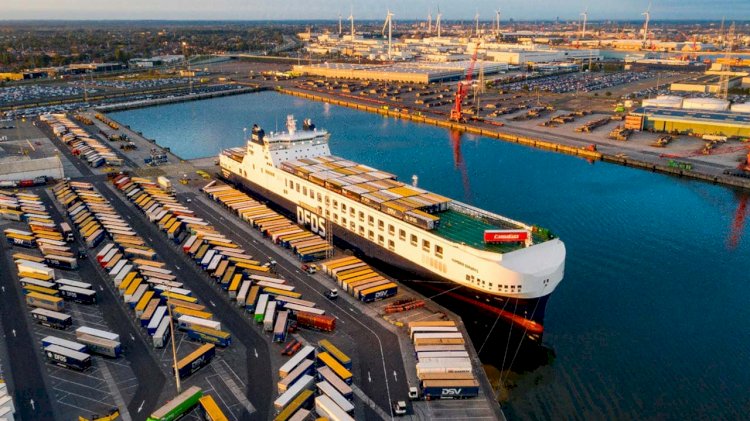
The ‘Humbria Seaways’ called at North Sea Port, Thursday 10 September. It was the first time that the newest ship in the DFDS fleet had visited the port.
The service between Gothenburg in Sweden and North Sea Port is one of the most important on the North Sea for DFDS.

Conversely, DFDS is a top customer for North Sea Port. With five calls per week, the Danish shipping and logistics group is one of the port’s most frequent users. The shipping company’s blue and white ships have been a familiar sight on the Western Scheldt, in the lock at Terneuzen, on the Ghent-Terneuzen Canal and at Mercatordok for decades now.

DFDS is particularly busy at the moment at the terminal at Mercatordok in Ghent.

Alain De Brauwer, Route Operations Manager for DFDS Seaways in Belgium, explains:

“We always have a lot of cargo ready for shipment and we receive large volumes from Sweden. So when a bigger ship calls, it always comes in handy.”

Daan Schalck, CEO North Sea Port, said:

“In these times of the coronavirus, it’s good to see the recovery continuing for such a large customer.”

The ‘Humbria Seaways’ was briefly available to ship some extra cargo. The ship has just come out of dry dock and made a quick crossing from Gothenburg to Ghent and back before switching to another one of the shipping company’s routes.

The ‘Humbria Seaways’ has only been in service for a few months. The ship is one of the newest MegaRoRos built for DFDS in China. RoRo stands for roll-on/roll-off. A RoRo ship is one especially built to accommodate wheeled cargo (such as vehicles, trailers and goods placed on a special chassis). The various decks are connected via ramps to the wide loading ramp at the stern of the ship.

The ships in this new series are 237 metres long and 33 metres wide. Definitely not on the small side, in other words. But they are especially notable for their unusually large cargo capacity: they can carry up to 6,700 line metres of cargo. In other words: if you put all that cargo in a row, the traffic jam would stretch for 6.7 kilometres. This puts them among the largest ships of their type.

In designing its new range of ships, DFDS took into account the possibility that the vessels might serve North Sea Port. The Ghent terminal also underwent various modifications in order to be able to receive these larger ships.

The shipping company had already been using the ‘Hollandia Seaways’, a sister ship of the ‘Humbria’, on the route from Ghent to Gothenburg for some time. Other ships are currently providing this service, but a return of the larger vessels is not out of the question.