4.4 C
New York
Home Blog Page 775

Port of Rotterdam: Real-time tracking of import movements with Cargo Tracker

0

A pilot project of the Port of Rotterdam Authority is now a fully-fledged application called Cargo Tracker. Portbase will be developing the application in the coming months in collaboration with the market. The expectation is that companies will be able to use Portbase by the end of this year to monitor all import movements and they will be notified automatically about any delays.

No more calling the shipping company or emailing the terminal to ask where a container has got to: just log on to a portal and see immediately where the cargo is. This service, known as Cargo Tracker, is available to everyone and one of Rotterdam’s aims with the new option is to establish its reputation as a smart port.

Cargo Tracker is the successor to Boxinsider, an app developed by the Port of Rotterdam Authority in 2019. Matthijs van Doorn, Director of Logistics, explains:

‘Our strategy is to become the smartest port in the world, and in that way to boost our competitive position. The digital transition is opening up opportunities. From that perspective, we launched a number of experiments in our own development lab. They included collaborating with the market in the search for solutions. One of them involved enhancing the transparency of the chain: supply chain visibility. Initially, we wanted to tackle that in a large-scale, wide-ranging way but that turned out to be unachievable in the short term. So we reduced our focus by concentrating on a number of parties in the chain. We went to work to get information from different parties so shippers would know better what is happening.’

The result was Boxinsider. Van Doorn says:

‘Ship owners, terminals and shippers were interested in getting on board. The tool met the demand for chain visibility and led to standardisation. The transparency meant that everyone in the chain knew exactly what was going on and the standardisation ensured that data could be exchanged smoothly and reliably. Once this structure was in place, we wanted to take it to the next level and make it available to more companies for development and use. That can be done through the Portbase Port Community System.’

Supplying the tool through Portbase will allow it to grow, says Donald Baan, a former employee of the Port Authority who helped with the predecessor, Boxinsider, and who now works as Portbase’s business development manager:

‘We’re now working with the new name, Cargo Tracker. I think it’s a hugely valuable product for shippers. You don’t want to spend all day making phone calls and entering codes on different sites to know where a container is. We now have all that information in Cargo Tracker. It’s clear at a glance where containers are located and the system also provides information about things like customs declarations. Not only does that save on phone calls and a lot of internet time, the data can also be used to optimise things like warehouse planning. Obviously, the information is available only to people who have been given authorisation. So we make sure that the data is shared not only efficiently but also securely.’

Source: evofenedex/Job Halkes
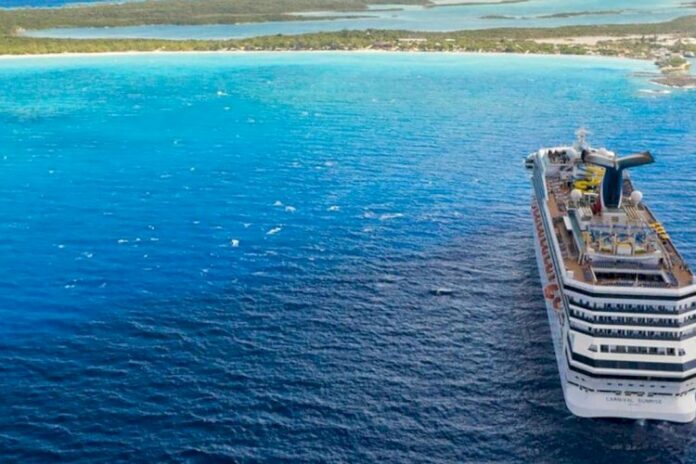
Carnival Cruise Line announces the sale of two fantasy-class ships

0

Carnival Cruise Line has announced the sale of Carnival Fascination and Carnival Imagination, which had previously been put on long-term lay-up status and removed from published itineraries.

The sale of Carnival Fascination, launched in 1994, and Carnival Imagination, introduced in 1995, is in line with Carnival Corporation’s plan to accelerate the removal of less efficient ships from its fleet.  This follows the sale of Carnival Fantasy and Carnival Inspiration which took place in July.  Upon return to operations, Carnival will still operate four upgraded Fantasy-class ships – Carnival Ecstasy, Carnival Sensation, Carnival Elation and Carnival Paradise – which feature additional balcony staterooms as well as enhanced dining and entertainment options that are part of the line’s Fun Ship 2.0 enhancement program.

Christine Duffy, president of Carnival Cruise Line, said:

“While we are sad to see  Carnival Fascination and Carnival Imagination leave our fleet, it is a necessary move as it allows us to focus on ships that offer the greatest variety of features and stateroom accommodations for our guests.”

Related to its ongoing ship enhancement program and the current pause in cruise operations, Carnival also advised guests and travel agents that it is delaying the return to guest operations for four ships until after scheduled dry dock enhancements are completed in the first half of 2021.

The four impacted ships and resulting cancelled itineraries include:

  • Carnival Magic itineraries operating from Miami will be cancelled until Mar. 13, 2021
  • Carnival Paradise itineraries operating from Tampa will be cancelled until Mar. 19, 2021
  • Carnival Valor itineraries operating from New Orleans will be cancelled until Apr. 29, 2021 (including the transatlantic cruise from New Orleans on Jan. 25, 2021 and the return from Barcelona on Feb. 26, 2021)
  • Carnival Spirit itineraries operating from Brisbane will be cancelled through May 16, 2021, with the first sailing being the Singapore to Brisbane voyage embarking on June 12, 2021.

Duffy said:

“This extended pause in our operations has also impacted shipyard availability, and we’ve had to reschedule required dry docks.  As we continue to work through issues related to our eventual return to operations, we are committed to providing our guests and travel agent partners with certainty where we can, although we regret disappointing our guests.  We appreciate the continued support and understanding of our guests and hope to welcome them back on board soon.”

MOL obtains VSPS Certificate from Australia’s Department of Agriculture

0

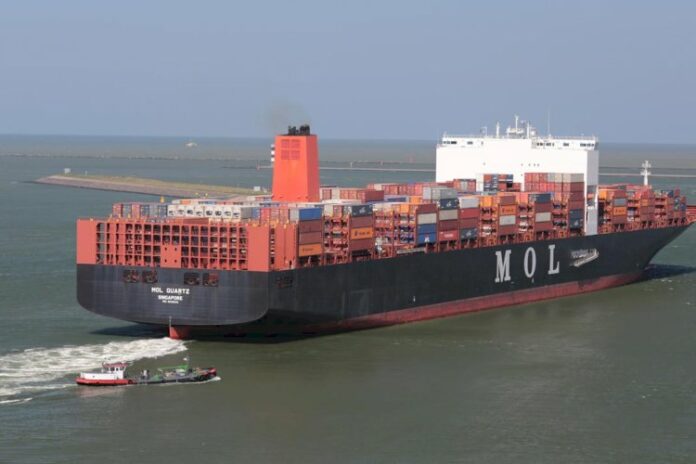
The department has reinforced its measures to quarantine vessels calling at Australian ports to prevent the entry of stink bugs, which are harmful to fruit, vegetables, and other agricultural products, and provide for inspections of car carriers and their cargo.

Stink bugs tend to hibernate when the temperature drops below 15°C, and emerge and become more active as the temperature rises. The quarantine and inspection processes are especially important in cases when vessels load cargo during cold weather in the Northern Hemisphere from October through January and then call at Southern Hemisphere ports including Australia, when temperatures are warmer.

MOL has held extensive discussions with various concerned parties including pest insect experts and Australian government officials. As the first Japanese shipping company to acquire VSPS certification, it is reinforcing measures (Note) on car carriers that ply Japan-Australian and South Korea-Australia routes to meet the strict standards set by the Australian government. Smoother quarantine inspections will be anticipated when vessels call at ports in Australia, reducing delays in unloading vehicles and improving service quality for customers.

As a sustainably growing company contributing to Australia’s social and economic growth, MOL has an ongoing commitment to initiatives that reduce pest risks to the nation’s agricultural industry.

(Note)
Criteria include thoroughness of cleaning inside cargo holds before loading cargo, ensuring appropriate ventilation during cargo loading operations, and thoroughly sharing information about cargo hold inspections and the presence or absence of stink bugs during the voyage with Australian officials.

Jan De Nul installed the first offshore wind turbine for TPC offshore wind farm

0

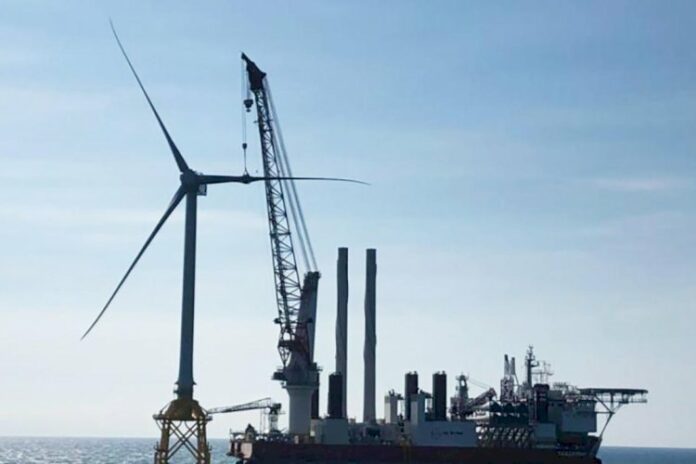
Jan De Nul’s Offshore Jack-Up Installation Vessel Taillevent successfully installed for Taiwan Power Company (TPC) the very first Hitachi turbine onto its jacket foundation.

With the first wind turbine installation completed, the project team will proceed with the commissioning process, along with the final termination of the subsea cable inside the tower.

The TPC Offshore Wind Farm near Fangyuan, eight kilometres off the West coast of Taiwan, will comprise in total 21 units of 5.2 MW wind turbines, each installed on a jacket with transition piece, anchored to the seabed by four steel pin piles.

Philippe Hutse, Director Offshore Division at Jan De Nul Group, says:

“The successful installation of the first wind turbine on TPC’s first offshore wind farm is a remarkable achievement and the result of the good cooperation between Jan De Nul and Hitachi. We never lost sight of our goals, even in these unprecedented COVID-19 times. We look forward to producing green energy in Taiwan.”

The project, in particular the wind turbine installation campaign, has suffered significant delays due to restrictions and new regulations implemented by authorities in Taiwan and around the globe as a result of the COVID-19 pandemic.

The TPC Offshore Wind Farm is constructed in a region where typhoons are very common. Consortium partner Hitachi Ltd. pioneered this design by obtaining the Wind Turbine Class T certification, an international standard on wind-resistant design recognising the need in regions subject to frequent typhoons.

Jiro Yasuda, General Manager of Energy Solutions at Hitachi, says:

“We are very proud of seeing our turbines installed in the open sea. Seeing this is a reward for all our staff who have put so many hours into this project. We would like to thank Jan De Nul for its remarkable support over the past years.”

The turbines are being installed by the Taillevent, specifically designed for the transport and installation of offshore wind turbines and foundations. The vessel measures approximately 140 m in length and is equipped with six spuds. She has an on-board crane with a lifting capacity of 1,000 tonnes and an auxiliary crane of 50 tonnes.

Jan De Nul Group started the construction works for the offshore wind farm back in September 2018 with the preparatory onshore cable duct installation works to connect the existing onshore sub-station to the cable interface near shore.

In 2019, fabrication of the different components were initiated. In April 2020, the first foundation components were readied for transportation from the South Korean fabrication yards to the offshore windfarm area.

In June 2020, Jan De Nul Group installed the first pin piles and connected the first export cable to shore. And by early August, Jan De Nul Group installed and anchored the very first jacket foundation to the seabed.

New innovation programme to support the development of the Blue Economy

0

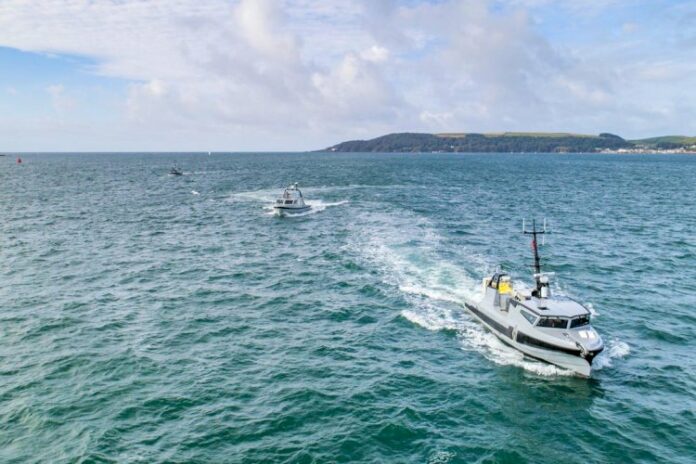
The UK Hydrographic Office has launched its new ADMIRALTY Marine Innovation Programme, the organisation announced today. Spearheaded by the UKHO’s Research, Design and Innovation team and RE_SET, the programme will give innovators and start-ups a chance to develop new solutions that solve some of the world’s most pressing challenges when it comes to our oceans.

The launch of this programme follows extensive research commissioned by the UK Hydrographic Office into the Blue Economy, which is estimated to be worth £3.2 trillion by the year 2030. Marine geospatial data will play an essential role in supporting this growth by enabling the identification of new areas for tidal and wind energy generation, supporting safe navigation for larger autonomous ships, playing a vital role in mitigating the effects of climate change and more.

Successful innovation programme participants will develop their own solutions for these areas, using ADMIRALTY data sets that range from seabed composition samples and bathymetric profiles of the seafloor, to tidal and navigational information. Entrants to some challenges will also work alongside leading experts in research, design and development at the UKHO, with winners receiving an opportunity to launch their products into some of the world’s fastest growing marine sectors.
 
From today, the UKHO are looking for applicants for its first innovation challenge: 

  • Unlocking Autonomous Navigation – identify, trial and prove how navigational data can be used to support the safe navigation of Marine Autonomous Surface Ships. Each selected participant will have access to ADMIRALTY data and expertise, with winners receiving prizes worth £175,000 and an opportunity to launch their product in a sector estimated to be worth £111bn by 2030.

Applications for this challenge will close on 7th October 2020.

Subsequent challenges will invite innovators to develop solutions for areas including maritime insurance, tidal and wave energy generation, blue carbon sequestration and sea-level rise modelling. Dates for these challenges will be confirmed throughout 2020 and 2021.

Commenting on the launch of the ADMIRALTY Marine Innovation Programme, Mark Casey, Head of Research, Design and Innovation at the UK Hydrographic Office said:

“The launch of our Marine Innovation Programme is an exciting milestone in our journey to help many marine sectors solve some of the core issues that we face. We believe that our challenges will support innovation across the Blue Economy and encourage digital leaders to use marine geospatial data in new and varied ways. We would encourage anyone with the skills or a big idea in these areas to get in touch, get involved, and help unlock the power of marine geospatial data”

The launch of the ADMIRALTY Marine Innovation Programme follows extensive research commissioned by the UK Hydrographic Office into the Blue Economy. 
 
A ‘new’ Blue Economy is developing as established economic sectors are being disrupted and new economic sectors emerge, paving the way to the smart, sustainable and resilient use of ocean ecosystems.

This includes the autonomous shipping sector which is estimated be worth £111 billion and employ 554,000 people by 2030. 

Shanghai Ming Wah installs ABB Ability™ Tekomar XPERT fleetwide after fuel savings

0

The fleetwide deployment follows a trial on two ships which started in February 2019 and an initial order covering four vessels in June 2019. The order for the remaining eight vessels was received in July this year.

Under the initial order, ABB Ability™ Tekomar XPERT helped Shang Ming Wah save 0.62 tons of fuel per day on each of the four ships. One vessel, with a MAN B&W 6S42MC main engine, recorded a fuel saving of 4.3g/kWh, highlighting the significant fuel consumption advantages the software can bring to high-powered engines in particular. The lower fuel use will lead to a dramatic improvement in environmental performance, reducing fleetwide CO2 emissions by an anticipated 5,800 tons a year. 

Chen Qiuhua, General Manager, Shanghai Ming Wah Ship Management Center, said:

“With changing market conditions, Shanghai Ming Wah is embracing digital technologies while improving management efficiency, which will enable us to retain our full strength and market competitiveness. ABB is our trusted partner and the Tekomar XPERT digital solution helps our fleet optimize operations while creating a better experience for our customers.”

Tekomar XPERT analyses turbocharger and engine performance to provide pre-emptive warnings and recommendations which can prevent engine failures. In one notable example, Tekomar XPERT helped Shanghai Ming Wah detect high cylinder pressure in one engine. High pressures increase the mechanical load on cylinder components and can lead to operational hazards.

Xu Gang, Head of Services for ABB Turbocharging in China, said:

“In an increasingly digital world, we continue to seek technological innovations to provide customers with more advanced solutions such as Tekomar XPERT. ABB Turbocharging and Shanghai Ming Wah have established a good foundation through many years of cooperation, and this agreement has further strengthened our collaboration.”

Tekomar XPERT empowers ship owners and operators with key engine indicators provided via intuitive dashboards, allowing them to monitor, optimize and benchmark engine performance while preventing engine problems. It runs on any engine, regardless of type or age and is built on ABB’s Ability™ platform with the highest standards of cyber security.

BV and the French flag support SeaOwl’s innovative remote-operated vessel project

0

Named ROSS (Remotely Operated Services at Sea), the concept and capability were successfully demonstrated by SeaOwl last week. 

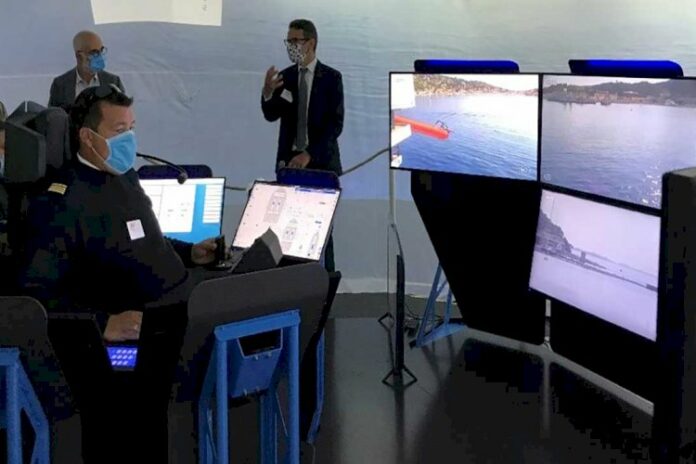
The ROSS retrofitted, Bureau Veritas classed, supply ship ‘VN Rebel’ was operated by a SeaOwl captain based in Paris. The Paris captain was able to take and maintain command of the ‘VN Rebel’ navigating off the French Mediterranean port of Toulon with full remote control of the ship. The ‘VN Rebel’ was sailing with the required authorizations from the French flag ensuring compliance with the IMO resolution for the trial of Maritime Autonomous Surface Ships* (MASS). This is the very first time that this resolution has been applied in France to a ship of this size.

Bureau Veritas provided a reference framework, and risk analysis – based on its own guidance for autonomous shipping (NI 641), to develop a means for the French maritime administration to approve the ROSS concept as per IMO MSC.1/Circ. 1455 for alternative designs. BV’s detailed risk analysis and marine experts assessed the systems’ critical functions to help demonstrate equivalence with traditional maritime convention requirements for safe navigation and operations as required under SOLAS. 

The analysis addressed the resilience of the communications link provided by Marlink (also a partner in the project), the remote operation of watch-keeping, and communications functions. The analysis also included the corresponding remote operations of the machinery including engine, dynamic positioning (DP) provided by Sirehna (also a partner in the project) and the cybersecurity of the system. During the test, in addition to proving the availability of remote navigation functions (steering, visual watch, VHF, anti-collision manoeuvers, etc.), the SeaOwl crew also demonstrated responses to several scenarios including a weather incident, resulting in the loss of communications connectivity, and a cybersecurity attack with the detection of a GPS blurring.

Following this successful demonstration, the next step for SeaOwl is to validate the concept of ROSS onboard a newbuilding designed to provide services to offshore platforms.

Jean-Baptiste Gillet, Advanced Services Director, Bureau Veritas Marine & Offshore, said:

“It is a pleasure to test our guidance (NI 641) in a concrete project like ROSS. It confirms the need to have a thorough risk assessment of the different remotely operated functions, identifying all potential operational scenarios and challenges. One of the challenges for would-be MASS operators and flag administrations has been to find a way to provide a compliance pathway and ensure confidence in both regulator and the regulated. The success of the ROSS project is full of promise as to the quality of future relations between actors and authorities for future developments.”

The Department of Maritime Affairs (DAM – the French Ministry for the Sea) has supported this project from inception, and has assisted the stakeholders in the development of a methodology that ensures a high level of safety and allows the certification of the first remotely operated vessel in France.

The Ministry said:

‘This methodology is based on the work carried out by the International Maritime Organization. It is based on analyses to identify the risks resulting from this new technology and to define the most appropriate solutions to reduce these risks. This work also aims to establish equivalence with a conventional vessel with personnel on board. The DAM welcomes this effective cooperation between the administration and industry in the service of a technological innovation project.’

Vincent Boutteau, Managing Director, SeaOwl Group added:

‘Recognized as crucial from day 1 of the project by SeaOwl, safety and compliance have been successfully tackled through MSC.1/Circ. 1455 methodology with the support of BV. The in-depth risk analysis that have been carried out with BV, and a pool of experts gathered by the French Flag authority have significantly improved the initial design to guarantee now full safety and compliance of the tele-operation platform.’
 

Konecranes wins order for two more mobile harbor cranes from ZHD Stevedores

0

In July 2020, ZHD Stevedores (ZHD) ordered two eco-efficient Konecranes Gottwald Model 6 Mobile Harbor Cranes for their operations in the Netherlands – one for Dordrecht and one for Moerdijk. With delivery in February and commissioning by the end of March 2021, the cranes will handle dry bulk, steel coils, breakbulk and containers.

Active in the so-called Rotterdam-Rijnmond area, ZHD operates terminals (including open and covered storage) in the ports of Dordrecht and Moerdijk. ZHD also renders floating stevedoring services in the Port of Rotterdam.

The two new Konecranes Gottwald Model 6 mobile harbor cranes are the G HMK 6407 B variant in a four-rope grab configuration for dry bulk handling. With a maximum lifting capacity of 100 tons, they are suitable to handle steel coils, breakbulk and containers. Both cranes will be prepared for operations on a pontoon, a modification that provides the versatility needed for multiterminal and multimodal operations. Furthermore, they have different propping bases allowing the crane to be placed and operated in narrow spaces.

Both cranes feature advanced mobile harbor crane drive technology from Konecranes that meets EU Stage V emission standards. Additionally, the cranes are prepared for connection to an external power supply, providing ZHD maximum flexibility in terms of energy source and points of operation.

The cranes are also equipped with the latest Konecranes digital services such as web reporting and bidirectional remote access that allows ZHD to share crane data in order to improve performance and maintenance work.

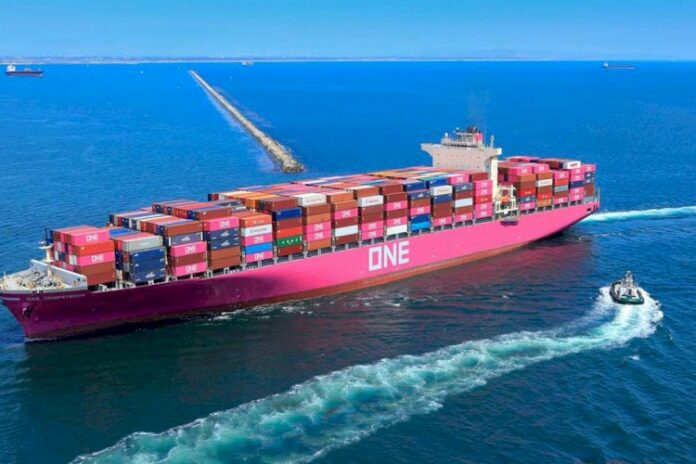
ONE’s new JCV service offers a direct connection from Japan/China to Vietnam

0

The new Japan – China – Vietnam (JCV) service has been developed to further enhance ONE’s Inter Asia Network.

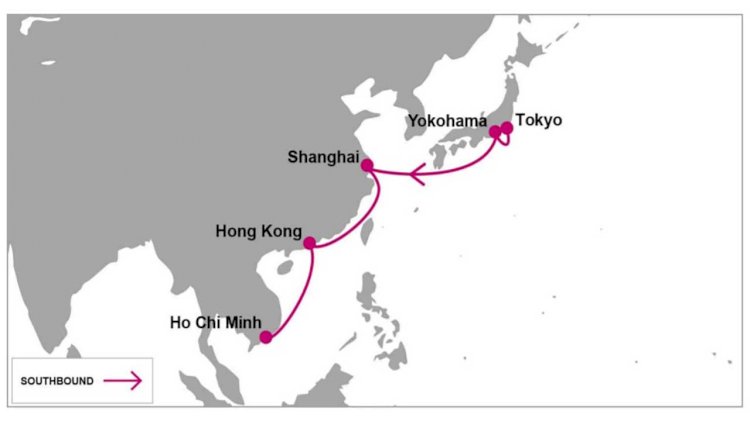
It will be the first direct service from Shanghai to Ho Chi Minh and will increase the frequency of sailings between Japanese ports and Vietnam. The first sailing will commence from Tokyo on 15th of October 2020.

Japan China – Vietnam (JCV) rotation is as follows: Tokyo – Yokohama – Shanghai – Hong Kong – Ho Chi Minh City (Cat Lai)

First vessel: WAN HAI 263 S303 (Tokyo 15th October 2020)

ONE continuously strives to enhances its products and the new JCV service will provide an excellent, reliable and efficient service for ONE’s valued customers. 

DNV GL chosen as lead partner in Offshore Coordination Project for Great Britain

0

DNV GL, the world’s largest resource of independent energy experts and certification body, has been appointed by National Grid ESO as a lead partner in the Offshore Wind Coordination project in Great Britain.

The project will analyse a coordinated approach for offshore grid development and shape the future national strategy of Great Britain’s offshore grid through feeding into the UK Department for Business, Energy & Industrial Strategy’s Offshore transmission network review, which also involves other parties, such as the UK regulator, OFGEM.

The UK has emerged as a world leader in offshore wind energy since the technology’s inception. With an installed capacity over 10 GW of offshore wind, the UK will soon be home to the world’s largest wind farm, Dogger Bank. Offshore wind continues to be a key electricity source for the UK government and supports its commitment for the country to be net zero by 2050. Delivering a future-proof grid which ensures all turbines, substations and cables are connected to the grid safely and effectively is of paramount importance to meeting that goal.

The project will review and recommend ways to improve how offshore wind farms are connected to the onshore transmission network. DNV GL has been commissioned to assess the viability of a coordinated approach including:

  • Assess technology availability (HVDC equipment)
  • Analyse technical and regulatory barriers and solutions 
  • Study implications on power system security and stability
  • Develop offshore and onshore grid designs
  • Conduct societal Cost-Benefit Analysis of the offshore grid

Combining its comprehensive experience of energy markets, power system analysis and transmission & distribution technology, DNV GL brings together a highly skilled and diversely experienced team to assess the most beneficial offshore network development approaches and the results they deliver for energy users (consumers) and coastal communities. As offshore infrastructure is anticipated to be shared among multiple projects, it is projected that a harmonized development approach will result in optimal utilization of infrastructure, higher integration of offshore wind energy, reduction of carbon emissions and  consumer bills, and provision of operational benefits to the onshore grid.

National Grid ESO Head of Strategy and Regulation, Craig Dyke, said:

“This is an important project to be working on with DNV GL, examining different technological and engineering solutions for offshore grid development and relative different costs and benefits. We are committed to helping facilitate offshore wind’s contribution to the UK’s net zero target, as well as ensuring value for money for consumers and reducing the environmental and social impact of onshore connections to local communities.”

Prajeev Rasiah, Executive Vice President North Europe, Middle East & Africa at DNV GL – Energy said:

“We are honoured to lead this project particularly as the UK Government has committed to installing 40 GW of offshore capacity by 2030. This means that offshore transmission and distribution grids need to be capable of supporting the increasing supply of clean electricity from offshore wind projects and help the UK meet its decarbonization plans. The Offshore Coordination Project is a vital venture which will create many lessons learnt and may help to develop an industry standard approach to benefit not just the UK but also other countries.”