4.4 C
New York
Home Blog Page 774

EnBW-aerodyn research project: Nezzy² wind turbine learns to swim in the Baltic Sea

0

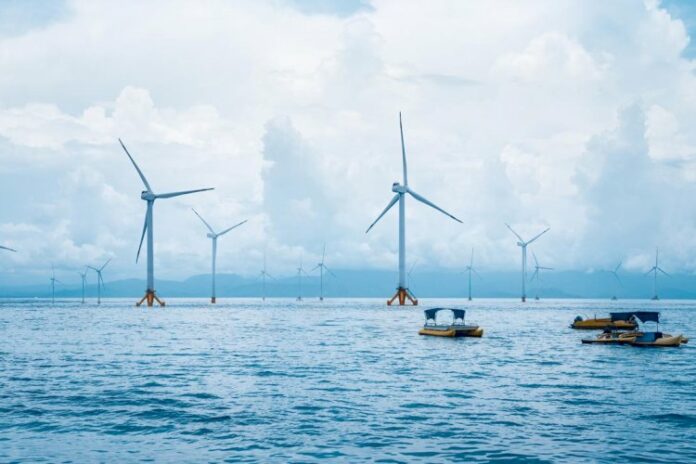
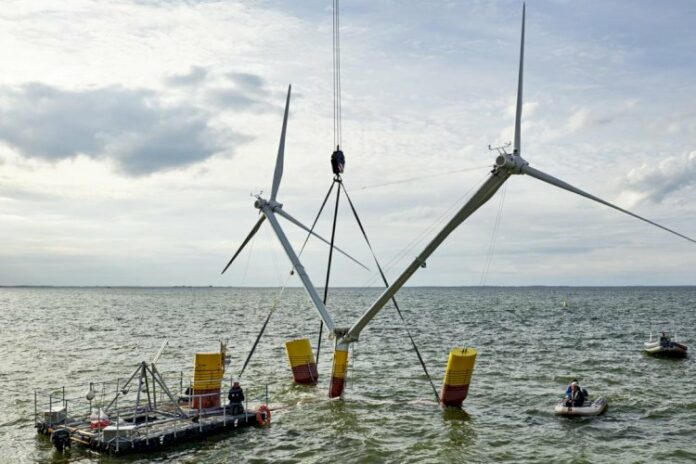
The Nezzy² floating wind turbine is being tested at sea for the first time in Greifswald Bay. EnBW and aerodyn engineering, a north German engineering company, have joined forces to trial this new offshore technology. The 18 metre tall, 1:10-scale prototype consists of two wind turbines on a floating platform made of precast concrete elements.

Until now, offshore wind turbines have been anchored to fixed foundations in the seabed at maximum depths of 50 metres. Floating turbines have the advantage that they can be deployed in deeper waters. 

Hannah König, head of wind and marine technology at EnBW, explains:

“The potential is huge. Looking ahead, the new technology will open up new countries and marine areas with greater water depths for offshore wind power.”

As well as supporting their development, EnBW also plans to deploy the floating turbines itself. 

König says:

“France especially is an attractive market for us.”

aerodyn Managing Director Sönke Siegfriedsen says:

“We are confident that Nezzy² will enable the international offshore wind industry to generate wind power at sea even more cost-effectively in future. In EnBW, we have gained a partner for our test with ten years of experience in the construction and operation of offshore wind farms.” 

Three months, Nezzy² has been successfully tested in a flooded gravel pit near Bremerhaven. Now, the turbine is floating 650 metres off Vierow port, where it is anchored with lines to the sea floor. After the approval by the responsible authority the two companies will examine how the floating turbine performs in wind and wave conditions. If the Baltic Sea trials are successful, a full-scale version of Nezzy² will be put through its paces in China in late 2021 or early 2022.

Abu Dhabi Ports’ Smart Container Initiative to cut emissions by half

0

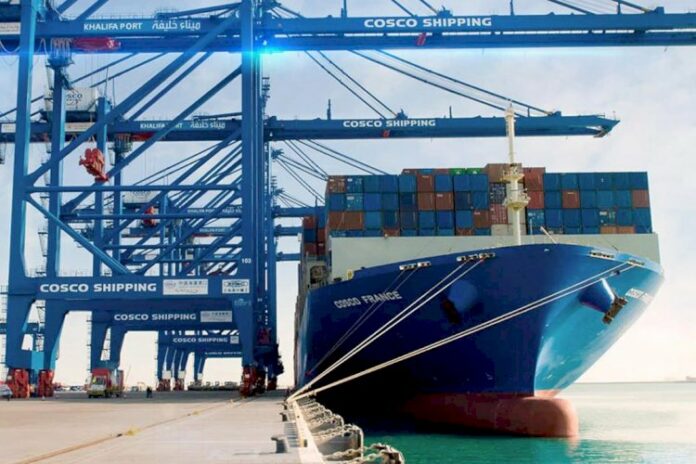
As part of its ongoing digital transformation drive, Abu Dhabi Ports has launched the Smart Container Initiative that will house its digital solutions in a resilient, safe and optimised eco-friendly mobile environment.

Powered by clean energy, the solar-panelled steel and aluminium smart container uses environmentally friendly technologies such as in-row cooling, renewable energy and efficient space allocation that will reduce Power Usage Effectiveness (PUE) by more than 20 percent and will slash carbon emissions by half.

The prefabricated containerised data centre runs a wide range of mission-critical applications, including port and terminal operation systems, visitor passes, and other digital customer services.

Captain Mohamed Juma Al Shamisi, Abu Dhabi Ports Group CEO said:

“Abu Dhabi Ports’ Smart Container Initiative reflects our commitment to devise and accelerate sustainable eco-friendly digital transformation solutions that not only advances the economic and technological prowess of the emirate but also falls in line with the Sustainable Development Goals (SDGs) put forward by the United Nations.

Global maritime organisations need to reassess traditional ways of conducting business and to seek out sophisticated alternatives especially during times of economic upheaval. We are committed to investing in ultra-modern green and clean technology and innovative digital infrastructure that ensures business continuity at all times.”

Dr Noura Al Dhaheri, Head of Digital Cluster and CEO of Maqta Gateway, Abu Dhabi Ports said:

“Adding value across our port operations while maintaining the highest safety standards for our data is imperative in creating a successful streamlined service. This initiative to deploy a mobile data centre is another important step in our continued effort to provide agile and scalable end-to-end smart services to all our stakeholders and customers whilst ensuring business continuity.”

A crucial element in Abu Dhabi Port’s digitalisation success lies in its ability to offer differentiation through hybrid cloud architecture. Its adaptation enables Abu Dhabi Ports to respond faster to digital demands, control costs and provide more competitive pricing to its customers.

Corvus Energy batteries will be installed on the five all-electric ferries

0

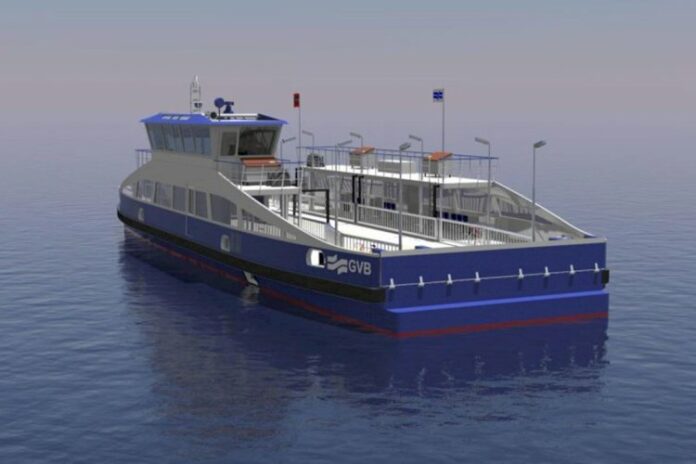
Corvus Energy has announced that the company has been selected by Holland Ship Electric to supply lithium-ion battery-based energy storage systems (ESS) for five new all-electric ferries being built by Holland Shipyard Group for Amsterdam’s municipal public transport provider, GVB.

The ferries will operate on three of the North Sea Canal routes, replacing the current fleet built in the 1930s. The routes in the North Sea Canal are amongst the busiest routes, transporting more than 350 000 cars a year. The replacement of the ferries is in line with the sustainability goals set by GVB and the Municipality of Amsterdam to provide zero-emission public transport in the Municipality of Amsterdam and surroundings. The aim of GVB`s extensive newbuilding and retrofit program aims is that the entire fleet will be hybrid or fully electric by 2025.

Kim Strate Kiegstad, Vice President Sales at Corvus Energy. He continues, says:

“Corvus Energy is very proud to be selected as supplier for these prestigious projects and to contribute to huge emissions savings in the North Sea Canal. We see that the adoption rate for maritime Energy Storage Systems is increasing significantly across the globe – and especially in Europe. In every market, this is a process that needs to mature. Companies such as GVB leading by example will help local shipbuilding and shipowners increase their level of knowledge of the technology and its benefits. We do expect that almost every future newbuild will have some kind of energy efficiency solution included.”

As the leading manufacturer of Energy Storage Systems for maritime applications, Corvus Energy provides battery power to more ferries than all other providers of energy storage systems combined. Beginning with the first zero-emission ferry, Ampere, Corvus Energy’s ESSs have now been selected for close to 100 hybrid and all-electric ferries globally.

All five new all-electric ferries are of the Ijveer design and will be built in Holland Shipyard Group in the Netherlands. Each ferry is 41 meters in length, is 13,9 meters wide, holds 20 cars, four trucks, or 400 passengers. The ferries will be equipped with air-cooled Corvus Orca Energy ESS that will supply electrical power to the ferry’s all-electric power and propulsion system.

The first new ferry will arrive in the summer of 2021. After that, one will arrive every six months, until 2023.

JF AIS provides its next generation R2S digital twin technology

0
Aligning with Vattenfall’s ongoing digitalisation strategy, digital asset and data management specialist, James Fisher Asset Information Services (JF AIS) has provided its next generation R2S digital twin technology to help the major offshore wind developer understand how visualisation can optimise asset management and project lifecycles. 
This demonstration was made possible by a £1.5 million collaboration between the Offshore Renewable Energy (ORE) Catapult and Vattenfall that is helping to accelerate technology commercialisation by directing high-potential UK developers to trials at the EOWDC. This Vattenfall-owned site in Aberdeen Bay is home to some of the world’s most powerful wind turbines, providing a test-bed for offshore wind innovators to demonstrate cutting-edge technology in real-world operating conditions.  
Michael Herdman, Vattenfall’s Project Manager at the EOWDC, says: 
“With digitalisation being one of our main focuses, we are keen to adopt technology which can optimise our operations and maintenance both onshore and offshore. We see huge value in the R2S software. Its digital twin technology allows us to remotely manage our assets using a like-for-like digital copy.  
The service from JF AIS has been excellent, and we are excited about future developments and integrations with different data sources, which will help us manage our assets more effectively and efficiently.”
To help investigate whether R2S technology could transfer to offshore wind, ORE Catapult previously granted access to its 7MW Levenmouth Demonstration Turbine for virtual mapping. The digital twin platform links directly with existing systems, software and data to support more informed decision-making onshore, unlocking new ways to save money and time. 
The EOWDC has been awarded up to €40 million (£35.6 million) of funding from the European Union and is supported by Aberdeen Renewable Energy Group (AREG). The scheme successfully boosts the industry’s drive to supply clean and sustainable power, producing enough electricity every year to meet the annual demand of approximately 80,000 homes. 
Laura Fairley, JF AIS Market Development Manager, adds: 
“Technology transfer across sectors is bringing significant value and we have found this to be the case here. R2S has been developed for over 10 years in the oil and gas sector to help reduce downtime, streamline data access and improve service delivery, mirroring the needs of the offshore wind industry.  
It has been fantastic to work with the forward-thinking team at Vattenfall, creating the R2S model around their digitalisation needs. The initial feedback has been great and I’m looking forward to seeing the added benefits that are created as we look to link more data to their model.” 

Report: Marine energy devices likely pose minimal impacts to marine life

0

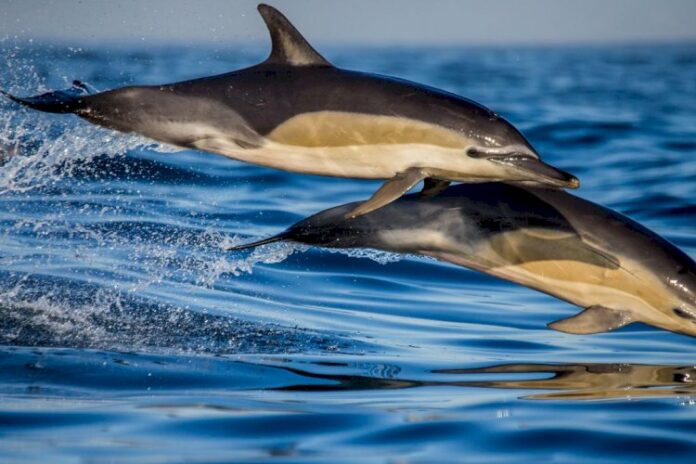
Marine scientists from around the world spent the last four years reviewing numerous studies and other data on the possible environmental effects of marine renewable energy (MRE) devices and found that the potential impact to marine life is likely small or undetectable.  

The 2020 State of the Science report was released by Ocean Energy Systems (OES)-Environmental, a collaboration under Ocean Energy Systems, supported by the International Energy Agency, and dedicated to examining the environmental effects of MRE development. The 300-page report is the most comprehensive international analysis to date on the issue. The report’s release coincides with World Oceans Day. 

Andrea Copping, an oceanographer with the U.S. Department of Energy’s Pacific Northwest National Laboratory and lead author of the report, said:

“We believe that small numbers of operational marine energy devices are unlikely to cause harm to marine animals, including marine mammals, fish, diving seabirds, and benthic animals; change habitats on the seafloor or in the water significantly; or change the natural flow of ocean waters or waves.”

With the ocean covering more than 70 percent of the Earth’s surface, drawing upon the power of the ocean to provide electricity would reduce the carbon footprint from energy production, provide grid stability in remote, coastal areas, and could add $3 trillion to the global economy. MRE development is also expected to create new jobs in supply chain companies and environmental consultancies. MRE is generated from ocean waves, tides, and currents; ocean temperature and salinity gradients; and the flow of large rivers. For example, devices like wave energy converters extract the power from ocean waves and convert it into electricity. Developing a fraction of available wave energy in U.S. waters could result in clean, reliable power for millions of American homes.

The report represents the most up-to-date knowledge on environmental effects of MRE, based on studies and monitoring from publicly available, peer-reviewed scientific literature and reports. The 30 scientists who authored the report investigated potential stressors, including: underwater noise; electromagnetic fields; changes in oceanographic processes, including circulation, wave height, sediment transport patterns, water quality, and marine food webs; encounters with moorings and cables; and the risk of a marine mammal or fish colliding with a device. The report also looks at strategies for accelerating consenting and permitting processes such as marine spatial planning, adaptive management, and retiring risk.

MaREI’s Dr. Anne Marie O’Hagan authored the chapter on Marine Spatial Planning and Marine Renewable Energy. This involved surveying the 15 nations of the OES-Environmental initiative about their MSP practices in relation to MRE development and found that practices varied widely from intentional inclusion of MRE in MSP processes, to application of MSP principles without a formal MSP plan, to the lack of MSP used in MRE development.

The report can help MRE developers consider how to design, site and operate devices; avoid any impacts to marine animals and environments; provide information to government regulators; and inform the broader research community of the latest findings. The authors reported that, with the few MRE devices deployed to date, no marine mammals, fish, or seabirds have ever been observed colliding with a device. Additionally, there was no evidence of harm from underwater noise from operational devices or electromagnetic fields emitted from electric cables; no significant changes in habitat have been caused by MRE devices; and potential changes to oceanographic systems or entanglement of marine animals with mooring systems or cables pose very low risks.

Henry Jeffrey, chair of OES, said:

“This project, supported by the OES, reveals the latest thinking about the interaction of ocean energy technologies with the environment and I strongly encourage its use to help streamline consenting processes and support the responsible development of ocean energy around the world. Since the publication of our 2016 State of the Science report, our understanding of potential impacts has increased as a result of more deployments and monitoring efforts, supported by continuous collaborative efforts among OES nations under the leadership of the US Department of Energy.”

OES functions within a framework created by the International Energy Agency and represents nations with an interest in developing MRE. OES-Environmental is an initiative under OES, made up of 15 countries that collaborate to evaluate the state of the science of potential environmental effects of MRE development, to assist with permitting processes, and to allow increased and responsible deployment of devices.

North Sea Container Line launches new direct Norway service at LCT

0
The service, both southbound and northbound, will link around 15 ports on the west coast of Norway directly with the UK, from Egersund in the south to Tromsø in the north. With a fixed weekly schedule and fast transit times, NCL will offer a wide range of line equipment from its fleet of 1800 containers which includes 20ft, 40ft and 45ft dry and reefer containers.
 
The concept behind the new service is built firmly around the desire to offer a more cost effective and environmentally friendly alternative for the transport of fish from the west coast of Norway. “First and foremost, the original ambition of NCL was to move fresh salmon off the roads and provide a route from the west coast of Norway directly to the heart of the UK market.
 
Bente Hetland, Managing Director of NCL, commented:
“After working on this project for some time, it is clear that there is also a healthy demand for a variety of other products between Norway and the UK. Our investment opens many doors for NCL and provides the market with a much-needed containerised solution whilst allowing us to link and further develop our other existing services from Rotterdam, Hamburg and Bremerhaven into Norway.” 
 
It is expected that the service will be able to achieve cost savings in the region of 25%-30% compared to truck between the west coast of Norway and the UK.
 
John Good Logistics, whose co-operation with NCL extends more than 15 years, will provide a full liner agency service in the UK including sales & marketing, vessel agency and operations and UK haulage.
 
Alan Platt, Chairman of John Good Logistics, added:
“We are delighted to have the opportunity to further develop the NCL brand in the UK and strongly believe in this new concept which will appeal to many customers on a range of different levels. Although we will have a clear focus on reefer cargo, it has already become very apparent that there is a pent up demand for dry cargoes suited to shipping in containers.”
 
The choice of London Container Terminal was determined by its excellent geographical location, its reefer and short sea expertise along with its recognition as Britain’s Greenest Port.
 
 Commenting on the new service, Ross McKissock, Asset Manager from London Container Terminal said:
“This is great news for London Container Terminal as we start NCL’s new and direct connection to Norway this month. Our excellent, Brexit-ready, facilities at LCT provides a fast, low carbon and cost-effective alternative to trucking, showcasing the major benefits of short sea routes.  We are pleased to be working with NCL and John Good to help bring this concept to market and we look forward to supporting users of the service to optimise their supply chains into the UK’s largest Reefer cargo and food market in the South East.”
Source: Forth Ports 

Vineyard Wind releases first batch of pre-construction fisheries science

0

Vineyard Wind has released a significant amount of fisheries science data collected over the last year and a half from both the 501 and 522 lease areas.  

Vineyard Wind CEO Lars T. Pedersen said:

“There’s no question that data and science are essential to developing the best possible industry standards and ensuring co-existence with other ocean users. We take our status as the ‘first mover’ in the industry very seriously and have made understanding potential impacts through science central to our efforts.  We believe setting a solid foundation for this first project will help to establish best practices and allow an industry with unmatched potential for jobs, economic development, and environmental benefits to get going in a responsible manner.”

Studies were designed and conducted by the University of Massachusetts Dartmouth School for Marine Science and Technology (SMAST) and utilize different methods of data collection, including trawling, ventless traps and drop camera surveys and will be evaluated using the Before-After-Control-Impact (BACI) framework.  All studies are conducted from fishing vessels and the ventless trap surveys are supported by the Massachusetts Lobstermen’s Association (MLA).  Under this framework, monitoring will occur prior to development (Before), and then during construction and operation (After).  During these periods, changes in the ecosystem will be compared between the development site (Impact) and a control site (Control).  The control sites are in the general vicinity with similar characteristics to the impact areas (i.e. depth, habitat type, seabed characteristics, etc.).

Dr. Kevin Stokesbury, Professor at the School for Marine Science & Technology (SMAST) at UMASS Dartmouth, said:

“The first year of surveying was very successful providing information on groundfish, lobsters, invertebrates living on the sea floor, and including larval lobster and fishes. The sampling was conducted within a scientific framework to detect a 25 % change in the most abundant species. This sets up a baseline, and with continued surveying, the difference between natural changes and those resulting from windfarm development will be measurable.  The hardest part of these studies is to get out on the water and get moving on them. We are glad to be working with Vineyard Wind and the fishing Industry to get these studies underway.”

MLA Executive Director Beth Casoni said:

“The Massachusetts Lobstermen’s Association (MLA) is glad to be involved in the collaborative research with SMAST in the Vineyard Wind project area. The commercial fishing industry has been asking for industry-based research to be done and we are now entering our second year of survey work with industry members for the pre, during, and post construction surveys. The MLA will be sharing these preliminary findings at our Annual Weekend in 2021 and all are encouraged to attend to learn more about the collaborative research being done today.” 

In addition to the above studies, and at the request of recreational fishermen, Vineyard Wind also partnered with the New England Aquarium (NEAq) on a highly migratory species study.

Lead by NEAq’s Anderson Cabot Center for Ocean Life, the report creates, “a comprehensive assessment of baseline recreational fishing effort for highly migratory species in southern New England and the associated Wind Energy Areas (WEA).”  The analysis finds that “Within Vineyard Wind lease areas (OCS-A 0501 and OCS-A 0522), the available data indicated that recreational fishermen primarily target bluefin tuna, shortfin mako, and ‘any tuna species,’” among other data points. 

Vineyard Wind believes strongly that project specific science should be usable at a regional scale to facilitate efforts to understand potential cumulative impacts of offshore wind and changes to the ecosystem from.

Top North Sea emitter UK needs to electrify its rising oil and gas output to reach climate goals

0

Electrification of oil and gas platforms on the UK continental shelf (UKCS) should play an important role in efforts to achieve this target, as a Rystad Energy analysis shows that UK oil and gas production will remain significant for decades to come. After a small decline over the next several years, output forecast to rebound to approximately 2 million barrels of oil equivalent per day by around 2035.

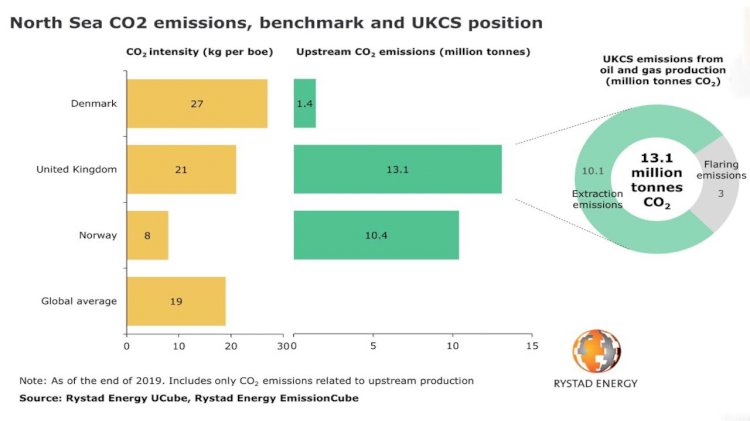
UK emissions from oil and gas production in the North Sea are the highest among the region’s producers, reaching 13.1 million tonnes of CO2 in 2019, according to Rystad Energy emission data. Extraction emissions account for 10.1 million tonnes of CO2, with flaring making up the rest.

In comparison, Norway’s total emissions from oil and gas production reached 10.4 million tonnes of CO2 and Denmark’s 1.4 million tonnes in the same year.

When it comes to emission intensity, the UK’s 21 kilos of CO2 per barrel of oil equivalent (boe) is also behind Norway’s impressive 8 kilos per boe. Denmark has the highest intensity in the region with 27 kilos of CO2 per boe, reflecting its low production levels compared to its infrastructure energy needs. The global intensity average is 19 kilos of CO2 per boe.

Rystad Energy projects UK oil and gas production to rise over the years and peak at 2.09 million boe in 2035, up by about 25% from the 1.64 million boe expected this year. In order to reach its ambitious climate goals, the country will need to take serious steps towards decarbonization of its production by electrifying its infrastructure via renewable sources of energy, thus moving away from carbon-intensive gas turbines and diesel generators on offshore platforms.
Rystad Energy’s upstream analyst Olga Savenkova says:

“There is significant room for improvement when it comes to reducing carbon intensity on the UKCS. We already see that priorities are shifting toward greener solutions from both sides of the decision-making process, and many operators and investors are now including an additional carbon cost in their capital allocation decisions.”

The Norwegian continental shelf (NCS) may serve as a great example: There are currently eight oil and gas fields partly or fully electrified in the country, and another eight fields with sanctioned electrification projects. Rystad Energy expects that 60% of NCS production will come from electrified offshore platforms by 2025.

Following Norway’s lead, several major operators in the UK – as well as some smaller players – are conducting feasibility studies targeting platform electrification across the Central North Sea and West of Shetland. Low-emission design will become part and parcel of new field development plans.

An associated risk here is that high-carbon-intensity developments may struggle to meet sanctioning requirements and late-life producing assets may face permanent shutdown earlier. As a result, companies will end up with stranded assets if they don’t take timely emissions reduction measures.

The initial capital investments for using renewable power generation offshore will be higher than traditional power generation solutions, but this additional cost will be partially offset by lower operating costs and carbon price savings. At the same time, the absence of energy-generation equipment on platforms will reduce topside weight and manpower requirements, as well as noise and vibration. Fields’ own use of hydrocarbons will also be reduced, and the problem of fuel deficiency for power generation for mature assets will become obsolete.
Shortly after announcing the results of the 32nd lease round earlier this month, the UK government launched a policy review of its future offshore oil and gas licensing regime as part of the net-zero emissions target. This may result in emissions-reduction obligations being incorporated into the scoring system for future license applications.

Another important technology for achieving the net zero target is carbon capture and storage (CCS), which, according to OGA estimates, could remove more than 130 million tonnes of CO2 per year from UK emissions. The UK oil and gas sector is well positioned to redeploy its skills, capabilities and existing infrastructure to accelerate CCS deployment.

The UKCS has enough CO2 storage capacity to fully support the country’s needs, along with oil and gas infrastructure that can be reused for this purpose. Hydrogen is a low-carbon energy source which could replace fossil fuels in power generation, heating and transportation.

The final important building block in the UKCS’s comprehensive approach toward energy transition is offshore wind. Development of offshore wind clusters near oil and gas production hubs can create significant opportunities for green electrification of production platforms. At the same time, access to lower-cost electricity directly from offshore wind farms for oil and gas operators creates commercial opportunities for wind developers to expand.

The installed capacity of global offshore wind was 27.6 GW last year, 35% of which was in the UK. The country’s installed offshore wind capacity is set to rise to 10.4 GW this year from 9.7 GW in 2019 and will surge to almost 38 GW by 2030, close to the government’s target of 40 GW, Rystad Energy estimates.

SBO intends to order a new vessel with an option for a second new-build

0

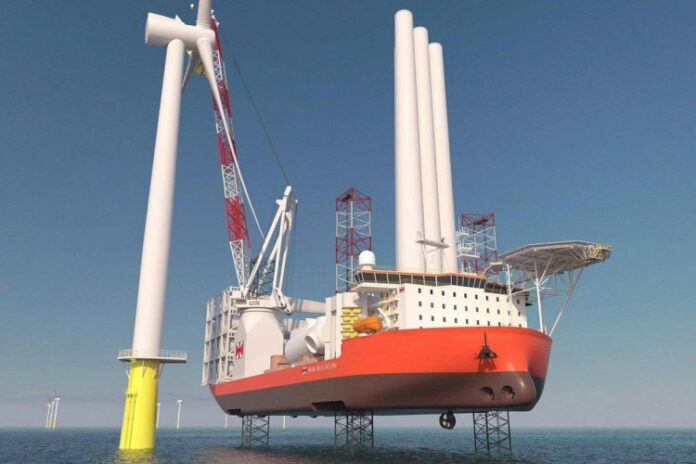
The development comes as the Danish operator prepares itself for the installation of next-generation wind turbines over the coming decade and beyond. Offshore wind turbines continue to scale up, and this planned investment will keep SBO at the forefront of this fast-moving industry.

Mikkel Gleerup, CEO of SBO, said:

“I am proud to announce that our organisation has put in the hard work to understand the challenges the industry faces, and is now equipped to deliver a solution which will prevent a supply chain bottleneck when new turbine models reach the market in the mid-2020s.”

SBO has shortlisted several leading international shipyards for the order of a new Wind Farm Installation Vessel (WIV) with capacities unseen in the industry up to now. The planning process began in April 2019, and Gleerup is confident that the company has designed a highly competitive asset, able to work on the most difficult sites, with the largest equipment in the industry.

The vessel design, created in partnership with GustoMSC, is a bespoke version of the NG-20000X-G design, with multiple customisations based on SBO’s decade of experience in the industry.

Janus Joensen, Head of Engineering and R&D, says:

“It has been key for us to deliver an asset that can grow with the industry, but also offer a cost base that is attractive in the market. We have collected significant data over the last decade and by building these learnings into the design we hope to bring material benefits to our customers.”

Over the past year, Swire Blue Ocean has run engineering studies in order to understand how far it could extend the capabilities of its existing “O-class” vessels.

SBO has performed extensive market research, working closely with the major developers and turbine manufacturers. SBO focused on defining the optimum design for replacing the main cranes on its WIVs, considering both the needs of the future market and the vessels’ technical potential.

SBO’s engineers and project partners have developed a crane that is designed to provide an overturning moment of 100,000 t/m, while maintaining the vessels’ exceptional capacity to jack up on difficult sites and weather treacherous offshore conditions. The main cranes are designed to provide up to 1600 tonnes of lifting capacity with a 155 m hook height above deck. These specifications are expected to meet the requirements for installation of all turbine models currently under development and allow for the continued growth of turbine components.

The installation of the new cranes is scheduled to commence in Q4 2023.

ABS and HHI complete design simulation Joint Development Project

0

ABS and Hyundai Heavy Industries (HHI) have completed a Joint Development Project (JDP) to build multi-physics simulations capable of analyzing the carbon-footprint of vessels in the design stage.

The simulations allow in-depth evaluation of the impact of a range of energy saving options, offering a detailed preview of a vessel’s performance before key investment decisions are made.

Patrick Ryan, ABS Senior Vice President, Global Engineering and Technology, said:

“The modeling and simulation techniques that ABS and HHI are pioneering allow owners, designers and shipyards unprecedented insight into the impact of multiple decarbonization strategies on a vessel’s performance at the earliest possible stage. This approach unlocks benefits in operational efficiency, safety and investment decision making. This technology also aligns with our industry-leading efforts to introduce a paperless end-to-end class process, demonstrating how we are moving ahead and realizing the benefits of digital class for the industry.”

Jaeeul Kim, Executive Vice President and CTO of HHI, said:

“This joint project will give us more options to review alternative technologies at early design stage. Our vessels fully comply with IMO’s environmental regulations before 2050, with LNG dual fuel propulsion systems, including various original energy saving devices and continuous developments will keep HHI and ABS front-runners in this fast changing industry.”

The simulations connect to a broad range of inputs from many model types such as computational fluid dynamics models, wave resistance models, and data-validated engine performance models. A multi-physics model unlocks the ability to evaluate the performance impact from the design options and the operational measures. Examples of technologies that can be evaluated in the modeling process include air lubrication systems, energy-saving devices, voyage speed profiles, and engine fuel options. The simulations can also reflect the impact of inputs from a range of data sources and optimization tools allowing comprehensive analysis of the trade-off between different vessel configurations.

Georgios Plevrakis, ABS Director, Global Sustainability, said:

“Developing a detailed understanding of the impact of your chosen decarbonization pathway on a vessel during the concept design phase is a major step forward in helping owners navigate the complexity of building a fleet capable of meeting IMO sustainability objectives.”

The JDP is the latest in a series of sustainability focused projects between HHI and ABS, following the LNG Bunkering Vessel Compatibility Study, which was delivered in June. The project included a review of existing and proposed LNG bunkering vessels including LNG capacities, mooring arrangements, bunker manifold arrangements, hose handling arrangements and ship-to-ship communications.