0.5 C
New York
Home Blog Page 772

Somali piracy: Last three hostages freed but threat still exists

0

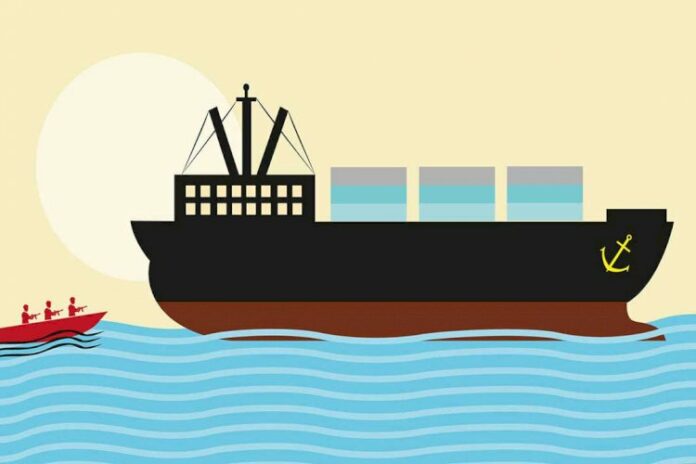
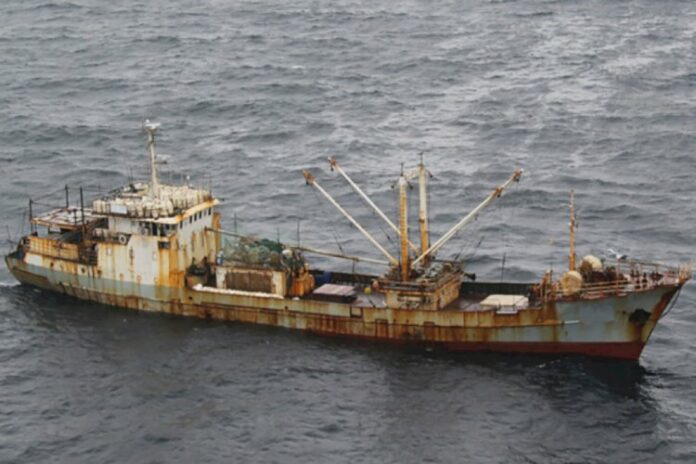
The three had been working on an Iranian fishing vessel, FV Siraj, when it was hijacked off the coast of Hobyo, Somalia in March 2015. They are now on their way home after completing tests for Covid-19 and undergoing other medical checks.

In a letter dated 15 September, the Chair of the Contact Group on Piracy off the Coast of Somalia (CGPCS) expressed relief over the release; made possible due to the intervention of the Hostage Support Partners (HSP). 

CGPCS said:

“Their continuous pro-bono support and negotiations with Somalia pirates and other key stakeholder, over the years led to freeing of the remaining crew members.”

HSP also facilitated the release of the fourth member of the FV Siraj in 2019 for urgent medical care.

CGPCS also commended the role played by charity International Seafarers’ And Assistance Network (ISWAN) which provided assistance through the CGPCS’ Piracy Survivors Fund in supporting the families of hostages during difficult periods of captivity and upon returning home.

International Maritime Bureau (IMB) welcomes the good news. However, it warns that ships still need to be alert and remain vigilant and not get complacent when transiting Somalia waters as the threat of attacks still exists.

Navies need to have continued presence in the region to have a stabilising effect IMB says.

Vessels are urged to continue implementing BMP5 recommended practices while transiting these waters.  Somali pirates still maintain the capability for carrying out attacks.

No attacks were reported off Somalia in 2019 and up to June 2020. In 2018 three vessels were reported being fired upon in the region.

First vessel in the world that autonomously sails the most optimal route

0

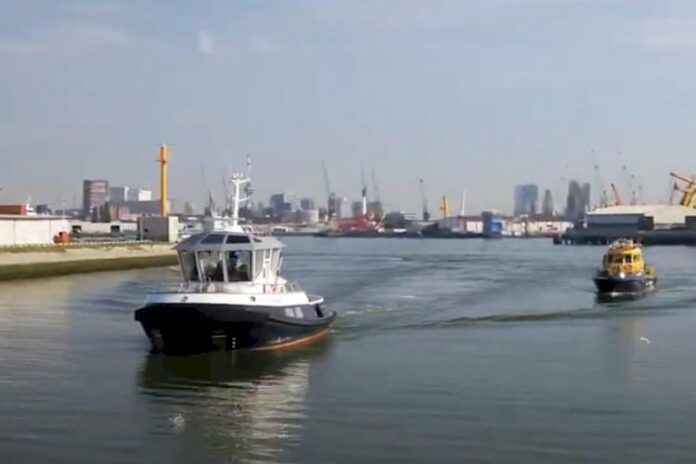
Maritime service provider KOTUG International, ship design company Rotortug®, and tech start-up Captain AI today demonstrated the first boat in the world that sails the most optimal route without human intervention at the Smart Shipping event of the Netherlands Forum for Smart Shipping. A significant milestone on the road towards fully autonomous and sustainable sailing.

In the summer of 2018, KOTUG and Rotortug® already demonstrated that it is possible to operate a tugboat in the port of Rotterdam, the Netherlands, remotely from Marseille, France. That was the first step on the roadmap towards fully autonomous sailing. In collaboration with Captain AI, it is now possible to safely sail the Rotortug® “RT Borkum” autonomously on the river Nieuwe Maas in Rotterdam using the Captain AI Route Planner and Autopilot. 

Vincent Wegener of Captain AI says:

“The route planner can be seen as the Google Maps for waterways. It calculates the route, which the boat then autonomously sails, using our autopilot software.”

To define this route as efficiently as possible, Captain AI’s software is connected to the KOTUG Optiport dispatch planning software, enabling optimized route planning in real-time, based on AIS data and Artificial Intelligence.

Patrick Everts of KOTUG:

“The digital captain has to know what the vessel’s destination is and how to get there in the most efficient way. Linking Captain AI’s software to OptiPort is not only making the skipper’s life easier because vessels can autonomously navigate the optimal route, but is also saving on fuel and CO2 emission”.

The “RT Borkum” already has undergone several successful operational tests in the busiest port of Europe, proving for the first time that autonomous planning followed by autonomous sailing works in practice.  

KOTUG International and Captain AI have entered into a partnership to further develop and commercialize the software. The next step is making the software suitable for large-scale applications and to explore matters such as safety and legislation, in consultation with the users and legislators.

Marine-i supports development of innovative platform for floating offshore wind construction

0

Part funded by the European Regional Development Fund, Marine-i is designed to help the marine tech sector in Cornwall and the Isles of Scilly grow through harnessing the full potential of research and innovation.

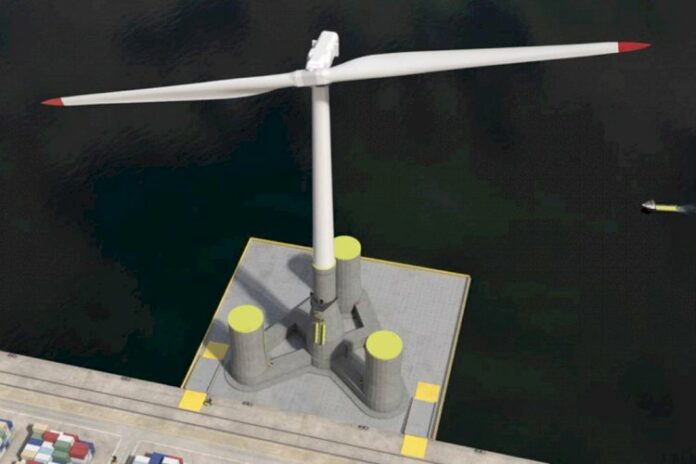
The innovative design has been created by TUGDOCK Ltd, which is based in Falmouth, Cornwall. The company has patented and produced a novel floating solution to lift structures for various uses. Lucas Lowe-Houghton, Director of Business Development for TUGDOCK, explains:

“The Floating Offshore Wind sector is growing fast worldwide, with enormous opportunities now emerging in the Celtic Sea and beyond. However, very few ports have sufficient water depth and assembly space to enable the commercialisation of these huge turbine floaters. TUGDOCK solves this problem. Our submersible platforms can operate in as little as 5 metres draft, enabling a more efficient construction. The platform is then towed to deeper water for launching of the turbines. Our platform is modular, easy to erect, and reusable. The TUGDOCK solution potentially means that a much larger number of UK ports could be involved in the fabrication of these structures, creating many new jobs.” 

The next step for TUGDOCK is to carry out rigorous testing of a scale model of the platform. Marine-i is supporting this through grant funding and by providing access to leading-edge marine RD&I expertise and world-class testing facilities. Prof Lars Johanning of University of Exeter, lead partner for Marine-i, says: 

“The development of floating offshore wind energy in the Celtic Sea is a huge opportunity for Cornwall and the South West. Enabling this technology to reach its full potential will require new thinking and innovative solutions from potential suppliers, just like those being proposed by TUGDOCK. We will be helping them to demonstrate the operational capability of the new platform, using the world class testing facilities at COAST Lab. We will also be researching the types of sites that the platform would be used in and how stable it will be in various sea conditions.”

Lucas Lowe-Houghton adds:

“We are very grateful for this support from Marine-i. Having access to this level of research expertise will really help to accelerate the development of our unique technology, opening up a fast growing global market for us.”

Study: ‘Wrong-way’ migrations stop shellfish from escaping ocean warming

0

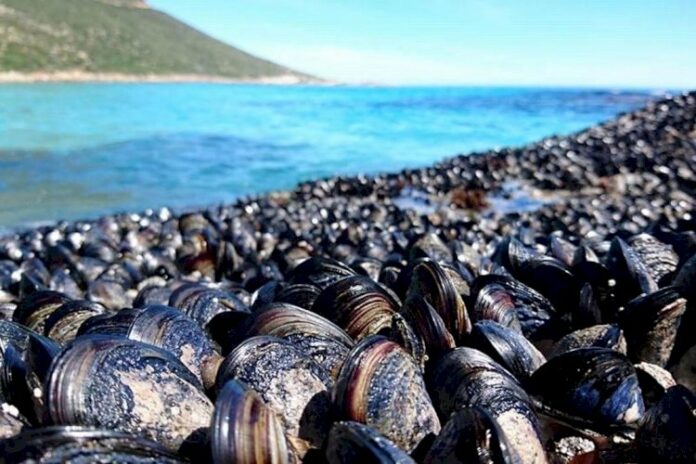
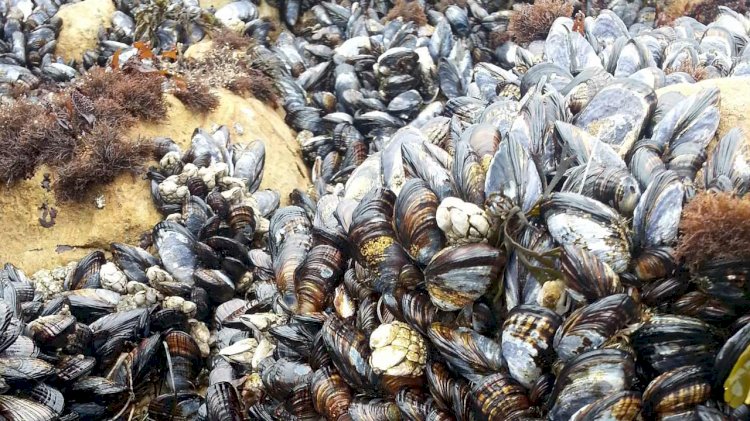
Ocean warming is paradoxically driving bottom-dwelling invertebrates that are valuable to the shellfish industry –- including sea scallops, blue mussels, surf clams and quahogs –- into warmer waters and threatening their survival.

In a new U.S. National Science Foundation-funded study published in Nature Climate Change, researchers identify a cause for the “wrong-way” species migrations: warming-induced changes to their spawning times, resulting in the earlier release of larvae, which ocean currents push into warmer waters.

The researchers, at Rutgers University and other institutions, studied six decades of data on 50 species of bottom-dwelling invertebrates and found that about 80% have disappeared from Georges Bank off Massachusetts and the outer shelf between the Delmarva Peninsula and Cape Cod.

Heidi Fuchs of Rutgers, the study’s lead author, said:

“The deeper, colder waters of the outer shelf should provide a refuge from warming, so it is puzzling that species distributions are contracting into shallower water.”

Many species of fish respond to a warming ocean by migrating to cooler waters. But the “wrong-way” migrators – which include shellfish, snails, starfish, worms and others – share a few crucial traits. As larvae, they are weak swimmers and rely on ocean currents for transportation. As adults, they tend to remain in place.

A warming ocean would have caused these species to spawn earlier in spring or summer, exposing their larvae to winds and water currents they wouldn’t experience during the normal spawning season.

As a result, the larvae would be pushed toward the southwest and inland, where waters are warmer and larvae are less likely to survive. Those who survive to adulthood stay in these areas, and are trapped in a feedback loop in which warmer waters lead to even earlier spawning times and a further shrinking of their occupied areas.

Cynthia Suchman, a program director in NSF’s Division of Ocean Sciences, says:

“Studies like this that combine ocean physics and biology can help us understand how populations of marine organisms are responding to climate change.”

VIDEO: Wallenius Marine reveals the new design for the wind powered ship Oceanbird

0

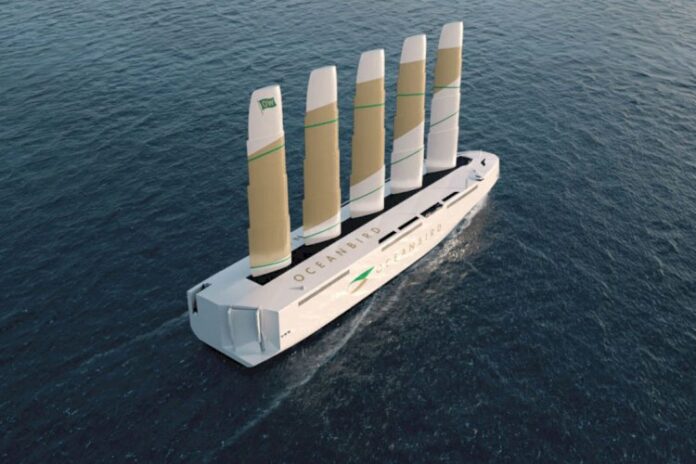
The 200 metres long and 40 metres wide cargo vessel will be able to cross the Atlantic in 12 days.

The wing sails are all of 80 metres tall, giving the ship a height above water line of approx 100 metres, but thanks to a telescopic construction they can be lowered, resulting in a vessel height above water line of approx 50 metres. This comes in handy when passing under bridges or if the surface area of the wingsails needs to be reduced due to strong winds.

To be able to get in and out of harbours – and as a safety measure – the vessel will also be equipped with an auxiliary engine. Powered by clean energy, of course. The first vessel will be a cargo ship, but the concept can be applied to ships of all types, such as cruise ships.

Naval Architect Carl-Johan Söder says:

“Together with our partners KTH and SSPA, we will continue testing with the 7 metre models in basin and open water, during the fall. The design will be developed in different aspects as we continue to put in new data from tests in the simulations. This will also be an important platform to test and demonstrate the control algorithm for the wing rigs and hydrodynamic appendixes.

We are also lining up for the first round of seakeeping test in SSPA maneuvering basin from end of September. This will be unique tests where the model will be equipped with fans in order to capture both aero and hydro dynamic effects in model scale. So, all in all we are looking forward to a very intensive autumn with several exciting activities.“

Predicted growth in plastic waste exceeds efforts to mitigate plastic pollution

0

Ambitious global efforts to reduce plastic pollution are not enough to overcome the predicted increase in plastic production: a fundamental restructuring of the global plastic economy is needed.

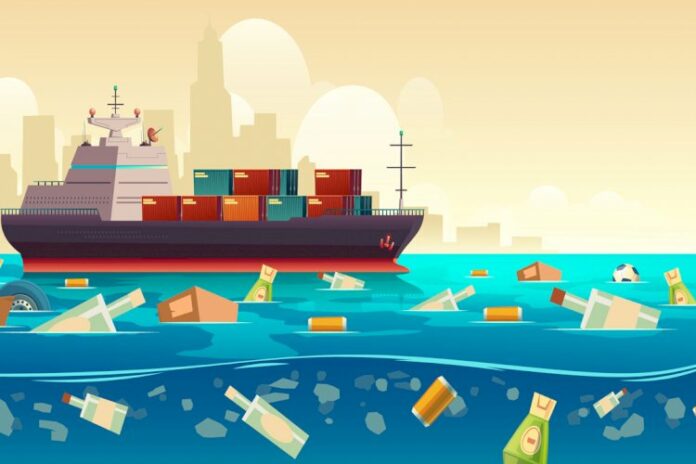
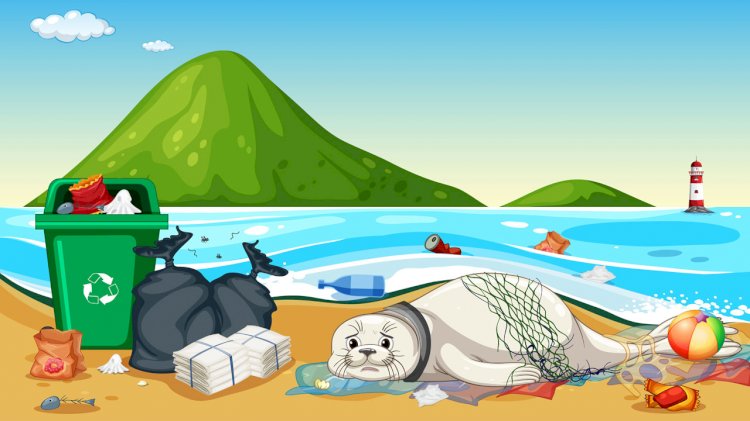
Plastic pollution inputs into rivers, lakes and the ocean could increase to as much as 53 million metric tons annually by 2030 even if current reduction commitments made by governments and the private sector are met, according to a new study published by the international journal Science. This is approximately equivalent to one cargo ships’ worth of plastics, by weight, entering aquatic ecosystems every single day.

The SESYNC (National Socio-Environmental Synthesis Center) working group comprised of scientists from the University of Toronto, University of Georgia, Ocean Conservancy and nearly 20 other international institutions modelled several future scenarios to estimate annual plastic emissions out to the year 2030. The working group compared “business as usual” with current commitments and an ambitious target of less than 8 million metric tons of plastic entering aquatic ecosystems yearly. Using a mechanistic process flow model, researchers were able to calculate that 24 to 35 million metric tons of plastics entered aquatic ecosystems in 2020 alone.

Dr. Chelsea Rochman, Assistant Professor at the University of Toronto, science advisor to Ocean Conservancy and senior author on the study, said:

“Even if we achieve our most ambitious plastics reduction and recycling targets, the amount of plastic waste entering aquatic ecosystems could double by 2030. If we fail and continue along a ‘business as usual’ path, it could quadruple. The study lays bare that current commitments are not enough to stem the tide of plastic entering our aquatic ecosystems – we need to be doing much more, and we don’t have a moment to lose.”

Truly extraordinary efforts are needed to reach a target of 8 million metric tons, a number the world deemed unacceptable when Dr. Jenna Jambeck and colleagues published the first quantitative estimate of plastics entering the ocean in 2015. These latest findings show that to reach that goal, plastic production and waste would need to be reduced by 25-40%; all countries would need to properly manage 60 – 99% of all their waste; and society would need to recover 40% of the remaining plastics that do enter the environment – a rate equivalent to roughly one billion people participating in Ocean Conservancy’s International Coastal Cleanup each year.
Nick Mallos, Senior Director of Ocean Conservancy’s Trash Free Seas® program and a co-author of the paper, said:

“These numbers underscore the need for a sea change in our relationship with plastics. The needed level of ambition should be a wakeup call for governments, industry and civil society around the world to rethink the global plastics economy.”

George Leonard, Chief Scientist at Ocean Conservancy and a co-author of the paper, added:

“There is no single solution that will protect the ocean from plastic pollution. We are at an all-hands-on-deck moment: we need to rapidly reduce plastic production, massively improve waste management, clean up what does enter the environment, and build the political will to hold plastic producers responsible for their products.”

The findings of this study are consistent with other analyses done by Ocean Conservancy, including the organization’s 2019 Plastics Policy Playbook, which showed that a broad range of solutions are needed to tackle this mounting environmental threat. Another paper published by a separate research team in the same issue of Science echoed the need for a more ambitious, multipronged strategy to stem the tide of accelerating plastic waste.

Source: Ocean Conservancy

VIDEO: Damen launches Marine Aggregate Dredger for Hanson

0

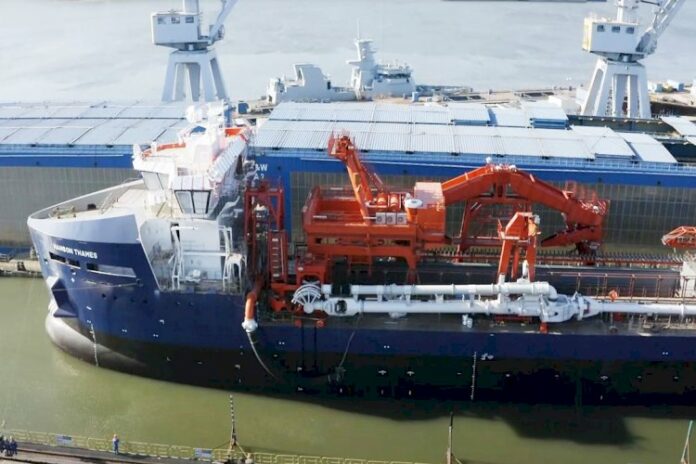
On 11th September, Damen Shipyards Group launched a Marine Aggregate Dredger (MAD) 3500 at its Galati yard in Romania.

Damen is building the MAD for UK-based Hanson. The company will use the vessel to conduct offshore aggregate extraction in water depths up to -55 metres in the North Sea and English Channel.

The MAD was successfully launched, despite the impact of the coronavirus during this critical stage of production. To ensure the safe continuity of its business operations around the world, Damen has taken numerous measures at its yards and offices.

Damen’s MAD range applies innovative maritime engineering to ensure safe, comfortable operations even in adverse conditions. Safety is further enhanced by the positioning of all dredge pipes above main deck. The equipment itself is protected by the MAD’s enclosed bow.

The MAD 3500 model specifically aims at achieving the optimal balance between payload and efficiency within the limited dimensions required for the vessel to traverse the Shoreham Lock on the English south coast.

Following the launch, Damen will complete work on the vessel, to be named Hanson Thames, and afterwards undertake commissioning, including of dredge equipment and screening installation from Damen Dredging Equipment in the Netherlands and a dry unloading system from PLM Cranes.

Austal Australia delivers 7th Guardian-class Patrol Boat

0

The vessel, PSS President H.I. Remeliik II, was gifted by the Government of Australia to the Government of Palau during a handover ceremony at Austal Australia’s Henderson shipyard.

Austal Chief Executive David Singleton said this Guardian-class Patrol Boat delivery was unique as it is the first to take place under COVID-19 restrictions, limiting the attendees at the ceremony. 

The Pacific Patrol Boat Replacement (PPB-R) Project was awarded to Austal in May 2016, with an additional contract option awarded in April 2018, taking the program to 21 vessels valued at more than A$335 million.

Twelve Pacific Island nations including Papua New Guinea, Fiji, the Federated States of Micronesia, Tonga, Solomon Islands, Cook Islands, Kiribati, Marshall Islands, Palau, Samoa, Tuvalu, Vanuatu and Timor Leste will receive the vessels through to 2023.

The Pacific Patrol Boat Replacement Project supports more than 200 direct jobs at Austal Australia and more than 200 indirect jobs nationally, through approximately 450 Australian businesses contracted.

Austal’s service centre in Cairns is providing in-service support to the growing Guardian-class Patrol Boat fleet, with more than 40 people now employed in a variety of engineering and sustainment roles in the Far North Queensland city.

The 39.5 metre steel monohull patrol boat – designed, constructed and sustained by Austal Australia – is based on a proven design platform that has included the 38 metre Bay-class, 56 metre Armidale-class and 58 metre Cape-class patrol boats that are in service with the Australian Border Force and Royal Australian Navy.

The PSS President H.I Remeliik II is replacing its namesake predecessor, a Pacific-class Patrol Boat that has been in service in Palau since 1996.

Data initiative sets sights on tackling global ocean challenges

0

Under this contractual agreement, Skylight will be used to provide data solutions that may help NOAA Fisheries and its partners identify potential IUU fishing activities.

IUU fishing is an internationally recognized problem that has far-reaching consequences for national security, global economies and marine fisheries. In addition to helping to identify IUU fishing activities, this partnership calls for the development of potential approaches to increase the use of maritime domain awareness that support the protection and conservation of North Atlantic right whales, an endangered large whale species with only about 400 remaining. Entanglement in fishing gear and vessel strikes are the leading causes of right whale mortality.

Retired Navy Rear Admiral Tim Gallaudet, Ph.D., assistant secretary of commerce for oceans and atmosphere and deputy NOAA administrator, said:

“NOAA scientists from across the country will work with the Vulcan team on the use of data systems to help tackle some of the biggest challenges facing our Blue Economy. When U.S. science and technology agencies and leading private sector firms work together, we can achieve great success in tackling real-world challenges while also fostering innovative approaches.”

Seattle-based Vulcan Inc. developed the Skylight system as part of its philanthropic ocean portfolio and is working with partners across the globe to tackle one of the leading drivers of ocean decline and threat to a sustained food supply. Skylight leverages artificial intelligence and machine learning algorithms to identify suspicious activity, cutting through the noise, helping authorities to focus investigations and determine proper action.

Utilizing artificial intelligence is also a strategy of NOAA, to reduce the cost of data processing, and to provide higher quality and more scientific products and services for societal benefits.

Ted Schmitt, Principal Program Officer for Skylight, said:

“It is very gratifying to partner with organizations such as NOAA. Together, we can make a difference and create impact towards reducing IUU. Vulcan developed this maritime awareness tool as part of our philanthropic portfolio to specifically address one of the greatest drivers of ocean health decline. This pilot program with NOAA is a great example of how public-private partnerships have the potential to leverage technology to change that trajectory.”

NOAA and the Skylight team will spend the next 3 to 6 months exploring additional opportunities that could potentially help augment how the agency addresses these marine resource issues.

NOAA has entered into numerous public-private partnerships, including with Caladan Oceanic, OceanX, Ocean Infinity and Viking Cruises.

Great Lakes announces receipt of $118.8 Million in awarded work

0

The awarded work includes:

  • Post 45 Contract 4 Charleston Lower Harbor New Work Dredging Project (Capital, South Carolina, $52.9 million)
  • Emerald Isle, North Carolina Post-Florence Renourishment – Phase 3 Project (Coastal Protection, North Carolina, $30.6 million)
  • Freeport Harbor Channel Improvement Project, Reach 3 Lower Stauffer Channel (Capital, Texas, $15.5 million)
  • Upper Yazoo Dredging Subcontract (Capital, Mississippi, $7.2 million)
  • Grand Isle and Vicinity, West End Beach Nourishment Project (Coastal Protection, Louisiana, $6.4 million)
  • Hudson River Maintenance Dredging Project (Maintenance, New York, $6.2 million)

The Post 45 Contract 4 Charleston Lower Harbor New Work Dredging Project consists of maintenance and new work dredging of material from the Charleston Lower Harbor to Hugh Leatherman Terminal. This work is one of the final phases of the deepening project that Great Lakes began for the U.S. Army Corps of Engineers Charleston District and South Carolina State Port Authority in 2017.  

When all phases are concluded, Charleston will have the only 52-foot deep channel in the Southeast.  Funding for this project comes from both the Federal Government and the State of South Carolina.  Excavated material will be placed in upland placement areas and the Ocean Dredged Material Disposal Site (ODMDS).  The work also includes measures to ensure compliance with requirements of the Endangered Species Act and Marine Mammals Protection Act. Work on this project is expected to begin in the fourth quarter of 2020, with anticipated completion in the second quarter of 2022.

The Emerald Isle, North Carolina Post-Florence Renourishment – Phase 3 Project includes offshore borrowing of material and placement of sand over approximately 10 miles of beach in the Town of Emerald Isle in North Carolina.  Funding for this project was provided from Federal supplemental appropriations after Hurricane Florence.  Great Lakes also successfully completed Phase 1 in April of 2019 and Phase 2 in April of 2020. Work on this project is estimated to begin in January of 2021.

The Freeport Harbor Channel Improvement Project, Reach 3 Lower Stauffer Channel work is the first segment in the harbor improvement project. Project work includes the deepening of the channel to 53 feet and the widening of one channel section to make way for larger, deeper-draft vessels serving the container and crude oil export industries in the port. The client on this project is the U.S. Army Corps of Engineers Galveston District in conjunction with Port Freeport, Texas. Funding is provided by the Federal government and Port Freeport.  Work is estimated to start in the fourth quarter of 2020, with anticipated completion in the second quarter of 2021.

The Upper Yazoo Dredging Subcontract consist of new work dredging in the Yazoo River Basin in Tallahatchie County, Mississippi. This project is a continuing channel improvement effort by the U.S. Army Corps of Engineers to improve flood control in the Yazoo River Basin. Work is estimated to start in the second quarter of 2021, with expected completion in the third quarter of 2021.

The Grand Isle and Vicinity, West End Beach Nourishment Project involves emergency restoration work on the severely eroded storm damaged shoreline at Grand Isle in Louisiana. This is a high priority unique coastal protection project for the State of Louisiana’s Coastal Protection Restoration Authority and the Town of Grand Isle. Work on this project is expected to complete in the fourth quarter of 2020.

The Hudson River Maintenance Dredging Project entails maintenance dredging of the Hudson River, New York City to Waterford, New York.  The dredged material will be transported to and placed in an upland Dredge Material Placement Site.  The client on this project is the U.S. Army Corps of Engineers New York District and is funded by the Federal government. Work on this project is estimated to complete in the fourth quarter of 2020.

David Simonelli, Chief Operating Officer commented:

“Great Lakes is pleased to add these projects to our backlog of deepening, coastal protection, and maintenance dredging work. These efforts will contribute to our 2020 performance and position us well for 2021. These projects are aligned with our strategy to support the overall improvement and resiliency of our country’s environment, coastlines and infrastructure.”