-0.4 C
New York
Home Blog Page 771

New weekly service connects Portugal to Liverpool

0

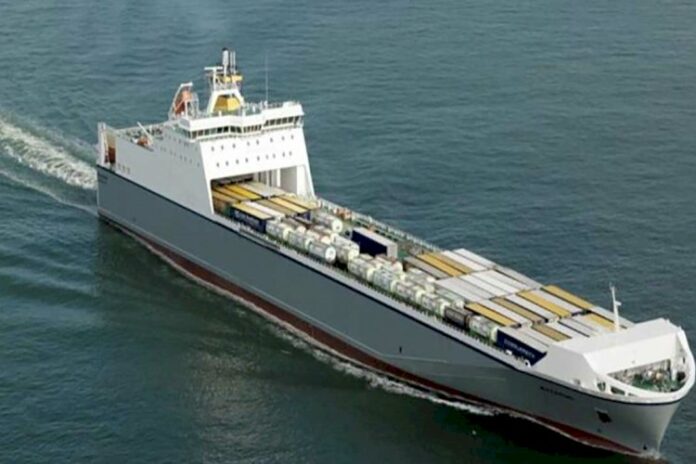
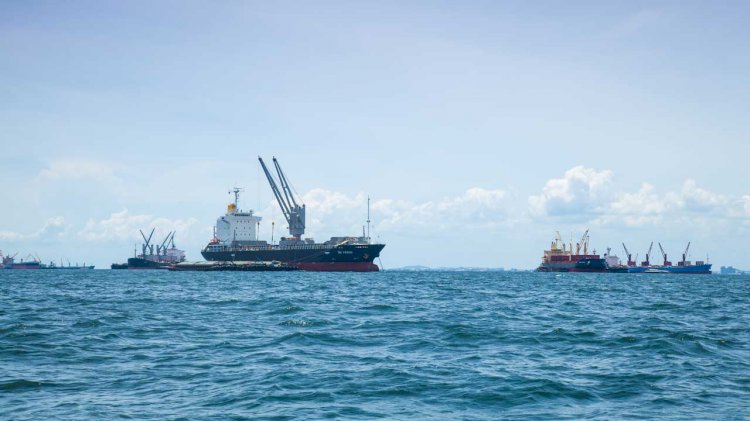
Peel Ports and CLdN are celebrating the addition of a second ferry service from the Iberian peninsula to Liverpool. The new weekly service connecting Portugal to Liverpool, has been introduced following the success of the first pure RoRo service between Santander, Liverpool, and Dublin (IE) in June.

Whilst most new services take time to build market confidence, these new connections have already proved a huge success, further increasing frequency and capacity on CLdN’s Irish and UK services from continental Europe. They offer cargo owners and hauliers the chance to utilise longer maritime routes, switching to unaccompanied trailers to improve the overall productivity of the driver pool.

Liverpool is a key port for the Atlantic and Irish Sea trades and this new route between Iberia and Liverpool, will provide both Irish and US exporters alike, with a reliable, fast and direct route for their customers, including those in northern Britain. Market uncertainty, related to COVID and Brexit, has presented a number of ongoing issues within the supply chain, affecting long distance European haulage and driver availability. This new service will mitigate all these risks.

David Huck, Managing Director at Peel Ports, said:

“This is a really positive start in our efforts to open up new trade opportunities amidst current market conditions. Many supply chains have been looking for alternative solutions given the challenges of moving cargo within a COVID environment. These services not only address those concerns, but also the potential risks from a no-deal Brexit in the UK’s negotiations with the EU, which are predicted to present delays on the traditional cross-channel routes.

The Port of Liverpool is ideally positioned to allow CLdN to benefit from the UK’s extensive port network as a viable alternative. It also means CLdN can take advantage of hugely reduced waiting times, storage and efficient onward routes. The new offering has provided a vital solution to protect and preserve every link in the supply chain. Specifically, it is able to support the reduction of long European haulage legs to deliver a robust and reliable service in the face of COVID-19 restrictions”.  

Sjors Bosvelt, Head of Sales, CLdN said:

“Since launching the triangular route in June, plus Porto, Dublin, Liverpool sailings, we have continued to progressively expand our route network. The new Portuguese service, which commenced on 11th September with the arrival of Japanese built Kawasaki Class vessel, Clementine into Liverpool, will offer environmental benefits and be less prone to disruptions or interruptions as seen on the short straights, as well as increased coverage of direct shipment possibilities from Iberia to UK and Ireland.”
DNV GL – Maritime releases the 4th edition of its Maritime Forecast to 2050

0

DNV GL – Maritime has released the fourth edition of its Maritime Forecast to 2050. The purpose of Maritime Forecast to 2050 is to enhance the ability of shipping stakeholders, especially shipowners, to navigate the technological, regulatory and market uncertainties in the industry, and set shipping on a pathway to decarbonization. 

It is based on a library of 30 scenarios which project future fleet composition, energy use, fuel mix, and CO2 emissions to 2050. Sixteen different fuel types and 10 fuel technology systems are modelled in the report.

Knut Ørbeck-Nilssen, CEO of DNV GL – Maritime, said:

“The grand challenge of our time is finding a pathway towards decarbonization. Reducing GHG emissions is rapidly becoming the defining decision-making factor for the future of the shipping industry. The pressure to act decisively is mounting. Perfect is the enemy of good, and so we mustn’t wait for an ideal solution to arrive and risk making no progress at all. Using a wide range of scenarios involving different fuel types and technologies, and varying degrees of regulatory pressure, our new report helps to map a way forward, offering shipowners clear insights on how to meet the challenges and opportunities ahead.”

The Maritime Forecast identifies the choice of fuel as the essential factor in decarbonizing shipping. The industry is at the beginning of a transition phase, with many potential options emerging alongside conventional fuels. This increasingly diverse fuel environment means that engine and fuel choice now represent potential risks that could lead to a stranded asset. Factoring in the impacts of availability, prices and policy, on different fuels, makes the choice even more complex.

To capture this complexity and help make this picture clearer the Maritime Forecast offers a wide range of scenarios, outlining the potential risks of a particular fuel choice. To make the ramifications concrete, alongside the pathways, the Maritime Forecast includes detailed analysis of a Panamax bulk carrier newbuilding. By stress testing technology decisions under the various pathways and scenarios, the Forecast presents potential performance and the carbon robustness of the various design choices.

The 30 scenarios result in widely different outcomes for the fuel mix in the fleet. In the scenarios with no decarbonization ambitions, very low sulphur fuel oil, marine gas oil and LNG dominate. While under the decarbonization pathways, in 2050 a variety of carbon-neutral fuels holds between 60% and 100% market share.

Under the decarbonization scenarios it is hard to identify clear winners among the many different fuel options. Fossil LNG gains a significant share until regulations tighten in 2030 or 2040. Bio-MGO, e-MGO, bio-LNG and e-LNG emerge as drop-in fuels for existing ships. By 2050, E-ammonia, blue ammonia and bio-methanol frequently end up with a strong share of the market and are the most promising carbon-neutral fuels in the long run.

A surprising result from the model is the relative limited uptake of hydrogen as a ship fuel, as a result of both the estimated price of the fuel and the investment costs for the engine and fuel systems. Hydrogen, however, plays an integral role as a building block in the production of several carbon-neutral fuels such as e-ammonia, blue ammonia and e-methanol, all of which gain significant uptake under the decarbonization pathways. It may also find niche applications in some vessel types, such as ferries and cruise vessels, as well as in specific regions where investments have been made into local production and distribution.

The Maritime Forecast to 2050 is part of a suite of Energy Transition Outlook (ETO) reports produced by DNV GL. The ETO has designed, expanded and refined a model of the world’s energy system encompassing demand and supply of energy globally, and the use and exchange of energy between and within ten world regions.

ABS and Israel Shipyards trial 3D model process

0

Patrick Ryan, ABS Senior Vice President of Global Engineering and Technology, said:

“Israel Shipyards is our latest partner where we have been able to demonstrate how ABS can support the design and class review process using 3D models. This exciting project is another building block in our development of an end-to-end paperless class process, which is seeing us work with leading shipbuilders all over the world to realize the benefits of digital class for the industry.”

This project seeks to reduce the total number of 2D drawings and paper-based documentation for Class review of the OPV design, and it replaces those documents with the original computer aided design (CAD) model.  This streamlines the communication of the design intent from the shipyard to the Class society, which reduces cost and waste and improves communication clarity and therefore review quality. 

Shiran Purvin, Israel Shipyards Vice President of Engineering, said:

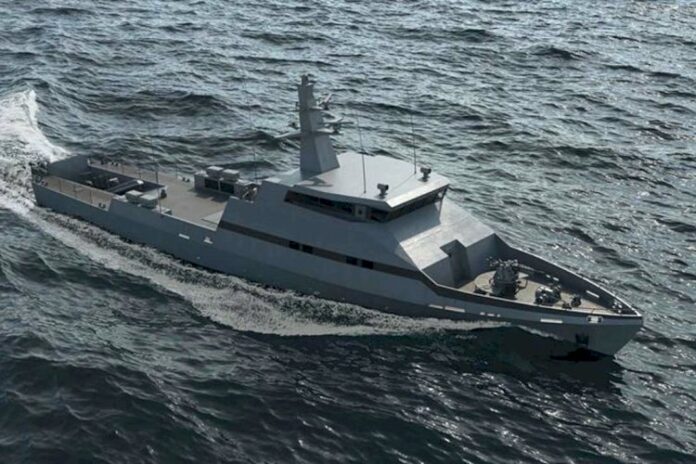
“The new 45-meter OPV is Israel Shipyards novel design of a multi-mission platform, intended for a wide range of naval, homeland security, and civilian activities. The design incorporates several key elements to enhance the platform’s performances, such as a slipway for a fast seven-meter RIB for interdiction and rescue missions, a large flush deck area with the capability of carrying multi-mission payloads, a spacious 360-degrees bridge and other features. The design is based on ABS Rules and Regulations for High Speed Craft and incorporates an innovative approach for the Plan Approval of the 3D vessel model almost without the need for the traditional 2D ‘Class Drawings’. This approach saves engineering effort and is exercised successfully under the guidelines and assistance of ABS.”

ABS is also involved in advanced 3D Model class projects with Samsung Heavy Industries in Korea, SDARI in China, and General Dynamics NASSCO in the U.S., among others.

Release of containers at Port of Antwerp will be digitalized

0

This new way of working will guarantee a secure, transparent and optimised release process for incoming containers, which will then leave the port by rail, barge or truck.

To pick up a container at a terminal in the port, a unique PIN code is needed nowadays. The time between providing the PIN code to the shipping company and the driver entering this code at the terminal is considerable. Moreover, the PIN code is seen by various parties which increases the risk of abuse.

To make this process more secure and efficient, a new process for the release of containers, referred to as “Certified Pick up” (CPu), comes into force on January 1st 2021. CPu is a neutral, central data platform which connects all stakeholders involved in the container import process. 

The CPu platform receives and processes container information to generate an encrypted digital key, with which the eventual carrier can pick up the container. This digital key is only created when the final carrier is known.  The time between the creation of the digital key and the collection of the container is therefore minimal. 

It will also be possible to trace which parties were involved in the collection of the container. This allows the competent authorities such as customs and police to access the data exchanged and generated in Certified Pick up within the boundaries of their legal powers.

In the longer term, CPu should allow the digital key to be completely eliminated. An identity-based security process with fingerprints or eye scans might be developed. 

CPu has operational benefits for all logistics partners in the port chain. It simplifies administrative processes, allows employees to work more securely and reduces the turnaround time of import containers in the port. Customs and the police will also be able to operate more efficiently and effectively thanks to CPu.

Port Alderman Annick De Ridder:

“As a port, we take our social responsibility with this initiative. I welcome the fact that the port community is helping to further secure the logistics chain. With the digital code system, we are making it much more difficult for the drug mafia to gain access to the containers at the terminals. I really want to thank all involved partners for making this possible.”

The Port Authority and the port community have an open and constructive dialogue with all involved logistics parties, such as shipping companies, shipping agents, terminals, shippers, freight forwarders, logistics operators, truck companies and inland navigation and rail operators. Together, they will look into how to further shape CPu and implement it in phases. 

Bernard Moyson, Chairman of Alfaport-Voka:

“We are pleased that this project focuses on a faster, safer and more efficient release of containers. A collective approach is the only way forward to meet the security challenges. The fact that we have reached a constructive compromise on this initiative proves once again the strength and resilience of the port community in Antwerp. ”

Port of Antwerp CEO Jacques Vandermeiren:

“This is a story of co-creation with the aim of marketing the port of Antwerp even better as a high-performance digital port.  We set up a port-wide consultation structure, which monitors the project and adjusts it if necessary.”

Hornsea Two SOV launched in Turkey

0

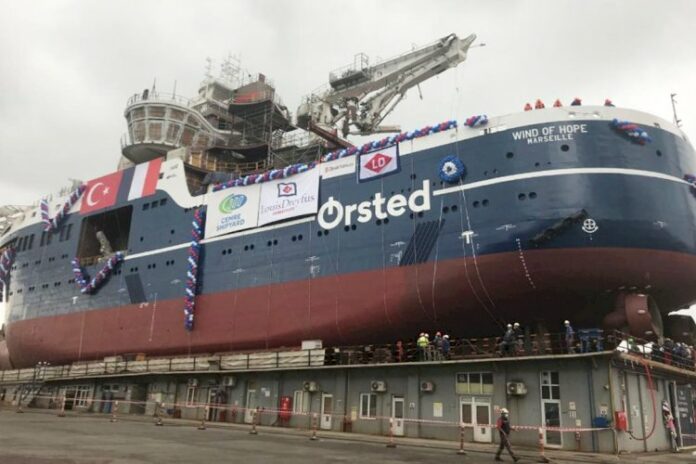
After the SOV launching ceremony that took place on September 21st, the Wind of Hope is expected to arrive at Ørsted’s east coast operations and maintenance facility at the UK port of Grimsby next year.

The vessel will be operated out of Hornsea Two offshore wind farm, accommodating up to 64 technicians who will service and maintain the wind turbines and an additional vessel crew.

Morten Holm, Head of Operations for Hornsea Two at Ørsted, said:

“We’re extremely pleased to be able to reach this exciting milestone for the wind farm. Technicians will spend two weeks at a time onboard this vessel as they live, eat and sleep onboard whilst working offshore. The Wind of Hope has been designed with comfort and practicality in mind and we look forward to welcoming her to her new home in Grimsby.”

Totalling a length of 84m, the SOV is two metres larger than the new Hornsea Two blades which have been manufactured locally at Siemens Gamesa’s blade factory in Hull.

Kamil Beffa, Deputy CEO of Louis Dreyfus Armateurs, added:

“We are delighted to reach a turning point in the construction of this second SOV dedicated to Ørsted’s Hornsea Two windfarm. It means a lot to our marine industrial solutions strategy as a partner of the Danish wind energy leader. It is also an exciting commitment in favor of clean and renewable energy and our continued focus on safety and environmental footprint with innovative ship designs.”

Working as an accommodation base, the Wind of Hope has been fitted with a number of modifications intended to ensure that shift patterns offshore are as comfortable as possible for the crew.

A motion compensated gangway allows technicians to walk to work from the ship directly onto the transition piece of the turbine they are required to access, whilst the onboard helideck enables efficient crew and cargo transfers to take place.

Vessel’s main specifications:

  • Length: 84.00 m
  • Breadth: 19.40 m
  • Depth: 7.00 m
  • Design draft: 5.00 m
  • Propulsion: Diesel-electric, DP2 Dynamic Positioning
  • Accommodation: Capacity of 90 persons including up to 64 windfarm technicians.

Vessel’s transfer specifications:

• A daughter craft with a capacity of 8 technicians and 1 ton of cargo
• A motion compensated gangway (about 19m range)
• A motion compensated crane (1 ton at 23 m)

Robot research ship from ProMare and IBM takes to sea

0

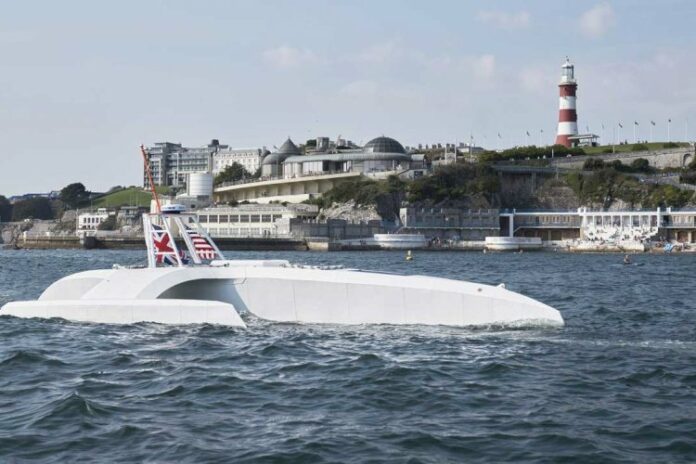
Following two years of design, construction and training of its AI models, the new fully-autonomous trimaran was lifted into the waters off the coast of Plymouth, England ahead of its official launch.

Designed to provide a safe, flexible and cost-effective way of gathering data about the ocean, the new-generation Mayflower promises to transform oceanography by working in tandem with scientists and other autonomous vessels to help understand critical issues such as global warming, micro-plastic pollution and marine mammal conservation. ProMare is co-ordinating the scientific studies working with IBM Research and a number of leading scientific organizations.

MAS features an AI Captain built by ProMare and IBM developers which gives MAS the ability to sense, think and make decisions at sea with no human captain or onboard crew. The new class of marine AI is underpinned by IBM’s latest advanced edge computing systems, automation software, computer vision technology and Red Hat Open Source software.

Andy Stanford-Clark, Chief Technology Officer, IBM UK & Ireland, said:

“Able to scan the horizon for possible hazards, make informed decisions and change its course based on a fusion of live data, the Mayflower Autonomous Ship has more in common with a modern bank than its 17th century namesake. With its ability to keep running in the face of the most challenging conditions, this small ship is a microcosm for every aspiring 21st century business.”

To enable followers around the world to stay updated with MAS as it undertakes its various missions, IBM and ProMare have launched a new interactive web portal. Built by IBM iX, the business design arm of IBM Services, the MAS400 portal is designed to provide real-time updates about the ship’s location, environmental conditions and data from its various research projects. Live weather data will be streamed from The Weather Company, as MAS is receiving forecast data and insight from the new IBM Weather Operations Center.

The portal even features a seven-armed, stowaway octopus chatbot called Artie, who claims to be hitching a ride on the ship. Powered by IBM Watson Assistant technology and created in partnership with European start-up Chatbotbay, Artie has been trained to provide information about MAS and its adventures in a lively, and accessible format.

Fredrik Soreide, Scientific Director of the Mayflower Autonomous Ship project and Board Member of ProMare, says:

“MAS400.com is one of the most advanced ocean mission web portals ever built. Protecting the ocean depends on our ability to engage the public in important matters affecting its health. This MAS400 portal is designed to do exactly that and tell people where the ship is, what speed it’s travelling at, what conditions it’s operating in and what science we are conducting. Users can even help Artie the Octopus fish out surgical masks, cigarette butts and other increasingly common forms of ocean litter from a virtual ocean of facts and data.”

MAS will spend the next six months in sea trials and undertake various research missions and voyages before attempting to cross the Atlantic in Spring 2021. MAS’s transatlantic voyage will be based on a similar route and pioneering spirit to the 1620 Mayflower which made the same crossing 400 years ago.

Dogger Bank wind farm places record-breaking turbine order boosting local jobs

0

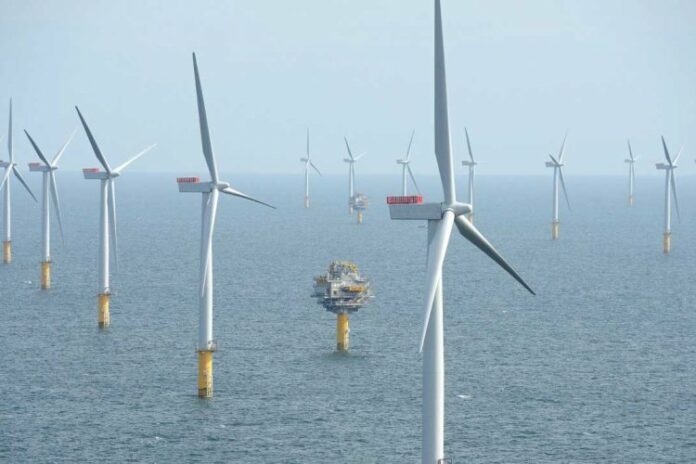
The contract award, which is subject to Dogger Bank A and B reaching Financial Close, includes an order for 190 Haliade-X 13MW offshore wind turbines to be installed off the north-east coast of England, split evenly at 95 turbines for each of the first two phases of Dogger Bank Wind Farm.

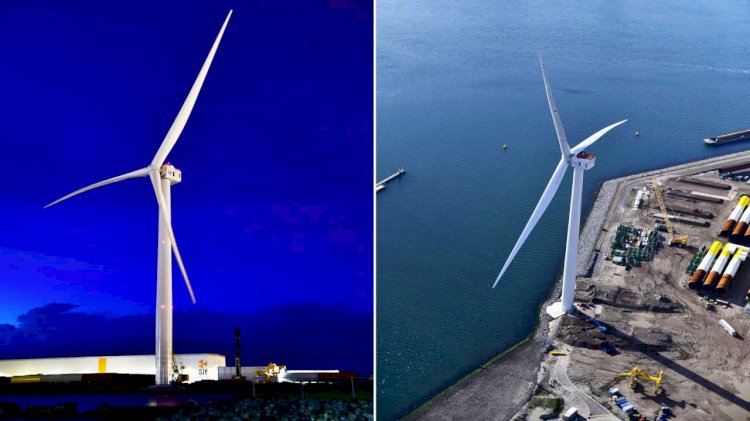
The installation of these turbines will be the first time ever a 13MW Haliade-X is installed in the world. One spin of the Haliade-X 13MW can generate enough electricity to power a UK household for more than two days.

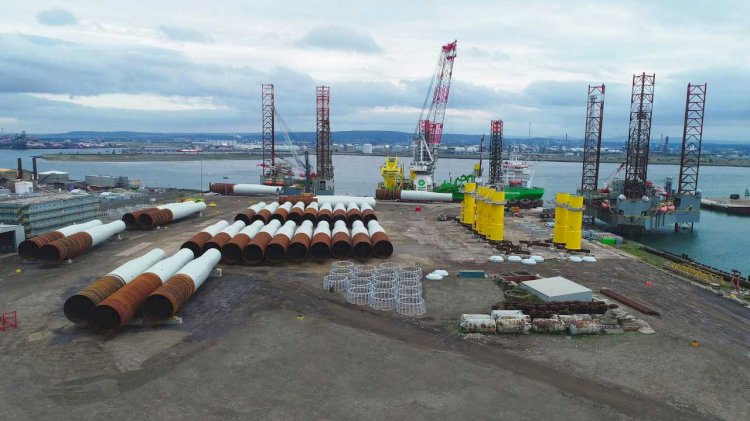
As part of the agreement GE Renewable Energy will establish its marshaling harbour activities at Able Seaton Port in Hartlepool which will serve as the base for turbine service equipment, installation and commissioning activities for Dogger Bank A and B.

This will see the delivery of component parts for each of GE’s Haliade-X 13MW wind turbines to the specialist port, including the nacelle, three tower sections and three 107m long blades, for pre-assembly on-site at Able Seaton prior to transport out to the North Sea for installation. This activity will lead to the creation of 120 skilled jobs at the port during construction. Turbine installation is expected to commence in 2023 at Dogger Bank A.

Today’s contract announcement also includes a five-year Service and Warranty agreement supporting operational jobs in the maintenance of the wind farm. This agreement for Dogger Bank phases A and B will account for around 120 out of the total 200 long term jobs (previously announced) that will be based out of the Port of Tyne where the wind farm’s new Operations and Maintenance base will be located. GE’s Service team will be co-located with the Dogger Bank Operational and Maintenance team at Port of Tyne.

This brings the total number of jobs in the North East associated with the development and operation of Dogger Bank Wind Farm to 320 so far.

Recruitment activity is expected to begin in early 2021, and job roles will be advertised closer to the time by GE and by Dogger Bank via the Dogger Bank website and social media channels.

Dogger Bank Wind Farm is a joint venture between SSE Renewables, who are leading the construction of the wind farm, and Equinor, who will operate the 3.6GW project during its lifetime of at least 25-years.

The project is located over 130km off England’s north-east coast and will be capable of powering up to 4.5 UK million homes each year when complete in 2026. Due to its size and scale, the site is being built in three consecutive phases; Dogger Bank A, Dogger Bank B and Dogger Bank C. Each project is expected to generate around 6TWh of electricity annually.

Energy Minister Kwasi Kwarteng said:

“I am thrilled to see so many green jobs on the way to the North East of England thanks to our world-leading offshore wind industry. Projects like Dogger Bank are absolutely crucial to building back greener from the coronavirus pandemic – creating jobs, growing the economy and tackling climate change.”

Steve Wilson, Dogger Bank Wind Farm’s Project Director at SSE Renewables, said:

“These turbines are a true testament of how hard the offshore wind industry is working to continually innovate and drive down costs and we look forward to working with GE Renewable Energy to help us deliver the largest offshore wind farm in the world.”

Peter Stephenson, ABLE UK’s Executive Chairman, commented:

“We are delighted that 120 skilled jobs will be based here at the Port, in this exciting and growing industry. The offshore wind sector will increase four-fold by 2030 through the Sector Deal, and with the increasingly demanding targets for low carbon power generation, there is an unparalleled level of market visibility. Combine this with the sectors’ extraordinary efforts in terms of developing new products and significantly reducing costs, this industry is set to become a dominant factor in a post Covid 19 UK economy.”

The Haliade-X 13MW turbine is an enhanced version of the successful 12MW prototype unit which has been generating power in Rotterdam since November 2019 and recently secured its provisional type certificate from DNV-GL. This prototype unit, which set a world record in January 2020 by being the first wind turbine to produce 288MWh in one day, will start operating at 13MW in the coming months as part of its ongoing testing and certification process. The uprated 13MW Haliade-X will continue to feature 107-meter long blades and a 220-meter rotor. 

John Lavelle, President & CEO, Offshore Wind at GE Renewable Energy, said:

“In signing these orders with Dogger Bank, our Haliade-X technology will now have an important role to play in the UK’s offshore wind ambitions (40GW by 2030) and greenhouse emission reduction to “net-zero” by 2050.”

Halfdan Brustad, vice president for Dogger Bank at Equinor, said:

“We want Dogger Bank to be a flagship project that leads the way in both digitalisation and innovative technology, so it is a great honour to confirm that this project will be the first in the world to use these powerful turbines. The sheer scale of Dogger Bank brings huge opportunities to the UK. As well as being home to the world’s largest offshore wind farm, the North East will benefit from hundreds of jobs and local supply chain opportunities.”

Dogger Bank’s three projects, Dogger Bank A, Dogger Bank B and Dogger Bank C, secured 3.6GW of offshore wind contracts in the UK Government’s 2019 contracts for difference auctions.

Canadian tour operators clean up ocean debris during coronavirus pandemic

0

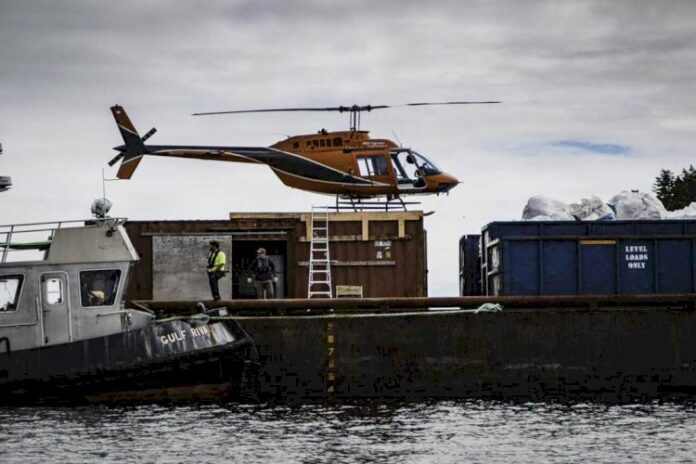
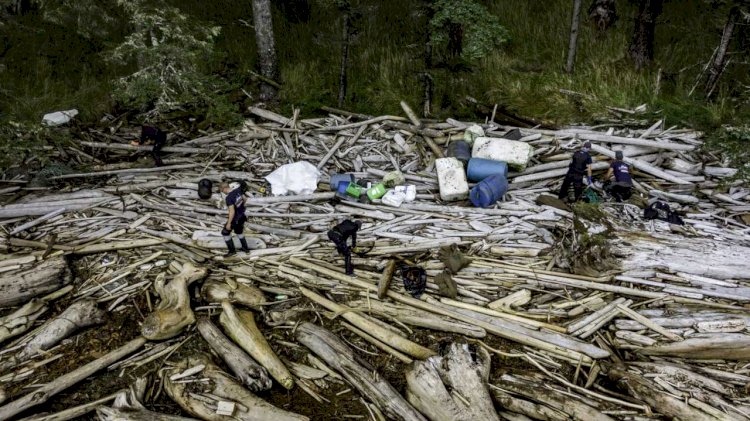
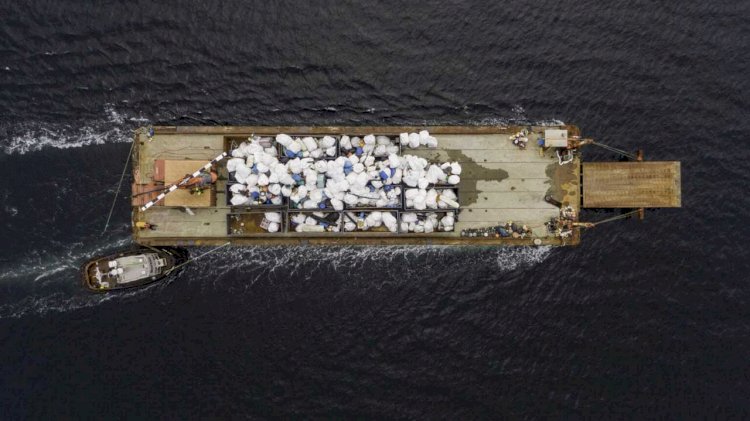
British Columbia contributed $3.5 million to fund the project. The expeditions involve collecting debris on the coastline of B.C., using a helicopter to transfer the debris to a barge and shipping the debris to Vancouver Island for recycling and disposal.

The first expedition, which was also to the central coast, wrapped up Sept. 7. In total, 61 tonnes of garbage were removed.

In 2019, B.C. Premier John Horgan asked Parliamentary Secretary for Environment Sheila Malcolmson to find solutions to the issues of abandoned vessels, marine debris and ocean plastics. To better understand these issues, she travelled along the coast, meeting with local governments, First Nations, industry and environmental organizations. 

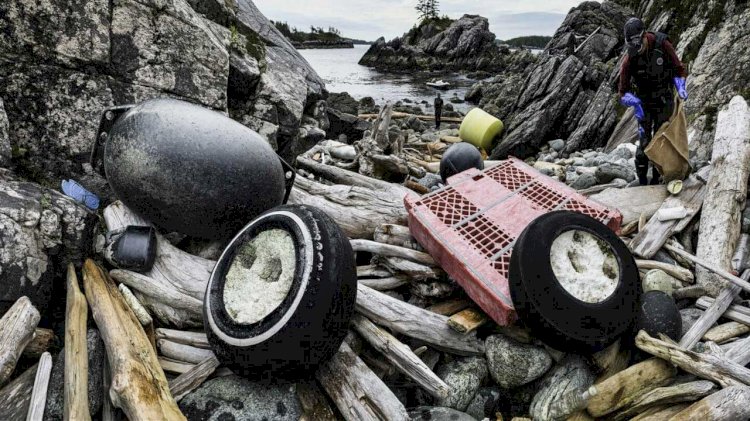
In a report on her findings published in February, the province highlighted the primary sources of the pollution, including mooring buoys, fishing gear, aquaculture debris and polystyrene foam used for marine infrastructure such as docks and aquaculture facilities.

Fishing debris, whether lost or abandoned, poses a serious threat to marine mammals such as whales. Entanglements can wound or kill whales. Fisheries and Oceans Canada says nearly half of all humpbacks they’ve identified in the province have scars from entanglements. For ecotourism operators on B.C.’s coast, whales are one of the selling points. 

Plastic pollution also poses serious problems. Plastics break down into smaller pieces, eventually ending up as microplastics, which make their way into the food chain as fish and seabirds eat them. Microplastics can’t be digested, so they stay in the animals’ guts and are starting to show up in humans.

Some marine animals — including endangered and threatened species — also ingest larger pieces of plastic. Last year, a sperm whale was found dead on a Scottish beach with over 200 pounds of debris in its guts, including plastics and rope. Recent research shows that loggerhead turtles mistake plastics for food. Studies have also shown that up to 90 per cent of seabirds are ingesting plastics.

Debris in the marine environment is also changing the way species travel through the world’s oceans. After the 2011 Japanese earthquake and tsunami, nearly 300 small marine species, including 30 known invasive species, ended up in North America after travelling on marine debris, such as buoys and broken boats, across the ocean.

The province’s report on ocean pollution emphasized the need for providing funding and creating better systems for recycling and disposal. It also recommended prioritizing education and outreach and developing better regulations and enforcement procedures to prevent debris from getting into the marine environment. Cleaning up the debris that’s already out there is a first step toward reaching a solution.

Canadian tour operator Kevin Smith explains that decades ago he worked on a large-scale beach clean-up on Cape Scott. When COVID-19 forced his company to cancel all the trips that were booked for the year, he thought back to that experience.

Smith roughed out his ideas for the project and took them to his colleague, marine ecologist and founder of Outer Shores Expeditions Russell Markel.

The two worked on a plan together and proposed it to other tour operators. The group then took the proposal to the Kitasoo/Xai’Xais, Heiltsuk, Gitga’at, Wuikinuxv and Nuxalk First Nations to get support and permission to conduct the operation. With the support in hand, they requested funding from the province and received it through the Clean Coast, Clean Waters Initiative Fund.

Most of B.C.’s exposed coastline is rugged, remote and subject to dramatic weather conditions. Cleaning it up requires knowledge of the area, technical skill, good timing and extremely hard work.

Like 70 per cent of what they are finding is industrial fishing debris, and most of it is international. Mostly it’s just plastic, styrofoam and tons and tons of fishing equipment.

Source: The Narwhal

Experts recommend heightened protocols for the healthy return of sailing

0

New recommendations from a panel of globally recognized medical and scientific experts say that by relentlessly focusing on prevention and other measures – including the testing of guests and crew members – public health risks associated with the pandemic can be mitigated in a cruise ship environment.

The Healthy Sail Panel has submitted its recommendations to the U.S. Centers for Disease Control and Prevention (CDC), in response to a CDC request for public comment that will be used to inform future public health guidance and preventative measures relating to travel on cruise ships. The Panel was formed in June by Royal Caribbean Group and Norwegian Cruise Line Holdings Ltd.

The Panel comprises globally recognized experts in medical practice and research, public health, infectious diseases, biosecurity, hospitality and maritime operations that have applied the best available public health, science and engineering insights to their recommendations.

The Healthy Sail Panel’s 65-plus-page report includes 74 detailed best practices to protect the public health and safety of guests, crew and the communities where cruise ships call. Recommendations include testing, the use of face coverings, and enhanced sanitation procedures on ships and in terminals. The Panel is chaired by Governor Mike Leavitt, former U.S. Secretary of Health and Human Services, and Dr. Scott Gottlieb, former commissioner of the U.S. Food and Drug Administration.

Dr. Gottlieb said:

“The Healthy Sail Panel spent the last four months studying how to better protect the health and safety of guests and crew aboard cruise ships. Taken as a comprehensive approach, we believe the Panel’s robust public health recommendations will help inform strategies for a safe resumption of sailing.”

Gov. Leavitt said:

“This Panel undertook an ambitious, cross-disciplinary, public health examination to develop standards and guidelines that create the highest level of safety in the complex environment of a cruise ship. We studied the industry’s experiences combating the pandemic – and we then incorporated the many lessons learned and advances made by medicine and science over the past six months. The Panel’s recommendations are grounded in the best scientific and medical information available and are intended to meaningfully mitigate public health risks to those who sail.”

Richard D. Fain, chairman and CEO of Royal Caribbean Group, said:

“We understand our responsibility to act aggressively to protect the health and safety of our guests and crew, as well as the communities where we sail, and we asked the Panel to help us learn how to best live up to that responsibility. We were inspired by the depth of the Panel’s work and their determination to help us establish the strongest protocols in the travel industry.”

Frank Del Rio, president and CEO of Norwegian Cruise Line Holdings Ltd., said:

“The Healthy Sail Panel’s recommendations are robust and comprehensive, and they reflect the intense focus the panelists brought to their work. We know that both authorities around the globe and consumers expect cruise lines to provide the safest, healthiest vacations we can, and this work demonstrates our commitment to doing just that.”

Fain and Del Rio said each company will use the Panel’s recommendations to inform the development of new, detailed operating protocols, which will be submitted to the CDC and other authorities around the globe for review and approval– an important milestone in the process of resuming sailing around the world. The Panel’s work is open sourced for others to incorporate in their protocols as well; Governor Leavitt and Dr. Gottlieb expressed appreciation that authorities and other cruise companies had already engaged in the Panel’s work as observers.

The Healthy Sail Panel identified five areas of focus every cruise operator should address to improve health and safety for guests and crew, and reduce the risk of infection and spread of COVID-19 on cruise ships:

  • Testing, Screening and Exposure Reduction
  • Sanitation and Ventilation
  • Response, Contingency Planning and Execution
  • Destination and Excursion Planning
  • Mitigating Risks for Crew Members

In each category, the Healthy Sail Panel created practical and actionable recommendations to address specific safety concerns. Among the recommendations are key strategies such as:

  • Taking aggressive measures to prevent SARS-CoV-2 from entering a ship through robust education, screening and testing of both crew and guests prior to embarkation
  • Reducing transmission via air management strategies and enhanced sanitation practices
  • Implementing detailed plans to address positive infection on board, including contingencies for onboard treatment, isolation and rapid evacuation and repatriation
  • Closely controlling shore excursions
  • Enhanced protection for crew members

KR opens LNG fueled and bunkering simulation center

0

The new facility is located at KR’s headquarters in Busan and officially opened on 15 September.

Following the opening ceremony, a memorandum of understanding was signed between KR and Transgas Solution (TGS, CEO LEE Jae-ik) agreeing to build an Operator Training Simulator (OTS) system which will be used to training operators of LNG-propelled ships and for ship-to-ship bunkering.
 
The KR LSC has been established to facilitate industrial growth across the LNG propulsion and bunkering sector based on KR’s long-standing high level expertise with LNG technology. The use of LNG as a ship fuel and demand for bunkering is expected to increase as a result of the International Maritime Organization’s regulations to reduce SOx, which came into effect at the beginning of this year, and with the strengthening of GHG emission regulations in the future.

The KR LSC will provide comprehensive technical services relating to LNG operations, including not only the customized trial and optimal operations for LNG fuel supply and bunkering systems but also conducting the detailed risk analysis for liquefied gas for ships propelled by eco-friendly fuels such as LNG, hydrogen, and ammonia.

KR will also collaborate with TGS to develop practical education and training programs for shipping companies, shipyards, and equipment companies, for example by combining the use of an Operator Training Simulator (OTS) and Virtual Reality (VR) based on a real-time simulation of the LNG vessel fuel processes.

Dr. HA Tae-beom, EVP of KR’s R&D Division, said at the signing ceremony:

“KR is already renowned for providing world’s best technical services for structural strength assessment, temperature distribution analysis, and thermal stress analysis of LNG carriers. We will increase competitiveness by providing high-quality LNG technology services to our customers – shipping companies and shipyards around the world.”

MR. LEE Jae-ik, CEO of TGS, said:

“I welcome this collaboration with KR, our work to develop advanced education and training using the Operator Training Simulator (OTS) is hugely important, and underpins our commitment to training LNG experts across the maritime sector and engineering industry.”

Meanwhile, KR has been procuring test technology for LNG-propelled ship engines and aftertreatment devices through the Greenship Equipment Testing and Certification Center (TCC) established in Gunsan in 2015. The newly established KR LSC will provide unified LNG technical services adding simulation technology and enabling the implementation of a pretreatment device for LNG fuel propulsion.