-0.4 C
New York
Home Blog Page 770

HMM opens Fleet Control Centre

0

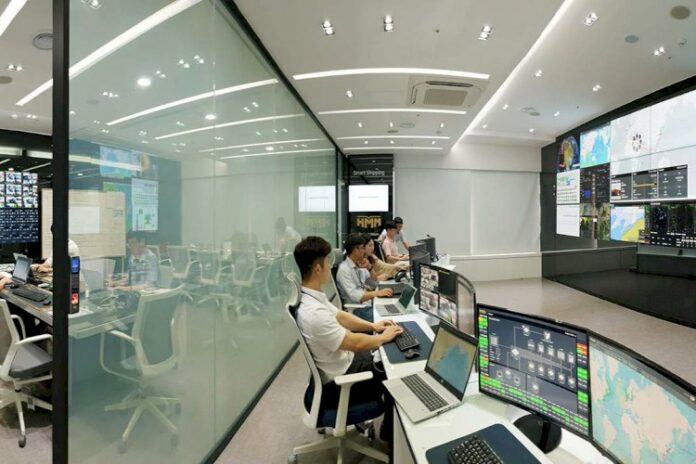
HMM unveiled its land-based ‘Fleet Control Centre’ located at the HMM R&D facilities in Busan, South Korea. This centre has been newly designed to effectively monitor and control the operation of HMM’s modern fleet including twelve 24,000 TEU and eight 16,000 TEU container vessels.

HMM has completed the delivery of its twelve 24,000 TEU containerships in September 2020, while eight 16,000 TEU vessels will be included in its fleet in the second quarter of 2021. All twenty ships feature the latest smart ship solutions.

The newly-launched Fleet Control Centre provides an integrated platform for vessel-to-shore data and increased connectivity. Its real-time monitoring system offers plenty of information with full visibility including vessel performance, locations, fuel consumption, ocean weather and cargo information etc. The vessels also can benefit from a remote control system which supports a wide range of vessel operations including inspection and repair works on the machinery on ships.
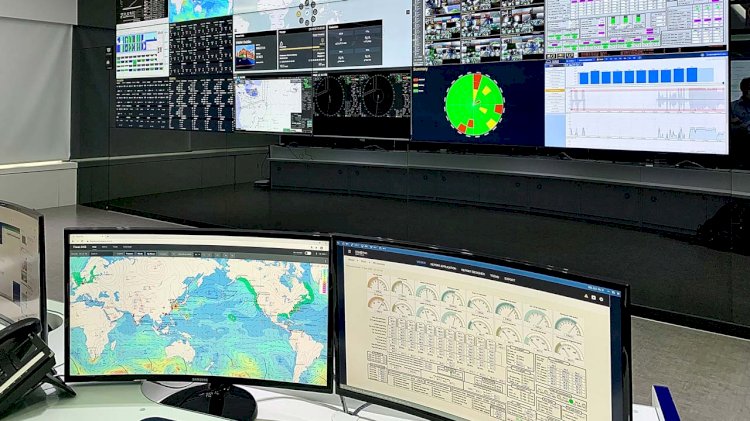
In addition, each vessel is encouraged to identify and react to an unexpected threat or obstacle both on board and around the ship by sharing information with the Fleet Control Centre in a timely manner.

HMM will continue to analyse the operational efficiency and explore the commercial viability of autonomous ships based on big data collected from the centre.

Jae-hoon Bae, President & CEO of HMM, said:

“Digital capabilities have become a key element in securing a competitive edge. We will accelerate efforts to enhance operational excellence and efficiency in our fleet management… We will also gradually apply the smart ship solutions not only to our newbuilds but also to the other ships already in operation.”
CMA CGM adds 23,000 TEU LNG-powered container vessel to its fleet

0

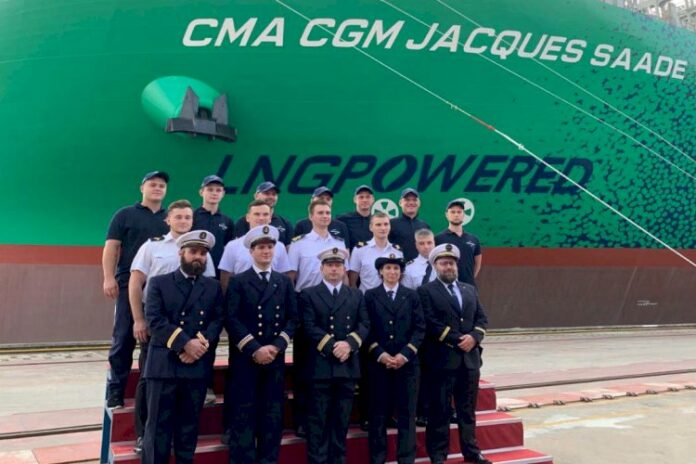
The CMA CGM JACQUES SAADE has joined CMA CGM Group’s fleet thus becoming the largest LNG-powered container ship in the world. A global leader in shipping and logistics, CMA CGM has made the symbolic choice of naming its new flagship after its founder, Jacques Saadé, a visionary and entrepreneur.

The joining of the fleet of the CMA CGM Jacques Saadé was marked by a first-of-its-kind digital naming ceremony that saw the shipyard’s representatives in Shanghai and CMA CGM Group’s management in Marseille share an emotional landmark moment in their common history. Blessed by father Francis Fang, the vessel was then officially named by her Godmother, Tanya Saadé Zeenny, who wished the ship, the captain and its crew the best of luck on their future voyages.

In November of 2017, Rodolphe Saadé, CMA CGM Group’s Chairman and Chief Executive Officer, decided to equip this series of container ships with LNG-powered engines – a first in the history of shipping for Ultra Large Container Vessels. The CMA CGM Group has thereby proven its commitment towards driving forward maritime transport’s energy transition.

Today, LNG is the most advanced solution when it comes to preserving air quality. It enables a 99% reduction in sulfur dioxide and fine particle emissions, and an 85% reduction in nitrogen dioxide emissions, going well above and beyond existing regulation. LNG emits up to 20% less CO2 compared to fuel motorization. This technology is one of the first steps towards achieving CMA CGM Group’s ambitious 2050 objective of carbon neutrality.

These nine vessels are packed with innovations, the result of a long cooperation between CMA CGM’s research and development experts and industrial partners. In addition to LNG motorization, the vessels offer advanced technologies:

  • The cockpit boasts the latest embedded digital technologies to assist the commander and crew, in particular for port maneuvers;
  • They feature a redesigned straight bow with an integrated bulb, a redesigned rudder, and a redesigned propeller all of which substantially improve the vessels hydrodynamics, thereby reducing energy consumption.

These 9 vessels bear a specific “LNG Powered” label that will be recognizable on all seas across the globe.

The CMA CGM JACQUES SAADE, along with its eight 23,000 TEU sister ships (twenty-foot equivalent unit) will be registered at the French International Register (FIR). They will bear the names of landmark Parisian monuments and other renowned venues and institutions from throughout the French capital (Champs Elysées, Palais Royal, Louvre, Rivoli, Montmartre, Concorde, Trocadéro, and Sorbonne). CMA CGM has chosen Total as part of a major industrial partnership to supply them with gas. 

Van Oord’s TROV buries cables to 5,5 metres depth for offshore grid connection

0

TenneT is building the Hollandse Kust (zuid) offshore grid to connect new offshore wind farms. 4 cables will have to be buried into the North Sea seabed for this purpose. For the first 10 kilometres of the cable route, these cables will have to be buried more than 5 metres into the seabed in order to cross the busy shipping route Rotterdam Maasmond. 

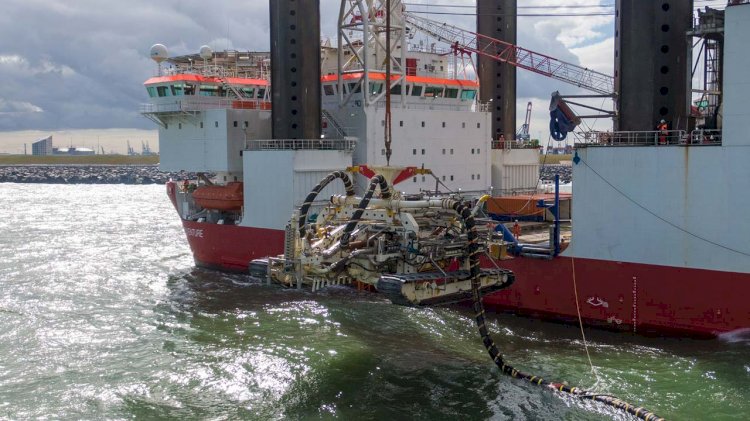
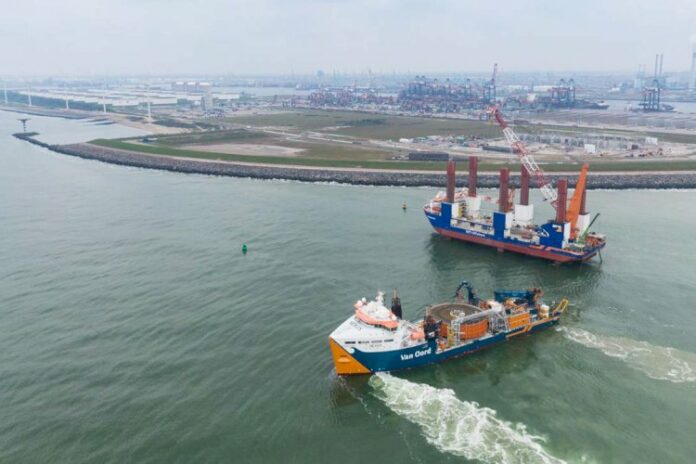
The Van Oord-Hellenic Cables consortium will be installing 4 subsea 220 kV AC cables that will connect 2 offshore platforms to the onshore electricity grid. The first 2 cables to the Alpha platform will be installed this year. The other 2 cables, meant for the Beta platform, will follow in 2021. The last few days the preparatory work has been completed. The cable was pulled ashore via a direct drill to the new transformer substation that is being built on the Maasvlakte. From this point, the cable with a total length of 42 kilometres to the wind zone Hollandse Kust (zuid) will be laid by the Deep Dig-It, a large remote-controlled trencher.

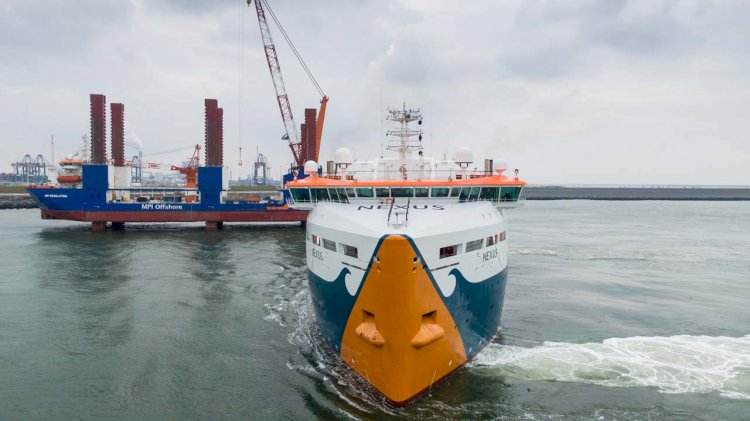
Van Oord’s Deep Dig-It is a so-called ‘Tracked Remotely Operated Vehicle’ (TROV) that drives unmanned over the seabed and creates a deep trench for the cables by liquefying the seabed. At the same time, the trencher inserts the cables into the trench and seals them again into the seabed. This new trencher is one of the largest and most powerful of its kind and can bury cables more than 5 metres deep in very hard soil. The Deep Dig-It is controlled at Van Oord’s offshore installation vessel MPI Adventure, which is also equipped with a crane to launch and take out the Deep Dig-It. 

The Hollandse Kust (zuid) offshore wind farm is located 22 kilometres off the coast of the Dutch province of Zuid-Holland. The sea cables connect the two offshore platforms with the Maasvlakte high-voltage substation and the Randstad 380 kV South ring.

The 1,400 MW grid connection will be completed in 2022 and will eventually provide electricity for 1.6 million households. The offshore wind farm contributes significantly to the Dutch government’s objective of having a total of 3.5 GW installed offshore wind energy capacity by 2023. With the commissioning of Borssele Alpha and Beta this year, the first 1.4 GW has been realised.

ABB powers P&O super-ferries towards new sustainable transport era

0

ABB has won a contract with Guangzhou Shipyard International Ltd for supplying a full scope of integrated solutions for P&O Ferries’ two new vessels.

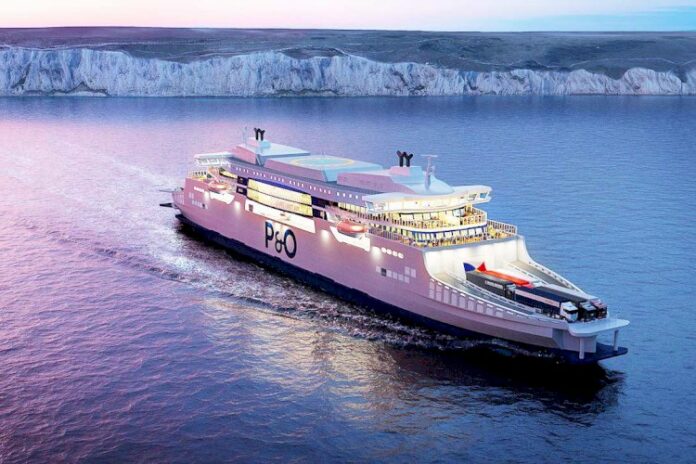
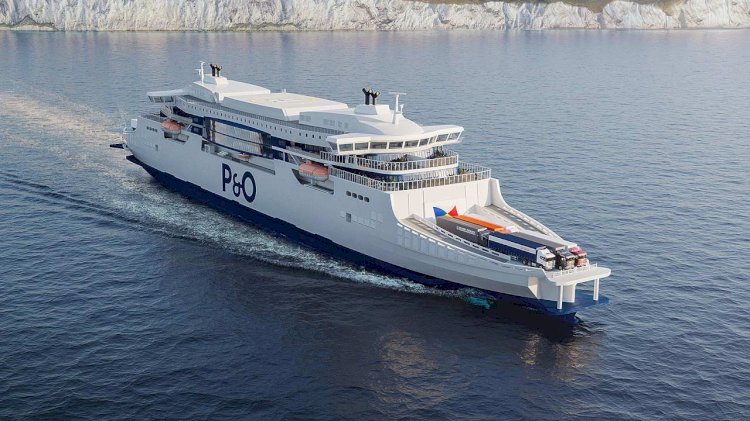
The hybrid propulsion solution, using electric power from 8.8MWh batteries and diesel generators, will cut fuel consumption on P&O Ferries’ Dover-Calais route by 40 percent. The batteries will provide full power for harbor maneuvering and stay in port and will prepare the vessels for a zero-emission future once more electric shore charging stations are available.

Equipped with four Azipod® propulsion units per vessel, each rated at 7.5 megawatt, the 230-meter-long vessels will be the largest passenger and freight ferries ever to sail the route when they enter service in 2023. The benefits of bridge-to-propeller integration proved decisive in selecting the hybrid solution for the new ferries, according to P&O Ferries.

In addition to Azipod® propulsion and energy storage, the new ships will feature a comprehensive scope of ABB solutions to cover power and propulsion, automation and power energy management. ABB’s Power and Energy Management System (PEMS™) is closely integrated with the electrical system and ensures optimal use of the vessel’s total power resources by improving the information flow across shipboard systems.

Mr. Zhongqian Chen, Chairman of Guangzhou Shipyard International, said:

“The P&O ferries under construction at the Guangzhou Shipyard International are truly iconic. We are delighted to strengthen our strategic cooperation with the technology leader ABB and to work together on this leading-edge project, considering ABB’s proven supplier status in the global ferry market.”

Juha Koskela, Division President, ABB Marine & Ports, said:

“We are proud to have ABB technology at the heart of P&O Ferries’ sustainability program, as it transitions to the zero-emission future envisaged for shipping.”

Built to the double-ended design where the vessels will feature a pair of Azipod® units and a bridge at each end, there will be no need to turn ships in port. The captain and senior officers will simply walk to the opposite bridge, saving seven minutes on each outbound and return journey and one ton of fuel – a sixth of what is used on the 21-mile crossing.

The vessels will also be equipped with ABB Ability™ Marine Pilot Control, the intelligent maneuvering and control system that enables safer, more efficient operations by automating some navigational tasks to allow bridge officers to focus on optimizing overall ship control and positioning.

The vessels’ engines will be equipped with ABB’s Power2 two-stage turbocharging system that will further improve power efficiency and help achieve up to five percent in fuel savings. In addition, the Power2 system will help reduce up to 60 percent of nitrogen oxide emissions.

With over 20 vessels and 27,000 sailings a year via eight routes between the UK, the Republic of Ireland and north continental ports, P&O Ferries is one of the leadingferry and logistics companies in Europe, carrying 8.4 million passengers, 1.6 million cars, and 2.2 million freight units every year.1

The Guangzhou Shipyard International where the vessels will be constructed is recognized as one of the most modern and biggest shipbuilding companies in China and has an increased focus on building sustainable vessels.

KNUD E. HANSEN developed new icebreaking expedition cruise vessel

0

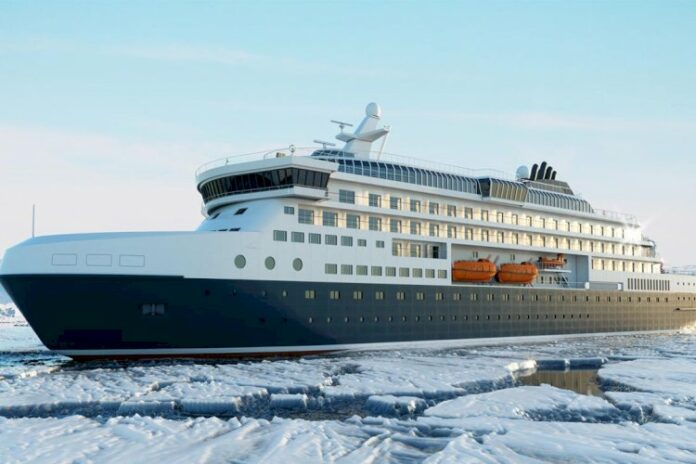
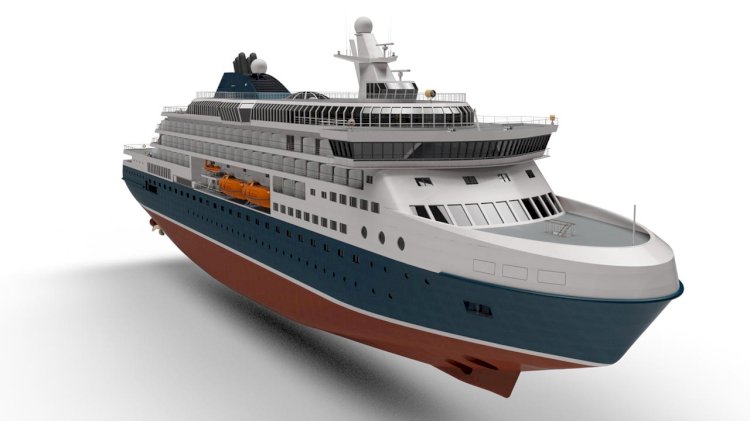
At 144 metres long, the vessel can accommodate 300 passengers in 150 ultramodern cabins that offer an exceptional sailing experience.

The vessel has a service speed of 17 knots in open water and can operate in solid multi-year ice of 1,8m thickness. The vessel has diesel electric propulsion, and two azipod-units, each 7,5 MW. The six generators have a combined power of approximately 23 MW and are fueled by a combination of marine diesel oil (MDO), and natural gas (LNG).

There are two tunnel thrusters, each abt. 1500 KW, located at the bow, which combined with the twin screw arrangement, provide a high degree of maneuverability. There is also a large lithium-ion battery bank to power the vessel while dockside, resulting in no port emissions. The vessel has a range of 8100 nautical miles in open water.

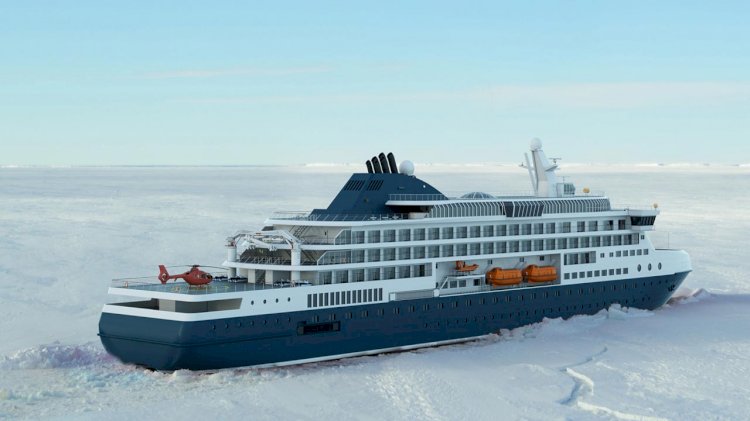
The vessel features a layout with public spaces including a bar/lounge, multi-purpose lounge, library, gift shop, observation lounge, fitness room/spa including a panorama ice bar, as well as a pool and jogging area. The vessel also features a large tender garage for stowing zodiacs and other expedition equipment that can be easily launched through a shell door on the port side. The vessel features a large helicopter deck aft where the helicopter can be lowered to the hangar on the deck below. There are two service lifts and three passenger lifts providing access to all accommodation decks. The vessel also includes a dedicate cargo hold with overhead hatch and davit system for stowing and deploying special, expeditionary cargo in remote locations along the cruise.

The majority of passenger cabins have private balconies with ocean views. The passenger cabins feature the KNUD E. HANSEN ‘Flex Cabin System’, which allows for cabin walls to be easily reconfigured between sailings to convert a single, luxury suite into two separate cabins. This allows the operator to maximize revenue based on specific demand.

The vessel is fully SOLAS compliant. KNUD E. HANSEN aims to achieve the highest level of survivability with strict adherence to Safe Return to Port (SRtP) requirements through the inclusion of redundant, segregated power and propulsion systems as well as passenger safe havens and an auxiliary wheelhouse. Special attention has been observed with regards to the MarPol regulations as well as the Polar code

This design has been developed completely in-house, by the highly trained and experienced staff of naval architects, marine engineers and designers at KNUD E. HANSEN, who place the utmost importance on safety, efficiency and design ingenuity.

MAIN PARTICULARS

  • Length o.a 144,20 m
  • Length pp 127,60 m
  • Breadth moulded 22,00 m
  • Depth moulded to deck 3 9,20 m
  • Design draught 7,00 m
  • Deadweight 1965 t
  • Deadweight 1965 t
  • Ice class PC3
  • Max number of passengers 300
  • Number of crew 150

Damen delivers ASD TUG 2810 to Thomas Services Maritimes

0

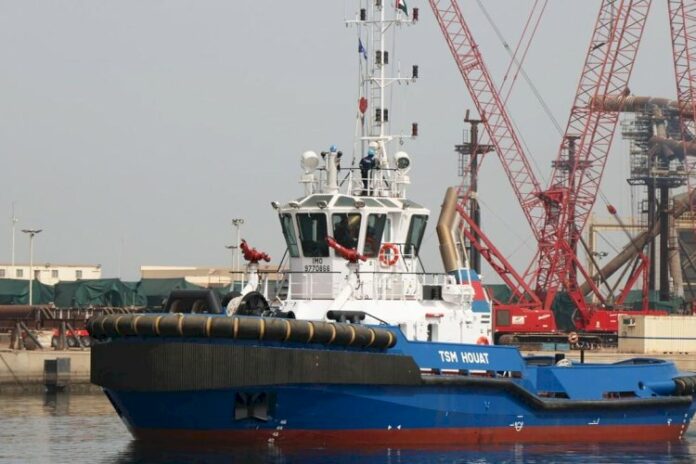
The new vessel forms part of the company’s growth strategy. The ASD Tug 2810 is the most successful ASD Tug in Damen’s portfolio, with over 175 deliveries since its introduction in 2002.

TSM was looking for a proven vessel and design, 60 tons bollard pull with a short delivery time for its harbour towage operations.

Damen, as pioneer of the standardised shipbuilding philosophy, has long extolled the virtues of building in series for stock. Amongst these is the fast delivery of proven, cost-effective technology. As a result of this practice, Damen was able to deliver the ASD Tug 2810 to TSM in just over six months.

This was despite the outbreak of the coronavirus, which naturally lead to some delays in production and prevented the vessel crew from travelling to Albwardy Damen in Dubai, where the tug was being constructed. However, with implementation of safe working measures and technical acceptance being done remotely, production could continue during this time.

In its selection of vessels, TSM is looking for high quality, including outstanding safety and comfort characteristics. Since the introduction of the ASD Tug 2810, Damen has been continually upgrading the model with state-of-the-art technology in order to maintain its high standards and relevancy.

Joost van der Weiden, Damen sales manager, said:

“As family businesses TSM and Damen share common goals and values. Our mutual appreciation for the benefits of standardisation and constant aim for high standards ensures a good fit. As such, we have enjoyed an excellent collaboration with TSM during the construction of this ASD Tug 2810. On behalf of Damen, I wish TSM success with their new vessel.”

The ASD Tug 2810 will be named TSM Houat, after the island of the same name in the department of Morbihan, Brittany. Her home port will be Sète in the Hérault department on the Mediterranean.

Neptune Energy commences subsea construction on Seagull project

0

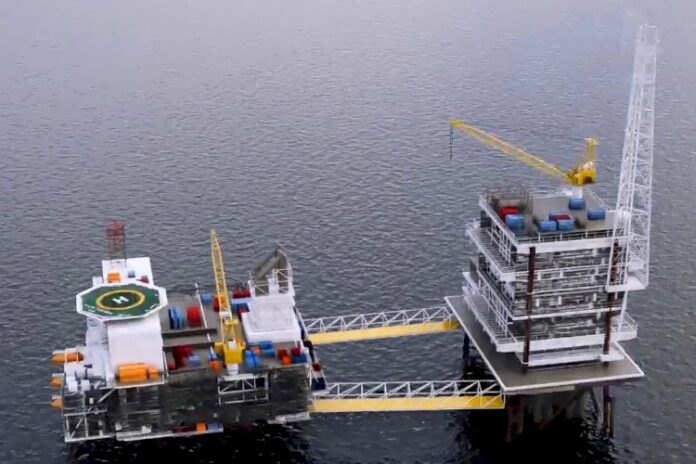
TechnipFMC, working under the Neptune Energy Alliance Agreement, has deployed the Apache II pipelay vessel to start the pipe-in-pipe installation, laying approximately 5km of pipe connecting the Egret manifold to the Seagull development.

Neptune Energy’s UK Managing Director, Alexandra Thomas, said:

“Seagull is an important project for Neptune, its partners and the UK. It is expected to produce 50,000 boe per day (gross) and supports UK security of supply. This is a key milestone for Seagull – the first step in offshore execution of the project. We continue to work with our contractors and suppliers, focussing on the safe deployment of people, vessels, and equipment and managing the challenges associated with the impacts of the ongoing COVID-19 pandemic.”

TechnipFMC Vice President, Commercial & Projects UK, Mediterranean & Caspian, Bill Morrice, said:

“We are delighted to see the first offshore execution milestone on the project come to fruition. Despite the challenging backdrop of COVID-19 we have worked collaboratively with Neptune as one team to deliver our scopes to date both safely and efficiently. This comes as a result of the valuable contribution from our design, engineering, HSEQ, procurement and fabrication teams and we look forward to continuing our working relationship with Neptune to achieve first oil at the Seagull development.”

TechnipFMC’s Normand Mermaid was mobilised in late August to provide pre-lay activities, including surveying and boulder removal. Following the pipe installation, its Normand Ranger will undertake trenching activities for the development. 

Seagull Project 

Seagull is a high pressure, high temperature (HPHT) development located in the Central North Sea on UK licence P1622 Block 22/29C, 17km south of the BP Operated ETAP Central Processing Facility (CPF). Proved plus probable gross reserves are estimated at 50 million boe.

The development will be tied back to the ETAP Central Processing Facility, partially utilising existing subsea infrastructure. Gas from the development will come onshore at the CATS processing terminal at Teesside, while oil will come onshore through the Forties Pipeline System to the Kinneil Terminal, Grangemouth. 

Neptune is the operator of Seagull and has a 35 per cent equity interest. Its joint venture partners are BP with 50 per cent and JAPEX with 15 per cent.

Next generation of sleek, fast, low fuel consumption ferries

0

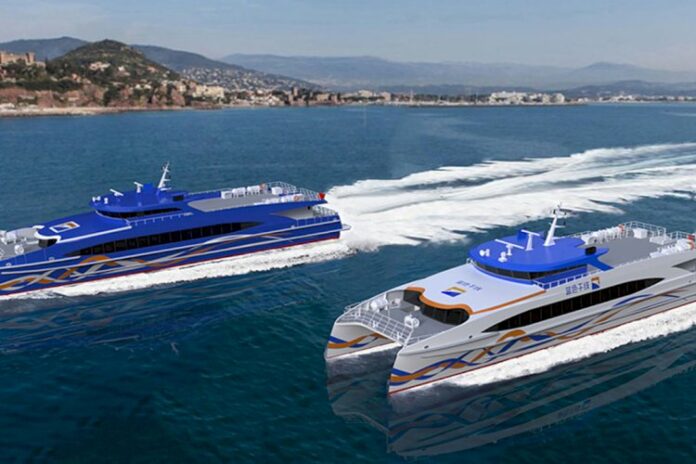
To be operated by the Zhuhai Fast Ferry Company, the vessels will form the next generation of sleek, fast, low fuel consumption ferries operating in the Pearl River Delta region. 

AFAI Southern Shipyard’s winning bid for the project was underpinned by the partnership’s ability to deliver a high speed, low fuel consumption vessel which offers a step change in passenger experience.

The vessels will accommodate 199 economy passengers on a single deck with VIP passengers having a dedicated cabin on the upper deck. The main passenger deck features all amenities aft to maximise crew comfort and deliver an open, airy cabin with clean forward visibility.

The Incat Crowther 40 will be powered by twin MTU 12V2000 M72 main engines, driving Rolls Royce Kamewa S71-4 waterjets.

The latest hull form is used for the vessels featuring Incat Crowther’s unique reverse bow which optimises hull efficiency and seakeeping characteristics delivering reduced operating costs and exceptional passenger comfort. This proven hull form has been rigorously tested in service and continues to support Incat Crowther to deliver leading designs throughout the industry.

Incat Crowther have delivered over 50 ferries currently in operation in China.

Wärtsilä: Scrubbers shown to have lower climate impact than low-sulphur fuel

0

The technology group Wärtsilä, a leading provider of Exhaust Gas Cleaning (EGC) systems for the marine industry, refers its customers to a recent report from CE Delft, an independent research and consultancy organisation, regarding the climate impact of EGCs. The study compares the results to the use of low-sulphur marine fuels and is made from a well-to-wake perspective in order to achieve an accurate comparison.

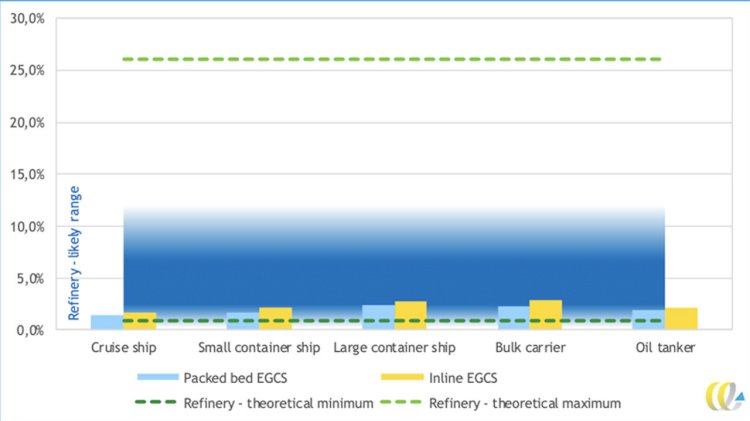
The report concludes that the environmental impact of EGCs will be less than that of low-sulphur marine fuel. It notes that CO2 emissions associated with producing and installing an EGC system are small compared to those generated when operating the system. The CO2 emissions are mainly related to the energy demand of the system’s pumps, which typically result in a total increase in CO2 emissions of between 1.5 and 3 percent.

By contrast, with de-sulphurised fuels the overall CO2 footprint increase is a result of the refining processes. Theoretical calculations range from an increase in CO2 emissions of 1 percent to as much as 25 percent when removing the sulphur content of the fuel. The report states that while the lower figure is not in fact physically possible, the higher percentage increase is applicable only to a quality of fuel that is too high for marine applications. The conclusion, therefore, is that the CO2 emissions associated with the production of low-sulphur marine fuels will be between these extreme values, as illustrated in the attached image.

CO2 emissions associated with the production of low-sulphur marine fuels will be between these extreme values. Image: CE Delft

Jasper Faber, Project Manager at CE Delft, said:

“This study provides a comprehensive overview of the climate impacts of different options to reduce sulphur emissions. It shows that in many cases, the carbon footprint of using a scrubber is lower than low-sulphur fuels.”

Jan Othman, Vice President, Exhaust Treatment, commented:

“Wärtsilä has consistently demonstrated its commitment to minimising the marine sector’s carbon footprint. This shows not only in our products and systems, but also in our manufacturing and production processes. We are delighted that this independent report confirms that when taking all things into consideration, our EGCs create less CO2 emissions than the use of sulphur-compliant fuel.” 

Research has indicated that greenhouse gas (GHG) emissions from shipping have increased by more than 10 percent in the last five years. These emissions are projected to increase by up to 50 percent by 2050, which means that if the International Maritime Organization’s goal to significantly lower the industry’s GHG emissions is to be achieved, scrutiny of all aspects of shipping is necessary. Reducing CO2 emissions whilst complying with the IMO’s MARPOL Annex VI is one such important aspect.

New vision to link offshore wind farms to Britain and the Netherlands

0

National Grid Ventures, the commercial development arm of National Grid plc, and Dutch Transmission System Operator TenneT have announced a cooperation agreement to explore the feasibility of connecting Dutch and British wind farms to the energy systems of both countries via subsea electricity cables called interconnectors. The development would be the first of its kind for the UK and the Netherlands in the North Sea.

Harnessing the full potential of offshore wind will play a vital role in decarbonising European economies and societies by 2050. The UK and the Netherlands have both established ambitious targets to expand offshore wind capacity in the North Sea, with the UK government recently announcing it was targeting 40 gigawatts by 2030, whilst the Dutch have targeted 11.5 gigawatts by 2030 and another increase of 20-40GW by 2050. Delivering such large-scale offshore wind growth efficiently will require significant amounts of new infrastructure and close cooperation between countries around the North Sea.

The announcement follows a recent decision by the Dutch government to future-proof the first far shore high voltage direct current (HVDC) 2GW offshore transmission grids in the Netherlands for the IJmuiden Ver Wind Farm Zone, approximately 80km off the North-West coast. 

Under the terms of the cooperation agreement, TenneT and National Grid Ventures will explore the development of a multi-purpose interconnector (MPI) to simultaneously connect up to 4 gigawatts of British and Dutch offshore wind between the British and Dutch electricity systems, providing an additional two gigawatts of interconnection capacity between the countries.

By connecting into both systems, the MPI will enable spare transmission capacity to be used to trade electricity between the countries, thereby increasing the potential utilisation of offshore infrastructure. Reducing the amount of infrastructure needed will also mitigate the environmental impact on coastal communities, compared to the current approach in which interconnectors and wind farms are developed and connected separately.

The two companies aim to have a “path-finder” project defined by the end of 2021 with a view to delivering an operational asset by 2029.

Manon van Beek, CEO of TenneT, said:

“TenneT has been at the forefront of developing multi-purpose interconnection to enable the large-scale growth of offshore wind in the North Sea. This agreement allows us to work with National Grid in the North Sea to develop innovative infrastructure that uses every spare electron of offshore wind generation to reach our decarbonisation targets.”

Jon Butterworth, Managing Director of National Grid Ventures, said:

“The UK’s binding commitment to net zero by 2050 and the European Green Deal have set clear goals for a low-carbon future for generations to come. Multi-Purpose Interconnectors have the potential to act as a key enabler for new offshore wind projects and we’re delighted to be partnering once again with TenneT to deliver an innovative vision to help realise the full green energy potential of the North Sea.”