0.9 C
New York
Home Blog Page 769

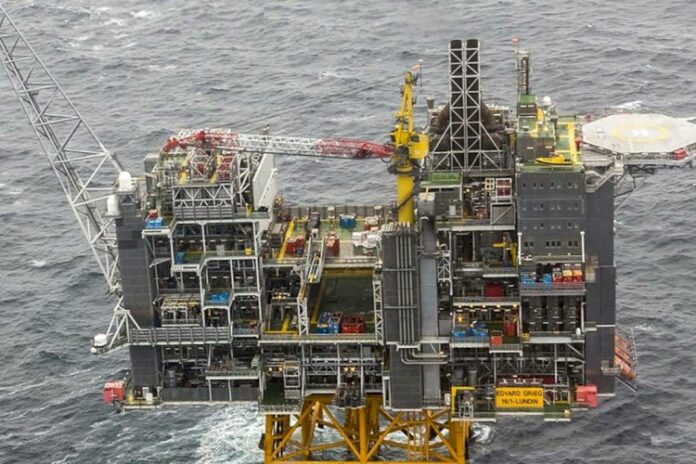
Aker Solutions to install electric boilers on the Edvard Grieg platform

0

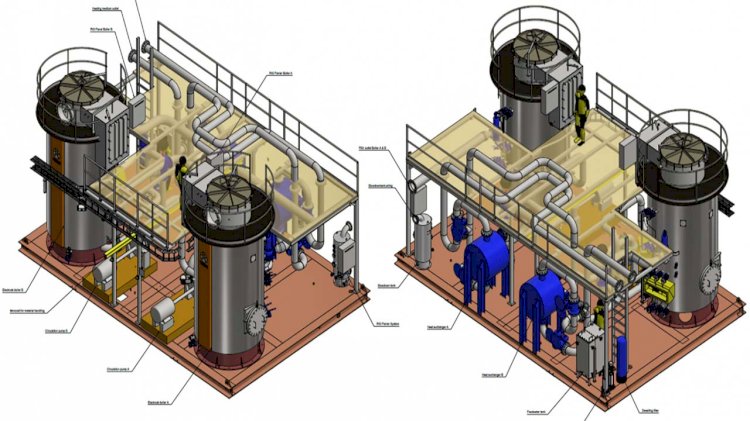
Electric boilers are a key component that make it possible to fully electrify Edvard Grieg, which in total will yield a reduction in CO2 emissions of around 200,000 tonnes per year.

Aker Solutions will be responsible for the engineering work, prefabrication as well as preparation of all underlying systems for the installation work offshore. Aker Solutions will also have overall responsibility for the system, and for ensuring a seamless transition from use of gas turbines to electric boilers.

Today, the power requirement is generated using a gas turbine equipped with heat recovery. Starting from 2022, Edvard Grieg will be connected to the area power from shore solution for the Utsira High. As from this point in time, the demand for heat will be filled by electric boilers.

A power from shore solution will be established for the installations in the southern part of the Utsira High in the North Sea in connection with Phase 2 of the Johan Sverdrup field development. A subsea cable will be laid from the Johan Sverdrup field center to Edvard Grieg.
Lundin Energy Norway’s Field Development Director, Charlotte Berge, says:

“We achieve several positive effects by getting electric power from shore, both in terms of operations and in the form of environmental benefits.
Shutting down the gas turbines contributes to an overall reduction of CO2 emissions of 200,000 tonnes per year. Operating costs will also be reduced since we will no longer need to operate our own power plant on the platform and we expect to see an improvement in operating efficiency.”

The Edvard Grieg platform was  designed to receive electricity from shore from the very beginning of the construction phase in 2012. This was also a requirement set by the authorities. In 2014, the Norwegian Parliament (the Storting) decided that a solution would be developed to supply power from shore for Johan Sverdrup, and that the other platforms in the area would be connected to this solution in connection with Phase 2 of the Sverdrup development.

Charlotte Berge says:

“Whilst receiving electricity for a platform via cable has been done before,  adaptations to retrofit standard equipment from the onshore industry were needed to obtain the heat needed in the process plant. This will be an innovative solution in the  offshore environment.”
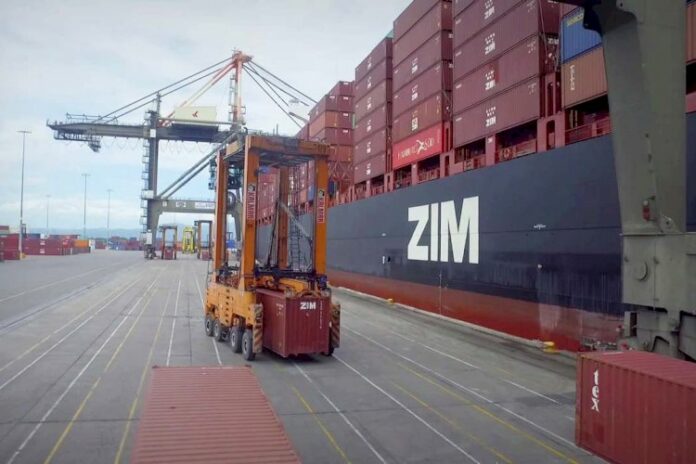
ZIM launches a new China-Australia express line

0

The new service, named China Australia Express (CAX), will offer 11-day transit time from South China to Sydney – one of the fastest in the market – along with additional advantages and superb customer service.

The new China-Australia service, planned to commence in mid-October 2020, will have the following rotation:

Ningbo – Shanghai – Yantian – Sydney – Melbourne – Brisbane – Ningbo

The service will deploy 6X2500 TEU vessels with extensive capacity and plugs for refrigerated cargo. A fleet of new, advanced reefer units fitted with ZIMonitor system for constant monitoring and damage prevention will be available to customers on the new service.  

Eli Glickman, ZIM’s President & CEO, added:

“We are very pleased to start operating in the Australian trade in view of the high demand in the market. I am sure this new service will provide a solution to customers’ growing needs in this trade. We see great opportunity in the Australian trade and believe our unique Z Factor and innovative yet personal approach will be appreciated and valued by customers in this market.”


Benin Terminal takes delivery of two new yard gantries

0

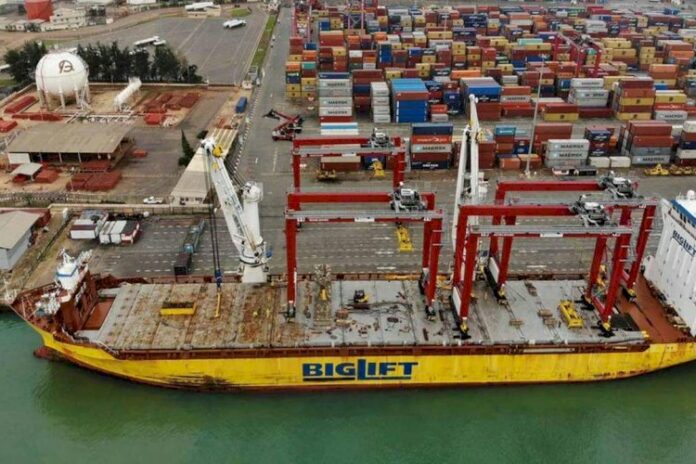
The new equipment will serve to improve the productivity of Benin Terminal, boost the country’s competitiveness and bolster trade in West Africa.

With a lifting capacity of 40 tonnes each, the ultra-modern gantries will improve container storage capacity at the terminal, increase the pace of deliveries and reduce handling times for goods at Benin Terminal.

Financed by Benin Terminal to the tune of 2.1 billion CFA francs (€3.2 million), the two yard gantries, built by lifting equipment manufacturer Konecranes, will strengthen the stevedoring capacities of the Benin Terminal container terminal.

Yves Magarian, Managing Director of Benin Terminal, said:

“Despite the COVID-19 pandemic, Benin Terminal is pursuing its programme of investments and continues to modernise its port activities at the Autonomous Port of Cotonou. We now have 12 yard gantries. The new equipment will make our stevedoring operations even more seamless and improve service quality for our shipping company and consignee customers.”

Thanks to the 95 billion CFA francs (€145 million) invested by Benin Terminal since 2013, the container terminal has become a regional logistics hub for growth for Niger, Mali, Burkina Faso and Nigeria.  The investments have made Cotonou a more efficient, modern and attractive port that contributes to the economic development of Benin.

Benin Terminal, which today employs some 677 Beninese nationals, is thus contributing to the fluidity of the supply chain in Benin and the countries in the sub-region. In addition to its port activities, the company also rolls out solidarity initiatives every year in key sectors such as health, education and environmental protection.

LR awards Samsung Heavy Industries AiP for its ammonia-fuelled tanker

0

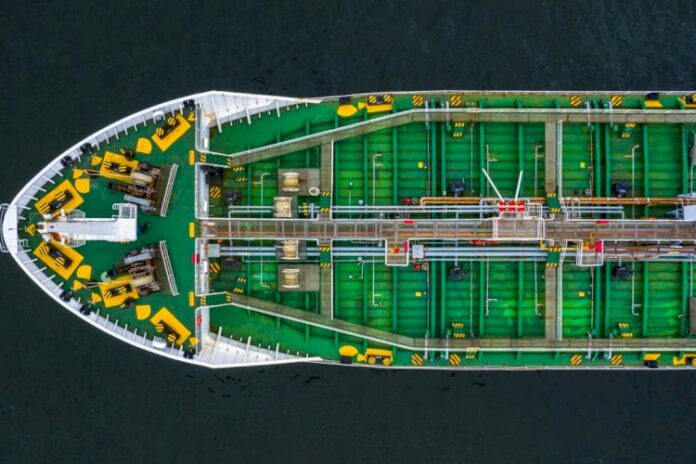
LR has granted Approval in Principle (AiP) to Samsung Heavy Industries (SHI) for its ammonia-fuelled tanker design, a key progress milestone in the joint development project LR and SHI announced with industry leading partners MISC Berhad and MAN Energy Solutions in January 2020.

To meet the International Maritime Organization’s 2050 ambitions on halving greenhouse gas (GHG) emissions from 2008 levels, zero-carbon vessels need to enter the world fleet by 2030. Ammonia is among the zero-carbon fuels that is being considered by maritime stakeholders and with the award of this AiP, SHI will forge ahead with its exclusive development of a relevant fuel gas supply system and detailed ship design. It aims to commercialise these developments by 2024.

Jong-Hyun Youn, SHI EVP and head of design, said:

“The ammonia fuel design project led by SHI brings all relevant stakeholders spanning from the fuel supplier to operator and it will result in a commercial outcome.”

LR Group CEO designate and Marine and Offshore Director Nick Brown said:

“LR is working with leading industry partners to make deep-sea zero-carbon vessels a reality within this decade. Shipping needs action not words to deliver on the IMO’s 2050 GHG ambitions and this challenge calls for collective action and industry collaboration. Following the announcement of the ammonia-fuelled tanker joint development project in January, we are delighted that SHI has made steady progress on the fuel gas supply system and detailed ship design.”

In its 2020 Energy Prediction report, the International Energy Agency forecasts that the use ammonia and hydrogen as vessel fuels will expand and will account for 60% of marine fuels by 2060. Similarly, BP announced in its 2020 energy prediction report that the portion of non-hydrocarbon fuels such as ammonia, hydrogen, biofuel and others will increase to 85% of 2018 total energy amount by 2050.

CyberOwl to provide its cybersecurity technology to secure the Metrostar fleet

0

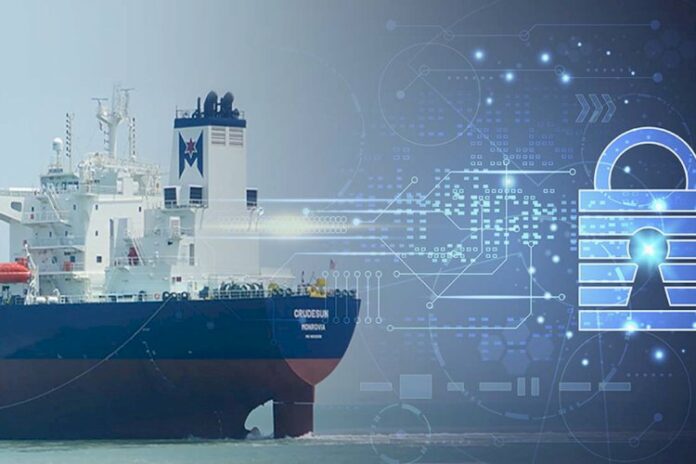
CyberOwl, a cybersecurity company that safeguards operational assets in the maritime, defence and industrial sectors from attacks across Europe and APAC, has agreed a contract to provide its vital shipping cybersecurity technology to secure the Metrostar Management Corporation fleet. 

With 4 months remaining to 1 January 2021 and IMO 2021, many operators are still unsure of their next steps for managing cyber risk onboard their vessels and gaining assurance on compliance with the looming regulation. 

Having launched their first product in 2019, CyberOwl now works with shipping fleets across Europe and APAC to help them gain visibility of their onboard systems, actively manage the cyber risks and gain assurance on compliance. Despite the disruptions of Covid-19, the Company continues to see a drive in demand for their products and services as fleet owners and managers come alive to the severity of the risks.

This drive in demand is, in part, a result of year-on-year increase in digital acceleration in an industry that is often spoilt for choice in adopting complex technological innovations with little visibility as to how they impact a vessel’s cyber risk. The latest move to acquire CyberOwl’s services demonstrates Metrostar Management Corporation’s proactive approach to managing its cyber risk and remaining compliant with IMO2021 requirements.

Daniel Ng, CEO of CyberOwl, said:

“Metrostar joins the growing number of maritime companies that place trust in CyberOwl to help them actively manage the cyber risks to their vessel systems. Working with Metrostar, it is clear that they are on a mission to be at the cutting edge of cybersecure digitalisation, becoming the leading light for the rest of the shipping sector.” 

Matthew Maheras, IT Manager of Metrostar Management Corporation, said:

“CyberOwl’s Medulla has been able to provide us visibility of cyber risks in a way that we previously struggled with. Within days of installation, their systems detected risks to our onboard systems which we were able to deal with immediately to avoid any disruptions and losses. Medulla also produces practical, incident documentation and meaningful reports that really facilitate communication of cyber risks with Senior Management and provide me compliance assurance during inspection processes. The team are professional, experienced and a real pleasure to work with.”

Wärtsilä solutions meet challenging needs of Canadian Coast Guard vessel

0

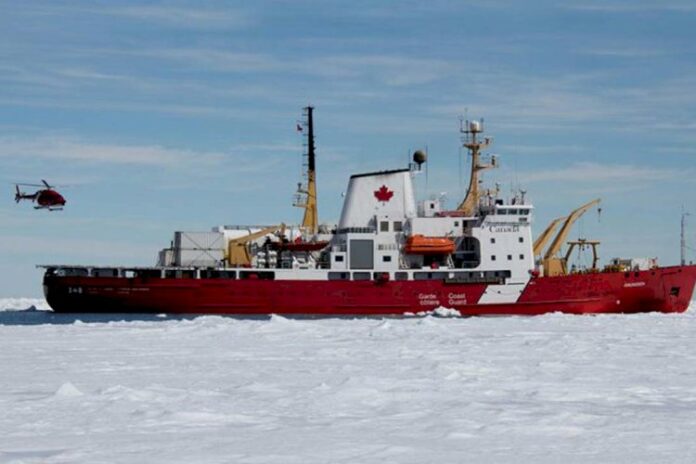
The order with Wärtsilä was placed in July. Wärtsilä was able to meet the CCG’s challenging requirements for build quality and fitting the equipment in the existing space of the 98 metres long Arctic Class 3 Medium Icebreaker, the only vessel in its class to be fitted with Retractable Thrusters and DP.

The new Thrusters will be integrated with the existing Bow Thruster, which is also a Wärtsilä product.

Mike Ford, Sales Manager for Americas & DP at Wärtsilä Voyage, states:

“The Platinum DP system will exceed the functionality desired by the CCG, and will enhance the DP capacity of the vessel to perform sailing and manoeuvring operations. By offering the most intuitive user interface on the market, Platinum DP also reduces the training requirements for successful system operation. The user interface plays a critical role in helping operators make the most of the system in the trying conditions found in Canada’s Arctic waters.” 

Ian Brouwer, Senior Sales Manager, Wärtsilä Marine Power, says:

“We continue to work closely with the CCG to ensure that we fully understand and successfully meet their requirements for specification writing, documentation and project management. Supplying the products is only part of the picture, since they need to be engineered for complete integration with the Amundsen’s existing machinery, and for this we have outstanding capabilities.”

The Wärtsilä equipment is scheduled for delivery in September 2021.

Kongsberg Digital and MAN enter into a strategic digitalization partnership

0

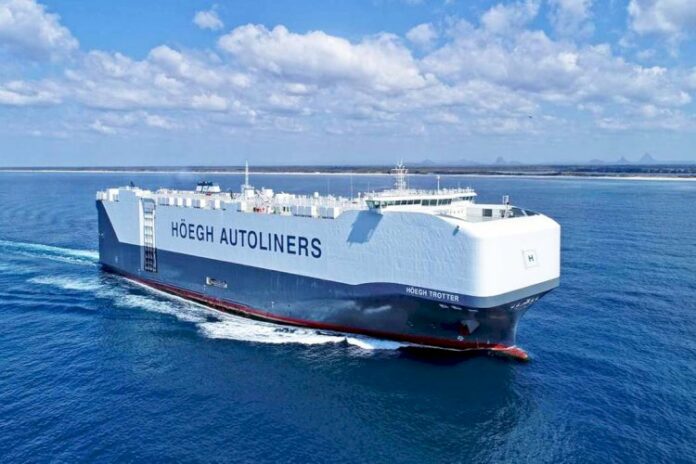
In order to accelerate the rate of digitalization in the maritime industry and secure greater value for customers on both sides, Kongsberg Digital and MAN are now formalizing the MoU from October 2019 and entering into a strategic digitalization partnership. Their first joint project is together with Höegh Autoliners.

Kongsberg Digital and leading engine manufacturer MAN are entering into a strategic digitalization partnership, formalizing the Memorandum of Understanding (MoU) signed by the two companies in October 2019. The first project undertaken by the partnership will be to deliver joint digital infrastructure to Höegh Autoliners, marking the first step in their stated aim to work together in accelerating the rate of digitalization in the maritime industry and securing greater value for customers on both sides.

The agreement to collaborate in developing digitalization solutions for the maritime sector came about as the two companies realized that their separate efforts in this space were complementary. Kongsberg Digital’s recently launched Vessel Insight – a new, cost efficient data infrastructure solution for the maritime market – is a natural match with MAN’s PrimeServ Assist digital solution for optimization of engine use and maintenance.

Vessel Insight captures contextualized data from vessels and fleets for use in value generating applications for ship owners and operators, so by integrating the data from PrimeServ Assist will be able to provide a more holistic picture for the majority of vessels with MAN two-stroke engines on board. With two major maritime vendors collaborating on a common data infrastructure, customers will benefit from interfacing with one system instead of many, automated data integration, and a larger selection of digital solutions. This will make the digital transformation faster and more cost efficient for customers in the maritime sector.

Hege Skryseth, President of Kongsberg Digital, said:

“The engine is the most critical component onboard a vessel, and this strategic collaboration will ensure optimal operations and maintenance of the engine. This will generate significant value to our customers. We look forward to working together with MAN and our customers to ensure that they get the digital solutions that fit their capabilities and needs.”

The maritime industry is in a transformational phase and is still learning new ways to extract additional value from digitalization, and with two major vendors now working together to further develop a powerful, safe and open infrastructure, this transformation will accelerate. For vendors of digital solutions and services, developing value adding applications and software for customers will be easier and more cost efficient, which in turn leads to a broader selection of available solutions. This will speed up the ability to digitalize and gives ship owners and operators a quicker return on their digital investment.

Per Hansson, Head of Digital and Strategy at MAN Energy Solutions, said:

“We are constantly searching for opportunities to bring the benefits from digital development to our customers faster and easier. Our advanced analytics and support services are areas where we can provide unique benefits to our customers’ businesses – further optimizing the operation, maintenance and availability of their vessels. Working together with renowned industry partners like Kongsberg gives us one more way to provide our services to our customers, and to jointly further digitization within the maritime sector.”

The inaugural project with Höegh Autoliners is currently in a testing and validation phase, with a goal to enable real time engine monitoring and digital assistance for optimization, while reducing digital equipment onboard. Kongsberg Digital will provide its data infrastructure solution, Vessel Insight, for real time data transfer while MAN deploys PrimeServ Assist for engine data analysis.

Geir Frode Abelsen, Head of Technical Operations in Höegh Autoliners, said:

“For us in Hoegh Autoliners, this collaboration is an important step towards the utilisation of digital solutions in optimising the running and maintenance of our engines in a safe and effective way.”

Inmarsat Fleet LTE coverage extends to Gulf of Mexico

0

In conjunction with Inmarsat’s service provider One Net, the North Sea trials were undertaken with ship management company V.Ships Offshore at the beginning of 2020, delivering hybrid connectivity via 4G cellular plus satellite coverage on VSAT Ka-band and L-band, without the complication of dual billing or the risk of disconnection. V.Ships Offshore, based in Aberdeen, covers ship management and technical services, as well as crew management and recruitment.

The new Gulf of Mexico coverage extension adds to the existing agreement already in place with subsea fibre and offshore LTE network operator, Tampnet, following the Fleet LTE North Sea service launch in November 2019.

Scott Bryce, Vessel Manager, V.Ships Offshore, said:

“We’ve been thoroughly impressed with the stability and quality of Fleet LTE service throughout the trial and the automatic and seamless switching between networks, which has removed the risk of any disconnection in service that would normally effect our day-to-day activities. The service plan flexibility has also given us the ability to move up and down plans when needed, to support our changing bandwidth demands, and there are no hidden admin fees to worry about.”

The expansion of the Fleet LTE service means customers in both the North Sea and Gulf of Mexico can access high speed 4G, Fleet Xpress maritime VSAT Ka-band and continuous L-band connectivity within a single, fully managed hybrid package.

Eric Griffin, vice president Offshore & Fishing, Inmarsat Maritime, said:

“The trial success with V.Ships Offshore supported by our partner One Net, is a real proof point for Fleet LTE and we are excited about the evolution of the service into the Gulf of Mexico, to support the recovery of the offshore sector and expansion into other regions and sectors in the future.”

Inmarsat Fleet LTE is available in a range of service bands that deliver data speeds of up to 40 Mbps with round trip delay of around 35-40ms. However, when LTE is not available, services automatically switch over to Ka-band Fleet Xpress committed information rates, with continuous back-up from L-band FleetBroadband.

Tampnet CEO, Per Helge Svensson, said:

“Inmarsat is a leader in a market that has significant untapped potential for Tampnet’s premium LTE services, and we are really pleased to extend our agreement to the Gulf of Mexico based on the success of the trials.”

Stena develops a solution to use recycled batteries in charging stations at ports

0

The project is part-financed by the EU and will, among other things, investigate how used batteries from the transport sector can be reused for energy storage in ports.

Rasmus Bergström, Managing Director of Batteryloop, says:

“An incredible amount is happening in the world of batteries. New solutions are being designed to meet the charging requirements of the transport sector of the future, especially for shipping where vessels are starting to switch to electric power. Rapidly charging a large ferry, for example, requires a huge amount of energy in a short time and it’s not certain that the electricity grid will be able to deliver it. Local energy stores at ports could offer a great solution to this problem.”

Batteryloop* is a subsidiary of the Stena Recycling Group. The company has quickly made an impact in electrification, not least in the recycling of used batteries from the automotive industry. A global collaboration agreement was recently signed with Volvo Buses, for the reuse of batteries from its electric vehicles.

Rasmus Bergström says:

“One thing is sure, batteries are here to stay. In order to conserve natural resources and make battery recycling sustainable, we need to do everything we can to use batteries for as long as possible. Our conclusion is that many batteries can have a second life as energy storage. If we can find solutions that will scale-up and work in ports, we’ll have a win-win situation in many ways.”

The project will map and evaluate opportunities to reuse lithium-ion batteries from the transport and automotive industry for energy storage in ports – to charge electric ferries, for example. The collaboration includes several Stena companies – Batteryloop, Stena Recycling, Stena Rederi and Stena Line – the ports of Gothenburg and Kiel and the accreditation company DNV GL. The project will be carried out over two years and be part-financed by INEA, the EU’s Innovation and Networks Executive Agency.

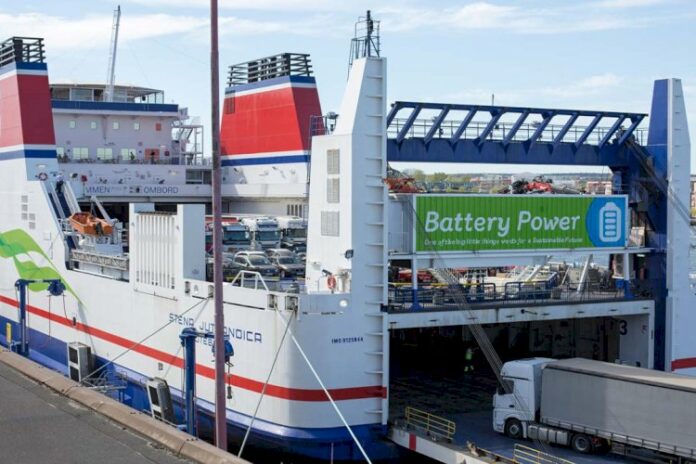
As early as 2018, Stena Line began its investment in battery power on the ferry Stena Jutlandica, which uses battery power to drive the bow thrusters that steer the vessel into port.

Per Wimby, project manager for electrification at Stena Teknik, says:

“This is an important milestone in the electrification of shipping. Our future project, Stena Elektra – a fully electric ferry – is already on the drawing board. In order to succeed, we need to solve the issue of how to quickly charge a ferry. Energy storage at ports using recycled batteries, is a very interesting and sustainable alternative for the future.”

Quayside energy storage can also be used as an alternative power source for vessels in port, which will reduce greenhouse gas emissions. Stena Line and the Port of Gothenburg have long been pioneers in this area and all Stena Line ferries are connected to green onshore power in Gothenburg.

*Batteryloop

Batteryloop builds energy stores from batteries and ensures the recovery and recycling for batteries that are no longer in use. Through Stena Recycling’s branch network, Batteryloop can receive batteries directly from manufacturing companies, repair shops, car dismantlers and insurance companies. Batteryloop is a subsidiary of Stena Recycling, which is part of the Stena Metall Group. 

Kongsberg will design and equip the third Sølvtrans wellboat

0

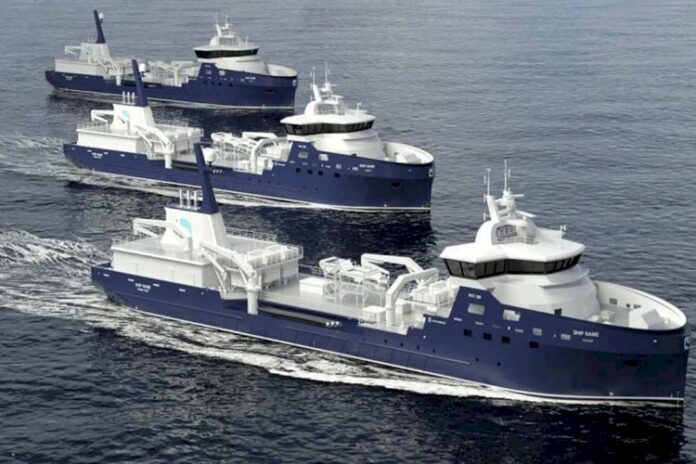
Kongsberg Maritime (KM) has reinforced two long-standing business relationships with the news that it is to design and equip the third wellboat in a series to be built for Sølvtrans Rederi by the Myklebust Verft yard in Gursken, Norway. KM estimates the value of this contract to be approximately NOK 45 million.

Based in Ålesund, Sølvtrans is one of the world’s largest wellboat shipping companies for the transportation and processing of live salmon. There are 19 wellboats in its fleet, seven of which have been designed by KM. Of these, three are now under construction by Myklebust Verft, with its 135-strong permanent workforce.

The new wellboat, with a loading capacity of 4,000m3, is a KONGSBERG NVC 389 live fish carrier vessel design. It will sport a host of onboard features designed to ensure the safe, gentle, humane and cost-effective handling of fish stocks: freshwater production and treatment systems, movable bulkheads, vacuum and under-pressure loading, over-pressure unloading, and a generous hold capacity.

In addition to assuming responsibility for the wellboat’s design, KONGSBERG will also deliver a comprehensive equipment package. Designed to greatly reduce environmental impact with its efficient diesel-electric propulsion system, the vessel will also benefit from the presence of a PROMAS solution, in which the rudder and propeller are integrated into a single system for enhanced hydrodynamic performance. KONGSBERG thrusters will provide the side force required to optimise manoeuvring capabilities, and the vessel will be fitted out with an array of KONGSBERG electrical and automation systems as well as vital deck machinery such as winches.

Monrad Hide, Sales Director in Ship Design, Kongsberg Maritime, says:

“The collaborative partnership we have developed over time with Sølvtrans and Myklebust Verft is deeply appreciated and of considerable value to us. All three companies are leaders in our respective fields, and what we’ve seen is that the strong synergy of our skills and specialisms has had an overwhelmingly positive ripple effect on sales and supplier infrastructures in the local region and well beyond.”

Roger Halsebakk, CEO, Sølvtrans, adds:

“The building and commissioning of the new wellboat is destined to be another high-profile project which will bolster our collective reputation and generate business across a number of sectors. We know that we can rely on KONGSBERG’s well-established expertise in vessel design and maritime technology, just like we can count on Myklebust Verft to carry out an impeccable construction job.”