5.7 C
New York
Home Blog Page 77

US vetoes G-7 shadow fleet task force plan

0

Canada, which holds this year’s revolving G-7 presidency, will host a summit of foreign ministers in Charlevoix, Québec, next week. In negotiations to formulate a joint statement on maritime issues, the US is pushing to strengthen language around China while watering down wording on Russia, said the people, who asked not to be identified discussing sensitive matters that aren’t public.

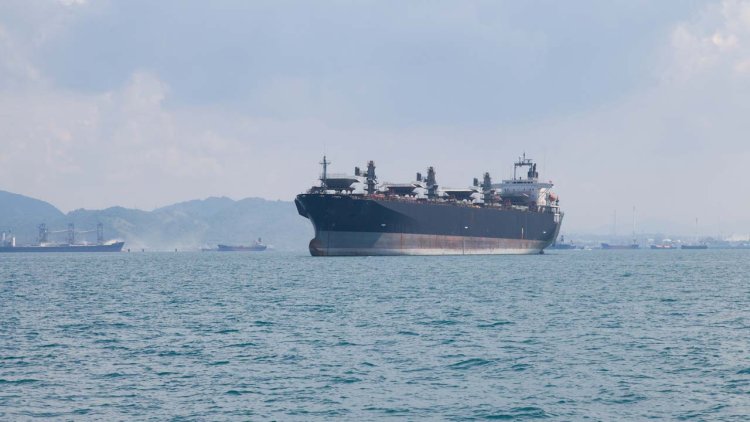
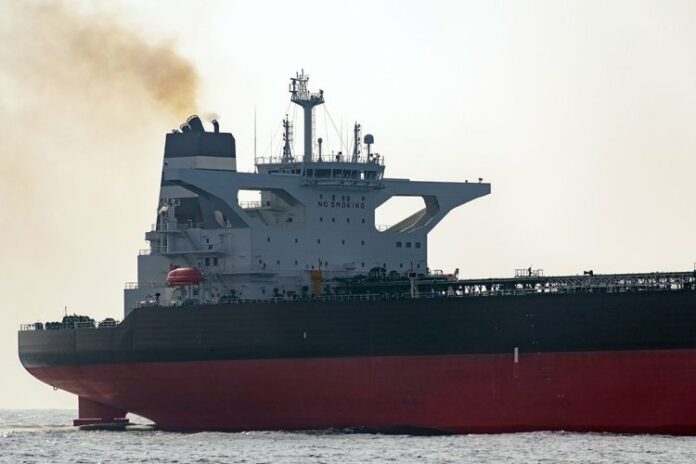
The term “shadow fleet” is used to refer to aging oil tankers concealed to overcome Western sanctions imposed on Moscow since it launched a full-scale invasion of Ukraine in 2022.

As well as vetoing Canada’s proposal to establish a task force to monitor for sanction breaches, the draft G-7 statement seen by Bloomberg News shows the US pushed to remove the word “sanctions,” as well as wording citing Russia’s “ability to maintain its war” in Ukraine by replacing it with “earn revenue.”

In wording around sea safety and security, the US pushed to name China directly, including by referencing the risk to “lives and livelihoods” caused by its moves to “enforce unlawful maritime claims,” its aerial maneuvers, and the South China Sea specifically.

G-7 communiques aren’t final until they’re published through consensus, and negotiations could still yield significant changes before or during the summit.

Still, relations between the US and other Western powers have frayed significantly. Last month, for example, allies were unable to publish a joint statement to mark the third anniversary of Russia’s full-scale invasion of Ukraine — something they’d done the previous two years — after the US opposed strong condemnation of Russia.

Washington is also pushing back against references to maritime sustainability, the people added, as well as efforts to create a maritime observatory to track boundary changes. That’s a key issue in maritime conflicts globally, including in the South China Sea.

US diplomats have briefed their counterparts that the move was due to Washington’s re-evaluation of its position in multilateral organizations, rendering it unable to join any new initiatives, the people said.

A spokesperson for Canadian Foreign Minister Melanie Joly declined to comment on ongoing negotiations. Spokespeople for the US State Department didn’t immediately respond to an emailed request for comment.

President Donald Trump’s second term in the White House has upended decades-long norms of foreign policy in just a month and a half, prompting allies to seek to establish their own security guarantees. European leaders gathered in Brussels for an emergency summit this week with a view to massively increase defense spending, as the future of US participation in alliances including NATO hangs in the balance.

In a sign of Trump’s impact on traditional US allies’ foreign policy, a separate draft of the main communique, also seen by Bloomberg, shows any mention of Russian aggression has vanished, welcoming instead “all efforts” to agree to a ceasefire.

Source: Bloomberg

Dual Fuel Voith Tractor Tug delivered to BOTAŞ Petroleum Pipeline Corporation

0

The 39-metre tug Silivri has been successfully delivered to The BOTAS Petroleum Pipeline Corporation in Turkiye. The TRAktor V3900-DF series tug was recently completed at Uzmar Shipyard to a design by Robert Allan Ltd.

Silivri is only the second vessel in the world to combine Voith Schneider propulsion with dual-fuel LNG/diesel engines. This unique arrangement has only been combined once before, on her sistership Sultanhani, delivered earlier in the year to the same owner.

Equipped with Wärtsilä 6L34DF engines and 32X6 Voith Schneider propellers, Silivri can undertake challenging escort operations as part of Botas’ fleet. VSPs are well suited for this application due to their fast response time and precise maneuvering. The 32X6 VSP model is the latest innovation in cycloidal propeller design, featuring several improvements over its predecessors, not least of which is a simplified yet more robust design. The TRAktor V3900-DF series also features a new geometry for the VSP guard plate, optimizing bollard pull performance and simplifying construction.

The Wärtsilä 6L34DF dual fuel engine can run on either natural gas or diesel, with seamless transition between the two fuels. An exhaust aftertreatment arrangement consisting of SCR units, mixing tubes, and a dedicated diesel exhaust fluid (DEF) system are installed on the vessel to maintain IMO Tier III emission compliance even in diesel operating mode. The 40 m3 LNG tank is fitted aft of the Engine Room in a dedicated compartment and is installed transversely allowing a more compact and efficient equipment arrangement, as well as separating associated hazardous zones from the accommodation block forward. A carefully designed force ventilated LNG vent mast allows possible vented natural gas from the LNG tank and system to be well dispersed on exit, without the potential for cold vapour collapse. The vent mast locates the outlet well above the working deck and away from any crew areas or ventilation intakes.

Silivri’s wheelhouse design enables 360-degree visibility for the Master and features two control stations (one forward, one aft), each with full functionality. Critical deck equipment like the heavy-duty escort winch and dedicated staple are fully visible from the aft control station. From this same location both fire-fighting monitors are visible in their position on an aft elevated platform.

Development of the TRAktor V3900-DF hull form included an extensive computational fluid dynamics (CFD) phase in which multiple operational parameters were optimized. Foremost among those was ensuring excellent tug directional stability by installing Robert Allan Ltd.’s strake stabilizers at the stern of the tug. These small appendages ensure the tug is directionally stable yet still highly maneuverable, with very minimal impact to resistance. During the design phase these results were verified in model tests and results were confirmed on sea trials.

Silivri can generate 80 tonnes of bollard pull and 107 tonnes of steering force during escort operations. The Silivri can also achieve 188 tonnes of braking (more than 2x the static bollard pull).

This tug represents the latest evolution of the design concept developed by Robert Allan Ltd. for LNG-fueled tugs. It addresses the space and regulatory limitations specific to small vessels, which are not present in larger LNG-fueled vessels. This design incorporates lessons learned and operational feedback from the 10 previous Robert Allan Ltd. designed LNG-fueled tugs. Many of these design features are now being used as the foundation for future alternatively fueled tug designs under development at Robert Allan Ltd.

Particulars of the TRAktor V3900-DF series are:

  • Length overall: 39.0 m
  • Beam, moulded: 15.0 m
  • Depth, moulded: 6.0 m
  • Gross tonnage: 900

The tug was designed and constructed to comply with all applicable Rules and Regulations of Bureau Veritas with the notation I ✠HULL, ✠MACH, ✠AUT-AMS, Escort Tug, Fire-Fighting 1 Water Spraying, Dual Fuel, LNG Fuel, In Water Survey, Unrestricted Navigation

Tank capacities are as follows:

  • Diesel Fuel oil: 164 m3
  • LNG: 40 m3
  • Potable water: 23 m3

Jan De Nul and DEME ink award letter

0

A joint venture of Jan De Nul and DEME has signed a letter of award with Indian engineering and construction company ITD Cementation for dredging and reclamation works in Vadhavan Port, during a Belgian economic mission to India.

The letter of award was signed during the Belgian economic mission to India, which is taking place from 1 to 8 March 2025.

The project includes nearshore reclamation and shore protection for the greenfield port, which is located on India’s west coast in Maharashtra. Spanning approximately 200 hectares, the land reclamation will facilitate the construction of breakbulk and liquid cargo handling facilities. 

This development is part of a larger initiative by the Indian government to establish Vadhavan as one of the world’s top ten container ports by 2040. The joint venture will serve as a subcontractor to ITD Cementation to execute this phase of the project.

Construction work is scheduled to begin in the third quarter of 2025, following the monsoon season. For this project, Jan De Nul and DEME will deploy two of their larger trailing suction hopper dredgers.

UK unlocks floating offshore wind power with major investment for Scottish port

0

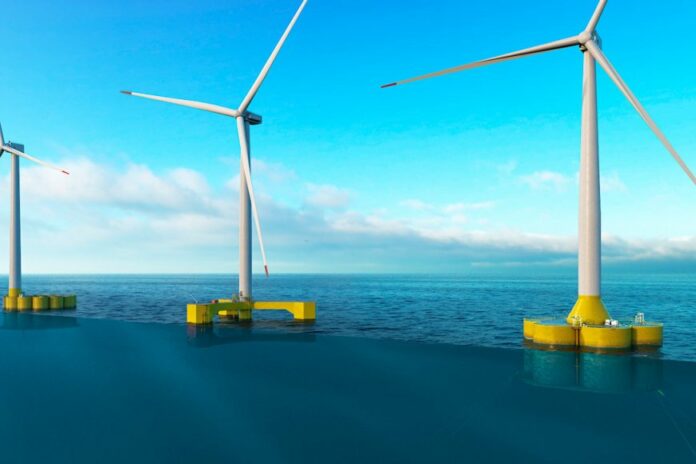
The Department for Energy Security and Net Zero confirmed the Floating Offshore Wind Manufacturing Investment Scheme (FLOWMIS) funding for the Invergordon-based Trust Port’s ‘Phase 5’ expansion, which aims to establish the UK’s first custom-built integration hub for floating offshore windfarm construction.

The award paves the way for Port of Cromarty Firth to secure match-funding from banks and/or other investors, and to award a pre-construction contract to kick off work on Phase 5, which must be completed in 2027 to be ready for the first commercial-scale floating wind projects.

The expansion project is expected to create 170-320 jobs in the construction phase. When complete, it will provide the larger facilities needed for the construction, installation and operational support to offshore and floating offshore wind – a vital component of regional jobs and growth, national energy security (and reduction of energy bills), and to Scotland and the UK achieving their Net Zero obligations.

The Port’s deep, sheltered waters are perfectly suited to accommodating the large ships which will deliver the major components required for offshore wind, such as the towers, blades, steel or concrete floating foundations.  These will be manufactured around the UK and further afield. Once received onto the Quay West and new Phase 5 laydown area, the floating turbines will be assembled and pre-commissioned, before being towed to the windfarm site. This is expected to create 280-1000 jobs, depending on the realised design.

The offshore wind project pipeline is one of the UK’s largest opportunities to create economic growth and jobs. FLOWMIS was launched in 2023 as part of the UK Government’s Powering Up Britain plans in order to distribute funding needed to boost larger port infrastructure that enables the delivery of new floating offshore wind farms. Two ports – Port of Cromarty Firth and ABP Port Talbot in Wales – were provisionally awarded the funding in March last year, subject to due diligence and subsidy control.

In the last decade offshore wind turbines have steadily increased in size and moved into deeper water – necessitating the need for larger Port facilities. New floating wind technology provides an opportunity for Scotland and the UK to undertake a greater proportion of the work and associated manufacturing. Funding these two port facilities is a statement of the UK’s intent to position our country as leaders in this sector, and to ensure developers deliver real benefits to the local communities who host these facilities, through jobs and business opportunities.

Alex Campbell, Port of Cromarty Firth Chief Executive, said: “The Port is delighted that FLOWMIS funding has been secured for our ambitious Phase 5 expansion, which is a critical step towards creating the UK’s first custom-built floating offshore wind integration port.

“We believe this confirmation by the Department for Energy, Security and Net Zero shows the faith in our Trust Port status to deliver the jobs and growth locally and nationally, for the benefit of all stakeholders, with any profits generated reinvested back into our infrastructure and development.

“It also recognises the Cromarty Firth’s position among industry and government as the most logical location for a strategic national floating wind hub, due to its sheltered deep waters, proximity to wind farm sites, and skilled local workforce and supply chain, who have huge experience in delivering large energy projects such as the multi-billion-pound Moray West.

“FLOWMIS funding now allows us to finalise the match funding and supporting contractual commitments, and final designs, necessary to make this vision a reality.

“We believe the certainty from this announcement will also unlock further investment in other Ports across the Inverness and Cromarty Firth Green Freeport to boost their complementary plans – for instance the assembly of floating wind foundations.”

Concordia Damen to build innovative RoRo Pontoon for Royal Van der Wees Group

0

In addition, the Werkendam-based shipyard will build two coupling pontoons for Van der Wees. This project marks another milestone in the long-standing collaboration between Concordia Damen and Van der Wees, following the successful delivery of the Pieter van der Wees five years ago.

The Lastdrager 29 is specifically developed to meet the unique transport challenges faced by Van der Wees, which has designed the RoRo Pontoon together with Shipbuilding Solutions. Equipped with a (removable) drive-in function, the pontoon enables the seamless loading and unloading of high and heavy cargo, supporting a load capacity of up to 600 tons. Its optimized dimensions ensure efficient navigation through Europe’s inland waterways, even in challenging conditions. 

Royal Van der Wees Group stated: “Concordia Damen Shipbuilding is a reliable partner with whom we have successfully collaborated before. Five years ago, Concordia Damen built the Pieter van der Wees for us, and we look forward to working together again.”

Drawing on years of operational experience, this new pontoon incorporates several interesting features, including:
•    Spud poles and mooring winches for enhanced positioning and stability.
•    Ballast systems to ensure optimal trim and weight distribution.
•    Wave protection and beach landing capabilities, allowing for operations in varying water levels and terrains.
•    Two coupling pontoons (12.19 x 2.94 x 3.06 m), providing increased buoyancy for complex transport operations where complete roll-on and roll-off control is paramount

Together with the ‘Nicolaas van der Wees’, Royal Van der Wees Group’s shallow draft (1m), 2x 500 HP Pusher Tug, the Lastdrager 29 will offer efficient solutions for transporting heavy cargo, even under challenging conditions, such as low water levels, narrow locks, low bridges, and tight river passages.

“We are pleased and thankful to continue our collaboration with Koninklijke Van der Wees Transporten on this innovative project,” says Chris Kornet, Managing Director at Concordia Damen. “The Lastdrager 29 reflects our commitment to delivering high-quality, specialized vessels that meet the evolving needs of inland waterway transport.” 

The project is set to begin this month, with delivery expected by the end of 2025.

Gas discovery in the Norwegian Sea

0

Preliminary estimates indicate that the discovery contains 3-7 million standard cubic metres (Sm3) of recoverable oil equivalent (o.e.), which corresponds to 19-44 million barrels of recoverable o.e.

“Norwegian gas is in high demand and is crucial to Europe’s energy security. That’s why it’s important for us to continue exploring and making new discoveries so we can maintain a high level of deliveries. This discovery was made in an area where gas infrastructure is already in place, and which we’re also continuing to develop. We have active exploration efforts under way in this area, which have resulted in several discoveries in recent years,” says Grete B. Haaland, Equinor’s senior vice president for Exploration & Production North.

The licensees’ assessment is that this is a commercial discovery, and they will consider tie-back to existing infrastructure or development together with other discoveries in the area.

The discovery was made in the Åsgard and Kristin area in the Norwegian Sea. Mistral Sør is situated just a short distance north of Linnorm, the largest gas discovery on the Norwegian continental shelf (NCS) that has yet to be developed. Equinor took over the operatorship for Linnorm in 2023. A discovery was also made in 2024 in the Lavrans field. Lavrans is currently being developed with a tie-back to the Kristin Sør field.

Mistral Sør was drilled by the Deepsea Atlantic (Odfjell Drilling) rig in production licence 1119. The objective of the well was to prove petroleum in Middle Jurassic sandstone in the Garn Formation, with a secondary target in the Ile Formation.

Well 6406/6-7 S encountered an approx. 45-metre hydrocarbon column in the Garn Formation, with good reservoir properties. The well was drilled to a vertical depth of 4024 metres below sea level, and was terminated in the Ror Formation in the Lower Jurassic. Water depth at the site is 256 metres. Extensive data acquisition and sampling have been carried out.

The well will be permanently plugged, and the Deepsea Atlantic will leave the location to commence drilling on 15/8-G-4 Utgard.

No hydrocarbons were proven in the secondary exploration target.

MacGregor wins contract to deliver 100T AHC crane for dive support vessel

0

MacGregor, part of Cargotec, has been awarded a contract to deliver a 100T AHC crane for a Dive Support Vessel owned by Jana Marine Service Company.

The contract, which was booked in the fourth quarter 2024, is not reported as part of Cargotec’s orders received, as MacGregor is reported as part of discontinued operations. The crane delivery to the Guangzhou Salvage shipyard is scheduled in the second quarter 2026, with vessel delivery later that year.

MacGregor’s local sales team will work in close cooperation with Guangzhou Salvage throughout the project to ensure the crane’s seamless integration into the vessel and optimise its performance.

The customer chose MacGregor due to its satisfaction with a previous delivery of a similar crane, citing its high performance and lightweight.

“Timely delivery, reliability and innovation are core capabilities for us and qualities that we also seek from suppliers,” said Tang Renjian, Guangzhou Salvage Bureau Company. “We look forward to working with MacGregor again on the successful completion of a highly significant project for our yard”.

“We are delighted to have been awarded this contract,” said Pasi Lehtonen, Senior Vice President, Offshore Solutions, MacGregor. “Our 100T AHC crane is a proven solution that offers superior performance and reliability. We are confident that it will meet the customer’s needs and exceed its expectations.”

Norway announces two North Sea areas for CO2 storage

0

This is the sixth time that acreage is being announced for CO2 storage on the Norwegian Continental Shelf (NCS). 

Several commercial companies have made inquiries to the ministry with a desire regarding awards of one or more specific storage areas. These inquiries form the basis for the areas now being announced.

Announcement and possible allocation of area for a storage permit will take place after individual application. The permitting process is initiated by companies by applying for permits according to the storage regulations, after having established that they have a sufficiently good basis for applying. The application deadline is 24 April 2024.

Minister of Energy, Terje Aasland, said: “I am very pleased that several companies want storage areas for commercial storage of CO2 on the Norwegian continental shelf. We have developed a system that provides good access to promising areas.”

Cummins secures DNV AIP for methanol-ready marine engine

0

Cummins Inc. has received Approval in Principle (AIP) from DNV for its methanol-ready QSK60 IMO II and IMO III engines, available in power ratings from 2000 to 2700 hp (1491 – 2013 kW). 

The approval, granted in June 2024, validates Cummins’ retrofittable methanol dual-fuel solution for the global marine market, ensuring compliance with the highest standards of safety and performance.

Following extensive field testing, Cummins plans to launch the retrofit kits post-2028 to align with market demand and infrastructure readiness. Designed for diesel-electric systems, these kits can be integrated with battery technology to optimize efficiency and sustainability.

Dawn Wehr, Cummins Executive Director – Strategy, Product Planning & Digital, said: “Using a retrofittable solution dismisses the need for a major vessel overhaul and creates an immediate positive impact on carbon-emissions reduction. With our continual work on developing solutions for other alcohol fuels, including ethanol, we are committed to providing solutions that work for different operations and fuel infrastructure availabilities to ensure ease of adoption.”

The approval builds on Cummins’ August 2023 announcement permitting the use of renewable diesel, such as hydrotreated vegetable oil (HVO), across its high-horsepower engine range. By leveraging renewable diesel in dual-fuel solutions, ship operators can make significant progress towards reducing carbon emissions.

“Cummins is committed to delivering innovative power solutions to the marine industry,” added Gbile Adewunmi, Vice President of Industrial Markets – Power Systems Business. “Through partnerships with our customers, we can drive solutions that meet application requirements, sustainability targets, as well as bridge the longer-term goal of zero emissions. This announcement is a strong example of the investment and technology advancements Cummins is making to further our Destination Zero strategy.”
 

Exail supplies navigation systems to NOR Offshore Rental

0

This latest order comes ahead of NOR’s new office opening in the Asia-Pacific (APAC) region, further strengthening its presence in the market and addressing the growing demand for high-performance navigation technology.

Exail INS and AHRS are engineered to operate at depths of down to 6,000 meters, providing reliable and precise navigation data for both shallow and deep-sea operations. Their robust design ensures consistent performance under extreme conditions, making them ideal for challenging subsea projects. The addition of these systems to NOR’s rental pool of equipment will further enhance its capabilities in the APAC region, where demand for advanced navigation solutions is increasing.

“We are pleased to continue supporting NOR with our advanced inertial navigation systems,” said Carl Trollet, Regional Sales Manager at Exail. “Our systems are trusted for their precision and reliability in the most demanding environments, and we are confident they will play a key role in NOR’s ability to meet the diverse needs of clients in the APAC region.”

This new order follows a significant order placed by NOR at the end of 2024, underscoring the strong collaboration between the two companies.

“We’re excited about the continued expansion of our fleet to better support the growing demand in the APAC region,” said Jostein Jansen, Chief Commercial Officer at NOR. “With this continued investment in Exail’s advanced systems, we further strengthen our commitment to providing our customers with state-of-the-art navigation technology. Our ongoing relationship with Exail has been invaluable, and we are pleased to continue working together.”