5.7 C
New York
Home Blog Page 78

McDermott completes EPCIC project in Gulf of Mexico

0

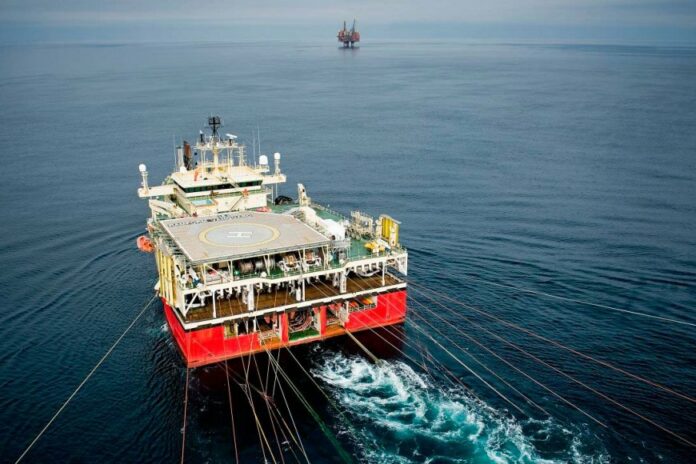
McDermott announces the safe and successful completion of engineering, procurement, construction, installation, and commissioning (EPCIC) activities in the Gulf of Mexico for Shell Offshore Inc. (Shell), a subsidiary of Shell plc., to begin oil production at its Whale development.

Awarded in 2021 and completed last month, the project leveraged McDermott’s marine assets, including its North Ocean 102 vessel and the newly upgraded Amazon, to execute complex pipelay operations, reaching water depths of nearly 2,800 meters (9,100 feet). This included installing approximately 50 kilometers (30 miles) of pipeline and 15 kilometers (9 miles) of umbilicals connecting five subsea drill centers to the new Whale floating production platform. Seamless collaboration across multiple offices, plus skilled engineering and procurement guided by rigorous safety protocols, ensured the project’s success.

“The completion of the Whale project demonstrates the power of collaboration, engineering expertise, and ingenuity,” said Mahesh Swaminathan, McDermott’s Senior Vice President, Subsea and Floating Facilities. “Our relationship with Shell is one marked by trust, a focus on operational excellence, and solution-oriented project delivery. Together, we overcame challenges and made history with the debut of the Amazon in the Gulf of Mexico, highlighting its strategic value for subsea field developments in ultra-deepwater environments.”

Designed for complex offshore operations, the Amazon delivered an advanced ultra-deepwater pipelay system with a high-level of automation. In a Gulf of Mexico first, it installed five 3,350 meters-long (approximately 11,000 feet), steel catenary risers, showcasing the vessel’s high top tension capacity, and marking a significant milestone for subsea infrastructure projects.

The Shell Whale development, located about 200 miles southwest of Houston, features a semi-submersible production platform, with capability for remote operations and monitoring of almost every aspect of the facility – representing a significant advancement in sustainable, high-efficiency energy production.

Wärtsilä cargo handling systems chosen for three new Gas Carriers

0

The order was placed by HMD and booked by Wärtsilä in Q1, 2025. Two of the ships have been contracted by Singapore and Hong Kong headquartered ship owner/operator Purus, and the third by Pasco Gas, based in Istanbul, Turkey. Both owners have previously ordered similar vessels fitted with Wärtsilä cargo handling systems.

Wärtsilä Gas Solutions is a world leading designer and supplier of advanced cargo handling and reliquefaction systems to gas carriers of all sizes. ​The company has established a close relationship with HMD over the years on a broad range of gas-related products and systems.

“HMD is a key customer in the medium-sized gas carrier market. Over the past decade, we have equipped more than 15 medium-sized gas carriers built by HMD. We are excited to continue with the latest project and several other ongoing ones,” comments Patrick Ha, Sales Manager, Wärtsilä Gas Solutions.

The Wärtsilä equipment is scheduled for delivery to the yard commencing in the latter part of 2025.

Fugro trials first automated eDNA sampler to transform biodiversity studies

0

The trial took place in the marina directly outside of the Fugro office in Portchester, UK. This advanced technology rapidly generates biodiversity assessments by collecting environmental DNA (eDNA) samples autonomously, reducing project time and costs.

The compact, programmable, and self-cleaning Autosampler enables in situ collection and preservation of eDNA samples with no human interaction, enhancing safety and efficiency, especially in remote or hazardous environments. Continuous collection of biodiversity data supports monitoring over extended periods. This provides a more representative sample for compliance with Biodiversity Marine Net Gain commitments. Comprehensive monitoring of marine biodiversity is crucial for understanding the impacts of energy infrastructure, such as offshore wind farms, on marine ecosystems.

The device streamlines the process by integrating eDNA collection into routine maintenance, with deployment options available off the back of a vessel, underneath buoys and moorings, or manually in rivers and lakes. Completely autonomous and programmable, it eliminates the need for personnel to be present and allows for tailored data collection over extended periods of time. The results show that the Autosampler provides data as reliable as manual methods, supporting long-term environmental monitoring, crucial for sustainable development projects.

Andy Addleton, Environmental Service Line Manager at Fugro, said, “Fugro’s expertise in environmental monitoring and our commitment to innovation has enabled us to integrate this advanced technology into our existing platforms, such as uncrewed surface vessels, SEAWATCH® Wind Lidar Buoys, and seabed landers. This offers clients a safer, more efficient, and flexible solution for long-term biodiversity assessments.”

Lloyd’s Register Type Approval awarded to Corvus Dolphin NxtGen Energy ESS

0

The LR Type Approval confirms that the energy dense and lightweight energy storage system (ESS) complies with the most stringent rules, regulations, and safety requirements in the industry, as defined by one of the leading maritime class societies.  

The Corvus Dolphin NxtGen Energy design features unmatched safety capabilities that surpass class and flag requirements, drawing on the proven Corvus Orca ESS—the world’s most widely installed marine battery system. These advanced safety measures include passive single-cell Thermal Runaway (TR) isolation and a TR gas exhaust system. With its lightweight construction, high energy density, and innovative modular design, the Dolphin NxtGen ESS is optimized for both space and weight efficiency, essential elements in vessel design. As a result, the Corvus Dolphin NxtGen Energy battery system is perfectly suited for both small and large battery installations where minimizing weight and maximizing available space are crucial. 

Additionally, Corvus Energy’s advanced Battery Management System (BMS) and proprietary digital solutions, including continuous remote monitoring and digital twin technology, enhance operational safety throughout the battery system lifetime. 

“We are very pleased that the Dolphin NxtGen Energy battery system has now also received type approval from LR, confirming that it meets the high safety standards required in the maritime industry,” says Fredrik Witte, CEO of Corvus Energy.  

He adds: “Achieving LR Type Approval is a major milestone in our work to power a clean future as LR is one of the major class societies and a key player in many segments where the adoption of hybrid and electric solutions are high.” 

In addition to securing LR, Bureau Veritas and DNV Type Approval, Corvus Energy is pursuing type approval certification from additional maritime classification societies for the Dolphin NxtGen Energy product going forward. 

A floating piece of Cypriot history: the Lambousa museum

0

Lambousa is a vessel like no other: it provides a glimpse into the rich nautical past of Cyprus. Once an old wooden fishing trawler, it has been restored and transformed into a floating museum thanks to EU funding. 

First built in 1955, the Lambousa fished in the Eastern mediterranean for 50 years. By the end of its career, it was one of the last traditional fishing boats of its kind in Cyprus. 

In 2005, with its fishing days behind it, the Lambousa was withdrawn from service and given to the municipality of Limassol. Rather than scrapping the vessel, the municipality embarked on a project to restore the Lambousa to its original state and preserve this symbol of maritime heritage.

However, instead of limiting itself at restoration, the municipality brought together a team to transform the old fishing trawler into a floating fishing museum, to celebrate the rich fishing heritage of Cyprus. The municipality was able to use the European Maritime and Fisheries Fund for this purpose.

A floating museum

Onboard the Lambousa, visitors can see the fishing gear that has been accurately restored, to reflect the onboard reality from the Lambousa’s working years, and understand the techniques and tools used by local fishers.

As explained by Katerina Loukaidou from the Limassol municipality, ‘the Lambousa symbolises the transition from the past to the present, giving the opportunity to promote the fishing tradition in Cyprus and in the Mediterranean region in general.’

Preserving heritage for the future

The Lambousa has been a fixture of Cyprus for many years and provides insight into the relationship between Cypriot culture and its marine environment, and ultimately how fishing has shaped Cyprus’s cultural identity and traditions. 

The vessel has also played a role in different European projects, aiming to reconstruct its history, gather valuable information and ensure that its cultural heritage lives on, both physically and digitally. University students have further contributed to this effort by creating an eBook and interactive digital platform that delve into the ship’s story and the restoration process.

For now, from its mooring at a jetty in Limassol, the Lambousa and the team behind it are focused on preserving knowledge and history, and making it available to all visitors, both Cypriot and international. The future of the museum may extend to training in traditional fishing methods, to ensure their preservation beyond education and awareness.

Source: europa.eu 

IOMSPC secures long term charter for Arrow

0

Arrow will operate in the Channel Islands, where it is already a familiar sight, for 12 months with international ferry operator DFDS. 

It is expected the vessel will predominantly operate on the Jersey to Portsmouth route. 

The charter arrangement will come into effect on 24th March. Arrow will undertake port trials and pilotage training before entering regular service. 

Arrow was purchased by IOMSPC in September 2022 from its previous owners in order to ensure compliance with the Sea Services Agreement prior to the arrival of new-build flagship Manxman in mid-2023. 

Under the terms of the Sea Services Agreement, once Manxman joined the fleet, conventional RoPax vessel Ben-my-Chree became the designated fleet back-up. 

Arrow will remain in Douglas until Ben-my-Chree’s current dry-dock period is completed, it will then proceed to Teeside for its own dry-docking before commencing work with DFDS.

Isle of Man Steam Packet Company Managing Director Brian Thomson commented, ‘We’re pleased to have secured a long term charter for Arrow with a renowned international operator such as DFDS. This gives us security while the future fleet strategy is agreed with our stakeholders.’  

IOMSPC will continue to operate its usual timetabled services with Manxman and Manannan (from March 28th, 2025) to Heysham, Liverpool, Belfast and Dublin. Ben-my-Chree will operate in a back-up role. 

DFDS awarded extended contract with Danish Defence

0

DFDS has entered an agreement with the Danish Defence to provide freight ferries for the transport of military equipment. 

The contract extends the scope of the current contract and starts in 2026, running for up to six years.

DFDS expands and extends its cooperation with the Danish Defence. Eight DFDS freight ferries (RoRo) are to be made available for the transport of military equipment and other commodities for military operations, missions, training exercises, humanitarian disaster relief situations and routine transports.

Under the contract, DFDS will ensure safe and efficient delivery of critical assets on the European continent to support security and defence operations, by leveraging its extensive fleet and freight transport capabilities. The ferries will be chartered and made available to the Danish Defence at short notice for the given period that the vessels will be needed.

The agreement is signed with Joint Movement and Transportation Organization (JMTO) and the ARK Project (ARK), and replaces the current contract agreed in 2020. JMTO is the strategic transport unit of the Danish Defence, while ARK is a cooperation between Germany and Denmark to secure access to strategic sea transport

“We are honoured to have been selected for this critical assignment, and I am proud that we will continue our longstanding cooperation with The Danish Defence and the ARK project. It shows the value of strong public-private partnerships that can foster resilience amid growing geopolitical tensions and rising economic uncertainty, and we look forward to contributing with our knowledge about transport and logistics,” says Torben Carlsen, CEO of DFDS.

The vessels include six named and two unnamed vessels. The latter will be chosen based on the specific operational needs of the Danish Defence in the given context. The vessels are equipped with special features such as enhanced manoeuvrability, ability to load dangerous goods and sufficient capacity for heavy vehicles.

DFDS has cooperated with the Danish Defence for many years, including support and cooperation with the ARK project since its start in 2003. DFDS vessels have contributed to numerous deployments for Denmark, Germany and other NATO allies.

GONDAN launches its first Uncrewed Surface Vessel

0

At the GONDAN shipyard in Figueras, Castropol, the launch of its first unmanned vessel has taken place. 

This vessel, designed by Salt Ship Design to carry out underwater maintenance and inspection missions, is 24 meters long and 7.5 meters wide and is equipped with a hybrid diesel-electric propulsion system with 500 kWh batteries. The vessel has a system of sensors, cameras and antennas on board that will allow it to carry out underwater inspection work such as the launch and recovery of underwater vehicles (WROV) capable of diving to a depth of 2000 meters in a completely remote way.

The Norwegian company Remota A/S, which specializes in remote operations and semi-autonomous maritime services for the offshore and marine industries, will provide the onshore Remote Operations Center (ROC), from where the operation of the vessel and the submarines it deploys will be controlled.

This new USV represents a significant technological advance that will enhance operational capabilities in maintenance and inspection work, offering high-performance solutions for missions in the marine environment and a reduction in C02 emissions of more than 90% compared to other conventional vessels.

Maersk names its 11th dual-fuel methanol vessel Albert Maersk in Mumbai

0

Maersk (Maersk) celebrated the name-giving of its newest dual-fuel methanol container vessel in Mumbai today as a part of the vessel’s maiden voyage to India. The vessel, named Albert Maersk, is the eleventh vessel in Maersk’s fleet capable of operating on methanol.

Vincent Clerc, CEO, A.P. Moller – Maersk, hosted the name-giving ceremony, which was attended by the Honourable Minister of Ports, Shipping and Waterways, Sarbananda Sonowal, the Honourable Minister of State for Youth Affairs and Sports, Raksha Khadse, diplomats, government authorities, customers, partners and Maersk employees.

Sarbananda Sonowal, Honourable Minister of Ports, Shipping and Waterways, said:

“It is a privilege for India to host the naming of this advanced dual-fuel vessel, a historic first for a foreign shipping company in our country. With the demand for green vessels rising, India has the potential to become a major producer and supplier of green methanol, ammonia, and hydrogen-based fuels. Maersk’s decision to focus on green fuel production in India is a welcome step that will accelerate our journey towards a sustainable maritime future. This vessel naming is more than just a tradition—it is a symbol of trust, collaboration, and a shared vision for the future. As India moves towards becoming a global maritime powerhouse, we welcome Maersk’s continued partnership in green shipping, green fuel production, and logistics.”

Vincent Clerc, CEO of A.P. Moller – Maersk, said:

“Maersk continues to take firm steps towards decarbonising shipping with the addition of one more dual-fuel vessel to its fleet. India is among the world’s fastest-growing major economies, with a thriving manufacturing sector, a booming e-commerce industry, and expanding exports. Shipping and logistics are high on India’s priorities, and Maersk looks forward to partnering with India on various aspects, such as exploring the potential sourcing of alternative fuels for low-emissions shipping and activities involving ship repairs and shipbuilding in the future that align well with the Indian Government’s ambitions to promote the shipping sector.”

Maersk contributes to this growing economy by facilitating the movement of one in every six containers imported or exported from the country and enabling global trade through its integrated logistics solutions. The company’s footprint in India includes two APM Terminals operations in Mumbai and Pipavav that facilitate the import and export of over three million containers every year, 26 warehouses spread across 350,000 sq. m., and a distribution network that reaches more than 80% of India’s pin codes.

On the backdrop of the name-giving ceremony, Maersk announced that the company sees an investment opportunity pipeline of about USD 5 billion in ports and terminals as well as landside infrastructure development in India.

Keith Svendsen, CEO of APM Terminals, said:

“We believe we can play a role in reducing the cost of logistics by ensuring that our customers access all their supply chain needs in one place – from all modes of transportation to port handling to warehousing and distribution. As APM Terminals, we are ready to invest more in developing ports with low emissions and great efficiency that will help businesses grow and connect India with the global markets.”

Russian missile attack on Ukraine damages civilian foreign vessel, casualties reported

0

A Russian ballistic missile struck the Odesa port on the evening of March 1, damaging port infrastructure as well as a foreign civilian ship flying the flag of Panama, Odesa Oblast Governor Oleh Kiper reported.

Two port employees were injured as a results of the attack. No information was available as to the extent of their injuries.

The Swiss-owned container ship MSC LEVANTE F sailed into the port earlier in the day, local Odesa publication Dumska reported.

No information was immediately available as to what the vessel was carrying, or the extent of the damage.

Foreign vessels have previously been damaged in Russian attacks on the port. In October 2024, multiple ships had been damaged in separate attacks on the Odesa port.

President Volodymyr Zelensky said on Nov. 23 at the International Conference on Food Security in Kyiv that Russia has damaged 321 port infrastructure facilities, as well as 20 foreign merchant vessels since July 2023.

Traveling along the Black Sea route, ships are regularly at risk of being attacked by Russia. Since the beginning of the all-out war, mines have also been drifting along the trade route, which also poses a risk to maritime transport.

As a major grain producer, Ukraine exports about 6 million tons of grain per month through ports along the Black Sea.

Following an initial blockade at the start of Russia’s full-scale invasion, Russia unilaterally terminated the Black Sea grain deal last year forcing Kyiv to set up a new export route in the Black Sea.

Initially envisioned as a humanitarian corridor to allow the departure of ships stranded there since the start of the full-scale war, it has since grown into a full-blown trade route.

Source: Kyiv Independent