2.1 C
New York
Home Blog Page 767

Nachipa unveils plans for growth in dry bulk sector with ‘cargo first’ approach

0

Latin America’s dry bulk leader rebrands, and opens its first European office in Hamburg, Germany

Nachipa, a specialist in the global transportation of dry bulk commodities, today launched its new brand to coincide with a fresh business focus that is taking a cargo-first approach, reducing its owned fleet, and expanding its global operations.

Formed in 1948 and still family-owned, the rebrand coincides with the opening of Nachipa’s first European office in Hamburg, Germany and move to an asset-light model.

Nachipa recognises the changing nature of the shipping market and the increasing demand for a cargo-first approach. This places an onus on working closely, flexibly, and consultatively with its clients to provide tailored, non-commoditised solutions for dry bulk transportation.

Nachipa will be operating an exclusively modern fleet, vetted to the highest industry standards, and supported by a data-driven approach to inform better decision-making and higher performance. Nachipa currently operates ten handysize vessels with an average age of five years on mid- and long-term contracts, and also typically controls an additional two to four ships on a spot basis. The company transports approximately three million metric tonnes of dry bulk cargoes annually.

In the coming years, Nachipa will expand its operations to meet the growing demand for modern supramaxes and ultramaxes, and aims to triple its tonnage under management, as well as open its first Asian office.

Felipe Simian, Chief Executive Officer, Nachipa commented:

“The market has been tough for the past few years and the global pandemic has added to the challenge. We are looking forward to a healthier market in the not-so-distant future. It’s been a difficult period, but our transition to an asset-light, cargo-focused model and expansion into new regions is enabling us to ride out the storm, as well as making us more resilient to unexpected market conditions. We are cautiously optimistic about next year and ready to seize the opportunities when they arrive.”

Jan-Philipp Rauno, Chief Commercial Officer, added:

“Today, our activities are concentrated in the Americas, but our new office in Hamburg, Germany places us at the very heart of the European transhipment trade, and brings us closer to our customers and partners as we expand our quality-first strategy globally. Nachipa’s asset-light approach allows us to be reactive, flexible, and adaptive to change. Working closely and collaboratively with our clients and partners, we have the courage to face the greatest global challenges in a responsible way, together.”

Vattenfall has opened its first floating solar farm in the Netherlands

0

This means that from now on, half of the annual energy consumption of the electric sand dredge and the associated sorting and processing equipment will be generated sustainably on site.

Space for building solar farms is scarce in the Netherlands. A possible solution to this is to construct floating solar farms, for example on ponds and pools resulting from sand and gravel extraction. An additional benefit is that the water cools the panels naturally, which increases their efficiency compared to land-based solar panels.

As the prime contractor, Vattenfall was responsible for building the floating solar farm, while Netterden provided the funding.  

Ivo Iprenburg, Business Development Manager, says:

“Netterden’s vision on socially responsible business was the main reason for launching this project. Green power is a natural part of this. This ambition is an excellent fit with Vattenfall’s mission to make fossil-free living possible within one generation. We are pleased to have had the opportunity to make this project feasible for them.”

The solar farm was officially handed over to Netterden on 25 September

Successful delivery and installation of new Tyra jackets

0

Norwegian Energy Company ASA has announced the successful installation of two new jackets at Tyra. The milestone moves the Tyra Redevelopment project into a new phase. The next milestones are for the new modules currently being fabricated to be delivered from the yards and transported to the Danish Continental Shelf for installation.

Today, the two jackets were confirmed safely installed on Tyra according to plan after completing fabrication in the yard, Dragados Offshore S.A, in Spain. The jackets form the foundation for the new Tyra process and accommodation platforms and are the first new jacket structures delivered and installed for the Tyra redevelopment project. The past year has mainly involved the safeguarding of the wells and wellhead jackets, and the decommissioning and removal of the old Tyra modules this summer. 

The delivery and installation of the two new jackets is an important step towards having a state-of-the-art production and export facility ensuring efficient production and enhanced safety for decades to come. Looking ahead, the remainder of the project will focus on yard fabrication and offshore installations to rebuild the new Tyra. The wellhead and riser modules are currently being built in Singapore, the accommodation module in Italy and the process module in Indonesia.    

The redeveloped Tyra hub will be a sophisticated production and export center that will secure gas supply for many years ahead. Additionally, the redevelopment will reduce emissions for the future of natural gas production on the Danish Continental Shelf. With the use of new technology and modernized working processes Tyra’s operating efficiency is expected to increase, and at the same time reduce CO2 intensity by 30%. This is a key facet of Noreco and DUC’s emissions-reducing activities, which also includes optimization of fuel usage, reduction of flaring, simplification of existing infrastructure and optimization of supply chain. 

David B. Cook, Chief Executive Officer for Noreco, said:

“The delivery and installation of these jackets is an important achievement for the project and a true testament to our ability to consistently deliver in-line with expectations, in both a safe and predictable manner. The milestone marks a clear shift for the Tyra Redevelopment project, moving our focus onto completing the new modules. Each milestone moves us toward a state-of-the-art facility in the North Sea. The Tyra Redevelopment will not only improve safety and increase Noreco’s production as well as operational efficiency, but also at the same time lower CO2 emissions and unit costs.”

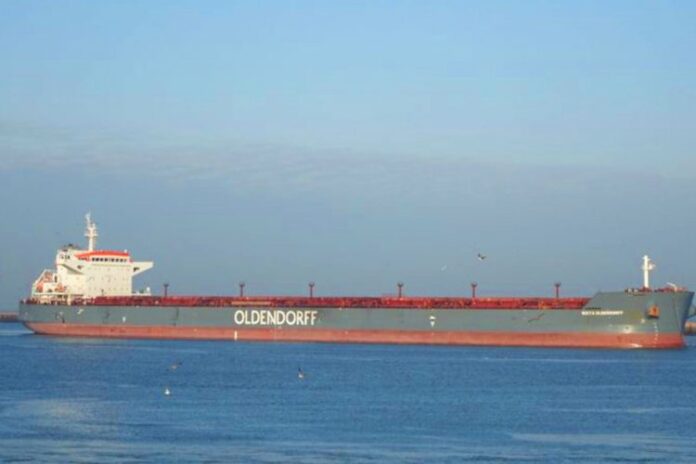
Patricia Oldendorff has COVID-19 virus cases aboard

0

Seventeen crewmembers aboard have tested positive for the Corona virus. The company has had excellent support from the Australian Department of Health, AMSA and the Pilbara Ports Authority.

The authorities have been managing the situation with upmost professionalism. Every effort is being made to contain and improve the situation as quickly as possible.

There was a crew change aboard the vessel in the Philippines on September 5, 2020. The crew change was done in compliance with the Department of Transportation in the Philippines, Protocol for Crew Change and Repatriation. All joining crewmembers were quarantined in the Philippines prior to joining the vessel. Approximately 5 days before joining the vessel, all crewmembers were tested with the viral RNA-PCR test. All crewmembers tested negative for the virus before leaving the Philippines.

The vessel arrived off Port Hedland on September 16th and has been at anchor since. The Master notified the Port Hedland authorities on arrival that two crewmembers were not feeling well. The authorities arranged for the crew to be tested and two crewmembers initially tested positive for the virus. Subsequent RNA-PCR tests have shown that 17 crewmembers have now tested positive. Fortunately, all crewmembers on board as well as in shore-quarantine are feeling well with only a few seamen showing very slight infection symptoms. The authorities have arranged for a cleaning gang to go aboard the vessel and do a thourough cleaning of all surfaces.

Maersk and Ørsted to test offshore charging buoy to reduce vessel emissions

0

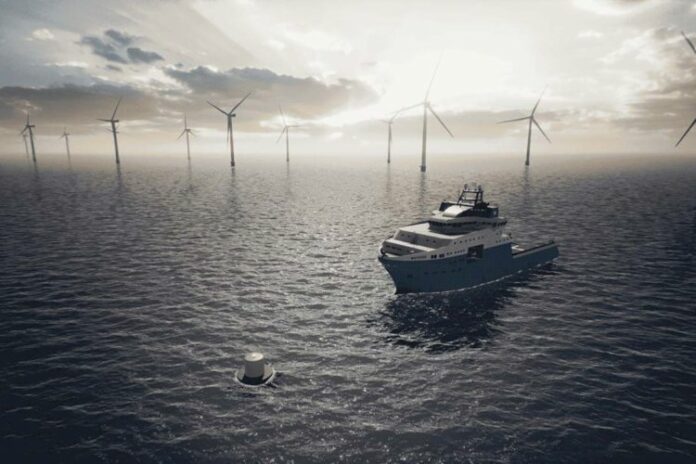
Maersk Supply Service A/S, a part of A.P. Moller-Maersk, and Ørsted have joined forces to test a proto-type buoy that will act as both a safe mooring point and a charging station for vessels, potentially displacing a significant amount of marine fuel with green electricity. 

Maersk Supply Service A/S and Ørsted, the world leader in offshore wind, have formed a partnership to test an innovative charging buoy that can bring green electricity to offshore wind farm service vessels and potentially to a wide range of maritime vessels. The buoy can be used to charge the smaller battery- or hybrid-electrical vessels and to supply power to larger vessels, enabling them to turn off their engines when laying idle. By substituting fossil-based fuels with green electricity, virtually all emissions are eliminated while the buoy is in use.

The proto-type buoy has been developed by Maersk Supply Service while Ørsted is responsible for the buoy’s integration with the electrical grid at the offshore wind farm. The charging buoy will be tested in the second half of 2021, where it will supply overnight power to one of Ørsted’s service vessels.

Upon technical validation and commercial ramp up, the electrical charging buoy has significant potential, short to medium term, to contribute positively to reduce emissions for the maritime industry. This will happen through displacing tens of thousands of tons of fuel consumed every year in the wider maritime sector by enabling inactive vessels to turn engines off and replace energy consumption and charge batteries with renewable electricity. Within five years of global operation, Maersk Supply Service has the ambition to remove 5.5 million tons of CO2, additionally avoiding particulate matter, NOx, and Sox.

Ørsted intends to make any intellectual property generated in designing the integration of the buoy into the offshore wind asset publicly available to maximise the uptake potential of this carbon reduction innovation across the offshore wind sector.

As large parts of the global maritime fleet are getting ready to receive shore power in ports, timing is right for implementing this clean ocean-tech innovation. The charging buoy is applicable as a mooring point outside ports, in offshore wind farms, and near vicinity to other offshore installations. Additionally, it will further help limit the increasing vessel congestions and remove air pollution in port areas.

Jonas Munch Agerskov, Managing Director for Offshore Renewables at Maersk Supply Service, says:

“The charging buoy tackles a multitude of problems; lower emissions, offering a safe mooring point for vessels, better power efficiency and eliminating engine noise. This is also a solution that can be implemented on a global scale, and one that can be adapted as the maritime industry moves towards hybridisation and electrification.” 

Mark Porter, Senior Vice President and Head of Operations at Ørsted Offshore, says:

“Ørsted has set the ambitious target of having carbon neutral operations in 2025, which includes the operations of our offshore wind farms. Technical and commercial innovation is central to Ørsted’s ability to provide real, tangible solutions to achieve our operational ambitions – and we need our partners’ support. We are happy to team up with Maersk Supply Service to test this innovative charging buoy, which brings us a step closer to creating a world that runs entirely on green energy.”

For the demonstration phase of the project, Maersk Supply Service has received one of the largest EUDP grants (Energy Technology Development and Demonstration Programme, under the Danish Energy Agency) in 2020 supporting with DKK 22 million to the engineering and demonstration of the power buoy. The Danish Maritime Fund has provided initial support to conceptualise the project.

Equinor: The Breidablikk field ready for development

0

Today the partnership will submit the plan for development and operation to the Minister of Petroleum and Energy, in addition to awarding contracts for subsea facilities and upgrading of the Grane platform. The expected production from the field is about 200 million barrels, investments totalling about NOK 18.6 billion.

Geir Tungesvik, Equinor’s acting executive vice president for Technology, Projects and Drilling, says:

“The Breidablikk field is one of the largest undeveloped oil discoveries on the Norwegian continental shelf (NCS). Field development will create substantial value for the Norwegian society and the owners. We are also pleased to award two key contracts today at a total value of NOK 3.3 billion, including options. The contracts will contribute to important activity for the supply industry and secure jobs for many years.”

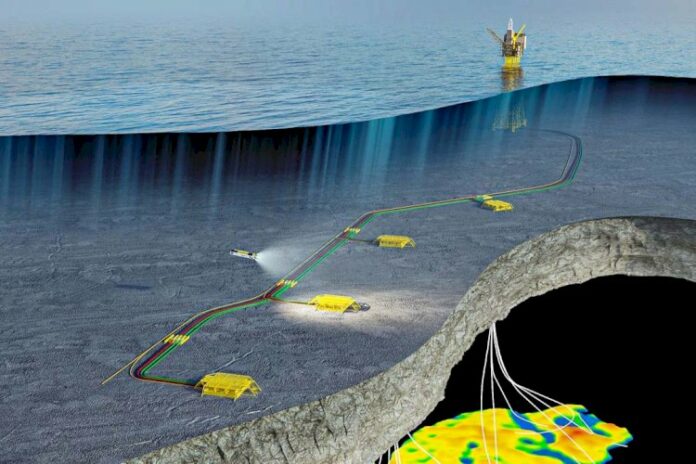
The development concept chosen for the Breidablikk field is subsea development with 23 oil producing wells from four subsea templates that are controlled from Grane. Breidablikk will be tied in to the Grane platform for oil processing prior to being brought ashore at the Sture terminal. The production from Grane will be monitored with advanced digital tools from Equinor’s integrated operations centre (IOC) at Sandsli to ensure optimal production and value creation from the wells.

The Breidablikk development will include a control cable system for electricity and communication (DC/FO). This is a relatively new technology that can reduce the costs associated with further development of the field, in addition to facilitating the use of docking stations for subsea drones on the seabed. The phase-in of Breidablikk will reduce the CO2 intensity on the Grane field.

The contract for subsea production facilities is awarded to Aker Solutions. The contract covers the delivery of four subsea templates and up to 23 subsea trees and associated components. The contract value is estimated at about NOK 2.5 billion, including options. Around 300 man-years in Norway will be associated with the project for the supplier, with project management and engineering at Fornebu and Tranby, fabrication in Egersund and Sandnessjøen and service organisation in Ågotnes. In addition, there will be deliveries from the UK, Malaysia and Brazil.

Wood, the maintenance and modification supplier for Grane, has performed studies for the Breidablikk project, and an option for engineering, procurement, construction and installation (EPCI) will now be exercised for the company. The work scope includes equipment installation on the Grane platform in order to receive oil from the Breidablikk subsea facility. Existing processing equipment and water purification system on the platform will be upgraded. With an estimated value of about NOK 800 million the contract is expected to create over 500 man-years in Norway. The engineering work will be performed in Sandefjord and the fabrication will take place in Stavanger.

Earlier this year TechnipFMC won a contract for pipelaying in the Breidablikk project with options for subsea installation. The award contributes to sustaining workplaces for TechnipFMC in Norway, including the Orkanger spool base, where the pipelines will be fabricated before they are reeled onto the installation vessel.

All contracts have not been awarded, however about 70% of the value creation in the development phase is expected to go to Norwegian companies. The contracts are subject to government approval of the plan for development and operation.

Oil will be transported through the Grane oil pipeline to the Sture terminal in Øygarden municipality for storage and shipping. The field will be operated from Equinor’s Sandsli facilities in Bergen. Breidablikk is being phased in during a period of declining oil production at Grane and will help maintain the activity level on the platform.

First oil from the field is scheduled for the first half of 2024.

Abu Dhabi Ports acquires MICCO to enhance its service offering

0

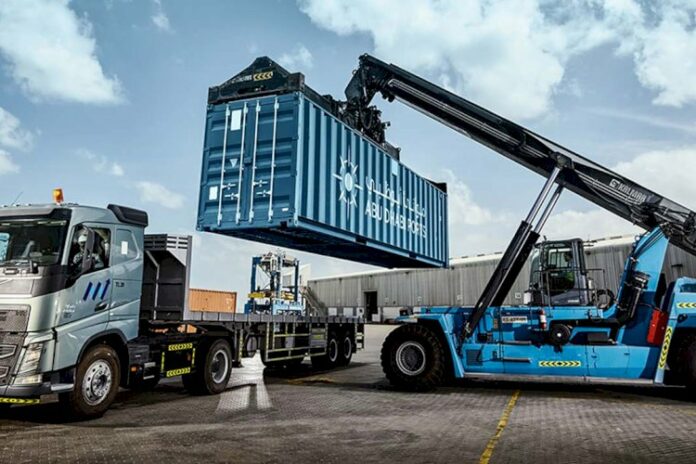
Abu Dhabi Ports, part of ADQ – one of the region’s largest holding companies with a broad portfolio of major enterprises spanning key sectors of Abu Dhabi’s diversified economy, has announced another step in its drive to enhance the emirate’s rank as an international hub for trade and logistics with the acquisition of MICCO Logistics.

With the integration of MICCO as part of Abu Dhabi Ports Logistics, the Group’s logistical arm is setting itself apart from the competition. Abu Dhabi Ports Logistics leverages MICCO’s experience and capabilities as the emirate’s first provider of end-to-end logistics solutions.

Thanks to the powerful combination of MICCO’s international and regional logistics solutions, its large and diversified transportation fleet, and a network of temperature-controlled warehouses, along with the Group’s extensive multi cargo handling and industrial zone capacity, Abu Dhabi Ports is in a unique position to serve its customers along every segment of the supply chain.

The added capacity enables the organisation to manage all customer touch points including: sourcing; PO management; international freight handling through Project, Commercial, and Contract Logistics; customs clearance; stevedoring; local, regional, and international transportation; Airline Road Feeder Services; and, storage, order fulfilment and handling solutions via its strategically located network of distribution centres.

Abu Dhabi Ports’ enhanced logistics portfolio will ensure that it remains the leading provider of logistics services for the energy sector, while at the same time it expands its value offer to other strategic sectors including retail, e-fulfilment, FMCG and pharmaceutical/healthcare.

H.E. Khalifa Sultan Al Suwaidi, Vice Chairman of Abu Dhabi Ports and Chief Investment Officer at ADQ, commented:

“We are collaborating with Abu Dhabi Ports to transform its logistics arm into one of the largest, most capable and most cost-efficient providers of fully integrated and holistic logistics solutions in the UAE and beyond. This reflects ADQ’s key role in stimulating economic development and growth through our logistics cluster while further strengthening Abu Dhabi Ports’ strategic position as a leading provider of integrated port and industrial zone services, and a facilitator of global maritime trade and logistics.”

Captain Mohamed Juma Al Shamisi, Group CEO, Abu Dhabi Ports, said:

“The acquisition of MICCO is a critical step in our emirate’s journey to establish itself as a leading hub within the global trade and supply chains. The combined advantage of both organisations means that Abu Dhabi Ports will be able to compete on the regional and global stage as a provider of holistic logistics solutions, enhancing what we offer to both existing and prospective customers, while at the same time furthering our contribution to Abu Dhabi’s non-oil GDP and the government’s diversification efforts.”

Robert Sutton, Head of Abu Dhabi Ports Logistics Cluster, said:

“Aligning directly with Abu Dhabi Ports’ growth strategy, the integration of MICCO has enabled us as an organisation to both enhance our service offering, while also meet the needs of a broader global market. Our greatly expanded capacity to deliver a wide spectrum of services across the entire supply chain has also opened doors for us to target new opportunities in segments that have been traditionally underserved, including FMCG and healthcare. With the addition of MICCO, we are truly connecting the world with the Gulf and beyond.”

Founded in 1978, MICCO Logistics is one of the first local freight forwarders established in Abu Dhabi and one of the first businesses to offer consolidated freight services to the emirate’s oil and gas industry.

With a modern ground fleet comprised of more than 350 prime movers with diversified fleet of trailers, specialised storage facilities, MICCO’s diverse portfolio of logistics solutions includes freight management in Project, Contract, and Commercial Logistics, multi-modal transport, warehousing and distribution, stevedoring, as well as road feeder services for the aviation segment.

As the first logistics company to establish its presence in the Khalifa Industrial Zone Abu Dhabi (KIZAD), MICCO’s distribution centre includes several temperature-controlled warehousing services that are ideally suited for storing sensitive cargo for extended periods.

The state-of-the-art Warehouse Management Systems and highly advanced GPS systems add to the technical excellence extended within the supply chain.

A pair of RAstar 3200-SX terminal support/escort tugs for Scotland

0

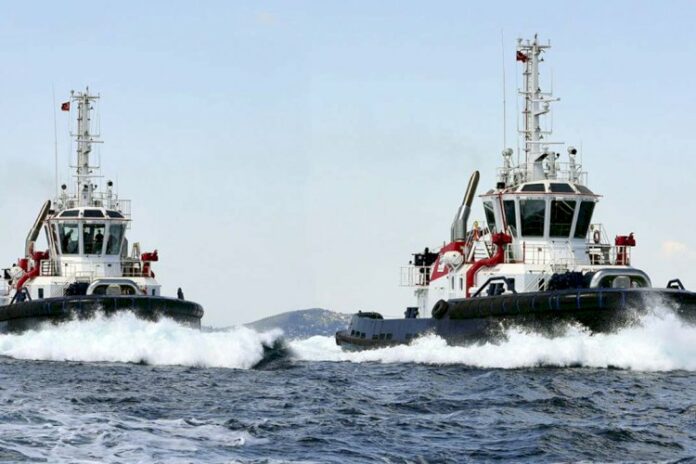
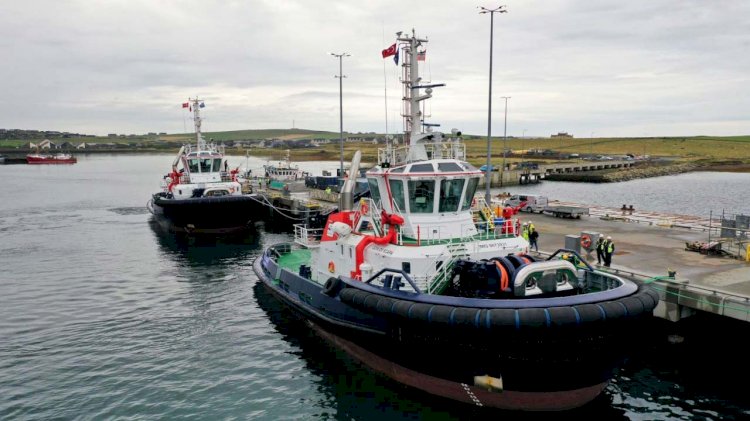
Early September 2020 saw the delivery of Odin of Scapa and Thor of Scapa, a pair of Robert Allan Ltd. designed RAstar 3200-SX terminal support/escort tugs, to Orkney Island Council Marine Services. 

Following a rigorous tender process, Sanmar Shipyards was chosen as the builder. The unique and historical names were chosen by a widely supported, local voting exercise launched by the Council in November of 2019. The two tugs are replacing two of the three tugs currently operated by the owners.

The RAstar 3200-SX tugs are purposely designed with a shallower draft than other comparable high-performance escort tugs and incorporate considerable input and collaboration with Sanmar. This includes design optimization to minimize construction costs without reducing end performance, implementing feedback from the large number of companies already operating Sanmar built Robert Allan Ltd. designed tugs and pre-engineering features, such as deck machinery, accommodation layout, etc., to easily allow future customization requests received from their global customer base to be quickly implemented.

The RAstar 3200-SX escort/ship-assist tug is a twin Z-drive, diesel-powered vessel, designed for the performance of ship-handling, towing and escort duties. The escort tug is equipped for operations over the bow and stern, with a powerful escort winch at the bow for escorting and ship handling operations, and a towing winch, towing pins and rounded transom at the stern for towing.

Key particulars of the Odin of Scapa and Thor of Scapa are:

  • Length, overall: 32.0 m
  • Beam, moulded:13.0 m
  • Depth, least moulded: 5.35 m
  • Maximum draft (overall): 5.50 m
  • Gross tonnage / net tonnage: 497/149

Tank Capacities at 98% are:

  • Fuel oil: 162 m3
  • Potable Water: 20 m3
  • Main engine lube oil: 1.0 m3
  • Foam: 9.8 m3
  • Sewage holding tank: 9 m3

The vessel is constructed to RINA class requirements with the following notation:

Propulsion and auxiliary machinery consist of:

  • 2 x Caterpillar 3516C main diesels, each delivering 2350 bkW @ 1800 RPM
  • 2 x Rolls Royce model US255 Controllable pitch Z-drives with 2.8 m diameter propellers
  • 3 x CAT C 4.4 diesel gensets

Deck equipment:

  • Fore Winch: DMT escort winch
  • Aft Winch: DMT towing winch
  • Tow pin: Macgregor Triplex guide pins

Ship-handling fenders at the bow consist of an upper row of cylindrical fender and a lower course of W-fender. Sheer fendering consists of “D” rubbers. “W” block type fendering at the stern.

The accommodations have been outfitted to a high standard for a crew of six. The deckhouse contains an entrance lobby, the galley, mess, two officer cabins with ensuite WC, and a laundry. The lower deck contains one plus one double berth cabins with shared WC and two single officer cabins with ensuite WC. The wheelhouse is designed with a single split control station which provides maximum all round visibility and exceptional visibility to the bow and side fendering. The engine room features an acoustically isolated switchboard room.

Royal Research Ships resume scientific operations

0

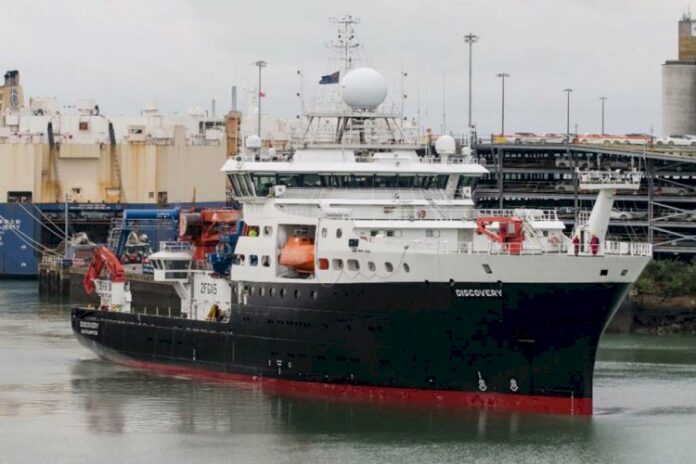
Both ships underwent scheduled refits over the summer which saw essential planned maintenance carried out to the hull and engines, as well as the ship-fitted scientific equipment.

RRS Discovery returned to home port of Southampton following the refit on Wednesday 23 September. We are now mobilising for the ship’s next research expedition and will sail to the Ellet Array to carry out UK-OSNAP 2020 activity in early October with the NOC’s Prof. Penny Holliday as Principal Investigator. UK-OSNAP aims to improve understanding of the circulation and fluxes of the North Atlantic Subpolar Gyre and will see the recovery and redeployment of moorings and an ADCP (Acoustic Doppler Current Profiler), as well as completing a CTD (Conductivity, Temperature and Depth) section from the Scottish continental shelf.

In November, RRS Discovery will make the annual journey to the Porcupine Abyssal Plain Sustained Observatory (PAP-SO) led by the NOC’s Dr Susan Hartman. The 20-day mission will enable scientists and engineers to service the equipment and gather biological samples. For over 20 years the observatory has provided key time series datasets for analysing the effect of climate change on the open ocean and deep-sea ecosystems.

In December the ship will resume operations under the RAPID project to complete the activities that were left unfinished when RRS James Cook was recalled home in March this year at the start of the pandemic.

Meanwhile, RRS James Cook is currently on operations off the west coast of Africa, recovering equipment that was deployed in 2019. The ship will return to Southampton in the second half of October and is scheduled to sail to Port Stanley in the Falkland Islands in early December to enable scientific research by the British Antarctic Survey.

Leigh Storey, the NOC’s Associate Director, National Marine Facilities, said:

“These past months have presented significant challenges. However, thanks to the dedication and professionalism of NOC staff – and in particular the National Marine Facilities team – we are now in a position to resume our activities in support of the UK’s oceanographic research programme.”

Nearly a fifth of world’s ocean floor now mapped

0

The Nippon Foundation-GEBCO Seabed 2030 Project, which aims to facilitate the complete mapping of the global ocean floor by 2030, has announced the inclusion of 14.5 million square kilometres of new bathymetric data in the latest GEBCO Grid. 

Coverage of the seabed has risen from 15 per cent to 19 per cent in the last year. When Seabed 2030 was launched in 2017, only six per cent of the oceans had been mapped to modern standards.

The effort to complete the map of the world’s oceans has gathered significant momentum since its launch, with Seabed 2030 rallying over 100 international organisations in support. The Project now has 133 official partners, contributors and supporters – and continues to pursue new collaborations in data collection and technical innovation.

Jamie McMichael-Phillips, Seabed 2030 Project Director, said:

“The sustained increase in data available to map the ocean floor will enable Seabed 2030 to play a leading role in delivering a comprehensive set of authoritative data that is freely available for all to use. This is a leap forward towards achieving our mission, by the year 2030, to empower the world to make policy decisions, use the ocean sustainability and undertake scientific research based on detailed bathymetric information of the Earth’s seabed.”

The Chairman of The Nippon Foundation, Mr Yohei Sasakawa, recently announced three initiatives that need further collaborative activity in accelerating the mapping of the ocean floor – these include supporting the mapping of unexplored areas, collecting data through crowdsourcing, and advancing technology for data collection.

A complete map of the world’s ocean will facilitate a heightened understanding of fundamental processes including ocean circulation, weather systems, sea level rise, tsunami wave propagation, tides, sediment transport, benthic habitat distributions and climate change.

It will also be a key enabler of other deliverables under Sustainable Development Goal 14, to conserve and sustainably use the oceans – all of which echo the goals of the UN Decade of Ocean Science for Sustainable Development.