2 C
New York
Home Blog Page 766

JFD awarded extension of prestigious NATO submarine rescue system contract

0

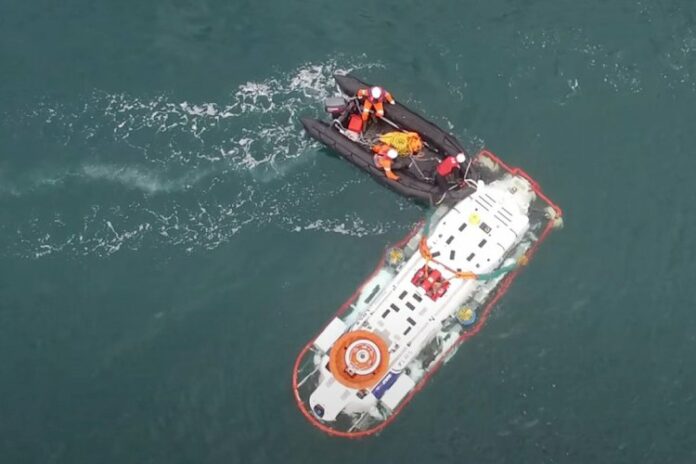
The initial five-year contract has been extended to 2023, demonstrating the faith in JFD’s ability to operate and maintain the system, and encompasses all aspects of NSRS operations and through-life-support.

JFD has a legacy as an operator of submarine rescue systems and has been an integral part of the UK’s submarine rescue provision since 1983. The company has been at the heart of the NSRS since it came into service in 2008 as both an operator and equipment manufacturer. JFD was then awarded an initial five-year contract by the UK Ministry of Defence for the provision of the NSRS in July 2015. The latest contract extension will continue its In-Service Contract for the NSRS which includes extensive training across all JFD submarine rescue systems worldwide for the UK MoD and the partner nations of France and Norway.

The contract continues to include expert engineering and technical support to ensure high-level operation and maintenance of the system to provide 24/7 availability of the service, 365 days a year. The agreement also involves shared training opportunities to ensure suitably qualified and experienced personnel are on hand to perform rescue operations at short notice, to protect the entire global submarine community.

Defence Minister, Jeremy Quin, said:

“The safety of our personnel is of the utmost importance and I am pleased we have extended our submarine rescue capability contract with JFD, which will continue to support jobs in Scotland. This contract extension also represents our dedication to the NATO Submarine Rescue System and underpins our continued commitment to ensuring NATO submarine operations remain as safe as possible.”

Danny Gray, managing director, JFD, said:

“We are extremely proud to have secured this contract extension after five years’ of hard work to build strong relationships with the UK MoD and the participant nations of France and Norway. The extension reflects the MoD’s confidence in our ability to keep submariners safe, as well as the diligence with which we delivered the initial agreement.

“Our heritage is built on world-class safety and we are pleased our team continues to impress with their extensive knowledge, as well as their unwavering commitment to the highest possible standards of equipment maintenance, operational delivery and training. We look forward to continuing our work with the NSRS Authority and ensuring we are constantly upgrading processes, equipment and training to exceed market standards.”

Richard Devlin, head of defence sales, JFD, said:

“The decision to extend the contract with JFD is testament to the depth of our expertise, the quality of our training and the support infrastructure we have built, based on our strong foundations in submarine rescue. While establishing ourselves as the MoD’s trusted contractor to deliver safe and efficient rescue operations is key, we also continue to work with all partners involved in the NSRS project to provide capability enhancements and manage equipment obsolescence, both of which are vital to ensuring the NSRS service offers the highest safety standards in the world.”
Simulation model may reduce the climate footprint of oil production

0

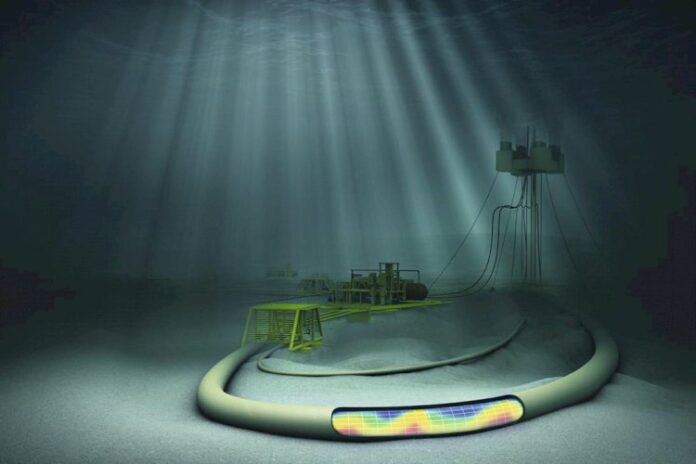
An innovative Norwegian computational tool called “Slug Capturing 2” is now enabling the design of longer pipelines that will allow many more fields to be developed as satellites.

Out of sight from land and from the air, the Norwegian shelf is covered by a spider’s web of pipelines through which production fluids flow from the wells tapping the reservoirs. This system carrying oil, water and gas in the same pipeline is called multiphase transport.

Research scientists in Norway have now developed a simulation model designed to meet one of the biggest challenges created by this form of pipeline transport – the formation of slugs. These limit the distance at which a satellite field can be developed from its host facility and require that major safety margins are built into the design of multiphase facilities.

Multiphase technology came into being at SINTEF and the Norwegian Institute for Energy Research (IFE) almost 40 years ago. This technology makes it possible to transport unprocessed oil and gas straight from a field’s production wells to platforms located on neighbouring fields or directly to land.

Multiphase transport is the key factor that has enabled fully integrated production facilities to be installed on the seabed. It allows oil and gas to be recovered offshore without the high levels of energy consumption and greenhouse gas emissions that the construction of new production platforms entails.

For each ton of steel that is saved in construction, CO2 emissions are reduced by a little less than two tons.

One of the major challenges faced by the multiphase technology pioneers at SINTEF and IFE was to address the problem of slugging – the formation of long plugs of liquid, separated by large gas bubbles in the pipelines.

Slugging causes massive fluctuations in flow rates and results in vibrations along the pipelines. It can reduce pipeline lifetime and if the plugs are long enough, they can flood the separators in the reception facility.

The computational tools developed by the pioneers provided adequate control of the slugging phenomenon and made multiphase transport possible for many offshore fields. However, the longer the pipeline, the greater the slugging problem.

This is one of the reasons that a new simulation tool recently developed by SINTEF and the Norwegian company LedaFlow Technologies is good news.

All thanks to this tool we will probably soon be able to increase the maximum multiphase transport distance enabling more satellite developments.

The new tool will thus enable reductions in emissions from oil and gas production and is of major significance in the transition to a net zero-emissions society.

Konecranes to deliver over 40 lifting products to Wärtsilä’s Smart Technology Hub

0

Konecranes has won an order to deliver over 40 next-generation lifting products to the Smart Technology Hub, a new integrated center of research, product development and production in Vaskiluoto, Vaasa owned by Wärtsilä Finland, with a preliminary agreement for additional lifting products. 

Vesa Riihimäki, Director, Delivery Management at Wärtsilä, said:

”Wärtsilä is moving closer to turning our visions of a Smart Marine Ecosystem and a 100% renewable energy future into reality by designing and establishing the Smart Technology Hub. It is a technology, innovation and validation centre with leading manufacturing and life-cycle capabilities to maximize the value proposition for our Marine and Energy customers. This unique setup brings together Wärtsilä’s global Centres of Excellence along with world class partners like Konecranes to create an agile and integrated ecosystem for solution development and deployment in marine and energy industries.” 

The order comprehensively covers Konecranes’ benchmark products including the award-winning S- and C-series lifting products, up to 400-ton engineered-to-order open winch cranes, overhead cranes with a lifting capacity between 2-32 tons, workstation lifting systems, and manual hoists. Konecranes’ integrated Smart Features such as Active Sway Control and its modern digital service platform represent the most advanced crane technology on the market today by improving process efficiency, speed, safety and quality while assuring the total control of material flow.

Aku Lehtinen, VP, Industrial Cranes EMEA East, Konecranes, said:

“Being the selected technology partner for Wärtsilä’s Smart Technology Hub is definitely a milestone for us at Konecranes and having such a unique environment for joint partnerships and innovation is a milestone for the whole EMEA region.”

Wärtsilä’s Smart Partner Campus in Vaskiluoto aims to bring people and companies together and speed up ecosystem co-creation. The research and product development work are done together with Wärtsilä’s customers and suppliers, start-ups and universities. This partnership has clear benefits: Konecranes will provide the latest in lifting equipment technology, which can be developed even further with the help of Wärtsilä and other partnering technology forerunners.

The order will be delivered in several batches, with the first deliveries starting during this fall and running until the end of 2021.

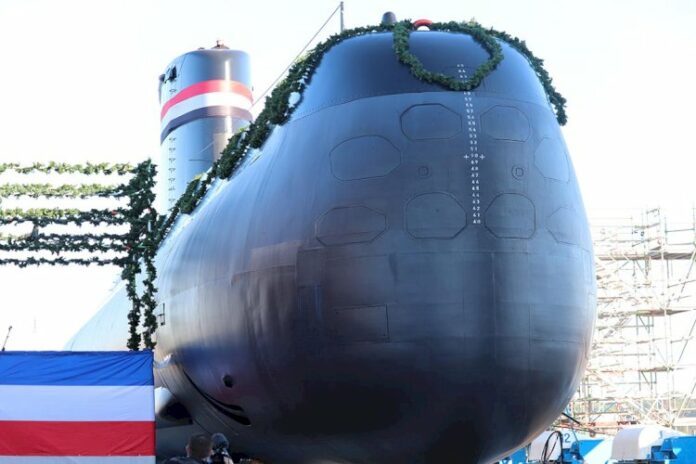
Naming and launching of fourth Egyptian submarine

0

Following the very strict corona prevention measures at the shipyard, Vice Admiral Ahmed Khaled Hassan Said, Commander-in-Chief of the Egyptian Navy, officially named the boat “S44”.

Dr. Rolf Wirtz, CEO of thyssenkrupp Marine Systems:

“Given the global corona pandemic, we are pleased to welcome Vice Admiral Ahmed Khaled Hassan Said to celebrate this very special milestone. The naming of the fourth submarine proofs how strong and trusting we can work together even in challenging times. I would like to thank our employees, who have always worked in line with tremendous care and discipline in the past work-intensive month.”

The contract for the delivery of the first two 209/1400 mod class submarines to the Arab Republic of Egypt was signed in 2011. In 2015, Egypt decided to take the option for two additional units. The first submarine was handed over in December 2016 and the second submarine in August 2017. Subsequently, the third submarine, named “S43”, was handed over in April 2020. The submarines are designed for maritime defense as well as conflict prevention, surveillance, information gathering and operations by special forces.

About „S44″: The submarines of the HDW Class 209/1400mod series are extremely reliable, can stay submerged for a long time, are fast, and are hard to locate thanks to their low signatures. The HDW Class 209/1400mod is the latest version of the HDW Type 209 with over 60 boats built or under contract.

Wärtsilä reels in another fishing vessel order

0

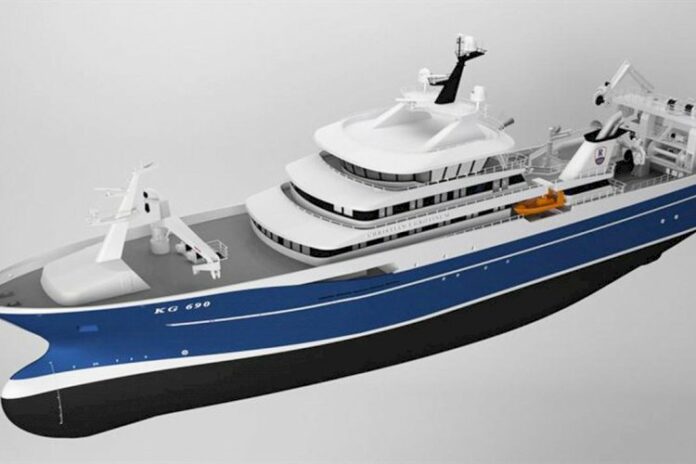
The Danish shipbuilder Karstensens Shipyard has awarded Wärtsilä the contract to deliver the main propulsion machinery for an 89 metres long pelagic purser/trawler being built for Faroe Islands based Christian i Grótinum, a leading North Atlantic fishing group. The order was booked in July this year.

Karstensens Shipyard specialises in designing and building sophisticated fishing vessels, and this new ship will be the largest built by the yard to date. It will be powered by a Wärtsilä 31 main engine, which has received recognition from Guinness World Records as being the world’s most efficient 4-stroke diesel engine.

Jens Karlsson, General Manager, Area Sales, Wärtsilä Marine Power, says:

“Efficiency and sustainability are essential in today’s operating environment, and these values are emphasised with this vessel through the combination of Karstensens’ design and Wärtsilä’s highly efficient solutions.”

Mr Bogi Rasmussen, Skipper & Owner of Karstensens Shipyard, says:

“This newbuild promises to set a new standard for pelagic fishing vessels. We required the latest propulsion technology, and Wärtsilä has such a strong reference list in delivering state-of-the-art solutions that they were the obvious partner for us to select.”

In addition to the main engine, Wärtsilä will also supply a selective catalytic reduction (SCR) system for reducing nitrogen oxide emissions, the shaft generator, a two-speed gear with power take-off (PTO) function, the shafting, a controlled pitch propeller (CPP), and Wärtsilä’s ProTouch propulsion control system. The equipment is scheduled for delivery to the yard in mid-2021, and the vessel is expected to be delivered in January 2022.

Wärtsilä propulsion systems have been developed to provide outstanding reliability, low operating costs, environmental friendliness, easy installation/integration, and intuitive operating control. 

HHLA invests in the Adriatic Port of Trieste

0

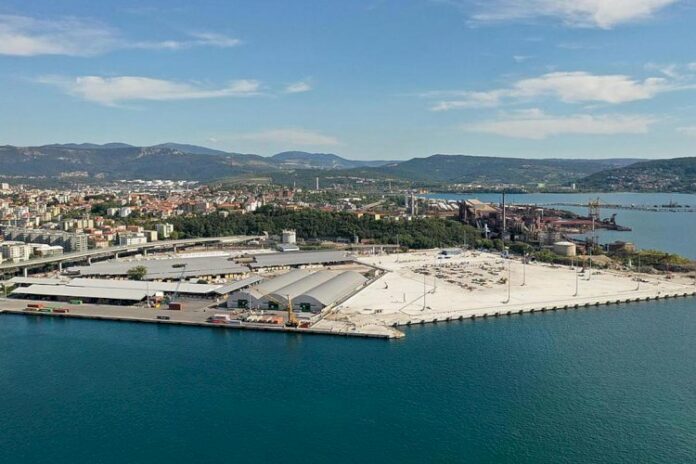
The Hamburger Hafen und Logistik AG (HHLA) is taking a majority stake of 50.01 percent in the multi-function terminal “Piattaforma Logistica Trieste” (PLT) in the Italian seaport of Trieste. An agreement was signed on 28 September.

The investment will be allocated contractually and organisationally to HHLA International GmbH. With this investment, HHLA is positioning itself in a growing market on the Adriatic whose strategic position offers great opportunities for development. 

Angela Titzrath, Chairwoman of HHLA’s Executive Board:

“The Adriatic region has been developing very dynamically in the past few years. As the northernmost port in the Mediterranean, Trieste is the southern gateway to Central and Eastern Europe. The investment is a strategic expansion to our existing port and intermodal network. The terminal gives us the opportunity to actively participate in and help shape new and changing cargo flows and underline our ambitions to grow internationally. At the same time, we will continue to enhance our terminals in Hamburg by investing in facilities and technology. We are a Hamburg company, at home in Europe and operating globally.”

Francesco Parisi, Chairman of PLT’s Executive Board:

“HHLA’s participation strengthens the growth prospects of PLT and of the entire Port of Trieste. Our development strategy in the direction of Central and Eastern Europe fits in with HHLA’s orientation. The position of the new partners confirms us in the development of the terminal expansion we are pushing ahead with.”

The terminal facilities are within the Free Port of Trieste and take up a total area of 28 hectares. In the northern part of the facilities, mainly general cargo transports and logistic services are being handled. The new heart of the terminal is emerging in the southern part: the newly developed area will start operations in the first quarter of 2021 and is designed to handle container and RoRo traffic. The capacity of the PLT terminal will then comprise a total of approximately 300,000 TEU (standard containers), 90,000 RoRo units and 700,000 tonnes of general cargo. There is also the option to significantly expand terminal capacity through additional adjacent areas.

The strategically relevant position of the Port of Trieste on the Adriatic also allows for excellent development opportunities in hinterland transport. The PLT terminal has its own rail connection. The HHLA rail subsidiary Metrans already connects the Port of Trieste with its European intermodal network.

The transaction is subject to various conditions precedent and is expected to close in January 2021.

KDI wins contract to deliver engine room simulator to Flensburg University

0

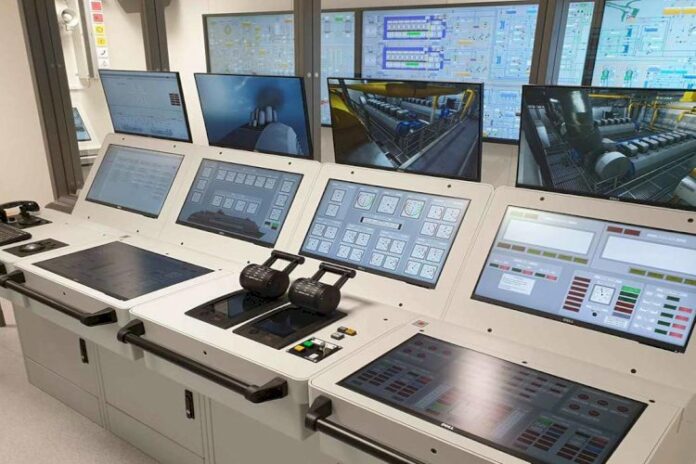
Scheduled for August 2021, the extensive delivery includes a K-Sim Engine Full Mission engine room simulator and a K-Sim Engine desktop classroom configuration. In addition, the university has ordered six different K-Sim Engine models to achieve the desired training outcomes for a variety of propulsion and engine types.

To meet modern shipping training needs KDI will also develop an entirely new model based on the machinery configuration from a next-generation LNG Carrier propelled by two MAN ME-GI low-speed engines that can operate on LNG, MGO and HFO: the K-Sim Engine LNG Carrier MAN ME GI L22. The model will be specifically designed to meet new safety and sustainability requirements in shipping. It will enable students to attain expertise in operating two-stroke LNG-fueled engines, with an emphasis on safety-related LNG handling which aims to minimize risk to personnel and the marine environment.

Additionally, to enable IGF code training in LNG bunkering procedures, the DEDF42 Cruise Ferry model – based on a pioneering Dual Fuel passenger ship – is also included in the delivery. To comply with the Ballast Water Management Convention, several of the included models have a combined electrolysis and filter system in order to meet IMO and USCG requirements for such a system.

Kongsberg Digital’s new K-Sim Engine eLearning modules are also included with the delivery. These are accessible via K-Sim Connect, a pioneering cloud-based ecosystem providing members with a range of simulation services and tangible benefits. Simple and straightforward to use, it provides instructors with the possibility to upload, share and manage exercises for eLearning purposes. Students can obtain access to the simulation exercises at any time or location, simply by logging in.

Tone-Merete Hansen, Senior VP in Kongsberg Digital, Maritime Simulation, says:

“Kongsberg Digital is the first to deliver advanced cloud-based simulation, supporting maritime training institutes in modernizing and improving the quality of their training. We are pleased to provide Hochschule Flensburg with the flexibility of our subscription-based simulation services, delivered via K-Sim Connect. By collaborating with the industry and integrating advanced functionality from KONGSBERG’s well-reputed real equipment, such as K-Power, K-Chief and AutoChief, into our simulators, we’re constantly developing new realistic models meeting the trends of fuel and propulsion systems.”

Pawel Ziegler, Professor, Flensburg University of Applied Sciences, comments:

“The upgrade to Kongsberg Digital’s new-generation simulator technology will make a world of difference in improving our training environment.”

Prof. Dr. Michael Thiemke adds:

“The new K-Sim Engine models will prepare our students for controlling and managing the engine systems onboard different vessels, including the top modern ones. With the cloud-based eLearning solution our students will also gain access to high-quality simulation exercises outside the school, to practice more and build the necessary competence.”

Wilhelmsen and thyssenkrupp launch 3D printing JV

0

With the signing of the Letter of Intent to establish a Joint Venture, thyssenkrupp and Wilhelmsen will collaborate on delivering maritime spare parts using 3D printing, leveraging on thyssenkrupp’s deep expertise in AM alongside Wilhelmsen’s in-depth maritime expertise and direct ongoing experience in understanding the needs of vessel fleet managers.

Based on current data, maritime fleets spend approximately 13 billion USD a year on spare parts; with 50% of these vessels being older than 15 years, availability of parts are limited. This makes fulfillment of orders for maritime spare parts costly and complicated, and in fact, supply chain overheads involved may oftentimes far outstrip the cost of the part itself.

Moreover, traditional manufacturing processes such as machining and casting often involve long lead-times stretching into months. As a result, ship managers must carry high stock levels of parts to ensure that they can fulfill orders, leading to high capital costs.

AM, thus, provides a solution to these issues by improving lead-time and costs considerations as suitable components are fabricated near the vessel location in a matter of weeks, sometimes days.

Abhinav Singhal, Director of thyssenkrupp Innovations, shared:

“We are already seeing very positive response from our Maritime customers on Additive Manufacturing adoption. They are realising the benefits from faster lead times, reduced costs and having more resilience in their spare parts supply chain. This is going to be a true gamechanger for the Maritime industry and we are proud to offer it alongside Wilhelmsen.”

Hakon Ellekjaer, Head of Venture, 3D Printing, Wilhelmsen, says:

“We are very excited to enter the next phase of our 3D printing journey, hand in hand with thyssenkrupp. This joint venture will, we believe, take the lead as the de-facto supplier of 3D printed maritime spare parts, continuing to bring the benefits of Additive Manufacturing technology to shipping companies by reducing the cost of spare parts, lead times and environmental footprint.”

The joint venture will thus position both thyssenkrupp and Wilhelmsen as leaders in the AM fulfillment platform for the maritime sector. It is expected be headquartered in Singapore, it will serve the key port locations around the world.

Edvard Grieg reserves increased by 50 million barrels of oil equivalent

0

Lundin Energy AB (Lundin Energy) has announced that due to the continued outperformance of the Edvard Grieg field, the gross proved plus probable (2P) reserves have been increased by approximately 50 million barrels of oil equivalent (MMboe), lifting the gross 2P ultimate recovery for the field to 350 MMboe1, 2.

The expected plateau production period from the Greater Edvard Grieg Area, which also includes the Solveig Phase 1 and Rolvsnes Extended Well Test (EWT) developments, has been extended by a further year to late 2023.

The Edvard Grieg field continues to outperform, with the water production levels significantly lower than anticipated, which is supported by a recently completed 4D seismic survey that provides excellent imaging of the movement of water in the reservoir and shows the water injection flood front to be further away from the production wells than predicted, indicating increased oil-in-place in the field. An updated reservoir model has been completed, incorporating these latest results, which supports increased reserves and an extension to the plateau production period.

Edvard Grieg gross 2P reserves are increased by approximately 50 MMboe (33 MMboe net to Lundin Energy), lifting the gross 2P ultimate recovery for the field to 350 MMboe1,2, representing an increase of 90 percent from the original PDO. These additional reserves are significantly value accretive as no additional investment is required, above the planned infill well programme. The reserves estimates have been audited by ERCE3.

The gross 2P ultimate recovery for the Greater Edvard Grieg Area, which includes Edvard Grieg, as well as the Solveig Phase 1 and Rolvsnes EWT developments, is increased to 410 MMboe2. These additional reserves extend the plateau production period for the Greater Edvard Grieg Area by a further year, to late 2023, representing a five-year extension from the original PDO.

There is significant further upside in the Greater Edvard Grieg Area, where the total gross ultimate resource potential is estimated to be 800 MMboe, which includes upsides to existing fields and unrisked prospective resources. Several attractive exploration targets have been identified within tie-back distance to the existing facilities, with the operated Merckx prospect in licence PL981, scheduled for drilling in the fourth quarter 2020.

The aim is to progressively mature these opportunities in order to keep the facilities full beyond 2023.

Nick Walker, COO of Lundin Energy, said:

“Since Edvard Grieg first oil in 2015, the field has year on year exceeded our expectations both from a reservoir as well as an operational performance perspective. What has been achieved at Edvard Grieg epitomises the best of Lundin Energy, through the application of subsurface expertise, cutting-edge technology and operational excellence, combined with a determined and entrepreneurial approach to operatorship. This reserve increase and plateau extension is incredibly value accretive, as it comes with limited additional investment. I’m confident, that as we continue to explore in the Greater Edvard Grieg Area, it will grow further and drive material additional value to the partnership and Norway.”

Equinor: Oil and gas discovery close to North Sea Fram field

0

Recoverable resources are estimated to be in the range of 2-6 million standard cubic metres of oil equivalent, corresponding to 13-38 million barrels of oil equivalent.

Nick Ashton, Equinor’s senior vice president for exploration in Norway, says:

“We are working continuously on keeping an exploration portfolio that forms the basis for high value creation and in addition can be produced with a low carbon footprint. This discovery contributes to reaching this goal.”

Wells 35/11-24 S, 35/11-24 A and 35/11-24 B were drilled around 7 kilometres west of the Fram field and 130 kilometres northwest of Bergen.

The discovery demonstrates the importance of continuous learning. Based on investment in new data and exploration wells that Equinor drilled last year, we have developed new understanding of the underground in one of the most mature and developed areas on the Norwegian continental shelf (NCS).

Ashton says:

“This strongly indicates that it is still possible to prove new and profitable resources that can utilise existing infrastructure on the NCS.”

The purpose of the wells was to prove petroleum in the Upper Jurassic rocks of the Heather formation.

Well 35/11-24 S encountered a hydrocarbon column totalling 42 metres in sandstone layers in the Heather formation, of which 21 metres interval were gas and 7 metres in sandstone of mainly moderate to good reservoir quality and 21 metres interval were oil and 17 metres in sandstone of good to moderate reservoir quality.

Well 35/11-24 A encountered a total gas column of 25 metres and up to 6 metres in moderate quality sandstone in the Heather formation. Well 35/11-24 B encountered an oil column of minimum 3 metres in good-quality sandstone in the Heather formation.

The wells were not formation-tested, however extensive data acquisition and sampling were carried out. All wells were concluded in the Heather formation from the Late Jurassic epoch at a depth of 3000-3600 metres. Water depth in the area is 356 metres. The wells have been permanently plugged and abandoned.

The licensees will evaluate the discovery for a potential tie-in to existing infrastructure in the area.

The wells were drilled by the West Hercules drilling rig, which will proceed to drill wildcat well 6407/1-8 S in the Apollonia prospect in production licence 263 D in the Norwegian Sea.