2 C
New York
Home Blog Page 765

First-ever U.S. flagged “Jones Act” compliant Service Operations Vessel

0

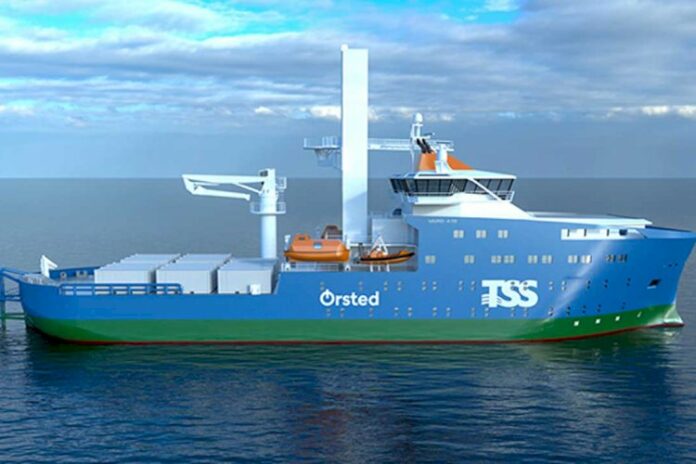
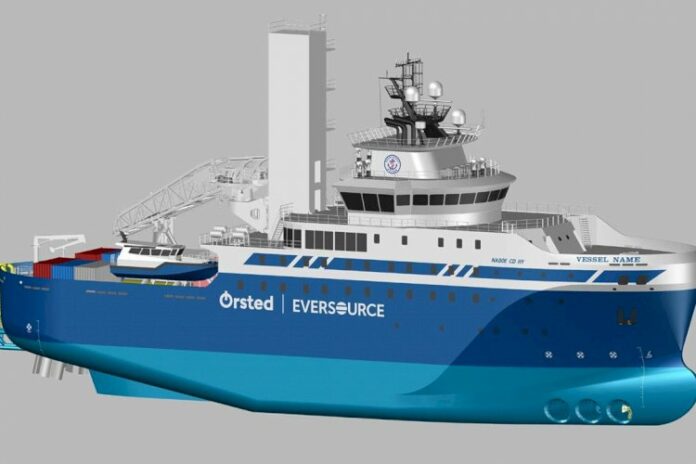
Edison Chouest Offshore (ECO), Ørsted and Eversource announced today the execution of a long-term charter agreement for the provision of the first-ever U.S. flagged “Jones Act” compliant Service Operations Vessel (SOV).

The SOV will be engineered, constructed and operated by ECO as an integral part of the operation and maintenance of the Revolution Wind, South Fork Wind and Sunrise Wind offshore wind farms in the northeast United States, which are dependent on obtaining the necessary federal permits from the Bureau of Ocean Energy Management (BOEM).

The SOV will be utilized during the operation & maintenance (O&M) phases of the wind farm projects, serving as an at sea base of operations to accommodate and transfer technicians, tools and parts safely to and from the individual Wind Turbine Generators. This vessel is a special-purpose design with focus on passenger comfort and safety, enhanced maneuverability and ship motions, extended offshore endurance and reduced emissions.

The vessel will be built at a combination of Edison Chouest’s shipyards in Florida, Mississippi and Louisiana, creating well over 300 new construction jobs. The construction of this vessel will also have a broader economic impact on other U.S. states hosting suppliers of major components, with some notable beneficiaries being North Carolina and Illinois for steel and main engines, respectively. While the offshore wind industry is relatively new to the United States, states in the Gulf of Mexico region, who have a long history in offshore related industries, stand to immediately gain from the high transferability of existing jobs over to offshore wind. In addition to jobs created in Louisiana, the vessel will operate from New York once in operation.

Mr. Gary Chouest, President of Edison Chouest Offshore, says:

“The offshore wind energy industry is generally well developed and understood, particularly in Europe where an enormous industry has developed over decades, but this industry is in an initial stage in the United States. There is an unprecedented opportunity, with twelve offshore wind projects planned, an additional ten offshore wind leases signed, and another six wind leases awaiting award. In aggregate, there is a pipeline of well over 25 thousand megawatts of power to be produced by over 1,700 wind turbines, across thirteen states, and in various stages of development that will require an incredible array of vessels, resources, knowledge, and capital commitment to install, operate, and repair.”

The vessel will be over 260 feet long and capable of housing 60 passengers. Crew will enjoy access to passenger staterooms with private bathrooms, an exercise room, cinema/training room, internet café and multiple lounges. The SOV will include a below deck warehouse to palletize storage for wind farm tools, components and supplies with step-less access to an elevator. A Daughter Craft, with associated Launch and Recovery System and hydraulic height-compensating landing platform, will also be installed for infield turbine repair operations. In keeping with the environmental goals of the offshore wind industry, this vessel will operate on diesel electric power that meets EPA Tier 4 emission standards and will feature proprietary ECO Variable Frequency Drive (VFD) to reduce greenhouse gas emissions.

Thomas Brostrøm, CEO of Ørsted North America, Offshore, said:

“It is hard to state what this moment means for this new, multi- billion-dollar industry. The SOV is not only a crucial part of our plans to build out and operate our Northeast Wind Farms, but it represents just how far reaching the economic impacts of offshore wind can be; offshore wind means massive investments for U.S. companies and jobs for American workers, even those in states without active projects.”

Joe Nolan, Executive Vice President at Eversource Energy, said:

“Today’s news represents a key moment in the advancement of the offshore wind industry in the United States. Not only is this new vessel a critical component of our plans to build and develop the next generation of clean energy in our country, it’s a testament to how far the industry has come in such a short time and what we can achieve moving forward. This new state of the art vessel will help us deliver on the promise of creating jobs, driving economic growth, and combating climate change and will play a key role in our efforts to support states in meeting their commitment to decarbonization.”
Construction starts on the world’s largest floating offshore wind farm

0

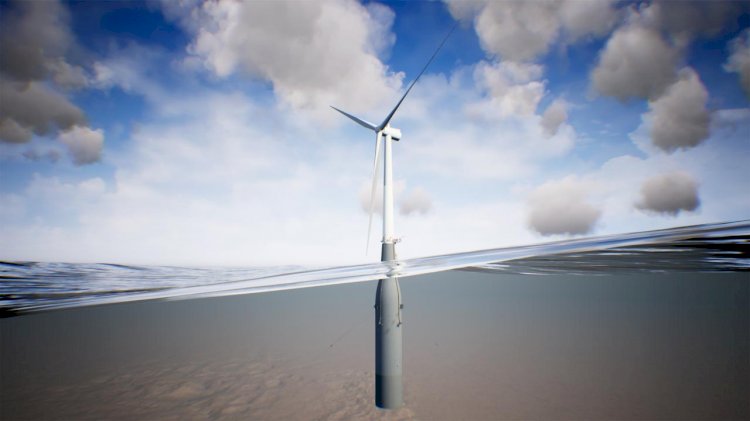
Prime Minister Erna Solberg and Kværner apprentice Arne Linga started construction of Hywind Tampen, a floating offshore wind farm, at Kværner Stord. The technology project opens up new opportunities for Norwegian industry.

Prime Minister Solberg and Linga started the cutting robot on the project’s first sheet of steel on Thursday, 1 October. Kværner’s assignment will include building 11 floating concrete hulls for the turbines on Hywind Tampen.

Equinor president and CEO Eldar Sætre says:

“Hywind Tampen is a new chapter in Norway’s narrative as an energy nation. With support from the Norwegian authorities, we’re not only building Norway’s first offshore wind project; we’re refining floating offshore wind technology along with the Norwegian supplier industry.” 

Sætre says:

“Eighty percent of the world’s offshore wind resources are located in deep water areas and are available for floating offshore wind projects. If we can use projects like Hywind Tampen to make floating offshore wind competitive with other forms of energy, the technology will be able to deliver large-scale renewable power and contribute to a more sustainable global energy supply. A floating offshore wind market will also open up considerable industrial opportunities for Norwegian industry.”

The development of the Hywind Tampen project involves around 250 full-time equivalents for Kværner employees. Kværner’s project will also generate around 800 full-time equivalents in ripple effects for suppliers and the public sector, among others.

A study conducted by Multiconsult shows that, in total, the Hywind Tampen project could provide 1,550 to 3,000 full-time equivalents in ripple effects for the Norwegian private sector.

Equinor’s ambition is for floating offshore wind to be competitive with other forms of energy by 2030.

Hywind Tampen project director Olav-Bernt Haga says:

“By using larger turbines, concrete substructures, new technology and a new assembly method, we’re well on our way toward delivering on the objective to reduce costs by more than 40% compared with Hywind Scotland. This is an important step to establish floating wind as a sustainable power supply alternative. If more major floating offshore wind projects are realised in the future, it will be possible to reduce costs even further, and we could see a development in cost reductions equivalent to the one we’ve seen in fixed foundation offshore wind.”

Equinor sees a potential for floating offshore wind projects in Norway, the UK, Europe, the US and Asia.

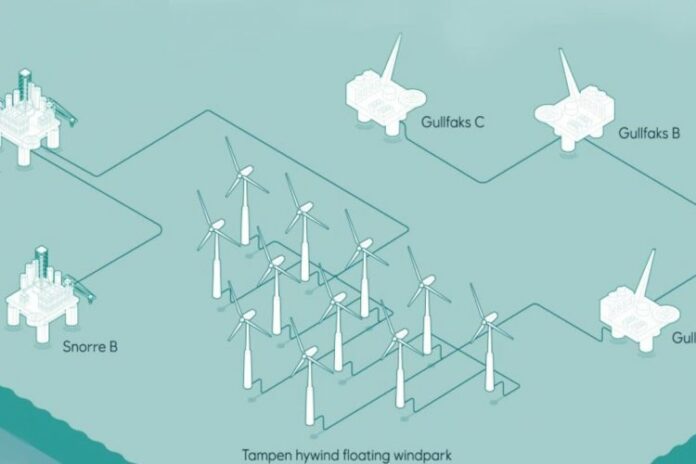
The Hywind Tampen project will be the first floating offshore wind project to supply renewable power for oil and gas installations. The wind farm will have a total capacity of 88 MW, and is expected to cover about 35 percent of the annual power needs on the five platforms Snorre A and B and Gullfaks A, B and C.

Hywind Tampen will reduce emissions from the Gullfaks and Snorre fields by more than 200,000 tonnes per year, which corresponds to annual emissions from 100,000 private vehicles.

Equinor has been a pioneer in floating offshore wind technology and has been working on this technology for nearly 20 years. When the Hywind Tampen project is operational in 2022, the company will be operating one-third of the global floating offshore wind capacity.

Aquaculture industry: SinkabergHansen invests in a new type of feeding technology

0

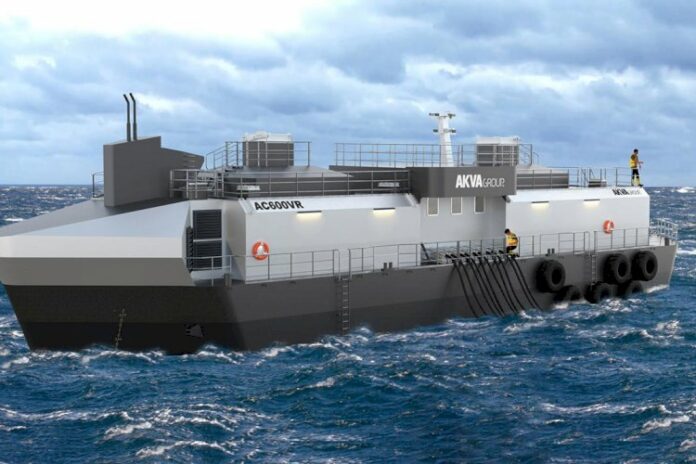
SinkabergHansen has purchased an AC 600 VR feed barge with new technology for waterborne feeding from AKVA group. The feed barge model has been developed for exposed locations and was first presented during Aqua Nor 2019.

Svein-Gustav Sinkaberg, CEO of SinkabergHansen, says:

“The feed barge with a waterborne feeding system can now be described as an efficient feeding machine. The environmental and cost benefits of waterborne feeding are so great that we see it as justifiable to invest in this type of feeding technology.”

SinkabergHansen will use the feed barge at the location Otervika – which is one of the company’s most exposed locations.

Tests carried out during the development of the new ten-line feeding system showed a 70-90 per cent reduction in the energy requirement of feeding by waterborne feeding compared to air feeding. Waterborne feeding is also very quiet in operation, and microplastic wear inside feed hoses is not a problem with water transport.

Sinkaberg says:

“Waterborne feeding also provides good conditions for deep feeding. In addition to lower lice pressure at depth, there are several types of solutions we continue to work on to facilitate good fish welfare and good growth during deep operation, including light conditions and feed distribution. Testing and combining the technologies properly at full-scale provides good conditions for developing such solutions – at the same time as we see that there are still issues that should be better elucidated when it comes to adapting operations and technology to optimize good operation and environmental benefits.” 

Hans-Øyvind Sagen, Sales Director AKVA group Nordic, says:

“If you also add a battery hybrid package, the feeding system in this feed barge provides significant environmental effects and cost savings in the aquaculture industry. Only a monthly cost saving of around NOK 200,000 in generator operation for feeding ten pens provides a good reason to take a closer look at this feeding technology.”

New technology is always associated with both costs and some uncertainty. To adapt the feed barge and gain useful experiences with the new technology, SinkabergHansen entered into a lease agreement for the AC 600 VR feed barge from late autumn 2019.

Sagen says:

“We have great respect and are very grateful for that SinkabergHansen took on the task of being in the front line with us to work out waterborne feeding technology.”

Early in spring 2020, the feed barge and waterborne feeding operation were stable and the fish were harvested as planned in June.

Sagen, who also sees opportunities for existing feed barges, says:

“The largest bottleneck for introducing this new environmentally-friendly and cost-saving technology in the market is to show that the waterborne feeding system is stable in operation and provides at least the same growth rate as airborne feeding. In this context, this feed barge sale to SinkabergHansen, and the collaboration with them, is very important for further market development.”

Sagen says:

“In the short term, existing feed barges can be rebuilt from airborne feeding to waterborne feeding, as the energy and environmental effect will be the same as waterborne feeding for new feed barges. In Norway alone, there are several hundred feed barges of steel and concrete that may be relevant for such a rebuild, and it will provide enormous energy savings and environmental effects.”

Tapiit Live transforms seafarer training via Fleet Xpress

0

The agreement is designed to transform seafarer training by cutting costs and carbon footprint, and improving standards of teaching. The first live stream training package will be offered on a dedicated 24-hour-a-day basis on demand worldwide without a fluctuating connection.

Marco Cristoforo Camporeale, Head of Maritime Digital, Inmarsat Maritime, said:

“We are delighted that Tapiit Live will become a Certified Application Provider for our Fleet Connect dedicated bandwidth solution powered by Fleet Xpress. This partnership will help improve onboard training tremendously with live streaming and we are excited to be working with an innovative partner that is revolutionising training at sea.”

Richard Turner CEO at Liverpool-headquartered Tapiit Live said:

“This is a hugely exciting moment for seafarer training. Tapiit saw a gap in the market as previously internet costs, with enough bandwidth to enable live streaming, were so high that it was thought live stream classroom style training was 10 years in the future – now we’re delivering it to close to 10,000 ships. Tapiit has done a lot of technical work in the background to compress the file size of the different platforms required for live streaming such as video, recording and PowerPoint.

“As a result, we felt confident to approach Inmarsat with a technically robust product that would work on live stream – as there as so many poor alternatives with some companies attempting training at sea over patchy zoom signals. Inmarsat’s Fleet Connect dedicated bandwidth solution on its Fleet Xpress service alongside Tapiit’s technical expertise offers a training package specially designed by Tapiit and delivered at our studios that can innovate and improve seafarer training fundamentally.

“This is a massive step forward for the industry as nothing beats classroom style learning. While e-learning is effective, live streaming is better as it ensures seafarers who are attending the training can actively engage with the tutor in real time or via private chat.”

Switching to live stream training strips out massive overheads with up to 80 per cent of normal training costs accounted for by travel, accommodation, expenses and room hire. Interest in the new package among ship operators is also being driven by the coronavirus crisis which has seen classroom training severely disrupted.

Richard Turner continues:

“Our initial talks with ship owners, ship management companies and ship registries has shown a massive problem with shore-based training now and into the future because coronavirus. There is a real need to adapt training to the new normal of restricted movement and travel and this is a big problem that our deal with Inmarsat solves.

“Seafarers no longer have to travel, they can do a lot of the training while still at sea via desktop, tablet or phone with sessions broadcast from our studios in Liverpool and India as well as studios we are looking to open in America and Singapore. In addition, companies can use this new platform to broadcast company conferences and meetings direct to the ship helping crew become closer to day to day operations on land.”

The first live stream training packages will range from toolbox talks, mental wellbeing, maritime English, risk assessments, security and safety culture.

He continues:

“The training is best offered on a bespoke basis so we can tailor it to a particular fleet and company’s requirements. A very important element will be mental wellbeing. The challenges of life at sea have been brought into sharp focus by the coronavirus crisis and the huge problems around repatriating seafarers particularly to Indian and the Philippines. As a result we have designed three mental wellbeing courses which include support for leaders, crew and also a tailored package for coronavirus related issues.”

Maersk Drilling awarded a contract to drill two development wells in the North Sea

0

The harsh-environment jack-up rig to be used for the job is yet to be assigned. The contract is expected to commence in Q2 2021, with an estimated duration of 121 days. The contract value is approximately USD 12.1m.

Further, Maersk Drilling and Dana Petroleum Denmark B.V. have agreed to defer the previously announced one-well contract in the Danish sector which was originally expected to commence in May 2020. The updated date of commencement will be determined at a later stage, and the rig to be used is yet to be assigned. Maersk Drilling expects to receive compensation in the form of a deferral fee.

Prior to commencement of the Project Unity contract, the rig to be used will be equipped with a high-efficiency Selective Catalytic Reduction (SCR) system which uses ammonia injection to convert NOx into harmless water and nitrogen, expectedly reducing NOx emissions by up to 98%. The design will include an advanced control interface between engines and SCR units.

COO Morten Kelstrup of Maersk Drilling says:

“We’re happy to add further to our relationship with Dana by drilling these two wells for the Unity gas development project. Operations in the Dutch North Sea come with a strict focus on protecting the environment, and we fully support this as part of our ambition of providing responsible drilling. We already have experience with providing NOx emission reductions by using SCR systems on Mærsk Innovator in the North Sea.”

LR awards Digital Safe Security certification to Evergreen

0

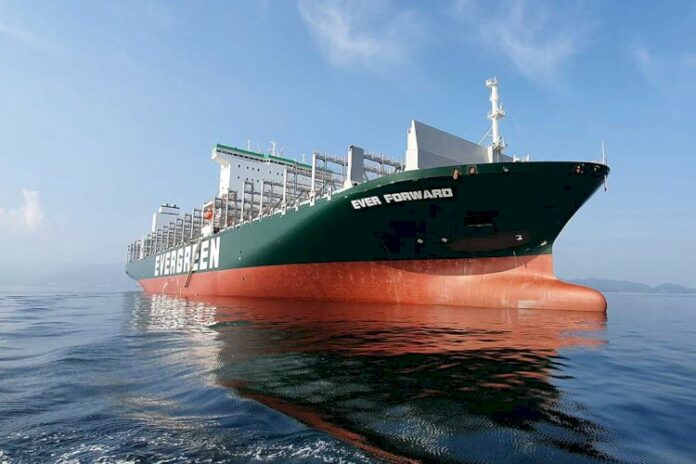
Evergreen Marine Corp. Ltd. (Evergreen) has been awarded Digital Safe Security certification from LR for its latest 12,000 TEU ultra large container ship, Ever Forward, which was built and delivered by Samsung Heavy Industries Co., Ltd. (SHI) on 28 September 2020.  

SHI used its smart ship solution, SVESSEL, to develop the digital ship system onboard Ever Forward. This solution provides operators and shore-based staff with instant access to operating data from onboard systems for monitoring and diagnostics through the cloud, which they can use to make more informed operational decisions and respond to issues faster and more efficiently.

Ever Forward has been built to class in line with LR Digital Ship notations with elements of SVESSEL certified against LR’s Digital Safe Security notation, demonstrating that access for autonomous and remote monitoring of the ship’s systems has been provided and assessed.

LR also provided independent assurance services to Evergreen and SHI, applying the Digital Ship descriptive notation to the vessel in recognition of the work and certifying the digital ship system as safe.

Yong-Lae Shim, Vice President of SHI Ship and Offshore Research Institute, said:

“We are delighted to support Evergreen with our latest smart ship solution, SVESSEL which has been developed with the advances in information and communication technologies aiming to complete digitalisation of a ship and its applications to efficiently and safely assist operation. We believe digital transformation will revolutionise the maritime transportation industry and drive economic value for all stakeholders including shipowners and operators.”

Young-Doo Kim, LR’s North East Asia TSO Manager, said:

“By working closely with Evergreen and Samsung Heavy Industries, we were successful in assessing the system’s functionality through LR’s Digital Safety Security notation. We are excited to see digital ship technologies grow and comprise more and more functions and reach higher levels of autonomy, helped by LR’s Digital Ships procedures that enable digital systems to be installed safely and fully functional as intended.”

Corvus Energy awarded contract for delivery of ESS for Windmill Support Vessel

0

Corvus Energy has been selected by Vard Electro to supply lithium-ion battery-based Energy Storage Systems (ESS) for the new vessel being built at Vard Vung Tau for Greater Changhua wind farms.

The Service Operation Vessel (SOV) is of VARD 4 19 design – a newly developed ship design for the complicated and harsh environment in the Taiwan Strait. The vessel will be the first SOV to be built according to Taiwanese flag and class.

VARD is well known for its design and shipbuilding of highly advanced vessels for the energy sector. Over decades, the Group has been trusted to build a broad range of state-of-the-art vessels for the oil and gas industry, research, cable laying, icebreaking, fisheries, and other marine and maritime operations. In recent years, VARD has also developed and built a series of vessels for the expedition cruise market worldwide.

The offshore wind market is expected to grow due to the global shift towards renewable energy. With increasing environmental focus, owners of wind farm support vessels will need to consider hybrid electric solutions and alternative fuels to meet requirements.

Peter Pilskog, VP Sales & Marketing at Vard Electro, says:

“As a leading actor of hybrid-electric solutions for the offshore and maritime industry, we offer Greater Changhua Windfarms products and solutions of high quality. Utilizing our extensive industry experience, we will equip their SOV with an environmentally friendly SeaQ® system that enhances safety, efficiency, and sustainability of their operations.”

Vard has developed three different cost-effective SOV designs with the latest propulsion technologies and hull forms developed for offshore renewables.

The 84,4m long and 19m wide VARD 4 19 SOV is designed with all primary functions including accommodation for 89 persons, transfer of technicians to installations as well as storage of spare parts and tools for operations on offshore wind farms.

Corvus Energy will deliver air-cooled Corvus Orca ESS for the SOV.

Christian Søvik, Senior Vice President Sales at Corvus Energy, says:

“Vard is in the absolute forefront when it comes to designing and building specialized vessels, as well as sophisticated electrical system design. We are very grateful and proud to be selected by Vard Electro to deliver the ESS for this highly advanced and innovative SOV. The potential for fuel and emission savings in offshore operation is high due to the vessel`s high variations in load and high demand for redundancy. We expect the growing wind market to be an important arena for energy storage solutions and further development of green technology in the years to come.”

The vessel is scheduled for delivery in 2022.

Kongsberg partners with CEMS to raise the bar for cooperative maritime safety

0

This collaboration between Norway’s leading provider of next-generation maritime digital solutions and one of the most forward-looking educational establishments in Singapore clearly illustrates the growing cooperation between the two countries in the maritime field.

Kongsberg Digital is pleased to announce the signing of a contract to deliver an Advanced Navigation Research Simulator (ANRS) to the newly-established Centre of Excellence in Maritime Safety, CEMS, in Singapore. This collaboration between Norway’s leading provider of next-generation maritime digital solutions and one of the most forward-looking educational establishments in Singapore clearly illustrates the growing cooperation between the two countries in the maritime field.

Set up as a joint venture between the Singapore Maritime Institute and Singapore Polytechnic with the intention of creating a world-class assessment and research facility, CEMS is one of several centers in Asia that is committed to the digital transformation of the maritime safety domain. The delivery of KONGSBERG’s ANRS is scheduled for Q1 2021, and an official opening will be held during Singapore Maritime Week 2021. Based on K-Sim Navigation and integrated with the K-Sim VTS (Vessel Traffic Service) simulator, the ANRS creates a holistic solution in support of the CEMS initiative, which aims to enhance safety and efficiency of vessel traffic while safeguarding the environment.

As Singapore’s leading center for maritime safety research and innovation, CEMS conducts research on crew behavior, using Artificial Intelligence to enhance training and assessment with a goal to contribute towards the International Convention on Standards of Training, Certification and Watchkeeping for Seafarers (STCW). Other research interests at CEMS include the study of e-Navigation and the validation of new designs and operational concepts, including smart and autonomous ships.

CEMS’ research and development efforts to keep Singapore’s port waters safe will become even more critical when the new mega-port currently under construction at Tuas is built and ready for operation. The new mega-port’s capacity to accommodate more vessels will require new cutting-edge technology and consequent complexity of operations, increasing demand for training to ensure that vessels navigate safely within Singapore port waters.

To this end, the new KONGSBERG ANRS lab delivery will include simulation research and development tools for ship modeling and geographical sailing areas, in addition to its primary systems. These incorporate VTS and Remote Operation Center simulation, a scalable/multi-modal navigation bridge simulator and Instructor/Assessor/Research and Development stations. Technologies including eye tracking to assist human-computer interaction will be incorporated into the simulation domain.

Andreas Jagtøyen, EVP of Digital Ocean, Kongsberg Digital, says:

“CEMS is an enabler, improving maritime safety and operational excellence through a combination of simulation technology, the use of digital twins and new training methods. The powerful maritime cluster in Singapore, consisting of world-class education and research institutes, equipment manufacturers, shipyards, ship owners and ship operators, is without question one of the most important global locations for KONGSBERG as a working environment where we can test and further develop our digital solutions in the maritime domain.”

Daniel Zhang, Centre Director of CEMS, said:

“One of the critical factors that underpins Singapore’s success as a major global maritime hub is our highly-trained and skilled workforce that is ready to meet the new challenges in the maritime world. Our partnership with Kongsberg Digital will empower Singapore Polytechnic staff and learners of all ages to pick up new digital skills and domain knowledge that will strengthen the capabilities of our maritime workforce. This is a strategic collaboration that enables both organizations to co-create and develop more innovative digital solutions that will continue to keep our ships and crew safe, and sharpen our competitive edge as a leading sea transport hub.”

DEME: ‘Green Jade’ steel cutting gets underway

0

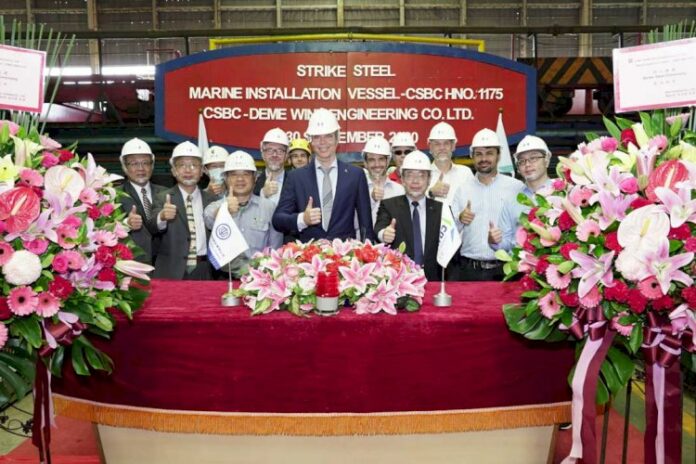
Representatives from the Hai Long and Zhong Neng offshore wind farm projects, the American Bureau of Shipping and the CR Classification Society were delighted to witness this important moment in Taiwan’s maritime and industrial history and join in the celebrations with CDWE and CSBC, the shipyard that will build this unique vessel. ‘Green Jade’ is the first floating DP3 heavy lift and installation vessel to be built in Taiwan and she will sail under the Taiwanese flag.

Being built at CSBC in Kaohsiung, ‘Green Jade’ will feature an exceptional combination of high transport and load capacity, impressive lifting heights and green technology. The vessel has a 4,000-tonne crane capacity and DP3 capability, which will enable CDWE and its customers to transport a multitude of the next generation, multi-megawatt turbines, jackets and components in a single shipment, making it extremely cost effective. 

At 216.5 metres long, ‘Green Jade’ has a spacious, unobstructed deck and can comfortably accommodate a crew of up to 160 people. She will be capable of installing these mega monopiles and jackets at greater water depths and her DP3 technology enables the vessel to continue operations under the most challenging conditions.

‘Green Jade’ has dual fuel engines and a Green Passport and Clean Design notation. Other environmental innovations include a waste heat recovery system that converts heat from the exhaust gases and cooling water to electrical energy, in addition to various other fuel-saving measures.

CDWE, Taiwan’s first offshore wind EPCI contractor, was established in February 2019 by CSBC, the largest shipbuilder in Taiwan, and DEME Offshore. The steel cutting ceremony is a major milestone for the joint venture, which has already secured several important contracts in Taiwan’s flourishing renewables sector.

Set to enter service in 2022, ‘Green Jade’ will be deployed for both the Hai Long Offshore Wind Project and at Zhong Neng for Zhong Neng Wind Power Corporation Preparatory Office. CDWE signed Taiwan’s first comprehensive, large-scale Balance of Plant Preferred Supplier Agreement with Hai Long Offshore Wind Project in October 2019. For Zhong Neng, the contracts comprise the transportation and installation of the foundations, as well as a Preferred Bidder Agreement for the transportation and installation of the turbines.

‘Green Jade’ shows CDWE’s confidence in the offshore wind industry in Taiwan and the wider Asia Pacific region and its 100% commitment to maximising local content. CDWE is dedicated to supporting Taiwan in the development of its offshore wind industry, and a successful and sustainable supply chain, optimising local materials and skills.

Robert Tseng, Chairman of CDWE, says:

“We feel proud and honoured to see the steel cutting of ‘Green Jade’ take place precisely on schedule. This is a marvellous step for CDWE and the Taiwan offshore wind industry. It indicates that the first Taiwan owned, built and operated main installation vessel has entered into the most important construction stage. For such a multi-functional and complicated vessel, the achievement of this important milestone shows our ambition and commitment to deliver the ‘Green Jade’ on time and to the very best quality standards to ensure our client’s best interest. We will continue to work seamlessly with CSBC and all the stakeholders in the next two years and we are confident that CDWE will provide the most reliable and functional vessel to meet and exceed the high expectations of our clients in the offshore wind market.”

Hugo Bouvy, Managing Director DEME Offshore, comments:

“We are delighted to see this ambitious project taking shape. By combining the expertise of DEME and CSBC – two market leaders – we are confident we will be able to deliver this vessel as planned and we are sure ‘Green Jade’ will play an important role in helping to shape the future success of Taiwan’s offshore wind industry. We really feel that we are participating in history with this game-changing vessel. And we look forward to taking this exciting journey with our local partners.”

Wen-Lon Cheng, Chairman of CSBC, says:

“The fact that the first steel cutting of ‘Green Jade’ is perfectly on schedule once again demonstrates the keen focus of CDWE and CSBC to accomplish the smooth delivery of ‘Green Jade’ by the fourth quarter of 2022. Both teams have put a tremendous amount of effort into the early preparation stages to make sure the vessel is delivered successfully – from the engineering tasks through to the dedicated project management system and intensive communication and interaction among all stakeholders, including the system and equipment vendors, classification societies and flag state authority etc. This is undoubtedly why we have been able to start the construction of such a complicated project on time and adhere to such an intensive schedule. The ‘Green Jade Team’ aims to continue this effective and efficient cooperation to make sure the construction progress is carried out as planned, which will enable us to deliver this exceptional vessel ready on time for her first projects.”

Marlink and Quadrille extend their partnership to offer a news channel for seafarers

0

Marlink, the world’s leading provider of end-to-end managed smart network solutions has extended its partnership with software and service provider Quadrille to provide a dedicated news and information channel to Marlink maritime customers.

Marlink and Quadrille are thus expanding their existing partnership, which was established more than four years ago with the aim of providing seafarers with a range of video and news content. Under the Marlink brand name XChange Media, the companies already offer comprehensive and highly trusted, high-quality news to the crew on board.

Marlink has integrated Quadrille’s broadcast technology into its own smart hybrid network to enable XChange Media subscribers to receive daily updated news, no matter where their vessels are currently located.

Tore Morten Olsen, President, Maritime, Marlink, said:

“Like many critical service providers to the maritime industry, we are acutely aware of the need for the latest news and information, from trustworthy and credible sources in these times, especially during a global pandemic which forces thousands of seafarers to remain onboard. Having a reliable feed of information available in multiple languages is a positive benefit for owners and crew alike, at a time when seafarers may be onboard ship for extended periods.

Xavier Battas, CEO Quadrille, said:

“Quadrille makes broadcasting possible to customers in many remote locations and regions and we are pleased to have concluded an extended agreement with Marlink especially at this time when connectivity and connections are so important. Having put in place the technology to deliver content for the maritime industry, we believe the service will quickly prove its value to seafarers and become a regular part of their lives onboard the ship.”